铜业

Search documents
10万亿!世界铜王的坑比恒大的还深
Xin Lang Cai Jing· 2026-02-24 09:14
Core Viewpoint - The "World Copper King," Zhengwei Group, is facing severe legal and operational challenges as of early 2026, despite its significant revenue and asset scale, which surpasses that of Evergrande [3][12]. Group 1: Company Overview - Zhengwei Group achieved over 600 billion yuan in revenue in 2022, ranking 124th in the 2023 Global 500 and 37th in China's top 500 enterprises [3][12]. - The company claims to possess 10 trillion yuan worth of mineral resources, primarily copper, and has been recognized for its extensive copper reserves [4][15]. Group 2: Financial and Operational Challenges - From early 2023 to February 2026, Zhengwei Group and its subsidiaries faced multiple legal executions, with amounts ranging from 15,000 yuan to 409 yuan, and a total of over 11.4 billion yuan in enforced payments [3][12]. - The company's assets, including equity, land, and industrial parks, have been frozen or seized, leading to numerous projects being abandoned or halted across various regions [3][12]. - The control of listed companies is at risk, with a significant portion of shares set for judicial auction, potentially altering ownership [3][12]. Group 3: Historical Context and Growth - Founded by Wang Wenyin in 1999, Zhengwei Group initially focused on copper trading and expanded its operations through strategic acquisitions during economic downturns [5][14]. - The company experienced rapid growth, claiming to control 5%-10% of global copper production capacity and reporting revenues of 700 billion yuan in 2021 and 720 billion yuan in 2022 [15][16]. Group 4: Dependency on Related Transactions - A significant portion of Zhengwei's revenue, approximately 93%, is derived from internal transactions, raising concerns about the sustainability of its financial model [6][16]. - The company's claims of vast mineral resources lack empirical support, with no substantial evidence of its mining operations or locations [6][16]. Group 5: Impact of Evergrande Investment - Zhengwei's substantial investment in Evergrande, exceeding 10 billion yuan, has become a critical liability following Evergrande's financial collapse in 2021, leading to severe cash flow issues for Zhengwei [6][19]. - The company's financial structure has been heavily impacted, with many projects failing to materialize and significant funding gaps emerging across its operations [19]. Group 6: Leadership and Future Outlook - In October 2023, Wang Wenyin resigned from key positions within Zhengwei Group, reflecting the company's deteriorating situation [20]. - Despite the potential for high copper prices in 2025, Zhengwei is unable to capitalize on industry gains due to ongoing financial distress and lack of a comprehensive debt restructuring plan [20].



10万亿!世界铜王正威集团的坑比恒大的还深
Xin Lang Cai Jing· 2026-02-24 09:14
Core Viewpoint - The "World Copper King," Zhengwei Group, is facing dual crises of judicial enforcement and operational difficulties as it enters 2026, despite its claimed vast mineral resources worth 10 trillion yuan and significant revenue figures [2][11]. Group 1: Company Overview - Zhengwei Group achieved over 600 billion yuan in revenue in 2022, ranking 124th in the 2023 Global Fortune 500 and 37th in China's top 500 enterprises [2][11]. - The company is known for its extensive copper reserves, claiming to control 5%-10% of global copper production capacity, with total copper reserves estimated between 24 million to 30 million tons [5][14]. Group 2: Financial and Operational Challenges - From early 2026 to February, Zhengwei Group and its subsidiaries faced multiple enforcement actions, with total amounts exceeding 11.4 billion yuan, including a forced execution of over 470 million yuan in October 2025 [2][11]. - The company has seen significant asset freezes, including equity, land, and industrial parks, leading to stalled projects and land recoveries in various regions [2][11]. Group 3: Leadership and Strategic Decisions - Wang Wenyin, the founder and actual controller of Zhengwei Group, has faced multiple consumption restrictions due to ongoing lawsuits related to the company [12][18]. - The company’s rapid expansion strategy, particularly during economic downturns, has been a hallmark of its growth, but reliance on internal transactions has raised concerns about its financial health, with 93% of its 700 billion yuan revenue in 2021 coming from related-party transactions [15][18]. Group 4: Market Position and Reputation - Despite its impressive revenue figures, Zhengwei Group's profitability has been questioned, with a reported net profit of only 1 million yuan in 2021, indicating a profit margin of less than 0.01% [15]. - The claims of vast mineral resources have been challenged, with no substantial evidence supporting its status as a major player in overseas copper mining, leading to skepticism about its marketing narrative [6][15].
江西铜业:要约收购SolGold plc已获法院和股东大会表决通过
Ge Long Hui A P P· 2026-02-24 04:15
格隆汇2月24日|江西铜业公告,公司于2025年12月24日通过全资子公司江铜香港投资,以每股28便士 现金发出正式要约收购SolGold plc全部已发行及将要发行股本。根据英国相关收购流程,法院会议于 2026年2月23日(伦敦当地时间)召开,会议表决通过了本次收购方案。同日,目标公司亦召开了股东 大会,表决通过了该收购方案。后续该收购方案将于2026年3月2日(伦敦当地时间)经英国法院进行裁 决庭审。如能通过裁决,预计于2026年3月4日(伦敦当地时间)正式生效。 ...
车间干劲足 访企问需忙
Xin Lang Cai Jing· 2026-02-21 18:17
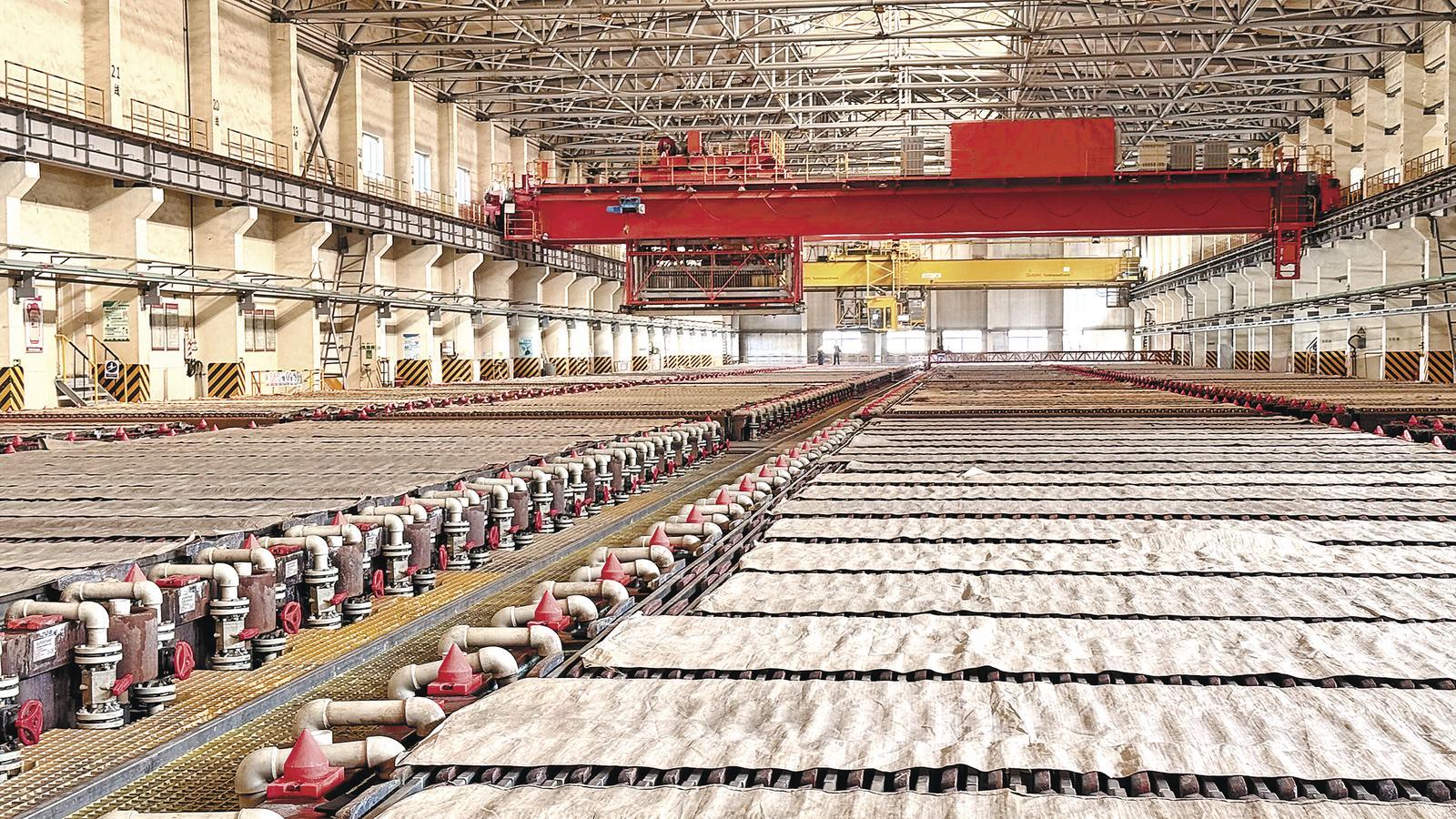
Core Viewpoint - The news highlights the proactive measures taken by the Xining Economic and Technological Development Zone to ensure continuous production and supply stability during the Spring Festival, showcasing the commitment of both government officials and companies to maintain operational efficiency and safety. Group 1: Company Operations - Qinghai Copper Industry Co., Ltd. has successfully implemented an intelligent upgrade project in its electrolytic workshop, which includes four core components: intelligent transportation of anode plates, storage and shaping systems, intelligent transportation and storage of cathode copper, and a 5G communication network [6] - The company has maintained continuous production during the Spring Festival, ensuring stable output of electrolytic copper and other products through optimized production scheduling and strict safety measures [6][9] - The daily production capacity of Qinghai Xiaoxiniu Biological Dairy Co., Ltd. has remained stable at 150 tons during the holiday, with automated production lines operating at full capacity to meet market demand [8] Group 2: Government Support and Safety Measures - Zhao Xiayuan, a staff member from the Investment Promotion Bureau, actively engages with companies to assess their needs and provide support, even during the holiday period [5][7] - The Xining Development Zone has conducted thorough safety inspections across key industries, focusing on hazardous chemicals, fire safety, and other high-risk areas to ensure a robust safety framework [10] - Continuous safety monitoring and a 24-hour duty system have been implemented to maintain operational safety and support high-quality economic development post-holiday [10]
高盛:美国战略储备对其铜价预测构成上行风险
Wen Hua Cai Jing· 2026-02-21 02:28
Group 1 - Goldman Sachs analysts predict that the proposed U.S. strategic copper reserve plan could lead to a reduction in metal inventory, resulting in an upward risk to their forecast of $11,200 per ton for copper prices in Q4 2026 [2] - The implementation of the reserve plan is expected to absorb most of the projected global copper surplus of 300,000 tons in 2026, shifting the market from oversupply to supply-demand balance [2] - The "Project Vault" announced by President Trump aims to establish a critical mineral reserve to support the U.S. automotive industry, targeting a 60-day supply of minerals for emergencies [2] Group 2 - Goldman Sachs estimates that if the U.S. reserves 60 days of critical metals, the reserves for copper and aluminum alone could account for about half of the total capital required for the "Project Vault" [3] - While the U.S. could potentially stockpile all 60 critical minerals, the reserves may be concentrated in smaller markets with high import dependence, such as heavy rare earths, rather than being evenly distributed across all commodities [3] Group 3 - As the largest copper consumer globally, the Chinese industry faces three major challenges: increasing dependence on foreign resources, overcapacity in the midstream processing sector, and downstream demand being suppressed by high copper prices [4]

国元证券首次覆盖江西铜业给予增持评级,铜价高位支撑业绩增长
Jing Ji Guan Cha Wang· 2026-02-20 10:56
Core Viewpoint - Guoyuan Securities initiated coverage on Jiangxi Copper Co., Ltd. with a "Buy" rating, highlighting the company's strong advantages in the copper industry chain and expected continued profit growth due to high copper prices [1] Financial Report Analysis - Jiangxi Copper achieved a revenue of 396.05 billion yuan for the first three quarters of 2025, a year-on-year increase of 0.98%, and a net profit attributable to shareholders of 6.02 billion yuan, up 20.85% year-on-year [2] - In Q3 alone, the company reported revenue of 139.09 billion yuan and a net profit of 1.85 billion yuan, showing significant growth [2] - The net cash flow from operating activities improved dramatically by 1441.78% to 6.29 billion yuan, indicating enhanced operational efficiency [2] - The company is expected to produce 2.29 million tons of cathode copper in 2024 and 1.20 million tons in the first half of 2025, supporting profit elasticity through capacity release [2] Recent Events - Key recent events include the release of Guoyuan Securities' initial coverage report on February 13-14 and the update of the non-ferrous metals industry weekly report on February 15 [3] - The copper market experienced fluctuations due to trading stagnation before the Spring Festival, but the long-term supply-demand tightness remains unchanged, potentially increasing market focus on Jiangxi Copper's resource advantages and profit potential [3] Recent Stock Performance - Jiangxi Copper's stock (00358.HK) showed significant volatility over the past week, with a drop of 4.39% on February 13, followed by a rebound of 3.85% on February 16, and a latest price of 43.76 HKD on February 20, down 1.17% for the day [4] - The cumulative decline over the period was 1.88%, with a volatility of 7.94% [4] - Technical indicators suggest that the MACD histogram is expanding negatively, indicating short-term pressure, although there was a net inflow of 51.1 million HKD on that day, showing a positive trend in main capital [4] - The copper sector declined by 1.62% during the same period, slightly underperforming the broader market [4]
智利上调2026年铜均价预估至每磅5.15美元
Wen Hua Cai Jing· 2026-02-14 00:34
Core Viewpoint - The Chilean government estimates a 2.4% economic growth for the year, slightly below the previous forecast of 2.5%, primarily due to a slowdown in mining growth [2] Group 1: Economic Forecast - Chile's average copper price forecast for this year has been raised to $5.15 per pound, up from the previous estimate of $4.35 per pound [2] - Chile remains the world's largest copper exporter [2] Group 2: Industry Challenges - China's copper industry faces three major challenges: increasing dependence on foreign upstream resources, overcapacity in the midstream processing sector, and downstream demand being suppressed by high copper prices [2]
江西铜业(600362):首次覆盖报告:铜矿盈利能力提升,冶炼业务短期承压
Guoyuan Securities· 2026-02-13 14:55
Investment Rating - The report assigns an "Accumulate" rating to Jiangxi Copper Co., Ltd. with a target price of 56.59 yuan [7]. Core Insights - Jiangxi Copper's comprehensive copper industry chain advantages are driving rapid performance growth, with a significant increase in revenue and net profit due to rising copper prices [1][4]. - The company is the largest cathode copper supplier in China, with a production capacity exceeding 2 million tons per year, and is expected to maintain steady growth in performance due to high copper prices and scale effects [3][4]. - The company is actively expanding its overseas resource layout, which is crucial for long-term strategic positioning [4][13]. Summary by Sections Financial Performance - For Q1-Q3 2025, Jiangxi Copper achieved operating revenue of 396.05 billion yuan, a year-on-year increase of 0.98%. In Q3 2025, revenue reached 139.09 billion yuan, up 14.09% year-on-year. The net profit attributable to shareholders was 6.02 billion yuan, a 20.85% increase year-on-year, with Q3 net profit at 1.85 billion yuan, up 35.20% year-on-year [1][2][26]. Resource and Capacity - The company has a well-established resource reserve layout, with a cathode copper production capacity of over 2 million tons per year. In 2024, cathode copper production is expected to reach 2.29 million tons, a year-on-year increase of 9.28% [3][15]. - Jiangxi Copper's resource reserves include 8.90 million tons of copper, 239.08 tons of gold, and 8,252.60 tons of silver, with significant investments in overseas resources [12][13]. Industry Outlook - The copper market is expected to experience sustained high price fluctuations due to supply-demand dynamics, with global copper reserves growing at a slower pace and potential shortages in refined copper [4][49]. - The demand for refined copper is anticipated to continue growing, driven by both emerging and traditional applications, which will support copper prices [4][49]. Profitability and Valuation - The report forecasts Jiangxi Copper's net profit attributable to shareholders for 2025-2027 to be 8.45 billion, 11.37 billion, and 12.87 billion yuan, respectively, with corresponding P/E ratios of 23.19, 17.24, and 15.22 [4][6]. - The company maintains a stable gross margin, with a slight increase in net margin, indicating effective cost management and operational efficiency [41]. Product Contribution - Cathode copper remains the primary revenue source, contributing 50.21% of total revenue in H1 2025, despite a year-on-year decline in revenue from cathode copper and copper rod lines [30][31]. - The gold business is also showing strong growth, with revenue from gold reaching 37.25 billion yuan in H1 2025, a year-on-year increase of 5.62% [32]. Strategic Initiatives - Jiangxi Copper is advancing key projects, including the expansion of its copper processing capacity and the development of new mining projects, which are expected to enhance its competitive position in the market [25][36].
新能源及有色金属日报:昨日美股大跌情况下,铜价亦受影响-20260213
Hua Tai Qi Huo· 2026-02-13 08:53
1. Report's Industry Investment Rating - Copper: Neutral - Arbitrage: Suspended - Options: Sell put options [9] 2. Core View of the Report - As the Spring Festival approaches, downstream demand continues to decline, and the price of precious metals remains volatile. The price of copper may range from RMB 97,800/ton to RMB 106,600/ton. It is not recommended to hold heavy positions during the Spring Festival holiday [9]. 3. Summary by Relevant Catalogs Market News and Important Data Futures Quotes - On February 12, 2026, the main Shanghai copper contract opened at RMB 103,620/ton and closed at RMB 102,330/ton, a 0.15% decrease from the previous trading day's close. During the night session, it opened at RMB 102,030/ton and closed at RMB 100,030/ton, a 2.58% decrease from the afternoon close [1]. Spot Situation - According to SMM, the spot price of SMM 1 electrolytic copper was at a discount of RMB 100 - RMB 20/ton to the 2602 contract, with an average discount of RMB 60/ton, a RMB 10/ton decrease from the previous day. The spot price ranged from RMB 101,840 - RMB 102,240/ton. The 2602 contract showed a W-shaped oscillation and closed at RMB 101,950/ton. With the Spring Festival approaching, the market was quiet, and the supply - demand imbalance was expected to widen the spot discount [2]. Important Information Summary Macro and Geopolitical Aspects - US President Trump is expected to visit China in early April, and President Xi Jinping will meet him. The Sino - US trade "cease - fire" is expected to be extended. Due to investors' concerns about AI eroding corporate profits, the US stock market tumbled, causing copper prices to decline [3]. Mining End - In 2025, Congo (Kinshasa)'s copper exports increased from 3.1 million tons to 3.4 million tons, a 9.7% year - on - year increase, solidifying its status as the world's second - largest copper producer. Chinese - funded enterprises play a major role in Congo's copper production [4]. Smelting and Import - In January, the proportion of Chinese - produced copper in LME's available inventory decreased due to inflows from other countries. The absolute inventory of Chinese - produced copper in LME warehouses increased from 87,475 tons in December to 95,150 tons at the end of January [5]. Consumption - As the Spring Festival nears, spot trading is light. The output and capacity utilization rate of copper rods in January 2026 decreased compared to December. Different regions showed different trends in production volume [6]. Inventory and Warehouse Receipts - LME warehouse receipts changed by 3,000 tons to 196,650 tons. SHFE warehouse receipts changed by 8,282 tons to 187,179 tons. On February 12, the domestic electrolytic copper spot inventory was 353,600 tons, a change of 22,300 tons from the previous week [7][8]
云南铜业:公司已于2025年12月31日完成凉山矿业40%股份的资产过户手续
Zheng Quan Ri Bao· 2026-02-12 13:41
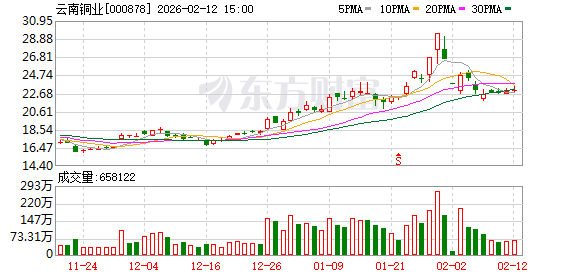
证券日报网讯 2月12日,云南铜业在互动平台回答投资者提问时表示,公司已于2025年12月31日完成凉 山矿业40%股份的资产过户手续,直接持有其60%股权,凉山矿业成为公司控股子公司。针对2026年一 季度利润计算方式,公司将凉山矿业100%的利润全额纳入合并财务报表,并在此基础上按60%的持股 比例计算归属上市公司股东的净利润。 (文章来源:证券日报) ...