自动驾驶

Search documents
对话 Mobileye CEO Amnon Shashua:物理AI,Mobileye两手抓
雷峰网· 2026-01-26 11:17
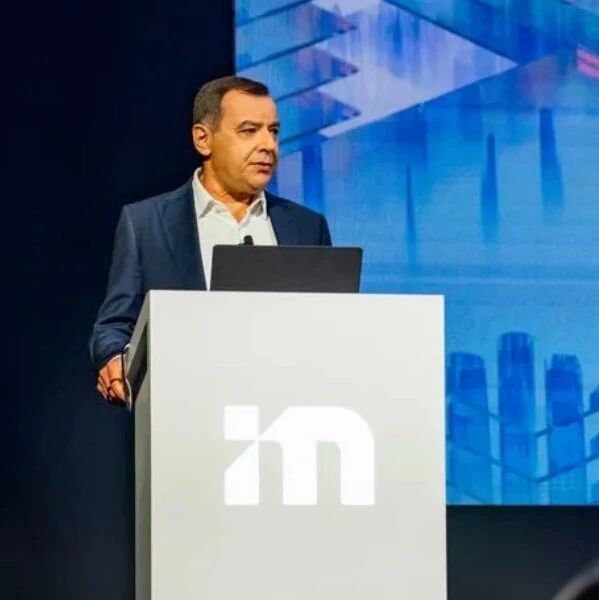
Core Viewpoint - The consensus on developing driving automation has shifted from "consumer-grade first, then Robotaxi" to a dual-engine strategy focusing on both automotive and robotics applications, particularly with Mobileye's recent acquisition of Mentee Robotics for approximately $900 million [2][18]. Group 1: Autonomous Driving Market Structure - Mobileye is a key player in the global advanced driver-assistance systems (ADAS) market, with over 230 million vehicles equipped with its technology by the end of 2025 [5]. - The autonomous driving market is likened to a "sandwich" structure, with a large ADAS market on one side and the emerging, high-value Robotaxi market on the other [5][7]. - Mobileye's surround-view ADAS has secured orders from major automotive manufacturers, with expected deliveries exceeding 19 million units based on the EyeQ6H chip [5][7]. Group 2: Challenges in Scaling Robotaxi - The feasibility of Robotaxi has been established, but scaling it presents three main challenges: reliance on retrofitting existing vehicles, data collection for new city deployments, and reducing the number of remote operators [9][10]. - Mobileye is collaborating with Volkswagen to produce pre-configured Robotaxi systems, which will facilitate faster scaling compared to retrofitted solutions [10]. - The company is developing a "Vision-Language-Semantics-Action" (VLSA) system to gradually replace remote operators, enhancing operational efficiency [11][14]. Group 3: Shift in High-Level Driving Automation Path - The traditional path of achieving L4 autonomous driving through consumer vehicles has been reversed, with successful commercial operations of Robotaxi by Waymo leading to new business models [15][16]. - Mobileye is pursuing parallel development across all levels of driving automation, ensuring adaptability to market changes [17]. Group 4: Dual-Engine Growth Strategy - Mobileye's acquisition of Mentee Robotics is aimed at leveraging synergies between automotive and robotics, enhancing safety and accelerating commercialization in the humanoid robot sector [18][22]. - The company anticipates significant growth in automotive business orders, projecting a total of $24.5 billion over the next eight years, a 42% increase from previous forecasts [24]. - Mobileye is positioned to capitalize on the emerging physical AI market by integrating its expertise in driving automation with robotics [25].

Uber还有机会么?
美股研究社· 2026-01-26 10:27
Core Viewpoint - Uber is optimistic about launching autonomous ride-hailing services by 2026 in over 10 markets, aiming to maintain its competitive edge while forming full-stack partnerships, despite investor concerns about competition from Tesla and Waymo [3][4]. Group 1: Competitive Landscape - Uber has achieved over 20% returns in the past year but has underperformed compared to its industrial peers since mid-2025, facing potential long-term disruption from competitors like Tesla and Waymo [4]. - The argument for autonomous ride-hailing may not significantly impact the network economy until the end of the century, which currently provides Uber with a competitive advantage in its ride-sharing ecosystem [5]. - Analysts express concerns that if Waymo views platform ownership as key to maximizing value, the long-term sustainability of Uber's cooperative/competitive model with Waymo may be in jeopardy [5]. Group 2: Autonomous Vehicle Adoption - Analysts believe that by 2030, autonomous ride-hailing is unlikely to replace the entire ride-sharing market, with projections showing growth from 0.9% in 2026 to 7.5% [10]. - Uber's operational leverage and market leadership in many regions, including Southeast Asia, are bolstered by network effects from data and supply-demand aggregation [5][12]. Group 3: Financial Performance and Outlook - Uber's monthly active platform consumers (MAPCs) have steadily increased to 189 million, indicating the stickiness of its platform moat [12]. - Analysts are relatively optimistic about Uber's free cash flow (FCF) margin, expecting it to reach 18% by 2027, which is considered a strong profitability indicator compared to the industry median [14]. - Despite Tesla's recent peak valuations, Uber's forward P/E ratio of 20.7 is seen as attractive relative to the industry median of 22.8, suggesting a favorable risk/reward balance for investors [14][16].


轻舟智航L2/L4智驾方案解析:一段式、VLA和世界模型
自动驾驶之心· 2026-01-26 07:16
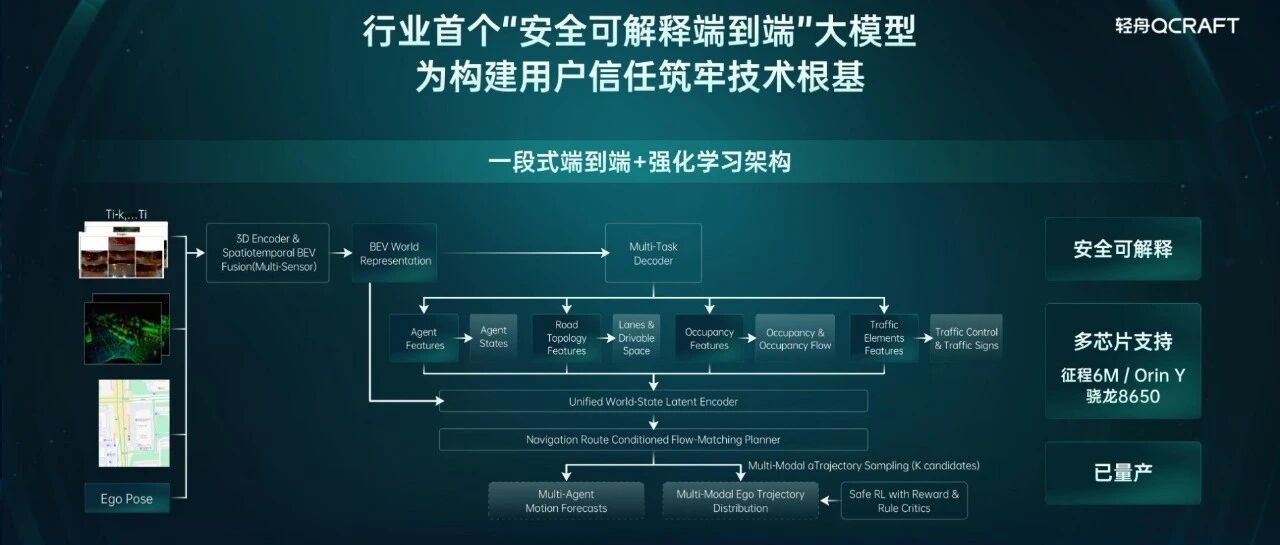
Core Viewpoint - The article discusses the advancements in autonomous driving technology, particularly focusing on the new city NOA solution based on the single journey 6M architecture implemented in the Li Auto L series. It highlights the integration of various algorithms and the overall architecture of the system, emphasizing its potential for real-world applications and safety mechanisms. Group 1: Technical Architecture - The single J6M architecture achieves end-to-end processing with reinforcement learning, showcasing a sophisticated network structure that operates on 128 TOPS computing power [3][5] - The architecture utilizes Safe RL to optimize vehicle trajectory, indicating a focus on safety and reliability in autonomous driving [5] - The input data includes time-sequenced images, Lidar, SD navigation, and vehicle positioning, which are fused to create a global BEV representation [6] Group 2: Algorithmic Innovations - The article mentions the validation of algorithms like DiffusionDrive and Flow Matching by multiple companies, indicating their readiness for mass production [5] - It introduces two recommended algorithms, Diffusion Planner and Flow Planner, with the latter being an improved version developed by a team from Tsinghua University [5] - The Flow-Matching Planner is used to decode vehicle motion predictions and multi-modal vehicle trajectories, enhancing the system's predictive capabilities [7] Group 3: Future Developments - The next-generation autonomous driving model architecture combines VLA with World Model into a unified end-to-end system, suggesting a significant evolution in the technology [11] - The article notes that the VLA system is not merely a demonstration of capabilities but serves as foundational infrastructure for the scalable operation of L4 autonomous systems [12] - The CEO of the company expresses that neither VLA nor the world model will be the ultimate solution for autonomous driving technology, indicating ongoing development and exploration in the field [13]
财通证券:特斯拉和Waymo持续加速Robotaxi业务 对国内相关产业起映射作用
智通财经网· 2026-01-26 03:45
Group 1 - Tesla is advancing its Robotaxi business, with a public service launch of its fully autonomous fleet in Austin starting January 22, 2026, and a Q4 earnings call on January 28 expected to reveal further operational details and future plans [1] - The Cybercab project is progressing, with testing in five states and production planned for April 2026. Elon Musk indicated that the cost per mile could be below $0.20 during large-scale operations, and updates on hardware developments, including AI chip designs, have been shared [1] - Waymo is expanding its operational areas, increasing the geographic coverage in Austin from 90 to 140 square miles and launching services in a 60 square mile area in Miami. The company plans to significantly increase the number of cities it operates in, including Dallas and Denver [2] Group 2 - Investment recommendations include Pony.ai, Horizon Robotics, and Xpeng Motors, with a focus on companies like Didi Global, Uber, and others in the autonomous vehicle space [2]


2026年Robovan深度报告汇报
2026-01-26 02:49
Summary of the Conference Call on RoboOne Industry Industry Overview - The RoboOne (LOB ONE) market is experiencing explosive growth, with leading companies expected to deliver 50,000 units in 2024, significantly up from over 20,000 units last year, primarily for urban internal delivery applications in complex environments similar to Robotaxi technology [1][2] - The regulatory policies pose a major challenge for the development of LOB ONE, with current licensing management being relatively ambiguous, and stricter regulations in the future potentially impacting industry expansion [1][4] Key Players and Competitive Landscape - Desay SV is noted for its full-stack self-research capabilities, from chip pre-controllers to vehicle operations, providing a latecomer advantage [1][5] - Youjia Innovation, a commercial vehicle autonomous driving operator, is actively expanding its orders [1][5] - Jingwei Hirain has a strong partnership with Baixin Niu, excelling in remote control and line control hardware capabilities [1][5] - Major competitors in the RoboOne field include Jiushi Intelligent, New Era, and Baixin Niu, with Jiushi Intelligent rapidly increasing its market share through partnerships with several express delivery companies [20][25] Market Applications and Trends - RoboOne is primarily applied in the express delivery sector, with approximately 27,000 units delivered domestically from January to November 2025, nearing a total of 30,000 units for the year [1][6] - Future penetration into urban delivery markets for fast-moving consumer goods (FMCG), durable goods warehousing, and chain restaurants is anticipated [1][6] - The express delivery industry is the preferred landing scene for RoboOne due to its large scale and cost-reduction pressures, with a potential market size of 20 billion yuan in 2024, expected to grow to 60 billion yuan by 2030 [3][19] AI Empowerment and Efficiency - AI empowerment is enabling the transportation industry to enhance efficiency at the hardware level, particularly for B-end scenarios with complex but predictable demands, driving urban delivery market development [7][9] - The current AI technology upgrade is significantly improving B-end transportation efficiency compared to the previous 4G mobile internet wave, which primarily addressed C-end issues [8][10] Market Size and Potential - The domestic urban delivery market exceeds 1 trillion yuan, with 64% attributed to branch transportation, and key components include FMCG delivery (30%) and cross-regional e-commerce (17%) [15] - The demand for RoboOne is estimated at 15 million units, with a potential market space of approximately 730 billion yuan if fully replacing existing vehicles, indicating a total market scale exceeding 1 trillion yuan when combined with the express delivery sector [23][24] Challenges and Future Outlook - The development of LOB ONE faces challenges from regulatory pressures, with the current rapid expansion of major players dependent on policy changes [4][21] - The ideal application scenarios for RoboOne include e-commerce express delivery, FMCG delivery, durable goods warehousing, and chain restaurants, which are characterized by fixed-route transportation without door-to-door service requirements [18][17] - The express delivery sector's economic pressures and the potential for significant cost reductions (over 50%) through the use of RoboOne vehicles are driving strong demand from B-end enterprises [19] Conclusion - The RoboOne industry is poised for substantial growth, driven by technological advancements, regulatory developments, and increasing demand for cost-effective delivery solutions across various sectors. The landscape is competitive, with several key players emerging as leaders in the market.
自动泊车系统安全要求强标公开征求意见;英伟达L4级自动驾驶出租车将于2027年上路 | 1月智驾热搜
Zhong Guo Qi Che Bao Wang· 2026-01-26 02:12
Core Insights - The global competition in automotive intelligence is accelerating in 2026, driven by policy breakthroughs and commercial implementations [2] Domestic News - The Ministry of Transport issued an implementation opinion to promote the development of public data resources to support intelligent driving and new energy vehicle industries, aiming to create typical demonstration scenarios through data integration [3][4] - The Ministry of Industry and Information Technology is soliciting opinions on seven mandatory national standards for intelligent connected vehicles, including safety requirements for automatic parking systems, which will provide clear standards for the industry [5] - Guangdong is exploring the development of intelligent driving liability insurance products to support the new energy vehicle industry, aiming to establish a risk-sharing and social trust system [6] - Hong Kong's Transport Department is promoting unmanned testing of autonomous vehicles, having issued six pilot licenses for testing in various regions [7][8] - Jiangsu Province is advancing the "vehicle-road-cloud integration" application pilot, focusing on the development of high-level autonomous driving systems and intelligent infrastructure [10][11] - Guangdong is strengthening pilot applications for intelligent connected vehicles, encouraging technological innovation and cross-city testing [12] - Shanghai is emphasizing the development of intelligent connected new energy vehicles as a key emerging industry, focusing on soft and hard collaboration and data-driven approaches [13] Overseas Developments - NVIDIA announced plans to test its first full-stack autonomous vehicle in the U.S. in early 2026, with a goal to launch L4 autonomous taxi services by 2027 [14] - Mobileye plans to acquire humanoid robot manufacturer Mentee for $900 million, aiming to enhance its capabilities beyond autonomous driving [15] - Hyundai appointed a former executive from NVIDIA and Tesla to lead its autonomous driving business, highlighting the importance of this sector [17] - Bosch unveiled a new AI smart cockpit platform at CES 2026, showcasing advancements in personalized vehicle experiences [19] - The U.S. House Committee is reviewing legislation to simplify the deployment of autonomous vehicles, potentially increasing the annual exemption limit for companies [21] Corporate Dynamics - GAC Group signed a comprehensive cooperation framework agreement with Huawei to deepen collaboration in intelligent vehicle technologies [22][23] - Black Sesame Intelligence's Huashan A2000 chip passed U.S. scrutiny, allowing for global sales and marking a significant milestone for Chinese autonomous driving technology [24][25] - Geely received a license for L3 autonomous driving road testing in Hangzhou, indicating progress in the competitive landscape for L3 vehicles [26] - BAIC's L3 model has begun large-scale pilot operations, marking a significant step towards commercial deployment of autonomous driving [28] - Lantu Motors and Yiwang signed a strategic cooperation agreement to jointly develop intelligent driving and cockpit technologies [29] - Geely and Qianli Zhijia launched a new brand for smart driving solutions, covering a range of autonomous driving capabilities [30][31] - Hesai Technology was selected by NVIDIA as a lidar partner for its autonomous driving platform, enhancing its role in the global supply chain [33][34] - Chery showcased its AI advancements, indicating a shift towards a more AI-driven automotive strategy [35][36] - WeRide announced that its Robotaxi fleet has surpassed 1,000 vehicles, achieving commercial viability in multiple cities [37]



金元证券每日晨报-20260126
Jinyuan Securities· 2026-01-26 02:10
Core Insights - The report highlights significant advancements in the autonomous driving industry, marking a transition from technology validation to large-scale implementation driven by policy support, technological breakthroughs, and commercial trials [15]. Group 1: Market Overview - The report provides a summary of major market indices, indicating mixed performance across global markets, with the US Dow Jones down by 0.58% and the S&P 500 slightly up by 0.03% [11]. - In the Asia-Pacific region, the Hong Kong Hang Seng Index rose by 0.45%, while the Nikkei 225 increased by 0.92% [11]. Group 2: International News - The potential announcement of a new Federal Reserve Chair by President Trump is noted, with Rick Rieder emerging as a leading candidate [10]. - A significant increase in South Korean bookings for travel to China is reported, with a year-on-year growth of 87.8% [10]. Group 3: Domestic News - China's total import and export value is projected to exceed 45 trillion yuan in 2025, maintaining its status as the world's largest goods trading nation [12]. - Beijing's economic and social development goals for 2026 include a GDP growth target of around 5% and a public budget revenue growth of about 4% [12]. Group 4: Important Announcements - Hunan Gold plans to acquire 100% stakes in Golden Tianyue and Central South Smelting [14]. - Deleja intends to invest 5 billion yuan in a project for manufacturing wind turbine gearboxes [14]. Group 5: Research Recommendations - The report emphasizes the importance of monitoring six dimensions in the autonomous driving sector: core technology barriers, mass production progress, market competition positioning, growth and certainty of performance, domestic substitution potential, and key event catalysts [15]. - The report notes that the L3 autonomous driving pilot has officially launched, accelerating the commercial closure and driving the industry towards a critical phase of large-scale implementation [15].
为大山孩子打开未来之窗 这家粤企既摘冠又播种
Xin Lang Cai Jing· 2026-01-26 00:26
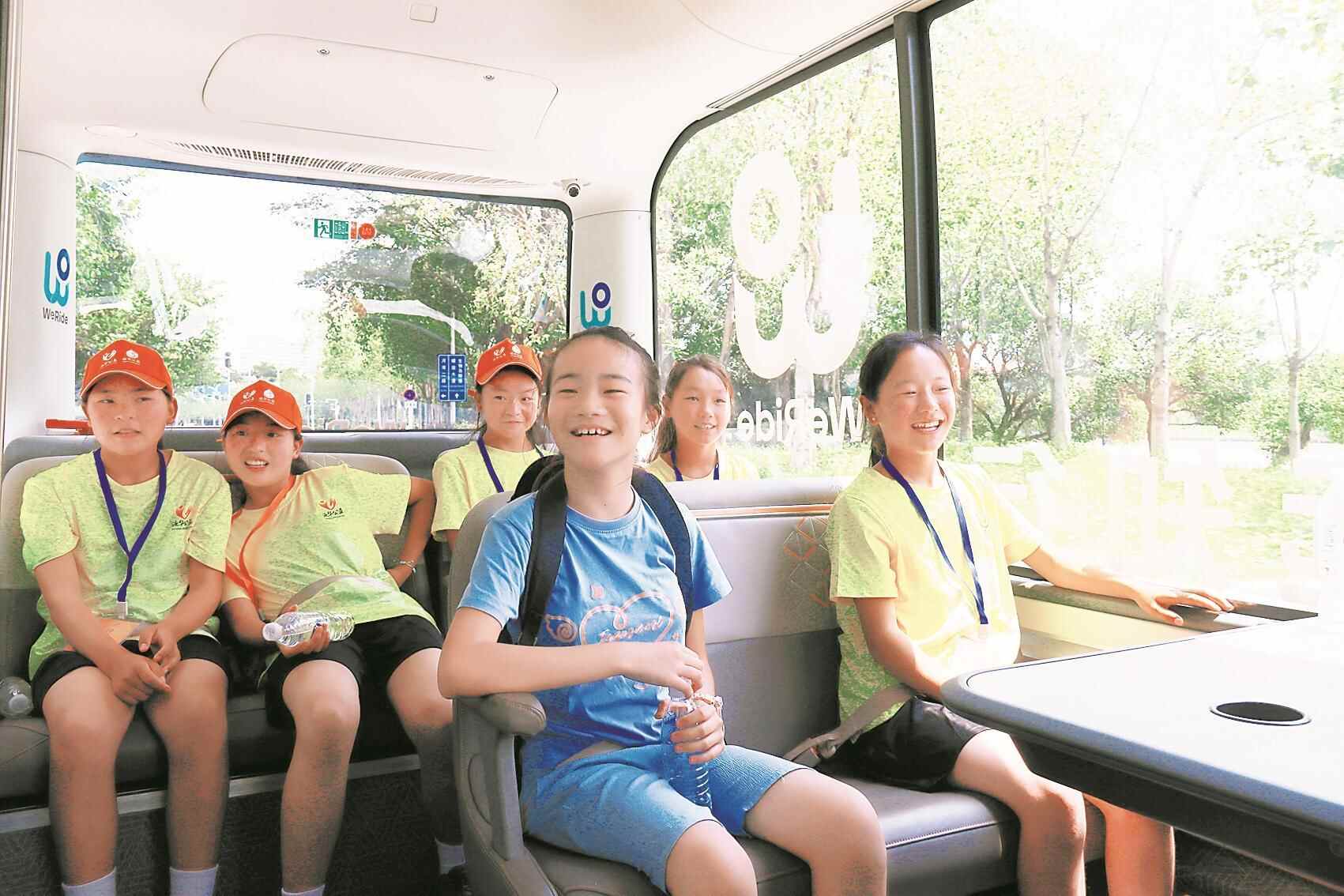
Core Viewpoint - The article highlights the intersection of advanced technology and social responsibility, showcasing how a self-driving vehicle company, WeRide, engages with children from remote areas to educate them about autonomous driving technology while also achieving recognition in international competitions [2][5]. Group 1: Educational Initiatives - WeRide implemented a "precise popular science" program to help children from the Daliang Mountains understand complex autonomous driving concepts by using relatable analogies [3]. - Engineers at WeRide used simple explanations and models to illustrate the technology, making it accessible to children who had limited exposure to traditional vehicles [3][4]. - The initiative aims to inspire children to envision careers in technology, shifting their questions from curiosity about urban architecture to aspirations of creating autonomous vehicles [4]. Group 2: Achievements and Recognition - WeRide recently won first place at the Dubai World Autonomous Driving Challenge, demonstrating its technological prowess on an international stage [4][5]. - The company balances its pursuit of technological excellence with a commitment to social impact, as evidenced by its educational outreach efforts [5]. Group 3: Long-term Commitment to Social Responsibility - WeRide has partnered with the Pan-Hua Public Welfare Foundation to create a series of experiences for children, having already hosted nearly 100 children from impoverished areas [5]. - The company is expanding its social initiatives, including transforming autonomous buses into services for mentally challenged youth and conducting educational activities in schools [5][6]. - The philosophy driving these efforts emphasizes that cutting-edge technology should be accessible to those who need it most, fostering a broader understanding of science and technology [6].
寻踪2026投资机遇 百亿私募瞄准“预期差”
Shang Hai Zheng Quan Bao· 2026-01-25 14:24
Group 1 - The core viewpoint is that the A-share market is expected to experience a structural trend in 2026, driven by positive liquidity and fundamentals, with a focus on sectors like technology, consumption, and real estate that present "expectation differences" [2] - Multiple billion-level private equity fund managers believe that undervalued stocks are likely to undergo a systematic repricing in 2026, as the risk-free rate has declined rapidly over the past three years without a corresponding increase in stock valuations [3] - The market's focus is shifting towards companies with strong earnings support, as 2025 is likely to be the bottom of the current A-share profit cycle, providing a solid foundation for future earnings clarity and industry performance [6] Group 2 - The AI sector remains a focal point, with discussions around whether it has entered a bubble; however, key fund managers emphasize the importance of capital expenditure from leading cloud companies as a critical variable for AI investments in 2026 [4][5] - Specific opportunities in the AI field are identified, including advancements in computing infrastructure and applications in autonomous driving and robotics, which are expected to create new business prospects [5] - The market logic is anticipated to transition from valuation recovery to earnings-driven performance, indicating a need for detailed industry analysis to identify growth potential [6]

荣耀、倍思、努比亚等50+品牌签约速卖通品牌出海;《明日方舟:终末地》全球公测,阿里云提供技术支撑丨36氪出海·要闻回顾
36氪· 2026-01-25 13:30
Core Viewpoint - The article highlights the significant growth and strategic partnerships in the cross-border e-commerce and technology sectors, particularly focusing on brands expanding into overseas markets and the increasing demand for innovative technologies in various industries [4][5][6]. Group 1: Brand Expansion and E-commerce Growth - Over 50 leading brands, including Honor, Baseus, and Nubia, have signed with AliExpress for the "Super Brand Outbound Plan" to accelerate their overseas market expansion, particularly in high-value categories like consumer electronics and smart home devices [4]. - TikTok Shop in Southeast Asia is projected to double its GMV by 2025, with daily GMV increasing by 90% year-on-year, indicating a strong consumer upgrade trend in the region [5][6]. - Cainiao's global overseas warehouse is expected to see a 32% year-on-year increase in order processing volume by 2025, with operations in over 40 overseas warehouses across 18 countries [8]. Group 2: Technological Innovations and Collaborations - Eagle Network's new game "Arknights: End of the World" has launched globally, supported by Alibaba Cloud to handle high concurrency demands during the launch [4]. - NineSight has initiated Malaysia's first autonomous vehicle testing project in collaboration with local postal services, showcasing the company's expansion into Southeast Asia [7]. - Baidu's "LuoBo Kuaipao" has launched a fully autonomous driving service in Abu Dhabi, marking its first overseas public service deployment [8]. Group 3: Investment and Market Trends - Zhongke Kelan has completed a multi-million angel round financing to accelerate its biodegradable plastic products' overseas expansion, targeting applications in ecological agriculture and marine environments [10]. - Yanhe Technology has secured nearly 100 million yuan in A1 round financing to enhance its global market presence and production capabilities for perovskite batteries [11]. - The overseas micro-short drama market is expected to exceed $5 billion by 2026, with Chinese apps capturing 90% of the market share [12][13].