
房地产业

Search documents
产业债系列报告:如何看待新增产业主体的投资价值?
Hua Yuan Zheng Quan· 2025-09-02 23:39
Report Summary 1. Industry Investment Rating The report does not mention the industry investment rating. 2. Core Viewpoints - Since 2024, the number of new bond - issuing industrial entities has significantly increased under the strict supervision of urban investment bonds. The new industrial entities from January 1 to August 26, 2025, are mainly concentrated in low - to - middle administrative levels, with over half of them having an AA+ rating and mostly located in economically developed provinces. The marginal supply increment of industrial bonds brought by these new entities is difficult to substantially alleviate the shortage of credit bond assets [1][2]. - Newly - issued bonds of new industrial entities often have an excess spread at the initial listing stage due to liquidity and market cognitive differences, and the excess spread tends to narrow to varying degrees after listing. It is recommended to select bonds from industries with relatively good prosperity (such as social services) and focus on bonds issued by urban investment subsidiaries [3]. 3. Summary by Directory 3.1 Newly - Issued Bond Industrial Entities Inventory - **Quantity change**: Since the second half of 2023, under the strict supervision of urban investment bonds, the number of new bond - issuing industrial entities has increased. In 2024, there were 133 new industrial bond - issuing entities, and from January 1 to August 26, 2025, 191 industrial entities entered the capital market for bond financing. The number of new industrial bond - issuing entities from January to July 2025 showed a fluctuating upward trend, with 41 entities in July alone [1][4]. - **Administrative level**: Among the 191 new industrial bond - issuing entities from January 1 to August 26, 2025, 63 were district - level state - owned enterprises and 62 were prefecture - level state - owned enterprises, showing a concentration in low - to - middle administrative levels. The 63 new district - level industrial entities were mostly concentrated in economically developed provinces such as Shandong, Zhejiang, Guangdong, and Jiangsu [8]. - **Subject rating**: Among the new industrial bond - issuing entities from January 1 to August 26, 2025, 103 had an AA+ rating, accounting for 54%, followed by 52 with an AA rating and 31 with an AAA rating, mainly medium - and low - credit - rated entities [8]. - **Industry distribution**: The top five industries with the largest number of new industrial bond - issuing entities from January 1 to August 26, 2025, were comprehensive (47), social services (31), building decoration (24), non - bank finance (18), and real estate (10) [13]. - **Regional distribution**: New industrial bond - issuing entities were mostly concentrated in economically developed provinces such as Shandong (30), Jiangsu (24), Guangdong (17), and Zhejiang (17) [13]. - **Asset scale**: Most of the industrial entities that first appeared in the bond market in 2025 were small - scale. Among the 191 new industrial bond - issuing entities from January 1 to August 26, 2025, 47% had a total asset scale of less than 100 million yuan, and 49% had a net asset scale of less than 50 million yuan. Among the 81 industrial entities with a total asset scale of less than 100 million yuan, 32 were subsidiaries of urban investment companies [17]. - **Bond issuance scale and use of funds**: The total issuance scale of bonds issued by new industrial entities from January 1 to August 26, 2025, was 13.78 billion yuan, mainly private placement corporate bonds. The funds were mainly used to repay interest - bearing debts (8.08 billion yuan, accounting for 59%), and some were used for project construction, supplementary working capital, and other purposes [20]. - **Ways for urban investment entities to increase bond quotas**: Bond - financing - restricted urban investment entities usually use subsidiaries as issuers to try to increase bond quotas, mainly by injecting assets into existing subsidiaries or stripping urban investment - related businesses. The former is the preferred method, but the single - bond quota of urban investment subsidiaries is usually small [23]. 3.2 How to Evaluate the Investment Value of New Industrial Entities - **Value discovery process**: In the first five trading days after the listing of bonds issued by new industrial entities, the excess spread fluctuated little and showed no obvious trend. As time passed, the market's perception of new industrial entities gradually converged, and the liquidity premium and risk premium at the initial listing stage mostly narrowed significantly [3][26]. - **Overview of major industries of new industrial entities**: - **Building industry**: The industry is currently in a state of low prosperity. In 2024, the construction and completion areas decreased year - on - year. In July 2025, the PMI and its sub - indicators were at a low level. Although the "anti - involution" initiative was put forward, it is difficult to significantly boost the bargaining power of construction enterprises in the short term, and the subsequent marginal improvement needs attention [30][31]. - **Social services**: The number of domestic tourists and tourism revenue have been continuously rising. The main business of social service issuers is mainly related to tourism. With the improvement of the modern tourism system, tourism will play a more prominent role in promoting economic development [35]. - **Real estate**: Housing prices and investment are at a low level. In July 2025, the prices of new and second - hand houses in 70 large and medium - sized cities decreased year - on - year, and real estate development investment also declined. Policy support may be the key variable for the real estate market [37]. 3.3 Investment Recommendations - Focus on new bond - issuing industrial entities in the future, as they often have an excess spread at the initial listing stage, which tends to narrow over time. - Select bonds from industries with relatively good prosperity, such as social services. - Pay attention to bonds issued by urban investment subsidiaries, as their credit risks are relatively controllable [39].
滨江集团“地王”豪赌背后:营收利润大增,净利率仅5.9%
Bei Ke Cai Jing· 2025-09-02 14:33
Core Insights - Binjiang Group, as the only private real estate company in the top ten sales in the first half of the year, has gained significant market attention [1] - The company reported a substantial increase in revenue and net profit, with operating income reaching 45.449 billion yuan, up 87.8% year-on-year, and net profit attributable to shareholders increasing by 58.87% to 1.853 billion yuan [1][3] - However, the company faced a significant cash flow challenge, with a net cash outflow from operating activities of 8.964 billion yuan, a decrease of 95.52% compared to the previous year [2][3] Financial Performance - Binjiang Group's sales in the first half of the year amounted to 52.75 billion yuan, a decrease of 9.4% year-on-year, ranking 10th among national real estate companies [1] - The company achieved a gross profit margin of 12.24%, an increase of 2.67 percentage points compared to the same period last year [1] - Despite the increase in net profit, the net profit margin stood at 5.92%, which is lower than the approximately 10% margin of leading competitors [5] Land Acquisition and Market Position - The company added 16 new land reserve projects in the first half of the year, with a total land payment of 33.272 billion yuan [3] - Binjiang Group's land reserves are heavily concentrated in Hangzhou, with 73% located there, while 17% are in other cities within Zhejiang province [3] - The company has been active in acquiring high-cost land parcels, including several "land king" projects, which have significantly increased acquisition costs and compressed profit margins [4][5] Market Context - The real estate market in Hangzhou has shown stability, with a 13% year-on-year increase in second-hand home transactions, reaching 48,926 units [4] - The total land auction amount in Hangzhou reached 116 billion yuan, a 96% increase year-on-year, making it the highest in the country [4]

泰达股份:累计回购股份数量约为203万股
Mei Ri Jing Ji Xin Wen· 2025-09-02 09:12
Group 1 - The company, Teda Co., Ltd. (SZ 000652), announced a share buyback of approximately 2.03 million shares, representing 0.137% of its total share capital, with a total expenditure of about 8.85 million yuan [1][1][1] - The highest and lowest purchase prices during the buyback were 4.44 yuan and 4.30 yuan per share, respectively [1][1][1] - As of the report date, the company's market capitalization is 6.4 billion yuan [1][1][1] Group 2 - For the first half of 2025, the company's revenue composition is as follows: wholesale industry 89.05%, environmental management 9.89%, construction 0.44%, textile and apparel 0.37%, and real estate 0.26% [1][1][1]

每日债市速递 | 国债期货收盘集体上涨
Wind万得· 2025-09-01 22:49
Group 1: Open Market Operations - The central bank announced a reverse repurchase operation of 182.7 billion yuan for 7 days at a fixed rate of 1.40% on September 1, with the same amount being the bid and awarded [1] - On the same day, 288.4 billion yuan of reverse repos matured, resulting in a net withdrawal of 105.7 billion yuan [1] Group 2: Funding Conditions - On the first trading day of the month, the central bank's reverse repos decreased significantly, leading to a net withdrawal, while the interbank market remained stable overall [3] - The overnight repo rate for deposit-taking institutions fell by nearly 2 basis points to 1.31% [3] - The latest quotes for overnight financing of non-bank institutions using pledged certificates and credit bonds slightly decreased to around 1.43% [3] - The latest overnight financing rate in the U.S. was reported at 4.34% [3] Group 3: Interbank Certificates of Deposit - The latest transaction rate for one-year interbank certificates of deposit among major national and joint-stock banks remained stable at 1.66% [10] Group 4: Bond Market Overview - The yields on major interbank bonds mostly declined [9] - The closing prices for government bond futures collectively increased, with the 30-year main contract rising by 0.30%, the 10-year by 0.17%, the 5-year by 0.08%, the 2-year by 0.02% [13] Group 5: Global Macro Insights - The European Central Bank President Lagarde expressed concerns about any government changes in the Eurozone, stating that the French banking system is in a better condition than during the 2008 crisis [16] - South Korea's exports in August increased by 1.3% year-on-year, marking the third consecutive month of growth, with semiconductor exports reaching a record high of 15.1 billion USD, up 27.1% year-on-year [18]


*ST中地: 中交地产股份有限公司关于相关公司债清偿义务转移完成的公告
Zheng Quan Zhi Xing· 2025-09-01 09:20
Core Viewpoint - China Communications Real Estate Company has completed the transfer of debt repayment obligations related to several corporate bonds to its controlling shareholder, China Communications Real Estate Group, in response to ongoing pressures in the real estate market [1][3]. Group 1: Basic Situation of the Matter - The transfer of debt obligations is a strategic move to optimize the asset-liability structure and reduce repayment pressure amid a challenging real estate environment [1]. - The specific bonds involved in this transfer include "21 Zhongjiao Bond," "23 Zhongjiao 06," "25 Zhongjiao 01," "25 Zhongjiao 02," and "25 Zhongjiao 03" [1]. Group 2: Inheriting Party Information - China Communications Real Estate Group was established on March 24, 2015, with a registered capital of 1.5 billion RMB [2]. - The company operates in the real estate industry, focusing on property development, management, and investment [2]. Group 3: Debt Transfer Procedure - The debt obligations have been officially transferred from China Communications Real Estate Company to China Communications Real Estate Group, with necessary approvals obtained from internal decision-making bodies [3]. - A bondholders' meeting was held on May 19, 2025, to approve the debt inheritance proposal [3]. Group 4: Rights and Obligations of Bond Issuance - China Communications Real Estate Group will assume all repayment and disclosure obligations related to the bonds, ensuring the protection of investor rights [3]. - The terms of the bonds, including interest rates and maturity dates, will remain unchanged following the transfer [3][4]. Group 5: Impact Analysis - Following the completion of the debt transfer, China Communications Real Estate Company will no longer bear the repayment obligations for the specified bonds, which will now be the responsibility of China Communications Real Estate Group [4][5].

*ST中地: 中交房地产集团有限公司关于公司债清偿义务承继完成的公告
Zheng Quan Zhi Xing· 2025-09-01 09:20
Core Viewpoint - The announcement details the completion of the debt assumption obligations by China Communications Real Estate Group Co., Ltd. for the bonds originally issued by China Communications Real Estate Co., Ltd. [1] Group 1: Bond Information - The bonds involved in the debt assumption include "21 Zhongjiao Bond," "23 Zhongjiao 06," "25 Zhongjiao 01," "25 Zhongjiao 02," and "25 Zhongjiao 03" [2][4] - The original issuer, China Communications Real Estate Co., Ltd., will no longer be the debtor for these bonds, as the repayment obligations have been transferred to China Communications Real Estate Group [4] Group 2: Company Information - China Communications Real Estate Group Co., Ltd. was established on March 24, 2015, with a registered capital of 1,500,000,000 RMB [1][3] - The company operates in the real estate industry, focusing on real estate development, property management, and investment management [3] Group 3: Debt Assumption Process - The debt assumption process has been approved by the internal decision-making bodies of both the original issuer and the assuming party, and a bondholders' meeting has been held to pass the resolution [3][4] - The original guarantor for "21 Zhongjiao Bond" has signed a release agreement regarding the guarantee obligations [3] Group 4: Rights and Obligations - China Communications Real Estate Group will continue to fulfill the obligations related to the bonds, including interest payments and information disclosure, ensuring the protection of investors' rights [4] - The key terms of the bonds, such as interest rates and issuance periods, will remain unchanged following the transfer [4]
“反内卷”牵动市场预期 价格指数上升
Jin Rong Shi Bao· 2025-09-01 02:53
Economic Indicators - In August, the Manufacturing Purchasing Managers' Index (PMI) was 49.4%, the Non-Manufacturing Business Activity Index was 50.3%, and the Composite PMI Output Index was 50.5%, showing a slight increase from the previous month [1][2] - The Manufacturing PMI has been below the critical line for five consecutive months, indicating ongoing economic downward pressure [1] Manufacturing Sector - The production index rose to 50.8%, up 0.3 percentage points from last month, while the new orders index increased to 49.5%, up 0.1 percentage points [2] - The recovery in manufacturing is attributed to the easing of adverse weather conditions and the resumption of the third batch of "national subsidies" for durable consumer goods [2][3] - The prices of major raw materials and factory output prices rose to 53.3% and 49.1%, respectively, indicating a continuous improvement in manufacturing market prices [2][3] Service Sector - The Non-Manufacturing Business Activity Index increased to 50.3%, with the service sector index reaching 50.5%, marking a significant recovery [4] - The summer consumption effect has positively impacted sectors such as transportation and hospitality, with related indices remaining above 60.0% [4][5] - The business activity expectation index for the service sector rose to 57.0%, indicating optimism among service enterprises regarding market prospects [5] Construction Sector - The construction sector's business activity index declined due to ongoing rainy weather, although it remains above 53%, indicating sustained growth in infrastructure-related activities [5] - The construction PMI is expected to rise into the expansion zone as weather conditions improve and growth stabilization policies take effect [5]
8月新房均价双涨,9月或迎政策密集期
3 6 Ke· 2025-09-01 02:49
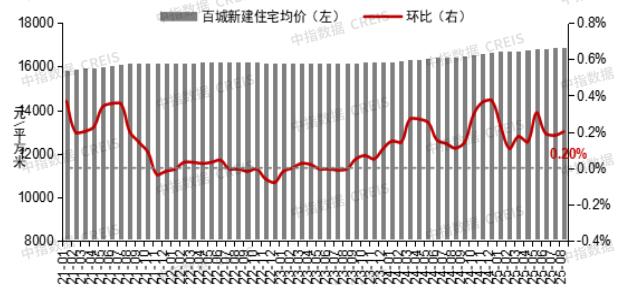
Core Insights - The average price of new residential properties in 100 cities in China reached 16,910 yuan per square meter in August, showing a month-on-month increase of 0.20% and a year-on-year increase of 2.73% [1] - The average price of second-hand residential properties in August was 13,481 yuan per square meter, reflecting a month-on-month decrease of 0.76% and a year-on-year decrease of 7.34% [1] - The average rental price in 50 cities was 34.88 yuan per square meter per month, with a month-on-month decline of 0.15% and a year-on-year decline of 3.76% [1] Market Trends - The "stop decline and stabilize" policy goal was reiterated by the State Council, boosting market confidence [1][11] - Major cities like Beijing and Shanghai have optimized housing policies, easing restrictions on the number of properties that eligible buyers can purchase [10][11] - The market is entering the traditional peak season for real estate sales, with expectations for increased activity in core cities [11] Price Movements - In August, first-tier cities saw a month-on-month increase in new residential prices of 0.48%, while second-tier cities increased by 0.21%. In contrast, third and fourth-tier cities experienced a decrease of 0.25% [6] - Second-hand residential prices in first-tier cities decreased by 0.55%, while second-tier and third/fourth-tier cities saw declines of 0.85% and 0.78%, respectively [6] Policy Developments - The State Council emphasized the need for strong measures to consolidate the stabilization of the real estate market, focusing on urban renewal and improving housing quality [10][11] - Local governments are implementing various supportive measures, including optimizing public housing loan policies and issuing special bonds to recover idle land [10][11] Project Highlights - Several new residential projects have been launched in major cities, with notable sales performance indicating strong demand [9][12] - The focus on high-quality housing development continues, with guidelines being issued in various regions to promote the construction of quality residential projects [12]
潘向东:人民币贬值着地了,股市行情可能也就来了
Sou Hu Cai Jing· 2025-08-30 06:05
Economic Growth and Investment - The current economic growth is stable, with a slight decline after a rebound in Q1, but investment growth is expected to remain strong, as indicated by a 32.2% year-on-year increase in planned investment for new projects in the first five months [1] - Real estate sales have surged, with sales area and sales revenue increasing by 33.2% and 50.7% year-on-year respectively in the first five months, leading to an 18.3% increase in new construction area [2] - State-owned enterprises are experiencing a significant rise in investment growth at 23.3%, while private investment growth is only 3.9%, marking a notable divergence in investment behavior [2] Manufacturing and Trade - The total import and export volume decreased by 3.2% year-on-year in the first five months, reflecting a downturn in manufacturing investment and indicating a decline in international competitiveness of the manufacturing sector [3] - The trend of declining manufacturing investment since 2010 continues, with rising costs driving manufacturing companies to relocate overseas [3] Debt and Leverage - Despite rising government and household debt since 2008, China's overall leverage ratio remains relatively safe compared to global standards, although non-financial corporate leverage has reached high levels [4] - The high debt levels in traditional cyclical industries like steel and oil have led to some corporate defaults, but the overall risk to the economy is currently manageable [4] Capital Market Policies - Short-term capital market policies are expected to regulate market activities, which may suppress market activity temporarily but are aimed at long-term development [5] - The liquidity in the economy is expected to remain relatively abundant, with high financing costs for small and medium enterprises indicating structural issues in the financial system [5][6] Currency and Exchange Rate - The valuation of the RMB remains a contentious issue, influenced by trade balances and economic structure, with ongoing debates about its reasonable valuation range [7] - A potential moderate depreciation of the RMB is considered a suboptimal choice to balance trade and non-trade sectors, despite concerns about its impact on capital markets and investor confidence [8]
财政部:2025年1-7月全国国有及国有控股企业经济运行情况
Sou Hu Cai Jing· 2025-08-29 11:35
Group 1 - The total operating revenue of state-owned enterprises (SOEs) in China for the first seven months is 47,311.09 billion yuan, remaining flat compared to the same period last year [3] - The total profit of SOEs for the same period is 2,478.64 billion yuan, showing a year-on-year decline of 3.3% [3] - The taxes payable by SOEs amount to 3,469.46 billion yuan, which is a decrease of 0.4% year-on-year [3] Group 2 - As of the end of July, the asset-liability ratio of SOEs stands at 65.1%, an increase of 0.3 percentage points compared to the previous year [2] - The report includes various types of SOEs, such as those under the State-owned Assets Supervision and Administration Commission (SASAC), the Ministry of Finance, and local state-owned enterprises across 36 provinces and regions [2]