手机

Search documents
怎样通过公司公告挖投资机会?这5个公告得盯紧!
Sou Hu Cai Jing· 2025-05-28 04:48
Group 1 - Company announcements are crucial for investors as they provide insights into operational performance, new projects, and management changes, which can directly impact stock prices [1] - Earnings announcements are essential, as significant increases in revenue and profit indicate strong business performance, potentially leading to stock price appreciation [1] - Major asset restructuring announcements can signal significant changes in a company's business model, such as acquisitions or divestitures, which may create new growth opportunities or risks [2][4] Group 2 - Shareholding changes indicate shifts in the ownership structure, where increased holdings by major shareholders suggest confidence in the company's future, while reductions may raise concerns [3] - Dividend announcements reflect a company's profitability and willingness to share earnings with shareholders, which can attract investors seeking stable returns [6] - Project investment announcements highlight new initiatives that could drive future growth, but they also carry uncertainties related to execution and market demand [6] Group 3 - Monitoring these key announcements—earnings, asset restructuring, shareholding changes, dividends, and project investments—can help investors identify potential opportunities in the stock market [7]

发现报告:传音控股机构调研纪要-20250527
发现报告· 2025-05-27 10:13
Summary of Transsion Holdings Conference Call Company Overview - Transsion Holdings is a provider of smart terminal products and mobile internet services, focusing on emerging markets. The company operates well-known mobile brands TECNO, itel, and Infinix, as well as digital accessories and home appliance brands [3][4][5] Key Financial Performance - For 2024, Transsion reported revenue of 68.715 billion CNY, a year-on-year increase of 10.31%, and a net profit of 5.549 billion CNY, a slight increase of 0.22% [10] - In Q1 2025, revenue was 13.004 billion CNY, a decrease of 25.45% year-on-year, with a net profit of 490 million CNY, down 69.87% [10][12] Market Position and Strategy - Transsion holds a 10.6% share of the global mobile phone market, ranking fourth among manufacturers, and has over 40% market share in the African smartphone market [4][14] - The company aims to expand its presence in emerging markets, including South Asia, Southeast Asia, the Middle East, and Latin America, while also diversifying into digital accessories and home appliances [13] Innovation and R&D - Transsion has established R&D centers in Shanghai, Shenzhen, and Chongqing, focusing on hardware, software, and mobile internet development. As of the end of 2020, the company employed 1,915 R&D personnel [4] - The company emphasizes technological innovation, particularly in imaging technology and localized services, to enhance user experience and maintain competitive advantages [4][11] Competitive Landscape - The company faces increasing competition from brands like Xiaomi and REALME in the African market. However, it has maintained a leading position through localized technology and strong brand recognition [14] - Transsion plans to enhance its mid-to-high-end product offerings and expand its AIoT ecosystem to meet diverse consumer needs [13][15] Challenges and Outlook - The decline in Q1 2025 revenue and profit is attributed to market competition and supply chain costs. The company is focused on stabilizing its operations and improving profitability [12][16] - Transsion's gross margin fell below 20% for the first time in Q1 2025, indicating increased promotional efforts to remain competitive [16] Social Responsibility - Transsion collaborates with the UN Refugee Agency to support educational initiatives for African refugee children, reflecting its commitment to social value creation in emerging markets [3]

传音控股业绩会:强化中高端产品突破
Zheng Quan Shi Bao Wang· 2025-05-27 09:45
Core Viewpoint - Transsion Holdings reported a revenue of 68.715 billion yuan for 2024, a year-on-year increase of 10.31%, while the net profit attributable to shareholders was 5.549 billion yuan, a slight increase of 0.22%. However, in Q1 2025, the revenue dropped to 13.004 billion yuan, a decrease of 25.45%, and the net profit fell to 490 million yuan, down 69.87% [1] Group 1: Company Performance - In 2024, Transsion Holdings achieved a revenue of 68.715 billion yuan, marking a 10.31% increase year-on-year [1] - The net profit attributable to shareholders for 2024 was 5.549 billion yuan, reflecting a 0.22% increase year-on-year [1] - For Q1 2025, the company reported a revenue of 13.004 billion yuan, which is a 25.45% decrease compared to the previous year [1] - The net profit for Q1 2025 was 490 million yuan, showing a significant decline of 69.87% year-on-year [1] Group 2: Market Position and Strategy - Transsion Holdings is recognized as a leading player in the emerging smartphone market, particularly in Africa, where it holds a market share of over 40% for five consecutive years [1] - The company has established a strong brand presence with its TECNO, itel, and Infinix smartphone brands, and has expanded into digital accessories and home appliances [1] - The chairman emphasized the long-term strategy of deepening the African market, leveraging its high market share and brand influence to enhance its competitive advantage [2] Group 3: Product Development and Innovation - The company plans to continue expanding its smartphone business while focusing on high-end product development, investing in areas such as imaging, AI, and charging technologies [2] - Transsion is developing a customized operating system based on Android, which includes applications tailored to the needs of emerging market users [3] - The company is addressing the unique challenges of emerging markets, such as high traffic costs and low bandwidth, by developing technologies that optimize connectivity and user experience [2][3]
A股手机电池巨头宣布:金立手机还钱了
Zheng Quan Shi Bao Wang· 2025-05-26 15:47
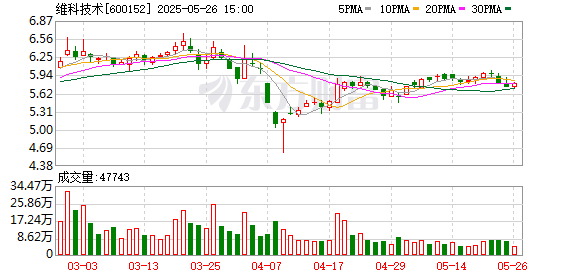
Core Viewpoint - The announcement from Weike Technology (维科技术) regarding the receipt of 682,600 yuan from the bankruptcy distribution of Gionee Communication (金立通信) has brought the once-prominent mobile phone brand back into public attention [2][4]. Group 1: Company Background - Weike Technology's main business includes the research, production, and sales of consumer batteries, small power batteries, and sodium-ion battery storage [3]. - Weike Technology was a battery supplier for Gionee mobile phones, and the collapse of Gionee led to significant uncollectible debts amounting to tens of millions [3][4]. Group 2: Bankruptcy and Legal Proceedings - The bankruptcy distribution plan for Gionee Communication was approved by the Shenzhen Intermediate People's Court on July 6, 2023, allowing for a second distribution of bankruptcy assets [4]. - Weike Battery's claim in the second distribution amounted to 682,600 yuan, which has now been received [4]. - Weike Battery had previously filed lawsuits against Gionee's subsidiaries for unpaid debts totaling approximately 84 million yuan as of the end of 2017 [4][5]. - In November 2019, a court ruling mandated Gionee's subsidiary to pay Weike Battery 80.65 million yuan, with Gionee and its founder also held liable for part of the debt [4]. Group 3: Financial Impact - The recently received 682,600 yuan will offset the bad debt provision, thereby increasing Weike Technology's current profits [6]. - As of December 2023, Weike Technology reported that its accounts receivable from Gionee's companies amounted to 78.77 million yuan, with full bad debt provisions already accounted for [5][6]. Group 4: Gionee's Market Presence - Gionee Communication, established in 2002, was once a major player in the Chinese mobile phone market, nearly surpassing Nokia and Samsung in market share between 2003 and 2007 [7][8]. - Despite its bankruptcy, Gionee's products, including smartphones and feature phones, are still available for sale on various e-commerce platforms, primarily targeting the mid-to-low-end market [9].

“品质消费500强”发布 创新驱动本土品牌加速崛起
Xin Hua She· 2025-05-26 02:28
Core Insights - The "Global Brand China Online 500 Strong List" (CBI500) has been released, marking the first brand ranking based on actual consumer purchasing behavior, alongside the "China Online Consumption Brand Index" (CBI) and "Online Brand Purchasing Power Index" (BPI) [1] Group 1: Consumer Quality and Brand Performance - Consumer quality in China has significantly improved, with the CBI rising from 59.42 to 63.38 from Q1 2023 to Q1 2025, indicating an increase of nearly 4 points in average brand ratings over two years [2] - The online market in China has become a competitive arena for global brands, with a 70-30 split between domestic and foreign brands in the CBI500, showcasing the rapid rise of local brands driven by innovation [2] - In the smartphone sector, Apple leads, followed by five domestic brands: Huawei, Xiaomi, Vivo, Honor, and OPPO, which are enhancing their competitiveness and moving towards high-end markets [2] Group 2: Emerging Brands and Market Segments - The home appliance sector features established brands like Haier and Midea, alongside rising stars like Bear Electric, which ranks 94th due to its data-driven approach to product development [3] - Local brands excel in understanding consumer needs and innovating in niche markets, as demonstrated by the mobile accessory brand Tulas, which ranked 166th [3] Group 3: Industry Trends and Regional Strengths - The pet economy is thriving, with 12 pet industry brands in the CBI500, 10 of which are domestic, reflecting strong agricultural and livestock foundations in regions like Shandong [4] - Cities like Ningbo, Foshan, Quanzhou, and Jinhua are emerging as brand powerhouses, leveraging their industrial advantages to enhance brand value and recognition [4] Group 4: High-End Domestic Brands - A new wave of high-end domestic brands is emerging, successfully entering premium price segments traditionally dominated by foreign brands, with notable examples like Laoputang Gold ranking 20th overall [5] - The apparel sector is transitioning from manufacturing to brand definition, with brands like Zhihuo achieving a 70% repurchase rate and significant sales growth during promotional events [5] - Local brands like Songmont are gaining traction in the global market by blending Eastern aesthetics with modern design, cultivating a loyal customer base [6]
“两新”政策加力扩围让消费者享更多实惠
Xiao Fei Ri Bao Wang· 2025-05-22 02:54
Group 1 - The Ministry of Commerce reported that as of May 11, 2025, the number of applications for the vehicle trade-in subsidy reached 3.225 million, with 1.035 million for scrapping and 2.19 million for replacement [1] - Since the implementation of the vehicle trade-in policy in 2024, the cumulative number of subsidy applications has exceeded 10 million [1] - Local governments are enhancing the "two new" policies to optimize processes and upgrade services, stimulating market activity and providing consumers with more benefits [1] Group 2 - In Hunan, the 2025 "two new" implementation plan has been adjusted to expand categories and lower thresholds, resulting in over 4.58 million applications for consumer goods trade-in subsidies, with a total subsidy amount of 3.947 billion yuan, driving sales exceeding 30.6 billion yuan [1] - In Xi'an, a new financial product called "National Subsidy Loan" has been launched, offering high credit limits and low interest rates to merchants applying for national subsidies, with an initial special quota of 2 billion yuan planned for this year [1] - Gansu has established a comprehensive subsidy area on its mobile government platform, achieving an average daily application volume of 10,000 since the beginning of the year, with daily sales exceeding 90 million yuan [1] Group 3 - In Sichuan, the vehicle trade-in program has surpassed 170,000 units, driving over 30 billion yuan in automotive consumption [2] - In Deyang, a combination of government subsidies and corporate discounts has led to the issuance of 20 million yuan in automotive consumption vouchers [2] - Anhui is implementing a "one-stop" application process for consumer goods trade-in subsidies, with over 12,000 participating merchants and 23,000 stores, of which approximately 51% are county-level merchants [2] Group 4 - Hebei has issued a subsidy implementation plan for scrapping old operating trucks, with a maximum subsidy of 140,000 yuan per vehicle based on vehicle type and scrapping time [2] - Chongqing is optimizing its manufacturing industry technology transformation loan policy, expanding interest subsidy support and lowering investment thresholds, with plans to implement over 1,500 technology transformation projects this year [2]
北证50、微盘股指数均创历史新高!还该坚守成长科技主线吗?
Mei Ri Jing Ji Xin Wen· 2025-05-20 08:32
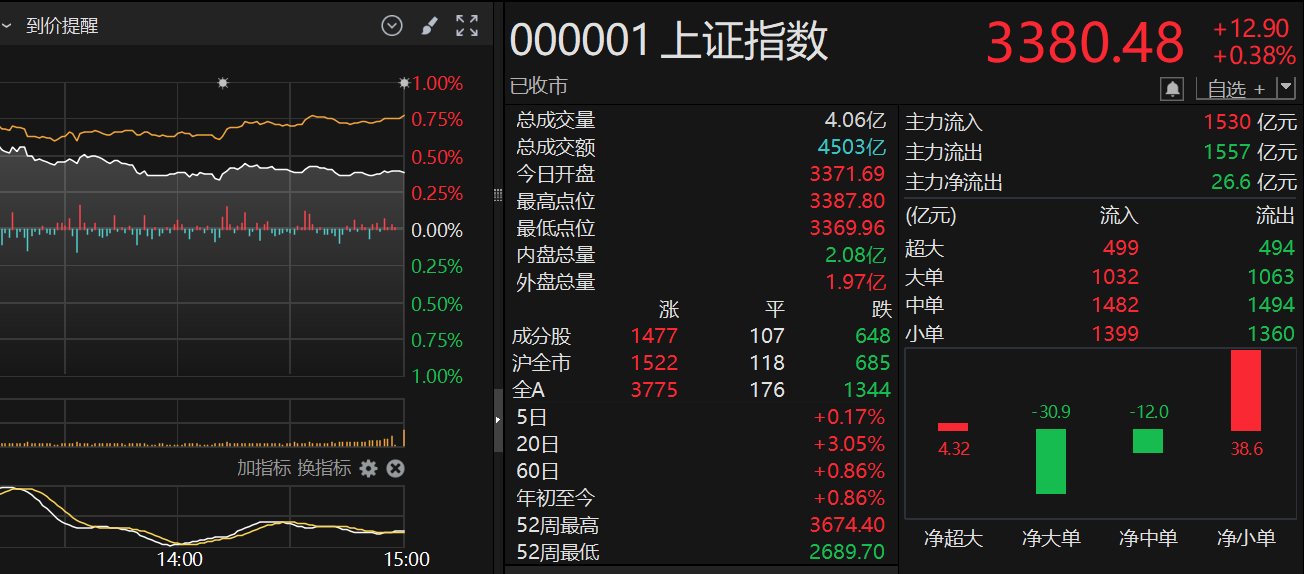
每经记者|王砚丹 每经编辑|叶峰 在纠结方向选择数日后,A股市场终于选择放量向上。 5月20日,三大指数集体收涨,沪指涨0.38%,收报3380.48点;深证成指涨0.77%,收报10249.17点;创业板指涨0.77%,收报2048.46点。 沪深京三市成交额超1.2万亿元,较昨日放量近千亿元。 降息周期中,投资股票、基金等资产有望获取比低息存款更高收益,企业融资成本降低也利于提升盈利,使得资本市场吸引力进一步提升。 在本周深交所主办的2025全球投资者大会上,证监会副主席李明表示,A股估值仍处于相对低位。投资中国意味着更高的确定性。今年以来,社保、保险、 年金等中长期资金累计净买入A股超过2000亿元,反映出中长期资金加速流入与股市稳中有涨的良性循环正在形成。 三大指数蓄势多日后选择放量上涨,说明市场人气在回升,有利于吸引更多观望的投资者入场。 值得注意的是,今日北证50(899050)、微盘股指数(861520)双双创出历史新高。北证50指数涨1.22%,收报1473.99点;微盘股指数报收于2378.10点,涨幅 为1.71%。 年初至今,北证50上涨超40%,微盘股指数上涨近30%。 相关基金在今年 ...
国外1. 大摩:穆迪下调美国评级之际,投资者对美股可以逢低买入。2. 澳洲联储:维持低且稳定的通胀是首要之务。3. 丹麦丹斯克银行:推迟美联储降息预期,因经济衰退风险缓解。国内1. 中信证券:核聚变板块催化不断,有较强增长前景预期。2. 中信建投:全球在线音乐行业量价齐升,构筑长期增长潜力。3. 银河证券:银行基本面积极因素持续积累、改善可期。4. 天风证券:小米自研芯片或加速国产高端手机竞争格局变化。5. 中泰证券:受益涨价业绩兑现,维生素板块结构性行情仍可期待。6. 光大证券:商业化进程有望加速,关注外
news flash· 2025-05-20 08:13
Group 1 - Morgan Stanley suggests that investors can buy US stocks on dips following Moody's downgrade of the US rating [2] - The Reserve Bank of Australia emphasizes that maintaining low and stable inflation is a top priority [2] - Danske Bank delays expectations for a Federal Reserve rate cut due to easing recession risks [2] Group 2 - CITIC Securities highlights the continuous catalysts in the nuclear fusion sector, indicating strong growth prospects [2] - CITIC Construction Investment notes that the global online music industry is experiencing both volume and price increases, building long-term growth potential [2] - Galaxy Securities reports that positive factors in the banking sector are accumulating, with improvements expected [2] - Tianfeng Securities mentions that Xiaomi's self-developed chips may accelerate changes in the competitive landscape of high-end domestic smartphones [2] - Zhongtai Securities anticipates structural market opportunities in the vitamin sector due to price increases and performance realization [2] - Everbright Securities sees potential acceleration in the commercialization process, focusing on the application of exoskeleton robots in medical rehabilitation [2] - Guotai Junan Securities indicates that the liquor industry is seeking a bottom in its cycle, highlighting its investment value [2]

港股三大指数集体高开,宁德时代高开逾12%,小米集团领涨恒生科技成分股
Mei Ri Jing Ji Xin Wen· 2025-05-20 01:57
Group 1 - The Hong Kong stock market opened higher on May 20, with the Hang Seng Index rising by 0.28% to 23,398.35 points, the Hang Seng Tech Index up by 0.22%, and the National Enterprises Index increasing by 0.31% [1] - Pharmaceutical stocks experienced a collective surge, while shipping and port stocks also saw broad gains. Notably, Contemporary Amperex Technology Co., Ltd. (CATL) opened over 12% higher [1] - The Hang Seng Technology Index ETF (513180) saw a slight increase, with leading stocks such as Xiaomi, Li Auto, SMIC, Alibaba, and JD Health showing significant gains, while stocks like Alibaba Health, Bilibili, and Trip.com Group faced declines [1] Group 2 - Tianfeng Securities predicts that the release of Xiaomi's self-developed chip may accelerate changes in the competitive landscape of high-end domestic smartphones, with market share growth for leading manufacturers with self-research capabilities being a core logic for Xiaomi's valuation increase [2] - Xiaomi's years of investment in self-research across smartphones, operating systems, and chips are beginning to pay off, with synergistic effects expected to drive developments in its automotive business [2] - The Hang Seng Technology Index ETF (513180) leads in both scale and liquidity among its peers listed in A-shares, supporting T+0 trading, and includes core AI assets and technology leaders that are relatively scarce compared to A-shares [2]

低价销售行为的多维剖析:影响、竞争性质与法律边界
Sou Hu Cai Jing· 2025-05-19 11:39
Group 1 - The core issue of low-price sales is its significant impact on market order and brand development, with complaints related to low-price sales increasing by 18% year-on-year in 2024 [1] - Low-price sales lead to a "price avalanche effect," causing a 40% decline in monthly sales for businesses maintaining original prices, forcing 70% of industry players to follow suit, resulting in a 12% drop in overall profit margins [3] - The prevalence of counterfeit products in low-price sales is alarming, with 35% of such products being fake, leading to a 200% increase in complaints for a major international beauty brand and a 27 percentage point drop in brand reputation within six months [3] Group 2 - Not all low-price sales are illegal; they must be assessed based on intent, market impact, and legal criteria, with examples of unfair competition including predatory pricing and counterfeit sales [4] - Legal low-price sales can occur under specific circumstances, such as managing perishable goods or promoting new products with a clear promotional period, as demonstrated by a supermarket increasing turnover of near-expiry goods by 60% [5][6] - The legal framework allows for price reductions based on cost savings or seasonal adjustments, provided they do not harm other businesses or disrupt market order [7]