数据中心

Search documents
润泽科技1月15日获融资买入12.35亿元,融资余额31.97亿元
Xin Lang Cai Jing· 2026-01-16 01:48
1月15日,润泽科技跌10.67%,成交额88.40亿元。两融数据显示,当日润泽科技获融资买入额12.35亿 元,融资偿还10.89亿元,融资净买入1.46亿元。截至1月15日,润泽科技融资融券余额合计32.05亿元。 融资方面,润泽科技当日融资买入12.35亿元。当前融资余额31.97亿元,占流通市值的2.42%,融资余 额超过近一年90%分位水平,处于高位。 融券方面,润泽科技1月15日融券偿还5300.00股,融券卖出9200.00股,按当日收盘价计算,卖出金额 74.55万元;融券余量10.22万股,融券余额828.13万元,超过近一年90%分位水平,处于高位。 资料显示,润泽智算科技集团股份有限公司位于河北省廊坊经济技术开发区楼庄路9号,成立日期2007 年6月27日,上市日期2015年4月24日,公司主营业务涉及数据中心业务服务。主营业务收入构成为: IDC业务64.67%,AIDC业务35.33%。 截至10月31日,润泽科技股东户数9.53万,较上期增加11.76%;人均流通股17080股,较上期减少 10.52%。2025年1月-9月,润泽科技实现营业收入39.77亿元,同比增长15.05% ...

数据中心背后民怨沸腾,微软给马斯克上了一课
3 6 Ke· 2026-01-16 01:45
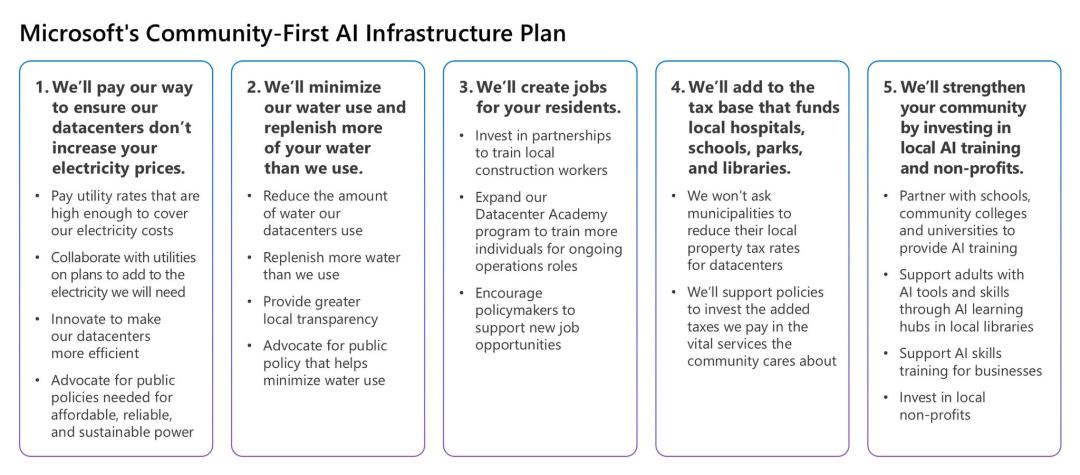
Core Viewpoint - Microsoft has introduced a "Community-First AI Infrastructure" plan, committing to responsible data center development that prioritizes community benefits over costs, aiming for a win-win between technological innovation and local employment [1][3][23]. Group 1: Microsoft's Commitments - Microsoft will not seek electricity subsidies or tax breaks, ensuring that local residents do not bear the costs of increased electricity prices due to data centers [2][23]. - The company promises to minimize water usage and replenish more water than it consumes, investing in local water systems [2][23]. - Microsoft aims to create job opportunities for local residents and enhance the tax base to support local services like hospitals and schools [2][23]. Group 2: Industry Context - The competition among major tech companies for data center investments is unprecedented, with projected capital expenditures reaching $400 billion by 2025, primarily for AI infrastructure [4][5]. - Data centers are expected to consume approximately 250 terawatt-hours (TWh) of electricity by 2026, increasing to 400-426 TWh by 2030, which will account for 6.7-12% of the total electricity consumption in the U.S. [5][7]. - The rapid growth in data center electricity consumption poses significant challenges to the U.S. energy system, with a projected total electricity consumption of 183 TWh by 2024 [4][5]. Group 3: Community Concerns - Local communities are increasingly concerned about the rising electricity prices and water resource depletion caused by data centers, with reports indicating a 267% increase in wholesale electricity prices in data center-heavy regions over five years [7][9]. - The disparity in resource consumption is stark, as communities near data centers face resource shortages while tech companies consume vast amounts of electricity and water [11][12]. - Employment opportunities created by data centers are often limited, with a typical facility requiring only 50 to 100 full-time employees after construction [8][12]. Group 4: Broader Implications - The current situation highlights the need for a new social contract between tech companies and communities, where the costs of resource consumption are shared more equitably [24][25]. - Microsoft’s commitments could serve as a model for other tech giants, emphasizing the importance of corporate responsibility in resource management and community engagement [23][25]. - The ongoing resistance from communities against data center projects indicates a growing demand for transparency and accountability from tech companies regarding their environmental and social impacts [22][25].





马斯克押注+20万颗卫星抢滩!“太空光伏”或成下个万亿级赛道
Sou Hu Cai Jing· 2026-01-16 01:12
Core Viewpoint - The future of energy may come from space, with Elon Musk proposing a plan to send 100GW of solar energy satellites annually to address the energy demands of increasing AI computational power [1] Group 1: Space Solar Power Advantages - Space solar power represents a significant upgrade from ground-based renewable energy to a strategic resource in space [2] - Space solar power has clear advantages over terrestrial solar power, including stable and high-intensity energy generation unaffected by weather conditions [2] - Current space solar power primarily uses gallium arsenide materials, which have a threefold absorption capacity compared to standard silicon batteries, but are costly due to the rarity of gallium [2] Group 2: Market Potential - The low Earth orbit satellite sector alone is projected to generate trillions in revenue, with over 100,000 satellites already registered globally [3] - Recent applications from China to the International Telecommunication Union for an additional 203,000 satellites indicate a significant increase in demand for high-performance solar cells [3] - The development of space computing is also gaining traction, with major companies like Microsoft and Google investing in space data centers, which will require stable energy supply [3] Group 3: Policy and Industry Dynamics - Recent policy changes, including the cancellation of VAT export rebates for solar products, will increase export costs and accelerate market consolidation [4] - Smaller companies lacking core technology and cost control are likely to be eliminated, while larger firms with scale and technology advantages will strengthen their market positions [4] - The solar industry is expected to undergo valuation recovery and technological advancements, paving the way for the commercialization of space solar power in the next 10 to 15 years [4]

券商晨会精华 | 把握AIDC电源向大功率、高压化、直流化趋势
智通财经网· 2026-01-16 00:55
Group 1 - The AIDC power supply is trending towards high power, high voltage, and direct current, primarily led by overseas companies like Nvidia and Google, indicating that overseas supply chains are currently superior to domestic ones [2] - Investors should focus on segments that align with these technological trends, characterized by high value, rapid growth, and strong barriers to entry, while avoiding segments that are likely to be replaced or eliminated [2] Group 2 - The People's Bank of China announced a 0.25 percentage point reduction in various structural monetary policy tools, reflecting a macro policy approach that emphasizes structural adjustments while maintaining moderate overall liquidity [3] - This policy adjustment aligns with the central economic work conference's focus on "quality and efficiency," and is supported by stable external demand, indicating that macro policies can still provide a safety net if total demand changes significantly [3] - The central bank has the capability to keep government bond yields stable, although the capacity of banks to absorb government bonds remains a structural issue that requires further conditions to be addressed [3] Group 3 - The accelerated construction of data centers in Europe has highlighted power supply and demand conflicts, leading to increased demand for offshore wind and power interconnection, which are unique to Europe [4] - The ongoing high demand for European grid upgrades benefits main network transformers and switches, as well as distribution network transformers [4]
数据中心背后民怨沸腾,微软给马斯克上了一课|硅谷观察
Xin Lang Cai Jing· 2026-01-16 00:04
Core Viewpoint - Microsoft has introduced a "Community-First AI Infrastructure" plan, committing to responsible data center construction that prioritizes local community benefits over corporate subsidies and tax breaks [3][5][26]. Group 1: Microsoft's Commitments - Microsoft will not raise local electricity prices and will cover additional electricity costs incurred by data centers, rejecting local electricity subsidies [5][26]. - The company aims to reduce water usage through efficient cooling technologies and will invest in local water systems, ensuring that more water is returned to the community than consumed [5][26]. - Microsoft plans to create job opportunities for local residents and will enhance tax bases for local hospitals, schools, parks, and libraries, refusing any tax incentives [5][26]. Group 2: Industry Context - The competition among major tech companies for data center construction is unprecedented, with projected capital expenditures reaching $400 billion by 2025, primarily for AI infrastructure [7][8]. - Data centers are expected to consume approximately 183 terawatt-hours of electricity in 2024, accounting for 4.4% of the total U.S. electricity consumption, with projections indicating this could rise to 6.7-12% by 2030 [8][10]. - The rapid increase in electricity demand from data centers has not been matched by a significant rise in power generation, leading to potential electricity crises for residents [10][11]. Group 3: Community Concerns - Communities are facing significant challenges due to the resource demands of data centers, including rising electricity prices and water shortages, with wholesale electricity prices in data center-heavy areas increasing by up to 267% over five years [10][12]. - Employment opportunities created by data centers are often limited, with a typical large data center requiring only 50 to 100 full-time employees after construction [11][12]. - In Arizona, the contrast between resource-intensive data centers and nearby communities lacking basic utilities highlights the inequities created by tech investments [12][14]. Group 4: Broader Implications - The current model of tech companies benefiting disproportionately from AI advancements while local communities bear the costs is unsustainable and unjust [26][27]. - Microsoft's commitments could serve as a framework for the industry, emphasizing the need for tech companies to pay for resource consumption, create local jobs, and take environmental responsibility [27][28]. - The ongoing public demand for accountability from tech giants indicates a shift towards renegotiating the social contract between technology companies and the communities they impact [27][28].

单芯片功率破千瓦,数据中心正酝酿一场 800V 的静悄悄革命
Hua Er Jie Jian Wen· 2026-01-15 14:08
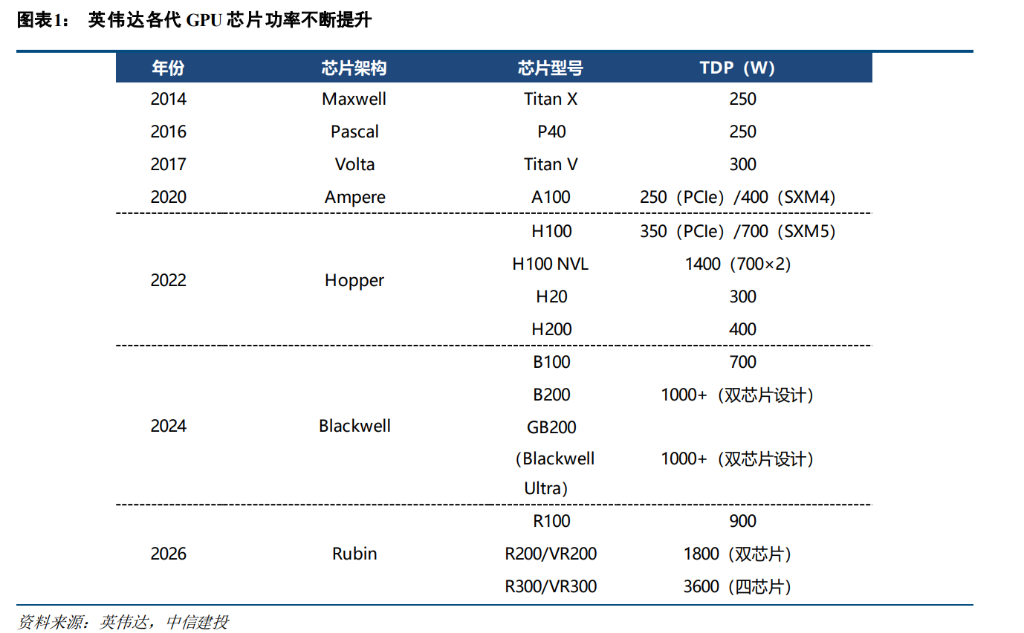
Core Insights - The report from CITIC Securities highlights a significant transformation in data center power supply architecture, driven by the increasing power demands of AI chips, particularly with single-chip power exceeding 1000W, necessitating a shift to 800V high-voltage direct current (HVDC) systems [1][2] Group 1: Power Supply Transformation - The transition from traditional AC power systems to 800V HVDC is not merely a voltage upgrade but a complete supply chain revolution, focusing on high-value components such as power supply units (PSU), solid-state circuit breakers, and third-generation semiconductors (SiC/GaN) [1][12] - The existing 415V AC power supply system is inadequate for the rising power density, which is expected to reach megawatt levels in data centers [2][4] Group 2: Technical Necessity for 800V Systems - Upgrading to 800V systems significantly reduces the required copper busbar diameter from 56mm to 14mm, making it a practical necessity for space-constrained server cabinets [4] - The report emphasizes that the physical advantages of high-voltage and direct current systems make them essential for the future of data center development [4] Group 3: Hardware Evolution and New Demands - The report notes a leap in PSU power density, with units evolving from 3kW/5.5kW to 30kW to accommodate the 800V architecture, raising technical barriers and value concentration [9] - Solid-state circuit breakers are identified as critical components for safely managing high-voltage direct current, addressing the challenges posed by traditional mechanical switches [9][12] Group 4: Investment Opportunities - Investors are advised to focus on sectors aligned with the 800V HVDC trend, particularly in high-barrier areas such as PSU, HVDC, and SST devices, as well as essential components like solid-state circuit breakers and third-generation semiconductors [12]

综合算力大数据:河北江苏广东居前三
第一财经· 2026-01-15 13:43
Core Viewpoint - The article discusses the rapid advancement of artificial intelligence (AI) and the increasing demand for computing power, highlighting the need for enhanced infrastructure and resource allocation in China to support this growth [3]. Group 1: AI and Computing Power Development - The Ministry of Industry and Information Technology and other departments have issued guidelines to strengthen AI computing power supply and promote the construction of a national integrated computing network [3]. - China's comprehensive computing power index shows progress in the computing industry ecosystem, but challenges remain in infrastructure balance and application depth [3][5]. - By mid-2025, China is expected to have published 1,509 large models, accounting for approximately 40.2% of the global total [5]. Group 2: Market Growth and Infrastructure - The global AI server market is projected to grow from $125.1 billion in 2024 to $158.7 billion in 2025, with China's AI computing power market expected to reach $25.9 billion in 2025, a year-on-year increase of 36.2% [6]. - The number of standard racks in data centers in China has increased from 3.15 million in 2019 to over 9 million by 2024, with a total of 10.85 million racks in use by mid-2025 [5][6]. Group 3: Regional Development and Resource Allocation - The comprehensive computing power index ranks Hebei, Jiangsu, and Guangdong as the top three provinces, while cities like Langfang, Zhangjiakou, and Guangzhou lead in computing power sub-index [5][17]. - The development of computing resources is shifting from core regions to broader areas, with cities leveraging local advantages to attract related industries [24]. Group 4: Energy Efficiency and Sustainability - The average Power Usage Effectiveness (PUE) of computing centers in China is 1.46, indicating progress in energy efficiency, but there is still significant room for improvement [25]. - Several provinces, including Hebei and Zhejiang, have made notable achievements in establishing national-level green data centers, contributing to over half of the total in the country [25].

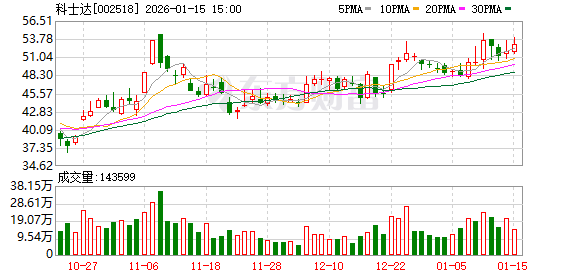
科士达:公司将继续以“数据中心+新能源”双轮驱动为核心战略
Zheng Quan Ri Bao· 2026-01-15 13:39
Core Viewpoint - The company will continue to focus on a dual-driven strategy of "data center + new energy" to capitalize on growth opportunities in both sectors [2] Data Center Sector - The company aims to leverage the accelerating global infrastructure for computing power by upgrading UPS products towards medium and large power, as well as liquid cooling technologies [2] - New product developments will include HVDC, integrated power modules, and SST to meet the high reliability and efficiency demands of AI computing centers [2] - The company plans to deepen collaboration with leading domestic internet companies and clients in finance and telecommunications, while using its Vietnam factory as a core node to expand ODM orders in rapidly growing regions like North America and Southeast Asia [2] New Energy Sector - The core growth engine will be energy storage, focusing on comprehensive energy storage solutions to strengthen its position in mature European markets and accelerate penetration into emerging markets [2] - The company will promote the integration of solar energy storage and charging solutions, enhancing supply chain resilience through partnerships with leading battery cell manufacturers [2] - The synergy between the data center and new energy businesses is expected to broaden the company's growth opportunities [2]

高盛王亚军:2026年香港IPO市场热度或延续,看好科技与消费赛道
Sou Hu Cai Jing· 2026-01-15 11:30
高盛亚洲(除日本外)股票资本市场联席主管王亚军。来源:公司供图 香港IPO市场热度或将延续 王亚军用"涛声依旧"来形容对2026年港股一级市场的整体判断。他认为,2026年香港IPO市场热度或将 延续,独立首次上市企业(尤其是AI及产业链相关企业)或将成为主力。 "再融资市场预计将维持高位运行。"王亚军表示,其背后的核心逻辑在于中国企业国际化的外汇需求以 及新能源、AI等高增长行业持续的资本开支需求,共同构成了企业强烈的再融资意愿。此外,兼具灵 活性的可转换债券将继续受到市场欢迎,其占融资总额的比例有望进一步提升。 高盛亚洲(除日本外)股票资本市场联席主管王亚军1月15日在媒体交流会上表示,2026年香港IPO市 场热度或将延续,独立首次上市企业(尤其是AI及产业链相关企业)或将成为主力。中国企业出海的 外汇需求、新能源及AI等行业的高资本开支需求,将推动再融资意愿持续旺盛。 谈及一级市场投资主线,王亚军认为,科技(特别是人工智能)与消费两大领域仍是市场焦点。 谈及去年末港股出现的IPO破发率阶段性上升现象,王亚军解释称,这主要是年末投资者风险偏好季节 性变化所致,并非市场根本转向。今年以来,市场情绪已迅速回 ...

AI基础设施投资达3万亿美元,盈利前景仍不明朗
Sou Hu Cai Jing· 2026-01-15 10:22
Core Insights - The construction boom of data centers driven by artificial intelligence continues, but concerns about potential industry collapse due to over-speculation and rising investment demands are increasing [2] - Moody's report estimates that at least $3 trillion will be needed in investments by the end of this decade to keep up with expected capacity expansion levels [2] - Major challenges for new data center development include power supply issues, local opposition, skilled labor shortages, and rising costs of construction materials and key equipment [5] Investment Projections - The six major U.S. cloud service providers are projected to have capital expenditures nearing $400 billion in 2025, expected to reach $500 billion in 2026 and $600 billion in 2027 [3] - Global total investment in data centers is expected to peak in 2029 and then decline starting in 2030 [3] Challenges in Development - New data center projects face increasing resistance primarily due to power supply issues and public concerns over resource consumption [3] - Developers are under pressure to shorten construction timelines to meet the demands of large-scale tenants, which conflicts with high demand for skilled labor and materials [3][5] Tenant Behavior - Some tenants are now willing to take on delivery risks they previously avoided, including waiving power and utility availability requirements from completion conditions [4] - OpenAI's increasing presence in the AI ecosystem poses growing credit risks, as its financing relies heavily on long-term lease agreements with major cloud service providers [4]