
白色家电

Search documents
如何高效捕捉红利收益?
HUAXI Securities· 2025-05-21 02:35
Group 1: Dividend Market Insights - The essence of the dividend market is linked to the performance of key sectors such as coal, steel, and banking, which drive absolute returns[1] - Historical performance shows that dividend assets gained both absolute and relative returns during specific periods, notably from March 2016 to January 2018 and February 2021 to June 2024[7] - The decline in dividend asset performance often correlates with the emergence of other investment opportunities in the A-share market[14] Group 2: Dividend Willingness and Industry Analysis - Following the new national policies in 2024, A-share companies are increasing their dividend payout ratios, particularly those capable of sustaining dividends[2] - Industries with enhanced dividend willingness include finance (rural commercial banks, joint-stock banks), utilities (logistics, shipping), consumer goods (white goods, leisure food, liquor), and manufacturing (commercial vehicles, lighting equipment)[2] - The overall dividend payout ratio for A-share companies is projected to decrease from approximately 35% in 2023 to about 33% in 2024, despite an increase in the number of companies paying dividends[27] Group 3: High-Quality Dividend Strategy - A modified high-quality dividend strategy has shown excess returns compared to traditional dividend strategies, with significant improvements in risk-adjusted performance metrics like the Sharpe ratio[44] - The strategy focuses on selecting stocks with low price-to-book (PB) ratios, high and stable return on equity (ROE), and strong dividend payouts[41] - Backtesting results indicate that the modified strategy yields a cumulative return of 136.75% with an annualized return of 11.31%[48] Group 4: Risk Factors - Potential risks include uncertainties in Federal Reserve policies and accelerated style rotation in equity markets[4] - The report highlights the importance of institutional behavior in driving both absolute and relative returns of dividend assets, particularly in 2024[20]
小米家电目标是进入前三!美的方洪波:小米进来对家电行业是好事,我们做了三份报告研究小米【附白色家电行业市场竞争分析】
Qian Zhan Wang· 2025-05-19 09:22
Core Insights - The competition between Midea and Xiaomi in the home appliance industry has garnered significant attention, with Midea's chairman Fang Hongbo acknowledging Xiaomi's ambitious goals in the sector [2] - Xiaomi's rapid growth in the home appliance market is evident from its financial reports, indicating that its appliance business has become a crucial growth driver [2][3] Group 1: Company Strategies and Market Position - Fang Hongbo expressed that while he respects Xiaomi's tactical moves, he is not afraid of their strategic entry into the home appliance market, viewing it as a positive development for the industry [2] - Xiaomi's recent financial data shows record high shipments in major appliance categories for 2024, with air conditioner shipments exceeding 6.8 million units (over 50% YoY growth), refrigerators over 2.7 million units (over 30% YoY growth), and washing machines over 1.9 million units (over 45% YoY growth) [2] - Xiaomi's president Lu Weibing has set a target for Xiaomi's air conditioners to rank among the top in the Chinese market by 2030, emphasizing the completion of a full product line and self-research capabilities [3] Group 2: Market Dynamics and Competitive Landscape - Traditional home appliance giants like Midea, Haier, and Gree have maintained significant market positions, with their white goods business revenues exceeding 100 billion [3][4] - In the refrigerator market, Haier leads with a 34.6% share in the online segment, while Midea holds 12.4% and Rongsheng 8.0%; in the offline market, Haier's share is 39.1%, with Midea at 9.8% [4] - In the air conditioning market, Midea and Gree dominate both online and offline sales, each holding 28.1% of the online market, while Midea leads offline with a 34.6% share [5] Group 3: Innovation and Industry Transformation - Lu Weibing criticized the lack of innovation in the home appliance industry, suggesting that Xiaomi's entry could disrupt the status quo and enhance commercial efficiency [7] - Lei Jun views the smart home appliance sector as a revolutionary upgrade, comparable to the proliferation of automobiles in the U.S. and washlet toilets in Japan, aiming to establish Xiaomi as a leading brand in smart appliances [7] - The competition between traditional giants and new entrants like Xiaomi highlights the need for continuous innovation and adaptation to changing market demands [7]




诚信文化建设:永不停歇的持久战
Jin Rong Shi Bao· 2025-05-16 03:29
Group 1 - The core idea emphasizes the importance of building a trust system in modern finance, integrating moral self-discipline, technological support, and institutional guarantees [1][8] - The evolution of trust mechanisms from historical practices like "Shang Yang's standing wood" to modern digital contracts illustrates the enduring significance of trust in society [2][4] - Trust is described as the invisible adhesive of modern society, essential for various daily interactions, including financial transactions and public services [3][4] Group 2 - Traditional Chinese values regarding trust, such as "a promise is a promise," play a crucial role in shaping the modern trust system and ensuring safety in public services and financial transactions [4][5] - Issues in the trust system, such as fraud and deception, can severely damage societal trust, as evidenced by various scandals in the capital market and consumer goods [5][6] - The need for a three-dimensional protective system involving individuals, enterprises, and the state is highlighted to restore trust and ensure accountability [6][7] Group 3 - The current progress of China's social credit system is supported by regulatory bodies implementing measures to enhance investor protection and combat financial fraud [7][8] - The integration of technology, such as AI systems for fraud detection and blockchain for traceability, is essential for building a reliable trust framework in the financial sector [7][8] - Continuous efforts in cultural construction of integrity are necessary for societal advancement, ensuring that trust remains a fundamental aspect of modern civilization [8]
如何看待白电龙头降本增效?
2025-05-15 15:05
如何看待白电龙头降本增效?20250515 摘要 • 家电企业通过全面预算管理和效率驱动价值链战略,构建了系统化的成本 管控体系,尤其美的等龙头企业已实现全链条成本优化。 • 中国白色家电生产线自动化率已达 80%以上,显著减少人工需求并提高设 备使用率,数字化转型是降本增效的关键驱动力,尤其在北京、上海等地。 • 中国白色家电行业在全球市场表现出色,美的等企业通过自动化控制技术, 设备控制率达 80%以上,提升生产效率和国际竞争力。 • 中国白色家电行业未来可通过扩大降本增效覆盖范围和复制优秀环节深度 挖掘价格优势,机械自动化水平仍有 50%的提升空间。 • 美的、海尔等品牌通过提升物流效率和集约化运营,提高了运营效率,但 仍有进一步优化的空间,信息化系统的优化也功不可没。 • 2025 年空调行业线上价格波动显著,美的承诺通过内部经营效率优化, 如人员优化和精细化管理,确保盈利不受明显影响。 • 格力电器估值相对较低且有向上趋势,海尔受益于关税压力缓解修复空间 较大,美的毛利率高但估值不便宜,稳定配置仍是合理选择,分红及股息 回报比例较高。 Q&A 今年家用空调市场的竞争态势如何?企业应如何应对这一变化? ...
白电年报|行业“马太效应”显著 包括格力在内半数公司营收缩水 康佳、惠而浦、雪祺电气业绩持续下滑
Xin Lang Zheng Quan· 2025-05-15 09:46
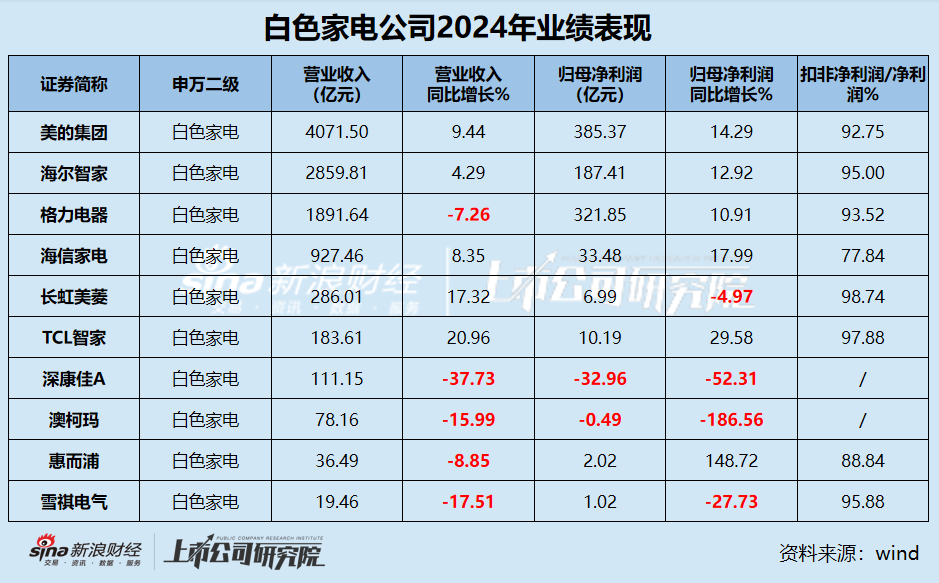
Core Viewpoint - The white goods industry in A-share market has shown significant performance divergence, with leading companies benefiting from scale and innovation while smaller firms face increasing pressure and declining performance [1][2]. Industry Performance - In 2024, the white goods industry achieved a total revenue of 10,465.29 billion yuan and a net profit of 914.88 billion yuan [1]. - The industry experienced a "Matthew effect," where leading companies strengthened their market positions, while smaller firms struggled [1]. Company Performance - Midea Group led the industry with a revenue of 4,071.50 billion yuan and a net profit of 385.37 billion yuan, showing year-on-year growth rates of 9.44% and 14.29% respectively [2][3]. - Haier Smart Home reported a revenue of 2,859.81 billion yuan and a net profit of 187.41 billion yuan, with a high quality of earnings reflected in a 95% proportion of non-recurring net profit [2][3]. - Gree Electric Appliances saw a revenue decline of 7.26%, with a net profit growth of only 10.91%, indicating a lag behind its competitors [2][3]. Performance Disparity - Half of the listed companies in the white goods sector experienced revenue declines in 2024, including Gree, Konka, Aucma, Whirlpool, and Snowman Electric [4]. - Konka reported a significant loss of 32.96 billion yuan, with a year-on-year loss increase of 52.31% due to declining traditional appliance business [4]. - Aucma transitioned from profit to loss, with a year-on-year decline of 186.56% [4]. Profitability Metrics - The industry exhibits a "high gross margin, low net margin" characteristic, with significant disparities among companies [5]. - Gree Electric Appliances leads with a gross margin of 29.43% and a net margin of 17.11% [7]. - Konka has the lowest gross margin at 4.40% and a net margin of -34.95%, indicating severe profitability issues [7]. Expense Management - The top three companies (Haier, Midea, Gree) have significantly higher sales and R&D expenses compared to others, with Haier's sales expenses being 3.13 times its R&D expenses [8][9]. - Four companies, including Aucma and Konka, reduced their R&D expenses year-on-year, which may negatively impact their long-term competitiveness [9]. Operational Efficiency - Midea, Gree, and Haier maintain superior cash generation and operational efficiency, with Midea achieving over 600 billion yuan in operating cash flow [13]. - Konka's inventory turnover days exceed 100 days, indicating potential inventory accumulation and sales risks [13]. - Whirlpool is the only company in the industry with negative operating cash flow, highlighting its weak sales collection ability [13].



收盘|沪指涨0.86%重回3400点,大金融板块爆发
Di Yi Cai Jing· 2025-05-14 07:26
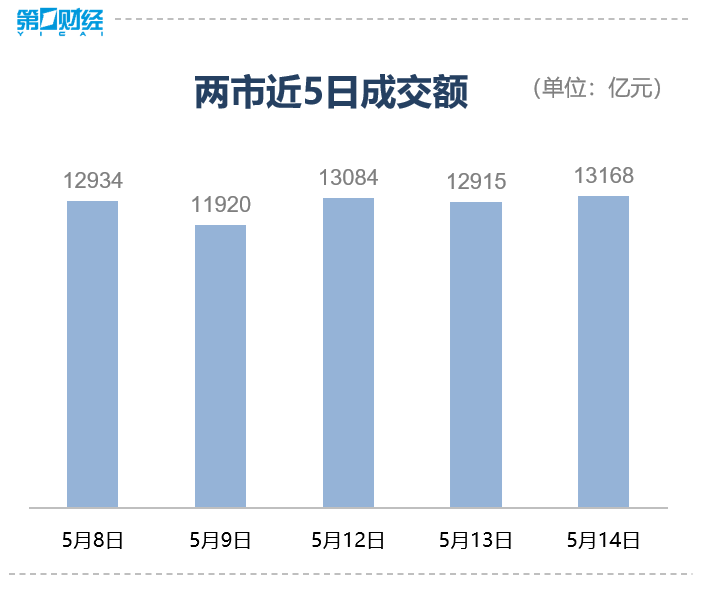
Core Viewpoint - The stock market experienced a collective rise on May 14, with major indices showing positive performance, indicating a recovery trend in the market [1]. Market Performance - The Shanghai Composite Index closed at 3403.95 points, up 0.86% - The Shenzhen Component Index closed at 10354.22 points, up 0.64% - The ChiNext Index closed at 2083.14 points, up 1.01% [1]. Sector Performance - The financial sector saw significant gains, particularly in insurance and brokerage stocks - Shipping and chemical sectors also performed well, while military and photovoltaic sectors experienced pullbacks [2][3]. Sector Gains - Insurance: +6.92% with a net inflow of 19.17 billion - Shipping: +4.78% with a net inflow of 11.47 billion - Logistics: +4.75% with a net inflow of 13.53 billion - Securities: +3.37% with a net inflow of 59.50 billion [4]. Sector Losses - Photovoltaic Equipment: -1.61% with a net outflow of 11.81 billion - Military Electronics: -1.29% with a net outflow of 6.46 billion [4]. Institutional Insights - Major funds saw net inflows in transportation, basic chemicals, and non-ferrous metals, while experiencing outflows in power equipment, social services, and textiles [5][6]. - Specific stocks like Dongfang Wealth, China Ping An, and Kweichow Moutai saw net inflows of 1.943 billion, 0.947 billion, and 0.765 billion respectively [5]. Market Outlook - Oriental Securities noted that with overseas risks stabilizing and no upward pressure on U.S. inflation, the market is returning to a phase of global fiscal expansion and economic recovery [7]. - Galaxy Securities suggested that the index will maintain a horizontal oscillation trend, while small-cap stocks may face a correction [8]. - Tianfeng Securities recommended focusing on investment opportunities in "AI + overseas + satellites" as core targets for the medium to long term [8].
厚植高质量发展沃土——河北邯郸经开区招商引资成果丰硕
Zhong Guo Chan Ye Jing Ji Xin Xi Wang· 2025-05-13 23:47
Core Insights - The article emphasizes the importance of investment attraction as a key driver for economic development and high-quality growth in Handan Economic Development Zone [1][4] Investment Performance - In 2024, Handan Economic Development Zone successfully signed 38 investment projects with a total investment amount of 32.671 billion yuan, including 5 projects exceeding 1 billion yuan [1] - The number of projects in the reserve and negotiation pipeline has surpassed 100 [1] Industry Focus - The zone is concentrating on four leading industries: high-end equipment manufacturing, high-end white household appliances, new energy, and new materials, aiming to enhance industrial structure and chain [3][4] - Notable signed projects include a 13 billion yuan investment in a new energy electrical steel project and a 3.2 billion yuan investment in a modern cold chain logistics park [3] Infrastructure Development - Handan Economic Development Zone has implemented 73 infrastructure projects with a total investment of 30.963 billion yuan to enhance regional attractiveness [6] New Industry Initiatives - The zone is actively cultivating strategic emerging industries such as digital economy, low-altitude economy, and artificial intelligence, with significant projects like the Handan Digital Economy Industrial Park [7][8] - The digital economy park aims to establish a comprehensive industrial system focusing on information technology, smart hardware, and intelligent manufacturing [7] Service and Support - The zone has established a comprehensive service system to support project implementation, ensuring a friendly investment environment and facilitating project approvals [5][6] - Continuous improvement of service quality has led to positive feedback from businesses regarding the efficiency of project execution [5][8]
格力电器(000651):2024年报及2025年一季报点评:分红率继续提升,25Q1业绩超预期
Huachuang Securities· 2025-05-12 14:13
Investment Rating - The report maintains a "Strong Buy" rating for Gree Electric Appliances, with a target price of 60 yuan [2][9]. Core Views - Gree Electric Appliances reported a revenue of 189.16 billion yuan in 2024, a year-on-year decrease of 7.26%, while the net profit attributable to shareholders was 32.18 billion yuan, an increase of 10.91% [2][5]. - In Q1 2025, the company achieved a revenue of 41.51 billion yuan, a year-on-year increase of 14.1%, and a net profit of 5.90 billion yuan, up 26.3% year-on-year [2][5]. - The company continues to enhance its dividend payout ratio, proposing a cash dividend of 20 yuan per 10 shares for 2024, which represents 52.06% of the annual net profit [2][9]. Financial Performance Summary - For 2024, the main financial indicators include: - Revenue: 190.04 billion yuan, with a year-on-year growth rate of -7.3% - Net profit: 32.19 billion yuan, with a year-on-year growth rate of 10.9% - Earnings per share: 5.75 yuan [5][10]. - The forecast for 2025 includes: - Revenue: 206.52 billion yuan, with a year-on-year growth rate of 8.7% - Net profit: 35.01 billion yuan, with a year-on-year growth rate of 8.8% [5][10]. Market Performance - Gree Electric's external sales showed significant growth, with a 13.25% increase in overseas revenue, while domestic sales decreased by 5.45% [2][9]. - The company has successfully expanded its international presence, with notable sales increases in Brazil (75% year-on-year) and the establishment of over 200 exclusive stores in Eastern Europe [2][9]. Operational Efficiency - The report highlights a significant improvement in operational quality, with a net profit margin of 14.2% in Q1 2025, an increase of 1.3 percentage points year-on-year [2][9]. - The company has implemented digital operations to enhance channel efficiency and reduce inventory risks [2][9].
投资策略:财报过后,供给出清、出口链与高股息再梳理
GOLDEN SUN SECURITIES· 2025-05-12 06:23
Supply and Demand Dynamics - Two industry categories are highlighted: "supply clearance" industries with significant inventory and capacity reduction, and "strong expansion" industries with high revenue growth and capacity expansion[2] - Industries exhibiting "supply clearance" characteristics include plastics, general equipment, gaming, agriculture, small metals, optical electronics, and communication services[2] - Industries showing "strong expansion" characteristics include other electronics, leisure food, motorcycles, precious metals, and shipping ports[2] Export Chain Analysis - Key export chain industries with high overseas revenue proportions include other home appliances, consumer electronics, shipping ports, small appliances, and engineering machinery[3] - Industries with high revenue exposure to the U.S. face uncertainty until trade relations improve, with potential valuation recovery for sectors like entertainment products and textiles if tariffs ease[3] High Dividend Yield Insights - High dividend yield sectors identified include coal mining, oil and gas extraction, refining and trading, shipping ports, and white goods[4] - Notable increases in dividend yields for transportation and consumer sectors compared to the previous year, particularly in shipping ports, logistics, and white goods[4] Market Strategy and Outlook - The A-share market shows resilience, with ETF net outflows indicating reduced support from protective funds, yet maintaining a steady upward trend with transaction volumes above 1 trillion[5] - The market is at a turning point, with key factors to monitor including U.S.-China trade talks and domestic economic indicators[5] - A broad fluctuation is expected in the A-share market, with strong support likely at lower levels, suggesting potential for increased positions if support levels are tested[5] Investment Recommendations - Balanced asset allocation is advised to navigate uncertainties, with a focus on technology sectors potentially regaining momentum[6] - Transitioning trading strategies from exceeding expectations to focusing on high-growth industries such as feed, motorcycles, plastics, and animal health[6] - Defensive assets like banks, insurance, and utilities remain viable as core holdings, with attention to sectors with rising dividend yields[6]
财报过后,供给出清、出口链与高股息再梳理-20250512
GOLDEN SUN SECURITIES· 2025-05-12 05:42
Group 1: Supply and Demand Dynamics - Two categories of industries are highlighted: "supply clearing" industries with significant inventory and capacity reduction, and "strong expansion" industries with high revenue growth and capacity expansion [2][15]. - Industries exhibiting "supply clearing" characteristics include plastics, general equipment, gaming, agriculture, small metals, optical electronics, and communication services [2][15]. - Industries showing "strong expansion" characteristics include other electronics, leisure food, motorcycles, precious metals, and shipping ports [2][17]. Group 2: Export Chain Analysis - Industries with high overseas revenue ratios are expected to maintain independent growth despite domestic demand pressures, including other home appliances, consumer electronics, shipping ports, small appliances, and engineering machinery [3][20]. - The report notes that industries with high revenue from the U.S. face uncertainties until U.S.-China trade relations improve, with potential valuation recovery for sectors like entertainment products, textile manufacturing, and lighting equipment if tariff issues ease [3][23]. Group 3: High Dividend Yield Industries - High dividend yield industries identified include coal mining, oil and gas extraction, refining and trading, shipping ports, and white goods [4][26]. - Notably, the dividend yield for transportation and consumer sectors has significantly increased compared to the previous year, particularly in shipping ports, logistics, and white goods [4][26]. Group 4: Market Performance and Strategy - The A-share market shows resilience, with a net outflow of ETFs indicating reduced support from protective funds, yet the market remains stable with transaction volumes exceeding 1 trillion [5][29]. - The report suggests a cautious approach to position management due to ongoing uncertainties, with a focus on potential support levels for the index [5][29]. - A balanced allocation strategy is recommended to navigate uncertainties, with a renewed interest in technology sectors, particularly in AI, and a shift towards high-growth industries such as feed, motorcycles, and plastics [5][30].