
家居

Search documents
主营业务订单下降 好莱客1—9月营收净利双降
Bei Jing Shang Bao· 2025-10-29 11:56
Core Viewpoint - Guangzhou Haolaike Creative Home Co., Ltd. reported a significant decline in both revenue and net profit for the first three quarters of 2025, indicating challenges in the home retail market recovery [1] Financial Performance - The company achieved a revenue of 1.265 billion yuan for the first three quarters, a year-on-year decrease of 12.38% [1] - Net profit for the same period was 31.36 million yuan, down 65.53% year-on-year [1] - In the third quarter alone, revenue was 435 million yuan, reflecting a 16.44% year-on-year decline [1] - The net profit for the third quarter was 6.73 million yuan, which is an 85.40% decrease compared to the same quarter last year [1] Market Conditions - The decline in net profit is attributed to the ongoing recovery phase of the home retail market, leading to a decrease in orders for the company's main business [1]

美的被罚500万?京东卷入“二选一”;炒黄金期货赚14亿辞职?报警;雷军年涨1960亿;00后用打印机造250万假币|| 大件事
Sou Hu Cai Jing· 2025-10-29 10:44
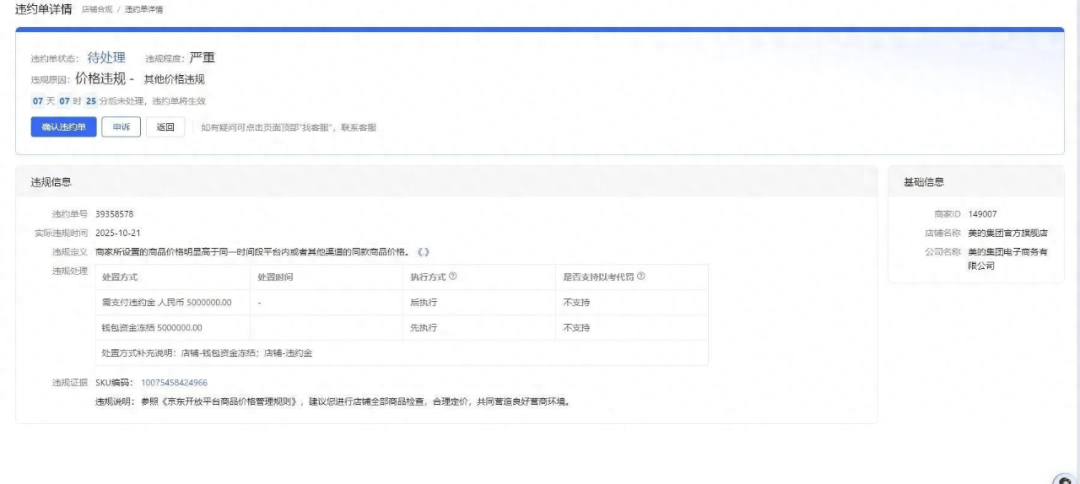
Group 1: Midea and JD.com Controversy - The rumor that Midea Group was fined 5 million yuan by JD.com for violating "choose one from two" requirements is false, according to insiders close to both companies [2][5] - There are indications of platform manipulation as numerous media outlets and self-media have spread this misinformation [2] - JD.com had indeed issued a fine to Midea Group, but it was later canceled due to public pressure and Midea's defense [5] Group 2: JD.com's Pricing Strategy - During the Double 11 shopping festival, JD.com implemented strict pricing strategies, including prohibiting brands from offering discounts or mentioning lower prices on other platforms [6] - Merchants found in violation of these rules could face fines ranging from 5 million to tens of millions of yuan, depending on the number of infractions [6] Group 3: Wealth Rankings and Economic Trends - The 2025 Hurun Rich List shows that Zhong Shanshan, founder of Nongfu Spring, has become the richest person in China with a wealth of 530 billion yuan, marking a 56% increase [8][12] - Zhang Yiming, founder of ByteDance, saw his wealth grow by 1.2 trillion yuan, driven by advancements in AI, placing him second with 470 billion yuan [9][12] - The list reflects a shift in economic trends, with new faces primarily from industrial products, health, and consumer goods sectors, while real estate figures are declining [13][14] Group 4: Meike Home's Financial Struggles - Meike Home has reported continuous losses exceeding 1.6 billion yuan over the past three years, with a loss of 88 million yuan in the first half of this year [16][18] - The company's cash flow has significantly declined, with a net cash flow from operating activities dropping by 84.57% [17] - Meike Home is closing stores to cope with financial pressures, reducing its number of stores from 141 in 2023 to 111 in 2024 [17] Group 5: Gold Market Speculation - A rumor circulated about a former chief analyst at Guohai Securities making a significant profit from gold futures trading, which was later denied as false [19][25] - The gold market has seen substantial price increases, with the main futures contract rising over 28% from late August to mid-October [26]



中源家居:第三季度净亏损790.2万元
Ge Long Hui· 2025-10-29 08:16
格隆汇10月29日丨中源家居(603709.SH)公布,公司第三季度实现营业收入4.01亿元,同比下降2.74%; 归属于上市公司股东的净利润-790.2万元;基本每股收益-0.06元。 ...

691家苏企亮相广交会 江苏“品牌出海”收获满满
Xin Hua Ri Bao· 2025-10-28 23:25
Core Insights - The 138th Canton Fair showcased the strength of "Jiangsu Manufacturing," with 691 Jiangsu enterprises and 1201 booths attracting global buyers and securing numerous orders [1][8] - Digital technology played a crucial role in enhancing brand influence, allowing overseas buyers to experience products remotely through innovative "cloud exhibition" services [2][8] Group 1: Digital Innovation and Sales Achievements - Jiangsu's trading group utilized digital tools to enhance brand visibility, including high-quality promotional materials and online platform integration for global reach [2] - A UK buyer placed a $600,000 order for a bathroom mirror after being impressed by its FSC-certified wood and low formaldehyde content [2] - A German buyer ordered $750,000 worth of custom-designed mirrors, facilitated by rapid 3D rendering and precise delivery promises [2] Group 2: Industry-Specific Innovations - Dream Lily Home Technology showcased smart health mattresses, attracting interest from buyers in Europe, Japan, and South Korea [3] - Nantong Jiuzheng Ergonomics successfully positioned itself as a key supplier of high-end electric sofas through ergonomic innovations [3] Group 3: Brand Development Strategies - Jiangsu's trading group implemented a systematic brand empowerment strategy, focusing on tailored support for enterprises at different growth stages [4] - The Xu Zhou sub-group developed a structured brand matrix to enhance the value of mature brands while protecting the rights of emerging companies [4] - The sub-group also guided small and medium enterprises in market positioning and operational processes to ensure steady growth [4] Group 4: Regional Focus and Market Adaptation - The Suqian sub-group emphasized brand awareness and transformation from product-focused to brand-centric strategies, enhancing market competitiveness [5] - Yancheng enterprises showcased products across 15 industries, aligning with global market demands and achieving significant order results [5][6] Group 5: Long-standing Enterprises and Market Engagement - Established companies like Gaochun Ceramics leveraged years of market experience to tailor products for emerging markets, resulting in increased customer inquiries [7] - Jiangsu's provincial commerce department aims to utilize the Canton Fair as a platform to connect with overseas markets and support enterprises in securing orders [7][8] Group 6: Overall Fair Success - The 138th Canton Fair set records with an exhibition area of 1.55 million square meters, 74,600 booths, and over 32,000 participating enterprises [8] - Jiangsu's participation also reached new heights with 3,454 enterprises, including 264 new exhibitors, showcasing the province's commitment to enhancing its global brand presence [8]
政策引导分红回报力度 118只个股最新股息率超5%
Zheng Quan Shi Bao· 2025-10-28 18:22
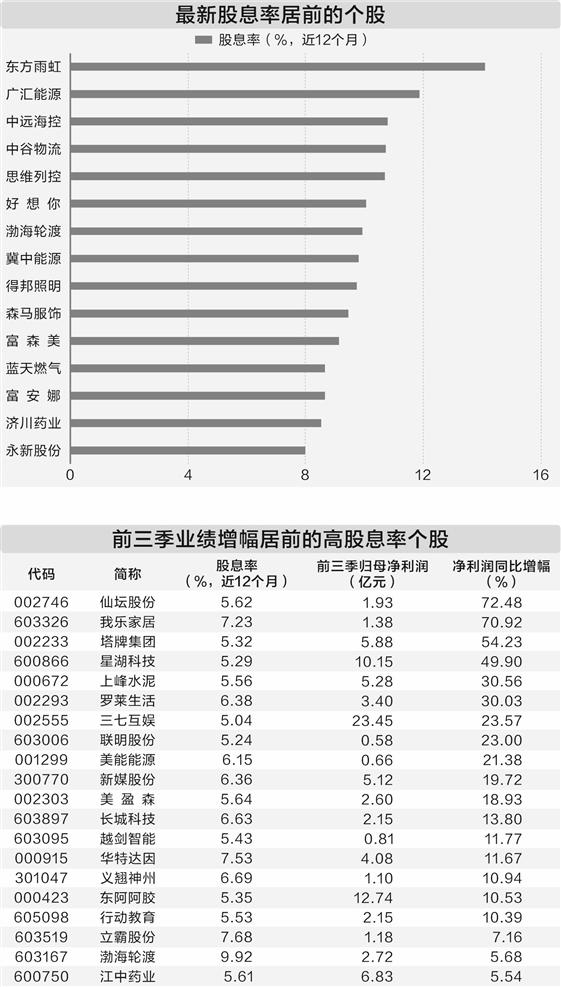
Core Viewpoint - The China Securities Regulatory Commission has proposed measures to enhance investor returns by encouraging listed companies to adopt share buybacks and increase dividend distributions, marking a shift towards a return-focused capital market [2][3]. Group 1: Dividend Policies and Trends - The new guidelines advocate for listed companies to implement multiple dividend distributions annually, enhancing the stability and predictability of dividends [3]. - The current policy environment is favorable for dividend investments, with a significant number of companies showing high dividend yields, particularly in a context of declining risk-free interest rates [3][4]. Group 2: High Dividend Yield Stocks - As of October 28, there are 118 stocks with a dividend yield exceeding 5%, with 6 stocks surpassing 10%, including Dongfang Yuhong at 14.1% and Guanghui Energy at 11.87% [4]. - Dongfang Yuhong has distributed a total of 5.881 billion yuan in cash dividends over the past year, while Guanghui Energy has a cumulative dividend of over 16.3 billion yuan from 2021 to 2024 [4]. Group 3: Performance of High Dividend Stocks - Among high dividend yield stocks, 24 companies reported significant net profit growth in the first three quarters, with Xiantan Co. leading at a 72.48% increase [5]. - Other notable performers include Wo Le Home with a 70.92% increase and Tapai Group with a 54.23% increase in net profit [5]. Group 4: Valuation and Growth Potential - A total of 21 stocks with high dividend yields are identified as undervalued, showing potential for significant price appreciation, with some having a price-to-earnings ratio below 20 and a price-to-book ratio below 2 [6]. - Hongcheng Environment is highlighted for its substantial growth potential, with a projected price increase of 42.83% and a stable dividend yield [6][7].
尚品宅配第三季度营收同比下降2.34%
Bei Jing Shang Bao· 2025-10-28 14:23
Core Insights - Guangzhou Shangpin Home Furnishing Co., Ltd. reported a revenue of 2.55 billion yuan for the first three quarters of 2025, representing a year-on-year decline of 6.66% [1] - The company experienced a net loss of 79.48 million yuan during the same period [1] - In the third quarter, revenue reached 998 million yuan, down 2.34% year-on-year, while net profit was 1.188 million yuan, showing a significant increase of 114.39% [1]

AI赋能“双11” 家居企业能否借此跳出价格内卷
Bei Jing Shang Bao· 2025-10-28 14:16
Group 1: Industry Trends - The home furnishing industry is shifting from a price war to a new ecosystem focused on whole-house renovation, AI technology, and integrated solutions during this year's "Double 11" shopping season [1] - Whole-house renovation has become the core consumption scenario for "Double 11," with brands offering one-stop solutions covering design, construction, materials, furniture, and soft decoration [1] - Consumer demand is evolving from a focus on low prices to an emphasis on quality, experience, and personalization, driven by government subsidies and trade-in policies [1] Group 2: Smart Home Demand - There is a growing consumer interest in smart home products, with significant sales increases reported for smart furniture such as smart drying racks and smart beds, achieving over tenfold growth in transaction volume [1][6] - The trend towards smart and green products reflects a precise collision of scene demand and industry upgrades, with AI-driven personalized design becoming a key competitive factor [6][8] - The market for smart home products is expanding, supported by advancements in IoT, cloud computing, big data, and AI technologies [8] Group 3: Company Innovations - Companies like Qu Mei Home are launching comprehensive solutions from bare shells to smart homes, integrating design, hard decoration, furniture, and smart technology [7] - Qu Mei aims to optimize service chains through industrial IoT and smart production, creating value for consumers throughout the entire lifecycle of home furnishing [7] Group 4: Consumer Behavior Changes - Consumers are increasingly valuing convenience and aesthetics, leading to a rise in the adoption of smart products as part of the "lazy economy" and "aesthetic economy" [8][10] - The shift in consumer psychology has led to a greater focus on the comfort, convenience, and safety of living environments, with many consumers now willing to try smart home solutions [10] Group 5: Challenges in Smart Home Integration - Despite the promising outlook for smart homes, challenges such as ecosystem fragmentation and low interoperability between different brand devices remain significant barriers [11] - Concerns about data privacy and the complexity of using smart devices are prevalent among consumers, highlighting the need for better integration and user experience [11][12] - The market is also facing issues with "pseudo-smart" products that do not provide real convenience, which disrupts consumer experience and market order [12]
Leggett & Platt(LEG) - 2025 Q3 - Earnings Call Transcript
2025-10-28 13:32
Financial Data and Key Metrics Changes - Third quarter sales were just over $1 billion, down 6% year-over-year, primarily due to soft demand in residential end markets and sales attrition from the divestiture of the aerospace business [8][11] - Third quarter EBIT was $171 million, and adjusted EBIT was $73 million, a $3 million decrease year-over-year, primarily from lower volume [11] - Third quarter earnings per share were $0.91, with adjusted EPS at $0.29, a $0.03 decrease year-over-year [11] - Operating cash flow for the third quarter was $126 million, an increase of $30 million compared to the third quarter of 2023 [11][12] - Total debt was reduced by $296 million in the third quarter, bringing total debt reduction for the year to $367 million [11][12] Business Line Data and Key Metrics Changes - Bedding product sales decreased 10% year-over-year but improved 3% sequentially [8] - Specialized product sales declined 7%, while furniture, flooring, and textile product sales were flat year-over-year [8] - U.S. mattress industry production improved sequentially but remained negative year-over-year, with total market consumption expected to decline low single digits for the full year [9][10] Market Data and Key Metrics Changes - The U.S. spring unit volume was in line with mattress consumption and domestic production volumes, both estimated to have declined low single digits [8] - Domestic mattress production improved sequentially, marking the second consecutive quarter of improvement, but remained negative year-over-year [9] - The automotive supply chain risks, including availability of aluminum and semiconductors, have begun impacting the industry, although no material impact has been experienced to date [10] Company Strategy and Development Direction - The company is reaffirming the midpoint of its full-year sales and adjusted EPS guidance, with sales expected to be $4.0 billion-$4.1 billion, down 6%-9% versus 2024 [14] - The restructuring plan is nearing completion, with expected annualized EBIT benefits of $60 million-$70 million [13][14] - The company aims to focus on organic growth, funding strategic acquisitions, and returning cash to shareholders through dividends and share repurchases [15][57] Management's Comments on Operating Environment and Future Outlook - Management expressed concerns about tariffs potentially driving inflation and impacting consumer confidence and demand [6][7] - The company remains focused on providing high-quality, innovative products while navigating a dynamic operating environment [7][16] - Management highlighted a robust innovation pipeline and partnerships with customers to develop products tailored to market needs [16][17] Other Important Information - The company completed the divestiture of its aerospace business, using proceeds to pay down commercial paper and reduce net debt [4][5] - Total liquidity at the end of the quarter was $974 million, comprised of $461 million in cash and $513 million in revolving credit capacity [13] Q&A Session Summary Question: Benefits from cost actions and restructuring - Management noted that restructuring efforts are meeting or exceeding expectations, with no customer disruptions and a projected annualized EBIT benefit of $60 million-$70 million [22][24] Question: Demand environment in bedding - Management characterized the market as stable, with sequential improvement in sales, but acknowledged ongoing challenges from macroeconomic factors [26][30] Question: Capital expenditure plans for 2026 - Management indicated that normalized CapEx is expected to be around $100 million, with ongoing funding for growth initiatives [32] Question: Segment margins for the year - Bedding segment margins are expected to be up 200 basis points, while specialized segments are projected to increase by 50 basis points [33] Question: Growth opportunities post-restructuring - Management sees significant growth potential in finished bedding and innovation, with a focus on private label products [52][53] Question: Future trajectory of textiles business - Management highlighted the potential for bolt-on acquisitions in textiles, leveraging successful past strategies [76][77]

Leggett & Platt(LEG) - 2025 Q3 - Earnings Call Transcript
2025-10-28 13:32
Financial Data and Key Metrics Changes - Third quarter sales were just over $1 billion, down 6% year over year, primarily due to soft demand in residential end markets and sales attrition from the divestiture of the aerospace business [8][11] - Third quarter EBIT was $171 million, and adjusted EBIT was $73 million, a $3 million decrease year over year [11] - Third quarter earnings per share were $0.91, with adjusted EPS at $0.29, a $0.03 decrease year over year [11] - Operating cash flow for the third quarter was $126 million, an increase of $30 million compared to the third quarter of 2023 [11][12] - Total debt was reduced by $296 million in the third quarter, bringing total debt to $1.5 billion [11][12] Business Line Data and Key Metrics Changes - Bedding product sales decreased 10% year over year but improved 3% sequentially [8] - Specialized product sales declined 7%, while furniture, flooring, and textile product sales were flat year over year [8] - U.S. mattress industry production improved sequentially but remained negative year over year, with total market consumption expected to decline low single digits for the full year [9][10] Market Data and Key Metrics Changes - The domestic mattress production volume declined low single digits year over year, with expectations for a slowdown in the fourth quarter due to seasonality [9][10] - The automotive supply chain faced risks, including availability of aluminum and semiconductors, but no material impact was reported to date [10] - The textiles segment experienced growth in geo components, while home furniture and flooring saw declines [10][72] Company Strategy and Development Direction - The company is focused on optimizing its portfolio, having completed the divestiture of its aerospace business [4][5] - A restructuring plan is nearing completion, with expected annualized EBIT benefits of $60 to $70 million [11][14] - The company aims to strengthen its balance sheet by prioritizing debt reduction and considering small strategic acquisitions [15][57] Management's Comments on Operating Environment and Future Outlook - Management expressed concerns about tariffs potentially driving inflation and impacting consumer confidence [6][7] - The company remains focused on providing high-quality, innovative products while navigating a dynamic operating environment [7][16] - Management reaffirmed the midpoint of full-year sales and adjusted EPS guidance, expecting sales of $4.0 to $4.1 billion [14] Other Important Information - The company plans to use excess cash flow primarily for debt reduction, with potential for small strategic acquisitions and share repurchases in the future [15][57] - Capital expenditures are expected to be lower this year at $60 to $70 million, with a return to normalized levels in the future [15][32] Q&A Session Summary Question: Benefits from cost actions and restructuring - Management highlighted successful execution of the restructuring plan, with expected annualized EBIT benefits of $60 to $70 million [22][23] Question: Demand environment in bedding - Management noted stability in demand patterns, with some improvement observed in the third quarter despite macroeconomic challenges [26][30] Question: Future CapEx plans - Management indicated a return to a more normalized CapEx level of around $100 million in the future [32] Question: Segment margins outlook - Bedding segment margins are expected to increase by 200 basis points, while specialized products are projected to rise by 50 basis points [33] Question: Growth opportunities post-restructuring - Management sees significant growth potential in finished bedding and innovation-driven product development [52][53] Question: Future capital allocation and acquisitions - The long-term net debt leverage target is two times, with a focus on reducing debt and considering small strategic acquisitions [57]
Leggett & Platt(LEG) - 2025 Q3 - Earnings Call Transcript
2025-10-28 13:30
Financial Data and Key Metrics Changes - Third quarter sales were just over $1 billion, down 6% year over year, primarily due to soft demand in residential end markets and sales attrition from the divestiture of the aerospace business [9][12] - Third quarter EBIT was $171 million, and adjusted EBIT was $73 million, a $3 million decrease year over year [12] - Third quarter earnings per share were $0.91, with adjusted EPS at $0.29, a $0.03 decrease year over year [12] - Operating cash flow for the third quarter was $126 million, an increase of $30 million compared to the third quarter of 2023 [12] - Total debt was reduced by $296 million in the third quarter, bringing total debt reduction for the year to $367 million [12][13] Business Line Data and Key Metrics Changes - Bedding product sales decreased 10% year over year but improved 3% sequentially compared to the second quarter [9] - Specialized product sales declined 7%, while furniture, flooring, and textile product sales were flat year over year [9] - U.S. mattress industry production improved sequentially but remained negative year over year, with total market consumption expected to decline low single digits for the full year [10][11] Market Data and Key Metrics Changes - The domestic mattress production volume remained negative year over year, with expectations for a slowdown in the fourth quarter due to normal seasonality [10] - The automotive supply chain risks, including availability of aluminum and semiconductors, have begun impacting the industry, although no material impact has been experienced to date [11] Company Strategy and Development Direction - The company is reaffirming the midpoint of its full-year sales and adjusted EPS guidance, with sales expected to be $4.0 to $4.1 billion, down 6% to 9% versus 2024 [14][15] - The restructuring plan is nearing completion, with expected annualized EBIT benefits of $60 to $70 million [13][14] - The company aims to prioritize debt reduction while considering small strategic acquisitions and share repurchases in the future [16][51] Management's Comments on Operating Environment and Future Outlook - Management expressed concerns about tariffs potentially driving inflation and impacting consumer confidence and demand [6] - The company remains focused on providing high-quality, innovative products and improving operational execution despite a challenging consumer environment [8][17] - Management noted that the innovation pipeline is robust, with new products gaining traction, positioning the company for long-term profitable growth opportunities [17][48] Other Important Information - The company completed the divestiture of its aerospace business to optimize its portfolio [4][5] - Total liquidity at the end of the quarter was $974 million, comprised of $461 million in cash and $513 million in capacity remaining under the revolving credit facility [13] Q&A Session Summary Question: Benefits from cost actions and restructuring - Management highlighted that the restructuring plan is nearly complete, with no customer disruptions and expected annualized EBIT benefits of $60 to $70 million [22][25] Question: Demand environment in bedding - The bedding market is characterized as more stable, with sequential improvement observed, although challenges remain due to macroeconomic factors [27][30] Question: Capital expenditure plans for 2026 - Management indicated that normalized CapEx is expected to be around $100 million, with ongoing funding for growth initiatives [32] Question: Segment margins for the year - Bedding segment margins are expected to be up 200 basis points, while specialized segment margins should increase by 50 basis points [33] Question: Growth opportunities post-restructuring - Long-term growth opportunities are seen in finished bedding and private label work, with a focus on innovation and product development [46][48]