
石化

Search documents
工业和信息化部发布14个行业数字化转型“场景导航图”
Xin Hua Wang· 2025-12-08 08:27
Core Insights - The Ministry of Industry and Information Technology released the "Guidelines for Scenario-Based and Graphical Promotion of Digital Transformation in Key Industries (2025 Edition)" at the 2025 Integration of Informatization and Industrialization Conference, focusing on 14 industries including steel and petrochemicals [1][2] - The guidelines aim to assist enterprises in overcoming challenges related to unclear demands and paths in digital transformation, transitioning from fragmented exploration to systematic advancement [1][2] Group 1: Digital Transformation Framework - The "Scenario Navigation Map" covers 14 industries and includes various digital transformation scenarios and cross-business collaboration scenarios, structured around five business activities: R&D design, production manufacturing, operation services, business management, and supply chain management [1][2] - The guidelines provide a clear boundary for each scenario, focusing on specific business pain points and integrating professional industrial knowledge to convert complex transformation tasks into actionable projects [2] Group 2: Implementation and Future Directions - Enterprises can implement the transformation in steps by first conducting scenario diagnostic analysis and formulating renovation plans, followed by resource allocation based on the provided element lists, ultimately achieving cross-scenario collaboration and overall optimization [2] - The Ministry plans to guide localities in applying the "One Map and Four Lists" pilot program, continuously updating the industry scenario maps and fostering excellent solutions and service providers to drive the deep integration of the real economy and digital economy [2]
又一民营巨头崛起!年入8715亿超越华为成第三民企,它是什么来头
Sou Hu Cai Jing· 2025-12-08 06:46
Core Insights - In 2024, a company from Jiangsu surpassed Huawei with a revenue of 871.5 billion yuan, becoming the top private enterprise in China's manufacturing sector [1] - This company, Hengli, operates quietly without chasing trends or promoting concepts, focusing instead on a comprehensive industrial chain spanning energy, chemicals, textiles, shipbuilding, and new materials [3] Company Background - Hengli was founded in 1994 by Chen Jianhua and his wife Fan Hongwei, starting with a struggling weaving factory purchased for 3.69 million yuan [5] - The founders established three principles: no guarantees, no debts, and no friends as shareholders, ensuring timely salary payments [5] - During the Asian financial crisis in 1997, Hengli expanded by acquiring low-cost equipment, establishing itself as a strong player in the weaving industry [5] Strategic Development - Hengli's transformation began with a focus on self-sufficiency in the industrial chain, entering the chemical fiber sector in 2002 with a 2.2 billion yuan investment [5][7] - The company achieved its first industrial chain extension during the SARS outbreak in 2003, launching a 400,000-ton melt-spinning project [7] - In 2010, Hengli ventured into oil refining, aiming to integrate the entire supply chain from crude oil to textile products [9] Achievements and Innovations - In 2018, Hengli's integrated refining project with a capacity of 20 million tons per year was completed in a record 19 months [9] - By 2020, Hengli became the first company globally to achieve a closed-loop supply chain from crude oil to finished textiles [9][10] - The company's full industrial chain model enhances cost efficiency and supply chain stability, allowing it to withstand external shocks [10] Operational Excellence - Hengli's operations integrate technology, capital, and management, exemplified by its use of advanced German hydrogenation processes [12] - The company has diversified into four main sectors: petrochemicals, textiles, shipbuilding, and new materials, generating nearly 900 billion yuan in annual revenue [12] - Hengli's low-profile approach is reflected in its founders' frugal lifestyle and strategic financial management, which has helped maintain cash flow stability [15] Market Position and Future Outlook - Hengli's surpassing of Huawei is not merely a revenue comparison but highlights different developmental paths in China's manufacturing landscape [20] - The company demonstrates that traditional industries can achieve world-class competitiveness through meticulous industrial chain integration and technological advancement [22] - Hengli's growth model emphasizes steady growth without reliance on policy trends or speculative capital, focusing on continuous investment in R&D and sustainability [24] Conclusion - Hengli's success illustrates that true industrial competitiveness lies in the details of production and supply chain management rather than in fleeting market trends [26] - The company fills significant gaps in China's manufacturing sector, contributing to advancements in various fields from high-performance fibers to large ship engines [27] - Hengli's journey reflects a commitment to deep-rooted, systematic success in manufacturing, showcasing that a slower, more deliberate approach can yield substantial results in a fast-paced economy [31]


韩国预计今年全年出口额将首次超过7000亿美元
Xin Lang Cai Jing· 2025-12-07 04:43
Core Insights - The South Korean government forecasts that the country's export value will exceed $700 billion for the first time in 2025, setting a new historical record, although exports excluding semiconductors are expected to decline year-on-year [1][3][4]. Export Performance - From January to November, South Korea's total export value reached $640.2 billion, marking a year-on-year increase of 2.9%, the highest level for the same period, surpassing the previous record of $628.7 billion in 2022 [1][3]. - Exports excluding semiconductors amounted to $487.6 billion during the same period, reflecting a year-on-year decrease of 1.5% [5]. Sector-Specific Trends - The automotive, shipbuilding, biopharmaceutical, and computer sectors saw export growth of 2%, 28.6%, 7%, and 0.4%, respectively, while all other sectors experienced declines [5]. - Notable declines were observed in machinery exports (down 8.9%), petroleum products (down 11.1%), petrochemicals (down 11.7%), and steel exports (down 8.8%). Additionally, exports of automotive parts, displays, home appliances, and secondary batteries fell by 6.3%, 10.3%, 9.4%, and 11.8%, respectively [5]. Semiconductor Dependency - In November, semiconductors accounted for 28.3% of South Korea's total export value, the highest proportion recorded this year, raising concerns about the country's over-reliance on the semiconductor industry [5]. - Historically, from 2002 to 2010, semiconductors represented about 10% of South Korea's total exports [5].
山东推出“四大行动”保障重大项目用地
Qi Lu Wan Bao· 2025-12-05 15:39
Core Viewpoint - The Shandong provincial government is implementing a series of actions to enhance the efficient use of land resources, supporting the province's green, low-carbon, and high-quality development goals [1] Group 1: Major Actions - Action 1: Planning Guidance Action aims to strengthen the Jinan and Qingdao metropolitan areas and enhance the leading role of the Jinan-Qingdao-Yantai urban agglomeration, while also implementing yield improvement projects for corn and soybeans in 22 major agricultural counties [1] - Action 2: Yellow River Strategic Potential Action focuses on completing national pilot projects for saline-alkali land utilization and promoting the cultivation of salt-tolerant crops to free up land for new developments along the Yellow River [1] - Action 3: Productivity Optimization Action will leverage land use planning to ensure precise land supply for key industrial clusters, including steel, petrochemicals, and automotive sectors, with tailored strategies for each cluster [1] - Action 4: New Urbanization Action targets 68 potential counties for urban renewal, old neighborhood upgrades, and village renovations, aiming to create compact, livable, and smart modern cities [1]
这家A股公司,宣布重大资产重组!下周一起停牌
Mei Ri Jing Ji Xin Wen· 2025-12-05 13:26
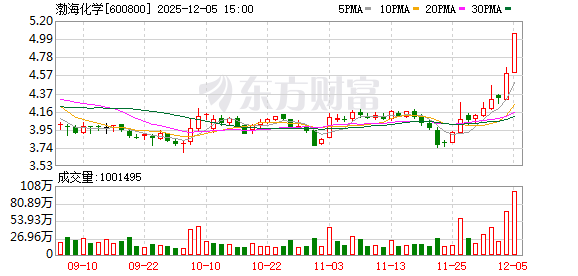
12月5日晚间,渤海化学(600800.SH,股价5.05元,市值56.06亿元)发布公告称,公司正在筹划向控股股东 天津渤海化工集团有限责任公司(以下简称"渤化集团")出售天津渤海石化有限公司(以下简称"渤海石 化")100%股权,并通过发行股份及支付现金的方式购买安徽泰达新材料股份有限公司(以下简称"泰达新 材")的控制权。本次交易预计构成重大资产重组,不会导致实控人变更,不构成重组上市。 10月29日,渤海化学发布2025年三季报。报告显示,公司前三季度营业收入为28.09亿元,同比下降 16.82%;归母净利润为-5.79亿元,同比下降7.85%;扣非归母净利润为-5.79亿元,同比下降5.98%;基本每 股收益-0.52元。 | 证券代码 | 证券简称 | 停复牌类型 | 停牌起始日 | 停牌 期间 | 停牌终止日 | 复牌日 | | --- | --- | --- | --- | --- | --- | --- | | 600800 | 渤海化学 | A 股 停牌 | 2025/12/8 | | | | 鉴于交易事项尚处于筹划阶段,有关事项存在不确定性,为避免造成股价异常波动,渤海化学自2025年 ...

印度撤销7种化学品进口认证要求
Zhong Guo Hua Gong Bao· 2025-12-05 02:59
Core Viewpoint - The Indian government has announced the removal of quality control orders (QCO) for seven petrochemical products to alleviate operational burdens on domestic manufacturers [1] Group 1: Regulatory Changes - The seven petrochemical products affected include paraxylene (PX), toluene, methyl acrylate, ethyl acrylate, vinyl acetate monomer (VAM), dichloroethane, and vinyl chloride monomer (VCM) [1] - The QCO, which was previously mandated by the Bureau of Indian Standards (BIS) since 2021, required manufacturers and importers to obtain certification to sell these chemicals in the Indian market [1] Group 2: Impact on Industry - This is the third instance of the Indian government easing import certification requirements for chemicals, aimed at boosting domestic production, particularly for small and medium enterprises (SMEs) [1] - The previous QCO was seen as detrimental to the competitiveness of Indian manufacturing, particularly impacting SMEs by limiting supply chain flexibility and increasing costs of imported raw materials such as polymers, rubber, chemicals, fibers, and metals [1]
恒逸石化子公司现争议标语,独家回应:并非初衷,已第一时间更换
Bei Ke Cai Jing· 2025-12-04 15:05
Core Viewpoint - The recent controversy surrounding a safety slogan at Guangxi Hengyi New Materials Co., Ltd., a subsidiary of Hengyi Petrochemical, has drawn public attention, prompting the company to revise the slogan and enhance internal management mechanisms to prevent future misunderstandings [1]. Group 1: Company Response and Actions - Hengyi Petrochemical stated that the original slogan was not intended to reflect the company's values and has been replaced with "Safety First, Prevention First, Comprehensive Governance, All Staff Participation" [1]. - The company has conducted a comprehensive review of safety slogans within the plant and invited professionals to ensure accurate and standardized expressions [1]. - Hengyi Petrochemical emphasized that safety production is a top priority, given the complex processes involved in petrochemical projects [1]. Group 2: Financial Performance - In the first three quarters of the year, Hengyi Petrochemical reported operating revenue of 83.885 billion yuan, a year-on-year decline of 11.53%, while the net profit attributable to shareholders was 231 million yuan, remaining roughly stable compared to the previous year [2]. Group 3: Safety Initiatives - The company's 2024 Social Responsibility Report indicated that it conducted 203 safety emergency drills and 961 safety training sessions, with a total safety investment of 169 million yuan for the year [3].

越来越多人,开始防守了
Sou Hu Cai Jing· 2025-12-04 14:11
Market Trends - The market has experienced a continuous decline in trading volume, with the Shanghai and Shenzhen stock exchanges recording a trading volume of 1.55 trillion yuan, a decrease of 121 billion yuan compared to the previous trading day [4] - There is a noticeable shift towards defensive strategies, with small-cap growth stocks losing momentum while large-cap value stocks are performing better [5] Index Performance - As of today, the CSI A500 index has increased by 0.38% this week, while the CSI 2000 index has decreased by 1.55% [6] - The top-performing sectors this week include non-ferrous metals, telecommunications, home appliances, petrochemicals, transportation, and coal, with high dividend sectors making up a significant portion [6] Sector Analysis - Consumer sectors such as home appliances, food and beverage, textiles and apparel, and social services have a higher probability of success from December to January [7] - Sectors like petrochemicals, steel, non-ferrous metals, coal, building materials, and large financial institutions show a significant increase in success probability in January [8] Interest Rate Outlook - There is a high probability of interest rate cuts in the U.S. in December, which may lead to similar actions domestically [9] - Major state-owned banks have collectively removed five-year large-denomination time deposits from their platforms, with three-year products' interest rates dropping to between 1.5% and 1.75% [10] Investment Strategy - It is currently advisable to increase the allocation of high-dividend ETFs in investment portfolios [11] - A method for selecting high-dividend products involves using the "Dividend Yield Calculator" in the "Index Direct Pass" mini-program to view dividend yields and products [12][13] - The current dividend yield for the CSI Dividend Index is reported at 4.3% [16] Portfolio Recommendations - While high dividend rates are favorable at year-end, it is recommended to maintain a balanced portfolio that includes technology and dividend stocks, with a current emphasis on dividends and large-cap stocks [18]

投产周期尾声,复苏周期拐点将至,聚焦石化ETF(159731)低位布局窗口
Mei Ri Jing Ji Xin Wen· 2025-12-04 11:39
Group 1 - The core viewpoint of the article highlights that the petrochemical ETF (159731) has experienced a slight decline of 0.36%, while certain holdings like Cangge Mining and Jinfat Technology have shown notable gains [1] - The petrochemical ETF has seen a continuous net inflow of funds for nine consecutive trading days, totaling 25.5 million yuan, with its latest share count reaching 242 million and total scale hitting 202 million yuan, both marking new highs since inception [1] - Tianfeng Securities anticipates that the industry is nearing the end of its production cycle, with expectations for a transition from localized improvements to a comprehensive recovery [1] Group 2 - By 2026, the growth rate of most petrochemical products is expected to decline significantly, with industries like PX, polyester filament, methanol, acetic acid, and MEG likely to see early improvements due to high capacity utilization [1] - Although the capacity expansion for olefins is slowing, there remains some growth potential, and the current capacity utilization still has room for improvement, suggesting that olefin recovery may lag behind other sectors [1] - From 2027 to 2028, the growth rate of new industry capacity is projected to further decline, reinforcing the industry's competitive barriers and facilitating a transition from sporadic recovery to overall improvement [1] Group 3 - The petrochemical ETF (159731) and its linked funds (017855/017856) closely track the CSI Petrochemical Industry Index, with the basic chemical industry accounting for 60.39% and the oil and petrochemical industry for 32.71% of the index [1] - The new round of capacity expansion in the petrochemical industry is entering its final phase, leading to a rebalancing of supply and demand, with expectations for gradual recovery in industry prosperity [1]
江苏扬州:加强公共建筑用能管理,推广合同能源管理等一体化模式
Xin Lang Cai Jing· 2025-12-04 11:25
Core Viewpoint - The Yangzhou Municipal Government has released a comprehensive implementation plan aimed at accelerating economic and social development through a full green transition, aligning with national and provincial policies on green transformation [5][17]. Group 1: Overall Requirements - The plan emphasizes the importance of adhering to Xi Jinping's economic and ecological civilization thoughts, aiming for a green, low-carbon, high-quality development path, with significant progress expected in key areas by 2030 and a fully established green economy by 2035 [6][19]. Group 2: Key Tasks - The plan outlines several key tasks, including the development of green low-carbon industrial clusters, the upgrade of traditional industries, and the promotion of green low-carbon services [8][19]. - Specific targets include the establishment of 20 zero-carbon factories and a scale of the energy-saving and environmental protection industry reaching approximately 20 billion yuan by 2030 [8][19]. Group 3: Energy Transition - The plan aims to optimize clean and low-carbon energy supply, focusing on the efficient use of coal and the development of non-fossil energy sources, with a target of 10 million kilowatts of renewable energy generation capacity by 2030 [9][19]. - It also emphasizes the construction of a new power system that integrates energy sources, networks, loads, and storage [14][20]. Group 4: Infrastructure Upgrades - The plan includes initiatives for green building development, mandating that new public buildings meet specific green standards and achieve a photovoltaic coverage rate of over 50% by 2030 [9][14]. - Transportation infrastructure will also undergo a green transition, with a focus on enhancing electric vehicle charging networks and promoting the use of electric vessels [9][20]. Group 5: Resource Efficiency - The plan promotes resource conservation and efficiency, including strict water resource management and the promotion of recycling and waste reduction initiatives [11][21]. - By 2030, the plan aims for a recycling volume of approximately 4.5 million tons of major renewable resources [21]. Group 6: Technological Innovation - The plan emphasizes the importance of research and development in green technologies, including new energy vehicles and advanced photovoltaic cells, to support the green transition [10][19]. - It also aims to enhance the commercialization of green technology innovations through various collaborative projects [10][15]. Group 7: Green Consumption - The plan encourages the adoption of green consumption practices among the public, promoting energy-saving behaviors and the use of sustainable products [16][19]. - Initiatives will include campaigns for the replacement of old consumer goods with greener alternatives and the promotion of organic agricultural products [16][19]. Group 8: Policy Framework - The plan outlines the need for a robust policy framework to support green transformation, including the establishment of green standards and financial incentives for sustainable practices [18][22]. - It aims to enhance market mechanisms for resource allocation and promote participation in carbon trading markets [22].