跨境电商

Search documents
投机取巧彻底没戏!合规风暴席卷全球,谁能扛住这波大洗牌?
Sou Hu Cai Jing· 2026-01-16 08:51
Core Viewpoint - The cross-border e-commerce industry is facing significant regulatory changes that threaten the profitability of small and medium-sized sellers, as compliance requirements increase globally, particularly with the U.S. leading the charge in 2025 [1][3]. Group 1: Regulatory Changes - The U.S. has suspended its tax exemption policy for small packages, eliminating the $800 tax-free threshold, which means sellers must now pay up to 120% in tariffs or a fixed fee of $100 per item [3][4]. - The European Union will implement a new VAT policy starting December 2025, which will impose VAT on all goods entering from abroad, further increasing costs for sellers [4][6]. - Other regions, including the UK and Japan, are also adjusting their tax exemption rules, raising compliance barriers for global trade [6]. Group 2: Impact on Sellers - Many sellers report that their profit margins have been severely impacted, with some stating they now incur losses due to increased tax burdens [4][6]. - The introduction of comprehensive tax reporting requirements has closed loopholes that previously allowed sellers to operate with minimal oversight, leading to a significant drop in net profits for 31% of sellers, with some facing VAT burdens as high as 8%-10% [6]. Group 3: Adaptation Strategies - In response to these challenges, the overseas warehouse model is gaining popularity, allowing sellers to stock goods in local warehouses to reduce shipping times and avoid tariffs [8][10]. - A semi-managed model is emerging, where sellers handle inventory and quality control while platforms manage operations, logistics, and customer service, thus lowering operational barriers for sellers [10]. - Emerging markets are becoming critical for growth, with platforms in regions like Latin America and Southeast Asia lowering entry barriers to attract Chinese sellers [10][12]. Group 4: Industry Outlook - Despite the challenges, the cross-border e-commerce sector is not in decline; China's cross-border e-commerce imports and exports reached 2.75 trillion yuan in 2025, a 69.7% increase from 2020, indicating a shift towards compliance and sustainable growth [12][14]. - The industry is transitioning from a focus on exploiting regulatory loopholes to creating genuine value, marking the beginning of a high-quality development era in cross-border e-commerce [12][14].


跨境电商成新引擎 经港珠澳大桥外贸货值首破3000亿
Xin Hua Wang· 2026-01-16 07:41
新华社广州1月16日电(记者王浩明)2025年,经港珠澳大桥珠海公路口岸的进出口货值达3258.4亿元 人民币,同比增长40.1%,首次突破3000亿元人民币大关,这是记者16日从拱北海关了解到的。 数据显示,港珠澳大桥口岸进出口货值从2019年的496.5亿元跃升到2025年的超3000亿元,年均增长率 达36.8%。 港珠澳大桥海关综合业务一科科长李媛媛表示,依托不断升级迭代的客货车"一站式"系统,叠加海 关"提前申报""两步申报""跨境一锁"等便利化措施改革,粤港澳三地清关重复检查大幅减少,"货畅其 流"成为常态,接下来海关部门将持续推动监管创新,助推大湾区经贸新通道迸发更强动能。 【纠错】 【责任编辑:胡蓉】 拱北海关相关负责人介绍,跨境电商成为大桥外贸增长的新引擎,依托海关"简化申报、清单核放、汇 总统计""优先查验"等便利化措施,2025年通过海关跨境电商管理平台经大桥口岸出口达1109.8亿元, 增长92.5%。据统计,平均每天有近500辆电商货车满载160余万个包裹从这里出发,经港澳机场中 转"飞"向全球140多个国家和地区。 "订单高峰时几十辆车都不够用,去年经大桥口岸出口的电商包裹重量已经 ...
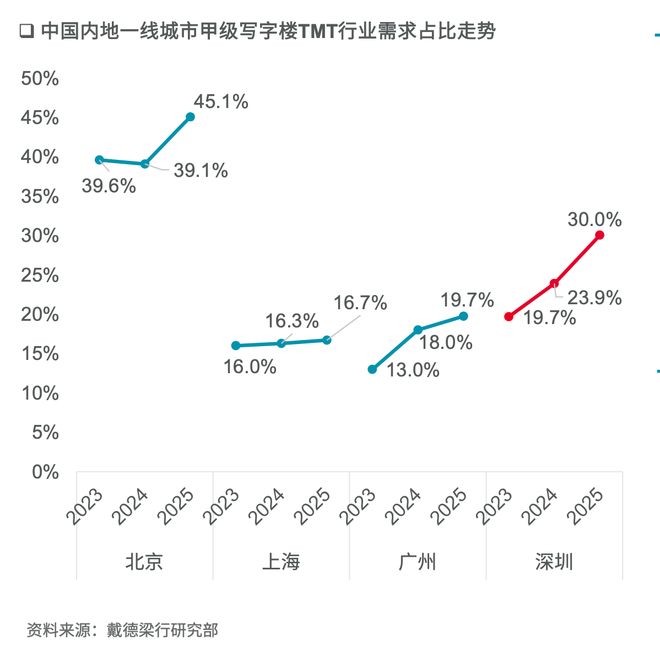
深圳AI产业爆发,TMT的办公租赁占市场总量超三成
Di Yi Cai Jing Zi Xun· 2026-01-16 07:01
2025年,A股市场上最火热的概念莫过于人工智能。在政策加持、资源集聚的持续作用下,人工智能产 业正在以前所未有的速度成长,拉动各相关行业快速发展。目前,深圳人工智能产业规模已突破3600亿 元,在广东省占比近四成,汇聚的企业超2800家,位居全国前列。 伴随着人工智能及其相关产业的快速发展,其办公租赁需求也持续扩张,逐渐成为写字楼市场的一项重 要增长动能。 戴德梁行提供的数据显示,按面积计,2025年,AI相关企业租赁需求在所有办公物业和甲级写字楼中 的占比分别为5.7%以及4.6%;若按宗数计,占比在所有办公物业和甲级写字楼中均有上升,均为 6.5%。 戴德梁行研究院副院长、华南及华中区研究部主管及董事向张晓端第一财经记者分析,"深圳的产业空 间及商办空间当中人工智能相关企业的需求增长,涵盖了龙头企业的持续扩张、中小型企业的快速增 长,以及创业型企业对灵活办公需求等,从具体细分产业来看,包括AI软硬件,以及结合应用场景渗 透到各个行业领域而不断衍生拓展出新的创新应用。" 整体来看,AI行业的租赁需求来源当中包含了大量初创企业及中小企业。"这也印证了当下深圳AI产业 蓬勃的创新创业趋势。"张晓端表示。 深圳 ...
“新丝路”让进出口货物省路费极速达
Ke Ji Ri Bao· 2026-01-16 06:36
Core Insights - The article discusses the implementation of 25 innovative measures for cross-border trade facilitation across China, aimed at responding to changes in the international trade environment and addressing business needs [1] Group 1: Cost Reduction and Efficiency - In Nansha Port, shipping collaboration has reduced the comprehensive cost for each vehicle by over 2000 yuan [1] - At Ningbo Zhoushan Port, advanced technologies like high-speed image recognition and automatic sampling robots have cut the average customs clearance time for iron ore and copper concentrate by 15 hours [1] Group 2: Multi-Modal Transport Innovations - The successful launch of the world's first "sea-rail combined transport + China-Europe fast shipping" model at Ningbo Zhoushan Port connects over 700 ports in more than 200 countries and regions [2] - The "one order system" for multi-modal transport has expanded the layout of inland dry ports, with the sea-rail combined transport business covering 16 provinces and 69 cities, maintaining the highest volume of foreign trade containers in China [2] Group 3: Air Transport Developments - The "airside direct access" initiative allows export goods arriving by domestic flights to bypass multiple handovers, streamlining the logistics process [3] - Plans to expand air-to-air, air-land, and air-rail combined transport services aim to enhance the efficiency of international logistics [3] Group 4: Special Goods Handling - The export process for electric vehicles and lithium batteries has been optimized to allow for separate shipping of batteries and vehicles, reducing time and costs associated with long-distance transport [4] - Guangzhou has established the first cross-border e-commerce platform for battery-powered goods, simplifying documentation requirements and significantly lowering logistics costs, with some testing fees reduced by 50% and ground operation costs by 60% [4] Group 5: Fresh Produce and Pharmaceuticals - Innovations in processes for fresh goods and pharmaceuticals have improved inspection capabilities, achieving seamless connections and expedited procedures [5] - In Guangzhou, imported cherries and durians can be delivered to owners in as little as 2 hours, while in Beijing, the inspection and release cycle for pharmaceuticals has been reduced to "minute-level," taking only 4 hours from port to patient [5]
2025年中国机电产品出口首次突破六成
Zhong Guo Jing Ji Wang· 2026-01-16 06:35
Core Viewpoint - In 2025, China's total foreign trade import and export volume is projected to reach 45.47 trillion yuan, marking a 3.8% growth and achieving growth for nine consecutive years. The resilience and vitality of China's foreign trade are highlighted, contributing significantly to global economic development [1]. Group 1: Trade Growth and Innovation - The export of electromechanical products is expected to grow by 9%, with its proportion exceeding 60% for the first time [1]. - The international competitiveness of green low-carbon products has significantly improved, and new business models such as cross-border e-commerce are emerging [1]. - Trade partnerships are becoming more diversified, with imports and exports to over 190 countries and regions showing growth, particularly with countries involved in the Belt and Road Initiative, which now accounts for 51.9% of trade [1]. Group 2: Future Challenges and Opportunities - In 2026, China will face profound and complex changes in the external environment, with both strategic opportunities and risks coexisting, leading to increased uncertainty [1]. - Despite challenges, China's economic foundation remains stable, with numerous advantages, strong resilience, and significant potential for foreign trade development [1]. Group 3: Policy Implementation and Support - The Ministry of Commerce will focus on implementing foreign trade policies effectively, providing precise support to enterprises, and maintaining confidence and expectations [2]. - There will be an emphasis on guiding localities and enterprises to stabilize traditional markets while expanding into emerging markets, including support for overseas exhibitions and trade promotion activities [2]. - New growth drivers will be cultivated, particularly in cross-border e-commerce and green trade, enhancing the international competitiveness of green low-carbon products [2]. - Efforts will be made to promote balanced development in imports and exports, including branding initiatives and facilitating access for quality products and services from other countries to meet domestic demand [2].
专家称:监管环境分水岭已现,合规化成跨境电商核心竞争力
Sou Hu Cai Jing· 2026-01-16 03:38
深圳商报·读创客户端首席记者 刘琼 当下,跨境电商面临欧美关税调整、数据合规等监管风险。面对当前复杂的市场环境,如何穿越周期, 守住合规底线,并持续获得资本与市场的青睐,成为摆在跨境大卖面前的重要课题。 监管环境分水岭已现 知名经济学家宋清辉在接受深圳商报记者采访时表示,2026年是监管环境的分水岭,当前这些风险已成 为IPO审核的"一票否决项"。 从数据合规角度来看,随着2026年欧盟《数字市场法案》(DMA)执法重点转向透明度,以及中国新 修订的《网络安全法》施行,企业处理全球用户信息(如独立站用户画像)的合法性成为审计重点。如 果企业无法证明其数据采集和算法合规,其估值或将面临"监管风险折价"。 "合规化,一定是企业需要当成核心竞争力去夯实的。"深圳市电子商务服务中心主任助理洪培林毫不讳 言"合规"的重要性。他在接受深圳商报记者采访时表示,对于企业来说,不论上市与否,只有合规才能 够长远发展。如果只靠短期利益驱动,最终结果就是出局。 "技术护城河"成资本关注重点 记者梳理企业招股书和相关公告发现,企业募资用途的分布高度聚焦在海外仓建设、研发投入以及品牌 营销投入等。从资本视角看,企业需通过哪些关键指标才 ...

2026义乌电商展 跨境出口:海关总署公布2025年我国进出口数据
Sou Hu Cai Jing· 2026-01-16 03:15
Group 1 - The core viewpoint of the articles highlights the significant achievements of China's foreign trade during the "14th Five-Year Plan" period, with total import and export volume exceeding 200 trillion yuan, marking a 40% increase compared to the "13th Five-Year Plan" [1][2] - In 2025, China's total goods trade reached 45.47 trillion yuan, a year-on-year growth of 3.8%, with exports amounting to 26.99 trillion yuan, up 6.1%, and imports at 18.48 trillion yuan, a historic high with a 0.5% increase [1][3] - High-tech product imports and exports grew at an average annual rate of 7.9% over the past five years, with a further acceleration to 11.4% in 2025, contributing nearly 60% to overall foreign trade growth [1][2] Group 2 - The new export categories, including electric vehicles, photovoltaic products, and lithium batteries, reached an export scale of nearly 1.3 trillion yuan in 2025, representing a 3.5-fold increase since 2020 [1] - Cross-border e-commerce in China saw a significant increase, with imports and exports totaling 2.75 trillion yuan in 2025, a 69.7% growth compared to 2020 [1] - China's trade relationships have diversified, with 249 countries and regions engaging in trade, and the concentration of trade partners has decreased, indicating a more balanced trade landscape [2] Group 3 - In 2025, trade with the United States accounted for 4.01 trillion yuan, or 8.8% of China's total trade, with China being the third-largest export destination and import source for the U.S. [3] - The U.S. and China have seen a temporary easing of trade tensions, with both sides achieving positive outcomes through multiple rounds of negotiations [3] - China's import volume reached a record high in 2025, maintaining its position as the world's second-largest import market for 17 consecutive years [3]

视频丨多地率先试点 跨境电商、保税货物迎“一站式”新体验
Yang Shi Xin Wen Ke Hu Duan· 2026-01-16 02:27
Core Viewpoint - The implementation of the "TIR + Bonded" regulatory model significantly enhances the efficiency of cross-border logistics for e-commerce and bonded goods, allowing for streamlined customs procedures and improved cash flow for enterprises [1][3][6]. Group 1: Policy Implementation - The General Administration of Customs has issued an announcement to optimize the implementation of the "International Road Transport Convention," incorporating cross-border e-commerce goods and bonded goods, and clarifying declaration standards [1]. - Pilot programs have been launched in customs offices in cities such as Hangzhou, Qingdao, Zhengzhou, Shenzhen, Yinchuan, and Urumqi starting January 15 [1]. Group 2: Operational Efficiency - Under the "TIR + Bonded" model, goods can be stored in customs special supervision zones, allowing for a "one-stop" process for declaration, transportation, and export, directly reaching overseas destinations [3][4]. - The cost of international road transport is only 25% of air transport, and it is twice as fast as rail transport, making it a more efficient option for exporters [6]. Group 3: Benefits for Enterprises - The "TIR + Bonded" model allows for convenient consolidation of goods in the comprehensive bonded zone and earlier tax refunds, providing tangible benefits to import and export enterprises [8]. - As of now, there are 272 certified enterprises in China, with a projected increase in international road transport business to over 3,800 transactions by 2025, representing a year-on-year growth of 110% [9]. Group 4: International Reach - Vehicles carrying cross-border e-commerce and bonded goods are simultaneously traveling to countries such as Kazakhstan, Uzbekistan, Pakistan, and Russia, achieving "one declaration, one vehicle direct delivery, one box to the end" under the "International Road Transport Convention" [9]. - More than 70 international road transport routes have been opened, covering Central Asia, West Asia, and Europe, effectively enhancing the convenience of customs clearance for international road transport [9].
东方证券:端侧AI落地场景明朗 智能眼镜与AI赋能跨境电商成双主线
智通财经网· 2026-01-16 02:14
Core Insights - The report from Dongfang Securities highlights the growing importance of smart glasses as a key application for edge AI, with a positive outlook for the eyewear industry chain and leading cross-border e-commerce companies driven by new product innovations [1][2] Group 1: Smart Glasses Market - The CES 2026 showcased smart glasses as a major trend, with over 90% of the core exhibition area occupied by Chinese brands, including more than 50 companies like Thunderbird, XREAL, INMO, and Rokid [2] - Key highlights from CES include the launch of the world's first dual-lens AR glasses with eSIM functionality by Thunderbird, Rokid's lightweight AI glasses for overseas markets weighing only 38.5 grams, and the MemoMind smart glasses by XGIMI, which weigh just 28.9 grams [2][3] - Global smart glasses shipments are projected to increase from 9.93 million units in 2025 to 86.9 million units by 2030, with the market size expected to grow from 19.7 billion yuan to 161.2 billion yuan, reflecting a CAGR of 50% [3] Group 2: Industry Dynamics - The report emphasizes that smart glasses are standardized products, requiring collaboration with eyewear companies to customize for individual consumer needs, as consumer preferences vary widely [3] - Weight is a critical factor influencing consumer decisions, making companies that can produce ultra-thin lenses and master fitting technology vital in the supply chain [3] - Consumer education for smart glasses relies heavily on offline channels, highlighting the importance of retail eyewear stores with strong distribution networks [3] Group 3: Investment Recommendations - Recommended investment targets in the smart glasses sector include companies like KANAT, Doctor Glasses, Mingyue Lenses, Aishide, and Tianyin Holdings [5] - In the cross-border e-commerce space, notable companies include Anker Innovations and Ugreen Technology, which are also highlighted for their innovative product launches at CES [5]

陕西持续激发临空经济发展活力
Shan Xi Ri Bao· 2026-01-16 00:24
Core Viewpoint - The Xi'an Xianyang International Airport is enhancing its role as a key logistics hub in the "Belt and Road" initiative, focusing on expanding air freight routes and cross-border trade to connect the western inland region of China with global markets [3][4]. Route Network - The opening of the Xi'an-Chicago cargo route in August 2025 is expected to facilitate a significant increase in air freight efficiency, with an estimated annual cargo volume of 17,100 tons, boosting the airport's international cargo throughput by over 25% [4][6]. - By 2025, the airport plans to open and enhance five new cargo routes, including connections to Milan and Debrecen, bringing the total to 33 international cargo routes, with a projected international cargo throughput of 75,600 tons, representing a 111% year-on-year increase [6][7]. Cross-Border Trade - The Xi'an Xianyang Airport Customs has implemented a 24/7 appointment customs clearance system, reducing average clearance time to one hour, a 50% improvement from 2024 [8]. - The cross-border e-commerce sector is thriving, with over 90 companies established in the Xi'an Comprehensive Bonded Zone, leading to a projected export trade volume of 3.24 billion yuan in 2025, a year-on-year increase of over 240% [8]. Emerging Industries - The airport is focusing on developing industries such as biomedicine and aviation maintenance, with over 20 aviation maintenance service companies already established, creating a comprehensive ecosystem for aircraft maintenance [9][10]. - The overall scale of the airport's emerging economy is expected to exceed 46.5 billion yuan by 2025, driven by various open functions and national pilot policies [10].