住宿

Search documents
国家统计局:5月份制造业采购经理指数回升,非制造业商务活动指数延续扩张
news flash· 2025-05-31 01:34
Group 1: Manufacturing PMI Insights - In May, the manufacturing PMI rose to 49.5%, an increase of 0.5 percentage points from the previous month, indicating an improvement in economic conditions [1][2] - The production index reached 50.7%, up 0.9 percentage points, signaling accelerated manufacturing activity, while the new orders index increased to 49.8%, up 0.6 percentage points [2] - Large enterprises saw their PMI rise to 50.7%, returning to the expansion zone, with production and new orders indices at 51.5% and 52.5%, respectively [2] Group 2: High-Tech and Export Performance - High-tech manufacturing PMI stood at 50.9%, maintaining expansion for four consecutive months, while equipment manufacturing and consumer goods sectors also showed improvement [3] - New export orders and import indices increased to 47.5% and 47.1%, respectively, reflecting a recovery in foreign trade orders, particularly from companies engaged with the U.S. market [3] Group 3: Non-Manufacturing Sector Performance - The non-manufacturing business activity index was 50.3%, slightly down by 0.1 percentage points but still indicating expansion [4] - The service sector's business activity index rose to 50.2%, driven by increased consumer activity during the "May Day" holiday, with significant growth in transportation and hospitality sectors [4] - The construction sector maintained expansion with a business activity index of 51.0%, although it showed a slight decline from the previous month [4] Group 4: Composite PMI Overview - The composite PMI output index increased to 50.4%, up 0.2 percentage points, indicating continued expansion in production and business activities across sectors [5][6] - The manufacturing production index and non-manufacturing business activity index contributed to the composite PMI, standing at 50.7% and 50.3%, respectively [6]
港人创业盯上岭南醒狮:这是能把全球华人连在一起的文化符号
Nan Fang Du Shi Bao· 2025-05-29 13:16
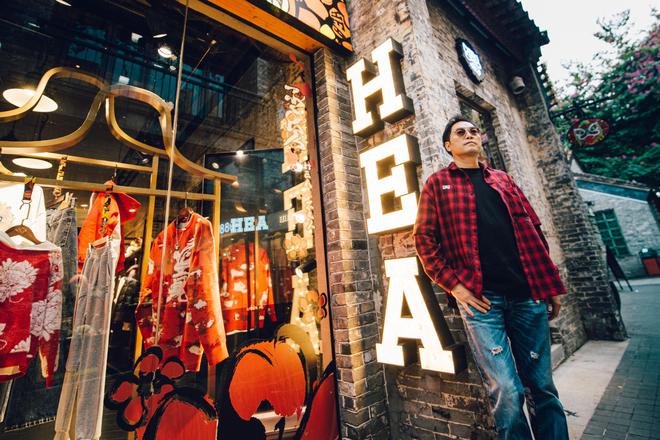
Core Viewpoint - The article highlights the entrepreneurial journey of Zhou Haohui and his clothing brand HEA, which aims to bridge cultural communication through fashion while promoting Lingnan culture globally [1][3]. Company Overview - Zhou Haohui founded the clothing brand HEA in Foshan, inspired by his childhood experiences with lion dance and a desire to promote Chinese culture [3][4]. - HEA has diversified its business model to include clothing, tea and coffee, cultural creative stores, and guesthouses [1]. Cultural Significance - The brand's design incorporates the image of the Lingnan lion dance, which Zhou believes serves as a cultural symbol connecting Chinese communities worldwide [4][5]. - Zhou emphasizes the importance of cultural identity for overseas Chinese, noting that lion dance competitions in Malaysia reflect a strong cultural connection [5]. Business Expansion - HEA opened its first physical store in Foshan in 2017, rapidly expanding to 60 stores within a year and 180 stores the following year [6]. - The first store outside Guangdong was opened in Chongqing, where consumer response exceeded expectations, reinforcing the brand's cultural confidence [8]. E-commerce Strategy - The company operates on nine major e-commerce platforms, including Douyin and Tmall, and has sold over 1 million items through local live streaming [10]. - HEA anticipates a GMV of 500 million yuan for 2024, indicating strong growth in the retail sector [10]. Future Aspirations - Zhou aims to establish HEA stores in Hong Kong and Macau, focusing on creating a cultural bridge rather than just a retail space [10].


国台办:只要民进党当局撤除种种障碍 两岸旅游就能恢复
news flash· 2025-05-28 03:47
Core Viewpoint - The spokesperson of the State Council Taiwan Affairs Office criticized the Lai Ching-te administration for obstructing cross-strait personnel exchanges and tourism cooperation, emphasizing the negative impact on Taiwan's tourism industry and public sentiment [1] Group 1: Cross-Strait Relations - The Lai Ching-te administration has been accused of deliberately blocking cross-strait personnel exchanges and tourism cooperation [1] - The administration has not lifted the "ban on group travel" and has raised the travel alert for Taiwanese residents visiting mainland China to "orange" [1] - Various measures have been taken to delay the restoration of direct flights between Fujian, Shanghai, and Taiwan, further complicating travel [1] Group 2: Impact on Tourism Industry - The restrictions imposed by the Lai administration have led to increased difficulties for the tourism industry in Taiwan, resulting in growing public discontent [1] - The spokesperson highlighted that restoring cross-strait tourism would benefit the tourism, accommodation, civil aviation, and shipping industries, as well as related businesses and workers [1] - The concept of "two sides of the strait as one family" is emphasized, advocating for the resumption of tourism to enhance cross-strait relations [1]
河南沁阳:政策“搭台”优惠“唱戏” 点燃夏日消费新引擎
Sou Hu Cai Jing· 2025-05-26 16:37
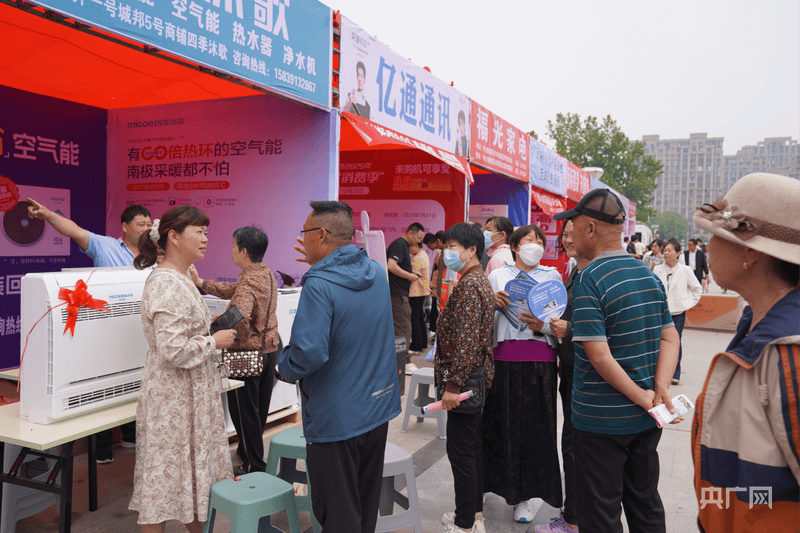
Group 1 - The "Enjoy Life with Heart" consumer promotion event in Qinyang City successfully concluded, integrating resources from various industries such as real estate, new energy vehicles, home decoration, finance, and home appliances to create a consumer promotion platform [1] - Over 30 merchants participated in the event, offering significant discounts such as "direct manufacturer subsidies" and "home decoration gift packages," benefiting consumers [1][2] - The event led to a continuous increase in order volume for merchants, with consumer participation in the "old for new" policy reaching 232 businesses and generating 34,655 orders, driving consumption of 110 million yuan and subsidies of 19.22 million yuan from mid-January to May [2] Group 2 - The total retail sales of consumer goods in Qinyang City reached 4.55 billion yuan from January to April, with a year-on-year growth of 9.1% [2] - Future plans include optimizing the consumption environment and cultivating new consumption hotspots to inject new momentum into the city's high-quality economic development [2]
2025【ESG先锋60】评选正式启动,探寻可持续发展领航者
Sou Hu Cai Jing· 2025-05-26 06:30
Core Viewpoint - The article emphasizes the importance of ESG (Environmental, Social, and Governance) principles in driving sustainable development and high-quality economic growth in various industries, particularly in China [2][3]. Group 1: ESG and Industry Impact - Companies across multiple sectors, including finance, energy, healthcare, and technology, are exploring new development models and value creation paths under the guidance of ESG principles [2]. - The integration of ESG concepts aligns with China's transition to high-quality development, providing new momentum and pathways for companies to overcome traditional growth bottlenecks [2]. Group 2: 2025 ESG Pioneer 60 Selection - The 2025 ESG Pioneer 60 selection aims to identify and recognize companies and individuals actively engaged in ESG practices, showcasing their dual economic and social value [3]. - The selection process will be rigorous, involving market indicators, public voting, and expert reviews to ensure fairness and social value in the results [3][4]. Group 3: Award Categories - The awards include various categories such as Annual Environmental Responsibility Excellence Award, Annual Social Responsibility Excellence Award, and Annual ESG Green Finance Award, recognizing contributions to ESG from multiple dimensions [4][6][7]. Group 4: Participation and Timeline - The selection is open to a wide range of industries, with nearly 100 sectors eligible to participate, regardless of ownership type or company size, as long as they demonstrate outstanding ESG performance [5][9]. - The application process is open until November 11, with the final award list to be announced in December, encouraging companies to participate through self-nomination or third-party recommendations [9].
4月澳门综合消费物价指数同比上升0.23% 环比回升0.16%
智通财经网· 2025-05-23 09:50
Core Insights - The overall consumer price index (CPI) in Macau increased by 0.23% year-on-year in April 2025, with a month-on-month rise of 0.16% [1] - For the twelve months ending in April 2024, the average CPI rose by 0.42% compared to the same period a year earlier [2] Price Index Changes - The price indices for Recreation, Sports, and Culture, and Miscellaneous Goods and Services increased by 2.47% and 1.82% respectively compared to the previous year [1] - The food and non-alcoholic beverages category saw a year-on-year increase of 0.48%, driven by higher dining and takeaway costs, while housing and fuel rose by 0.21% due to increased rental prices [1] - Conversely, categories such as Information and Communication (-3.01%), Clothing (-2.35%), and Transportation (-1.67%) experienced declines [1] Monthly Comparisons - Compared to March, the CPI rose by 0.16% in April, with significant increases in the Recreation, Sports, and Culture category (+2.6%) due to rising hotel prices [2] - The Clothing (+0.78%) and Transportation (+0.42%) categories also saw month-on-month increases, influenced by seasonal clothing availability and rising airfare [2] - The Information and Communication category saw a slight decrease of -0.07%, while the food and non-alcoholic beverages category fell by -0.04% due to price drops in fresh fish, seafood, vegetables, and fruits [2] Consumer Spending Categories - Macau's statistical bureau has compiled three series of consumer price indices to reflect price changes affecting different household spending groups [3] - The A and B class consumer price indices cover approximately 50% and 30% of households respectively, with average monthly expenditures ranging from 11,000 to 35,999 MOP and 36,000 to 71,999 MOP [3] - The categories of housing and fuel, food and non-alcoholic beverages, and transportation have significant weight in household spending, accounting for 34.47%, 29.47%, and 8.33% respectively [3]
一张票根玩转一座城:文旅融合的消费新密码
Sou Hu Cai Jing· 2025-05-19 05:20
Core Insights - The tourism industry is increasingly adopting a "cross-industry linkage" approach, where a single ticket can connect various aspects of the consumer experience, such as theater tickets offering discounts on art exhibitions and train tickets providing half-price access to tourist attractions [1][2][4] Group 1: Ticket Bundling and Consumer Behavior - The trend of "one ticket covers all" is gaining traction, allowing consumers to save money by purchasing bundled packages that include tickets for attractions, transportation, and accommodations [2][4] - This bundling strategy, referred to as "main ticket attracting secondary consumption," encourages tourists to explore surrounding areas and spend more, as seen in the case of a theater ticket that includes discounts at local restaurants [4][12] Group 2: Transportation as a Marketing Tool - Train tickets are being transformed into tourism vouchers, as demonstrated by a campaign in Luoyang where train ticket holders received half-price entry to attractions, resulting in increased ticket sales and overall consumer spending [5][9] - The integration of transportation and tourism not only boosts passenger numbers for railways but also enhances foot traffic for local businesses, creating a win-win situation for all parties involved [5][9] Group 3: Sports Events and Local Economy - Sports events are being leveraged to stimulate local economies, with ticket purchases linked to discounts on hotels and attractions, leading to significant increases in local restaurant revenues during event periods [7][9] - This model converts one-time sports event attendance into ongoing economic activity, benefiting local businesses and increasing overall GDP contributions [9] Group 4: Underlying Mechanisms - The success of the "ticket root" model is driven by three key factors: aggregation of traffic, penetration of consumption scenarios, and consumer spending inertia [10] - The initial purchase acts as a "spending trigger," encouraging consumers to continue spending as they perceive they are saving money [10] Group 5: Future Trends - The future of the "ticket root" model is expected to shift from physical tickets to a digital ecosystem, with possibilities for electronic tickets linked to mobile payment platforms and AI-driven recommendations for bundled packages [13] - The ultimate goal remains to ensure that consumers feel they are getting a good deal, which is crucial for driving continued engagement and spending in the tourism sector [13]
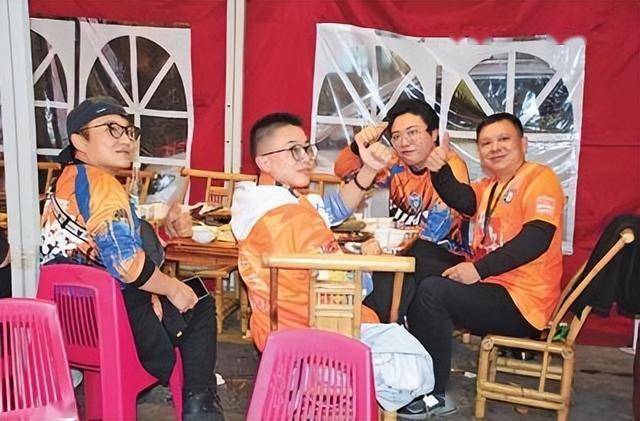
夜经济里看活力丨一条小街吃遍洛阳——看西工小街如何打造夜经济集聚区
He Nan Ri Bao· 2025-05-13 23:28
Core Viewpoint - The revitalization of Xigong Street in Luoyang has transformed it into a vibrant night-time destination, attracting both local residents and tourists, significantly boosting the local economy and enhancing consumer experiences [2][4]. Group 1: Economic Impact - Over 70% of customers at "Fangfei Coffee" are from outside Luoyang, indicating that tourism and street renovations have created new business opportunities [2]. - The total commercial area of Xigong Street has expanded to 400,000 square meters, with a walking street length of 1,200 meters following four phases of renovation since 2019 [2]. - The diverse offerings in Xigong Street, including over 800 shops, have contributed to a lively night-time economy, showcasing local culinary delights and attracting a wide range of consumers [3][4]. Group 2: Consumer Experience - The street features a mix of traditional and modern elements, with attractions such as local delicacies and creative spaces enhancing the overall visitor experience [3][4]. - Initiatives like discounted stays for job-seeking students at local hostels have made the area appealing to young consumers, fostering a sense of community and engagement [4]. - The integration of historical culture with contemporary trends has positioned Xigong Street as a unique cultural and commercial hub, appealing to both traditional and modern consumer expectations [4].
“宠客+惠民”双轮驱动 湖北京山市“五一”消费市场热力全开 推动城市活力升级
Zhong Guo Fa Zhan Wang· 2025-05-13 14:06
Core Insights - During the May Day holiday, Jingyang City in Hubei Province implemented "customer-friendly policies" and "benefit measures" to stimulate the tourism, dining, accommodation, and retail sectors, resulting in a significant surge in consumer activity [1] Group 1: Customer-Friendly Policies - Jingyang City introduced a series of "customer-friendly" initiatives aimed at providing a "zero-burden" travel experience, including free parking, free public transport, and free access to sports facilities and cultural venues [2] - The city received 774,000 tourists during the holiday, generating a total tourism revenue of 141 million yuan, representing year-on-year growth of 22% and 23% respectively [2] Group 2: Night Economy and Retail Growth - The night economy emerged as a new highlight, with significant foot traffic in three major night markets, leading to a fivefold increase in sales for some vendors [3] - The accommodation sector saw high occupancy rates, with some hotels reaching 100% occupancy, and over 5,000 guests were received across the city [3] - Retail activities experienced a boost with "trade-in" promotions, resulting in 852 transactions and sales revenue of 5.97 million yuan, a year-on-year increase of 9.6% [3] Group 3: Family-Friendly Attractions - Green Forest Mountain Scenic Area and Taikang Jingyang Farm became popular destinations, with the latter offering free admission and various family-oriented services, attracting over 60% family visitors [4] - The overall visitor numbers for scenic spots increased by 10%-20%, with specific attractions like Meiren Valley receiving over 5,000 visitors daily [4]
五一假期文旅市场全面开花:从人潮涌动看消费新趋势
Sou Hu Cai Jing· 2025-05-13 00:50
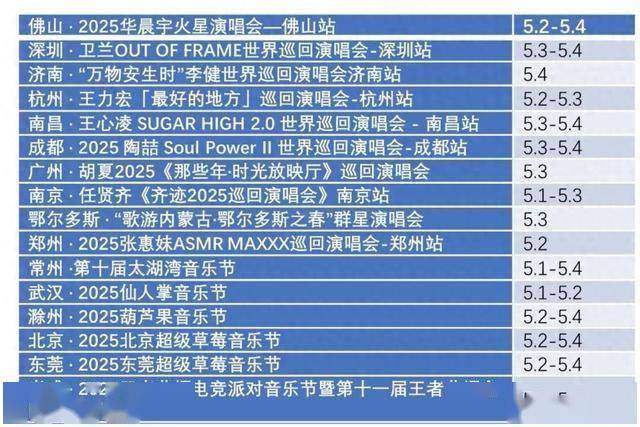
Core Insights - The May Day holiday in China witnessed an unprecedented surge in tourism, with major cities experiencing overwhelming crowds and travel demand exceeding expectations [1][2] - A notable trend emerged where travelers preferred longer trips, with cross-city orders accounting for 90% of bookings, indicating a shift towards "reverse tourism" where less popular destinations saw significant growth [4][7] - The entertainment sector, particularly concerts and music festivals, significantly boosted tourism in second-tier cities, with hotel prices in these areas increasing by 200% due to high demand from concert-goers [8][9] Transportation and Travel Trends - The transportation system faced a "stress test" during the holiday, with peak traffic on highways reaching 2.1 times the normal volume, totaling 62 million vehicles on May 1 [2] - The trend of "rational travel" emerged, with travelers opting for off-peak travel to save costs, reflecting a more mature consumer mindset [7] Accommodation Dynamics - The accommodation market displayed a stark contrast, with hotels in prime locations experiencing price surges and high occupancy, while less central areas offered more affordable options [9][10] - There was a doubling in bookings for high-end homestays and vacation packages, indicating a trend towards premium travel experiences [10] Cross-Border and Domestic Tourism - Outbound tourism remained popular, particularly to traditional destinations like Japan and Thailand, but inbound tourism saw a remarkable increase of 141%, highlighting China's growing appeal to foreign visitors [11] - County-level tourism orders grew by nearly 20%, with rural tourism experiencing a 40% increase, reflecting a shift towards more localized and authentic travel experiences [13] Cultural and Entertainment Integration - The film market showed differentiated competition, with domestic films performing strongly during the holiday, indicating a shift in audience preferences towards relatable content [12] - Night tours of museums and historical sites gained popularity, showcasing innovative cultural experiences that go beyond traditional ticket sales [17] Consumer Behavior and Market Evolution - The younger generation, particularly Gen Z, is reshaping the travel market with a focus on experiences that align with their interests, such as music festivals and unique accommodations [16] - The diversification of tourism consumption patterns was evident, moving from mere sightseeing to immersive experiences that combine entertainment, food, and local culture [18]