即时零售

Search documents
美参议院:特朗普竞选集会遭枪击源于安全疏漏;事关科创板!上交所发布“1+6”配套规则;加拿大一架波音737客机发动机起火丨早报
Di Yi Cai Jing· 2025-07-14 00:38
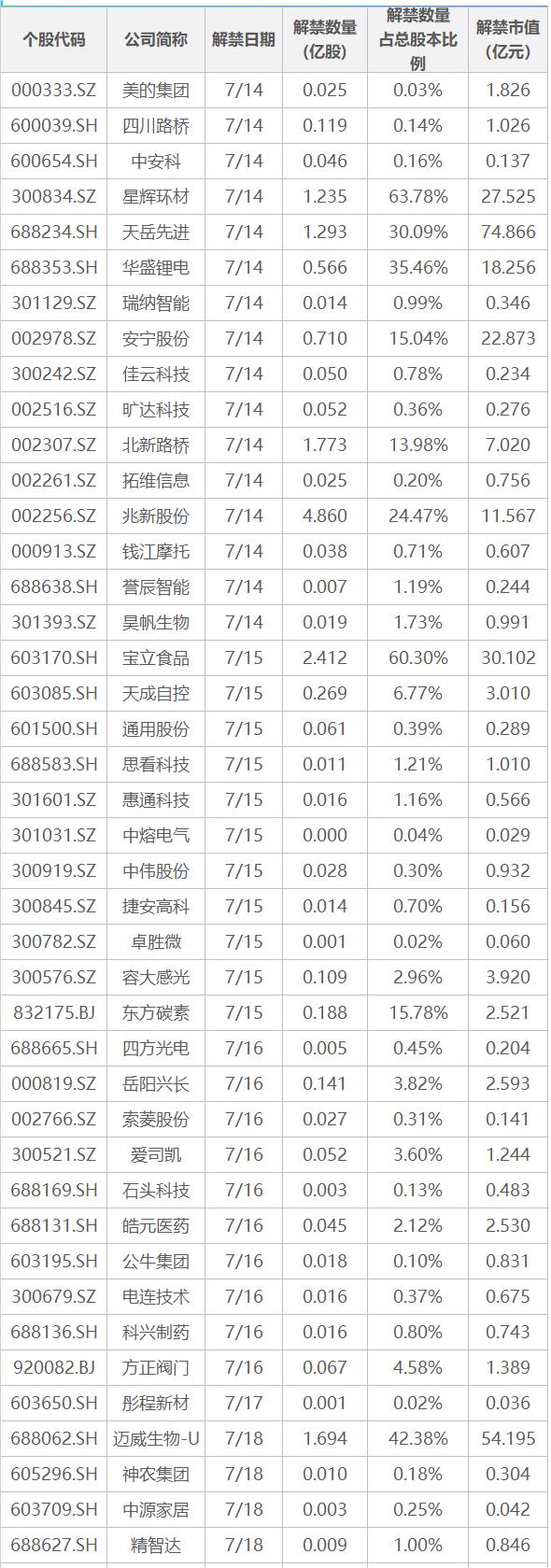
Group 1 - A Boeing 737 engine caught fire at Vancouver International Airport, leading to the evacuation of passengers without any reported injuries. The aircraft has been grounded for repairs, but airport operations remain unaffected [1] - The Shanghai Stock Exchange has officially released new rules for the Sci-Tech Innovation Board, detailing the criteria for recognizing senior professional institutional investors, which includes aspects like investment experience and compliance [2] - The U.S. Senate released a report indicating that a shooting incident at a Trump campaign rally was due to a series of avoidable security lapses, criticizing the Secret Service for its lack of discipline [3] Group 2 - Wang Yi, China's Foreign Minister, met with Russian Foreign Minister Sergey Lavrov, emphasizing the strategic value of China-Russia relations and the importance of high-level exchanges [4] - China's Ministry of National Defense responded to Japan's claims of Chinese military aircraft approaching, asserting that their actions were legitimate and necessary for national security [5] - The Tarim Basin's 750 kV power transmission project has been completed, creating the largest ultra-high voltage ring network in China, covering an area of 1.06 million square kilometers [6] Group 3 - A nationwide heatwave is expected to peak in central and eastern China, with temperatures exceeding 40°C in some areas, while rainfall decreases in southern regions [7] - A tourist in Chongqing was fined and restricted from the industry for illegal solicitation, disrupting public order at a popular tourist site [8] - China's railway investment reached 355.9 billion yuan in the first half of the year, marking a 5.5% year-on-year increase [9] Group 4 - China's first primordial gravitational wave detection experiment has been completed, successfully capturing clear images of radiation from the Moon and Jupiter, marking a significant advancement in this field [10] - Ukrainian President Zelensky has confirmed the appointment of Yulia Svyrydenko as the new Prime Minister, with discussions on the new cabinet structure scheduled [12] - Elon Musk's SpaceX is set to invest $2 billion in his AI startup xAI, which constitutes a significant portion of the company's recent funding round [17] Group 5 - This week, 42 companies will have their restricted shares released, with a total market value exceeding 26 billion yuan, led by Tianyue Advanced and Maiwei Biological [18] - Two new stocks are set to be issued this week, with a total of approximately 90.73 million shares expected to raise 1.236 billion yuan [22]

“疯狂星期六”,会持续到什么时候?
3 6 Ke· 2025-07-14 00:32
Core Viewpoint - The ongoing competition in the food delivery market, particularly between Meituan and Taobao, is characterized by aggressive subsidy strategies, with expectations that this "super Saturday" promotion will continue for at least the next two years [1][44]. Group 1: Market Dynamics - The recent "Super Saturday" event saw a significant increase in consumer engagement, with Meituan achieving a record of 1.2 billion orders in a single day, including over 1 billion food orders [3][12]. - Both Meituan and Taobao have shifted from aggressive subsidies to a more controlled "drip irrigation" subsidy strategy, indicating a response to previous over-saturation and regulatory signals against excessive competition [4][6]. - The food delivery market's share in China's retail sector has been steadily increasing, reaching 11.4% in 2024, highlighting the growing importance of local and high-frequency consumption [14][16]. Group 2: Competitive Strategies - Meituan and Taobao are employing creative subsidy tactics, such as random free orders and time-limited coupons, to encourage consumer habits and manage subsidy costs effectively [6][7]. - The competition is not just about food delivery but also about integrating these services into broader e-commerce strategies, with both companies aiming to leverage high-frequency users for cross-selling opportunities [18][21]. - The financial implications of the subsidy war are significant, with estimates suggesting that total investments could reach hundreds of billions, akin to national subsidies, indicating a fierce battle for market dominance [27][28]. Group 3: Long-term Outlook - Analysts express concerns about the sustainability of these aggressive subsidy strategies, questioning whether they will yield long-term benefits or merely serve as a short-term tactic to boost user engagement [38][39]. - The future of the food delivery market is tied to the growth of instant retail, with predictions that the market could reach a GMV of 4 trillion RMB by 2030, making the current investments seem rational if the market expands as anticipated [35][36]. - The competitive landscape is evolving, with companies like Alibaba and JD.com also adjusting their strategies to capture market share in the rapidly growing instant retail sector [30][32].


行业周报:烟火气回归家常菜崛起,潮玩、创作者经济赛道景气度延续-20250713
KAIYUAN SECURITIES· 2025-07-13 14:15
Investment Rating - The industry investment rating is "Positive" (maintained) [2] Core Views - The return of everyday dining and the rise of home-cooked meals are significant trends, with the market for casual dining exceeding 1.2 trillion RMB, emphasizing high cost-performance [5][58] - The creator economy, particularly in the music streaming sector, is experiencing stable growth, with platforms enhancing their bargaining power through non-music content [22][24] - The casual dining market is projected to grow at a compound annual growth rate (CAGR) of 9.1% from 2023 to 2028, reaching 55.87 billion RMB by 2028 [56][58] Summary by Sections 1. Trend in Casual Dining - The average spending on Chinese dining has decreased from 87.6 RMB in 2023 to 79.2 RMB in 2024, a decline of 9.6% [53][55] - The casual dining market is characterized by a shift towards high cost-performance and practicality, with a significant increase in home cooking frequency [53][56] - The market for affordable casual dining (under 100 RMB per meal) is the largest segment, accounting for 88.7% of the total dining market, with a current size of 36.18 billion RMB [56][58] 2. Creator Economy and Music Streaming - The global music streaming market is projected to reach over 20.4 billion USD in 2024, with a year-on-year growth of 7.3% [27][30] - Subscription users in the music streaming sector are expected to grow to 263 million in 2024, reflecting an increase of 11% year-on-year [30] - Spotify's market penetration in emerging markets is driving user growth, with a CAGR of 35% from 2021 to 2025 [26][30] 3. Trends in Toy and Creator Economy - The online sales of trendy toys in June 2025 reached 1.348 billion RMB, with a year-on-year growth of 16% [12][14] - The sales of blind boxes and plush toys showed strong performance, with blind boxes growing by 109% year-on-year [12][13] - The creator economy is bolstered by the growth of non-music content, enhancing platforms' bargaining power [22][24] 4. Beauty and Personal Care Market - The skincare market on Tmall has seen a concentration increase, with the top 20 brands accounting for 46.2% of the total GMV [66] - Domestic brands have seen a decline in both quantity and market share, while international brands have experienced double-digit growth [66][67]




十年过去了,为什么外卖还在大战?
虎嗅APP· 2025-07-13 09:18
Core Viewpoint - The article discusses the resurgence of intense competition in the food delivery market in China, likening it to a war driven by necessity rather than creativity, with major players like Meituan, Alibaba, and JD.com vying for control over the instant delivery infrastructure [6][33]. Group 1: Historical Context - The food delivery market in China has evolved significantly over the past decade, with initial competition focused on user acquisition and scale through heavy subsidies [4][5]. - In 2020, the focus shifted from growth to profitability, with new technologies like Web 3 and AI gaining attention, leading to a more cautious investment environment [5][6]. Group 2: Recent Developments - On July 5, 2025, a significant spike in order volume occurred, with Meituan reporting over 120 million instant retail orders and Alibaba's Taobao Flash Sale exceeding 80 million orders in a single day, resulting in estimated losses exceeding 1 billion yuan for both companies [6][7][21]. - The competition has intensified as companies aim to control the instant delivery infrastructure, moving beyond just food delivery to encompass a wider range of products [16][18]. Group 3: Strategic Shifts - The competition has shifted from merely capturing the food delivery market to controlling the entire instant delivery network, which is seen as a more valuable prize [18][19]. - JD.com initiated the latest round of competition as a strategic move to regain market share and drive traffic to its core e-commerce business, while Alibaba's response was driven by the need to consolidate its fragmented strategy [21][22]. Group 4: Market Dynamics - The current competitive landscape is characterized by a sense of urgency and fear among major players, as they face stagnating growth and the threat of being surpassed by rivals [23][33]. - The article highlights a shift in consumer perception, where the ongoing subsidy wars are viewed as routine business maneuvers rather than innovative market developments [28][29]. Group 5: Implications for Stakeholders - The intense competition has led to operational chaos for merchants and delivery riders, who experience both overwhelming demand and increased earnings during peak periods [29][30]. - The article suggests that the ongoing battles in the food delivery sector are indicative of a broader trend towards market consolidation and the establishment of a dominant player in local life services [33][34].
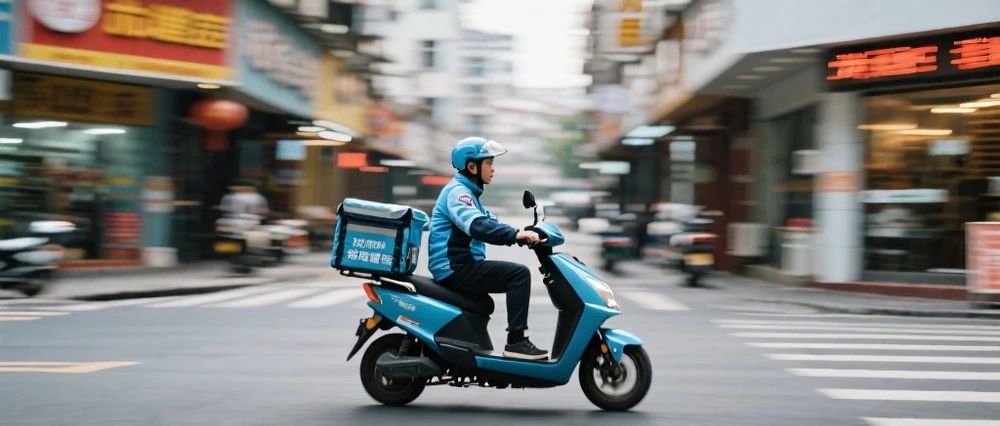
马云刘强东杀入2万亿赛道,京东阿里绝不能输,美团则想赢更多
Sou Hu Cai Jing· 2025-07-12 11:31
Group 1 - JD.com officially entered the food delivery market on February 11, 2025, with a recruitment plan for "quality dining merchants" and introduced three key strategies: quality merchants, zero commission, and social security for delivery riders [1][4] - By April 2025, JD.com’s food delivery service achieved over 10 million daily orders, and by June 1, this number increased to over 25 million [2][3] - JD.com has established a significant presence with 120,000 full-time delivery riders and 1.5 million restaurant partners, maintaining daily orders above 25 million during the 618 shopping festival [3][4] Group 2 - Meituan's response to JD.com's entry was relatively subdued, focusing on providing new insurance for riders and announcing the independent launch of Meituan Flash Purchase, which aims for "30-minute delivery of everything" [5][6] - Meituan's strategic shift includes optimizing its operations by exiting unprofitable areas while expanding its focus on instant retail, including Flash Purchase and small supermarkets [11][12] - By July 5, 2025, Meituan reported over 120 million daily orders, with over 100 million coming from food delivery, indicating a strong market position [15][28] Group 3 - Alibaba's entry into the market with Taobao Flash Purchase in April 2025, which quickly surpassed 60 million daily orders, indicates a significant competitive threat to both JD.com and Meituan [8][9] - The integration of Ele.me and Fliggy into Alibaba's e-commerce group reflects a strategic move to enhance its instant delivery capabilities [8][25] - The competition has intensified, with Meituan, JD.com, and Alibaba all vying for dominance in the instant retail space, leading to a significant increase in daily order volumes across platforms [15][29] Group 4 - Meituan's concept of "instant retail" was first introduced in 2021, predicting a market size exceeding 1 trillion yuan within five years, with a focus on meeting immediate consumer needs [20][21] - Meituan Flash Purchase has achieved a scale of 175 billion yuan in the past year, with expectations to exceed 400 billion yuan by 2026 [21][22] - The competition is characterized by a shift from traditional food delivery to a broader instant retail model, with all three companies focusing on enhancing their logistics and delivery capabilities [29][30] Group 5 - The ongoing battle for market share in instant retail is marked by aggressive strategies from JD.com and Alibaba, who view Meituan as a significant competitor [30][32] - Meituan's strategy of "30-minute delivery of everything" poses a direct challenge to traditional retail models, potentially disrupting the market for JD.com and Alibaba [32][33] - The competition is expected to be prolonged and intense, with all players aiming to secure their positions in the rapidly evolving instant retail landscape [30][33]

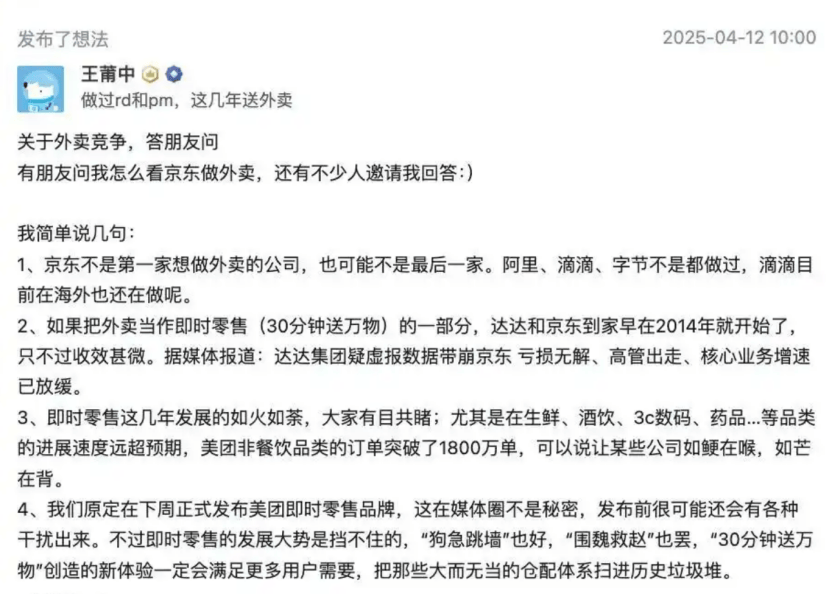
外卖大战又爆了!0元奶茶点到爆单,小龙虾一口价16.18元,上海点午饭3.4元吃饱
21世纪经济报道· 2025-07-12 11:23
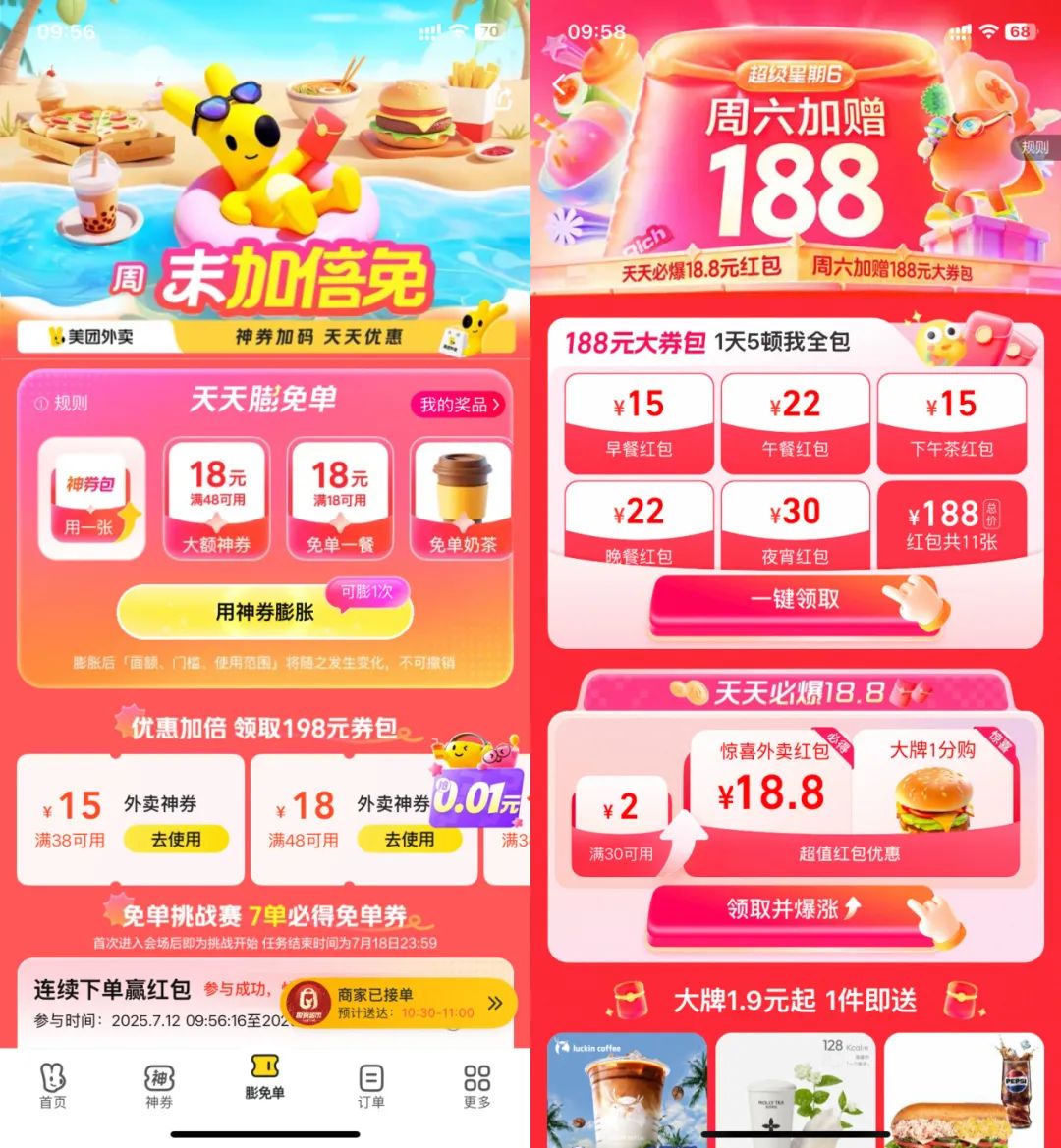
Core Viewpoint - The article discusses the resurgence of the "takeaway war" in China, highlighting significant discounts and promotions offered by major platforms like Meituan and Taobao Flash Purchase, which have led to a surge in consumer orders and impacted delivery riders and merchants [1][26][30]. Group 1: Promotions and Consumer Behavior - On July 12, platforms like Meituan and Taobao Flash Purchase issued large discount coupons, leading to a spike in consumer interest and orders [1][13]. - Consumers reported paying as little as 0.01 yuan for drinks due to these promotions, with some transactions showing discounts of up to 22.4 yuan [5][9]. - The hashtag FreeMilkTea trended on social media, indicating widespread consumer engagement with these promotions [2]. Group 2: Impact on Delivery Riders - Delivery riders experienced a significant increase in order volume, with some reporting daily earnings exceeding 1,000 yuan due to the high number of orders generated by the promotions [25][26]. - The influx of orders led to reports of riders completing up to 200 deliveries in a day, showcasing the intense demand created by the promotional activities [26][27]. Group 3: Merchant Challenges - While consumer orders surged, many merchants struggled to keep up with the demand, leading some to temporarily remove items from their menus due to overwhelming order volumes [27]. - Reports indicated that some merchants faced operational challenges, with long wait times for customers and overwhelmed staff [27][29]. Group 4: Competitive Landscape - The article notes that the competition among platforms has intensified, with Meituan and Taobao Flash Purchase both launching aggressive promotional strategies to capture market share [30][31]. - Alibaba announced a plan to inject 50 billion yuan into consumer and merchant subsidies over the next 12 months, indicating a strong defensive strategy against Meituan [31]. - Analysts predict that the ongoing competition will pressure overall industry profitability, with platforms needing to balance high delivery costs against consumer incentives [34][36]. Group 5: Future Outlook - The article suggests that the future of instant retail will depend on the platforms' ability to integrate supply chains and enhance delivery capabilities, particularly for non-standard products [37][38]. - The market for instant retail in China is projected to reach 1.2 trillion yuan by 2024, with the top three players' market share declining from 82% in 2020 to 67% [38].
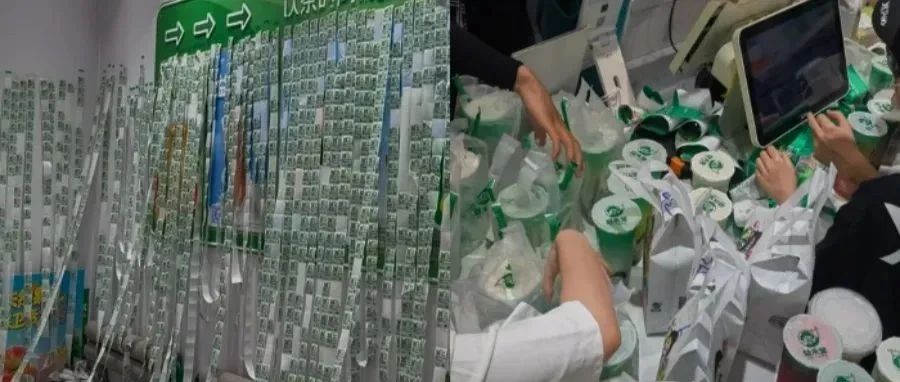
疯狂星期六,“免费奶茶”爆了!外卖战升级,摩根大通提问:值得吗?
华尔街见闻· 2025-07-12 09:03
Core Viewpoint - The article discusses the intense competition in the food delivery and instant retail market, primarily driven by Alibaba's Taobao Flash Sale, which has prompted major players like Meituan and JD to engage in aggressive subsidy wars [1][10]. Group 1: Competitive Landscape - Alibaba announced a substantial investment of 50 billion RMB for subsidies in the instant retail sector over the next 12 months, significantly escalating competition [10]. - Meituan responded with its own subsidy plans shortly after Alibaba's announcement, while JD also committed over 10 billion RMB for the same period [10]. - As of early July, Meituan's daily order volume reached a record high of 120 million, while Alibaba's daily orders surged to 80 million within two months [10]. Group 2: Financial Implications - Morgan Stanley highlighted that Alibaba's financial strength, with nearly 100 billion RMB in free cash flow and around 600 billion RMB in cash equivalents by March 2025, positions it favorably in this competitive landscape [11]. - The report suggests that the ongoing subsidy war will negatively impact the short-term profitability of all involved companies, including Alibaba, Meituan, and JD [14][18]. Group 3: Market Potential and Valuation - Morgan Stanley predicts that the Chinese instant retail market could reach a gross merchandise volume (GMV) of 4 trillion RMB by 2030, with industry profits estimated at 81 billion RMB [13]. - The report outlines two scenarios: an optimistic one where the market grows as expected, making current investments justifiable, and a pessimistic one where the market only reaches half the expected size, rendering the investments overly aggressive [15]. Group 4: Market Share Dynamics - Prior to the intensified competition, Meituan held approximately 45% of the market share, with Alibaba's Ele.me at 21% and JD at 5% [16]. - Despite the competitive pressures, Meituan is expected to maintain its market leadership, although its market share may decline due to the growth of instant retail, which is a new revenue stream for Meituan but could cannibalize traditional e-commerce for Alibaba and JD [16]. Group 5: Investment Strategy Adjustments - In light of the competitive uncertainties, Morgan Stanley has lowered its earnings forecasts for Alibaba and Meituan, adjusting their target prices accordingly [20]. - The report indicates a preference order for investment in the instant retail sector: Alibaba > Meituan > JD, reflecting the competitive advantages and financial resources of each company [14].


“外卖补贴大战”周末重启,咖啡奶茶疯狂爆单,摩根大通提问:如此惨烈,值得吗?
Hua Er Jie Jian Wen· 2025-07-12 07:20
Group 1 - The new round of "takeaway subsidy war" has reignited, initiated by Alibaba's Taobao Flash Purchase, forcing industry giants Meituan and JD to respond [1] - Alibaba announced a 50 billion RMB investment in subsidies for takeaway and instant retail over the next 12 months, leading to a chain reaction in the market [1] - As of early July, Meituan's daily order volume reached a record high of 120 million, while Alibaba's daily order volume reached 80 million within two months [1] Group 2 - Morgan Stanley believes that the competitive initiative has shifted to Alibaba, which has significant financial resources, including nearly 100 billion RMB in free cash flow and close to 600 billion RMB in cash equivalents by the end of March 2025 [2] - This financial strength positions Alibaba favorably in the ongoing consumption battle, creating significant competitive pressure on Meituan and JD [2] Group 3 - The intense "burning money" competition raises the question of whether such investments are worthwhile, depending on the long-term potential of the instant retail market [3] - Morgan Stanley presented two scenarios: if the instant retail market reaches 4 trillion RMB by 2030, the current investment is justified; if it only reaches half that, the investment appears overly aggressive [3][4] - Alibaba's substantial cash reserves and free cash flow give it a competitive edge, while Meituan and JD face challenges [3] Group 4 - In an optimistic scenario, the instant retail market's GMV is projected to reach 4 trillion RMB by 2030, with industry profits at 81 billion RMB [4] - In a pessimistic scenario, if the market's long-term GMV is only 2 trillion RMB, the terminal value would drop to 338 billion RMB, making the first year's total loss potentially reach 85 billion RMB [5] Group 5 - Prior to the intensified competition, Meituan held approximately 45% market share, with Ele.me (Alibaba's platform) at 21% and JD at 5% [6] - Despite increased competition, Meituan is likely to maintain its market leadership, although its market share may decline [6] - Instant retail growth will be incremental for Meituan, while it will cannibalize traditional e-commerce for Alibaba and JD [6] Group 6 - The investment expansion will directly impact short-term profitability, leading to stock price pressure for all involved companies [7] - Morgan Stanley predicts that Alibaba, Meituan, and JD's stock prices will face downward pressure in the next 3 to 6 months due to lowered profit expectations [7] Group 7 - Morgan Stanley has significantly lowered its adjusted EPS forecasts for Alibaba for fiscal years 2026 and 2027 by 22% and 11%, respectively, and reduced Meituan's operating profit forecast for 2025 by 15% [9] - Target prices for Alibaba have been adjusted downwards, with the US target price reduced from $170 to $140 and the Hong Kong target price from HKD 165 to HKD 135 [9] - Meituan's target price has also been lowered from HKD 160 to HKD 150 while maintaining an "overweight" rating [9]
十年过去了,为什么外卖还在大战?
Hu Xiu· 2025-07-12 01:44
Core Insights - The article discusses the resurgence of intense competition in the food delivery market in China, reminiscent of the fierce battles from a decade ago, driven by changing strategic goals among major players [4][30][54] - The focus has shifted from merely competing for market share in food delivery to controlling the broader infrastructure of instant delivery services, which encompasses a wider range of products beyond just food [25][28][56] Group 1: Historical Context - The food delivery market in China has evolved significantly over the past decade, with major players like Meituan, Ele.me, and Baidu competing aggressively for user acquisition through subsidies and promotions [2][10][19] - Initial competition was characterized by heavy spending on subsidies to attract users, with Meituan and Ele.me burning billions to establish their market presence [2][3][8] - The market saw a temporary peace as companies shifted focus towards profitability and sustainable growth, moving away from the "burn money" model [3][21] Group 2: Recent Developments - On July 5, 2025, a significant escalation occurred with Taobao Flash Sale launching a major offensive against Meituan, leading to record-high order volumes in the food delivery sector [4][6][7] - The total daily orders in the food delivery market reached a record 200 million, with Meituan reporting 120 million and Taobao Flash Sale exceeding 80 million orders on the same day [6][7] - The intense competition resulted in estimated combined losses exceeding 1 billion yuan for both companies on that day [7] Group 3: Strategic Shifts - The competition has evolved from a focus on food delivery to a broader battle for control over the instant delivery infrastructure, which includes various consumer goods [25][28][29] - Companies are now vying to establish themselves as the default delivery network for all types of products, not just food, indicating a strategic shift in the market landscape [26][28] - The change in strategic focus has led to a renewed willingness to incur losses in pursuit of long-term market dominance [30][41] Group 4: Consumer Perspective - From a consumer standpoint, the increase in subsidies and promotions has become a normalized expectation, with little awareness of the underlying competitive dynamics [43][46] - The perception of the food delivery service has shifted from a novel convenience to an expected norm, with consumers now viewing the ongoing subsidy wars as a means to benefit from lower prices [47][48] - The relationship between platforms and consumers has transformed into a transactional one, where consumers are more focused on immediate benefits rather than the broader implications of the competition [48][49]
“外卖大战”为何卷土重来,即时零售将走向何方?
Xin Lang Cai Jing· 2025-07-12 00:09
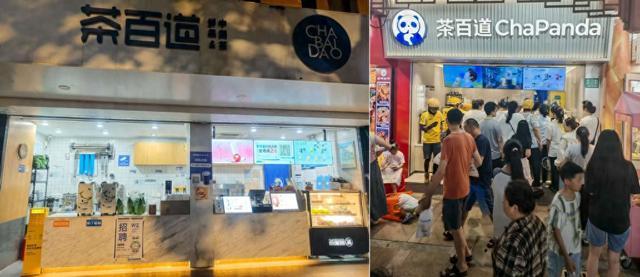
Core Insights - The recent surge in food delivery orders is attributed to a sudden increase in subsidies from platforms like Alibaba and JD, leading to a chaotic situation for restaurants and delivery personnel [1][3][4] - The competition among major platforms, including Alibaba, JD, and Meituan, has intensified, resulting in significant fluctuations in order volumes and delivery rider earnings [3][11][15] Group 1: Market Dynamics - The weekend's order spike was not coincidental; all three major food delivery platforms have been investing resources since Q1, expanding market capacity and increasing consumer engagement [4][10] - The introduction of a promotional event called "Super Saturday" by Alibaba aims to create a new consumer holiday, offering substantial cash redemptions for food delivery [3][12] Group 2: Financial Implications - Following the weekend's subsidy battle, stocks of various food and beverage companies surged, with Cha Bai Dao rising by 15% and Nayuki Tea by over 10% [5] - Despite the apparent increase in order volume, many merchants express concerns about the sustainability of profits due to high fixed costs and the potential for reduced orders once subsidies diminish [5][6] Group 3: Delivery Riders' Perspective - Delivery riders have experienced a temporary boost in earnings due to subsidies, but they face uncertainty as the platforms' subsidy policies fluctuate unpredictably [7][9] - The influx of new riders attracted by high subsidies may lead to increased competition and pressure on earnings once the promotional activities cease [9][10] Group 4: Competitive Landscape - The competition is not limited to food delivery; it extends to the broader instant retail market, with platforms vying for consumer attention and market share [11][15] - New entrants like Pinduoduo are also testing the waters in the instant delivery space, indicating that the battle for market dominance is far from over [15]