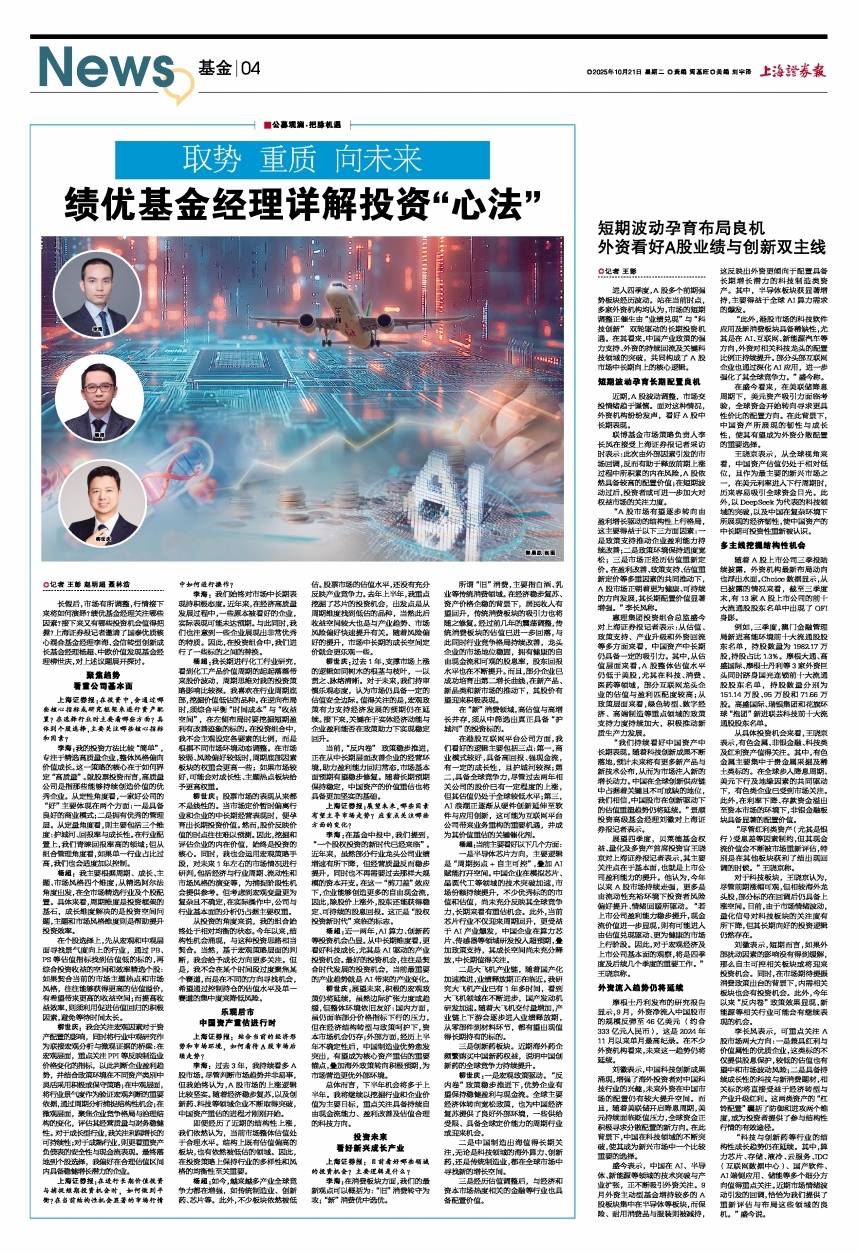
大飞机

Search documents
江苏“十五五”规划建议:增强新材料、生物医药等产业优势 深度融入长三角大飞机产业集群建设
Jing Ji Guan Cha Bao· 2025-12-13 02:04
Core Viewpoint - The Jiangsu Provincial Government emphasizes enhancing the competitiveness of strategic emerging industries and deepening integration into the Yangtze River Delta's large aircraft industry cluster as part of its 14th Five-Year Plan [1] Group 1: Strategic Emerging Industries - The plan focuses on strengthening the advantages of industries such as new generation information technology, new energy, new materials, biomedicine, and high-end equipment [1] - It aims to cultivate new growth engines in aerospace and low-altitude economy, creating internationally competitive strategic emerging industry clusters [1] Group 2: Innovation and Development - The implementation of an industrial innovation project is highlighted, which includes advancing innovation facilities, technology research and development, and product iteration and upgrades [1] - A large-scale application demonstration action for new technologies, products, and scenarios will be executed [1] Group 3: Investment and Funding - The plan mentions leveraging the provincial strategic emerging industry mother fund and the Jiangsu social security science and technology innovation fund to accelerate the large-scale development of emerging industries [1]
14万亿可期 江苏交经济建设新答卷
Jiang Nan Shi Bao· 2025-12-10 16:24
Economic Growth - Jiangsu's GDP is projected to exceed 14 trillion yuan in 2024, with a continuous increase from over 11 trillion in 2021 and over 12 trillion in 2022, showcasing strong economic resilience and growth potential [1] - The province's per capita GDP is expected to reach 22,600 USD in 2024, with labor productivity increasing from 213,000 yuan per person in 2020 to 284,000 yuan per person in 2024, indicating a focus on quality alongside scale [2] Domestic Demand - The total retail sales of consumer goods in Jiangsu are anticipated to rise from 3.63 trillion yuan in 2020 to 4.49 trillion yuan in 2024, reflecting a robust internal demand strategy [2] - Over 12,000 "Su New Consumption" promotional events have been held, distributing approximately 2.54 billion yuan in consumption vouchers and digital currency, which has significantly boosted domestic consumption [2] Innovation and Industry Upgrade - Jiangsu ranks second nationally in regional innovation capability, with significant R&D investment and breakthroughs in basic research, particularly in strategic emerging industries like new energy and high-end equipment [4][5] - The province has established a comprehensive industrial system with 16 advanced manufacturing clusters and 50 key industrial chains, leading to a strong global competitive position in various sectors [5] Manufacturing Sector - Jiangsu's manufacturing quality development index has ranked first nationally for five consecutive years, with a focus on digital transformation and smart manufacturing [5] - The province's strategic emerging industries have seen an average annual growth of 8% over the past five years, with sectors like biomedicine and integrated circuits leading nationally [5] Social Welfare and Common Prosperity - Jiangsu has made strides in reducing the urban-rural income gap to 2.04:1, with urban employment growth exceeding 10% nationally [6] - The province has implemented various social welfare projects, including a comprehensive elderly care system and high enrollment rates in education, enhancing the overall quality of life for residents [6] Future Outlook - Jiangsu aims to continue leading in high-quality development by focusing on technological and industrial innovation, deep reforms, and promoting common prosperity as part of its long-term strategy [7]
A股收评:三大指数分化,沪指跌0.06%创指涨超1%北证50跌0.37%,机器人、卫星互联网板块走高!超3800股下跌,成交1.56万亿缩量1219亿
Sou Hu Cai Jing· 2025-12-04 07:17
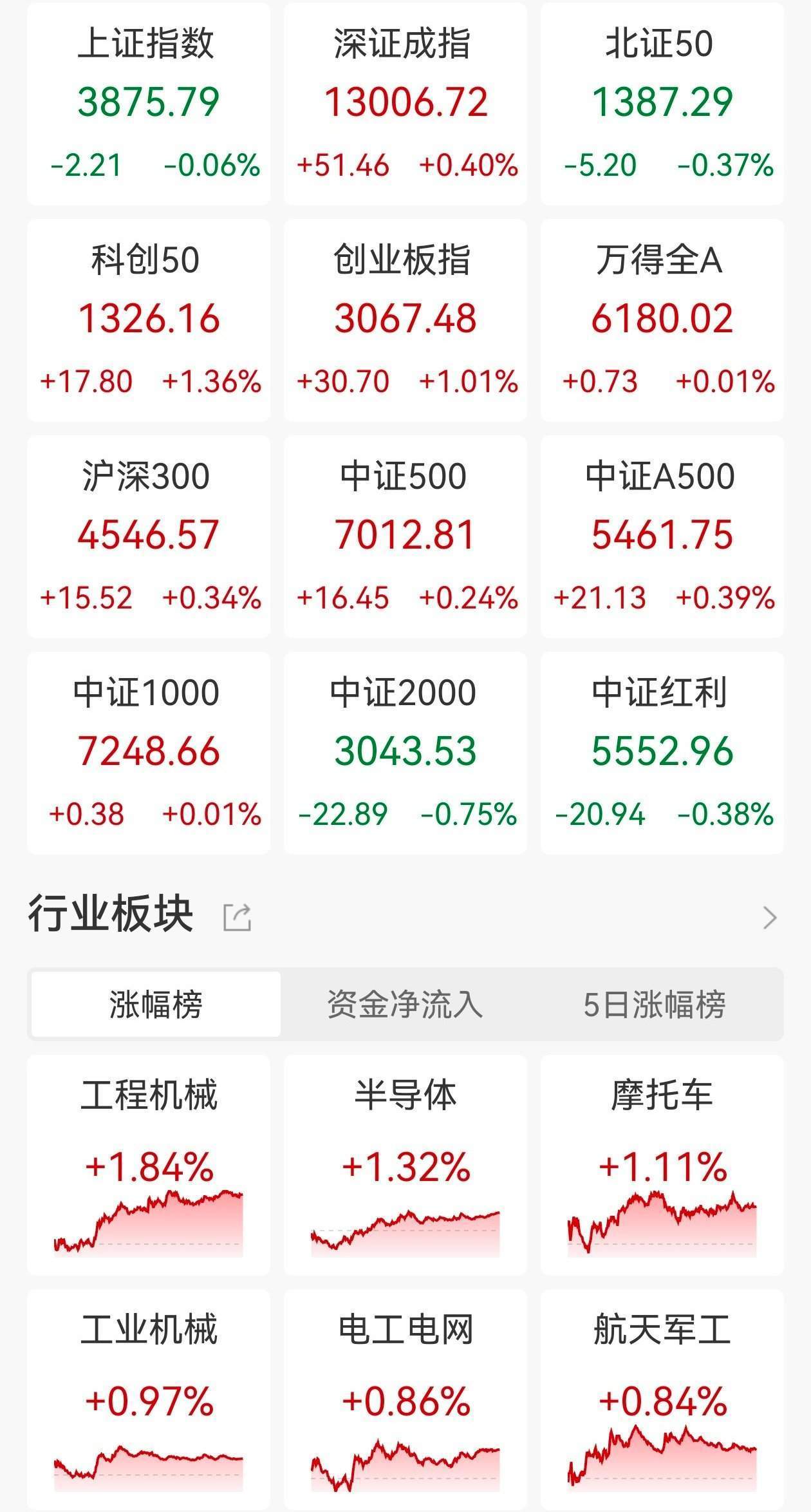
Market Overview - The A-share market showed mixed performance with the Shanghai Composite Index down by 0.06% closing at 3875 points, while the Shenzhen Component Index increased by 0.4% and the ChiNext Index rose by 1.01% [1] - The total market turnover was 1.56 trillion yuan, a decrease of 121.9 billion yuan compared to the previous trading day, with over 3800 stocks declining [1] Index Performance - Shanghai Composite Index: 3875.79, down by 2.21 points or 0.06% [2] - Shenzhen Component Index: 13006.72, up by 51.46 points or 0.40% [2] - ChiNext Index: 3067.48, up by 30.70 points or 1.01% [2] - Other indices such as the STAR Market 20 and the CSI 300 also showed positive movements [2] Sector Performance - The robotics sector surged following the Trump administration's focus on the field, with multiple stocks hitting the daily limit [4] - The satellite sector also saw gains, with several stocks reaching the daily limit [4] - The aerospace sector experienced a rise, highlighted by Aerospace Huanyu hitting the daily limit [4] - Conversely, the shipbuilding sector fell sharply, declining over 11%, while the Hainan sector and dairy stocks also faced significant losses [4]


A股收评:三大指数涨跌不一,沪指跌0.06%创指涨超1%,机器人、卫星互联网板块走高!超3800股下跌,成交1.56万亿缩量1219亿
Sou Hu Cai Jing· 2025-12-04 07:11
Market Overview - The A-share market showed mixed performance with the Shanghai Composite Index down by 0.06% closing at 3875 points, while the Shenzhen Component Index rose by 0.4% and the ChiNext Index increased by 1.01% [1] - The total market turnover was 1.56 trillion yuan, a decrease of 121.9 billion yuan compared to the previous trading day, with over 3800 stocks declining [1] Index Performance - Shanghai Composite Index: 3875.79, down 2.21 points (-0.06%) [2] - Shenzhen Component Index: 13006.72, up 51.46 points (+0.40%) [2] - ChiNext Index: 3067.48, up 30.70 points (+1.01%) [2] - Other indices such as the STAR Market 50 and CSI 300 also showed positive movements [2] Sector Performance - The robotics sector experienced significant gains, with stocks like Jilun Intelligent and Rifa Precision Machinery hitting the daily limit [4] - The satellite internet sector also saw a rise, with companies like Heertai and China Satellite reaching their daily limit [4] - The large aircraft sector surged, with Aerospace Hanyu hitting the daily limit [4] - Conversely, the shipbuilding sector faced declines, with Jianglong Shipbuilding dropping over 11% [4] - Other sectors such as the Hainan sector and dairy stocks also saw notable declines, with Roniu Mountain hitting the daily limit [4]
A股收评:三大指数涨跌不一,创业板指涨超1%,机器人、卫星互联网板块走高
Ge Long Hui· 2025-12-04 07:05
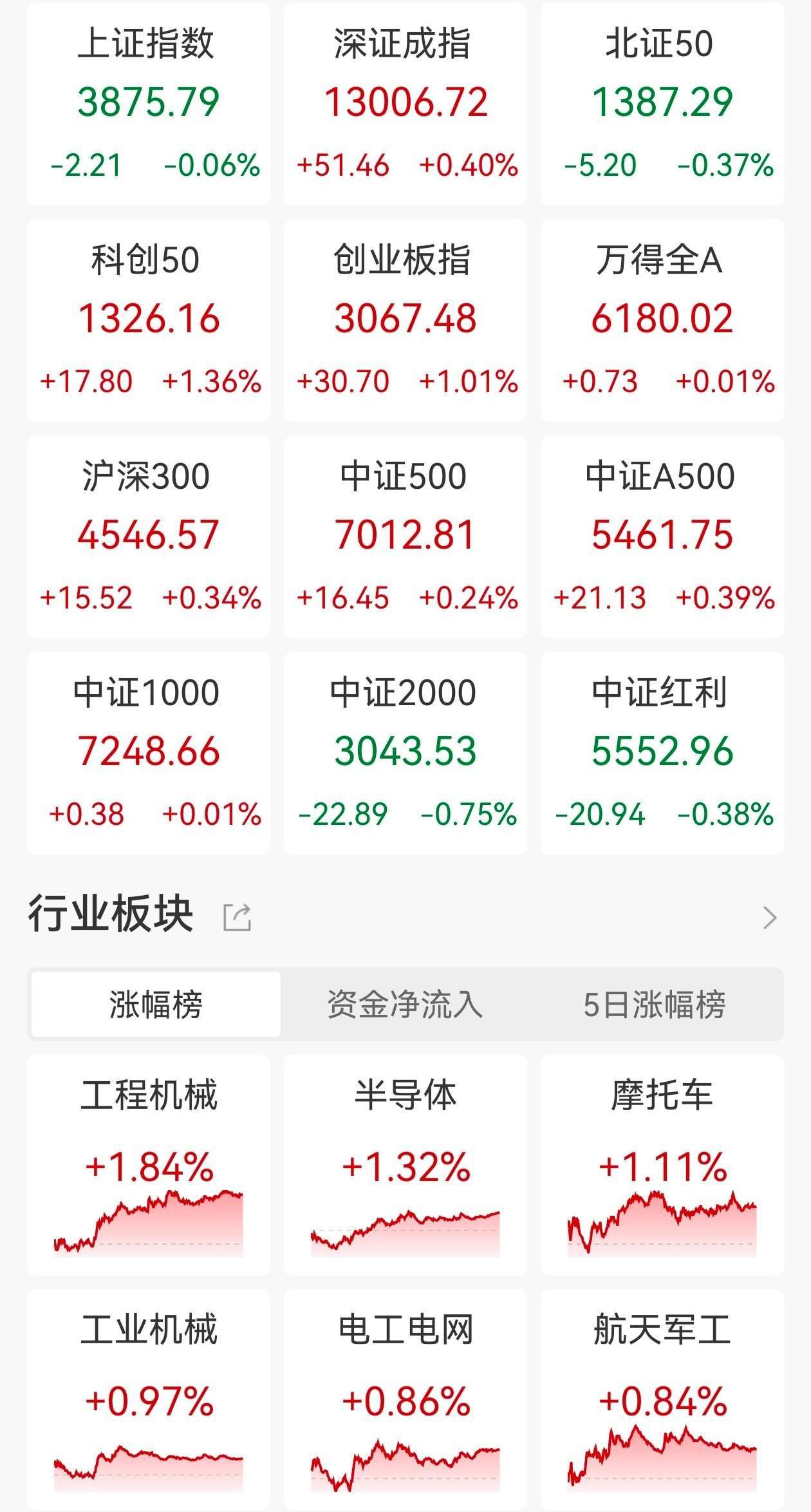
Market Overview - The A-share market showed mixed results with the Shanghai Composite Index down by 0.06% closing at 3875 points, while the Shenzhen Component Index rose by 0.4% and the ChiNext Index increased by 1.01% [1] - Total market turnover was 1.56 trillion yuan, a decrease of 121.9 billion yuan compared to the previous trading day, with over 3800 stocks rising [1] Sector Performance - The robotics sector surged following the Trump administration's focus on the industry, with stocks like Jilun Intelligent, Rifa Precision Machinery, and Hengerdai hitting the daily limit [1] - The satellite internet sector also saw gains, with companies such as Heertai and China Satellite reaching their daily limit [1] - The large aircraft sector experienced a boost, with Aerospace Hanyu hitting the daily limit [1] - Other sectors with notable increases included industrial mother machines, F5G, commercial aerospace, and SPD concepts [1] Declining Sectors - The shipbuilding sector faced declines, with Jianglong Shipbuilding dropping over 11% [1] - The Hainan sector fell, with Roniu Mountain hitting the daily limit down [1] - Dairy stocks weakened, with Pinwo Foods leading the decline [1] - The tourism and hotel sector experienced fluctuations, with Tongqinglou hitting the daily limit down [1] - Other sectors with significant declines included cultivated diamonds, pre-made dishes, and organic silicon [1] Additional Insights - The engineering machinery sector showed a 5-day increase of 1.84% [2] - The industrial machinery sector increased by 0.97% [2] - The electrical and grid sector saw a net inflow of funds, indicating positive investor sentiment [2]

工业克苏鲁,中国想从世界买什么?
虎嗅APP· 2025-12-03 10:22
Core Viewpoint - The article discusses the implications of China's self-sufficiency in manufacturing and its reluctance to engage in international trade, raising questions about the future of global trade dynamics and the concept of "Industrial Cthulhu" [4][8]. Group 1: Trade Dynamics - The author highlights that during a recent trip to mainland China, the prevailing sentiment was a lack of interest in imports, as China is capable of producing everything it needs more efficiently and at lower costs [7]. - The article questions the existence of trade if the largest seller, China, is not interested in buying from others, suggesting a potential shift in global trade paradigms [8]. - The author notes that the current trade surplus for China reached $3.3 trillion by the end of October, indicating a significant imbalance in trade relationships [16]. Group 2: Industrial Innovation - The article emphasizes China's rapid advancements in various sectors, including electric vehicles, photovoltaics, and AI, showcasing its transition from a manufacturing hub to an innovation leader [12]. - It mentions that the cost of hardware for autonomous vehicles in China is less than one-third of that in the U.S., highlighting China's competitive edge in technology [12]. - The article also points out that Western pharmaceutical companies are increasingly investing in Chinese firms, recognizing their potential in innovative drug development [12]. Group 3: Economic Challenges - The author discusses the risks associated with China's high trade surplus, including the potential for increased financial risk and inefficiency in overseas dollar assets [16]. - The article suggests that China's reliance on its status as the "world's factory" may hinder the internationalization of the renminbi, as the country imports less and maintains a singular channel for offshore assets [17]. - It raises concerns about the long-term sustainability of China's economic model, which may lead to a vicious cycle of trade imbalances and reduced global competitiveness [16][17]. Group 4: Future Considerations - The article proposes a shift in narrative from a zero-sum game in trade to a collaborative approach, suggesting that countries should work together and share benefits rather than compete solely on buying and selling [18]. - It emphasizes the need for a new framework that transforms the "world factory" concept into a "world workshop + world testing ground," which could foster innovation and cooperation [18].
江苏无锡:锚定新型工业化,工业强基铸就新质生产力
Sou Hu Cai Jing· 2025-11-30 20:21
来源:南京广播网 "十四五"时期是我国全面建成小康社会、实现第一个百年奋斗目标之后,乘势而上开启全面建设社会主 义现代化国家新征程、向第二个百年奋斗目标进军的第一个五年。 五年来,无锡规上工业总产值接连迈过2万亿元、2.5万亿元"台阶",2024年达到2.66万亿元,2021年至 2024年间,全市制造业增加值占GDP比重始终稳定在40%左右,实体经济"压舱石"作用愈发坚实;规模 以上工业企业数量"十四五"以来净增2707家,市场主体活力持续迸发;工业投资增速从2021年的-9.9% 攀升至11.3%,发展动能不断积蓄;中国软件名城、全国中小企业数字化转型试点城市、全国制造业新 型技术改造试点城市等11项"国字头"荣誉相继落户工信领域,品牌影响力持续彰显。 时光流转,奋进不止。今年前三季度,无锡工业经济延续稳中有进、稳中提质的良好态势,全市规上工 业增加值增长6.1%,全部工业增加值对GDP增长贡献率接近五成,在复杂多变的发展环境中交出了亮 眼答卷。这曲波澜壮阔的产业之歌,持续高亢激昂。 集群筑基・产业攀峰 无锡工业的能级跃升之路 一周前的腾讯全球数字生态大会城市峰会上,无锡与腾讯计算机签署重磅战略合作协议, ...
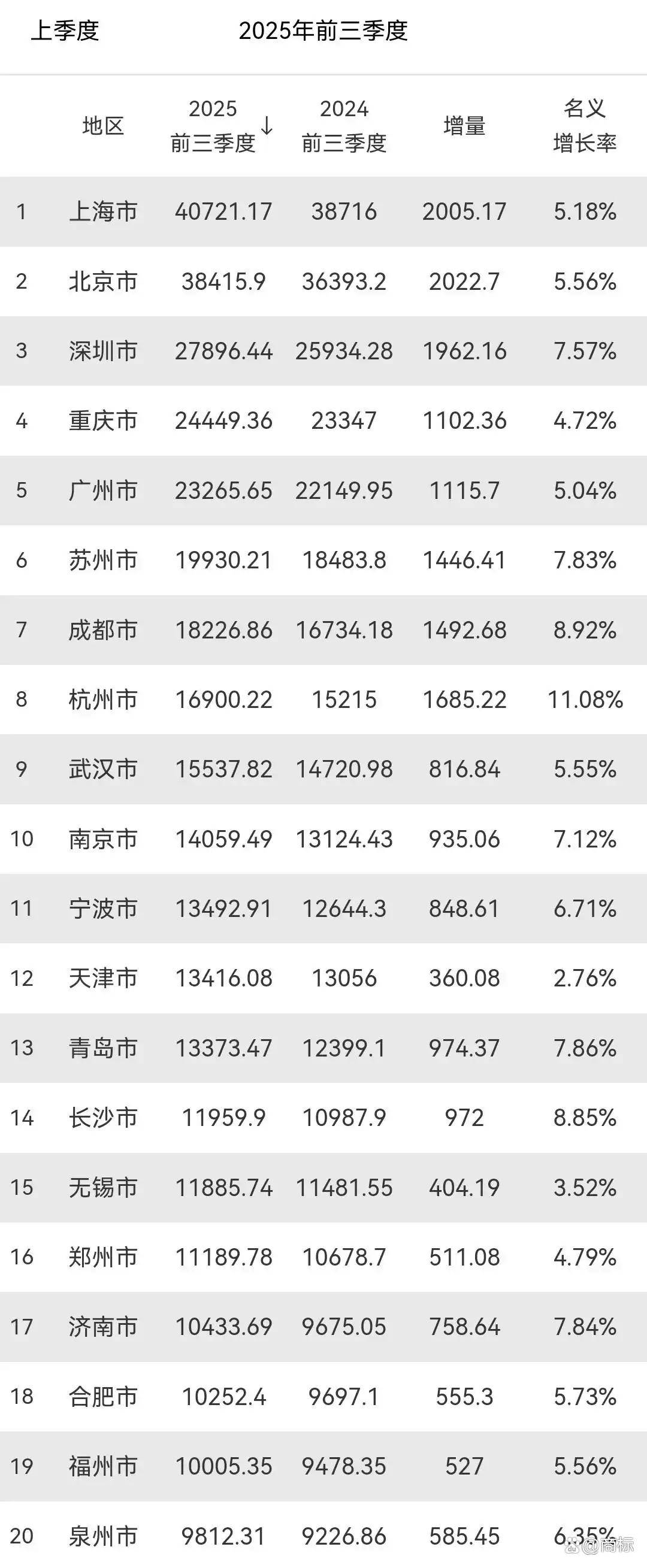
最新GDP!全国20强城市变动:上海突破4万亿,杭州增速11.08%,长沙逆袭无锡!
Sou Hu Cai Jing· 2025-11-10 23:01
Core Insights - The regional economic landscape is undergoing a significant reshuffle, with key changes in the top 20 cities by GDP in China for 2023, highlighting the impact of national regional development strategies and cities seizing opportunities from new productivity transformations [1][10] Group 1: Shanghai - Shanghai has become the first city in China to surpass a GDP of 40 trillion yuan, showcasing its dual advantages as an international financial center and a hub for technological innovation [4][5] - The city's strategic emerging industries account for 42% of its total output, with leading sectors such as integrated circuits, biomedicine, and artificial intelligence exceeding a scale of 1.7 trillion yuan [4][5] - The logistics advantage is underscored by the Yangshan Deep-Water Port, which has maintained the highest container throughput globally for 13 consecutive years, positioning Shanghai as a key node in the dual circulation economic framework [5] Group 2: Hangzhou - Hangzhou leads the 20 strong cities with an impressive GDP growth rate of 11.08%, driven by its digital economy, which contributes over 50% to its core industries [7] - The establishment of Alibaba's global headquarters and the empowerment of over 8,000 tech SMEs by Ant Group highlight the city's unique platform economy ecosystem [7] - Manufacturing investment in Hangzhou has surged by 28.9%, with companies like Xinhua San Group achieving a 30% increase in production efficiency through digital technology integration [7] Group 3: Changsha - Changsha has surpassed Wuxi to rank 15th nationally, with its engineering machinery industry serving as a key growth driver, led by companies like SANY Heavy Industry and Zoomlion [9] - The city's industrial added value growth rate stands at 7.5%, exceeding the national average by 3.7 percentage points, indicating robust industrial performance [9] - The establishment of the Xiangjiang Science City is fostering the rapid development of emerging industries such as semiconductors and aerospace, signaling a shift from a single-industry focus to a diversified innovation matrix [9]




“十五五”新蓝图·新机遇丨锚定协调发展——以布局优化激活区域经济新动能
Sou Hu Cai Jing· 2025-11-06 02:25
Core Insights - The article emphasizes the importance of optimizing regional economic layouts to activate new economic dynamics, particularly in the context of China's 14th and upcoming 15th Five-Year Plans [1][4]. Group 1: Regional Economic Development - In the Chengdu-Chongqing area, the collaboration between Sichuan and Chongqing has led to the establishment of significant economic and technological centers, enhancing overall regional competitiveness [2]. - The Chengdu-Chongqing economic circle has seen the creation of four trillion-level industrial clusters, including electronic information and advanced manufacturing, with an industrial added value projected to reach 24,230.1 billion yuan by 2024, a 40% increase from 2019 [2]. - The Yangtze River Delta region has experienced a substantial GDP increase from 27.6 trillion yuan in 2021 to over 33 trillion yuan in 2024, with 26 national advanced manufacturing clusters contributing significantly to this growth [3]. Group 2: Policy and Strategic Initiatives - The 15th Five-Year Plan suggests a clear direction for regional development, focusing on coordinated strategies and optimizing major productivity layouts to enhance high-quality economic development [1][4]. - Guangdong's "Hundred-Thousand-Ten Thousand Project" aims to address regional development imbalances, facilitating industrial transfers and activating county-level economic vitality [3][4]. - The article outlines a series of measures to enhance regional coordination, promote innovation, and optimize economic layouts, which are expected to be implemented during the 15th Five-Year Plan period [4][5]. Group 3: Industrial Collaboration - The integration of the automotive industry in the Sichuan-Chongqing region is highlighted, with significant collaboration in battery production and vehicle manufacturing [2]. - The article notes the formation of a "community of industries" in the Yangtze River Delta, where multiple industrial chains, including large aircraft and new energy vehicles, are advancing together [3]. - The article indicates that the optimization of resource allocation across regions will enhance economic resilience and efficiency, supporting high-quality development and modernization efforts [5].
公募观澜·把脉机遇 | 取势 重质 向未来 绩优基金经理详解投资“心法”
Sou Hu Cai Jing· 2025-10-21 00:03
Core Viewpoint - The market has experienced adjustments post-holiday, prompting discussions among top fund managers about future market trends and investment opportunities [12]. Investment Strategies - Company A focuses on high-quality enterprises with strong business models and management, emphasizing metrics like economic moat, return rates, and growth potential for stock selection [14]. - Company B employs a framework based on cycles, growth, themes, and market styles to select industries and stocks, prioritizing cyclical trends as foundational [14]. - Company C analyzes macroeconomic indicators like PPI to gauge corporate profitability trends, using industry conditions to validate macroeconomic assessments [15]. Market Outlook - Company A maintains a positive long-term outlook for the A-share market, citing solid recovery and breakthroughs in sectors like innovative pharmaceuticals and technology [18]. - Company B highlights the increasing global competitiveness of various industries, suggesting that many sectors remain undervalued despite recent market gains [18]. - Company C expresses cautious optimism, noting that macroeconomic policies are expected to support economic development, which could stabilize corporate profitability [19]. Investment Opportunities - Company A identifies opportunities in traditional consumer sectors like liquor and dairy, expecting recovery as household incomes rise [22]. - Company B sees potential in the semiconductor industry, driven by cyclical recovery and advancements in AI technology [24]. - Company C emphasizes the importance of macro policies and the global expansion of Chinese manufacturing as key areas for long-term investment [25].