
新能源车

Search documents
科创新能源ETF(588830)涨超4%,固态电池产业化进展加速
Xin Lang Cai Jing· 2026-02-09 02:45
消息面上,近期钠电&固态等产业化进展积极。钠电方面,2月5日,全球首款钠电池量产车型亮相,并 将在2026年中上市。固态电池方面,2月7-8日 第三届中国全固态电池创新发展高峰论坛在北京召开, 会议对全固态电池研发进展、关键技术问题展开深度研讨,明确了2026-2027年的产品定型到装车示范 等核心人物。头部几家电池企业有望在26Q1陆续进行产线招标;太空等场景快速发展有望打开固态电 池新应用领域。 有机构指出,(1)供给端:锂电排产环比有望进入显著提升通道:2月份受日历效应和春节假期影响, 锂电池排产环比回落13%左右,但同比增长近30%、淡季表现依旧亮眼。3月排产预计环比显著向好, 部分企业环比提升幅度有望达到15%-20%、部分企业有望创单月新高。(2)政策端:政策明朗下需求 有望快速释放:1月30日,发改委&能源局下发关于完善发电侧容量电价机制的通知,明确建立电网侧 独立新型储能容量电价机制。政策助推下国内储能、特别是长时储能有望获得更快发展。26年1月底2月 初以来,北京&上海&天津&江苏等各地陆续下发2026年汽车以旧换新补贴实施细则,助推政策快速落 地与实施。(3)容量电价补贴叠加锂盐价格波动回 ...
科创新能源ETF(588830)涨超4.8%,特斯拉计划扩大太阳能电池制造业务
Xin Lang Cai Jing· 2026-02-09 02:40
科创新能源ETF紧密跟踪上证科创板新能源指数,上证科创板新能源指数从科创板市场中选取50只市值 较大的光伏、风电以及新能源车等领域的上市公司证券作为指数样本,以反映科创板市场代表性新能源 产业上市公司证券的整体表现。 数据显示,截至2026年1月30日,上证科创板新能源指数(000692)前十大权重股分别为天合光能、晶科 能源、阿特斯、奥特维、厦钨新能、大全能源、容百科技、嘉元科技、固德威、天奈科技,前十大权重 股合计占比46.03%。 科创新能源ETF(588830)、创业板新能源ETF鹏华(159261)、光伏ETF鹏华(159863) 光伏概念表现活跃,消息面上,特斯拉正评估美国多个选址,计划扩大太阳能电池制造业务,目标在未 来三年内实现每年100吉瓦的太阳能制造能力。特斯拉副总裁邦妮·埃格尔斯顿、太阳能产品工程高级经 理塞思·温格相继在领英发布岗位,面向全球招募制造工程师与材料科学家,直言要"以极限速度解决规 模化制造难题,助力美国可再生能源突破"。官网招聘更给出明确时间表:2028年底前,在美国本土实 现从原材料端起的100GW一体化光伏制造。兑现马斯克的Tesla的100GW产能,预计第一期10G ...

突发!港股科技板块一跌再跌!阿里腾讯百度集体“跳水”,而新能源车却逆势猛涨
Sou Hu Cai Jing· 2026-02-08 20:43
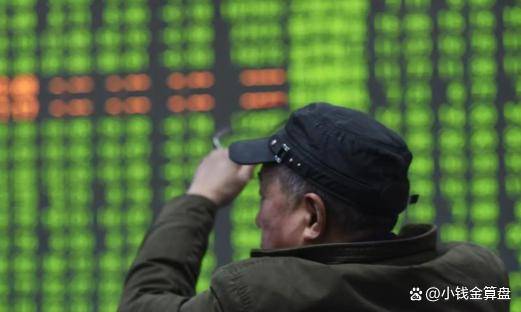
2026年2月6日,港股收盘时,一组数字让不少投资者心里一凉。 恒生指数跌了1.21%,恒生科技指数跌了1.11%。 阿里跌了近3%,腾讯、百度跌了近 2%,京东也跌超1%。 一片绿油油的行情里,新能源车却涨得红火,蔚来涨了近7%。 时间往回倒几天,情况更刺激。 2月3日,腾讯的股价在盘中一度暴跌超过6%,眼看着三千多亿港元的市值就蒸发了。 引发这场震荡的,不是什么惊天动 地的官方政策,而是两则在网络上流传、内容经不起推敲的"小作文"。 一篇说,平台型互联网企业可能不再享受高新技术企业的15%优惠税率。 另一篇更夸张,说游戏行业的税率要向白酒行业看齐,可能从现在的6%左右猛 增到32%。 就是这些没头没尾的消息,叠加了全球市场的不安情绪,瞬间点燃了抛售的导火索。 为什么几句漏洞明显的传言,能有如此巨大的威力? 答案可能不在于传言本身,而在于市场早已脆弱不堪的神经。 当大家都紧绷着的时候,一点风吹草 动,就足以引发一场雪崩。 我们来看看2月6日当天具体的市场表现。 阿里巴巴港股收盘下跌2.88%,股价报68.45港元。 百度集团港股下跌2.20%,股价收在98.70港元。 腾讯控股报 547.50港元,下跌1. ...

美股涨嗨了,中国资产大爆发!A股还能压的住?下周行情怎么走?
Sou Hu Cai Jing· 2026-02-07 20:33
2026年2月6日,大洋彼岸的美股市场写下了新的历史。 道琼斯工业平均指数在一轮强劲上涨后,历史上首次收盘站上了50000点大关,单日暴涨超过1200点,涨幅高达2.47%。 这不仅仅是数字的跨越,更像是一个时代的注脚,标志着美股长达十几年的牛市征程又树起了一座里程碑。 与道指一同狂欢的,还有纳斯达克指数和标普 500指数,它们分别上涨了2.18%和1.97%。 这场盛宴的核心驱动力,来自于那些耳熟能详的科技巨头。 英伟达的股价暴涨近8%,博通飙升超7%,就连苹果、微软也都录得可观涨幅。 更让中国投资 者关注的是,在美上市的中概股也迎来了集体爆发。 纳斯达克中国金龙指数大涨3.71%,蔚来、理想、小鹏等新能源车股,以及百度、阿里巴巴、拼多多等 互联网巨头,股价纷纷上扬,形成了一片"中国资产"的红色海洋。 这股兴奋情绪迅速蔓延至全球。 欧洲主要股市全线收高,大宗商品市场更是迎来暴动,国际白银期货价格单日暴涨超过9%。 甚至与A股关联紧密的富时中 国A50指数期货也上涨了超过1%。 整个世界资本市场,似乎都沉浸在一种乐观的氛围中。 然而,当这份来自全球的"喜报"传到国内,许多A股投资者的心中却泛起了复杂的滋味。 ...
后怕!当初决策层要是相信了许小年,中国可能会比现在落后二十年
Sou Hu Cai Jing· 2026-02-07 15:06
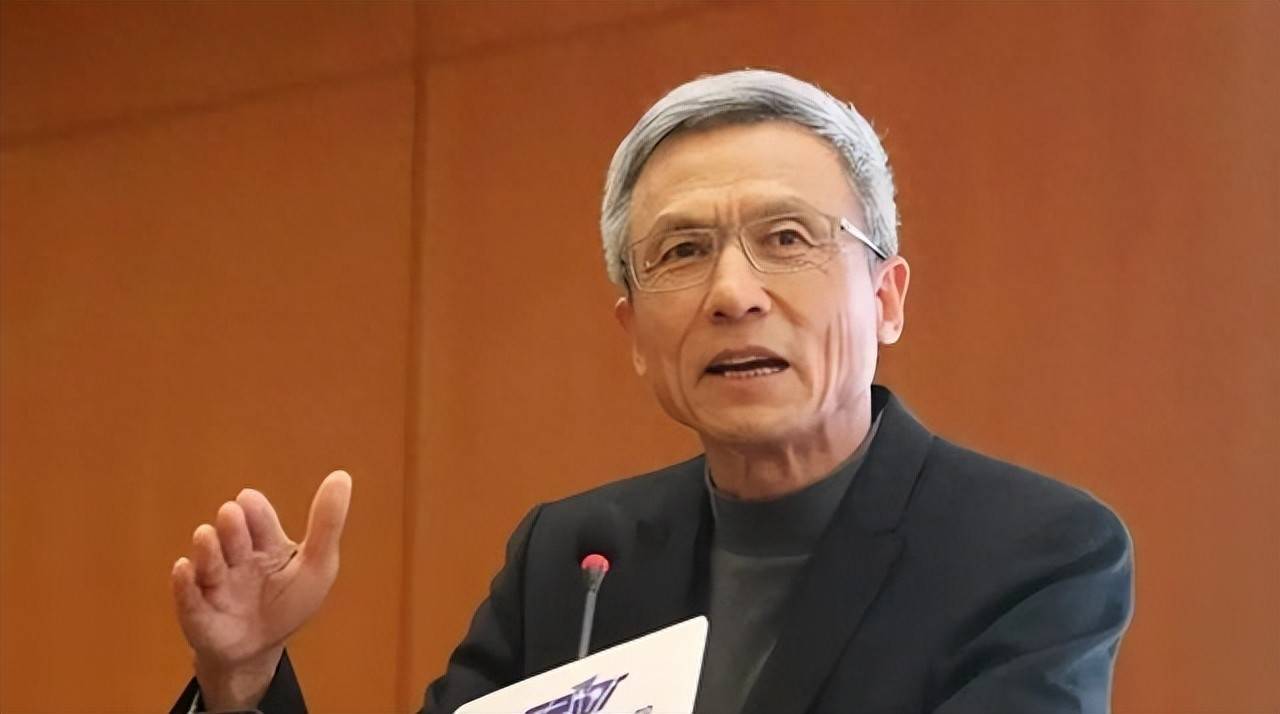
Group 1 - Xu Xiaonian is a prominent economist advocating for market self-regulation and minimal government intervention in China's economic development [2][4] - He believes that China's industrial base is still weak and that the country should not rush into high-end technologies like high-speed rail, chips, and new energy vehicles [4][9] - Xu has expressed concerns about the financial risks associated with high-speed rail investments, suggesting that the government should tighten funding and avoid blind expansion [6][7] Group 2 - In the semiconductor sector, Xu argues that China should not aggressively pursue advancements and should allow the market to determine capable enterprises [9][12] - He criticizes the new energy vehicle subsidy policies, suggesting they lead to inefficient spending and do not guarantee competitiveness for private companies [11][12] - Xu has voiced similar concerns regarding solar energy and 5G investments, warning that state-led initiatives could result in overcapacity [12][18] Group 3 - Despite Xu's warnings, China's high-speed rail network has expanded significantly since 2008, with projections to exceed 50,000 kilometers by 2025, accounting for over 70% of the global total [16][23] - The semiconductor industry has seen improvements, with companies like Huawei and SMIC making strides in technology and production capabilities [18][23] - The new energy vehicle market has grown substantially, with BYD surpassing Tesla in global sales, supported by government subsidies [19][23] Group 4 - The solar industry has become a global leader, with China accounting for 85% of component exports and significant cost reductions in production [21][23] - The 5G infrastructure has rapidly developed, with over 400,000 base stations built, enhancing automation in factories and contributing to industrial growth [23][25] - Overall, the combination of state investment and market competition has led to significant advancements in various sectors, countering Xu's more cautious approach [23][29]
又一新能源车事故后打不开车门,车企紧急回应
第一财经· 2026-02-07 01:27
Core Viewpoint - The safety issue of car door handles has gained public attention following a recent accident involving the 2024 Dongfeng Yipai 007, where the hidden door handles failed to function during a fire emergency, raising concerns about escape risks in collision scenarios [3][4]. Group 1: Incident Overview - A video of the 2024 Dongfeng Yipai 007 accident went viral, showing the vehicle emitting smoke and later catching fire after a collision, with passengers struggling to escape due to the malfunctioning door handles [3]. - Dongfeng Yipai issued a statement acknowledging the incident, which occurred on March 19, 2025, and confirmed that the accident was caused by a high-speed collision with a truck [3]. Group 2: Safety Concerns - The inability to open hidden door handles during emergencies has been a recurring issue in recent traffic accidents, highlighting the potential risks associated with this design [4]. - The Ministry of Industry and Information Technology has developed a mandatory national standard, GB 48001-2026, which will take effect on January 1, 2027, addressing safety requirements for car door handles [4]. Group 3: New Standards - The new standard mandates that each car door must be equipped with a mechanical release for the outer door handle, ensuring that doors can be opened in emergencies, such as battery thermal runaway [5]. - Each door must also have at least one mechanical release inner handle that operates independently, with specific placement and visibility requirements to facilitate emergency access [5][6]. - The standard specifies that the inner handle must be clearly marked with identifiable symbols and instructions, ensuring visibility and ease of use in low-light conditions [6].
31省市经济发展目标出炉,预制菜国标公开征求意见| 财经日日评
吴晓波频道· 2026-02-07 00:29
Economic Development Goals - The economic growth target for 2026 is set around 5%, a decrease from the previous year's target of "above 5%" [2] - Tibet has the highest growth target at approximately 7%, while Jiangxi is the only province to raise its target to 5%-5.5% [2] - The adjustment in targets reflects a pragmatic approach to enhance economic quality amid challenges such as local debt and real estate market adjustments [2] Pre-prepared Food Standards - The National Health Commission has released a draft national standard for pre-prepared foods, aiming to clarify definitions and management scope [4] - The standard emphasizes strict management of food additives and pollutants, aiming to rebuild consumer trust in the pre-prepared food industry [4] - The introduction of these standards is expected to promote high-quality development in the pre-prepared food sector [4] AI Applications and Market Dynamics - WeChat has restricted the use of AI application commands in its platform, reflecting competitive tensions in the tech industry [6] - The rapid influx of users to AI applications has led to server issues, indicating a need for better infrastructure to support high demand [6] - Concerns remain regarding the integration of AI applications in financial transactions, highlighting user hesitance [7] Meituan's Acquisition of Dingdong Maicai - Meituan announced a plan to acquire Dingdong Maicai for approximately 50 billion RMB, enhancing its supply chain capabilities [8] - Dingdong Maicai's business model focuses on rapid delivery through a network of small warehouses, which aligns with Meituan's operational strategy [8] - The acquisition is seen as a strategic move to strengthen market position amid increasing competition in the instant retail sector [9] Amazon's Capital Expenditure Plans - Amazon plans to increase its capital expenditure to $200 billion by 2026, reflecting aggressive investment in cloud services and AI technology [10][11] - The company's fourth-quarter sales reached $213.4 billion, with a 14% year-over-year growth, indicating strong performance [10] - Concerns arise regarding the sustainability of such high capital expenditures amid rising financing costs for tech companies [11] NIO's Quarterly Profitability - NIO announced its first quarterly profit, projecting adjusted operating profit between 700 million to 1.2 billion RMB for Q4 2025 [12][13] - The company achieved a 96.1% year-over-year increase in vehicle deliveries in January, indicating strong demand for its high-end electric models [13] - Despite achieving profitability, challenges remain due to reliance on specific models and rising costs in the supply chain [13] Bitcoin Market Volatility - Bitcoin experienced a 12% drop, reaching a 16-month low of around $63,000, with a total market cap decline from $2.48 trillion to $1.27 trillion [14][15] - The significant price drop has triggered concerns about market sentiment and potential further sell-offs if key psychological levels are breached [14] - Bitcoin's volatility is seen as a reflection of broader market risk appetite and liquidity conditions [15] Stock Market Performance - The stock market showed fluctuations with the Shanghai Composite Index closing down 0.25%, amid a trading volume of 2.15 trillion RMB [16] - Various sectors experienced mixed performance, with the chemical sector gaining while consumer stocks faced declines [16] - The market is currently in a phase of adjustment, with potential shifts in focus from growth to value stocks anticipated post-holiday [16]




又一新能源车事故后打不开车门,车企紧急回应
Di Yi Cai Jing· 2026-02-06 23:51
2月5日,东风奕派发布了《关于网络流传的eπ007事故视频的声明》。其中提到,上述事故发生于2025 年3月19日中午,团队在事故发生后立即赶赴现场,全力配合事故处置工作,并对涉及的人员及家庭表 达了关怀与慰问。根据调查认定,本次事故是车辆与货车高速碰撞后引发。 尽管如此,车门把手为什么打不开仍是公众关注的焦点,东风奕派尚未对此做出回应。 在近年的交通事故中,隐藏式门把手带来的安全隐患层出不穷。比如:2024年,山西运城一问界M7车 辆高速追尾后,隐藏式门把手无法打开;2025年,小米SU7高速碰撞事故中,隐藏式门把手未被打开也 成为外界的关注点之一。 隐藏式门把手潜在的安全风险,增加了汽车碰撞、起火事故中潜在的逃生与救援风险。比如:断电情况 下,电动式外门把手和车门内把手失效;无明显、统一标志,增加紧急情况下的操作难度。 车门把手再引争议。 近日,工业和信息化部组织制定的强制性国家标准《汽车车门把手安全技术要求》(GB 48001-2026)由 国家市场监督管理总局、国家标准化管理委员会批准发布,将于2027年1月1日起开始实施。 汽车门把手的安全问题再次引发公众关注。近日,网络平台上一则视频掀起热议。视频 ...
新能源板块今日反弹,新能源车ETF(159806)收涨近2%
Mei Ri Jing Ji Xin Wen· 2026-02-06 15:08
Group 1 - The new energy sector rebounded, with the New Energy Vehicle ETF (159806) rising nearly 2% [1] - Open Source Securities indicated that the profitability of automotive parts is expected to turn upward against the backdrop of anti-involution in the industry, coupled with downstream expansion, maintaining high growth potential [1] - Tesla disclosed that it has approximately 1.1 million paid Full Self-Driving (FSD) users, accounting for about 12% of the company's total vehicle sales, and announced a strategic transformation with a trillion yuan investment focusing on robotics and autonomous driving [1] Group 2 - The Shanghai government introduced a vehicle replacement subsidy, providing an 8% subsidy on the purchase price of new energy vehicles [1] - The National Energy Administration plans to establish 28 million charging facilities by the end of 2027, which is expected to drive investments exceeding 200 billion yuan [1] - By 2025, global shipments of humanoid robots are projected to increase significantly year-on-year, with Chinese manufacturers leading the market [1] Group 3 - The New Energy Vehicle ETF (159806) tracks the CS New Energy Vehicle Index (399976), which selects listed companies from the upstream materials, midstream batteries and components, and downstream complete vehicles sectors to reflect the overall performance of the new energy vehicle industry [1] - The index components are selected based on representative securities from sub-sectors, with a relatively balanced weight distribution [1]
纳斯达克中国金龙指数涨0.86%,蔚来涨6.17%
Mei Ri Jing Ji Xin Wen· 2026-02-06 14:43
每经AI快讯,2月6日,纳斯达克中国金龙指数涨0.86%,蔚来涨6.17%,理想汽车涨3.43%。 ...
