汽车芯片

Search documents
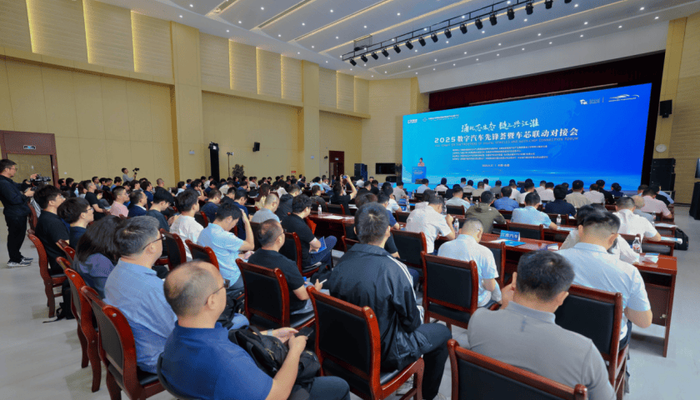
凝“芯”聚“汽”,数字汽车先锋荟暨车芯联动对接会成功在安徽省汽车办举行!
Xin Lang Cai Jing· 2025-09-24 01:46
Core Insights - The automotive chip is considered the "heart" of the intelligent connected new energy vehicle industry, and its localization process is crucial for the security of the supply chain [2][3] - The event held on September 22 aimed to promote collaborative innovation in automotive chips and build an ecosystem for the industry, attracting nearly 200 representatives from various sectors [2][3] Industry Overview - The shift towards electrification and intelligence in vehicles has significantly increased the number of chips used in smart connected new energy vehicles, making chips a new core of the industry [3] - The localization rate of automotive chips in China has risen from less than 3% five years ago to over 20% currently [3] Regional Development - Anhui Province has become a leader in automotive and new energy vehicle production, with outputs of 2.06 million and 1.02 million vehicles respectively from January to August this year [3] - The province aims to accelerate the construction of a "strong intelligent vehicle province" by incorporating smart automotive chip technology into its automotive industry planning [3] Event Highlights - The event facilitated over a hundred negotiations and established several cooperation intentions among automotive chip companies, Tier 1 suppliers, and financial institutions [2][14] - The collaborative model emphasized the role of Jianghuai Automobile Group in leading the supply chain and connecting nearly 40 quality chip companies for precise negotiations [5][10] Technological Trends - The automotive chip industry in China is entering a rapid development phase, with a focus on collaborative innovation to enhance the quality of the automotive industry [5][15] - Future trends in automotive chips include the rise of RISC-V architecture and a shift towards integrated development between chip design and vehicle development [15][17] Strategic Initiatives - The Anhui Provincial Automotive Innovation Center is tasked with matching supply and demand for chips, accelerating the application of cutting-edge technologies, and addressing common challenges in the industry [14][17] - The center aims to build a deep integration mechanism among government, industry, academia, finance, and services to strengthen the automotive chip ecosystem in Anhui [17]


独家丨地平线明年发布并争取量产舱驾一体芯片;比亚迪补强智舱团队,斑马智行原 CTO 加入
晚点Auto· 2025-09-19 11:49
Group 1 - Horizon is set to release a new integrated cockpit and driving chip in 2026, which is expected to be the most complex chip designed by the company to date [3] - The new chip development is led by Horizon's VP and Chief Architect Su Qing, focusing on defining computing power based on software algorithm requirements, which is becoming a mainstream development model in the autonomous driving chip sector [3][4] - The integrated cockpit and driving chip aims to reduce data transmission latency and simplify vehicle hardware design, offering a cost advantage over separate chips for mid-to-low-end autonomous driving and cockpit systems [5] Group 2 - Qualcomm is a major player in the integrated chip market, with its Snapdragon 8775 chip offering AI computing power of 72 Tops, and an upgraded version, the SA8797, providing 320 Tops, which is set to be used by companies like Li Auto and Leap Motor [4][5] - Horizon's lower-tier chips (J2/J3) still account for a significant portion of its shipments, with an expected shipment volume of around 4 million units in 2025, split evenly between low-tier and mid-to-high-tier solutions [5][6] - BYD is actively integrating its cockpit and driving teams to develop its own integrated chip products, with plans to launch a One-Board solution that combines cockpit and driving functions on a single PCB [6][7] Group 3 - BYD's "Heavenly Eye" driving assistance system is categorized into three platforms based on computing power and configuration, with plans to mass-produce the B platform by 2025, potentially offering advanced driving features at lower price points [7][8] - BYD aims to maintain its scale through smart technology, planning to introduce high-level driving assistance features at competitive prices as it faces increasing competition in the electric vehicle market [8]


中国品牌不惧“旺季不旺”,中国汽车还能“带货”芯片
Di Yi Cai Jing· 2025-09-17 14:01
Group 1: Market Trends and Performance - China's exports grew by 6.9% in the first eight months of the year, with August's export growth reaching 4.8%, driven by non-U.S. exports and private enterprises [1] - The global economic pressure is expected to lead to a gradual decline in export growth in the fourth quarter, with a focus on the impact of external demand on production [2] - Despite challenges, Chinese electronic consumer goods maintain strong competitiveness, with approximately 764 Chinese companies participating in the 2025 IFA, accounting for nearly 40% of exhibitors [2][3] Group 2: Brand Strategy and Innovation - Chinese brands are increasingly integrating AI technology and showcasing craftsmanship and technological innovation, enhancing their competitiveness in high-end markets [3] - The shift from product export to brand export is evident, with companies leveraging long-term R&D and industry cluster advantages to expand globally [3] - Chinese brands are transitioning from relying solely on supply chain advantages to establishing brand value and recognition in overseas markets [7] Group 3: Diversification and Market Expansion - Chinese brands have initiated diversification strategies in response to increased tariffs from the U.S., with exports to the EU and Japan growing by 10.4% and 6.7% respectively in August [4] - The trade transfer effect is strengthening, allowing for continued growth in non-U.S. exports, which is crucial for mitigating external economic fluctuations [5] - Companies are now more confident in exploring multiple markets simultaneously, moving away from a single-market focus [6] Group 4: Consumer Behavior and Brand Perception - There is a noticeable shift in consumer behavior towards more rational purchasing decisions, with many planning to complete their holiday shopping earlier [2] - Chinese brands are increasingly recognized for their value and ideology, which is essential for gaining trust and acceptance in overseas markets [7][8] - The perception of Chinese fast-moving consumer goods and cultural brands still lags behind international brands, indicating a need for greater efforts in brand recognition and cultural understanding [8]
汽车芯片的预制菜陷阱
Hu Xiu· 2025-09-16 00:32
Core Viewpoint - The article discusses the ongoing debate between the expectations of consumers regarding fresh dishes in restaurants and the reality of pre-prepared meals, drawing parallels to the automotive chip industry where performance and reliability are questioned against standards and consumer trust [2][9][16]. Group 1: Pre-prepared Meals vs. Fresh Cooking - The controversy arises from the perception that pre-prepared meals are being marketed as fresh, leading to consumer disappointment when expectations are not met [2]. - The restaurant's marketing strategy, which suggests that all dishes are freshly cooked, is challenged by revelations that many are actually pre-prepared [2][9]. - The need for transparency in food preparation is emphasized, similar to the automotive industry's need for clear standards regarding chip quality and classification [11][15]. Group 2: Automotive Chip Industry Challenges - The automotive chip industry faces a "trilemma" of balancing performance, cost, and compliance with automotive standards, similar to the challenges faced by pre-prepared meals in meeting consumer expectations [6][21]. - The market for automotive chips is projected to reach 95.07 billion yuan (approximately 13.2 billion USD) by 2025, but the actual market size may be inflated due to issues like duplicate statistics and inventory [16]. - The dominance of foreign companies in the high-performance chip market is highlighted, with over 90% of core chips being controlled by firms like NVIDIA and Qualcomm [16][17]. Group 3: Industry Standards and Regulations - The article mentions the introduction of a comprehensive standard system for automotive chips by the Ministry of Industry and Information Technology, aiming to cover the entire lifecycle of chips [14]. - The need for clear labeling of chip types and their intended use is compared to the requirement for pre-prepared meals to disclose their nature [15]. - The automotive chip industry is undergoing a consolidation phase, with a focus on reliability, cost, and supply stability becoming critical for manufacturers [21][28]. Group 4: Future Outlook and Industry Dynamics - The article suggests that the automotive chip industry must evolve beyond mere storytelling and focus on technological advancements to remain competitive [29][30]. - The competitive landscape is shifting, with leading companies gaining market share while smaller firms struggle with profitability and product differentiation [27][28]. - The potential for the Chinese automotive chip industry is noted, given its favorable market conditions and consumer willingness to adopt new technologies [32][33].

ESG一周丨沪深北交易所就三个“可持续发展报告编制指南”征求意见;三部门“小切口”控制温室气体排放,助推工业绿色低碳转型
Mei Ri Jing Ji Xin Wen· 2025-09-06 12:42
ESG Policies - The Shanghai and Shenzhen Stock Exchanges are soliciting opinions on the revised "Guidelines for the Preparation of Sustainable Development Reports" to enhance environmental responsibility among listed companies, focusing on pollution emissions, energy utilization, and water resource management [1] - The introduction of these guidelines aims to improve ESG disclosure quality and promote a low-carbon sustainable market ecosystem [1] Industrial Green Transformation - The Ministry of Ecology and Environment, along with other departments, has released the "Nitrous Oxide Emission Control Action Plan," aiming for improved emission control policies and technology innovation by 2030 [2] - This plan marks a shift towards detailed management of greenhouse gases in the industrial sector, emphasizing nitrous oxide, which is often overlooked [2] Investment Cooperation - The Shanghai Cooperation Organization's recent summit resulted in a declaration to enhance investment cooperation in sustainable development among member states [3] - This declaration aims to transition sustainable development from a conceptual framework to practical investment collaboration, facilitating projects in clean energy and ecological infrastructure [3] Carbon Trading Innovations - Yunfeng Financial and the Macau International Carbon Exchange have launched the "Carbon Trading Blockchain" initiative, which aims to enhance the transparency and credibility of carbon credit asset transactions [4] - This initiative is expected to drive significant changes in the green finance sector by leveraging blockchain technology [4] Renewable Energy Projects - The first cross-border renewable energy project in Asia, the 600 MW wind power project in Laos, has successfully connected to the grid and entered commercial operation [5] - This project supports Laos' energy structure optimization and demonstrates China's capability in international green infrastructure development [5] Automotive Industry Developments - The Chongqing Intelligent Connected New Energy Vehicle Chip Industry Alliance has been established, comprising 66 member organizations, including major automotive and technology companies [6] - This alliance aims to address the challenges in automotive chip supply and enhance the application of domestic chips in the new energy vehicle sector [6] ESG Ratings Improvement - China Ping An has received upgraded ESG ratings, achieving an A rating from Hang Seng Index and the highest AAA rating from WindESG, reflecting its strong performance in sustainable development [7] - These ratings indicate a growing recognition of China Ping An's governance, social responsibility, and environmental risk management practices [7]
开源拓界 众行致远 | 构建汽车软硬协同新生态!第四届中国汽车芯片大会在渝召开
Jing Ji Guan Cha Bao· 2025-09-05 07:39
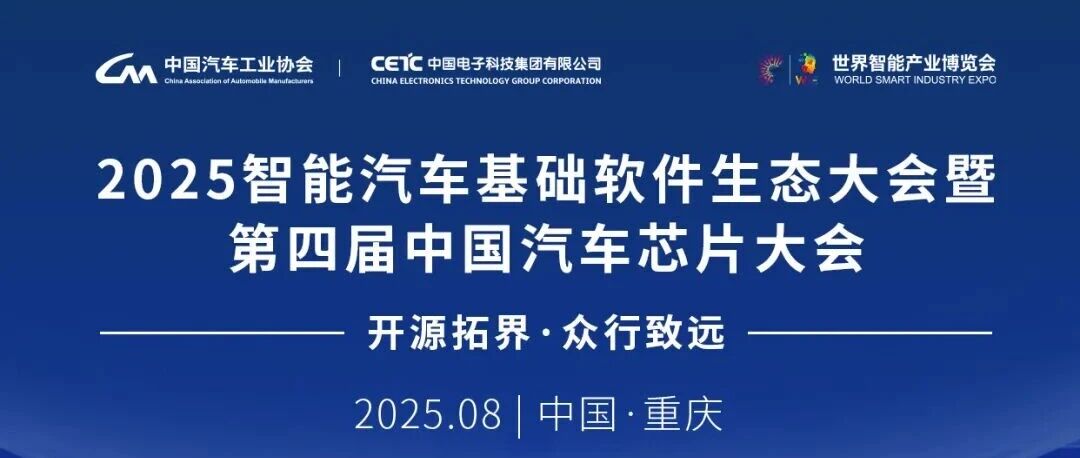
(原标题:开源拓界 众行致远 | 构建汽车软硬协同新生态!第四届中国汽车芯片大会在渝召开) 8月28日—29日,2025智能汽车基础软件生态大会暨第四届中国汽车芯片大会在重庆渝州宾馆圆满举办。29日下午,以"构建汽车软硬协同新生 态"为主题的第四届中国汽车芯片大会顺利召开。来自产业链上下游的200余名代表,聚焦操作系统层如何高效对接芯片算力与应用需求、突破开 发效率瓶颈等问题,共同探讨如何实现"芯片-系统-应用"的纵向贯通与跨企业横向协同。 大会由中国汽车工业协会副秘书长李邵华主持,重庆市经济和信息化委员会二级巡视员张玻、中国电科集团产业部主任刘淮松等领导参会并致 辞。 张玻介绍,作为中国重要的汽车生产基地,重庆正全力推进汽车产业高质量发展。近年来,重庆车规级芯片产业生态持续优化,已初步构建起覆 盖材料研发、芯片设计、晶圆制造、封装测试至系统总成的全链条体系。面向未来,重庆将主动把握"软件定义汽车"的发展趋势,加速打造世界 级智能网联新能源汽车产业集群,为中国汽车产业从"汽车大国"向"汽车强国"跨越注入强劲"重庆力量"。 重庆市经济和信息化委员会二级巡视员张玻 刘淮松表示,中国电科将主动抢抓智能网联产业的战略 ...
组织及合作单位重磅亮相!2025智能汽车基础软件生态大会暨第四届中国汽车芯片大会将在重庆举办
中汽协会数据· 2025-08-28 09:01
Core Viewpoint - The article highlights the upcoming 2025 Smart Automotive Basic Software Ecosystem Conference and the Fourth China Automotive Chip Conference, emphasizing the importance of collaboration among various industry players to advance the automotive technology landscape [1][9]. Group 1: Organizers and Support Units - The event is organized by the China Automotive Industry Association and CETC (China Electronics Technology Group Corporation) [1][4]. - The China Society of Automotive Engineers and CETC Chip Technology Group Co., Ltd. are among the supporting units [4][5]. - Various companies and organizations are listed as partners, including GigaDevice, Infineon, and several others, indicating a broad industry collaboration [6][5]. Group 2: Media and Promotion - Official media partners include Automotive Review and China Manufacturing, which will help promote the event [7]. - Additional media support comes from platforms like Sohu Auto and National Business Daily, enhancing the visibility of the conference [7].
理想自研智驾芯片上车路测,部分计算性能超英伟达Thor-U
Feng Huang Wang· 2025-08-28 08:16
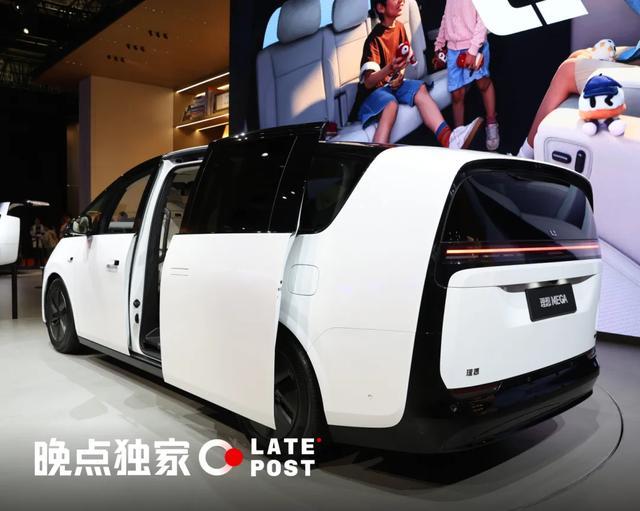
Core Insights - The core focus of the articles is on Li Auto's development of its self-researched autonomous driving chip, M100, which aims to enhance efficiency and cost-effectiveness in the future [2][3]. Group 1: Chip Development - Li Auto's self-developed autonomous driving chip M100 has passed critical pre-mass production stages and is currently undergoing road testing with small batches [2]. - The M100 chip demonstrates specific performance characteristics, providing effective computing power comparable to two NVIDIA Thor-U chips for large language model tasks and three for traditional vision tasks [2]. - The company plans to mass-produce the M100 chip next year while continuing to rely on existing partnerships with NVIDIA and Horizon Robotics [2]. Group 2: Financial Investment - The budget allocated for the self-researched chip project is reported to be in the range of several billion dollars [3]. - The development of the autonomous driving chip involves complex work, including hardware and software development, indicating a layered solution approach [3]. Group 3: Strategic Approach - Li Auto employs a dual strategy by using external solutions to maintain current market competitiveness while developing its own chip for future core advantages [4]. - The company is currently using NVIDIA's high-performance chips in its electric vehicle models, such as the flagship MPV MEGA and the new electric SUV i8 [4]. - In its main sales model, the L series, Li Auto adopts a mixed strategy, utilizing either NVIDIA Thor-U or Horizon Robotics' chips based on different versions of its smart driving assistance [5]. Group 4: Technical Challenges - The integration of hardware and software in chip development is complex, requiring deep technical expertise and efficient cross-department collaboration [4]. - The shift towards supporting Transformer architecture in future chip designs poses challenges for manufacturers in terms of foresight and adaptability in hardware-software tuning [4].


四维图新上半年营收17.61亿元,净亏损达3.11亿元
Ju Chao Zi Xun· 2025-08-22 07:01
Core Insights - The company reported a revenue of 1.76 billion yuan for the current period, representing a year-on-year increase of 5.62% compared to 1.67 billion yuan in the same period last year [1] - The net profit attributable to shareholders was -310.54 million yuan, showing an improvement of 12.68% from -355.65 million yuan in the previous year [1] - The net profit after deducting non-recurring gains and losses was -317.21 million yuan, also reflecting a 12.89% increase from -364.15 million yuan year-on-year [1] Financial Performance - The net cash flow from operating activities was -90.46 million yuan, a significant decline of 146.59% compared to a positive cash flow of 194.14 million yuan in the same period last year [1] - Basic earnings per share were -0.1330 yuan, improving by 13.69% from -0.1541 yuan [1] - Diluted earnings per share were -0.1330 yuan, showing a 12.38% improvement from -0.1518 yuan [1] - The weighted average return on equity remained at -3.61%, unchanged from the previous year [1] Asset and Equity Position - Total assets at the end of the reporting period were 10.96 billion yuan, a slight decrease of 0.66% from 11.03 billion yuan at the end of the previous year [1] - The net assets attributable to shareholders were 8.48 billion yuan, down by 3.15% from 8.76 billion yuan at the end of the previous year [1] Business Developments - The company made significant progress in its intelligent driving business, focusing on technological breakthroughs, customer delivery, and strategic layout [2] - The domestic market foundation is solid, with orderly delivery of intelligent driving solutions to clients such as Great Wall and BAIC [2] - The company launched a new AI infrastructure service architecture for intelligent driving, which enhances data processing and compliance for automotive enterprises [2] - In the intelligent cockpit business, the company achieved breakthroughs in technology and market expansion, introducing a new product matrix at the Shanghai Auto Show [2] - The company has shipped over 300 million automotive electronic chips, including 90 million SoCs and 80 million MCUs, catering to both traditional and new energy vehicles [2]

帮主郑重:龙虎榜暗战!章盟主3亿火拼量化,三路资金抢筹军工芯
Sou Hu Cai Jing· 2025-08-20 16:49
Group 1: Market Dynamics - The market is witnessing a fierce competition between retail investors and institutional players, with 81 stocks on the leaderboard and over 700 million yuan being traded [1] - Retail investors are primarily focused on military and computing sectors, while institutions are offloading real estate and home appliance stocks [1] Group 2: Key Players and Strategies - "Zhang Mengzhu" invested 332 million yuan in "turnaround" stocks, notably buying 131 million yuan of Huasheng Tiancai, which is facing institutional sell-offs [3] - "Quantitative trading" has aggressively purchased stocks worth 441 million yuan, including 146 million yuan in Guangqi Technology, driven by rumors of military contracts [4] Group 3: Industry Trends - Military new materials are gaining consensus, with Guangqi Technology's production capacity utilization exceeding 90%, indicating strong performance potential [6] - The computing sector is showing resilience, with Langchao Information's AI server overseas orders increasing by 70% quarter-on-quarter [8] Group 4: Risks in Traditional Sectors - The white goods sector is under pressure, with Hai Li股份 facing significant sell-offs and high inventory levels [10] - The real estate sector is also struggling, with 华丽家族 having a debt ratio of 87%, indicating high financial risk [11]