
数字货币

Search documents
大突破仍需基本面和流动性共振,震荡行情下结构性机会为主
British Securities· 2025-07-07 02:45
Core Views - The A-share market is experiencing a mixed performance with a lack of broad profit-making effects, indicating a structural market environment rather than a comprehensive upward trend [2][17] - The market is expected to remain in a volatile upward trend, with structural opportunities arising in sectors supported by performance and policy [2][17] Market Overview - Last Friday, the A-share market saw the Shanghai Composite Index reach a peak of 3497.22 points before a sudden drop, reflecting a clear divergence among indices [2][19] - The banking, insurance, and brokerage sectors showed strong performance, while the Shenzhen Component and ChiNext indices lagged behind, indicating a lack of widespread market momentum [2][19] - The overall market sentiment is cautious due to uncertainties surrounding tariff negotiations and insufficient economic recovery, leading to a preference for selective investment strategies [2][17] Investment Opportunities - Focus on three main investment lines: 1. Stocks with expected strong mid-year performance as the reporting window opens in July [3][18] 2. Technology sectors including military, robotics, AI, semiconductors, and digital economy, with a caution against speculative investments [3][18] 3. Stocks that have experienced significant declines, particularly in new energy and brokerage sectors, are recommended for opportunistic buying [3][18] Sector Analysis - The banking sector has shown resilience with a rebound after adjustments, driven by low valuations and high dividends, although macroeconomic uncertainties pose challenges [8] - The gaming sector is benefiting from advancements in AI and the growing popularity of short dramas, indicating a positive outlook for the entertainment industry [9] - Cross-border payment and digital currency stocks are experiencing renewed interest following regulatory developments, suggesting potential for future growth [10][11] - The pharmaceutical sector is gaining traction due to supportive government measures for innovative drug development, presenting a favorable investment environment [13] - The renewable energy sector, particularly solar and wind, is expected to see technical rebounds as global demand for clean energy continues to rise [14] - The steel industry is showing signs of recovery with limited downside potential in prices, supported by recent positive PMI data [15] - The brokerage sector is active due to policy support and market reforms, indicating potential for growth in investment banking activities [16]
深度 | 稳定币浪潮,如何影响汇率?【陈兴团队·财通宏观】
陈兴宏观研究· 2025-07-06 14:46
Group 1 - The core viewpoint of the article is that the recent regulatory developments in stablecoins in the US and Hong Kong have made them a market focus, with the top five stablecoins experiencing a 45% increase in market capitalization over the past year, raising questions about their impact on exchange rates [1][4][11] Group 2 - Stablecoins transmit their value stability through asset anchoring, primarily including off-chain asset-backed, on-chain asset-backed, and algorithmic types, with USDT and USDC being the most prominent [1][4][6] - The issuance mechanism of USDT involves customers depositing USD, after which an equivalent amount of USDT is issued, with the cash used to purchase high liquidity assets to ensure redemption [1][4][6] - The demand for USD stablecoins reduces transaction costs and increases demand for USD, supporting the USD index, while potentially leading to depreciation and capital outflow in weaker currency countries [1][6][9] Group 3 - Stablecoins act as a "shot in the arm" for local currencies by lowering transaction costs, with the average cost of remitting $200 globally being 6.4%, compared to 0.5%-3% for stablecoins, thus increasing demand for USD in trade settlements [2][11] - However, stablecoins do not resolve the fundamental issues of the USD system and carry underlying asset risks, with the potential for being replaced by central bank digital currencies (CBDCs) [2][11][14] Group 4 - For developing countries, stablecoins pegged to major currencies like the USD may replace local currencies, leading to a loss of monetary sovereignty, as approximately 70% of stablecoin users prefer not to hold local currency [3][16][18] - The depreciation of local currencies, such as Argentina and Brazil, has led to increased reliance on cryptocurrencies, with significant currency devaluations of 9.5% and 12.2% respectively in early 2024 [3][16] Group 5 - The global landscape for digital currencies is evolving with a dual approach, where stablecoins are increasingly regulated while CBDCs are still in pilot phases, with China promoting the digital RMB [21][23] - Hong Kong has taken the lead in establishing a regulatory framework for stablecoins, which may serve as a policy testing ground for their development [24]


股市市场信心逐步恢复?7月5日,深夜有哪些重要消息持续发酵!
Sou Hu Cai Jing· 2025-07-05 05:33
Group 1 - The core viewpoint is that the resumption of jet engine supply from General Electric to COMAC indicates a gradual easing of U.S. technology restrictions on China, suggesting a new cooperative dynamic between the two countries [1] - The recent lifting of restrictions on chip and ethane supplies further supports the notion of improved U.S.-China relations, which is seen as a positive signal for the market and may lead to a turning point for the Chinese economy in the second half of the year [1] - The market has been adjusting due to trade restrictions, and the gradual resolution of these issues is expected to restore market confidence [1] Group 2 - The unexpected news of the U.S. resuming jet engine supplies has sparked bullish sentiment in the A-share market, despite the expectation of a market adjustment [2] - The market's upward movement driven by positive news may not change the underlying market dynamics, leading to a potential return to previous levels after initial gains [2] - The index's performance may not correlate with individual stock movements, indicating that even if the index reaches new highs, many stocks may not follow suit [3] Group 3 - The three major indices experienced slight increases, with the Shanghai Composite Index reaching a new high for the year, although there was significant divergence in market performance [4] - A large number of stocks experienced declines, leading to a greater loss effect compared to previous days, particularly in the small-cap sector [4] - The market's downturn is attributed to the impact of new quantitative regulations, which have adversely affected short-term market dynamics and made it challenging for investors to capitalize on opportunities [4]
龙虎榜 | 机构狂买神州细胞,西测测试惨遭多游资“一日游”!
Ge Long Hui A P P· 2025-07-04 13:07
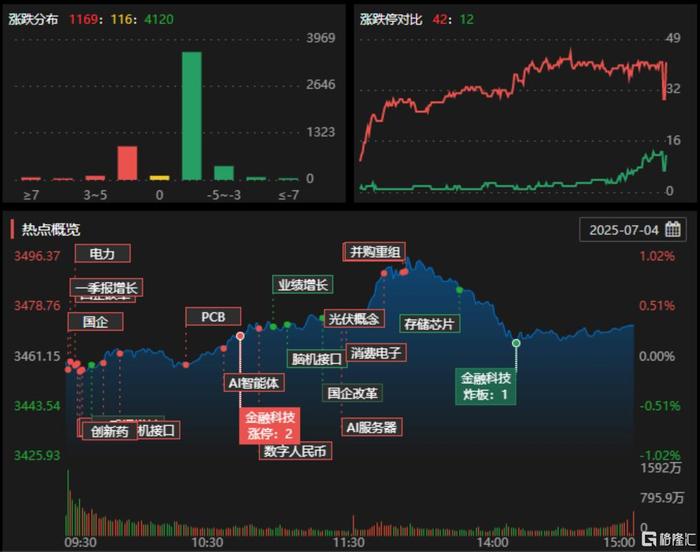
Market Overview - On July 4, A-shares showed mixed performance with the three major indices fluctuating. The total trading volume reached 1.45 trillion yuan, an increase of 121 billion yuan compared to the previous trading day, with over 4,100 stocks declining [1] - Market focus was on stablecoins, digital currencies, and cross-border payment sectors, while banking and gaming sectors strengthened. Energy metals and small metals sectors experienced declines [1] Stock Performance - A total of 39 stocks hit the daily limit up, with 10 stocks achieving consecutive limit ups. The limit up rate was 65% (excluding ST and delisted stocks) [3] - Notable stocks included Chengbang Co., which saw a significant drop after hitting the limit up, while innovative drug concept stock Seli Medical achieved a limit up for the fourth consecutive day [3] Key Stocks and Trading Data - **Shenzhou Cell**: Increased by 16.46% with a trading volume of 20.17 million shares and a total transaction value of 1.63 billion yuan. Institutional net buying amounted to 156 million yuan [18] - **Jingxin Pharmaceutical**: Rose by 10.02% with a trading volume of 8.74 million shares and a total transaction value of 1.49 billion yuan. The company focuses on innovative drugs and medical devices [9][10] - **Hengbao Co.**: Engaged in financial technology and digital currency, with a focus on expanding overseas markets. The company reported overseas revenue of 93.62 million yuan, accounting for 10.37% of total revenue [12] - **Jingbeifang**: Engaged in stablecoin and digital currency sectors, recently signed a strategic cooperation agreement to enhance financial technology innovation [15] Institutional Trading - The top three net buying stocks by institutions were Shenzhou Cell, Hengbao Co., and Nanling Technology, with net purchases of 156 million yuan, 98.35 million yuan, and 91.73 million yuan respectively [6] - The top three net selling stocks were Haoshanghao, Jingbeifang, and Yingfangwei, with net sales of 110 million yuan, 105 million yuan, and 72.72 million yuan respectively [6] Summary of Key Companies - **Jingxin Pharmaceutical**: Focuses on the mental health sector and has a first-class innovative drug expected to be listed in March 2024, with plans to enter the medical insurance payment directory [9][10] - **Hengbao Co.**: Involved in financial technology and digital security, with a focus on digital currency innovation and expanding into overseas markets [12] - **Jingbeifang**: Actively participates in the construction of key digital currency systems for major state-owned banks and aims to innovate in financial technology [15]



揭秘涨停丨封单资金超4亿元,这只个股被盯上
Zheng Quan Shi Bao Wang· 2025-07-04 11:00
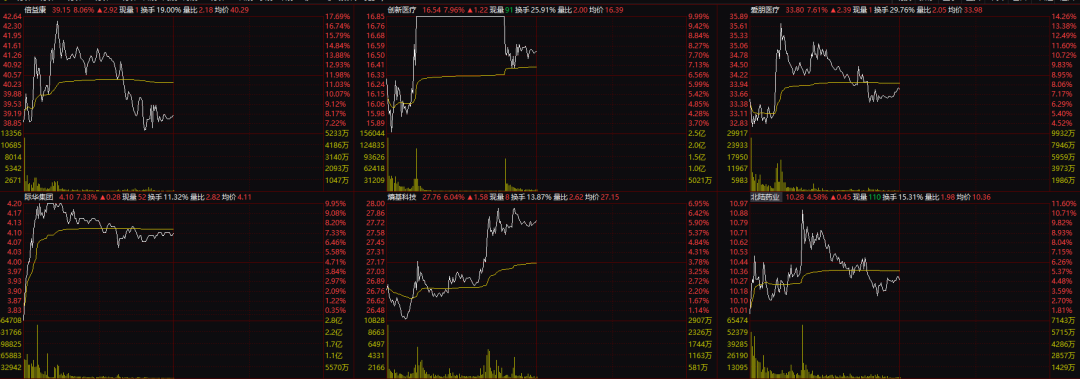
Market Overview - The main funds in the Shanghai and Shenzhen markets experienced a net outflow of 23.655 billion yuan, with the ChiNext board seeing a net outflow of 11.352 billion yuan and the CSI 300 index stocks experiencing a net outflow of 6.758 billion yuan [1] Stock Performance - Forest Packaging had the highest limit-up order volume, reaching 545,800 hands, followed by Jin Yi Culture, Huayin Power, and Shaan Energy with limit-up orders of 314,500 hands, 235,800 hands, and 214,800 hands respectively [2] - In terms of limit-up order funds, ten stocks had orders exceeding 100 million yuan, with Forest Packaging, Jin An Guo Ji, Hopson, and Huayin Power leading with 495 million yuan, 150 million yuan, 144 million yuan, and 144 million yuan respectively [2] Digital Currency Sector - The digital currency concept saw significant gains, with stablecoins, cross-border payments, and other fintech-related concepts rising on July 4 [3] - Companies like Desheng Technology are actively participating in digital currency projects, including the Beijing Minsheng Card, which integrates digital RMB [4] - Jingbeifang is involved in the system construction for digital currencies and is exploring stablecoin applications [4] Innovative Pharmaceuticals - Companies such as Seli Medical and Rejing Bio are making strides in innovative drug development, with Seli Medical's new drug application being accepted by the National Medical Products Administration [5] - Rejing Bio is focusing on antibody and nucleic acid drugs through strategic investments in innovative pharmaceutical companies [5] Printed Circuit Board (PCB) Industry - Jin An Guo Ji reported a revenue of 168 million yuan from its PCB business in 2024, marking a year-on-year growth of 32.81% [6] - Aoshikang specializes in high-precision PCB development and production, targeting high-value products in AI servers, automotive electronics, and high-frequency communication devices [7]
稳定币行业动态追踪:香港确立稳定币监管主线,有望进一步助力人民币国际化进程
Yuan Da Xin Xi· 2025-07-04 09:25
Investment Rating - The industry investment rating is "Positive" [5] Core Insights - The global stablecoin market is expected to grow explosively from a market cap of $3.95 billion in 2019 to $230.7 billion by 2025, with a compound annual growth rate (CAGR) of 97.0% [11][12] - USDT and USDC dominate the market, holding approximately 86.8% of the total market share, with USDT projected to reach a market cap of $150.3 billion by 2025 and USDC expected to grow to $60.8 billion [11][12] - Hong Kong has established a regulatory framework for stablecoins, which includes licensing, full reserves, timely redemption, strict auditing, and anti-money laundering (AML) measures [17][20] - The introduction of a stablecoin sandbox by the Hong Kong Monetary Authority (HKMA) allows institutions to test their operational plans in a controlled environment [21] Summary by Sections Mainstream Stablecoin Mechanisms and Market Size - USDT and USDC are the two main stablecoins in the U.S., with market shares of 61.3% and 25.5% respectively [8][10] - The market cap of USDT is expected to reach $150.3 billion by 2025, while USDC is projected to grow to $60.8 billion, benefiting from its transparency in reserves [11][12] Hong Kong's Stablecoin Regulation Framework - The U.S. Senate passed the GENIUS Act on June 17, 2024, establishing a regulatory framework for stablecoins, which includes full backing by liquid assets and annual audits for issuers with a market cap over $50 billion [17][18] - Hong Kong's Stablecoin Ordinance was enacted on May 30, 2025, focusing on licensing, reserve management, and compliance with AML and counter-terrorism financing (CFT) regulations [20] Potential for RMB Internationalization - The HKMA's stablecoin sandbox allows for testing in various applications, including payments and supply chain management [21] - Stablecoins offer advantages in cross-border payments, such as low costs and fast transaction speeds, which could enhance the international use of the RMB [25][28]
复旦大学数字金融研究中心周光友:稳定币挑战全球金融体系,人民币国际化战略如何重构
Guan Cha Zhe Wang· 2025-07-04 05:44
Core Insights - The rise of stablecoins represents a significant challenge to the existing monetary system and highlights the need for the issuance of RMB-pegged stablecoins, particularly in regions like the Shanghai Free Trade Zone and the Greater Bay Area [1][3] - Stablecoins have seen a dramatic increase in transaction volume, reaching $27.6 trillion in 2024, surpassing traditional payment giants like Visa and MasterCard [1] - The market for mainstream stablecoins is projected to reach $262.5 billion by June 2025, a 40-fold increase since 2020, indicating a growing challenge to the current financial system [2] Development Status and Academic Research - Stablecoins are defined as cryptocurrencies that are pegged to specific assets, typically fiat currencies, serving as a bridge between decentralized finance (DeFi) and traditional financial systems [6] - There are three types of stablecoins based on collateral: fiat-collateralized, crypto-collateralized, and algorithmic stablecoins [7] - Stablecoins can also be categorized by their yield models into interest-bearing and non-interest-bearing types, with non-interest-bearing stablecoins dominating the market [8] Challenges and Opportunities - The development of stablecoins poses challenges to monetary sovereignty, potentially undermining national economic control and financial stability [2] - Stablecoins are becoming a crucial infrastructure for connecting decentralized finance systems with traditional finance, especially in the context of accelerated digital transformation [2][4] - The internationalization of the RMB requires the establishment of a digital framework and active participation in global stablecoin rule-making to enhance its competitiveness [3][4]
盘中!沪指、A50拉升
Zheng Quan Shi Bao· 2025-07-04 04:27
Market Overview - A-shares experienced a narrow fluctuation in the morning session on July 4, with a strong performance driven by the banking sector, leading to all three major indices turning positive [2][4] - The Shanghai Composite Index rose by 0.41%, the Shenzhen Component Index increased by 0.05%, and the ChiNext Index gained 0.18% [4] - The FTSE A50 Index futures also saw an increase of nearly 1% during the session [4] Sector Performance - The banking sector led the market with a near 2% increase, with stocks like Shanghai Pudong Development Bank and Industrial Bank reaching historical highs [5] - Other sectors performing well included internet, public transportation, water services, software services, and insurance, while daily chemicals, mineral products, non-ferrous metals, and shipbuilding sectors faced declines [6] Concept Stocks - The digital currency concept saw significant gains, with stocks such as Jin Yi Culture, De Sheng Technology, and Jing Bei Fang hitting the daily limit [7] - The brain-computer interface concept also surged, with Bei Yi Kang rising over 17%, alongside other stocks like Ai Peng Medical and Innovation Medical [8] Regulatory Developments - On July 3, the National Medical Products Administration announced measures to optimize the lifecycle supervision of high-end medical device innovation, including special reviews for domestic and international leading innovations [10] - The announcement emphasized the need for improved communication between applicants and review experts, and support for high-quality development action plans related to high-end medical devices [10][11] Company-Specific News - In the Hong Kong market, Da Yang Group experienced a dramatic rise of nearly 75% after announcing a subscription agreement for 28.66 million shares at HKD 1.20 per share, representing approximately 19.99% of the existing shares [13][16] - Multi-Point Intelligence saw a rise of over 25% after announcing plans to apply for a stablecoin license and purchasing Bitcoin, responding to the Hong Kong government's push for Web3 industry development [17]
【招银研究】稳定币:运行机制、应用场景与影响
招商银行研究· 2025-07-03 10:34
Core Viewpoint - Stablecoins are a strategic battleground for national digital financial discourse, serving as a bridge between traditional finance and the crypto economy, especially in the context of emerging regulations in the EU, the US, and Hong Kong [1][5][10]. Group 1: Stablecoin Mechanism and Application Scenarios - Stablecoins are categorized into three types based on their anchoring mechanisms: fiat-collateralized, crypto-collateralized, and algorithmic, with fiat-collateralized stablecoins dominating the market [2][19]. - The stablecoin market exhibits a "one super, one strong, and a hundred flowers blooming" pattern, with USDT and USDC together accounting for 86% of the market share [2][36]. - Stablecoins are utilized in various scenarios including DeFi ecosystems, RWA transactions, value storage, cross-border payments, and retail payments, providing functions such as pricing benchmarks and real-time settlement [2][63]. Group 2: Impact on Banking Systems - Stablecoins pose significant implications for banking systems, affecting currency status, central bank policy tools, and potentially leading to systemic disturbances [3][9]. Group 3: Regulatory Developments - Recent regulatory frameworks in the US and Hong Kong mark a turning point for stablecoin development, emphasizing the need for compliance and stability in the financial system [5][10]. - Hong Kong's "Stablecoin Ordinance" introduces a comprehensive regulatory framework for fiat-backed stablecoins, focusing on strict entry requirements, robust reserve management, and unconditional redemption [13][14]. Group 4: Comparison of Regulatory Models - The regulatory approaches in Hong Kong, the US, and the EU differ significantly, with Hong Kong emphasizing openness and compatibility, the US reinforcing the dominance of the dollar, and the EU pursuing unity and security [16][18]. - The regulatory frameworks aim to balance financial stability and innovation while protecting investors and maintaining the integrity of financial markets [17][18]. Group 5: Stablecoin Market Dynamics - As of June 2025, the stablecoin market exceeds $250 billion, with USDT and USDC leading the market, accounting for 62% and 24% of the total market share, respectively [36][39]. - The market is characterized by a high degree of concentration, with USDT being the largest stablecoin by market cap, followed by USDC, which has gained traction due to its compliance and transparency [40][41].
A股震荡上行,个股机会显现
He Xun Cai Jing· 2025-07-03 08:02AI Processing
Group 1 - The A-share market is showing a mixed trend but is still moving upward, with the Shanghai Composite Index facing a resistance level at 3490 in July [1] - The technology sector is experiencing a noticeable retreat, with adjustments in semiconductor chips, military industry, and digital currency [1] - The marine sector has surged due to favorable catalysts, while scarce resources and controllable nuclear fusion continue to perform well [1] Group 2 - The banking sector has seen an increase, while the securities sector is undergoing adjustments [1] - The "Good Up Good" practical class has reduced positions, indicating a strategy to sell if the price effectively breaks below the 5-day moving average [1] - Individual stocks are still in a structural market, necessitating adjustments and short-term operations [1] Group 3 - The "Good Up Good" stock has reached a new high, and the stock "Hengbao Co." has doubled in value over 13 days [1] - The market presents numerous opportunities, as indicated by the performance of individual stocks and sectors [3]