
电力

Search documents
国泰海通 · 晨报260304|固收、交运、光储
国泰海通证券研究· 2026-03-03 14:08
Group 1: Fixed Income - Historical data indicates that geopolitical conflicts primarily create "emotional pulses" rather than driving trends in U.S. Treasury yields, with limited fluctuations observed during events like the Gulf War and the Vietnam War [3] - As of February, the 10-year U.S. Treasury yield has decreased by approximately 28 basis points to 3.95%, driven by factors such as heightened risk aversion due to geopolitical tensions, weak macroeconomic indicators, and strong institutional demand for U.S. Treasuries [3] - Short-term support for U.S. Treasuries remains due to ongoing reassessment of interest rate cuts, a strong credit market, and unchanged allocation logic from international institutions [4] Group 2: Transportation - The Spring Festival travel demand is robust, with a year-on-year increase of 5.8% in overall personnel flow, and air travel showing a growth rate of 6.9% [9] - Air ticket prices have continued to rise post-holiday, with an estimated increase of 4-5% year-on-year for domestic ticket prices during the Spring Festival period, indicating strong profitability potential for airlines [10] - The escalation of the Middle East situation has led to increased geopolitical oil price risks, but this does not alter the long-term value of airlines, suggesting a strategic opportunity for investment in the aviation sector [11] Group 3: Energy and Renewables - Qatar's cessation of natural gas production has caused a significant spike in European natural gas prices, increasing by over 50%, which is expected to drive demand for distributed solar and storage solutions [16] - The European electricity market is likely to experience upward pressure on prices due to the surge in natural gas prices, which will affect the wholesale electricity market [17] - The ongoing conflict may lead to sustained increases in natural gas and electricity prices, benefiting household solar and storage solutions, with a focus on the potential for demand growth in these sectors [18]

关于举办源网荷储及微电网投资建设培训的通知丨系列培训
中国能源报· 2026-03-03 13:39
Core Viewpoint - The integrated development of source-grid-load-storage is essential for the high-quality development of the power system and is a necessary choice for enhancing the consumption of renewable energy and non-fossil energy [2] Group 1: Training Overview - The training on source-grid-load-storage and microgrid investment construction is organized by China Energy News and aims to deepen understanding of related issues [2][3] - The training will take place from March 6 to 7 in Hangzhou [3] Group 2: Target Audience - The training is aimed at large energy groups, power companies, generation groups, local energy groups, key parks, factories, and various energy-consuming institutions [3] - It also targets new energy enterprises (wind, solar, storage), power design institutes, and integrated design units [3] Group 3: Course Modules - The training will cover policy interpretation, current development status, application scenarios, technical analysis, and profit models related to source-grid-load-storage and microgrids [3][4] Group 4: Development Directions - The training will discuss the differences and connections between green electricity direct connection and source-grid-load-storage [4] - It will also cover the application of microgrids in zero-carbon parks and provide guidelines for industrial green microgrid construction [4] Group 5: Fees and Payment - The training fee is set at 3,900 yuan per person, which includes the training fee, while transportation and accommodation are self-catered [4] - Payment can be made via bank transfer, and on-site payment will not be accepted [4]

何光华,入选2025年“大国工匠年度人物”
中国能源报· 2026-03-03 11:11
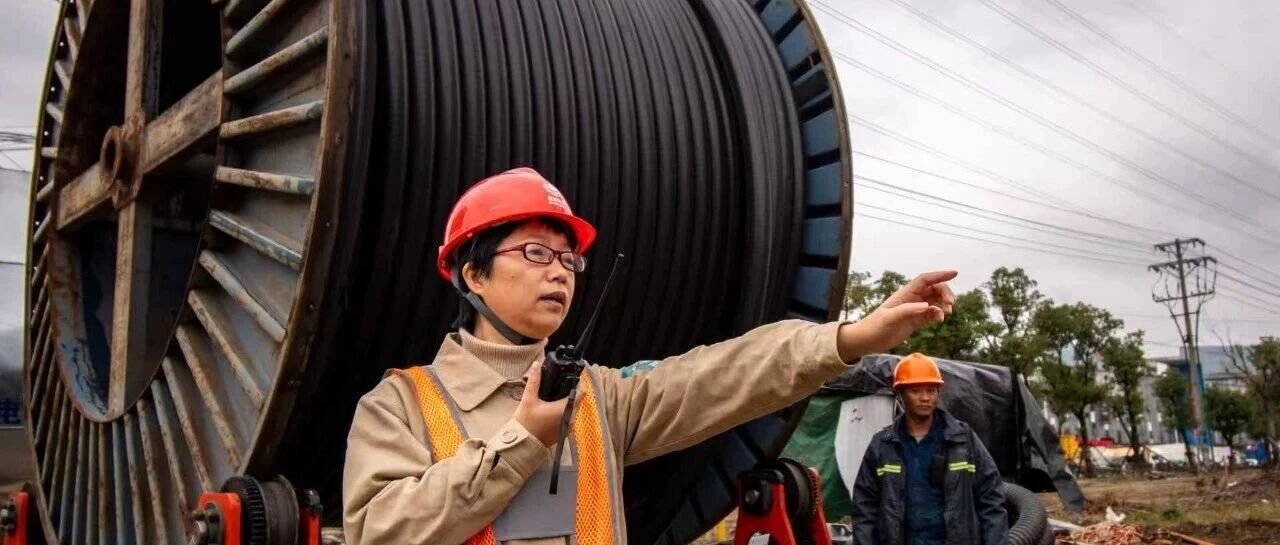
Core Viewpoint - He Guanghua, a senior engineer at State Grid Jiangsu Electric Power Company, has been recognized as the only employee from the State Grid system to be awarded the "National Craftsman of the Year" for 2025, highlighting her significant contributions to the power industry and technological advancements in high-voltage cable construction [2][3]. Group 1: Achievements and Innovations - He Guanghua has over 20 years of experience in cable construction and operation, focusing on overcoming technical bottlenecks in the industry. She led her team to develop a non-destructive construction technology for high-drop high-voltage cable lines, increasing the non-destructive laying length from over 400 meters to 1500 meters [3]. - This innovative technology won the second prize of the National Science and Technology Progress Award in 2019 and has been widely promoted in the power and petroleum industries across China, as well as in over 10 countries involved in the Belt and Road Initiative, including Russia and Singapore [3]. - Under her leadership, the team has conducted over 70 technology research projects, resulting in 89 national patents and 19 provincial or higher-level scientific awards, with cumulative economic benefits exceeding 5 billion yuan [3]. Group 2: Recognition and Impact - The "National Craftsman of the Year" campaign, initiated in 2018, has recognized 60 craftsmen to date, with He Guanghua being the third employee from the State Grid system to receive this honor, following Wang Jin and Feng Xinyan [3]. - The event emphasizes the importance of skilled professionals in driving high-quality development and technological self-reliance in key industries such as power, manufacturing, and aerospace [2].
首破50亿吨大关!能源保供成效是“十四五”最好的一年
中国能源报· 2026-03-03 09:44
Core Insights - China's total primary energy production has surpassed 5.13 billion tons of standard coal for the first time, marking the best year for energy supply security during the 14th Five-Year Plan [1] - Non-fossil energy generation has seen rapid growth, with coal-fired power generation experiencing its first decline in a decade [1] - Domestic crude oil production continues to rise, with a diversified import structure showing significant improvement [1] Group 1: Energy Production - In 2025, China's primary energy production reached 5.13 billion tons of standard coal, exceeding the 5 billion tons mark for the first time [1] - The total coal production in 2025 was 4.85 billion tons, a year-on-year increase of 1.4%, which is 3 percentage points lower than the average growth rate during the 14th Five-Year Plan [1] - The total electricity generation from coal was approximately 6.3 trillion kilowatt-hours, showing a year-on-year decrease of 0.7% [1] Group 2: Non-Fossil Energy - In 2025, the newly added electricity generation from non-fossil energy accounted for 112.1% of the total new electricity consumption, marking the fourth consecutive time since 2020 that it exceeded 50% [1] - Non-fossil energy has become the main contributor to new electricity generation during the 14th Five-Year Plan [1] Group 3: Oil and Gas Production - In 2025, domestic crude oil production was 216 million tons, reflecting a year-on-year growth of 1.5% [1] - The total crude oil import volume was 578 million tons, a year-on-year increase of 4.4%, with the import structure continuously optimizing [1] - Natural gas production reached 620.6 billion cubic meters, marking a continuous increase of over 10 billion cubic meters for nine consecutive years, with a year-on-year growth of 6.3% [2] - Natural gas imports totaled 176.46 billion cubic meters, a year-on-year decrease of 2.8%, with pipeline gas imports increasing by 8.0% and LNG imports decreasing by 10.6% [2] - The dependence on foreign natural gas has dropped to 40%, the lowest level during the 14th Five-Year Plan [2]

国家能源局召开2026年电力调度交易与市场秩序厂网联席会议
国家能源局· 2026-03-03 09:09
Core Viewpoint - The National Energy Administration (NEA) is advancing the construction and regulation of the national unified electricity market in 2026, emphasizing energy security, green transformation, and fair competition in the market [4]. Group 1 - The NEA held a meeting on March 2, 2026, to discuss electricity dispatch trading and market order, with a focus on enhancing communication between power plants and networks [2]. - The meeting highlighted the importance of implementing the decisions made by the Central Committee and the State Council regarding the unified electricity market and the regulation of natural monopoly sectors [4]. - The NEA aims to strengthen regulatory work in key areas such as energy security and the promotion of green energy policies, while ensuring a fair competitive market environment [4]. Group 2 - The meeting included reports on the current status of electricity market construction and regulation, with contributions from electricity trading centers in Beijing and Guangzhou [4]. - Fourteen electricity companies shared insights on supply-demand dynamics, operational conditions, market construction, trading order, and clean energy consumption, along with suggestions for 2026 priorities [4].

【宏观经济】一周要闻回顾(2026年2月26日-3月3日)
乘联分会· 2026-03-03 08:38
Economic Overview - In 2025, China's GDP reached 140,187.9 billion yuan, growing by 5.0% year-on-year, with the primary industry increasing by 3.9%, the secondary industry by 4.5%, and the tertiary industry by 5.4% [5] - The per capita GDP was 99,665 yuan, reflecting a 5.1% increase from the previous year [5] - The total national income was 1,393,700 million yuan, also up by 5.1% [5] Employment and Labor - The total employment reached 72,504 million, with urban employment accounting for 65.6% [6] - Urban new employment increased by 1,267 million, surpassing the previous year's figures by 110,000 [6] - The average urban survey unemployment rate was 5.2%, with a year-end rate of 5.1% [6] Industrial Growth - The total industrial output value was 416,826 billion yuan, marking a 5.8% increase [11] - The manufacturing sector saw a growth of 6.4%, with significant increases in automotive manufacturing (11.5%) and electrical machinery (9.2%) [12] - Profits from industrial enterprises reached 73,982 billion yuan, a slight increase of 0.6% [13] Agricultural Production - Total grain production was 714.88 million tons, an increase of 1.2% year-on-year [10] - The production of cotton rose by 7.7%, while oilseed production increased by 2.9% [10] Trade and Investment - The total import and export value was 454,685 billion yuan, growing by 3.8%, with exports increasing by 6.1% [20] - In January 2026, foreign direct investment amounted to 920.1 billion yuan, with a 25.5% increase in newly established foreign-invested enterprises [42] - The manufacturing sector attracted 260.9 billion yuan in foreign investment, while the service sector received 640.4 billion yuan [43] Consumer Market - The total retail sales of consumer goods reached 501,202 billion yuan, growing by 3.7% [16] - Online retail sales accounted for 26.1% of total retail sales, amounting to 130,923 billion yuan, a 5.2% increase [18] Financial Sector - The broad money supply (M2) increased by 8.5% to 340.3 trillion yuan [22] - The total social financing scale increased by 35.6 trillion yuan, with a year-end stock of 442.1 trillion yuan [22] Technological Development - R&D expenditure reached 39,262 billion yuan, growing by 8.1% [29] - The number of patents granted was 972,000, although this represented a 7.0% decrease from the previous year [29] Environmental Progress - Carbon emissions per unit of GDP decreased by 5.0% [9] - Clean energy generation increased by 14.4%, with significant growth in solar and wind energy [9]

两会聚焦丨我国能源生产总量首次突破50亿吨标准煤 能源保供成效是“十四五”最好的一年
国家能源局· 2026-03-03 08:02
Group 1 - The total production of primary energy in China is expected to reach 5.13 billion tons of standard coal by 2025, marking the first time it surpasses 5 billion tons, indicating significant energy supply achievements during the "14th Five-Year Plan" [2] - Non-fossil energy generation continues to grow rapidly, with coal-fired power generation experiencing its first decline in a decade. By 2025, the new non-fossil energy generation will account for 112.1% of the total new electricity consumption, with coal-fired power primarily serving as a backup and adjustment role [2] - Coal production is steadily increasing, with an expected output of 4.85 billion tons in 2025, a year-on-year growth of 1.4%, which is 3 percentage points lower than the average growth rate during the "14th Five-Year Plan" [2] Group 2 - Domestic crude oil production continues to rise, with an expected output of 216 million tons in 2025, a year-on-year increase of 1.5%. The crude oil import volume is projected to be 578 million tons, up 4.4% year-on-year, with a diversified import structure [2] - Natural gas production in China is expected to reach 262.06 billion cubic meters in 2025, marking a continuous increase for nine years, with a year-on-year growth of 6.3%. The total natural gas import volume is projected to be 176.46 billion cubic meters, down 2.8% year-on-year [3] - The dependence on foreign natural gas has reached a new low during the "14th Five-Year Plan," with the foreign dependence rate at 40% [3]

招商证券:算电协同驱动用电量增长 公用事业企业迎来价值回归
智通财经网· 2026-03-03 07:13
Group 1 - The core viewpoint is that the expansion of computing power driven by Token overseas will lead to a significant increase in electricity demand, with data center electricity consumption expected to reach about 4% of China's total electricity consumption by 2030 [1][2][3] Group 2 - Rapid growth in AI computing power is driving a surge in electricity demand for data centers, with China's data center electricity consumption projected to grow from 82.4 billion kWh in 2019 to 166 billion kWh by 2024, reflecting a compound annual growth rate of 15.0% [2] - The consumption of Tokens by Chinese models accounted for 61% of the total Token consumption on the OpenRouter platform during a specific week, indicating a strong demand for domestic data centers to handle overseas data processing [2] - By 2030, data center electricity consumption could account for 2.9% to 6.1% of China's total electricity consumption, depending on the growth rate of intelligent computing power [2] Group 3 - The operation of data centers relies on stable and sufficient electricity supply, with the Chinese government aiming for over 80% of new data center electricity to come from green sources by the end of 2025, promoting renewable energy consumption [3] - The green electricity trading market is maturing, allowing data centers to lock in green electricity resources through long-term purchase agreements, thus mitigating risks associated with fossil fuel price fluctuations [3] Group 4 - Public utility companies with heavy assets and low turnover (HALO) are expected to see a return to value, as they offer stable business models and predictable cash flows, making them a defensive investment choice amid AI disruptions and geopolitical uncertainties [4] - Investment recommendations include traditional power leaders such as Changjiang Power and Guodian Power, as well as quality regional power companies like WanNeng Power and Funiu Shares [4]

四部门助力防止返贫致贫和乡村全面振兴,中德续签《关于延续气候变化和绿色转型对话合作机制的联合声明》
GUOTAI HAITONG SECURITIES· 2026-03-03 04:35
Investment Rating - The report does not explicitly provide an investment rating for the industry Core Insights - The report highlights the establishment of a normalized financial support mechanism by four departments to prevent poverty and promote rural revitalization, indicating a shift towards a systematic and long-term financial support framework for rural areas [5][6] - The National Energy Administration is actively promoting the revision of important laws such as the Electricity Law and Renewable Energy Law, aiming to enhance the legal framework for the new energy system [7][9] - The Ministry of Ecology and Environment, along with the State Administration for Market Regulation, has released a revised Air Quality Standard, tightening limits on pollutants like PM2.5, which reflects a commitment to public health and environmental quality [10][12] Policy Trends - Four departments have issued opinions to establish a normalized financial support mechanism to assist in preventing poverty and promoting rural revitalization, focusing on optimizing small loans for impoverished populations and enhancing financial resources for underdeveloped areas [5][6] - The National Energy Administration is focusing on scientific legislation and strict enforcement to support the construction of a new energy system, with an emphasis on revising key energy laws [7][9] - The revised Air Quality Standard will implement stricter limits on PM2.5 and other pollutants, with a phased approach to enforcement starting in March 2026 [10][12] Industry Trends - The Shanghai Environmental Exchange has launched a carbon emissions quota administrative management service trust, marking a significant step in carbon market innovation and financial tool design [13][17] - The first forestry carbon credit insurance has been implemented in China, covering 3,760 acres and involving a carbon reduction of 32,200 tons, showcasing innovation in green finance products [18][19] International Events - The National Development and Reform Commission of China and the German Federal Ministry of Economic Affairs and Energy signed a joint statement to continue cooperation on climate change and green transition, emphasizing collaboration in energy and industrial sectors [20] - BusinessEurope, the largest business lobbying group in Europe, has called for a complete reform of the EU carbon market, highlighting the financial burden of carbon costs on industries [21][22] Corporate Developments - CATL and BMW signed a memorandum of understanding to collaborate on battery passport pilot projects, aiming to enhance supply chain carbon footprint reduction [24] - Microsoft announced it achieved 100% renewable energy consumption five years ahead of its target, reflecting its commitment to sustainability [24]
周期热点直击-PPI转正预期下甄选-HALO-板块
2026-03-03 02:52
Summary of Key Points from Conference Call Records Industry and Company Involved - The discussion primarily revolves around the macroeconomic environment, particularly focusing on the Producer Price Index (PPI) and its implications for various sectors, including oil, chemicals, and manufacturing industries in China and globally. Core Insights and Arguments 1. **PPI Recovery Expectations**: The PPI is expected to turn positive between April and June 2026, with a central estimate in May. If the situation in Iran escalates, this could occur as early as March to April 2026. The distinction between oil price-driven and endogenous recovery is crucial for market risk preferences [1][4][12]. 2. **Impact of Geopolitical Events**: The ongoing conflict involving the U.S., Israel, and Iran is noted as the largest since 1979, with potential implications for oil prices and market stability. The U.S. is unlikely to deploy ground troops, which may limit escalation [1][4][5]. 3. **Halo Sector Definition**: The "Halo" sector refers to heavy assets with low obsolescence risk, focusing on materials and consumables that are difficult to replace. This sector is expected to perform well during the PPI recovery phase [2]. 4. **Global Manufacturing and Pricing**: China's PPI recovery is seen as a significant indicator for global manufacturing and industrial pricing, suggesting a re-evaluation of industrial goods prices [3][21]. 5. **CPI Recovery Drivers**: The recovery of the Consumer Price Index (CPI) is driven more by supply-demand rebalancing rather than solely by upstream price movements. This contrasts with mainstream views that emphasize upstream price influences [9]. 6. **Investment Trends**: Fixed asset investment is expected to improve in 2026 compared to 2025, with manufacturing investment being influenced by PPI trends. The report suggests that manufacturing investment typically lags behind PPI by about six months [10][11]. 7. **Real Estate Market Dynamics**: Historical patterns indicate that nominal growth stabilizes before the real estate market does, particularly after significant adjustments in property prices [8]. 8. **Chemical Industry Analysis**: The chemical sector is divided into resource-based and chemical attributes, with a focus on how geopolitical events, like the Iran situation, could impact pricing and supply chains [22]. 9. **AI's Role in Chemical Production**: AI is expected to enhance efficiency in chemical production, particularly in formulation verification, but its impact on production efficiency is limited due to existing physical constraints [23]. 10. **Market Reactions to Geopolitical Risks**: Market participants may engage in event-driven trading based on the escalation of conflicts, particularly in oil and industrial materials. Observing simultaneous increases in gold, oil, and the dollar may indicate tightening liquidity [6]. Other Important but Potentially Overlooked Content 1. **Long-term Risks in Iran**: The potential for regime change in Iran is discussed, with significant challenges noted in achieving a stable transition. The risk of prolonged chaos is highlighted as a greater concern than rapid regime change [5]. 2. **PPI as a Key Variable**: In the complex macro environment of 2026, PPI is identified as a critical variable influencing the performance of the Chinese yuan and related assets, linking it to nominal growth and corporate profitability [7]. 3. **Global Supply Chain Implications**: The potential for disruptions in global supply chains due to geopolitical tensions, particularly in the energy sector, is emphasized, with specific attention to the implications for natural gas and chemical prices [31][33]. 4. **Investment Opportunities in Resource Sectors**: The report suggests that resource sectors, particularly those with domestic supply advantages, should be closely monitored for investment opportunities amid geopolitical tensions [33]. 5. **Energy Price Dynamics**: The relationship between energy prices and broader economic conditions is explored, with expectations that energy price increases will eventually translate into higher electricity prices, impacting the renewable energy sector [47]. This summary encapsulates the key points discussed in the conference call, providing insights into the macroeconomic landscape, industry-specific dynamics, and potential investment opportunities.