
能源化工

Search documents
宝城期货资讯早班车-20250820
Bao Cheng Qi Huo· 2025-08-20 02:16
1. Macroeconomic Data Overview - GDP growth in Q2 2025 was 5.2% year-on-year, slightly lower than the previous quarter's 5.4% but higher than the same period last year's 4.7% [1] - The manufacturing PMI in July 2025 was 49.3%, down from 49.7% in the previous month and slightly lower than the same period last year [1] - The non-manufacturing PMI business activity index in July 2025 was 50.1%, slightly down from 50.5% in the previous month but similar to the same period last year [1] - Social financing scale increment in July 2025 was not provided, with the previous month at 1132 billion yuan and the same period last year at 770.7 billion yuan [1] - The year-on-year growth rates of M0, M1, and M2 in July 2025 were 11.8%, 5.6%, and 8.8% respectively. M1 and M2 growth rates increased compared to the previous month and the same period last year [1] - Financial institution RMB loans had a net decrease of 5 billion yuan in July 2025, compared to an increase of 224 billion yuan in the previous month and 26 billion yuan in the same period last year [1] - CPI in July 2025 was flat year-on-year, down from 0.1% in the previous month and 0.5% in the same period last year [1] - PPI in July 2025 was -3.6% year-on-year, the same as the previous month but lower than -0.8% in the same period last year [1] - Fixed asset investment (excluding rural households) cumulative growth rate in July 2025 was 1.6% year-on-year, down from 2.8% in the previous month and 3.6% in the same period last year [1] - The cumulative growth rate of total retail sales of consumer goods in July 2025 was 4.8% year-on-year, slightly down from 5.0% in the previous month but higher than 3.5% in the same period last year [1] - Export and import values in July 2025 increased by 7.2% and 4.1% year-on-year respectively, both higher than the previous month [1] 2. Commodity Investment Reference Comprehensive - From January to July 2025, stamp duty was 255.9 billion yuan, a 20.7% year-on-year increase. Securities trading stamp duty was 93.6 billion yuan, a 62.5% increase. In July alone, it was 15.1 billion yuan, a 125% increase from July 2024 [2] - Zhengzhou Commodity Exchange is promoting the research and development of innovative products like the BPI index futures and the opening up of polyester sector products [2] - Futures prices of many products such as cotton and urea have become important references for national macro - policy making. Many enterprises in different industries use the futures market to manage risks [2] - China's futures market has improved its internationalization level. As of July 2025, there were 24 specific open - ended futures varieties, and some futures companies have achieved 100% foreign ownership [3] - The London Metal Exchange's Hong Kong delivery warehouse was inaugurated, which is significant for Hong Kong's development as an international financial center and for promoting RMB use in commodity trading [3][4] Metals - The Chinese Foreign Ministry was unaware of reports about lifting rare - earth export controls to India [5] - Gold has had low volatility since June 2025. Global gold ETFs added 397 tons in the first half of the year. Gold prices may be supported by an over 80% probability of a September interest - rate cut [5] - The world's largest silver ETF reduced its holdings by 16.95 tons [5] - The US added 407 product categories to the steel and aluminum tariff list with a 50% tax rate [5] - UBS expects global gold demand to reach a new high since 2011 and forecasts gold prices to reach $3600 by the end of March 2026 and $3700 by the end of June and September 2026 [6] - On August 18, lead inventory reached a new high in over a month, while zinc, tin, nickel, copper, and aluminum inventories decreased [6] Coal, Coke, Steel, and Minerals - Shandong plans to raise coke prices, with different increases for different types of coke starting from August 19 [8] - Mexico proposes to restore the North American Steel Committee to improve trade relations with the US and reduce Asian steel imports [8] Energy and Chemicals - On August 19, US crude oil futures fell 1.12%. The decline was affected by the expected US - Russia - Ukraine talks, weak demand from India, and increasing supply pressure [9] - Six government departments held a photovoltaic industry symposium to regulate the industry's competition order [9] - US API crude oil inventory decreased by 24.17 million barrels in the week ending August 15 [9][10] - India's imports of Russian crude oil decreased in July, and state - owned refineries will seek alternative sources in August and September [10] Agricultural Products - The Ministry of Agriculture and Rural Affairs emphasized efforts to ensure a good autumn harvest, regulate the agricultural product market, promote farmers' income, and prevent risks [12] - The Ministry of Agriculture organized a meeting on preventing and controlling major pests and diseases in autumn crops [12] - New York Arabica coffee futures reached a two - month high due to concerns about Brazil's coffee production [12] - US exporters sold 228,606 tons of soybeans to Mexico for delivery in the 2025/2026 season [13] - Corn yields in Nebraska, US, are expected to be lower than in 2024 [14] - Indonesia opened its market to Brazilian beef and offal [14] - India will exempt cotton import tariffs from August 19 to September 30 [14] 3. Financial News Compilation Open Market - On August 19, the central bank conducted 580.3 billion yuan of 7 - day reverse repurchase operations, with a net injection of 465.7 billion yuan after 114.6 billion yuan of reverse repurchases matured [15] Key News - In July 2025, national general public budget revenue increased by 2.6% year - on - year. The cumulative revenue in the first seven months increased by 0.1% year - on - year [16] - Government - funded budget expenditures increased by 31.7% in the first seven months due to the expenditure of 2.89 trillion yuan from special bonds and special treasury bonds [16] - Some provinces' audit reports pointed out problems in the use and management of special bonds, including data inaccuracies, project delays, and misappropriation [17] - From September 1, three new conditions for withdrawing personal pensions were added [17] - The central bank increased the re - loan quota for supporting agriculture and small businesses by 100 billion yuan to support disaster - affected areas [18] - Guangdong plans to issue 2.5 billion yuan of offshore RMB local government bonds in Macau in late August [19] - The second batch of science and technology innovation bond ETFs is about to be submitted, with 14 fund companies involved [19] - There were uncertainties in the principal and interest payment of some bonds, and some companies faced major events such as being presented with a winding - up petition [19] - International credit rating agencies made ratings and outlook adjustments for some countries and companies [19] Bond Market Summary - Bond prices stabilized due to the stock market decline and the central bank's reverse repurchase operations. Most yields of major inter - bank interest - rate bonds decreased, and treasury bond futures rose [20] - In the exchange - traded bond market, some bonds rose while others fell [20] - The CSI Convertible Bond Index rose 0.16%, and the Wind Convertible Bond Equal - Weighted Index rose 0.37% [20][21] - Most money - market interest rates increased on August 19 [21] - Shibor short - term rates mostly increased [21] - The winning yields of some agricultural and national development bank financial bonds were announced, along with their subscription multiples [22] - Most inter - bank and silver - bank repurchase fixed - rate bonds increased [22] - Most European and US bond yields decreased [23] Foreign Exchange Market - The on - shore RMB against the US dollar closed at 7.1820 on August 20, down 28 points from the previous day. The central parity rate was 7.1359, down 37 points [25] - The US dollar index rose 0.12% in New York trading, and most non - US currencies fell [25] Research Report Highlights - Shenwan Fixed Income believes that from May, the bond market has been driven by asset allocation. In August - October, the bond market may face pressure from capital diversion and crowded trading structures [26] - Huatai Fixed Income suggests that the bond market should focus on defense. Insurance funds may start to accept 10 - year treasury bonds at a yield of 1.8%, while trading funds should wait for opportunities [26] - Yangtze River Fixed Income expects that the central bank's mention of preventing capital idling will not lead to a tightening of the capital market. Liquidity will remain reasonably abundant [26] - CITIC Securities reports that the bank wealth - management scale exceeded 32.67 trillion yuan in late July, and it is expected to reach over 33.5 trillion yuan this year [27] - Shenwan Fixed Income expects local bond issuance and net financing to increase significantly in the next period [27][28] - Xingzheng Fixed Income points out that bond ETFs may face redemption and selling pressure during market adjustments. Investors can choose more resilient ETFs and take advantage of price discounts [28] - Yangtze River Fixed Income believes that the central bank may restart open - market treasury bond trading in the fourth quarter when the 10 - year treasury bond yield is in a certain range [28] - CICC Research Report states that the market's pricing of the Fed's interest - rate cut has increased, but the Fed will be cautious due to the risk of "stagflation - like" conditions [29] Today's Bond Market Reminders - On August 20, 142 bonds were listed, 171 bonds were issued, 117 bonds were due for payment, and 112 bonds were due for principal and interest repayment [30][31] 4. Stock Market News - On August 20, the A - share market had a narrow - range shock, with the three major indices falling and the North Exchange 50 hitting a new high. Consumer electronics, CPO, and liquor sectors led the gains [32] - The Hong Kong Hang Seng Index fell 0.21%. Oriental甄选's stock price fluctuated greatly. South - bound funds had a large net purchase [32] - Brokers are competing for customers by offering low commission rates [32] - As of August 18, the margin trading balance exceeded 2.1 trillion yuan, reaching a 10 - year high [33] - Foreign institutions are increasing their positions in Chinese stocks. Many foreign institutions are optimistic about the Chinese stock market [34] - As of August 19, social security funds appeared in the top ten tradable shareholders of 89 stocks, with 20 new heavy - position stocks [34] - As of August 19, 666 A - share companies released their semi - annual reports, and over 60% achieved year - on - year profit growth [34]
宝城期货资讯早班车-20250819
Bao Cheng Qi Huo· 2025-08-19 01:35
1. Report Industry Investment Rating There is no information provided regarding the report's industry investment rating in the given content. 2. Core Views of the Report - The report provides a comprehensive overview of macro - economic data, commodity investment trends, financial news, and stock market developments. It indicates that the government is taking measures to boost the economy, and various markets are influenced by factors such as geopolitical events, policy changes, and supply - demand dynamics. For the bond market, different research institutions have different outlooks, with some expecting a downward trend in interest rates, while others are cautious about short - term fluctuations [1][2][22]. 3. Summary by Relevant Catalogs **Macro Data** - GDP growth in Q2 2025 was 5.2% year - on - year, slightly lower than the previous quarter. Manufacturing PMI in July 2025 was 49.3%, down from 49.7% in the previous month. Non - manufacturing PMI for business activities in July was 50.1%, also a decline from the previous month. Social financing scale in July was lower than the previous month and the same period last year. M1 and M2 growth rates increased in July compared to the previous month and the same period last year, while M0 growth decreased slightly. Financial institution RMB loans decreased in July. CPI was flat in July, and PPI remained negative. Fixed - asset investment growth slowed down, while social consumption and export and import growth showed positive trends [1]. **Commodity Investment** **Comprehensive** - The government aims to enhance macro - policy effectiveness, stimulate consumption, expand investment, and stabilize the real estate market. The central bank will boost the development of the movable - property financing market to support small and medium - sized enterprises. New futures and options contracts have been launched by the Shanghai Futures Exchange [2][3]. **Metals** - Geopolitical developments may ease tensions and reduce safe - haven demand. A company agreed to acquire gold and copper assets from BHP for $465 million. Peru's copper production increased by 7.1% in June. Some institutions raised the gold price target. Metal inventories at the London Metal Exchange generally decreased [4][5][6]. **Coal, Coke, Steel, and Minerals** - Some regions in Shandong plan to raise coke prices. The prices of coking coal and coke in the circulation field increased in early August. Glencore applied to include two copper projects worth over $13 billion in Argentina's investment incentive program [7]. **Energy and Chemicals** - Oil prices rose due to geopolitical tensions and supply concerns. Citi expects Russian pipeline gas supply to Europe to potentially resume by the end of 2025, which affects its gas price forecast. Indonesia anticipates an increase in oil and gas production in 2026 [9]. **Agricultural Products** - The price of soybean meal increased in early August. The anti - subsidy investigation on EU dairy products was extended. There are developments in corn, wheat, and ethanol production, and Brazil's competition authority is investigating the "soybean suspension plan" [10]. **Financial News** **Open Market** - The central bank conducted 7 - day reverse repurchase operations, resulting in a net injection of 154.5 billion yuan on August 18. The Ministry of Finance and the central bank carried out treasury cash management operations with a winning bid of 120 billion yuan and an interest rate of 1.78% [12]. **Important News** - The government is committed to economic stability and market confidence. The trading association is investigating the misappropriation of debt - financing funds. There are various government bond operations, and the central bank signed a currency swap agreement with Thailand. There are international political developments and corporate bond - related events [13][14][15]. **Bond Market Review** - Bond yields generally rose, and bond futures prices fell. Different bond - related interest rates showed various trends, and overseas bond yields also had different movements. Some institutions have different outlooks on the bond market [17][18][22]. **Foreign Exchange Market** - The on - shore and offshore RMB showed different trends against the US dollar, and the US dollar index rose, affecting other major currencies [21]. **Research Report Highlights** - Different institutions have different views on the bond market, including expectations of interest - rate decline, focus on structural policies, and suggestions on convertible bond investment [22][23][24]. **Today's Reminders** - Many bonds are scheduled to be listed, issued, and have payments on August 19 [25][26]. **Stock Market News** - The Shanghai Composite Index broke through 3700 points, driven by various types of funds. The number of new accounts at securities brokerages increased, and there is an expected inflow of more funds into the A - share market. The Hong Kong stock market had mixed performance, and the Shenzhen Stock Exchange is researching the feasibility of adding a special voting channel for margin - trading accounts [27][28].
综合晨报:沪指创十年新高-20250819
Dong Zheng Qi Huo· 2025-08-19 01:22
Report Industry Investment Rating No relevant content provided. Core Viewpoints of the Report - The Shanghai Composite Index reached a ten - year high, with the market being hot and retail investors accelerating their entry. It is expected to continue the process of bubble - formation in the short term, but pressure will emerge after the sentiment reaches its peak [2][18]. - The conflict between Russia and Ukraine is difficult to resolve in the short term, so the US dollar will remain volatile. Gold prices are under pressure due to the marginal easing of geopolitical risks [11][14]. - The price of thermal coal is expected to weaken seasonally as the weather cools in mid - to late August. The price of copper is likely to continue its high - level oscillation pattern [3]. - The prices of various commodities and financial products are affected by multiple factors such as geopolitical situations, supply - demand relationships, and policy expectations, and their trends are complex and changeable. Summary by Relevant Catalogs 1. Financial News and Reviews 1.1 Macro Strategy (Gold) - Germany's Chancellor Merz said the tri - party meeting exceeded expectations, and Trump and Putin agreed that Putin and Zelensky would meet in two weeks. Gold prices are under pressure due to the marginal easing of geopolitical risks. The market is concerned about Fed Chairman Powell's speech at the Jackson Hole Global Central Bank Symposium. It is recommended to pay attention to the callback risk of short - term gold prices [11]. 1.2 Macro Strategy (Foreign Exchange Futures - US Dollar Index) - Trump and Zelensky hope to reach a consensus through tri - party talks, but the differences between Russia and Ukraine are large, so the short - term conflict is difficult to resolve, and the US dollar will remain volatile [14]. 1.3 Macro Strategy (US Stock Index Futures) - Both Russia and the US support direct negotiations between Russia and Ukraine, but the structural differences between the two sides on territorial issues are difficult to resolve, and the negotiation signal is more significant than the actual impact. It is necessary to pay attention to the callback risk if Powell's speech at the global central bank symposium is hawkish [16]. 1.4 Macro Strategy (Stock Index Futures) - The State Council will take measures to consolidate the stabilization of the real estate market. The Shanghai Composite Index reached a ten - year high, and the market is hot. It is recommended to allocate various stock indices evenly [17][18][19]. 1.5 Macro Strategy (Treasury Bond Futures) - The central bank conducted a 2665 - billion - yuan 7 - day reverse repurchase operation, with a net investment of 1545 billion yuan. The bond market is expected to remain weak in the short term, and it is recommended to take a bearish approach and be cautious when betting on rebounds [20][21][22]. 2. Commodity News and Reviews 2.1 Agricultural Products (Soybean Meal) - The inventory of soybean meal in oil mills increased slightly. Brazil's soybean exports in the first two weeks of August increased year - on - year. The good - rate of US soybeans was the same as the previous week and higher than market expectations. It is recommended to maintain a view of slightly bullish oscillation and pay attention to the Pro Farmer Midwest field inspection [23][24][25]. 2.2 Black Metals (Thermal Coal) - From January to July, national railways transported 11.96 billion tons of coal. The price of thermal coal continued to rise this week but is expected to enter a seasonal decline as the weather cools. The impact of over - production inspections on the operating rate is small, and the operating rate of coal mines decreased slightly [26][27][28]. 2.3 Black Metals (Iron Ore) - Fenix's Beebyn - W11 iron ore completed its first shipment. The price of iron ore is oscillating weakly, and it is expected to be weak in the short term due to factors such as the seasonal accumulation of finished product inventory and the decline of surrounding varieties [29]. 2.4 Black Metals (Rebar/Hot - Rolled Coil) - India imposed safeguard measures on flat steel products, and Vietnam imposed anti - dumping duties on carbon and alloy steel coated coils. China's steel exports increased in July. Steel prices are expected to continue to decline, and it is necessary to pay attention to volatility risks [30][31][33]. 2.5 Agricultural Products (Sugar) - The Philippines obtained a 2026 fiscal - year sugar export quota to the US. South Africa's sugarcane production is expected to increase by more than 7% in 2025. China's sugar imports in July were at a record high for the same period. The price of Zhengzhou sugar is expected to remain oscillating, and it is recommended to wait for opportunities to buy on dips for the January contract [35][36][37]. 2.6 Agricultural Products (Corn Starch) - The theoretical profits of corn starch enterprises in different regions were negative on August 18. The spread between CS09 and C09 weakened again. The supply - demand situation of starch is still weak, and the inventory is accumulating. It is recommended to pay attention to the regional spread between North China and Northeast China [39]. 2.7 Agricultural Products (Corn) - The import volume of major feed grains in China increased in July. Corn futures prices continued to decline after the contract change. It is recommended to hold short positions in the November and January contracts and pay attention to weather conditions. There may be opportunities for 11 - 3 reverse arbitrage [40]. 2.8 Non - ferrous Metals (Alumina) - Some high - energy - consuming industries in the northern region received notices of production restrictions for the military parade. Only one alumina enterprise in Henan reported potential production reduction. The supply - demand of alumina is in an oversupply trend, and the futures price is expected to oscillate weakly. It is recommended to wait and see [41][42][43]. 2.9 Non - ferrous Metals (Lead) - The social inventory of lead ingots decreased. Anhui's environmental protection situation has no new progress, and the supply of refined lead is still under pressure. The import of lead needs continuous attention. The start - up rate of lead - acid battery factories increased, but the peak - season demand may be falsified. It is recommended to wait and see in the short term [45][46][47]. 2.10 Non - ferrous Metals (Zinc) - The [LME0 - 3 zinc] was at a discount on August 15. Penoles' zinc production declined in the second quarter. The external market has high structural risks, and the domestic fundamentals are weakening. It is recommended to wait and see for single - side trading, pay attention to medium - term positive arbitrage opportunities, and maintain a positive arbitrage idea before overseas inventories bottom out [48][49]. 2.11 Non - ferrous Metals (Polysilicon) - Inner Mongolia completed the first settlement of new energy marketization. The spot price of polysilicon changed little, and the inventory increased. The production of polysilicon is expected to increase in August, and the terminal demand is weakening. It is recommended to use a callback - bullish strategy for single - side trading and pay attention to 11 - 12 reverse arbitrage opportunities at a spread of about - 2000 yuan/ton [50][52][54]. 2.12 Non - ferrous Metals (Industrial Silicon) - Hoshine's coal - electricity - silicon integration project phase III had an environmental assessment public notice. The supply of industrial silicon may increase marginally in August, but the demand from polysilicon may also increase, and the inventory may decrease. It is recommended to buy on dips in the short term, with the risk being the resumption of production by large factories [55][56]. 2.13 Non - ferrous Metals (Nickel) - LME nickel inventory decreased on August 18. The macro - environment has cooled slightly, and the supply - demand of nickel is in a double - weak pattern. It is recommended to pay attention to short - term band opportunities and medium - term short - selling opportunities at high prices [57][58]. 2.14 Non - ferrous Metals (Lithium Carbonate) - Sichuan Energy Power's lithium mine is in the production - ramping stage, and Australia's Covalent's lithium hydroxide plant started production. The supply - demand balance of lithium carbonate may turn to inventory reduction in the third quarter, and the price is expected to be strong in the short term. It is recommended to hold long positions and look for opportunities to buy on dips [59][60][61]. 2.15 Non - ferrous Metals (Copper) - Chile's Codelco applied to restart part of the El Teniente copper mine. Speculative funds increased their bullish bets on COMEX copper for the first time in four weeks. The short - term macro - factors support copper prices, but the weight of commodities in multi - asset allocation may be adjusted down. It is recommended to wait and see for single - side trading and pay attention to internal - external reverse arbitrage strategies [63][64][65]. 2.16 Energy Chemicals (Liquefied Petroleum Gas) - The congestion at Indian ports continues, and the congestion at the Panama Canal has eased. The price of LPG arriving in the Far East still has support, while the CP is expected to be weak in the short term [66][67][68]. 2.17 Energy Chemicals (Crude Oil) - The US and Russia support direct negotiations between Russia and Ukraine, and oil prices rose slightly. The market is still waiting and seeing, and oil prices lack directional drivers in the short term. It is recommended to maintain an oscillating view and wait for new drivers [69][70]. 2.18 Energy Chemicals (Asphalt) - The inventory of asphalt refineries increased, while the social inventory decreased. The fundamental improvement of asphalt is limited, and the futures price is expected to be in a dilemma in the short term. It is recommended to wait and see [71][72]. 2.19 Energy Chemicals (Bottle Chips) - The export quotes of bottle - chip factories changed little. The price of bottle - chip futures rose. The industry's production reduction has an effect, and the processing fee has slightly recovered. It is necessary to pay attention to the pressure brought by the resumption of production and new installations from late August to September [73][74][75]. 2.20 Energy Chemicals (Caustic Soda) - The price of caustic soda in Shandong rose on August 18. The supply increased slightly, and the demand was good. The spot price of caustic soda has bottomed out, and the futures price is expected to oscillate [76][77]. 2.21 Energy Chemicals (Pulp) - The import pulp spot market was mainly stable. The futures price of pulp oscillated weakly. The overall sentiment of commodities has cooled, and the pulp market is expected to oscillate in the short term [78][79]. 2.22 Energy Chemicals (PVC) - The price of PVC powder in China decreased. The futures price oscillated after a decline. India's anti - dumping ruling may reduce China's PVC exports, and the short - term futures price is expected to be weak [80]. 2.23 Energy Chemicals (PX) - The price of PX rose. The domestic PX supply is expected to increase marginally, and the profit is compressed. The single - side price of PX mainly follows the oscillation of crude oil. It is recommended to adjust with the cost of oil prices and try to go long lightly on dips [81][82]. 2.24 Energy Chemicals (PTA) - The spot price of PTA rose, and the basis was stable. The demand at the weaving end rebounded slightly, and the polyester load increased marginally. The PTA processing fee may have a small repair space. It is recommended to follow the cost - end oscillation and try to go long lightly on dips [83][84][85]. 2.25 Energy Chemicals (Soda Ash) - The price of soda ash in the Shahe area oscillated and adjusted. The supply of soda ash increased, and the demand was average. The futures price is expected to be volatile, and it is recommended to manage positions well [86]. 2.26 Energy Chemicals (Float Glass) - The price of float glass in the Shahe market changed slightly. The futures price of glass decreased, and the market sentiment was weak. It is recommended to operate cautiously on the single - side and focus on arbitrage operations, such as the strategy of going long on glass and short on soda ash when the spread widens [87]. 2.27 Energy Chemicals (Styrene) - The inventory of styrene in East China ports increased. The supply of pure benzene is expected to decline slightly in the short term, and the supply - demand of styrene will gradually balance in September but may accumulate inventory in the long term. The price of styrene is expected to oscillate, and it is necessary to pay attention to the cost - end changes caused by oil - price fluctuations [88][89]. 2.28 Energy Chemicals (Urea) - India's NFL issued a urea import tender. The urea futures price oscillated under pressure, and the spot price fell significantly. The demand is weak, and the futures price is affected by potential internal and external policy expectations. It is recommended to pay attention to the potential changes in the export end [90]. 2.29 Shipping Index (Container Freight Rate) - The container throughput of Yangshan Port in July reached a record high. The SCFIS (European line) index decreased. The supply pressure in September has improved, but the demand is weakening, and the freight rate will continue to decline. It is recommended to hold short positions in the October contract and pay attention to the empty - voyage situation during the National Day [91][92].
透视前7月四川经济“成绩单”——主要指标总体平稳 新质生产力稳步发展
Si Chuan Ri Bao· 2025-08-19 00:21
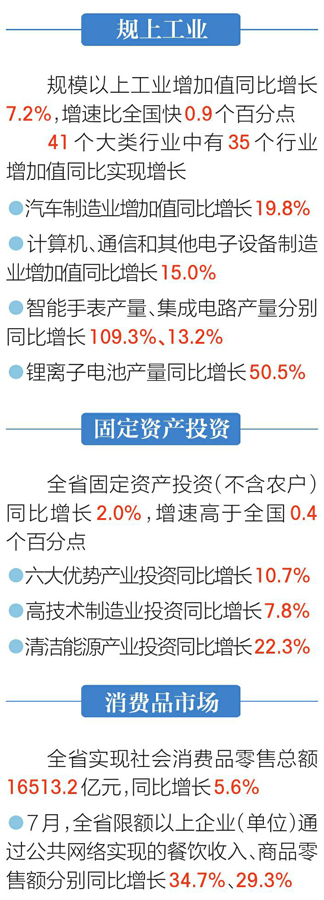
Industrial Growth - The industrial added value of scale enterprises in Sichuan increased by 7.2% year-on-year, outpacing the national growth rate by 0.9 percentage points [1][3] - Among 41 major industrial sectors, 35 sectors achieved year-on-year growth, indicating a stable growth landscape [3][4] - The automotive manufacturing sector saw a significant increase in added value, growing by 19.8% year-on-year [1][3] - The computer, communication, and other electronic equipment manufacturing sectors experienced a 15.0% year-on-year growth in added value [1][3] - Production of smartwatches and integrated circuits surged by 109.3% and 13.2% year-on-year, respectively [1][3] - Lithium-ion battery production increased by 50.5% year-on-year, reflecting a strong demand for green technologies [1][3] Investment Trends - Fixed asset investment (excluding rural households) in Sichuan grew by 2.0% year-on-year, surpassing the national average by 0.4 percentage points [7][8] - Investment in six major advantageous industries rose by 10.7% year-on-year, accounting for 32.0% of total investment, which is an increase of 2.5 percentage points compared to the previous year [8][9] - High-tech manufacturing investment increased by 7.8% year-on-year, outpacing overall manufacturing investment growth by 1.1 percentage points [8][9] - Investment in the clean energy sector saw a remarkable growth of 22.3% year-on-year, indicating a shift towards sustainable energy solutions [8][9] Consumer Market Performance - The total retail sales of consumer goods in Sichuan reached 16,513.2 billion yuan, with a year-on-year growth of 5.6%, exceeding the national growth rate by 0.8 percentage points [1][6] - In July, retail and catering revenues from enterprises above designated size grew by 34.7% and 29.3% year-on-year, respectively, showcasing a robust recovery in consumer spending [5][6] - The "old-for-new" policy has positively impacted sales, with communication equipment retail sales increasing by 103.0% year-on-year in July [6]

主要指标总体平稳 新质生产力稳步发展
Si Chuan Ri Bao· 2025-08-18 22:47
Economic Performance - The industrial added value of large-scale industries in Sichuan increased by 7.2% year-on-year, outpacing the national growth rate by 0.9 percentage points [1] - In July, the industrial added value grew by 7.6% year-on-year, exceeding the national average by 1.9 percentage points [1] - Among 41 major industrial categories, 35 experienced growth, indicating a stable growth rate of over 80% across industries [1] Key Industries - The automotive manufacturing sector saw a significant increase in added value, growing by 19.8% year-on-year [1] - The computer, communication, and other electronic equipment manufacturing industries reported a 15.0% increase in added value [1] - Production of smartwatches and integrated circuits surged by 109.3% and 13.2% respectively [1] - Lithium-ion battery production rose by 50.5% year-on-year [1] Investment Trends - Fixed asset investment (excluding rural households) in Sichuan grew by 2.0% year-on-year, surpassing the national growth rate by 0.4 percentage points [1] - Investment in six key advantageous industries increased by 10.7%, accounting for 32.0% of total investment, which is 2.5 percentage points higher than the previous year [1] - High-tech manufacturing investment rose by 7.8%, outpacing overall manufacturing investment by 1.1 percentage points [1] - Clean energy industry investment saw a substantial increase of 22.3% [1] Consumer Market - The total retail sales of consumer goods in Sichuan reached 16,513.2 billion yuan, marking a year-on-year growth of 5.6%, which is 0.8 percentage points higher than the national average [1] - In July, retail and catering revenues from large enterprises through public networks grew by 34.7% and 29.3% year-on-year respectively [1] - The "old-for-new" policy had a notable impact, with retail sales of communication equipment increasing by 103.0% year-on-year [1]
“90后”基金女员工“回家接班”,当选上市公司董事长
中国基金报· 2025-08-18 08:19
Core Viewpoint - The appointment of Shen Jiawen, a "post-90s" individual and daughter of the former chairman, as the new chairman of Liyuan Technology marks a significant transition in the company following the legal issues faced by her father, Shen Wanzhong [3][5][8]. Group 1: Appointment Details - Liyuan Technology announced the election of Shen Jiawen as the chairman of the fourth board of directors, effective immediately [5]. - Shen Jiawen has a background in finance, having previously worked as the compliance and risk control head at Huatai-PineBridge Investments [7]. - She holds a master's degree in economics from the University of Southern California and dual bachelor's degrees in applied mathematics and economics from the University of California, Berkeley [7]. Group 2: Background Context - The transition to Shen Jiawen's leadership is closely linked to her father's sentencing for the crime of disclosing important information improperly, resulting in a one-year prison sentence with a one-and-a-half-year probation and a fine of 3.3 million yuan [8]. - Shen Wanzhong resigned from his positions in the company, paving the way for his daughter's appointment [9]. Group 3: Industry Trends - The trend of fund industry professionals transitioning to operational roles in companies is becoming more common, with several notable examples, including Liang Feng from Putailai and Wang Shijia from Lihai Food [10][11]. - This shift indicates a growing trend of younger professionals from the finance sector taking on leadership roles in industrial companies [10].


五矿期货文字早评-20250818
Wu Kuang Qi Huo· 2025-08-18 05:24
Report Industry Investment Ratings There is no information provided regarding the report industry investment ratings in the given content. Core Viewpoints - The market sentiment is gradually turning rational, and the disk trends are starting to weaken. If the subsequent demand cannot be effectively repaired, commodity prices may be difficult to maintain the current level, and the disk prices may gradually return to the supply - demand logic [25]. - Policy - related emotional disturbances will continue to interfere with the disk, but ultimately, prices will move closer to the fundamentals after the emotions fade, which will take some time [31]. Summary by Categories Macro - Financial Index Futures - The central bank will focus on the supply - side in its financial policies, aiming to create effective demand with high - quality supply and promote a reasonable recovery of prices. Southbound funds had a record - high net purchase of HK$358.76 billion [2]. - The current policy is favorable to the capital market. After recent continuous increases, the market may experience intensified short - term fluctuations, but the general strategy is to go long on dips [3]. Treasury Bonds - In July, industrial added - value and social consumption showed growth, while real estate investment and new housing sales declined. The central bank will implement a moderately loose monetary policy [4]. - The economy showed resilience in the first half of the year, and the central bank is maintaining a loose attitude towards funds. Interest rates are expected to decline in the long - term, but the bond market may return to a volatile pattern in the short - term [6]. Precious Metals - US inflation data rebounded, and there are differences among Fed officials regarding inflation. The market is highly expecting a Fed rate cut. The speech of Fed Chairman Powell at the Jackson Hole symposium will significantly affect precious metal prices [7][8]. Non - Ferrous Metals Copper - Although US inflation data rebounded, the market has strong rate - cut expectations. The supply of copper raw materials remains tight, and the overall copper price may consolidate and wait for further macro - level drivers [10]. Aluminum - The domestic aluminum ingot inventory is at a relatively low level, and the export data is strong, which supports the aluminum price. However, weak downstream consumption and fluctuating trade situations may cause the aluminum price to fluctuate and decline in the short - term [11]. Zinc - The zinc market is in an oversupply situation, with domestic social inventories increasing rapidly and overseas registered warehouse receipts at a low level. Zinc prices still face significant downward risks [13]. Lead - The lead market has a situation of weak supply and demand, with slow inventory accumulation. Lead prices are expected to be weak [14]. Nickel - The short - term macro - environment is positive, driving nickel prices to rebound slightly, but weak downstream demand may cause prices to correct [15]. Tin - The supply of tin is currently tight, and demand is weak during the off - season. As Myanmar's production resumes, tin prices are expected to fluctuate [17]. Carbonate Lithium - The market expects a significant supply shortage of domestic carbonate lithium in the second half of the year, but the actual reduction in supply depends on the mining end. The current price increase may attract more supply, and investors are advised to be cautious [18]. Alumina - There are continuous disturbances in the supply of domestic and foreign ores, but the over - capacity pattern of alumina remains unchanged. It is recommended to short at high prices [19]. Stainless Steel - The stainless - steel market is in a state of weak demand and may continue to consolidate in the short - term [21]. Casting Aluminum Alloy - The downstream of casting aluminum alloy is in the off - season, with weak supply and demand. Although the cost side provides some support, the upward resistance of prices is increasing [22]. Black Building Materials Steel - The steel market has weak demand and insufficient demand support. If demand cannot be effectively repaired, steel prices may decline. It is necessary to pay attention to the recovery of terminal demand and the support of the cost side [25]. Iron Ore - Currently, the supply pressure of iron ore is not significant, but the profitability of steel mills is declining, and terminal demand is weakening. Iron ore prices may adjust slightly in the short - term [27]. Glass and Soda Ash - Glass production is increasing, inventory pressure is rising, and demand is weak. In the short - term, glass prices are expected to fluctuate, and in the long - term, they will follow macro - level emotions. Soda ash production is increasing, and inventory pressure is rising, but the price center may gradually rise in the long - term [28][29]. Manganese Silicon and Ferrosilicon - The over - capacity pattern of manganese silicon remains unchanged, and the supply pressure is increasing. The demand for ferrosilicon and manganese silicon may weaken in the future. It is recommended that speculative funds wait and see, while hedging funds can seize opportunities [30][32]. Industrial Silicon and Polysilicon - The over - capacity and high - inventory problems of industrial silicon remain unresolved. Although demand provides some support in August, prices are expected to fluctuate weakly. The polysilicon market has a situation of weak supply and demand, and prices are expected to fluctuate widely [35][36]. Energy and Chemicals Rubber - The rubber market has different views from bulls and bears. The short - term increase in rubber prices is large, and it is recommended to wait and see neutrally and consider band - trading strategies [38][41]. Crude Oil - Although geopolitical premiums have disappeared and the macro - environment is bearish, the current oil price is undervalued, and there is an opportunity for left - hand side layout [42]. Methanol - The supply pressure of methanol is increasing, and demand is weak. It is recommended to wait and see [43]. Urea - The supply of urea is relatively loose, and demand is average. The price is in a narrow - range fluctuation, and it is recommended to focus on long - position opportunities at low prices [44]. Styrene - The BZN spread of styrene is expected to repair, and port inventories are decreasing. Styrene prices may rise with the cost side [45]. PVC - The PVC market has strong supply, weak demand, and high valuations. It is recommended to wait and see [47]. Ethylene Glycol - The supply of ethylene glycol is decreasing, and demand is gradually recovering, but the inventory is increasing. The fundamentals are weakening, and the short - term valuation may decline [49]. PTA - The supply of PTA is expected to increase, and demand needs improvement. It is recommended to consider long - position opportunities with PX at low prices during the peak season [50]. p - Xylene - The load of PX is high, and downstream PTA has many short - term maintenance operations. PX is expected to continue to reduce inventory, and the valuation has support but limited upward space [51]. Polyethylene (PE) - The price of PE may be determined by the game between the cost side and the supply side in the short - term. It is recommended to hold short positions [53]. Polypropylene (PP) - The supply and demand of PP are weak, and the cost side may dominate the market. The price is expected to fluctuate strongly with the oil price [54]. Agricultural Products Live Pigs - The supply and demand of live pigs are expected to increase in the third quarter. The market may fluctuate within a range. It is recommended to buy at low prices in the short - term, pay attention to upper - level pressure in the medium - term, and use reverse - spread strategies for far - month contracts [56]. Eggs - The supply of eggs is sufficient, but it is currently the peak season, and egg prices are expected to rise slightly after stabilizing. In the medium - term, it is recommended to sell on rebounds [57]. Soybean and Rapeseed Meal - The USDA has reduced the soybean planting area, which is bullish for CBOT soybeans in the short - term. The import cost of soybeans is stable and slightly rising. It is recommended to go long on dips in the cost range of soybean meal [58][59]. Edible Oils - The fundamentals of edible oils are supported, but the upward space is limited. The market is expected to fluctuate strongly [62]. Sugar - The international sugar production is expected to increase, and the domestic import supply is increasing. Zhengzhou sugar prices are likely to continue to decline [64]. Cotton - The cotton price is affected by positive news but has weak downstream consumption. In the short - term, cotton prices are expected to fluctuate at a high level [65].
美国8月通胀预期抬升,中国7月经济数据下滑
Dong Zheng Qi Huo· 2025-08-18 01:26
1. Report Industry Investment Ratings - Not provided in the content 2. Core Views of the Report - The US economic data shows resilience, but inflation expectations are rising, and the future inflation pressure still faces upward risks. The short - term gold price is in a weak shock, and the US dollar index is in a high - level shock. The Chinese stock market may continue to rise in the short - term, but there are risks of high - level fluctuations. The prices of various commodities have different trends, with some expected to be in a shock pattern, some to rise, and some to fall [14][18][21] 3. Summaries According to Relevant Catalogs 3.1 Financial News and Comments 3.1.1 Macro Strategy (Gold) - The initial value of the University of Michigan consumer confidence index in the US in August was 58.6, lower than expected. The 1 - year and 5 - year inflation expectations increased. The retail sales in July rebounded as expected, and the previous value was revised upward. The short - term gold price is in a weak shock, and investors should pay attention to the callback risk [13][14][15] 3.1.2 Macro Strategy (Foreign Exchange Futures (US Dollar Index)) - Trump and Putin met, and EU and NATO leaders will go to Washington. The US - Russia talks did not reach an agreement. The US may put pressure on Ukraine for "territory for peace". The US dollar index is expected to be in a high - level shock [16][18][19] 3.1.3 Macro Strategy (Stock Index Futures) - China's economic data in July declined. The stock market's upward trend deviated from the economic fundamentals slightly. It may continue to rise in the short - term, but there are risks of high - level fluctuations. It is recommended to allocate assets evenly [20][21][22] 3.1.4 Macro Strategy (US Stock Index Futures) - US consumer confidence declined, inflation expectations rose, and the economy showed a slight stagflation trend. The Fed's future interest - rate cut rhythm is uncertain. The market risk preference is supported, but the risk of inflation rebound may increase market volatility [24][25][26] 3.1.5 Macro Strategy (Treasury Bond Futures) - China's economic data in July declined comprehensively. The demand is weak, and the bond market environment is not optimistic. If the stock market rises rapidly, the interest - rate center may rise. It is recommended to pay attention to short - hedging strategies [27][28][29] 3.2 Commodity News and Comments 3.2.1 Black Metal (Steam Coal) - The price of steam coal in Beigang was stable on August 15. The coal price is expected to enter the seasonal off - season, and attention should be paid to the downward space and its impact on market sentiment [30][31][32] 3.2.2 Black Metal (Iron Ore) - The production of India's NMDC in the first quarter of fiscal year 2026 increased significantly. The iron ore price is expected to be in a shock pattern in the short - term, and the iron water may decline slightly [33][34][36] 3.2.3 Agricultural Products (Soybean Oil/Rapeseed Oil/Palm Oil) - Indonesia confiscated 3.1 million hectares of illegal palm oil plantations, and the export of Malaysian palm oil from August 1 - 15 increased by 16.5%. The palm oil price is expected to continue to rise, and it is recommended to go long. The international soybean oil price is affected by policies, and the domestic soybean oil price is expected to rise [37][38] 3.2.4 Agricultural Products (Soybean Meal) - NOPA members' soybean crushing volume in July reached a six - month high. The domestic soybean meal supply is abundant. Attention should be paid to Sino - US relations and US soybean production areas' weather [39][41] 3.2.5 Agricultural Products (Cotton) - India's cotton inventory and demand in the 2024/25 season increased. Brazil's cotton production was slightly adjusted down. The new - year US cotton export signing was okay, but the overall progress was slow. The short - term cotton price is expected to be in a low - level shock, and the Zhengzhou cotton price may be in a strong shock in the short - term but not optimistic in the fourth quarter [42][43][46] 3.2.6 Agricultural Products (Sugar) - Brazil's port sugar waiting to be shipped decreased. The sugar production in the central and southern regions decreased slightly, but the sugar - making ratio reached a new high. The international sugar price is expected to be in a weak shock in the short - term, and the Zhengzhou sugar price is expected to be in a shock pattern, with the 1 - month contract suitable for buying on dips [47][50][52] 3.2.7 Black Metal (Rebar/Hot - Rolled Coil) - South Korean steel mills applied for an anti - dumping investigation on Chinese steel products. China's steel production in July decreased year - on - year, and real estate investment declined. The steel price is expected to be in a weak shock, and attention should be paid to the actual demand [53][54][57] 3.2.8 Agricultural Products (Corn Starch) - The cassava starch inventory is high and difficult to reduce. The starch supply - demand is weak. The CS09 - C09 spread is affected by different factors at different times [58][59] 3.2.9 Agricultural Products (Corn) - The成交 rate of imported corn auctions increased slightly. The corn inventory is not loose. The 11 and 01 contracts may have a downward space, and attention can be paid to the 11 - 3 reverse spread [60] 3.2.10 Non - Ferrous Metals (Alumina) - Two batches of alumina in Western Australia were traded. The alumina industry profit is good, and the supply is slowly increasing, with the futures price under pressure. It is recommended to wait and see [61][62] 3.2.11 Non - Ferrous Metals (Nickel) - The Shanghai nickel futures inventory increased. The macro - environment has uncertainties, and the nickel market supply and demand have different characteristics. Different strategies can be considered for different time horizons [63][64][65] 3.2.12 Non - Ferrous Metals (Copper) - Antofagasta expects its medium - term copper production to increase by more than 30%. The LME promotes market structure reform. The macro - factors support the copper price in stages, but there are risks of repetition. It is recommended to wait and see and pay attention to the internal - external reverse spread [66][67][68] 3.2.13 Non - Ferrous Metals (Lithium Carbonate) - Sigma Lithium's lithium production increased in the second quarter, and the cost decreased. The lithium carbonate price is expected to be strong in the short - term, and it is recommended to hold long positions and pay attention to buying on dips [69][70] 3.2.14 Non - Ferrous Metals (Polysilicon) - There are rumors of a shortage and price increase of photovoltaic components. The polysilicon inventory increased, and the production is expected to rise. The short - term price is expected to be in a shock pattern, and different strategies can be considered for long and short positions [71][73][74] 3.2.15 Non - Ferrous Metals (Industrial Silicon) - The production of industrial silicon in Xinjiang increased slightly. The overall supply and demand are in a state of de - stocking, but there are uncertainties. It is recommended to go long on dips [75][76] 3.2.16 Non - Ferrous Metals (Lead) - The LME lead spread is at a discount. The lead supply and demand are both weak, and it is recommended to wait and see [77][78] 3.2.17 Non - Ferrous Metals (Zinc) - The LME zinc spread is at a discount. The external market has structural risks, and the domestic market is in a state of inventory accumulation. Different strategies can be considered for different trading angles [79] 3.2.18 Energy Chemicals (Carbon Emissions) - The EU carbon price decreased slightly. The carbon price is expected to be in a narrow - range shock in the short - term [80][81] 3.2.19 Energy Chemicals (Crude Oil) - The number of US oil rigs increased. Trump said not to impose tariffs on China's purchase of Russian oil for the time being. The short - term oil price is expected to be in a range - bound shock [82][83][84] 3.2.20 Energy Chemicals (Caustic Soda) - The price of caustic soda in Shandong increased locally. The caustic soda market is expected to be in a shock pattern [85][86] 3.2.21 Energy Chemicals (Pulp) - The import pulp market is mostly stable, and the short - term pulp price is expected to be in a shock pattern [87][88] 3.2.22 Energy Chemicals (PVC) - The domestic PVC powder market is in a weak adjustment. The PVC price is expected to be in a shock pattern [89] 3.2.23 Energy Chemicals (PX) - The PX market is in a light trading atmosphere. The PX price is expected to be in a shock adjustment in the short - term [90][91][92] 3.2.24 Energy Chemicals (PTA) - The PTA spot basis is stable. The PTA price is expected to be in a shock adjustment in the short - term, and attention should be paid to the demand change from the off - season to the peak season [92][93][94] 3.2.25 Energy Chemicals (Bottle Chips) - The bottle chip factory's export price is stable with a slight increase. The bottle chip price follows the polyester raw materials' price, and the industry's production reduction effect is gradually emerging [95][96][98] 3.2.26 Energy Chemicals (Soda Ash) - The soda ash market in South China is weak and stable. The soda ash price is expected to have large fluctuations, and investors should manage their positions well [99] 3.2.27 Energy Chemicals (Float Glass) - The float glass price in Hubei decreased. The glass price is expected to be in a shock pattern, and it is recommended to focus on arbitrage operations [100] 3.2.28 Shipping Index (Container Freight Rate) - The US container imports in July increased sharply. The container freight rate is expected to continue to decline, and the previous 10 - month short positions can be held,,and attention should be paid to the National Day empty - flight situation [101][103][104]
商品期权周报-20250817
Guo Tai Jun An Qi Huo· 2025-08-17 12:17
1. Report Industry Investment Rating No relevant content provided. 2. Core Viewpoints of the Report - In the past week, the trading volume of commodity options increased slightly, mainly due to the increment brought by the rising volatility of the agricultural products sector. Meanwhile, the trading volume of the non - ferrous and new energy sectors decreased along with the decline of implied volatility. The implied volatility of non - ferrous sector options is at a relatively low level recently, and buying options for price reversal trading can be considered [5]. - The options of contracts such as soybean meal, corn, starch, iron ore, liquefied gas, polypropylene, PVC, plastic, palm oil, soybean No.1, soybean No.2, soybean oil, styrene, ethylene glycol, eggs, live pigs, and log 509 are about to expire. Attention should be paid to the end - of - month risks when changing contracts [5]. 3. Summary According to the Table of Contents 3.1 Market Overview - The trading volume of commodity options increased slightly last week, mainly due to the increment from the agricultural products sector. The trading volume of non - ferrous and new energy sectors decreased, and their implied volatility also declined. The implied volatility of non - ferrous sector options is at a recent low [5]. - The options of certain contracts are about to expire, and attention should be paid to the end - of - month risks [5]. 3.2 Market Data 3.2.1 Market Overview - The trading volume of the overall market this week was 8,808,344.8, with a week - on - week increase of 0.17%. The open interest was 8,996,228, with a week - on - week decrease of 0.27%. Among them, the trading volume of the agricultural products sector increased by 2.45%, that of the energy and chemical sector increased by 0.17%, that of the black sector increased by 0.4%, and that of the precious metals sector increased by 1.26%. The trading volume of the non - ferrous and new energy sectors decreased by 1.82%. The open interest of the agricultural products sector decreased by 0.1%, that of the energy and chemical sector decreased by 0.55%, that of the black sector decreased by 0.19%, and that of the non - ferrous and new energy sectors increased by 0.41% [6]. 3.2.2 - 3.2.55 Various Option Market Data - For each type of option (such as corn, soybean meal, etc.), detailed data on trading volume, open interest, volume PCR, open interest PCR, at - the - money volatility, HV - 10 days, HV - 20 days, and Skew are provided, including data for this week, last week, and their changes [12 - 44]. 3.3 Chart Analysis No relevant content provided.
浙江嘉化能源化工股份有限公司 关于以集中竞价交易方式回购股份比例达到2%的进展公告
Zhong Guo Zheng Quan Bao - Zhong Zheng Wang· 2025-08-16 06:07
Group 1 - The company has approved a share repurchase plan with a budget between RMB 400 million and RMB 600 million, with a maximum repurchase price of RMB 12.01 per share, valid for up to 12 months from the approval date [2] - After the implementation of the 2024 annual profit distribution plan, the maximum repurchase price was adjusted to RMB 11.82 per share [2] Group 2 - As of August 14, 2025, the company has repurchased 27,906,500 shares, representing 2.06% of the total share capital, with a total expenditure of RMB 242.44 million, excluding transaction fees [3] - The highest repurchase price recorded was RMB 9.14 per share, while the lowest was RMB 8.30 per share [3] - The company will continue to make repurchase decisions based on market conditions and will fulfill its information disclosure obligations in a timely manner [3]
