
资产管理

Search documents
东方红资管陷信任危机:规模利润双降,三年持有期产品争议凸显 |基金观察
Sou Hu Cai Jing· 2026-01-19 09:33
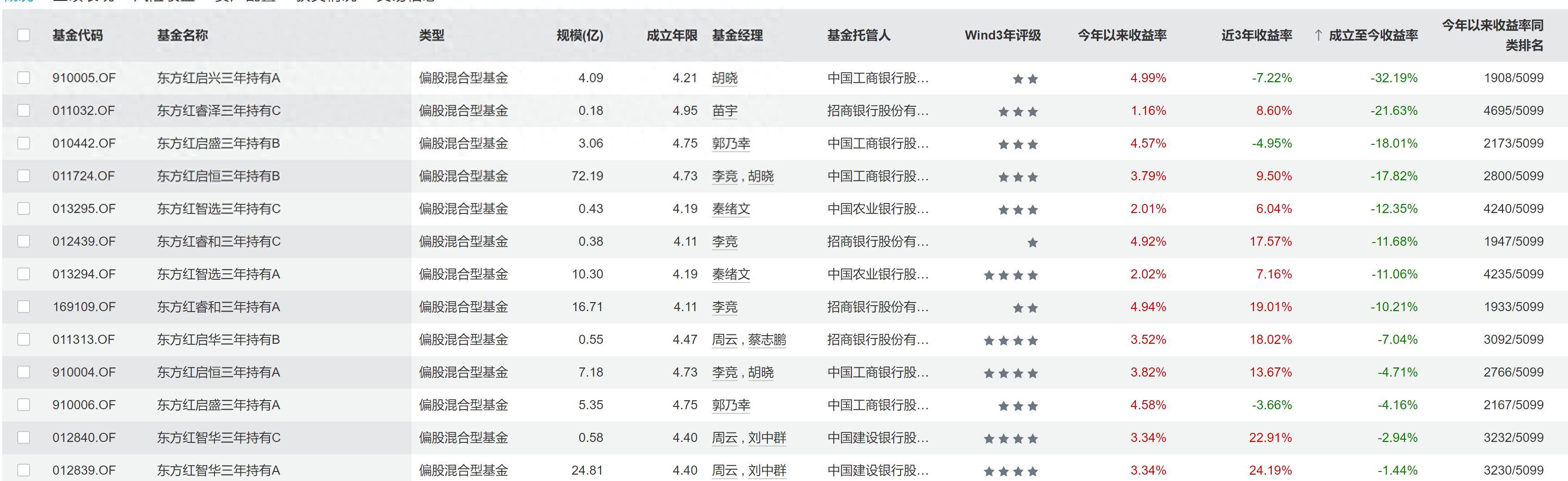
Core Viewpoint - Dongfanghong Asset Management Co., Ltd. is facing unprecedented development challenges, including a significant reduction in management scale, a sharp decline in net profit, loss of core research talent, and underperformance of three-year holding period products, which collectively threaten the trust foundation of this once-renowned asset management institution [1]. Group 1: Fund Performance - In the first half of 2025, Dongfanghong Asset Management experienced a brief surge in new fund issuance, with two products performing well: the Dongfanghong Core Value Mixed Fund raised 2 billion yuan and the Dongfanghong Yingfeng Stable Allocation FOF reached 6.573 billion yuan, setting a record for similar products in 2025 [2]. - Despite the excitement in new fund issuance, existing products are struggling, with 13 three-year holding period products failing to achieve positive returns as of the end of 2025. The Dongfanghong Qixing Three-Year Holding A product has accumulated losses of 32% [2][4]. - The disparity between the success of new funds and the poor performance of existing products reflects Dongfanghong's awkward position, where brand inertia attracts funds but insufficient core investment capabilities erode trust among existing clients [3]. Group 2: Financial Decline - Dongfanghong Asset Management's decline is characterized by structural issues rather than short-term cyclical fluctuations. The management scale has shrunk from a peak of approximately 270 billion yuan in 2021 to about 207.3 billion yuan by the end of 2025, a loss of nearly 60 billion yuan, resulting in a drop in industry ranking to around 40 [4]. - The company's profitability has also plummeted, with net profit falling from 1.438 billion yuan in 2021 to 333 million yuan in 2024, a decline of over 76%, marking the lowest level since 2016 [6]. Group 3: Talent and Investment Strategy - The decline of Dongfanghong Asset Management is closely linked to the continuous loss of core research talent. The company once boasted a strong investment research team but has faced a talent exodus, including key figures who have left to establish their own firms [11]. - The loss of talent has led to a transformation in investment style, with new fund managers frequently shifting their investment focus, diverging from the company's traditional deep value investment approach [13]. - The three-year holding period products, initially intended to promote long-term investment, have come under scrutiny due to their poor performance, particularly those launched at market peaks in 2021, which have resulted in significant losses for investors [8]. Group 4: Future Challenges - For the new head, Cheng Fei, the initial success in new fund issuance only temporarily alleviates pressure. The company faces multiple challenges, including improving the performance of underperforming products, addressing the concerns of trapped investors, rebuilding a research system independent of individual stars, and restoring its value investment philosophy to regain market trust [18].

TRUE PARTNER12月末资产管理规模约为2.78亿美元
Zhi Tong Cai Jing· 2026-01-19 08:41
Core Viewpoint - TRUE PARTNER (08657) reported an unaudited asset management scale of approximately $278 million as of December 31, 2025 [1] Group 1: Financial Performance - TP RV Volatility recorded a net return of -0.28% as of December 31, 2025 [1] - TP Overlay achieved a net return of +0.39% as of December 31, 2025 [1] - TP Dragon Tail reported a net return of -1.58% as of December 31, 2025 [1]
“只买不卖”!“香港巴菲特”将四分之一的财富投入黄金
Hua Er Jie Jian Wen· 2026-01-19 07:46
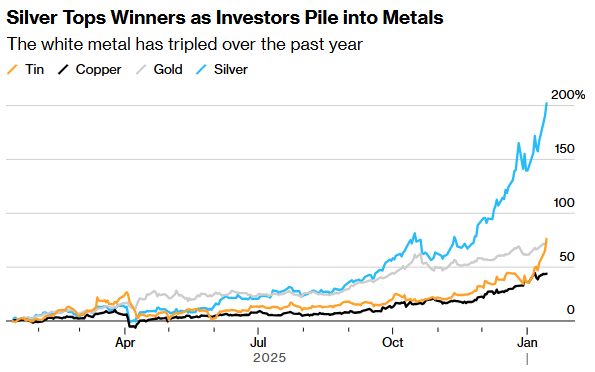
Core Viewpoint - The article highlights the investment strategy of Cheung Hai, known as the "Hong Kong Buffett," who allocates a significant portion of his wealth to gold, far exceeding the average allocation among peers, and adheres to a "buy and hold" strategy without trading or using derivatives [1][2]. Group 1: Investment Strategy - Cheung Hai has allocated approximately 25% of his family office assets, totaling around $1.4 billion, to precious metals, particularly gold, while the average allocation among family offices is only 2% [1][2]. - His investment in precious metals began with small amounts in 2008, leading to substantial purchases of physical gold ETFs ten years later, resulting in cumulative gains of $251.1 million and a growth rate of 167% [1][2]. - He recommends an investment portfolio consisting of 60% stocks, 20% bonds, and 20% precious metals, primarily gold, citing geopolitical tensions as a driving force for gold and silver [1][2]. Group 2: Historical Context and Performance - Cheung Hai's significant gold purchases were funded by selling shares of his company, Wei Li Group, before a major market correction in 2015 [4]. - He launched the Value Gold ETF in 2010, storing physical gold in Hong Kong, and remains the largest shareholder of the fund, valued at approximately HKD 1.3 billion ($167 million) [4]. - The prices of gold, silver, copper, and tin reached historical highs in early 2026, driven by anticipated easing policies from the Federal Reserve, political pressures from the Trump administration, and ongoing geopolitical tensions [1][4]. Group 3: Market Trends and Insights - Cheung Hai believes that the world is entering a period of large-scale "vault migration," with wealthy Asian families increasingly moving their assets back to the region to avoid U.S. sanctions or potential asset seizures [4]. - He emphasizes that owning physical gold is a secure way to store wealth, as it does not rely on any third party [4][5]. - The article notes that some Asian family offices are bypassing intermediaries to trade physical gold directly, reflecting a growing trend in precious metal investments [5].
特朗普关税威胁重创美元 避险需求推升金属与瑞郎 伦铜直逼1.3万美元
智通财经网· 2026-01-19 07:14
Group 1 - The potential imposition of a 10% tariff by the U.S. on European countries related to the Greenland acquisition plan increases uncertainty in U.S. policy, leading to a 0.1% decline in the Bloomberg Dollar Spot Index and a rebound in copper prices [1] - The Swiss Franc outperformed other G10 currencies due to rising demand for safe-haven assets, while the Euro rebounded from a two-month low [1] - Analysts suggest that Trump's tariff threats could trigger a "dollar sell-off" and may be used as a negotiation tactic, providing some support for the dollar [1] Group 2 - The political risk premium associated with U.S. assets, including the dollar, has significantly increased, prompting foreign investors to reduce their holdings [2] - Discussions around de-dollarization have resurfaced due to geopolitical risks related to Greenland, highlighting the vulnerability of the U.S.'s substantial net international liabilities [2] - Conditions for purchasing European bonds are becoming more favorable amid worsening European inflation indicators and escalating tensions between the U.S. and Europe [2] Group 3 - Precious metal prices have surged as investors flock to safe-haven assets, despite potential negative impacts on industrial demand from the U.S.-Europe trade conflict [3] - Copper prices rose by 1.3% to $12,965 per ton, supported by supply shortages and demand driven by the AI boom [3] - Optimism in the metal market is increasing, with copper prices following the trends of silver and gold [3]
阿波罗全球:美股估值接近1880年以来的最高水平
智通财经网· 2026-01-19 07:00
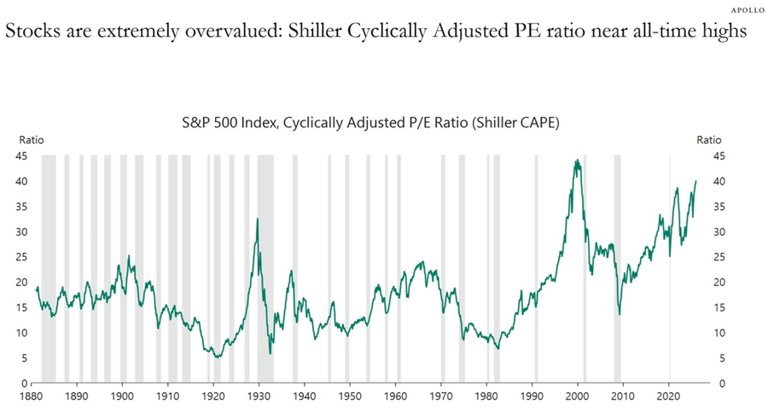
Core Insights - Stock valuations are nearing the highest levels in 145 years, as indicated by Apollo Global Management's data [1] - The cyclically adjusted price-to-earnings ratio (CAPE), or Shiller P/E, provides a more accurate measure of sustainable profitability compared to traditional P/E ratios [1] - Current CAPE readings show that stock valuations are more than double the historical average, suggesting potential for very low or even negative expected annualized returns over the next decade [3] Group 1 - The CAPE ratio smooths business cycle fluctuations by using inflation-adjusted average earnings over the past 10 years [1] - The latest readings indicate that stock valuations are at their highest levels since 1880 [1] - Current valuations are heavily concentrated among a few AI giants, such as Nvidia and Microsoft, raising concerns about potential market corrections if performance growth does not match high P/E ratios [3]
资管规模稳提升,把握优质金融
HTSC· 2026-01-19 03:10
Investment Rating - The report maintains an "Overweight" rating for the banking and securities sectors [9]. Core Insights - The overall AUM of China's asset management industry reached approximately 175.61 trillion yuan by the end of December 2025, with significant contributions from various sectors including banking wealth management, public funds, private equity, insurance, and trusts [15][16]. - The banking wealth management sector saw a year-on-year increase of 6.5%, reaching 31.63 trillion yuan, while public funds grew by 12% to 36.32 trillion yuan [15][16]. - The report highlights a positive trend in the issuance of financial products, with a notable increase in the number of new products launched in December 2025 compared to November [17][29]. Summary by Relevant Sections Banking Wealth Management - As of the end of 2025, the banking wealth management sector had a total AUM of 31.63 trillion yuan, reflecting a year-on-year growth of 6.5% [15][17]. - In December 2025, the market issued 3,039 wealth management products, a month-on-month increase of 15.5% [17][20]. - The average yield for wealth management products rose to 1.79% in December, an increase of 54 basis points from the previous month [43]. Public Funds - The total AUM of public funds reached 36.32 trillion yuan by the end of 2025, with a year-on-year increase of 12% [15][16]. - The issuance of new fund shares decreased by 0.7% year-on-year, but there was a notable increase in the proportion of equity and mixed funds [15][16]. Private Equity - By the end of November 2025, the private equity sector's AUM was 22.09 trillion yuan, with a month-on-month increase of 0.19% [15][16]. - In November, the sector saw a significant increase in new registrations, with a total of 713 billion yuan, marking a year-on-year growth of 97% [15][16]. Insurance Asset Management - The insurance sector's investment balance reached 37.46 trillion yuan by the end of Q3 2025, showing a year-on-year increase of 17% [15][16]. - The proportion of stock investments within the insurance asset management sector has increased, indicating a shift towards equity investments [15][16]. Securities Asset Management - As of Q3 2025, the securities asset management sector had an AUM of 6.37 trillion yuan, with a quarter-on-quarter increase of 4% [15][16]. - The number of new shares issued in December 2025 was 6.5 billion, reflecting a month-on-month increase of 45% [15][16]. Trusts - The trust sector's total asset scale was 32.43 trillion yuan by the end of June 2025, with a year-to-date increase of 10% [15][16]. - In December, the issuance of trust products decreased by 6% month-on-month, totaling 640 billion yuan [15][16].
香港亿万资管大佬大举加仓黄金 贵金属占资产四分之一
Zhi Tong Cai Jing· 2026-01-19 03:08
Group 1 - Cheah Cheng Hye, a prominent figure in Asian value investing, is significantly increasing his investment in gold, suggesting that investors should do the same [1] - Cheah's family office, managing $1.4 billion, has allocated about 25% of its assets to precious metals, up from 15% a year ago [1] - Despite gold prices reaching historical highs, Cheah's bullish stance on gold sets him apart from other ultra-high-net-worth investors, as UBS reports an average allocation of only 2% to gold and precious metals among family offices for 2024 [1] Group 2 - Cheah's investment in precious metals began with small amounts in 2008, leading to substantial investments in physical gold ETFs, yielding a total return of $251.1 million, a 167% increase [2] - The rise in metal prices, including gold and silver, has been driven by anticipated Federal Reserve easing policies, political pressures from the Trump administration, and geopolitical tensions [2] - Wealthy Asian families are increasingly reallocating funds back to the region to avoid U.S. sanctions or potential asset confiscation risks, with gold seen as a secure method for wealth storage [2] Group 3 - Cheah emphasizes the advantages of purchasing physical gold over paper gold, stating that physical gold stored in warehouses or bank vaults ensures ownership [5] - He has a significant investment in silver, which has seen a price increase of nearly three times over the past year, outpacing gold's growth [5] - Cheah co-founded Value Partners in 1993, which became the first asset management company listed in Hong Kong, reaching an asset management peak of $17 billion in 2017 [5] Group 4 - Cheah's substantial gold purchases were initiated from funds generated by reducing his stake in Value Partners before a market downturn in 2015 [8] - He launched the Value Gold ETF in 2010, storing physical gold in Hong Kong airport due to dissatisfaction with Western storage methods [8] - Cheah believes that geopolitical factors, such as tensions in Venezuela and the Russia-Ukraine conflict, are driving increasing demand for gold and silver, validating his investment strategy [8]
美联储主席遴选生变 伦敦金盘初刷新高点
Jin Tou Wang· 2026-01-19 03:03
摘要今日周一(1月19日)亚盘时段,伦敦金最新报价为1044.76元/克,较前一交易日上涨1.55元,涨幅 1.55%,日内呈现强势反弹走势。当日开盘价报1028.74元/克,盘中最高触及1050.03元/克,最低下探至 1028.74元/克。 目前热门候选人包括哈塞特、美联储理事沃勒、前理事沃什及贝莱德高管里德。其中,里德近期因被认 为更易获参议院批准而获得关注。预测市场数据显示,沃什胜率已升至60%,哈塞特和沃勒分别为 16%、14%。 美联储主席遴选还受新变数影响:司法部对美联储总部翻修启动刑事调查,鲍威尔指责此举意在施压降 息。参议员蒂利斯等警告,对特朗普提名人的审查将更严。尽管特朗普称对调查"不知情",但此举加剧 了市场对央行独立性的担忧。 财长贝森特曾警告调查或扰乱市场,但他强调市场已"超越此事",并称参议院会对四位候选人"非常满 意"。鲍威尔任期5月15日届满,遴选由贝森特主导。哈塞特则对留任白宫表示"受宠若惊",称"这里是 我最好的位置"。特朗普称本月将公布继任者,但未明确日期。 【最新伦敦金行情解析】 周末特朗普就丹麦自治领地格陵兰岛问题发出关税威胁,欧盟多国正考虑对价值930亿欧元的输欧美 ...
申万宏源助力新疆金投资产管理公司2.2亿元公司债成功发行
申万宏源证券上海北京西路营业部· 2026-01-19 02:28
Core Viewpoint - The successful issuance of bonds by Xinjiang Jin Investment Asset Management Co., Ltd. demonstrates the effectiveness of financial support in promoting regional development and optimizing financial ecosystems in Xinjiang [2][3]. Group 1: Bond Issuance Details - The bond issuance amounted to 220 million yuan, with a term of 3+2 years and a coupon rate of 2.58%, achieving a subscription multiple of 3.32 times [2]. - The final coupon rate was 30 basis points lower than the valuation of existing bonds, effectively reducing the issuer's funding costs [3]. Group 2: Issuer and Market Position - The issuer, Xinjiang Financial Investment (Group) Co., Ltd., is the only asset management company in Xinjiang with qualifications for bulk acquisition and disposal of non-performing financial assets, highlighting its monopolistic advantage in the region [3]. - Since 2020, the company has served as the sole lead underwriter for five bond issuances for the issuer, indicating a deepening partnership and expanding market influence in Xinjiang [3].
策略会密集召开 机构热议2026年投资主线
Zhong Guo Zheng Quan Bao· 2026-01-18 21:40
Core Insights - The investment strategy conference held in Shanghai highlighted optimism for the A-share market in 2026, driven by improved global liquidity and the performance acceleration of industries like artificial intelligence (AI) [1][2] Investment Environment Outlook - The global economic outlook for 2026 remains positive, with expectations of a friendly capital market environment due to loose monetary policies in both the US and China [2] - Key trends to watch include potential preventive interest rate cuts by the Federal Reserve and continued supportive policies for capital markets in both the US and China [2] - The AI investment landscape is expected to shift focus towards application growth, moving beyond initial investments in chips [2] AI and Computing Power - AI is identified as a critical area for investment in 2026, with both computing power and application opportunities being emphasized [3][4] - The demand for computing power is projected to remain strong, with limited suppliers capable of entering the global core customer base, enhancing the competitive edge of leading companies [3] - The domestic chip companies are improving their R&D capabilities, which is expected to accelerate the localization of computing power by 2026 [4] Resource Sector Strength - The cyclical resource sector has shown strength in early 2026, with significant interest in metals like gold, silver, copper, and aluminum [5] - Historical data suggests that global manufacturing PMI is likely to rise with continued interest rate cuts, indicating a recovery in the manufacturing sector [5] - Specific segments such as copper are expected to benefit from AI's demand, while lithium supply may face constraints post-2028 due to reduced capital expenditures [5]