造船

Search documents
积极参与中国金融市场国际化进程
Zhong Guo Zheng Quan Bao· 2025-09-18 20:24
Core Insights - Singapore Exchange Group (SGX) plays a crucial role as a bridge connecting Asian and global capital markets, particularly focusing on enhancing cooperation between China and Singapore's capital markets [1][2] - SGX aims to attract Chinese companies for listings, providing a platform for international market financing and supporting their global expansion [2][3] Group 1: Strategic Focus - SGX's strategic priority is to deepen cooperation in capital markets between China and Singapore, facilitating the flow of capital for China-related products [1][2] - The exchange is committed to enhancing the internationalization of its products and services, creating a robust ecosystem to support Chinese companies in their global endeavors [1][2] Group 2: Listing Process and Support - SGX has implemented a "policy package" to attract Chinese companies, expanding the scope for secondary listings and improving process transparency and investor access [2][3] - The typical timeline for IPO applications at SGX is now 6 to 8 weeks, providing greater certainty for applicants [2][3] - SGX collaborates closely with companies pre-IPO and offers ongoing research support post-listing, including a market maker program to enhance stock liquidity [2][3] Group 3: Market Ecosystem and Investor Base - Approximately 20% of listed companies on SGX are from Greater China, spanning various industries, indicating a strong presence of Chinese multinational corporations [3] - The Monetary Authority of Singapore has launched a S$50 billion "Securities Market Development Plan" to enhance the competitiveness of the Singapore securities market [3] Group 4: ETF and Index Development - As of July 2023, 10 cross-border ETF products have been launched under the China-Singapore ETF mutual access mechanism, marking a significant milestone [3][4] - A new index, the China Securities SGX Asia Emerging Markets Technology Index, will be launched in January 2024, focusing on technology sectors in Asia [5] Group 5: Future Goals and Technological Integration - SGX aims to become a leading international exchange, facilitating connections between global investors and Asian markets [7] - The exchange is integrating AI technology into its operations to enhance market surveillance, operational efficiency, and customer interaction [6][7]
每日市场观察-20250918
Caida Securities· 2025-09-18 02:09
Market Overview - On September 17, the market showed a strong upward trend, with the Shanghai Composite Index rising by 0.37%, the Shenzhen Component Index by 1.16%, and the ChiNext Index by 1.95%[2] - The total trading volume reached 2.4 trillion, a slight increase of approximately 30 billion compared to the previous trading day[1] Sector Performance - More than half of the sectors experienced gains, with notable increases in power equipment, automotive, home appliances, coal, and machinery[1] - The main sectors attracting capital include computing power, semiconductors, robotics, and new energy, indicating a high level of market activity[1] Capital Flow - On September 17, net inflows into the Shanghai Stock Exchange amounted to 27.539 billion, while the Shenzhen Stock Exchange saw net inflows of 24.762 billion[3] - The top three sectors for capital inflow were automotive parts, batteries, and power grid equipment, while the sectors with the highest outflows were components, chemical pharmaceuticals, and liquor[3] Policy and Regulatory Developments - The State-owned Assets Supervision and Administration Commission announced plans to promote strategic restructuring of state-owned enterprises to enhance core competitiveness and operational efficiency[4] - Hong Kong's Chief Executive proposed exploring a reduction in the stock settlement cycle to T+1 to attract more overseas companies for secondary listings[5] Industry Dynamics - The Ministry of Industry and Information Technology is focusing on 116 key directions for product and process innovation, including high-performance integrated electric joint modules and precision transmission technologies[7][8] - The 2025 World Energy Storage Conference reported a total planned investment of 24.58 billion in 18 signed projects, covering new batteries, storage systems, and zero-carbon parks[9] Fundraising Activity - In September, 122 new funds were launched, representing a 45.24% increase compared to August, with a notable improvement in fundraising efficiency[11][12] - Foreign institutions have conducted nearly 1,800 research visits to A-share companies since the second half of the year, indicating sustained interest in Chinese assets[13]
美索3500亿 韩国为何硬气拒签
Jin Tou Wang· 2025-09-17 06:33
Group 1 - The U.S. proposed to reduce tariffs on South Korean imports from 25% to 15%, contingent on South Korea committing $350 billion to specific industries, which South Korea found unacceptable [1] - South Korea's economy is significantly smaller than Japan's, with a GDP of about half and foreign reserves of $416 billion, which is less than one-third of Japan's [1] - The proposed investment amount represents 84% of South Korea's foreign reserves, raising concerns about the potential economic crisis if the agreement is accepted [1] Group 2 - The South Korean won is not freely convertible, lacking reserve currency status, which limits South Korea's risk hedging capabilities [2] - The majority of the $350 billion investment must be raised through loans and guarantees from South Korean institutions, with only a small portion available for direct equity financing [2] - South Korean companies have announced an additional $150 billion investment to negotiate better terms, including a $50 billion order for Boeing aircraft, but this is insufficient to alleviate immediate financial pressures [2]
率先打通在建船舶抵押融资堵点
Jing Ji Ri Bao· 2025-09-16 22:15
Core Viewpoint - The introduction of a mortgage loan for ships under construction by Postal Savings Bank in Heyuan City represents a significant breakthrough in financing for the shipping industry, addressing long-standing challenges in shipbuilding financing and supporting the green shipping trend [1][2]. Group 1: Industry Context - The shipping industry is a crucial link in supporting regional economic circulation, characterized by long construction cycles and high investment [1]. - Traditional mortgage financing has been limited due to the lack of valuation systems for ships under construction, which has hindered project progress for many shipping companies [1]. Group 2: Financial Innovation - Postal Savings Bank's Heyuan branch has developed a new mortgage loan scheme for ships under construction, breaking traditional financing barriers and providing a replicable model for the shipping and shipbuilding industry [2]. - The new financing solution utilizes a valuation model based on "progress + cost + prospects," and includes regulatory agreements to monitor project progress and control risks, allowing for loan approval in just over 10 days [1]. Group 3: Impact on the Industry - This financing innovation not only benefits individual companies but also injects financial support into the green upgrade of the shipbuilding industry, particularly for the construction of LNG new energy vessels [2]. - The bank aims to deepen its services in the shipping sector and enhance the financing service system to support high-quality development of the local economy and rural revitalization [2].

7天欧洲行拜访了30多家船东,回大连后还见了省委书记、开工了产业园,陈建华最近有点忙!
Sou Hu Cai Jing· 2025-09-16 03:06
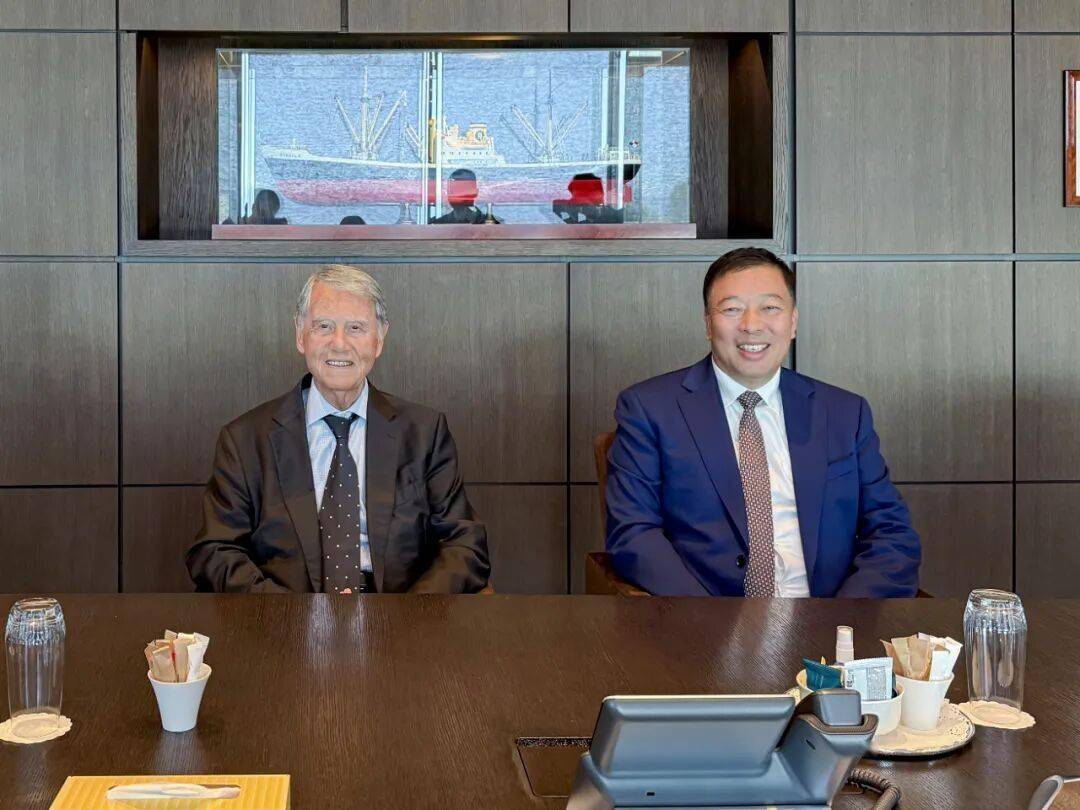
Core Insights - Hengli Group, led by Chairman and President Chen Jianhua, conducted a 7-day business exchange in Europe from September 7 to 13, showcasing Hengli Heavy Industry's new developments and exploring global industry opportunities and shipowner demands [1] Group 1: Business Activities - The delegation visited over 30 European shipowners in Greece and Switzerland, discussing orders for various ship types including container ships, 82,000 deadweight ton Kamsarmax bulk carriers, 181,000 deadweight ton Capesize bulk carriers, 306,000 deadweight ton Very Large Crude Carriers (VLCCs), and Aframax tankers [1] - Notable meetings included discussions with prominent figures such as MSC founder Gianluigi Aponte, Greek shipping magnate George Procopiou, and other influential shipowners [8] Group 2: Future Developments - On September 14, Hengli held a groundbreaking ceremony for the Cooperation Innovation and Marine Engineering Technology Industrial Park in Dalian, marking a new initiative in supporting the manufacturing sector [8][12] - The new shipbuilding orders are scheduled until 2029, with full production capacity expected to process 2.3 million tons of steel plates and produce 180 engines annually, establishing Hengli Heavy Industry as the largest and most comprehensive shipbuilding base globally [14]


韩国出口格局生变:对美出口连月下滑,中企东盟接棒,或成新筹码
Sou Hu Cai Jing· 2025-09-15 17:12
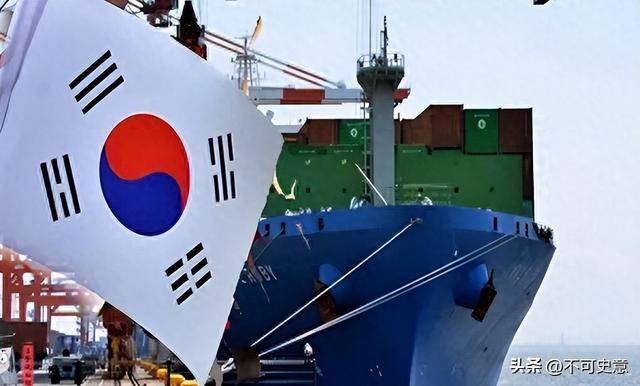
Core Viewpoint - The shift in South Korea's export structure from reliance on the U.S. to diversification towards China and ASEAN is not a temporary fluctuation but a long-term transformation driven by policy changes [2][4][13]. Export Trends - South Korea's exports to the U.S. decreased by 3.7% year-on-year in the first half of the year, with a significant drop of 12% in August and an 8.2% decline in the first ten days of September, indicating a persistent downward trend [2][4]. - In contrast, exports to China and ASEAN remained stable, with exports to China at approximately $110 billion in July and August, and ASEAN exports exceeding $108 billion during the same period [4][6]. Market Diversification - The South Korean government has recognized the high dependency on U.S. exports and is actively promoting market diversification, which is reflected in the current export trends [4][8]. - Concerns about the stability of demand from China and ASEAN are addressed by highlighting the consistent demand for semiconductor equipment and automotive parts from China, as well as the growing potential of the ASEAN market [6][8]. Investment Strategy - South Korean companies are adjusting their investment plans in the U.S. due to risks associated with U.S. policies, opting instead for more stable markets in Latin America and Europe, which also present high-end market opportunities [10][11]. - The shift in investment strategy is seen as a rational risk-avoidance measure rather than a retreat from high-end sectors, allowing for a more concentrated resource allocation in stable markets [11][13]. Long-term Outlook - The changes in South Korea's export structure are viewed as a necessary adaptation for an export-oriented economy to mitigate risks associated with global trade uncertainties, moving from a single-market dependency to a diversified approach [13].
A股并购重组活跃,诞生多只新“巨无霸”企业
Xin Lang Cai Jing· 2025-09-15 05:20
Group 1 - Capital market reforms have intensified since last year, with a series of policies supporting mergers and acquisitions (M&A) to inject strong momentum into the high-quality development of listed companies [1][2] - As of September 11, 2025, over 220 A-share listed companies have disclosed M&A events and related progress, indicating sustained activity in asset restructuring [1][2] - The strategic direction of M&A among listed companies is evident, focusing on either cross-industry acquisitions for transformation or expanding a "second growth curve" based on core businesses [1][2] Group 2 - Transformational M&A has become a crucial option for companies facing performance pressure, exemplified by Jinpu Titanium's plan to exit the loss-making titanium dioxide business and acquire a 100% stake in a rubber products manufacturer [2][3] - Expansion-oriented M&A reflects companies' strategies to deepen their industry chains, as seen in Guotou Zhonglu's plan to acquire a 100% stake in a state-owned electronic engineering firm, marking a shift from consumer goods to high-end industrial services [2][3] Group 3 - The semiconductor industry is a focal point for A-share asset restructuring in 2025, with significant cases like SMIC's acquisition of a 49% stake in its subsidiary, enhancing its control over advanced production capacity [3][4] - Chip design firm Chipone's planned acquisition of a semiconductor company aims to strengthen its position in the RISC-V ecosystem, potentially reshaping the semiconductor IP landscape [3][4] Group 4 - The computing power industry is also witnessing major consolidations, such as Dongyangguang's planned acquisition of Qinhuai Data for 28 billion yuan, which will enhance regional layout and technological synergy [4][5] - The merger between Haiguang Information and Zhongke Shuguang is set to create the largest scale in the domestic computing power industry, combining strengths in chips and data center infrastructure [5][6] Group 5 - Several "mega" asset restructuring cases have emerged in 2025, including the merger of Guotai Junan and Haitong Securities, and China Shenhua's acquisition of subsidiaries from its controlling shareholder, with total assets reaching 258.36 billion yuan [5][6] - The predominant transaction method remains a combination of issuing shares and cash, accounting for approximately 60% of deals, which alleviates short-term funding pressure while aligning interests [5][6] Group 6 - The trend of share-swap mergers is increasing, with notable cases like the merger of Haiguang Information and Zhongke Shuguang, and the merger of China Shipbuilding and China Shipbuilding Heavy Industry [6][7] - These mergers are significant for eliminating competition among firms, enhancing governance efficiency, and improving collaboration across the industry chain [6][7] Group 7 - Currently, about 10% of restructuring cases are in the intention stage, while 30% have board and shareholder approvals, indicating that most projects have moved into substantive progress [6][7] - Approximately 14% of cases have been completed, while around 17% have been canceled or terminated due to market changes or unmet transaction conditions, reflecting a cautious market attitude amid stricter regulations [6][7]

船舶行业2025年中报综述:上行周期中的短暂停火,继续看好后续主流船型放量
CMS· 2025-09-14 13:05
Group 1 - The shipbuilding sector experienced weak stock performance in the first half of 2025, primarily due to a decline in both volume and price in the ship market, despite strong earnings from shipbuilding stocks as prior orders were fulfilled [1][5][12] - The performance of shipbuilding stocks was significantly better than revenue growth, with profits increasing substantially due to high-priced orders from 2022 entering a delivery phase and a decrease in steel costs compared to 2021 [14][15] - The overall market sentiment for the shipbuilding industry was poor, with new orders and new ship prices under significant downward pressure, influenced by low freight rates and the impact of the US 301 Act on Chinese shipbuilding [19][31] Group 2 - The shipbuilding industry is expected to benefit from a future recovery in demand for bulk carriers and oil tankers, as their order-to-capacity ratios are currently low, indicating potential for growth [46][49] - As of June 2025, the order-to-capacity ratios for bulk carriers and oil tankers were only 10.4% and 15% respectively, significantly lower than the 39.4% for container ships, suggesting that the current downturn is a temporary pause in an upward cycle [46][47] - The report maintains a positive outlook on the shipbuilding sector, recommending investments in companies like China Shipbuilding and China Power, while suggesting attention to companies involved in shipbuilding and related equipment [1][5][46] Group 3 - The first half of 2025 saw a notable decline in fund holdings in the shipbuilding sector, with significant year-on-year decreases in holdings for major companies, although there was a quarter-on-quarter increase in Q2, indicating renewed institutional interest [11][12] - The earnings of major shipbuilding companies showed remarkable growth, with China Shipbuilding reporting a revenue of 40.3 billion yuan and a net profit of 2.95 billion yuan in H1 2025, reflecting a year-on-year increase of 12% and 109% respectively [15][17] - The global new ship order volume fell to 1.67 million CGT in May 2025, marking the lowest level in four years, with a significant year-on-year decline across various ship types, particularly LNG and oil tankers [31][34]


澳大利亚拟巨资打造核潜艇船坞
Xin Hua She· 2025-09-14 09:19
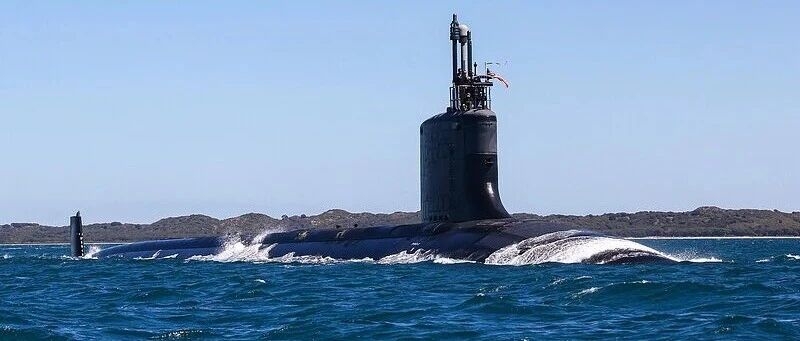
Group 1 - The Australian government will invest 12 billion AUD (approximately 8 billion USD) to upgrade the Henderson shipyard in Western Australia, aiming to establish it as a maintenance center for nuclear submarines over the next 20 years [1] - The total expenditure for developing the Henderson submarine dock may reach 25 billion AUD (16.6 billion USD) [1] - Australia currently lacks the infrastructure to service nuclear submarines, prompting concerns about nuclear proliferation risks associated with the trilateral security partnership with the US and UK [1] Group 2 - Recent defense investment announcements from Australia include a 10 billion AUD (6.6 billion USD) purchase of 11 Japanese "Aegis" class frigates and an investment of 1.7 billion AUD (1.1 billion USD) to develop the "Ghost Shark" underwater drone fleet [2]
澳大利亚拟斥资250亿澳元打造核潜艇船坞
财联社· 2025-09-14 08:32
Group 1 - Australia will invest 12 billion AUD (approximately 8 billion USD) to upgrade the Henderson shipyard in Western Australia, aiming to establish it as a maintenance center for nuclear submarines under the AUKUS alliance over the next 20 years [1] - The total expenditure for developing the Henderson submarine dock may reach 25 billion AUD (16.6 billion USD) [1] - Australia currently lacks the infrastructure to service nuclear submarines, prompting the need for this investment [1] Group 2 - The AUKUS partnership, which includes the US, UK, and Australia, has raised international concerns regarding nuclear proliferation risks and the potential destabilization of regional security [2] - The US Department of Defense is reassessing the AUKUS agreement to ensure it aligns with the "America First" agenda, while assurances have been given by US officials that the partnership will continue [2] - Recent Australian defense investments include a 10 billion AUD (6.6 billion USD) purchase of 11 Japanese "Mikuma" class frigates and 1.7 billion AUD (1.1 billion USD) for the development of the "Ghost Shark" underwater drone fleet [2]