
矿业

Search documents
美股存储股、矿业股大涨
第一财经· 2026-02-03 14:58
Market Overview - As of February 3, U.S. stock indices showed mixed performance with the Nasdaq up by 0.36%, the Dow Jones up by 0.22%, and the S&P 500 up by 0.20% [1][2]. Sector Performance - Mining stocks experienced significant gains, with Coeur Mining rising over 8% and Pan American Silver increasing by more than 6% [2]. - The storage sector also saw strong performance, with Western Digital up over 4% and SanDisk rising more than 5% [3]. - Most technology stocks were up, including Intel which rose over 4% and Google which increased by more than 1% [4]. Chinese Stocks - The Nasdaq Golden Dragon China Index fell by 0.40%, with notable declines in stocks such as Bilibili, Alibaba, and NetEase, each dropping over 2%, while Baidu and JD.com fell by more than 1%. Conversely, Xpeng Motors saw an increase of over 2% [4]. Notable Declines - PayPal experienced a significant drop, falling over 18% [5].


美股开盘,道指跌0.1%,标普500指数涨0.13%,纳指涨0.32%。矿业股高开,科尔黛伦矿业(CDE.N)涨8.2%,泛美白银(PAAS.O)涨6....
Jin Rong Jie· 2026-02-03 14:44
Market Overview - The Dow Jones Industrial Average opened down by 0.1% while the S&P 500 index increased by 0.13% and the Nasdaq rose by 0.32% [1] Company Performance - Coeur Mining (CDE.N) saw a significant increase in stock price, rising by 8.2% [1] - Pan American Silver (PAAS.O) also experienced a notable gain, with its stock up by 6.2% [1] - PayPal (PYPL.O) faced a sharp decline, dropping by 18% after the company warned of a potential decrease in earnings for the year and announced a change in CEO [1]
董秘职位空悬4年!鹏欣资源及两时任董事长被警示
Shen Zhen Shang Bao· 2026-02-03 13:45
Core Viewpoint - The company has faced regulatory scrutiny due to the prolonged vacancy of the board secretary position, which has been filled by the chairman since January 21, 2022, violating relevant regulations [2][3]. Group 1: Regulatory Actions - The Shanghai Stock Exchange issued a regulatory warning to the company's former chairman Wang Jian and Wang Jinding for failing to fulfill their responsibilities in appointing a board secretary [3]. - The company is required to take corrective measures, initiate the appointment process for a qualified board secretary, and submit a rectification report within one month [3]. Group 2: Share Pledge Information - The company's controlling shareholder, Tibet Zhiguan, pledged 23,230,000 shares to Shanghai Rural Commercial Bank, with the funds intended for working capital [4]. - After the pledge, Tibet Zhiguan holds 91,183,431 shares, representing 4.12% of the total share capital, with the pledged shares accounting for 25.48% of their holdings and 1.05% of the company's total shares [4]. Group 3: Shareholder Status - As of the announcement date, the controlling shareholder Pengxin Group and its concerted parties hold a total of 685,137,415 shares, representing 30.96% of the total share capital, with 427,837,580 shares pledged [5]. - The unpledged shares held by Pengxin Group and its concerted parties are insufficient to meet performance compensation commitments, prompting efforts to lift the pledges [5]. Group 4: Financial Performance - The company anticipates a net profit of between 210 million and 290 million yuan for 2025, a significant turnaround from a loss of 96.77 million yuan in the previous year [5]. - The expected profit increase is attributed to higher production and sales prices of gold, copper, and sulfuric acid, along with a rebound in cobalt hydroxide prices [5]. Group 5: Market Performance - As of February 3, the company's stock price decreased by 3.21%, closing at 8.75 yuan per share, with a total market capitalization of 19.363 billion yuan [6].

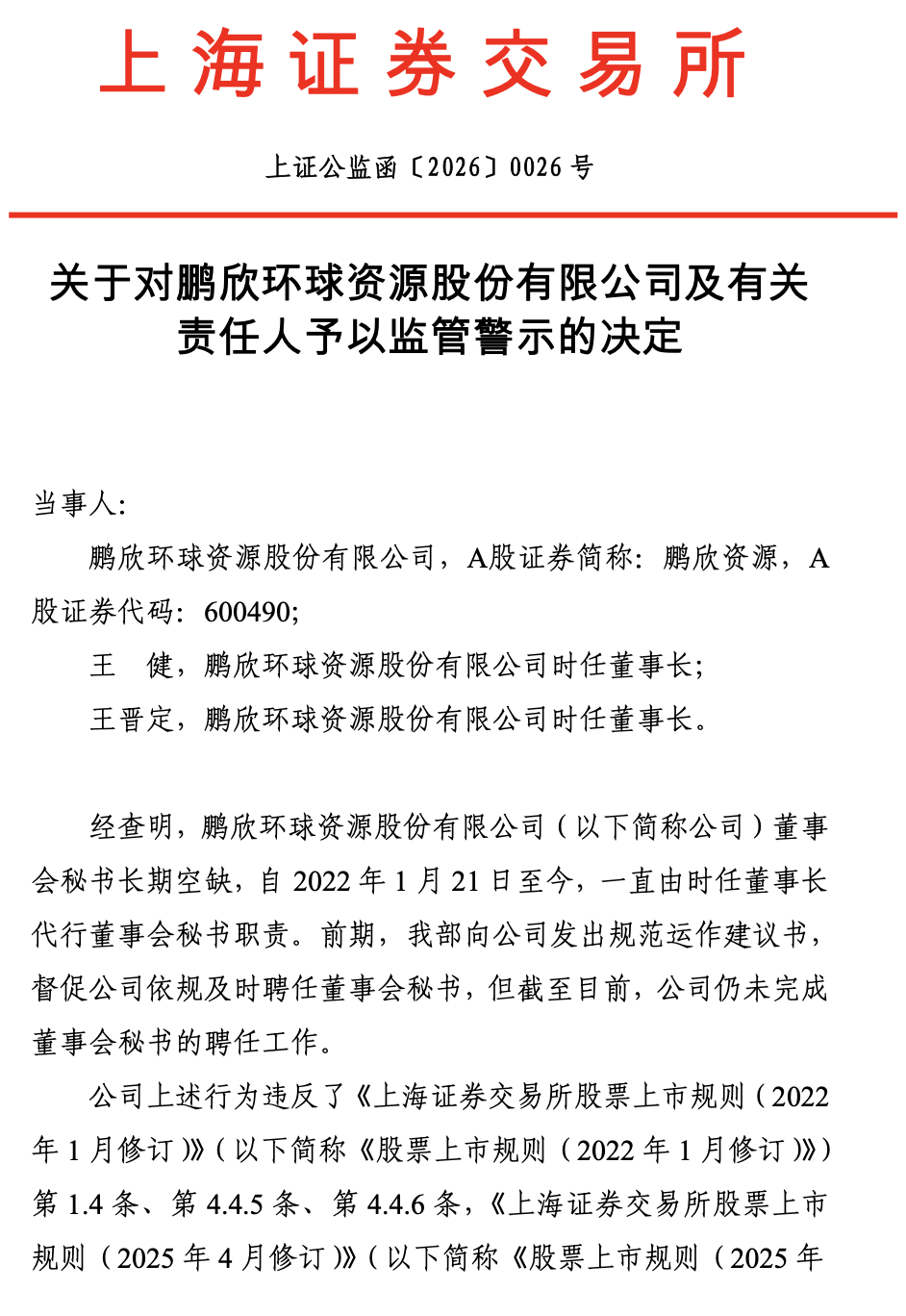
洛阳钼业(03993.HK)获摩根大通增持806.06万股
Ge Long Hui· 2026-02-03 13:33
格隆汇2月3日丨根据联交所最新权益披露资料显示,2026年1月28日,洛阳钼业(03993.HK)获JPMorgan Chase & Co.以每股均价23.8255港元增持好仓806.06万 股,涉资约1.92亿港元。 | 表格序號 | 大股東/董事/最高行政人員名 作出披露的 買入 / 賣出或涉及的 每股的平均價 | | | | | 持有權益的股份數目 佔已發行的 有關事件的日期相 | | --- | --- | --- | --- | --- | --- | --- | | | 股份數目 | 三大 | | | (請參閱 | 有投票權股(日/月/年) 精 | | | | | | | 出 | 份自分比 | | . CS20260202E00380 | JPMorgan Chase & Co. | 1101(L) | 8,060,604(L) | HKD 23.8255 | 279.500.219(L) | 7.10(L)28/01/2026 | | | | | | | 68.109.744(S) | 1.73(S) | | | | | | | 126.957.814(P) | 3.22(P) | 增持后,JP ...

黑色金属日报-20260203
Guo Tou Qi Huo· 2026-02-03 13:05
Report Investment Ratings - Thread steel: ☆☆☆ [1] - Hot-rolled steel: ☆☆☆ [1] - Iron ore: ☆☆☆ [1] - Coke: ★☆☆ [1] - Coking coal: ★☆★ [1] - Silicomanganese: ★★☆ [1] - Ferrosilicon: ★★☆ [1] Core Views - The steel market is weak and volatile, with the demand for thread steel decreasing and the inventory accumulating, while the demand and production of hot-rolled steel are increasing slightly and the inventory is decreasing. The profit of steel mills is poor, the downstream carrying capacity is insufficient, and the iron water production is stable. The overall domestic demand is still weak, and the steel export remains high. The rebound of non-ferrous and precious metals has improved the commodity sentiment, but the weak demand restricts the rebound space of the market [1]. - The iron ore market is weak, with the global shipping volume increasing but lower than the same period last year, and the domestic arrival volume decreasing slightly. The port inventory has continued to accumulate significantly, and there is still some structural support in the short term. The terminal demand is in a low-level shock, the steel mill's profitability has declined, and the iron water production is stable at a low level. The steel mill's imported ore inventory has increased, and the replenishment demand continues to be released. The overall supply and demand of iron ore are expected to improve marginally, but the decline in the risk preference of the commodity market puts pressure on the market [2]. - The coke market is mainly in a shock state, with the coking profit being average and the daily output slightly decreasing. The coke inventory has increased slightly, and the purchasing willingness of traders may improve after the first price increase. The overall supply of carbon elements is abundant, the downstream iron water is at the off-season level, the steel profit level is average, and the pressure on raw materials is still strong. The coke market is at a premium, and the market has certain expectations for the "anti-involution" policy. Driven by coking coal, the coke price is unlikely to decline significantly and is likely to fluctuate within a range [3]. - The coking coal market is mainly in a shock state, with the Mongolian coal customs clearance volume being 873 vehicles yesterday. The output of coking coal mines has increased slightly, the spot auction transactions have gradually declined, and the transaction price has mainly increased driven by the increase in the market price. The terminal inventory has increased significantly, and the total inventory of coking coal has increased significantly, with the production end inventory slightly decreasing. The winter storage demand is gradually coming to an end. The overall supply of carbon elements is abundant, the downstream iron water is at the off-season level, the steel profit level is average, and the pressure on raw materials is still strong. The coking coal market is at a premium to Mongolian coal, and the market has certain expectations for the "anti-involution" policy. The seasonal decline of Mongolian coal customs clearance data is still not obvious, but under the influence of the overall market sentiment, the coking coal price is unlikely to decline significantly and is likely to fluctuate within a range [5]. - The silicomanganese market has corrected, with the spot manganese ore transaction price slightly decreasing, the market entering the non-arbitrage space, and the downward space being relatively small. The market is waiting for the steel tender. The manganese ore port inventory may start to accumulate slowly, the mine end shipping has increased month-on-month, but the mine cost has increased compared with previous years, and the price reduction space may be relatively limited. The iron water production is at the seasonal low level, the weekly output of silicomanganese has increased slightly, and it is difficult to see a significant decline driver. The silicomanganese inventory has increased slightly, and the price is affected by the over-supply and the repeated fermentation of the "anti-involution" issue [6]. - The ferrosilicon market has corrected, with the tender price of a large steel mill in the north in February being 5,760 yuan/ton for acceptance and delivery, which is the same as last month. The power cost in some production areas has indeed decreased, the semi-coke price has decreased slightly, and the main production areas are still mainly in a loss state. The iron water production is at the off-season level, the export demand remains above 30,000 tons, and the marginal impact is not significant. The metal magnesium production has continued to increase month-on-month, the secondary demand has increased marginally, and the overall demand still has resilience. The ferrosilicon supply has not changed much, the inventory has decreased slightly, and the price is affected by the over-supply and the repeated fermentation of the "anti-involution" issue [7]. Summary by Category Steel - The thread steel market is in a weak shock state, with the off-season demand decreasing, the production stabilizing in the short term, and the inventory continuing to accumulate. The hot-rolled steel market has a slight increase in demand and production, and the inventory continues to decline, with the pressure gradually easing. The steel mill's profit is poor, the downstream carrying capacity is insufficient, the blast furnace复产 slows down, and the iron water production stabilizes. The overall domestic demand is still weak, and the steel export remains high. The rebound of non-ferrous and precious metals has improved the commodity sentiment, but the weak demand restricts the rebound space of the market, and there may still be fluctuations in the short term [1]. Iron Ore - The iron ore market is weak, with the global shipping volume increasing but lower than the same period last year, and the domestic arrival volume decreasing slightly. The port inventory has continued to accumulate significantly, and there is still some structural support in the short term. The terminal demand is in a low-level shock, the steel mill's profitability has declined, and the iron water production is stable at a low level. The steel mill's imported ore inventory has increased, and the replenishment demand continues to be released. The overall supply and demand of iron ore are expected to improve marginally, but the decline in the risk preference of the commodity market puts pressure on the market [2]. Coke - The coke market is mainly in a shock state, with the coking profit being average and the daily output slightly decreasing. The coke inventory has increased slightly, and the purchasing willingness of traders may improve after the first price increase. The overall supply of carbon elements is abundant, the downstream iron water is at the off-season level, the steel profit level is average, and the pressure on raw materials is still strong. The coke market is at a premium, and the market has certain expectations for the "anti-involution" policy. Driven by coking coal, the coke price is unlikely to decline significantly and is likely to fluctuate within a range [3]. Coking Coal - The coking coal market is mainly in a shock state, with the Mongolian coal customs clearance volume being 873 vehicles yesterday. The output of coking coal mines has increased slightly, the spot auction transactions have gradually declined, and the transaction price has mainly increased driven by the increase in the market price. The terminal inventory has increased significantly, and the total inventory of coking coal has increased significantly, with the production end inventory slightly decreasing. The winter storage demand is gradually coming to an end. The overall supply of carbon elements is abundant, the downstream iron water is at the off-season level, the steel profit level is average, and the pressure on raw materials is still strong. The coking coal market is at a premium to Mongolian coal, and the market has certain expectations for the "anti-involution" policy. The seasonal decline of Mongolian coal customs clearance data is still not obvious, but under the influence of the overall market sentiment, the coking coal price is unlikely to decline significantly and is likely to fluctuate within a range [5]. Silicomanganese - The silicomanganese market has corrected, with the spot manganese ore transaction price slightly decreasing, the market entering the non-arbitrage space, and the downward space being relatively small. The market is waiting for the steel tender. The manganese ore port inventory may start to accumulate slowly, the mine end shipping has increased month-on-month, but the mine cost has increased compared with previous years, and the price reduction space may be relatively limited. The iron water production is at the seasonal low level, the weekly output of silicomanganese has increased slightly, and it is difficult to see a significant decline driver. The silicomanganese inventory has increased slightly, and the price is affected by the over-supply and the repeated fermentation of the "anti-involution" issue [6]. Ferrosilicon - The ferrosilicon market has corrected, with the tender price of a large steel mill in the north in February being 5,760 yuan/ton for acceptance and delivery, which is the same as last month. The power cost in some production areas has indeed decreased, the semi-coke price has decreased slightly, and the main production areas are still mainly in a loss state. The iron water production is at the off-season level, the export demand remains above 30,000 tons, and the marginal impact is not significant. The metal magnesium production has continued to increase month-on-month, the secondary demand has increased marginally, and the overall demand still has resilience. The ferrosilicon supply has not changed much, the inventory has decreased slightly, and the price is affected by the over-supply and the repeated fermentation of the "anti-involution" issue [7].
铁矿石周报20260203:供需宽松,盘面震荡整理-20260203
Hong Ye Qi Huo· 2026-02-03 12:54
1. Report Industry Investment Rating - No relevant information provided 2. Core View of the Report - The current iron ore supply and demand is loose, and the market will maintain a volatile trend in the short term. The overall supply has increased slightly, with a small decline in Australian ore, a slight increase in Brazilian and non - mainstream ores. The arrival volume has slightly decreased but remains at a high level, and domestic ore production has slightly declined. On the demand side, affected by profit compression and environmental protection restrictions, steel mills have insufficient willingness to increase production, and iron water production remains stable. As the Spring Festival approaches, the inventory replenishment is coming to an end, and the support from inventory replenishment is weakening. Port inventories continue to increase, and steel mill inventories have rebounded [5][6]. - The trading strategy is range - bound [6]. 3. Summary by Related Catalogs Price - Spot prices have slightly declined [7] - The price of 62% Australian powder ore in the forward spot market is in US dollars per dry ton [9] - The price of 62% PB powder at Qingdao Port and 66% iron concentrate powder in Tangshan is in yuan per ton [12] Mineral Powder Spreads - The spread between high - and medium - grade ores has slightly widened, while the spread between medium - and low - grade ores has shrunk [13] - The spread between PB powder and Mac powder has rebounded [16] - The 5 - 9 spread is oscillating at a low level, and the basis of the 05 contract has slightly declined [21] Relative Valuation - The ratio of steel to ore is oscillating at a low level, and the ratio of ore to coke has slightly increased [31] Supply - Global shipments have slightly increased, with non - mainstream ore shipments rising slightly. From January 26th to February 1st, the global iron ore shipment volume was 3094.6 tons, a week - on - week increase of 116.2 tons [5][37] - Australian ore shipments to China have slightly declined, while Brazilian ore shipments have increased. Australian shipments were 1820.4 tons, a week - on - week decrease of 17 tons; Brazilian shipments were 692.2 tons, a week - on - week increase of 147.4 tons [5][41] - FMG shipments to China have significantly declined, while BHP shipments have continued to increase [45] - RT shipments to China have slightly increased, and VALE shipments have stopped falling and rebounded [49] - The shipping freight index has continued to rise [53] - The arrival volume has slightly declined but remains at a medium - high level. The total arrival volume at 45 ports in China was 2484.7 tons, a week - on - week decrease of 45.3 tons [5][57] - Domestic iron concentrate powder production has slightly declined. As of January 30th, the daily average output of iron concentrate powder from 186 mines across the country was 46.87 tons, a week - on - week decrease of 0.08 tons, with a capacity utilization rate of 59.98%, a week - on - week decrease of 0.11% [5][60] Demand - Steel mill blast furnace profits have slightly declined [66] - Blast furnace operation has changed little, and iron water production has remained stable. The daily average iron water production in the week of January 30th was 227.98 tons, a week - on - week decrease of 0.12 tons [5][72] Inventory - The port ore handling volume has stopped falling and rebounded, and port inventories have continued to increase. The number of ships at the port has decreased by 12 to 106 [5][81] - Australian ore inventories have continued to increase, while Brazilian ore inventories have slightly declined [85] - Coarse powder inventories have remained at a high level, and lump ore inventories have slightly declined [93] - Before the Spring Festival, steel mills have replenished their inventories, and imported ore inventories have continued to rise [101]
“十五五”智能矿山产业深度研究及趋势前景预判报告
Xin Lang Cai Jing· 2026-02-03 12:52
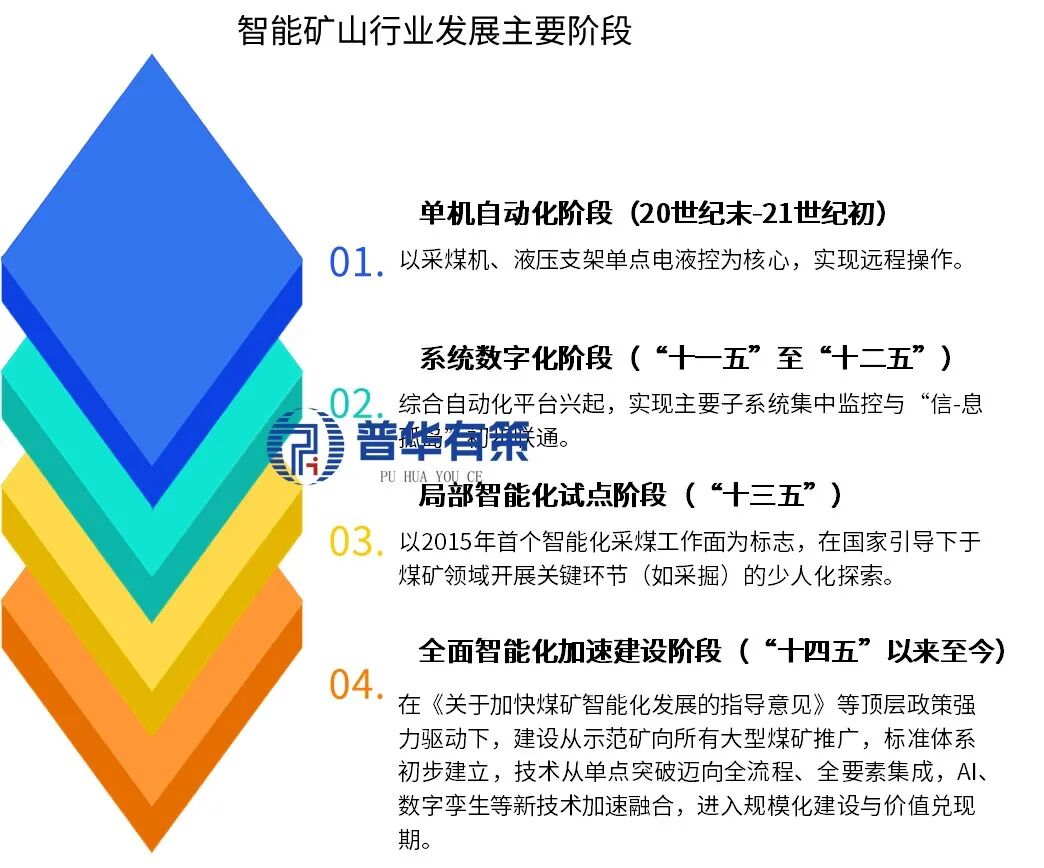
Group 1 - The core concept of the article emphasizes the dual drive of AI and policy in the development of the intelligent mining industry, which is projected to be a trillion-dollar market opportunity [1][2] - Intelligent mining is defined as a comprehensive system that integrates IoT, cloud computing, big data, AI, and smart equipment to achieve safe, efficient, green, and economical resource extraction [1][2] - The industry has been elevated to a national strategy since the 14th Five-Year Plan, with policies focusing on mandatory timelines and standards for intelligent construction, particularly in coal mining [2][5] Group 2 - The technological framework of intelligent mining features a "cloud-edge-end" collaboration, where sensors and smart equipment are deployed at the mining site for real-time data processing and decision-making [3][25] - Current technology is at a stage of "intermediate breakthroughs and dual-end development," with communication and data collection being relatively mature, while AI applications are still in exploratory phases [4][26] - The industry is driven by strong regulatory pressures, economic efficiency demands, technological advancements, and long-term structural changes in society [27][28][30][31] Group 3 - Future trends indicate that the integration of AI large models and digital twins will become central to mining operations, enhancing decision-making and operational efficiency [9][31] - The shift towards fully automated operations is expected to expand from localized applications to systemic implementations, with significant advancements in autonomous transportation and remote-controlled operations [10][32] - The industry is moving towards service-oriented and green transformations, with business models evolving from one-time product sales to ongoing service offerings [11][33][34] Group 4 - The barriers to entry in the intelligent mining sector include technological, financial, and regulatory challenges, which must be navigated for successful market participation [35][36] - The report provides a comprehensive analysis of the intelligent mining industry, including market size, supply-demand dynamics, and competitive landscape, highlighting key players and their strategies [38][39]
分红代替支付,则两难自解?博源化工与蒙大矿业等就近19亿元仲裁案达成和解
Mei Ri Jing Ji Xin Wen· 2026-02-03 11:45
Core Viewpoint - The arbitration case involving Boyuan Chemical and its resolution through a settlement agreement with China Coal Energy and Uxinqi Mengda Mining has significant financial implications, including a debt of approximately 1.889 billion yuan being settled through a share-based compensation mechanism [1][2]. Group 1: Arbitration Case Background - The arbitration case originated in February 2024 when China Coal Energy initiated arbitration due to a dispute over a capital increase agreement involving Mengda Mining [1]. - In December 2025, the China International Economic and Trade Arbitration Commission ruled that Boyuan Chemical and Shanghai Zheda Investment Development Co., Ltd. must pay approximately 1.889 billion yuan to Mengda Mining and additional legal fees to China Coal Energy [1][2]. - The arbitration request from China Coal Energy included claims for approximately 2.252 billion yuan in unpaid mining rights payments and related costs, along with penalties for late payment and breach of contract [4]. Group 2: Settlement Agreement Details - The settlement agreement allows Boyuan Chemical to offset its payment obligation of approximately 1.889 billion yuan by utilizing the undistributed profits from its 34% equity stake in Mengda Mining [2]. - Mengda Mining will initiate a dividend process to ensure that Boyuan Chemical's entitled dividend amount is no less than 1.889 billion yuan, which will directly offset Boyuan Chemical's payment obligations [2]. - Boyuan Chemical is required to pay a total of 12.4714 million yuan in legal fees to China Coal Energy within 10 days of the agreement's effectiveness [2]. Group 3: Financial Impact and Future Actions - Boyuan Chemical has already made provisions for this liability in previous years, amounting to 1.149 billion yuan, and expects the arbitration ruling to impact its 2025 financial results by approximately 123 million yuan after accounting for capitalized investments [2]. - Following the settlement, China Coal Energy will apply to lift the asset seizure and freeze on Boyuan Chemical's assets [2]. - Boyuan Chemical plans to pursue recovery from Shanghai Zheda for its share of the liability, although the exact recoverable amount remains uncertain [2].


印尼突发史诗级股灾,市值蒸发超800亿,金砖成色迎大考,背后黑手是美国?
3 6 Ke· 2026-02-03 11:16
Core Viewpoint - Indonesia's stock market experienced extreme volatility starting January 28, 2026, leading to a significant market crash, with the Jakarta Composite Index (JKSE) dropping nearly 16% over two days, marking the largest decline since the 1998 Asian financial crisis [1][2][4]. Group 1: Market Performance - The Jakarta Composite Index fell by 7.35% on January 28 and continued to decline, triggering trading halts due to a maximum drop of 10% on January 29 [1][3]. - The total market capitalization of the Indonesian stock market decreased from 16,244 trillion IDR to 15,046 trillion IDR, a reduction of 7.37%, equivalent to over 800 million USD [4]. - On January 30, the index fell nearly 5%, closing at 7,922 points, with 715 stocks declining and only 65 stocks rising, indicating widespread market pressure across all sectors [1][3]. Group 2: Regulatory Changes - Following the market crash, key figures in Indonesia's financial regulatory bodies resigned, including the CEO of the Indonesia Stock Exchange and the Chairman of the Financial Services Authority, indicating a significant shift in the regulatory landscape [2][20]. - The Indonesian government announced emergency regulatory reforms aimed at addressing the core issues highlighted by MSCI, including increasing the minimum free float requirement for listed companies from 7.5% to 15% [17][18]. Group 3: External Influences - The crash was triggered by a warning from MSCI regarding fundamental investability issues in the Indonesian stock market, which could lead to a downgrade from emerging market status to frontier market status if not addressed by May [9][10][25]. - External macroeconomic factors, including a strong US dollar and declining commodity prices, further exacerbated the situation, leading to increased pressure on the Indonesian rupiah and contributing to foreign capital outflows [13][14][26]. Group 4: Market Sentiment and Future Outlook - The market's reaction to MSCI's warning led to panic selling, with significant foreign capital withdrawal, which is expected to continue unless reforms are effectively implemented [10][26]. - Financial institutions are divided on the effectiveness of the government's measures, with some optimistic about short-term stabilization while others remain cautious due to ongoing uncertainties regarding MSCI's evaluation [22][26].
MIN2025Q4锂精矿权益产量环比增长1%至13.8万吨,权益锂精矿出货量环比增长1%至14.3万吨
HUAXI Securities· 2026-02-03 09:21
证券研究报告|行业研究报告 [Table_Date] 2026 年 2 月 3 日 [Table_Title] MIN 2025Q4 锂精矿权益产量环比增长 1%至 13.8 万吨,权益锂精矿出货量环比增长 1%至 14.3 万吨 [Table_Title2] 有色金属-海外季报 [Table_Summary] 季报重点内容: ►锂矿 1)整体 本季度两处运营基地的锂辉石折 SC6 的总产量为 13.8 万 吨(16.6 万吨混合品位),折 SC6 的销量为 14.3 万吨(17.3 万吨混合品位)。 两处矿区本季度加权平均实际售价为 1094 美元/吨 (CIF,SC6),环比增长 29%。 MinRes 正在评估 Bald Hill 重启的各种方案和当前市场 状况,该设施于 2024 年 11 月进入维护保养状态。 2)MT MARION(100%基础) 2025Q4,由于 C3 矿坑最后平台开采期间天气潮湿,以及 N4 矿坑开工初期需要额外排水,导致矿石开采量减少,进料 总运输量环比下降 19%。N9 矿区仍然是主要开采矿石来源。 2026 财年矿石产量预期已上调至 19 万至 21 万吨(此前预 期为 ...