证券业

Search documents
高市早苗再出狂言
券商中国· 2025-12-02 06:50
Core Viewpoint - The article highlights Japan's severe fiscal challenges, with government debt exceeding 200% of GDP, the highest among developed countries, and suggests potential implications for investment strategies in the region [1][2]. Group 1: Economic Indicators - The Bank of Japan's Governor, Kazuo Ueda, strongly hinted at an interest rate hike in December, leading to a significant drop in the Nikkei index by nearly 1000 points [1]. - Japan's government debt has surpassed 200% of its GDP, indicating a critical fiscal health situation compared to other developed nations [2]. Group 2: Government Response - Prime Minister Sanae Takaichi's comments at an international investment conference aimed to encourage investment in Japan, but they risk being misinterpreted given the current economic climate [1]. - Takaichi has indicated plans to establish a new fiscal target that allows for more flexible spending over several years, which may dilute the government's commitment to fiscal consolidation [1].


洞见 | 申万宏源杨成长:推动不动产金融向动产金融转变
申万宏源证券上海北京西路营业部· 2025-12-02 02:21
Core Viewpoint - The article emphasizes the need for China's financial system to transition from real estate finance to movable asset finance, driven by the shift in economic development from traditional factor-driven models to innovation-driven models during the "14th Five-Year Plan" and "15th Five-Year Plan" periods [2][3]. Group 1: Economic Transition and Financial System Challenges - During the "14th Five-Year Plan," the financial system explored ways to improve the market-oriented allocation of factors and promote the development of innovative factors, but it still faces challenges in serving new asset types [2][4]. - The transition to an innovation-driven economy will require financial institutions to adapt their service models to support new asset structures, focusing on technology, data, and green resources [5][6]. Group 2: New Asset Characteristics and Financial Service Requirements - New factors and assets are characterized by intangibility, high liquidity, and value increment, which pose challenges for traditional financial service models based on collateral and stable cash flows [7][8]. - The financial system must develop new service models that cater to movable asset characteristics, addressing the difficulties in rights confirmation, valuation, pricing, and investment [8][9]. Group 3: Current Challenges in Financial Services for New Factors - The financial system faces three main challenges: difficulty in incorporating new factors into financial statements, challenges in valuation due to lack of stable cash flows, and investment difficulties stemming from differing investor logic [8][9][10]. - New factors struggle with rights confirmation and accounting, as existing frameworks do not adequately address the unique characteristics of technology and data assets [9][10]. Group 4: Strategies for Financial Service Improvement - Financial institutions should enhance their capabilities in confirming rights and integrating new assets into financial statements, developing modern accounting systems that reflect the changes brought by technological and green transformations [16][17]. - A multi-dimensional evaluation framework should be established to improve the valuation and pricing capabilities for new factors and assets, involving industry experts and investment institutions [18][19]. - The construction of a unified national market for movable assets should be prioritized to facilitate the trading and circulation of new factors, enhancing market efficiency [20][21]. Group 5: Investment Tools and Financial Product Innovation - There is a need to diversify investment tools for movable assets, encouraging the development of patient capital and innovative financial products that align with the risk-return characteristics of new factors [23][24]. - Financial institutions should innovate their service models to better support the development of new factors, focusing on long-term investment strategies and enhancing risk management capabilities [25].
日本碎杯子,全线下跌
Sou Hu Cai Jing· 2025-12-01 23:57
这就是所谓的"日元套利交易",当日本突然说要加息,整个逻辑瞬间反转:借 来源:华尔街情报圈 12月第一个交易日,全球市场收到"警告": - 美元跌了,股市跌了,债市跌了,加密货币更是直接闪崩,一天蒸发近 10 亿美元的杠杆仓位,比特 币一度跌破关键的 8.5 万美元——这一波"跳水"直接把市场情绪打回了谨慎模式。 -与此同时,黄金冲高回落,收盘基本持平。几乎看不到什么上涨的资产。 为什么突然怕了? 起因源自日本,日本央行突然暗示12月将会加息。日本国债大跌,2年期日债收益率自2008年以来首次 升至1%,随后影响外溢,美债收益率又悄悄回到 4.1% 上方。 过去几年,很多全球资金的玩法是这样:借日本的低息日元 → 换成美元 → 买美股、加密货币、高风险 资产 钱的成本要上升 → 汇率可能不利 → 杠杆必须平仓 → 最先砸的,一定是高风险资产(如果日本要加 息,借日元就不划算了,甚至要平仓,那大量杠杆资金就得撤离)。 昨天这个链条上的资产全部都跌了——这不是危机,而是一次连锁踩刹车。本来大家在跳舞,结果隔壁 突然打碎一个杯子,还顺带说可能要关灯了,全场气氛都变了。 经过昨天的下跌,美联储主席的人选又面临变数—— ...
【笔记20251201— 债农的宏观视野与内卷艺术】
债券笔记· 2025-12-01 11:40
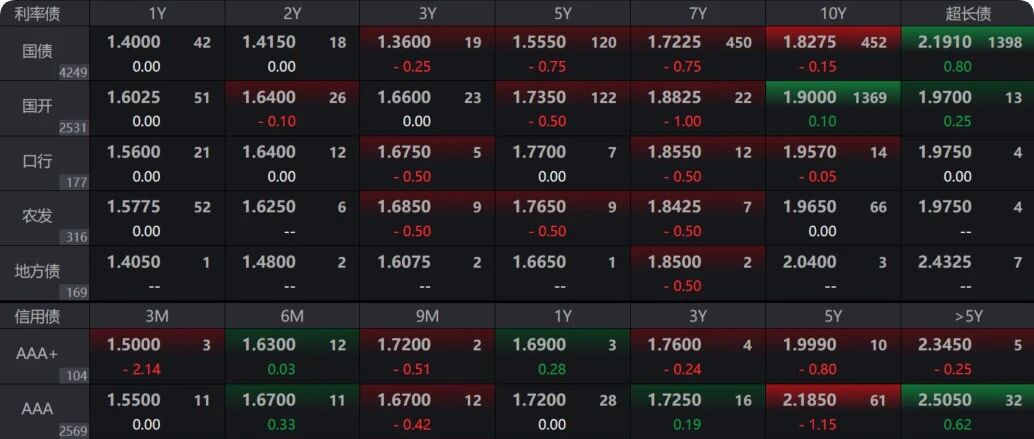
Core Viewpoint - The article emphasizes the importance of using rational analysis to navigate market fluctuations while aligning with the prevailing market trends, rather than attempting to predict market tops or bottoms [1]. Group 1: Macro Economic Indicators - The November PMI data met expectations, with the official manufacturing PMI reported at 49.2, indicating a stable economic outlook [5]. - The central bank reportedly purchased 200 billion yuan in bonds in November, contributing to a mixed performance in the stock market, with the Shanghai Composite Index returning to 3900 points [5]. - The central bank conducted a 107.6 billion yuan reverse repurchase operation, with a net withdrawal of 231.1 billion yuan due to 338.7 billion yuan in reverse repos maturing [3]. Group 2: Interest Rates and Bond Market - The weighted rates for various repo codes showed slight decreases, with R001 at 1.37% (down 5 basis points) and R007 at 1.49% (down 3 basis points) [4]. - The 10-year government bond yield fluctuated around 1.83%, with the lowest rate dropping to 1.822% before slightly recovering to 1.8275% [5]. - The interest rates for government bonds varied, with the 1-year bond at 1.40% and the 10-year bond at 1.8275%, reflecting a range of changes across different maturities [7].
刚刚,日央行“口风”突转,日股急挫!
Jin Rong Shi Bao· 2025-12-01 09:01
Group 1 - The Japanese stock market experienced a significant decline on December 1, with the Nikkei 225 index dropping over 2%, making it one of the most notable downturns in the Asia-Pacific market for the day [1] - Market expectations regarding a shift in the Bank of Japan's monetary policy rapidly increased, serving as a direct catalyst for the stock market's sharp decline [1] - Bank of Japan Governor Kazuo Ueda indicated that the central bank would weigh the pros and cons of raising policy rates at the upcoming monetary policy meeting on December 19, suggesting a potential end to ultra-loose monetary policy [1] Group 2 - Concurrently with the stock market decline, the Japanese government bond market faced large-scale sell-offs, with the 2-year Japanese government bond yield surpassing 1% for the first time since 2008 [2] - The 5-year and 10-year government bond yields rose to 1.35% and 1.85%, respectively, marking new highs since 2008, indicating accelerated selling by investors [2] - The Japanese government announced a comprehensive economic stimulus package worth approximately 21.3 trillion yen, with a significant portion of the funding coming from a supplementary budget for the fiscal year 2025 [2]
流动性与机构行为跟踪:基金、券商共振抛券
ZHONGTAI SECURITIES· 2025-12-01 08:38
1. Report Industry Investment Rating No information provided in the content. 2. Core View of the Report This week (from November 24th to November 28th), the capital interest rates were differentiated, the daily average of large - bank lending increased, and funds slightly reduced leverage; the maturity of certificates of deposit decreased, and the yield curve of certificate of deposit maturity steepened; in terms of spot bond transactions, the main buyers were large banks, mainly increasing holdings of 1 - 3Y interest - rate bonds, while funds and securities firms were the main sellers, with funds mainly selling 7 - 10Y and 20 - 30Y interest - rate bonds, and insurance companies continuing to increase allocations to 20 - 30Y ultra - long interest - rate bonds [3]. 3. Summary by Directory 3.1 Currency and Capital Market - A total of 1,676 billion yuan of reverse repurchases matured this week. The central bank cumulatively injected 1,511.8 billion yuan of reverse repurchases from Monday to Friday, injected 1,000 billion yuan of MLF on Tuesday (900 billion yuan of MLF matured on the same day), and 300 billion yuan of outright repurchases matured on Friday. The net liquidity withdrawal for the whole week was 364.2 billion yuan. 1,000 billion yuan of outright repurchases will mature next Friday [7][10]. - As of November 28th, R001, R007, DR001, and DR007 were 1.43%, 1.52%, 1.3%, and 1.47% respectively, with changes of 3.75BP, 2.7BP, - 1.76BP, and 2.6BP compared to November 24th, and were at the 19%, 9%, 11%, and 4% historical quantiles respectively [7][13]. - The daily average of large - bank lending increased slightly. From November 24th to November 28th, the total lending scale of large banks was 19.24 trillion yuan, with a maximum daily lending scale of 4 trillion yuan and a daily average lending scale of 3.8 trillion yuan, an increase of 0.22 trillion yuan compared to the previous week's daily average [7][17]. - The trading volume of pledged repurchase decreased. The daily average trading volume was 7.09 trillion yuan, with a maximum daily volume of 7.56 trillion yuan, a decrease of 2.77% compared to the previous week's daily average. The proportion of overnight repurchase transactions decreased, with a daily average proportion of 86.7% and a maximum daily proportion of 91.1%, a decrease of 2.21 percentage points compared to the previous week's daily average, and was at the 95.4% quantile as of November 28th [7][19]. 3.2 Certificates of Deposit and Bills - The issuance scale of inter - bank certificates of deposit increased this week, and the net financing amount increased. The total issuance volume was 559.25 billion yuan, an increase of 26.22 billion yuan compared to the previous week; the total maturity volume was 802.04 billion yuan, a decrease of 104.99 billion yuan compared to the previous week. The net financing amount was - 242.79 billion yuan, an increase of 130.41 billion yuan compared to the previous week [7][23]. - By bank type, city commercial banks had the highest issuance scale. This week, the issuance scales of inter - bank certificates of deposit by state - owned banks, joint - stock banks, city commercial banks, and rural commercial banks were 115.11 billion yuan, 192.21 billion yuan, 194.55 billion yuan, and 46.38 billion yuan respectively, with changes of 33.46 billion yuan, 18.8 billion yuan, - 22.9 billion yuan, and - 1.08 billion yuan compared to the previous week [23]. - By term type, the 9 - month issuance scale was the highest. The issuance scales of 1 - month, 3 - month, 6 - month, 9 - month, and 1 - year inter - bank certificates of deposit were 48.88 billion yuan, 107.26 billion yuan, 144.51 billion yuan, 153.97 billion yuan, and 104.63 billion yuan respectively, with changes of - 440 million yuan, 90.31 billion yuan, - 32.12 billion yuan, 71.31 billion yuan, and - 102.84 billion yuan compared to the previous week. The 9 - month certificates of deposit accounted for the highest proportion of the total issuance of certificates of deposit by different types of banks, at 27.53%, mainly due to more issuances by state - owned banks; the 6 - month term accounted for 25.84%, mainly due to more issuances by city commercial banks [24]. - The maturity volume of certificates of deposit decreased this week. The total maturity volume was 802.04 billion yuan, a decrease of 104.99 billion yuan compared to the previous week. The certificates of deposit maturing next week (from December 1st to December 5th) will be 448.81 billion yuan [28]. - This week, the issuance interest rates of certificates of deposit of most banks increased, and the issuance interest rates of certificates of deposit of most terms increased. By bank type, as of November 28th, the issuance interest rates of one - year certificates of deposit of joint - stock banks, state - owned banks, city commercial banks, and rural commercial banks changed by 1.04BP, 0BP, - 0.7BP, and 2BP respectively compared to November 21st, and were at the 4%, 5%, 3%, and 7% historical quantiles; by term, as of November 28th, the issuance interest rates of 1 - month, 3 - month, and 6 - month certificates of deposit changed by 4.74BP, 0.68BP, and - 2.9BP respectively compared to November 21st, and were at the 5%, 3%, and 2% historical quantiles [30]. - This week, the Shibor interest - rate curve steepened. As of November 28th, the overnight, 1 - week, 2 - week, 1 - month, and 3 - month Shibor interest rates changed by - 1.9BP, 2BP, 0.7BP, 0.1BP, and 0.2BP respectively compared to November 21st, reaching 1.3%, 1.44%, 1.53%, 1.52%, and 1.58% [32]. - This week, the yield curve of certificate of deposit maturity steepened. As of November 28th, the 1 - month, 3 - month, 6 - month, 9 - month, and 1 - year maturity yields of AAA - rated ChinaBond commercial bank inter - bank certificates of deposit were 1.45%, 1.58%, 1.62%, 1.64%, and 1.64% respectively, with changes of - 4.5BP, 0.15BP, 0.5BP, 0.75BP, and 0.5BP compared to November 21st [7][34]. - This week, the bill interest rates were differentiated. As of November 28th, the 3 - month national - share direct discount rate, 3 - month national - share transfer discount rate, 6 - month national - share direct discount rate, and 6 - month national - share transfer discount rate were 0.75%, 0.42%, 0.87%, and 0.78% respectively, with changes of 3BP, - 21BP, 5BP, and - 4BP compared to November 21st [7][38]. 3.3 Institutional Behavior Tracking - The inter - bank leverage ratio decreased. As of November 28th, the total inter - bank leverage ratio in the bond market decreased by 0.28 percentage points to 105.98% compared to November 21st, and was at the 8.10% historical quantile since 2021 [40]. - The leverage ratio of broad - based funds decreased slightly. As of November 28th, the leverage ratios of banks, securities firms, insurance companies, and broad - based funds were 102.7%, 179.2%, 130.2%, and 104.4% respectively, with changes of - 0.51BP, - 12.87BP, 0.93BP, and - 0.13BP compared to November 21st, and were at the 2%, 0%, 80%, and 7% historical quantiles respectively as of November 28th [7][42]. - The central value of the net - buying duration of funds turned negative, while rural commercial banks and wealth - management products increased their durations. As of November 28th, the weighted average net - buying duration (MA = 10) of funds was - 2.62 years, turning negative compared to 2.56 years on November 21st, and was at the 5% historical quantile; the weighted average net - buying duration (MA = 10) of wealth - management products was 1.54 years, increasing compared to November 21st, and was at the 68% historical quantile; the weighted average net - buying duration (MA = 10) of rural commercial banks was - 0.46 years, increasing compared to November 21st, and was at the 36% historical quantile; the weighted average net - buying duration (MA = 10) of insurance companies was 10.21 years, decreasing compared to November 21st, and was at the 71% historical quantile [7][44]. - The duration of medium - and long - term pure - bond funds decreased this week. As of November 28th, the duration of medium - and long - term pure - bond funds decreased by 0.09 years to 3.33 years compared to November 21st, and was at the 18% historical quantile since this year; the duration of short - term pure - bond funds increased by 0.05 years to 1.45 years compared to November 21st, and was at the 34% historical quantile since this year [48].
植田和男助燃日本央行加息预期,两年期日债收益率创17年新高,日元或迎拐点
第一财经· 2025-12-01 07:36
今日(1日),日本央行行长植田和男上午发表讲话后,其内容将市场对12月政策转向的猜测推向了 高潮。 本文字数:1957,阅读时长大约3分钟 作者 | 第一财经 后歆桐 随着日元疲软加剧,以及高市早苗政府对弱日元的容忍度下降,市场上周开始对日本央行加息预期大 幅回升。 2025.12. 01 植田和男讲话后,美元对日元走低至155.60,上周曾一度升至156.18高位,已超过通常的"干预"预 警水平155。日本东证指数涨幅扩大至1%。10年期日本国债收益率上升5个基点至1.85%,续创 2008年6月以来最高。30年期国债日本收益率也上升5个基点至3.385%。两年期日本国债收益率也 自2008年来首次触及1.00%大关。 富达国际全球多元资产主管奎菲(Matthew Quaife)上周接受一财记者专访时曾表示,日本仍可能 是2026年的一个好的投资故事,"我们最看好日本中盘股,因为相关上市企业更倾向于日本国内市 场。日本新政府即将实施的一系列政策对经济非常友好。当这种情况发生时,中盘股往往跑赢大 盘。" 但他也提示,投资日本眼下确实也存在一些风险,比如30年期日债持续呈现上升趋势。 图源:日本央行官网 植田和 ...
年内涨幅飙升 95%!白银逆袭赶超黄金,登顶贵金属“涨势之王”
Sou Hu Cai Jing· 2025-12-01 07:07
Core Viewpoint - The silver market has experienced a significant surge in 2025, outperforming gold with a year-to-date increase of over 95%, establishing itself as the leading precious metal [1][3]. Price Performance - Internationally, COMEX silver and London spot silver reached historical highs of $57.245 per ounce and $56.533 per ounce, respectively [1]. - In the domestic market, the Shanghai silver futures contract surpassed 13,000 yuan per kilogram, peaking at 13,239 yuan per kilogram, marking its highest performance since listing [1]. Market Dynamics - The bullish trend in silver is attributed to three main factors: a shift in monetary policy by the Federal Reserve leading to increased investment in precious metal ETFs, a perceived valuation gap between silver and gold, and a significant drop in global silver inventories [4]. - The global silver supply has been in a structural deficit for five consecutive years, with a projected deficit of 148.9 million ounces in 2024, narrowing to 117.7 million ounces in 2025, but still indicating a tight supply situation [5]. Supply and Demand Analysis - Global silver supply is expected to remain stable or grow slightly, with a supply of 1.015 billion ounces in 2024, reflecting a mere 1.73% increase from 2023 [5]. - Industrial demand for silver is projected to reach 680 million ounces in 2024, continuing to be a key driver of demand [5]. Future Outlook - Market opinions on the long-term trajectory of silver prices are mixed. Some analysts suggest that further price increases will require additional catalysts, while others predict a sustained upward trend based on macroeconomic conditions [7]. - The ongoing supply constraints and high demand in industrial sectors are expected to provide strong support for silver prices, although short-term volatility may occur [6][7].

刚刚全线暴跌!黑天鹅突袭!日本国债又崩了 冲击有多大?
Zheng Quan Shi Bao Wang· 2025-12-01 06:14
Group 1 - Japan's 3-month government bond yield surged over 34%, while the 10-year bond yield reached 1.85%, indicating a significant drop in bond prices across all maturities [1][2] - The Bank of Japan's Governor, Kazuo Ueda, indicated that the central bank will consider the pros and cons of raising policy rates at the next monetary policy meeting, with a current market expectation of a 62% chance of a rate hike in December [2] - The Japanese Ministry of Finance plans to increase short-term debt issuance to fund Prime Minister Fumio Kishida's economic stimulus plan, adding 300 billion yen (approximately 1.92 billion USD) in 2-year and 5-year bonds, which is expected to put pressure on short-term Japanese government bonds [3] Group 2 - The negative impact of Japan's bond market turmoil was reflected in the U.S. stock market, with futures indicating a broad decline, while the Asia-Pacific markets also showed weakness [4] - Despite the turmoil, a weakening U.S. dollar may mitigate the impact on A-shares and Hong Kong stocks, as it supports commodity prices and enhances liquidity in emerging markets [4] - Analysts suggest that the A-share market is expected to maintain an upward trend in December, with a focus on the upcoming Central Economic Work Conference, which will likely outline key economic policies for 2026 [4]
主导2026年债市的四大关键因素分析
Sou Hu Cai Jing· 2025-12-01 05:52
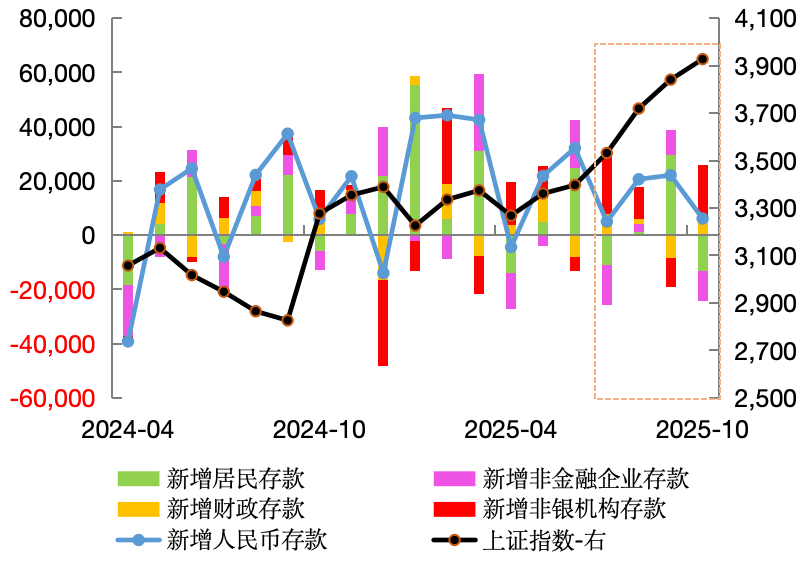
Group 1: Key Factors Influencing the Bond Market - The ongoing bull market in A-shares is expected to continue exerting pressure on the bond market, with the Shanghai Composite Index rising 28% since April 8, 2025, reaching a high of 4034 points on November 14, 2025 [2][3] - New tax regulations and redemption fee rules are anticipated to negatively impact the bond market, as the reintroduction of VAT on interest income from newly issued bonds increases costs for investors [6][7] - The Federal Reserve's interest rate cuts may open up monetary easing space in China, but the benefits for the bond market are expected to be limited due to a preference for equities among foreign investors [9][10] Group 2: Market Dynamics and Investor Behavior - The real estate market's downturn and historically low bank deposit rates are driving residents to shift their savings into the stock market, with a total reduction of 2.34 trillion yuan in household deposits from July to October 2025 [3][6] - The new regulations on redemption fees for funds are likely to increase short-term costs for bond investors, potentially leading to a shift in investment strategies towards direct bond purchases rather than bond funds [7][8] - The People's Bank of China (PBOC) has resumed government bond trading to guide the yield curve, with net purchases of 20 billion yuan in October 2025, although this is significantly lower than previous months [11][13] Group 3: Economic Outlook and Monetary Policy - The economic fundamentals in China are expected to remain weak, with October data showing lower-than-expected export, production, and investment figures, leading to a potential need for further interest rate cuts [10][13] - The PBOC's actions, including the resumption of government bond trading, aim to stabilize the bond market and mitigate rising yield pressures, with expectations that the 10-year government bond yield will struggle to fall below 1.6% [11][13] - Overall, the bond market is likely to experience a range-bound fluctuation in yields due to the interplay of supportive monetary policy and ongoing pressures from the equity market [13]