种业

Search documents
敦煌种业:12月11日召开董事会会议
Mei Ri Jing Ji Xin Wen· 2025-12-12 11:54
截至发稿,敦煌种业市值为35亿元。 (记者 曾健辉) 每经AI快讯,敦煌种业(SH 600354,收盘价:6.59元)12月12日晚间发布公告称,公司第九届第十七 次董事会临时会议于2025年12月11日以通讯方式召开。会议审议了《关于补选公司第九届董事会审计委 员会委员的议案》等文件。 2024年1至12月份,敦煌种业的营业收入构成为:种子占比72.09%,食品与贸易占比21.05%,其他占比 6.86%。 每经头条(nbdtoutiao)——实施城乡居民增收计划、降准降息等工具灵活高效运用、增加普通高中学 位……深度解读中央经济工作会议 ...

80%的蔬菜品种实现国产化 山东农业科技创新能力处在全国第一梯队
Feng Huang Wang Cai Jing· 2025-12-12 08:40
Core Viewpoint - Shandong Province is accelerating agricultural modernization during the "14th Five-Year Plan" period, focusing on technological innovation to enhance agricultural productivity and sustainability [1]. Group 1: Agricultural Technological Development - Shandong has 32 agricultural research institutions covering over 300 disciplines, with 9 academicians and 678 leading talents in the agricultural sector [1]. - The province's agricultural technology innovation capability ranks among the top in the country, with significant achievements in seed innovation, including 3 wheat, 1 corn, 1 soybean, and 3 peanut varieties among the top ten in national promotion area [1]. - The contribution rate of agricultural technology progress is 67.4%, which is 4 percentage points higher than the national average [1]. Group 2: Key Technology R&D and Promotion - The province has implemented a plan for key core technology breakthroughs, achieving 80% domestic production of vegetable varieties and developing the first domestically produced high-power CVT intelligent tractor [2]. - The coverage rate of quality seed varieties for major crops exceeds 98%, supported by the development and use of high-performance agricultural machinery [2]. Group 3: Talent Development and Support - Shandong is focusing on a talent matrix that includes top experts and local agricultural specialists, having recruited 14 top talents and 26 individuals under the national "Shennong Talent" program [2]. - The establishment of 31 provincial-level modern agricultural industry technology systems ensures comprehensive technical service coverage for leading industries [3]. Group 4: Policy and Mechanism Support - A coordination mechanism for agricultural technology R&D has been established to integrate innovation resources, with a focus on cultivating 100 agricultural technology enterprises [3]. - The province aims to enhance the integration of technological innovation and industrial innovation, creating a clear and collaborative agricultural technology innovation system [3].
80%蔬菜品种实现国产化,山东农业科技创新能力处在全国第一梯队
Qi Lu Wan Bao· 2025-12-12 08:27
Core Insights - Shandong Province is accelerating agricultural modernization during the "14th Five-Year Plan" period, leveraging technological innovation to enhance agricultural productivity and support the construction of a strong agricultural province [1][2]. Group 1: Agricultural Innovation and Achievements - Shandong has 32 agricultural research institutions and 9 academicians, leading to significant advancements in agricultural technology [1]. - The province's seed industry is nationally leading, with several crop varieties ranking in the top ten for national planting area, including 3 wheat, 1 corn, 1 soybean, and 3 peanut varieties [1]. - The mechanization rate for crop farming is 91%, which is 16 percentage points higher than the national average, and the contribution rate of agricultural technology progress is 67.4%, exceeding the national average by 4 percentage points [1]. Group 2: Key Initiatives and Strategies - Shandong is focusing on key technology research and has achieved breakthroughs, such as 80% of vegetable varieties being domestically produced and advancements in dairy and aquaculture technologies [2]. - The province supports the promotion of high-quality crop varieties, with over 98% coverage of improved seeds for major crops, and emphasizes the development of high-performance agricultural machinery [2]. - A talent matrix is being constructed, with 14 top talents recruited and 26 individuals selected for the national "Shennong Talent" program [2]. Group 3: Policy and Mechanism Support - A coordination mechanism for agricultural technology research has been established to integrate innovation resources, with a focus on cultivating 100 agricultural technology enterprises [3]. - Projects like the Rural Revitalization Technology Innovation Initiative are being implemented to promote agricultural technology innovation and application [3]. - Future plans include deepening the integration of technological and industrial innovation to enhance the overall effectiveness of agricultural technology innovation systems [3].
“十四五”科技成就·跃升|“科技突围”构筑北疆特色产业高地
Ke Ji Ri Bao· 2025-12-12 03:43
Group 1: Technology Breakthroughs in Inner Mongolia - The "Technology Breakthrough" initiative during the 14th Five-Year Plan aims to leverage Inner Mongolia's unique resources such as wind, solar, rare earths, and dairy to foster high-quality industrial development [1] - Inner Mongolia's new energy industry is experiencing rapid growth, with installed capacity exceeding 143 million kilowatts by May 2025, accounting for 52% of the region's total power generation capacity [3] - The establishment of the "Kubuqi New Energy Base" will enable the transmission of approximately 36 billion kilowatt-hours of electricity annually to the Beijing-Tianjin-Hebei region, significantly reducing coal consumption and carbon emissions [3] Group 2: Rare Earth Industry Developments - Inner Mongolia is focusing on developing its rare earth industry, particularly in Baotou, where innovative technologies are being applied to replace heavy rare earth elements while maintaining product performance [4] - Baotou's production capacity is set to reach 40,000 tons, positioning it as the world's largest high-performance neodymium-iron-boron production base [5] - The region aims for a rare earth industry output value of 130 billion yuan, driven by technological innovation and market-oriented mechanisms [5] Group 3: Dairy Industry Innovations - The establishment of the largest probiotic smart factory in Asia by Inner Mongolia Ketaobiotech aims to achieve technological breakthroughs in the dairy sector [6] - The National Grass Technology Innovation Center is developing advanced grass varieties and technologies to support dairy farming, ensuring a stable supply of quality feed [7] - Inner Mongolia has created a complete ecological system for the dairy industry, integrating all elements from grass cultivation to milk production and processing [7] Group 4: Hydrogen and Energy Innovations - The world's first hydrogen-ammonia dual-fuel gas turbine has been successfully assembled in Inner Mongolia, marking a significant advancement in zero-carbon energy technology [8] - This gas turbine can operate on hydrogen, ammonia, and natural gas, facilitating a complete energy production and consumption cycle [9] - The introduction of a new energy mining truck project combines photovoltaic power generation, intelligent storage, and super-fast charging technology, enhancing the efficiency of heavy-duty transportation [10]
端稳中国饭碗!农作物自育品种超95%
Xin Hua She· 2025-12-12 03:31
Core Insights - The "14th Five-Year Plan" emphasizes the implementation of seed industry revitalization actions, with significant improvements in seed source security and domestic breeding varieties accounting for over 95% of crop varieties [1] - The seed industry has transitioned from reliance on foreign imports to achieving over 80% and 85% market share for domestic sources in livestock and aquatic products, respectively [1] - The "15th Five-Year Plan" aims to further enhance the innovation and competitiveness of China's seed industry, with a focus on transforming agricultural genetic resources into innovation advantages [3] Group 1 - The seed industry is likened to the "chip" of agriculture, highlighting the historical dependency on foreign imports for key breeding stock, which posed risks to domestic supply and increased production costs [1] - Since the implementation of the "Seed Industry Revitalization Action Plan" in July 2021, there have been breakthroughs in breeding research, resulting in the development of several urgently needed crop varieties [1] - A comprehensive national agricultural genetic resource survey has been completed, establishing three national gene banks that rank first in the world in terms of resource preservation [1] Group 2 - A favorable environment for innovation and protection has been established, with revisions to the Seed Law and Plant Variety Protection Regulations, leading to a 20% decrease in seed-related legal cases compared to 2020 [2] - For the first time in 2024, China's seed export value is expected to exceed import value, achieving a trade surplus, with exports reaching over 40 countries [2] - The industry is focusing on accelerating the identification of agricultural genetic resources and enhancing support for breeding efforts to ensure food security [3]
广发证券:生猪养殖板块迎来左侧布局窗口期 26年中期猪价有望迎来向上拐点
智通财经网· 2025-12-12 01:49
Group 1: Pig Farming Industry - The current sales of fat pigs and piglets are in a loss state, indicating that the industry is in a precondition for capacity reduction [1] - Continuous losses in farming, combined with the "anti-involution" policy, are expected to accelerate capacity reduction in the industry, creating a left-side layout window for the pig farming sector [1] - By 2026, it is anticipated that there will be an upward turning point in pig prices, as competition in the industry intensifies and companies focus on comprehensive competitive capabilities rather than just cost competition [1] Group 2: Dairy Industry - In 2025, raw milk prices are expected to continue to bottom out, with industry losses driving a reduction in dairy cow inventory [2] - As the effects of previous capacity reduction become evident, the supply and demand for raw milk are gradually balancing, leading to a stabilization and rebound in spot milk prices in the second half of 2025 [2] - The beef supply is entering a contraction phase, with expectations for beef prices to continue to rise in 2026, increasing performance elasticity [2] Group 3: Feed Industry - The water feed sector is expected to maintain stable aquaculture volumes in 2026, with a trend of technical upgrades and structural adjustments continuing [3] - Domestic feed demand for livestock and poultry is projected to decline from high levels, while structural changes in the overseas feed industry present opportunities for Chinese feed companies to expand internationally [3] Group 4: Animal Health Industry - The animal health industry faces intensified competition, with product prices under pressure as the farming sector transitions from profit to loss [4] - Revenue and profitability in the industry may face significant challenges, prompting companies to accelerate business transformation and explore opportunities in the pet business [4] Group 5: Pet Food Industry - The industry is beginning to show a trend towards concentration, with leading companies like Guibao Pet and Zhongchong Co. performing well [5] - In the medium to long term, there is optimism for industry growth and the rise of domestic brands, with companies leveraging global production layouts to mitigate trade friction impacts [5] Group 6: Agricultural Planting Industry - Corn prices are expected to bottom out and rebound in 2025, with a strong possibility of fluctuations in 2026 [6] - The corn seed market is currently in a state of oversupply, undergoing a destocking phase, and may see improved conditions as inventory levels decrease [6]

新华鲜报·“十四五”发展亮点丨端稳中国饭碗!农作物自育品种超95%
Xin Hua Wang· 2025-12-12 01:28
Core Insights - The article emphasizes the significant progress in China's seed industry, highlighting the goal of transforming from a major seed producer to a strong seed nation through the implementation of the "14th Five-Year Plan" and the "Seed Industry Revitalization Action Plan" [1][3]. Group 1: Seed Industry Development - China's self-bred crop varieties now account for over 95% of the total, with domestic sources for livestock and aquatic species exceeding 80% and 85% respectively, enhancing food security [1]. - The country has made breakthroughs in breeding, developing essential varieties such as disease-resistant wheat and high-yield soybeans, which are crucial for agricultural productivity [1][3]. Group 2: Agricultural Resource Management - A comprehensive national agricultural germplasm resource survey has been completed, marking the largest and most extensive effort since the founding of the People's Republic of China, resulting in the establishment of world-class germplasm banks [3]. - The identification and utilization of germplasm resources have accelerated, leading to a more dynamic use of stored resources [3]. Group 3: Innovation and Regulation - A favorable environment for innovation has been fostered through the revision of the Seed Law and the Plant Variety Protection Regulations, alongside a 20% reduction in seed-related legal cases since 2020 [3]. - The government aims to enhance the precision in identifying agricultural germplasm resources and convert these advantages into innovation strengths, thereby accelerating the pace of seed industry innovation [5]. Group 4: International Trade and Competitiveness - In 2024, China's seed exports surpassed imports for the first time, achieving a trade surplus, with hybrid rice, cotton, and vegetable seeds being exported to over 40 countries [5]. - The article highlights the increasing global competitiveness of Chinese seeds, with various domestically bred livestock and aquatic species also entering international markets [5].

新华鲜报·“十四五”发展亮点|端稳中国饭碗!农作物自育品种超95%
Xin Hua She· 2025-12-12 01:23
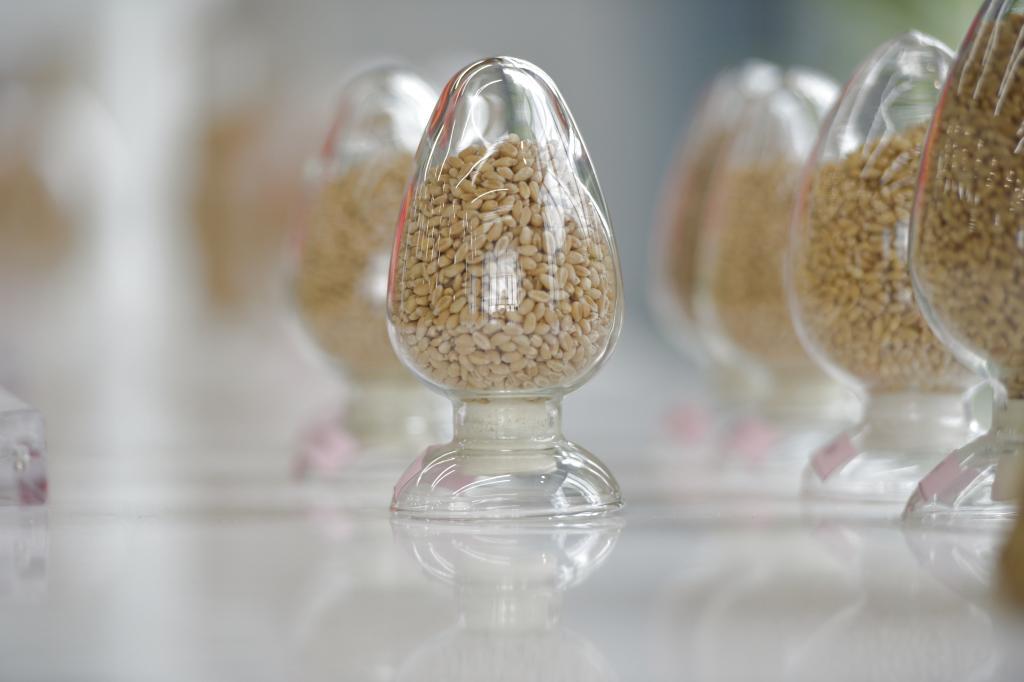
Core Viewpoint - The article emphasizes the significant progress in China's seed industry, highlighting the country's efforts to enhance seed source security and achieve self-sufficiency in agricultural seeds, with over 95% of crop varieties being independently bred [1] Group 1: Seed Industry Development - The "14th Five-Year Plan" has led to a marked improvement in seed source security, with domestic breeding varieties now accounting for over 95% of crops, and domestic market shares for livestock and aquatic seeds exceeding 80% and 85% respectively [1] - The Central Committee's "Seed Industry Revitalization Action Plan" was approved in July 2021, outlining a roadmap for transforming China from a major seed producer to a strong seed nation [1] - Significant breakthroughs in breeding have been achieved, including the development of high-resistance wheat and rice varieties, as well as high-yield soybeans, which are accelerating the update of seed varieties [1] Group 2: Agricultural Resource Management - A comprehensive national agricultural germplasm resource survey has been completed, marking the largest and most extensive effort since the founding of New China, resulting in the establishment of three national germplasm banks that rank first globally in resource preservation [1] - The identification and utilization of germplasm resources have been expedited, leading to a more active use of stored resources [1] - A favorable environment for innovation has been fostered through the revision of the Seed Law and the Plant Variety Protection Regulations, alongside a 20% decrease in seed-related legal cases since 2020 [1] Group 3: International Trade and Future Outlook - In 2024, China's seed exports are projected to exceed imports for the first time, achieving a trade surplus [1] - Chinese hybrid rice, cotton, and vegetable seeds are being exported to over 40 countries, with domestically bred livestock and aquatic species also entering international markets [1] - The Ministry of Agriculture and Rural Affairs plans to enhance the precise identification of germplasm resources and convert these advantages into innovation, aiming to accelerate the pace of seed industry innovation [1]
中银晨会聚焦-20251212
Bank of China Securities· 2025-12-12 00:19
Core Insights - The report highlights a focus on investment opportunities in various sectors, particularly in the context of market fluctuations and sector performance [1][2][3] Stock Recommendations - The report lists a selection of stocks recommended for December, including Poly Real Estate Group (0119.HK), Jitu Express (1519.HK), and Wanhua Chemical (600309.SH) among others [1] Market Index Performance - The report provides closing prices and percentage changes for major market indices, indicating a downward trend with the Shanghai Composite Index at 3873.32 (-0.70%) and the Shenzhen Component Index at 13147.39 (-1.27%) [1] Industry Performance - The report details the performance of various industries, with banking showing a slight increase of 0.17%, while sectors like real estate and food & beverage experienced declines of -3.06% and -0.42% respectively [2] Silver Market Insights - The report discusses the recent surge in silver prices, which have increased over 100% this year, with a notable breakout above $60 per ounce, driven by strong industrial demand and supply shortages [6][7] - It emphasizes the shift in silver's investment narrative, moving away from being viewed merely as a gold substitute to a standalone asset with unique value propositions [6][7] Fund Management Regulations - The report outlines new performance evaluation guidelines for fund management companies, emphasizing long-term performance metrics and aligning compensation with investor interests, which is expected to enhance the industry's overall health [11][12][13] - It suggests that these changes will lead to a more stable influx of long-term capital into the market, benefiting both the fund management sector and the broader capital market [14][15] Agricultural Sector Insights - The report highlights Longping High-Tech (隆平高科) as a leading player in the seed industry, showcasing its robust product portfolio and resilience in performance despite industry challenges [22][24] - It notes the company's strategic advantages in transgenic crops and its strong market position, projecting continued growth in revenue and profitability over the coming years [25][26]

中金:联合解读中央经济工作会议
中金点睛· 2025-12-11 23:47
Core Viewpoint - The Central Economic Work Conference held on December 10-11 in Beijing objectively analyzed the development situation of the Chinese economy, addressing various concerns regarding consumption, investment, real estate, corporate accounts, and market competition order. The policy direction for next year is "stability while seeking progress, improving quality and efficiency" [2][14]. Macro: Responding to Concerns, Improving Quality and Efficiency - The conference highlighted the importance of domestic demand as a primary task, emphasizing the implementation of special actions to boost consumption and the expansion of quality goods and services supply. It also aims to eliminate unreasonable restrictions in the consumption sector to unleash service consumption potential [5][6]. - On the demand side, the conference proposed a plan to increase urban and rural residents' income and optimize the implementation of "two new" policies, which may involve increasing social security spending to enhance disposable income and promote consumption growth [6][9]. - Government investment is expected to lead the way in stabilizing investment, with a focus on increasing central budget investment and optimizing the use of local government special bonds to alleviate financial pressures [6][9]. - The conference emphasized the need to actively and prudently resolve risks in key areas, particularly in the real estate sector, where it aims to stabilize the market and improve residents' purchasing power [7][9]. Strategies: Balancing Growth and Reform - The conference reiterated the need for a proactive fiscal policy while maintaining necessary fiscal deficits and total debt levels. It aims to optimize fiscal spending and strengthen fiscal management [10][23]. - Monetary policy is expected to remain moderately loose, with a focus on promoting stable economic growth and reasonable price recovery. The use of various policy tools, including interest rate cuts, is anticipated to be more flexible and efficient [11][24]. - The conference stressed the importance of innovation-driven development, with measures to enhance the role of enterprises in innovation and promote high-quality development of key industrial chains [12][16]. Real Estate: Focus on Supply Issues - The conference underscored the need to stabilize the real estate market, advocating for measures to control new supply, reduce inventory, and improve supply quality. It encourages the acquisition of existing homes for affordable housing [29][30]. - The emphasis on resolving inventory issues reflects a heightened focus on the real estate sector's challenges, particularly in light of the ongoing supply-demand imbalance [29][30]. Consumption: Continuous Policy Support - The conference prioritized domestic demand, reiterating the importance of consumption in driving economic growth. It plans to implement measures to enhance residents' income and stabilize employment for key groups [38]. - Policies aimed at boosting consumer confidence and spending are expected to continue, with a focus on increasing the quality and availability of goods and services [38].