
新能源

Search documents
中南经贸关系发展迎来新机遇
Xin Lang Cai Jing· 2026-02-13 22:46
Core Viewpoint - The signing of the economic partnership framework agreement between China and South Africa marks a significant step in enhancing bilateral trade and investment relations, reflecting a commitment to deeper economic cooperation and mutual benefits [2][4][6]. Group 1: Bilateral Economic Cooperation - The framework agreement is the 33rd of its kind signed by China with an African nation, aimed at allowing African countries to benefit from China's vast market opportunities [2]. - Both parties expressed a desire to enhance bilateral trade, particularly in sectors such as agriculture, mining, and renewable energy, while ensuring compliance with World Trade Organization (WTO) rules [3][5]. - South Africa is keen to attract more Chinese investments and increase its exports of agricultural products and high-value manufactured goods to China [4][5]. Group 2: Trade and Investment Opportunities - South Africa is a primary destination for Chinese investments in Africa, with a growing interest from South African companies to enter the Chinese market [5]. - The agreement is expected to provide zero-tariff treatment for certain South African exports to China, thereby promoting increased trade volume [4][6]. - The partnership aims to create a stable and predictable environment for economic cooperation, which is essential for achieving mutual benefits [4][6]. Group 3: Global Trade Context - The agreement comes at a time when South Africa is seeking to diversify its trade relationships in response to rising protectionism and unilateralism in global trade [8]. - Strengthening ties with China is seen as a strategic move to mitigate the impacts of external economic pressures, particularly from the United States [8]. - The ongoing development of Sino-South African trade relations is viewed as a stabilizing force in the global trade system, contributing positively to international economic dynamics [8].

天津滨海能源发展股份有限公司第十一届董事会第二十九次会议决议公告
Shang Hai Zheng Quan Bao· 2026-02-13 17:18
Group 1 - The company held its 29th meeting of the 11th Board of Directors on February 13, 2026, to discuss various proposals, including financing and guarantees for subsidiaries [2][3][4] - The Board approved a financing limit of 3 billion yuan for 2026, which includes bank loans, leasing, and other financing methods [4][15] - The Board also approved an additional guarantee limit of 3.5 billion yuan for subsidiaries, with 3 billion yuan allocated for financing guarantees and 500 million yuan for contract performance guarantees [4][15] Group 2 - The company plans to provide financial assistance to its subsidiaries, including a loan of up to 100 million yuan to Xingtai Xuyang New Energy Technology Co., Ltd. and recognition of a previous loan of 200 million yuan to Inner Mongolia Xiangfu New Energy Co., Ltd. as financial assistance [7][39][40] - The financial assistance is aimed at supporting the daily operations and project developments of the subsidiaries, which are engaged in lithium battery material research and production [40][54] - The Board believes that the financial assistance poses controllable risks and does not harm the interests of the company or its minority shareholders [55][56] Group 3 - The company approved the signing of EPC contracts for two projects: a 1,000 tons/year porous carbon project with an estimated contract value of 120 million yuan and a 2,000 tons/year silicon-carbon negative material project with an estimated contract value of 300 million yuan [8][62][70] - The contractors for these projects are controlled by the company's major shareholder, which constitutes related party transactions [9][73] - The Board confirmed that these transactions are within the normal business scope and do not adversely affect the company's operations or independence [73][74] Group 4 - The company will hold its second extraordinary general meeting of 2026 on March 2, 2026, to discuss the proposals approved by the Board [10][81] - The meeting will include provisions for both on-site and online voting, ensuring compliance with relevant laws and regulations [82][83] - Shareholders and their proxies will have the right to attend and vote at the meeting, with specific arrangements for related party transactions [84][86]

厦门屿能岳锦新能源科技有限公司成立,注册资本10000万人民币
Sou Hu Cai Jing· 2026-02-13 17:05
经营范围含新兴能源技术研发;技术服务、技术开发、技术咨询、技术交流、技术转让、技术推广;电 池销售;金属材料销售;金属制品销售;有色金属合金销售;非金属矿及制品销售;塑料制品销售;化 工产品销售(不含许可类化工产品);石油制品销售(不含危险化学品);建筑材料销售;五金产品批 发;家用电器销售;电子产品销售;国内贸易代理。(除依法须经批准的项目外,凭营业执照依法自主 开展经营活动)。 天眼查显示,近日,厦门屿能岳锦新能源科技有限公司成立,法定代表人为温作方,注册资本10000万 人民币,贵州闰美洪泰贸易有限公司、沈阳睿达可商贸有限公司持股。 序号股东名称持股比例1贵州闰美洪泰贸易有限公司80%2沈阳睿达可商贸有限公司20% 来源:市场资讯 企业名称厦门屿能岳锦新能源科技有限公司法定代表人温作方注册资本10000万人民币国标行业科学研 究和技术服务业>科技推广和应用服务业>技术推广服务地址中国(福建)自由贸易试验区厦门片区高 崎道846号823-3室(该住所仅限作为商事主体法律文书送达地址)企业类型有限责任公司(自然人投资 或控股)营业期限2026-2-13至无固定期限 ...
任泽平带你看前沿科技:2026研学计划
泽平宏观· 2026-02-13 16:33
Core Insights - The article emphasizes the importance of practical learning experiences in cutting-edge technology sectors, aiming to connect entrepreneurs with leading companies and experts in the field [12][24]. - It outlines a series of scheduled visits and closed-door research meetings focused on artificial intelligence and emerging industries, highlighting the commitment to exploring investment opportunities and fostering innovation [5][8][24]. Schedule Overview - The schedule includes visits to major tech companies and universities, such as NVIDIA, Tesla, Stanford University, and Berkeley, from November 4 to November 11, 2025 [7]. - Other notable events include closed-door research meetings in Suzhou and Shenzhen focusing on the power of AI in China, scheduled for March 27-28 and May 22-23, 2025, respectively [8][9]. Learning Objectives - The program aims to provide deep insights into the strategic decisions and technological advancements of leading firms, enabling participants to gain firsthand knowledge of the industry's evolution [12]. - It focuses on three key dimensions: trends in cutting-edge technology, the ecosystem of emerging industries, and innovative business strategies, facilitating a comprehensive understanding of market dynamics [12]. Participant Feedback - Participants have expressed that the program enhances their understanding of macroeconomic trends and provides valuable networking opportunities with industry leaders [46][47]. - The learning experience is described as transformative, allowing entrepreneurs to refine their business strategies and adapt to changing market conditions [46][48].

研究 | 《关于境内资产境外发行资产支持证券代币的监管指引》的分析及解读
Sou Hu Cai Jing· 2026-02-13 15:26
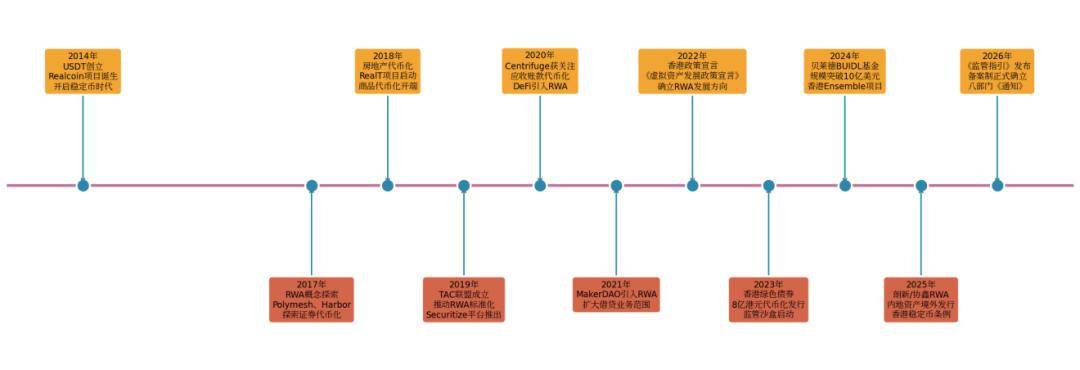
Core Viewpoint - The China Securities Regulatory Commission (CSRC) has established a dual-line regulatory framework for the issuance of asset-backed security tokens based on domestic assets in overseas markets, emphasizing strict compliance and pre-filing requirements to mitigate risks associated with the rapid growth of Real World Assets (RWA) tokenization [1][10][59]. Group 1: Background and Development of RWA Tokenization - The rapid development of RWA tokenization globally has been facilitated by blockchain technology, enhancing efficiency and transparency in asset securitization [3]. - The history of RWA tokenization can be divided into several phases: - The nascent stage (2014-2016) saw the emergence of Realcoin (later Tether) [5]. - The exploratory stage (2017-2019) included significant projects like Polymath and RealT, focusing on compliance and real estate tokenization [5][6]. - The initial development stage (2020-2022) featured projects like Centrifuge and MakerDAO integrating RWA into DeFi ecosystems [6][7]. - The rapid development stage (2023-2025) highlighted Hong Kong's leadership in issuing tokenized green bonds and regulatory frameworks [8][9]. Group 2: Regulatory Framework and Guidelines - The CSRC's regulatory guidelines, released on February 6, 2026, require pre-filing for the issuance of asset-backed security tokens based on domestic assets in overseas markets, marking a shift from a previously unregulated environment [10][11]. - The guidelines emphasize a dual regulatory approach: a complete ban on RWA tokenization activities within China and strict oversight for overseas issuance [13][59]. - The guidelines also introduce a negative list of prohibited activities and entities, ensuring compliance with various legal and regulatory requirements [41][42]. Group 3: Practical Cases of RWA Tokenization in China - Several practical cases of RWA tokenization have emerged in China, particularly in the renewable energy sector, showcasing the integration of RWA technology with national strategies [14][17]. - Notable projects include: - Longxin Technology's charging pile RWA project, which raised approximately 100 million RMB [17]. - GCL-Poly's photovoltaic RWA project, which raised over 200 million RMB [18]. - Xunying Group's battery swap asset RWA project, exploring new financing paradigms for renewable infrastructure [19]. Group 4: Market Size and Future Outlook - According to Boston Consulting Group, the market size for tokenized assets is expected to reach $16 trillion by 2030, significantly increasing from $310 billion in 2022 [13]. - The introduction of the pre-filing system is anticipated to open up the RWA tokenization market while maintaining a cautious regulatory stance to prevent cross-border financial risks [59]. - The unique focus on renewable energy assets in China's RWA tokenization reflects a policy direction towards green finance and the integration of real economy [23].
恒生指数重磅调整!宁德时代、洛阳钼业、老铺黄金被纳入
Mei Ri Jing Ji Xin Wen· 2026-02-13 14:19
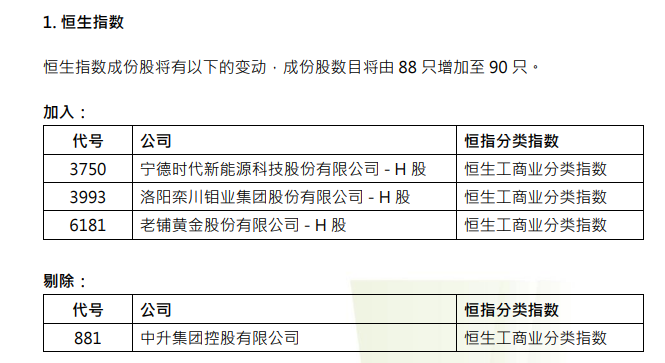
Group 1 - The Hang Seng Index Company announced the quarterly review results for the Hang Seng Index series, effective from March 9, 2026, after market close on March 6, 2026 [1] - The Hang Seng Index will add three stocks: Contemporary Amperex Technology Co., Limited (03750), Luoyang Molybdenum Co., Ltd. (03993), and Laopuhuang Co., Ltd. (06181), while removing Zhongsheng Group Holdings Limited (00881), increasing the number of constituent stocks from 88 to 90 [1] - Laopuhuang has seen a significant price increase, with a cumulative rise of nearly 20% since the beginning of 2026 [1] Group 2 - The Hang Seng China Enterprises Index will maintain 50 constituent stocks, adding Beike-W (02423) and Horizon Robotics-W (09660), while removing China Resources Beer (00291) and Mengniu Dairy (02319) [2] - The Hang Seng Composite Index will add 53 stocks, including Bank of East Asia (00023), and remove 28 stocks, including Shui On Land (00272), increasing the number of constituent stocks from 507 to 532 [5] - The Hang Seng Technology Index will not change, maintaining 30 constituent stocks [6] Group 3 - The total assets under management for products tracking the Hang Seng Index series is approximately $117.7 billion as of December 2025 [6] - The adjustments in index constituents may trigger passive fund rebalancing, potentially leading to increased trading volume for related stocks as the effective date approaches [6] - The inclusion of new economy enterprises in sectors like renewable energy, new consumption, and biotechnology is expected to enhance the growth potential and investment attractiveness of the indices, reducing the weight of traditional industries [6]

答卷已交,考题升级,前海开足“马”力
Sou Hu Cai Jing· 2026-02-13 13:34
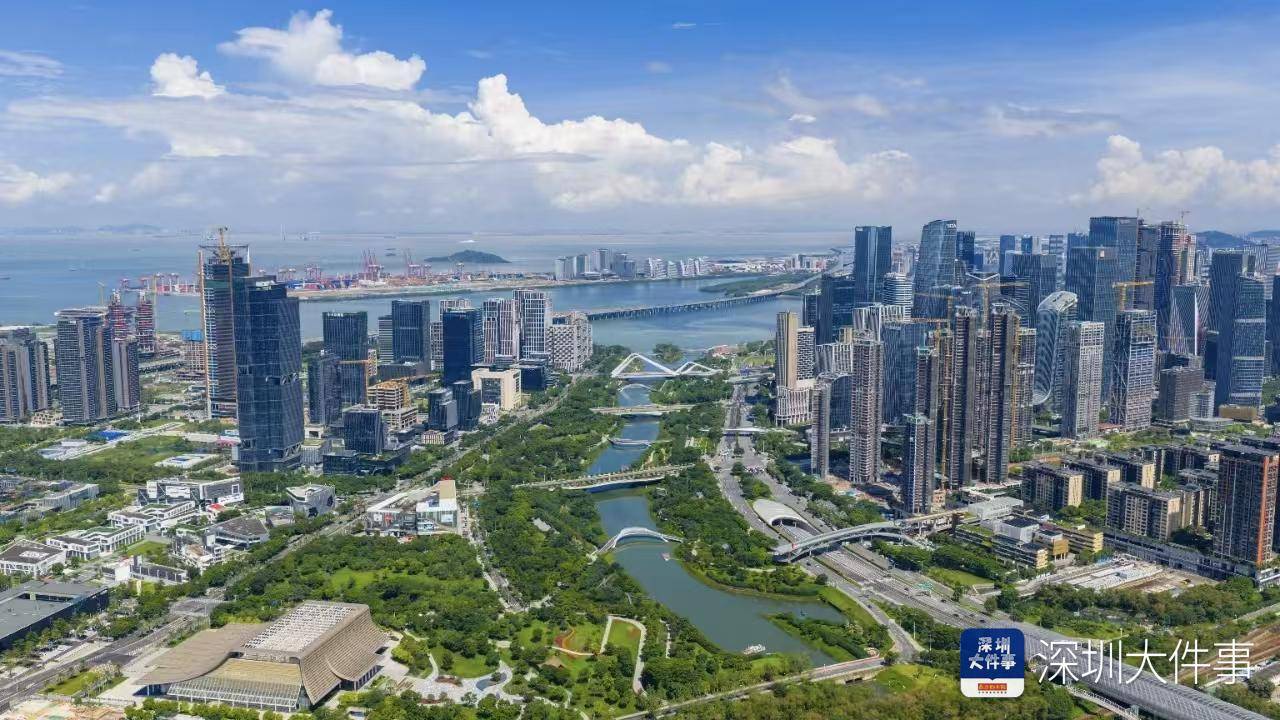
Core Insights - The Qianhai Cooperation Zone has demonstrated significant economic growth during the 14th Five-Year Plan period, with GDP nearly doubling from 175.57 billion to 331.81 billion yuan and import-export volume also doubling from 378.05 billion to 757.43 billion yuan, highlighting its role as a core engine for high-quality development in the Guangdong-Hong Kong-Macao Greater Bay Area [1][3][8] Economic Growth - The total area of the Qianhai Cooperation Zone expanded from 14.92 square kilometers to 120.56 square kilometers, providing strong momentum for high-quality development [3] - The region's GDP is projected to grow from 175.57 billion yuan in 2021 to 331.81 billion yuan by 2025, maintaining a high annual growth rate [3] - Import-export volume increased from 378.05 billion yuan to 757.43 billion yuan, showcasing resilience in foreign trade [3] Investment and Foreign Capital - Over the past five years, fixed asset investment in Qianhai exceeded 700 billion yuan, significantly boosting infrastructure and industrial development [3] - Actual foreign investment reached 157.52 billion yuan, with 29.32 billion yuan in 2025 alone, accounting for 58.1% of Shenzhen's total, making Qianhai a preferred destination for foreign investment in South China [3] Industry Development - By 2025, the software and information service industry cluster in Qianhai is expected to exceed 200 billion yuan in revenue, with seven other industry clusters each surpassing 50 billion yuan [4][5] - The software and information service sector, as a leading industry cluster, achieved a revenue of 255.49 billion yuan in 2025, reflecting a year-on-year growth of 19.6% [4] Modern Service Industry - The added value of the modern service industry in Qianhai is expected to exceed 200 billion yuan by 2025, more than doubling since 2021 [6] - Qianhai has attracted 183 Fortune 500 companies and nurtured 42 global service headquarters, significantly enhancing its internationalization [6] Institutional Innovation - Qianhai has led in institutional innovation, with its index ranking first among national free trade zones for four consecutive years and 105 innovative achievements replicated nationwide [3][8] - The region's exploration in cross-border data, finance, and shipping registration is becoming a replicable model for broader reforms [8] Competitive Landscape - The establishment of industry clusters indicates resilience, with the software and information service industry surpassing 200 billion yuan in revenue and seven major clusters each exceeding 50 billion yuan [8] - The simultaneous development of sectors like artificial intelligence, low-altitude economy, marine industry, and digital creativity signifies a transition from a "policy lowland" to an "industrial highland" [8][9]
瑞银深度调研报告:2026年中国两大产业主线:自主可控与海外扩张
Zhi Tong Cai Jing· 2026-02-13 13:31
Group 1: Core Insights - UBS's in-depth research in China identifies two main industry themes for 2026: self-sufficiency and overseas expansion [1] - The research covered various sectors including technology, industrial, healthcare, consumer, and utilities, visiting over 100 companies and industry experts [1] - The report highlights a shift in investor interest, with capital goods, media entertainment, and real estate development seeing increased research focus, while semiconductor and automotive parts sectors experienced a decline [1] Group 2: Technology Sector Insights - The technology sector is a key focus, with advancements in self-sufficiency moving from isolated breakthroughs to industry-wide collaboration [2] - AI capital expenditure is expected to grow steadily in 2026, driven by strong demand for AI applications and local semiconductor production [3] - Despite uncertainties regarding H200 GPU imports, domestic supply chains are adapting through technology substitution and demand upgrades [3] Group 3: Semiconductor Developments - The localization of China's semiconductor industry is accelerating, with significant progress in advanced etching/ deposition equipment, advanced packaging, and high-end analog chips [4] - Capital expenditure for wafer fabrication equipment (WFE) is projected to grow by 10-15% annually, driven by capacity expansion in advanced logic and memory wafer fabs [4] - Domestic manufacturers anticipate a substantial increase in storage capital expenditure in 2026, aligning with a global upcycle in the storage industry [4] Group 4: Overseas Expansion Trends - Multiple industries, including industrial, biopharmaceuticals, and consumer goods, are focusing on overseas expansion as a key growth strategy [6] - In the industrial sector, overseas orders for AIDC and renewable energy storage equipment are increasing significantly [7] - The healthcare sector is also prioritizing global expansion, with biopharmaceutical companies actively pursuing international collaborations and local sales team development [9] Group 5: Key Recommendations - UBS recommends several core stocks in the technology and semiconductor sectors, including Northern Huachuang (advanced etching/ deposition), Changdian Technology (advanced packaging), and Horizon Robotics (edge AI) [5][12] - In the healthcare sector, companies like WuXi AppTec (CRO/CDMO) and 3SBio (biopharmaceuticals) are highlighted as key beneficiaries of global expansion [12] - The consumer sector sees recommendations for Jason Furniture (overseas expansion) and Leap Motor (new energy vehicles), while Gree Electric Appliances is advised to sell due to margin pressures [12] Group 6: Overall Industry Outlook - The report concludes that China's industrial development in 2026 will be characterized by a dual focus on self-sufficiency in technology and overseas expansion in various sectors [13] - The integration of these two themes is expected to enhance China's economic globalization, with technology supporting overseas expansion and vice versa [13] - Investment opportunities are identified in sectors with low crowding and improving fundamentals, as well as in high-growth areas like AI and semiconductors [13]


证监会立案调查,这家公司为蹭热点“自问自答”
Zheng Quan Ri Bao Wang· 2026-02-13 13:31
Core Viewpoint - The China Securities Regulatory Commission (CSRC) has initiated an investigation into Shenzhen Yingjixin Technology Co., Ltd. for misleading statements related to information disclosure, particularly concerning their involvement in the brain-computer interface (BCI) chip sector [1][3]. Group 1: Investigation and Regulatory Actions - The CSRC has opened a case against Yingjixin for misleading disclosures made on January 6, where the company claimed to have launched a chip for BCI applications, which was later clarified to be in the market cultivation phase and not significantly impacting company performance [1][2]. - Other companies, including Ningbo Rongbai New Energy Technology Co., Ltd. and Shenzhen Yahui Long Biotechnology Co., Ltd., have also been investigated for similar misleading disclosures, with Rongbai facing a proposed fine of 9.5 million yuan [1][4]. Group 2: Misleading Information and Market Reactions - Yingjixin's January 6 response on the Shanghai Stock Exchange's E-interaction platform was deemed misleading as it did not accurately reflect the product's launch entity, sales scale, and the significant technical differences from international products [2][3]. - Following the misleading information, Yingjixin's stock price rose by 4.51% on the day of the announcement, despite the subsequent clarification that the product was not yet commercially viable [2][3]. Group 3: Broader Industry Implications - The regulatory actions against multiple companies signal a clear stance from authorities against "hype-driven" disclosures that mislead investors, emphasizing the need for accurate and complete information [4][7]. - Companies are reminded that voluntary disclosures are not exempt from regulations, and misleading statements can lead to significant penalties and regulatory scrutiny [7].


三峡能源:公司暂无钠离子电池生产业务
Zheng Quan Ri Bao Wang· 2026-02-13 13:14
Core Viewpoint - The company, Three Gorges Energy (600905), confirmed that its main business focuses on the development, investment, and operation of wind and solar energy, and it currently does not engage in sodium-ion battery production [1] Group 1 - The company's primary business activities are centered around wind energy and solar energy [1] - There is no involvement in the production of sodium-ion batteries at this time [1]
