
私募

Search documents
私募仓位升至年内新高 百亿私募 加仓力度大
Shen Zhen Shang Bao· 2025-09-22 23:23
Core Viewpoint - The stock private equity market in A-shares is experiencing significant increases in positions, reflecting optimistic expectations for future market trends [1][2] Group 1: Overall Market Sentiment - The stock private equity position index reached 78.04% as of September 12, up from 75.08% the previous week, marking a weekly increase of 2.96% and matching the year's high [1] - A majority of private equity firms are actively positioning themselves in the market, with 60.02% of stock private equity firms fully invested [1] Group 2: Position Distribution - The distribution of positions among different scales of private equity firms shows notable differences, with larger firms exhibiting higher levels of investment [1] - As of September 12, the position indices for various scales of private equity firms are as follows: over 100 billion, 78.22%; 50-100 billion, 86.49%; 20-50 billion, 74.22%; 10-20 billion, 75.88%; 5-10 billion, 76.28%; and under 5 billion, 78.85% [1] - The highest position index of 86.49% was recorded for private equity firms with assets between 50 billion and 100 billion, reaching a three-year high [1] Group 3: Large Private Equity Firms - Large private equity firms (over 100 billion) showed the most significant increase in positions, with an 11.11% rise compared to the previous week, bringing the position index to 78.22% [2] - Over half of the large private equity firms are fully invested, with 54.04% in full positions, while only 5.28% and 1.86% are in low and empty positions, respectively [2]
量化私募如何上好公司治理“必修课”?
Shang Hai Zheng Quan Bao· 2025-09-22 18:48
业内人士称,当私募业最为常见的"作坊"模式遇上快速增长的管理规模,量化管理人所面临的公司治理 难题愈发不容忽视。因此,越来越多头部量化私募着手优化公司治理结构,比如明晰股权架构和高管分 工、塑造企业文化、优化人才激励机制等。 越来越多量化私募正在形成共识:唯有打造稳健的公司架构、强大的团队实力,方能实现长跑。 "分家"戏码再度上演 6月以来不断发酵的靖奇投资股东纷争,引发市场关注。 6月,靖奇投资原法定代表人范思奇发文称卸任靖奇投资基金经理职务,但不久便以"十年努力,一朝背 刺"为标题发文表示自己被踢出公司。8月,范思奇又发布文章称,靖奇投资存在工作人员非法使用伪造 法人印章及冒用法人签名的情形。 ◎记者 马嘉悦 据中信证券统计,截至上半年末,量化私募管理人总体资产管理规模超1.7万亿元,在证券私募行业中 的占比升至近30%。下半年以来,头部量化私募旗下多头策略产品,依旧备受资金青睐。 不过,热闹之下,量化私募在公司治理方面仍面临挑战。据公开资料,8月以来,靖奇投资两位合伙人 内斗不断升级,伪造印章、抢公众号等操作暴露在大众视野。不久前,北京一家量化私募也因虚开增值 税发票受到市场关注。 今年以来,量化私募的 ...
中欧瑞博吴伟志:以四季理论为指挥棒,放眼全市场投资
Zhong Guo Zheng Quan Bao· 2025-09-22 14:55
Market Overview - The current market shows a clear structural differentiation, with an overall temperature in the 40-50 degree range, indicating it is not overheated (80 degrees and above) [2][10] - According to the seasonal theory, the market is still in the spring-summer phase and has not yet transitioned to autumn or winter [2][8] Investment Strategy - The company has increased allocations in cyclical, technology, and pharmaceutical sectors while reducing exposure to high-dividend sectors [1][11] - Future investment opportunities will focus on artificial intelligence (AI) and innovative pharmaceuticals [1][11] Growth Stock Characteristics - Growth stocks should exhibit three key characteristics: significant future revenue and profit growth potential (3-5 times growth, with an average annual increase of 20% or more), a strong business model with pricing power, and an excellent management team [4][5] - Growth stocks are categorized into four types for investment decisions: new economy growth stocks, market share gainers, stable market share with profit enhancement, and cyclical growth stocks [4][5] Team-Based Research and Decision-Making - The company emphasizes a team-based investment research system, with nearly 30 members divided into fundamental research, quantitative research, and international investment teams [6][7] - This structure allows for specialization and comprehensive coverage of key industries and emerging opportunities, enhancing decision-making efficiency [7][8] Market Timing and Signals - The company utilizes the seasonal theory as a guiding principle for investment, adjusting strategies based on market conditions [8][10] - Current market conditions do not show signs of overheating, and there are no clear signals indicating a market peak [10][11]
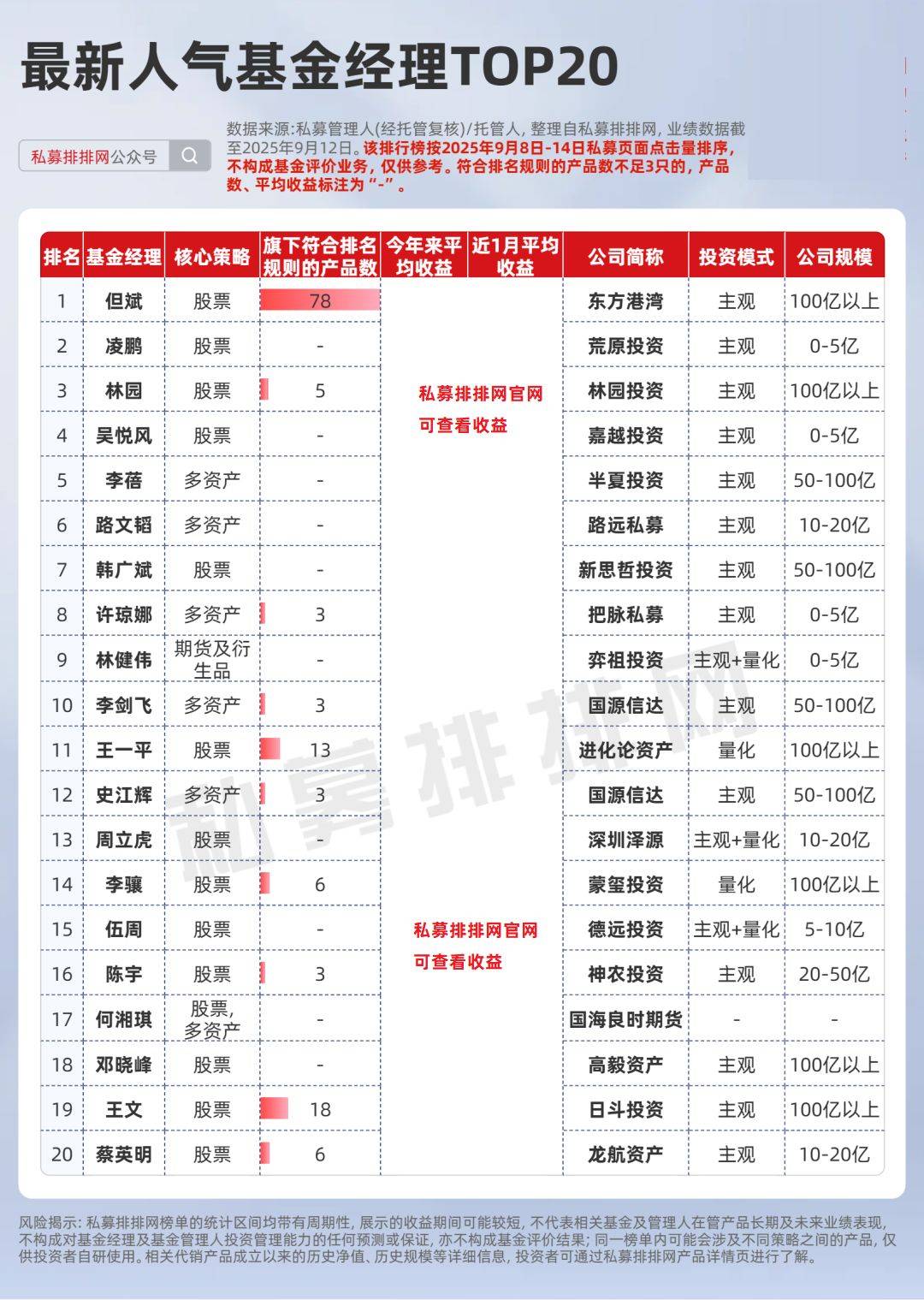
主观逆袭?但斌、李剑飞等9位主观基金经理进入人气十强!
Sou Hu Cai Jing· 2025-09-22 09:27
Core Insights - The A-share market has been performing strongly, but there is a noticeable divergence in sector performance, with previously popular quantitative products now struggling to outperform the market [1] - A resurgence of subjective products has been observed, with many previously quiet funds beginning to recover in net value, indicating a "subjective comeback" trend [1] Fund Manager Rankings - As of September 14, among the top 20 fund managers, 15 are from subjective private equity, dominating the rankings [1] - The top-ranked fund manager is Dan Bin, whose products have shown significant returns over the past month and year [3] - The second-ranked manager, Shi Zhi, and others in the top 8 are primarily from smaller private equity firms with assets under 5 billion [2] Performance of Specific Funds - Dan Bin's "Oriental Harbor Marathon Global A Class" has achieved a high cumulative net value and significant returns since inception [3] - Xu Qiongna, ranked 8th, has also seen impressive performance from her funds, particularly "Jinban Capital No. 5," which has shown the highest returns this year [6][7] Market Trends and Predictions - The current market is seen as being in a "slow bull" phase, with expectations of continued recovery driven by policy support and changes in industry supply-demand dynamics [8] - Chen Yu, a prominent fund manager, believes the market is at a pivotal point, similar to historical trends, and anticipates a long-term bull market driven by technological advancements [12][13] Notable Fund Managers - Li Jianfei and Shi Jianghui from Guoyuan Xinda are notable for having two fund managers listed among the top ranks, indicating strong performance across their funds [9] - Cai Yingming from Longhang Asset is recognized for focusing on undervalued, high-cost-performance targets, with his fund "Longhang No. 1" showing significant returns [14][15]

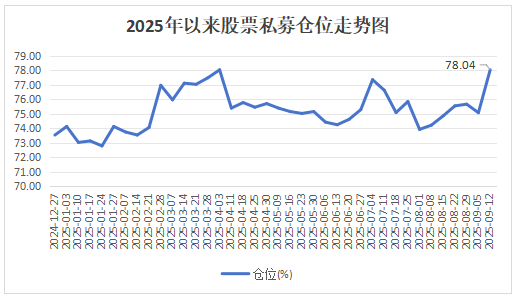
私募仓位飙升至78% 展现私募机构的乐观预期
Zheng Quan Shi Bao Wang· 2025-09-22 07:21
Group 1 - The A-share market is experiencing a significant increase in stock private equity positions, reaching a new high for the year, indicating optimism among private equity institutions regarding future market trends [1] - As of September 12, 2025, the stock private equity position index reached 78.04%, up 2.96 percentage points from the previous week, reflecting a notable increase in overall allocation enthusiasm [1] - A majority of private equity firms are adopting a proactive market strategy, with 60.02% in full positions and less than 20% in low or empty positions [1] Group 2 - Different scales of stock private equity show varied positioning characteristics, with larger firms demonstrating more aggressive positioning; for instance, firms with assets over 100 billion have increased their positions by 11.11 percentage points to 78.22% [1] - The highest positioning is seen in firms with assets between 50 billion and 100 billion, reaching 86.49%, marking a three-year high [1] Group 3 - Starstone Investment notes that while there is significant volatility in the market due to structural differentiation, the overall market trend remains stable, and the current financing and margin trading levels are not indicative of high leverage risk [2] - The current financing and margin trading balance reaching historical highs is viewed as a normal phenomenon given the growing overall size of the A-share market [2] Group 4 - Zhengyuan Investment highlights that the easing of tariff risks, ongoing policy support, and a low-interest-rate environment are driving significant incremental capital inflow into the market, leading to a phase of valuation expansion for state-owned assets [3] - The company emphasizes that high-quality undervalued assets will eventually be recognized for their long-term value in a broad market rally, advocating for patience and reliance on compounding effects [3]
私募仓位飙升至年内新高 百亿私募加仓11.11%
Xin Hua Cai Jing· 2025-09-22 06:21
满仓百亿私募占比逾5成。当前满仓百亿私募占比达54.04%,中等仓位百亿私募占比为38.82%,低仓和 空仓百亿私募占比仅为5.28%和1.86%,合计占比不足1成,进一步印证了头部私募机构对后市行情的坚 定信心。 据私募排排网最新数据显示,截至2025年9月12日,股票私募仓位指数达到78.04%,相较于前一周的 75.08%,单周大幅上涨2.96%,整体配置积极性明显提升。 从具体仓位分布来看,当前市场中高仓位私募占比占据绝对主导:60.02%的股票私募处于满仓状态, 23.34%的股票私募维持中等仓位,而低仓与空仓的股票私募合计占比不足20%,多数私募机构选择积极 布局市场。 对于此次私募大幅加仓的核心原因,排排网旗下融智投资FOF基金经理李春瑜分析认为,多重积极因素 共同构筑了良好的投资环境,推动私募加大配置力度:其一,A 股市场近期持续上涨,赚钱效应逐步凸 显,为私募加仓提供了直接动力;其二,市场情绪同步回暖,投资者信心稳步增强,风险偏好有所提 升;其三,从行业维度看,AI、半导体、新能源等新兴产业发展前景广阔,结构性投资机会持续凸 显,成为机构重点关注的方向;其四,政策面持续发力,为市场稳定运行与 ...
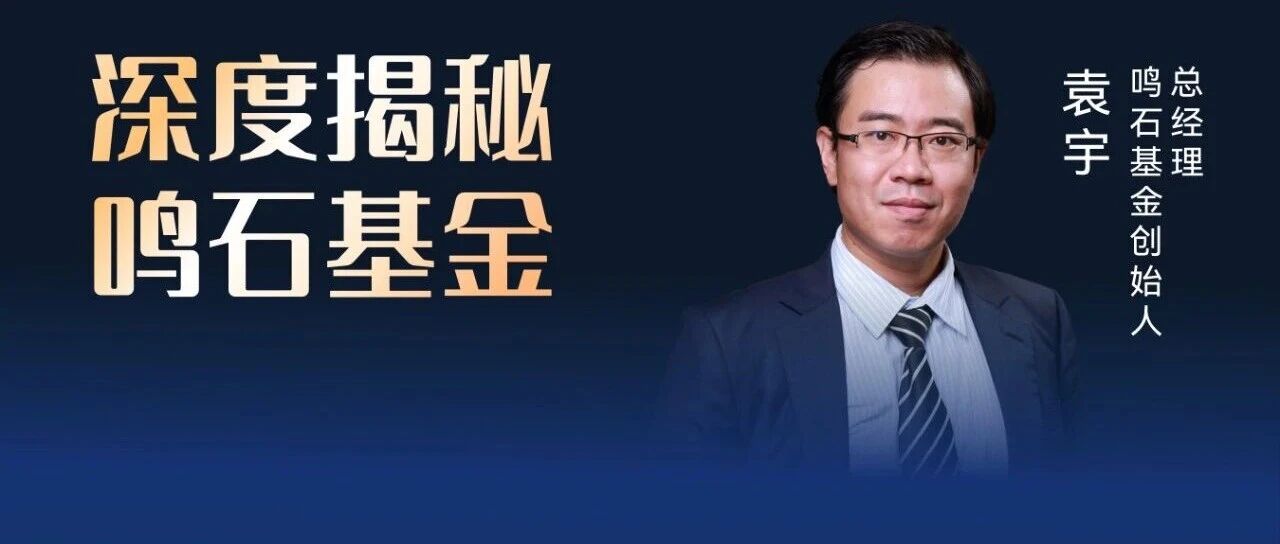
收益第一背后的秘密!独家揭秘鸣石基金“五环多核”的量化投研体系!
私募排排网· 2025-09-22 03:05
Company Overview - Ming Stone Fund was established in 2010 and is a leading player in the quantitative investment industry, utilizing a "five-ring multi-core" research and investment model that includes five core research processes: factor, AI, optimization, trading, and risk control [5][9] - The fund has a comprehensive product system covering index enhancement, quantitative stock selection, quantitative hedging, CTA strategies, ETF innovation strategies, and multi-strategy products, catering to various risk preferences of investors [5][9] Core Research Team - The research team is composed of highly qualified professionals, with over 80% holding master's or doctoral degrees from prestigious universities, including Ivy League schools and renowned domestic institutions [11] Investment Strategies and Product Lines - The fund employs a full-market quantitative stock selection strategy that does not benchmark against any specific index, aiming for broad stock coverage and strong timing discipline to achieve excess returns [17] - The index enhancement strategy involves long positions in stocks selected through quantitative methods, aiming to track and exceed the performance of indices like CSI 300, CSI 500, and CSI 1000 [22] - The quantitative hedging strategy combines long positions in selected stocks with short positions in corresponding index futures to achieve excess returns [25] - The CTA strategy utilizes models to time stock index futures, adjusting hedge ratios based on predicted index movements [28] Risk Control - Ming Stone Fund emphasizes risk control over high-risk, high-return pursuits, implementing a dual-layer risk management system that monitors parameters at the product level and signal effectiveness at the signal level [32] - The fund has developed its own Barra multi-factor risk control model, enhancing the predictive capability for volatility in high-frequency trading strategies [32] Core Advantages - The fund's leading quantitative research and investment system is characterized by its "five-ring multi-core" model, which supports multiple core research teams [33] - The integration of AI in the entire quantitative investment process enhances efficiency and market adaptability [34] - The fund's factor team, grounded in financial academic backgrounds, effectively identifies and utilizes factors with strong explanatory power and long validity [35] Awards and Social Responsibility - Ming Stone Fund has received multiple awards, including the "Outstanding Risk Control Private Fund Product" from Securities Times and the "Five-Year Outstanding Private Company" from Shanghai Securities Journal [36] - The fund is involved in social responsibility initiatives, supporting educational funds for disabled children and other charitable projects [38]
9.22犀牛财经早报:9月新发权益类基金规模近660亿元 超78%私募平均仓位行至年内最高位
Xi Niu Cai Jing· 2025-09-22 01:58
Fund Market - In September, the issuance scale of newly established equity funds reached nearly 66 billion yuan, with a total of 141 fund products established, totaling 118.27 billion yuan, making it the second highest monthly issuance this year [1] - The ETF market saw new members join the 10 billion yuan club, indicating a continuous influx of incremental funds into popular ETFs, driven by a strengthening equity market [1] - Over 78% of private equity firms reported their average positions at the highest level of the year, with many firms increasing their investments in technology and innovative pharmaceutical sectors [1] Quantitative Private Equity - As of September 12, less than 20% of quantitative private equity products achieved positive excess returns in August, indicating a significant underperformance compared to subjective private equity [2] - The management scale of quantitative private equity has nearly halved due to two major drawdowns this year, prompting firms to reduce leverage and limit style exposure [2] Floating Rate Bonds - The issuance of floating rate bonds has significantly rebounded, with 97 bonds issued and a total scale of 275.57 billion yuan, marking a year-on-year increase of 123.5% [2] - Policy bank bonds account for over 80% of the issuance, with expectations for the floating rate bond market to normalize and extend towards medium to long-term maturities [2] Banking Sector - A wave of redemptions for "perpetual bonds" is occurring, with banks like China Construction Bank and CITIC Bank announcing full redemptions of bonds issued in 2020, totaling 729.28 billion yuan this year [3] - This redemption trend is part of banks' strategies to optimize capital structures and reduce financing costs amid a declining interest rate environment [3] Aviation Industry - In August, China's civil aviation transportation volume reached a historical high, with a total turnover of 15.18 billion ton-kilometers and passenger transport volume of 75.36 million, reflecting a year-on-year growth of 8%, 3.3%, and 13.3% respectively [4] Pharmaceutical Industry - The 11th batch of national drug centralized procurement will open for bidding on October 21, covering 55 varieties and 162 specifications, with a focus on key areas such as antiviral drugs and innovative treatments for kidney diseases [4] - The new procurement scheme aims to ensure fair pricing and prevent excessively low bids that could disrupt the market [4] Corporate Developments - The chairman of Bosera Fund, Jiang Xiangyang, has stepped down, with Zhang Dong expected to take over, indicating a significant organizational change within the company [5] - The company Xuan Zhong Ecological is planning a change in control, leading to a temporary suspension of its stock trading [6] - Xiangrikui plans to acquire 100% of the high-end semiconductor materials company Xipu Materials, indicating a strategic move to enhance its product offerings [8] US Stock Market - The three major US stock indices closed higher, with the S&P 500 up 0.49% and the Nasdaq up 0.72%, reflecting a strong performance in the technology sector [9] - The trading volume surged on "Triple Witching Day," marking the third-highest record, as small-cap stocks fell from record highs [9] - The ten-year US Treasury yield rose for three consecutive days, reaching a two-week high, while the dollar index also increased [9]
私募业生态正在发生积极变革 超400家主动“不干了”
Shang Hai Zheng Quan Bao· 2025-09-22 01:16
Core Insights - The private equity industry in China is undergoing positive changes, with over 800 private equity firms deregistering as of September 19 this year, and more than 50% of these deregistrations being voluntary [1][3]. Group 1: Industry Transformation - The increase in the proportion of voluntarily deregistered private equity firms reflects a purifying trend in the industry, as regulatory scrutiny has intensified, leading firms to shift from "not daring to violate" to "not wanting to violate" regulations [1][3]. - The number of deregistered private equity fund managers this year reached 851, with 449 voluntary deregistrations and 332 deregistrations initiated by the association [3]. Group 2: Competitive Landscape - The rapid reshuffling of the "billion" tier of private equity firms indicates accelerated industry competition, with nearly 10 firms dropping out of the top tier this year due to compliance issues or poor performance [4]. - The competitive landscape has shifted from a focus on short-term performance to a broader emphasis on compliance, risk control, and after-sales service, prioritizing investor interests for long-term development [4]. Group 3: Compliance and Risk Management - There is a notable increase in compliance awareness among private equity firms, with many actively enhancing their compliance and risk management capabilities to foster long-term competitiveness [5][6]. - Firms are establishing robust internal controls and risk management systems, with specific measures in investment decision-making processes to ensure compliance and mitigate risks [6].
中欧瑞博吴伟志: 以四季理论为指挥棒 放眼全市场投资
Zhong Guo Zheng Quan Bao· 2025-09-21 20:50
Market Overview - The market has recently rebounded after a brief adjustment, with the Shanghai Composite Index nearing 3900 points and the ChiNext Index surpassing 3100 points, indicating a potential structural divergence in market styles [1] - The overall market temperature is assessed to be in the 40-50 degree range, suggesting it is not overheated, and the market is still in the spring-summer phase [1] Investment Strategy - The company has increased allocations in cyclical, technology, and pharmaceutical sectors while reducing exposure to high-dividend sectors [1] - Future investment opportunities will focus on artificial intelligence (AI) and innovative pharmaceuticals [1][10] Growth Stock Characteristics - Growth stocks should exhibit three key characteristics: significant future revenue and profit growth potential (3-5 times growth, with annual increases of 20% or more), a strong business model with pricing power, and an excellent management team [3] - Growth stocks are categorized into four types for investment decisions: new economy growth stocks, market share gainers, stable profit growth stocks, and cyclical growth stocks [3] Team Structure and Research Approach - The company employs a team-based investment research system, with nearly 30 members divided into fundamental research, quantitative research, and international investment teams [4][5] - The team structure allows for specialization and comprehensive coverage of market sectors, enhancing decision-making capabilities [5][6] Market Cycle Theory - The company utilizes a seasonal theory to guide investment decisions, recognizing the cyclical nature of the market [7] - The theory suggests that different market segments may be in different seasonal phases, with small-cap stocks potentially in a downturn while large-cap stocks are still in an upward phase [7][8] Market Sentiment and Future Outlook - The market is currently not showing signs of overheating, such as extreme valuations or investor euphoria, which are typical indicators of a market peak [9][10] - The company plans to maintain a high allocation in technology, pharmaceuticals, and cyclical sectors, with a positive outlook on AI, innovative pharmaceuticals, and gold [10]