
可再生能源

Search documents
天合光能控股子公司签订5GWh电网级电池储能系统合作备忘录
Bei Jing Shang Bao· 2025-11-04 11:51
Core Viewpoint - Trina Solar's subsidiary, Trina Storage, has signed a memorandum of cooperation with Pacific Green to supply 5 GWh of grid-level battery energy storage systems from 2026 to 2028, marking a significant milestone in the global renewable energy sector [1] Group 1: Company Developments - The memorandum does not involve specific financial amounts and is not expected to have a significant impact on the company's performance for the current year [1] - The actual impact on future operating performance will depend on the project's progress and implementation [1] Group 2: Industry Implications - Upon completion, the project will have the capacity to store and deliver up to 5 billion watt-hours of electricity to the grid, significantly enhancing grid reliability and accelerating the transition to clean energy [1]

中国对全球气候治理的贡献日益凸显
Ren Min Ri Bao Hai Wai Ban· 2025-11-04 01:08
Core Insights - The report highlights China's significant contributions to climate change mitigation and adaptation, showcasing its commitment to global climate governance and green development [2][3][4][5] Group 1: Climate Change Mitigation Efforts - In 2024, non-fossil energy is projected to account for 19.8% of China's total energy consumption, with coal consumption decreasing from 67.4% in 2013 to 53.2% [3] - The report indicates that the lithium battery and photovoltaic industries are expected to achieve double-digit growth in multiple indicators in 2024, with China's new energy vehicle production leading globally for ten consecutive years [3] - The national carbon market has entered a new phase, with a cumulative trading volume of 728 million tons and a transaction value of 49.83 billion yuan as of September 2025, marking a historical high for the market [4] Group 2: Global Climate Leadership - China has contributed to a significant reduction in global wind and solar power costs by over 60% and 80%, respectively, while creating 46% of global renewable energy jobs [4] - By the end of 2024, China has signed 54 climate cooperation agreements with 42 developing countries, enhancing their capacity to address climate change through various initiatives [4] - China's announcement of its 2035 national contribution targets aligns with the Paris Agreement, reflecting its commitment to international climate goals [5] Group 3: International Cooperation and Policy Stance - The report outlines China's basic stance for COP30, emphasizing the importance of multilateral cooperation, adherence to the UN Framework Convention on Climate Change, and promoting a just global green transition [5] - China remains committed to its climate actions and international cooperation efforts, regardless of changing global circumstances [5]


“十五五”时期,生态环境领域的重点着力方向是什么?专家解读→
Yang Shi Wang· 2025-11-03 18:44
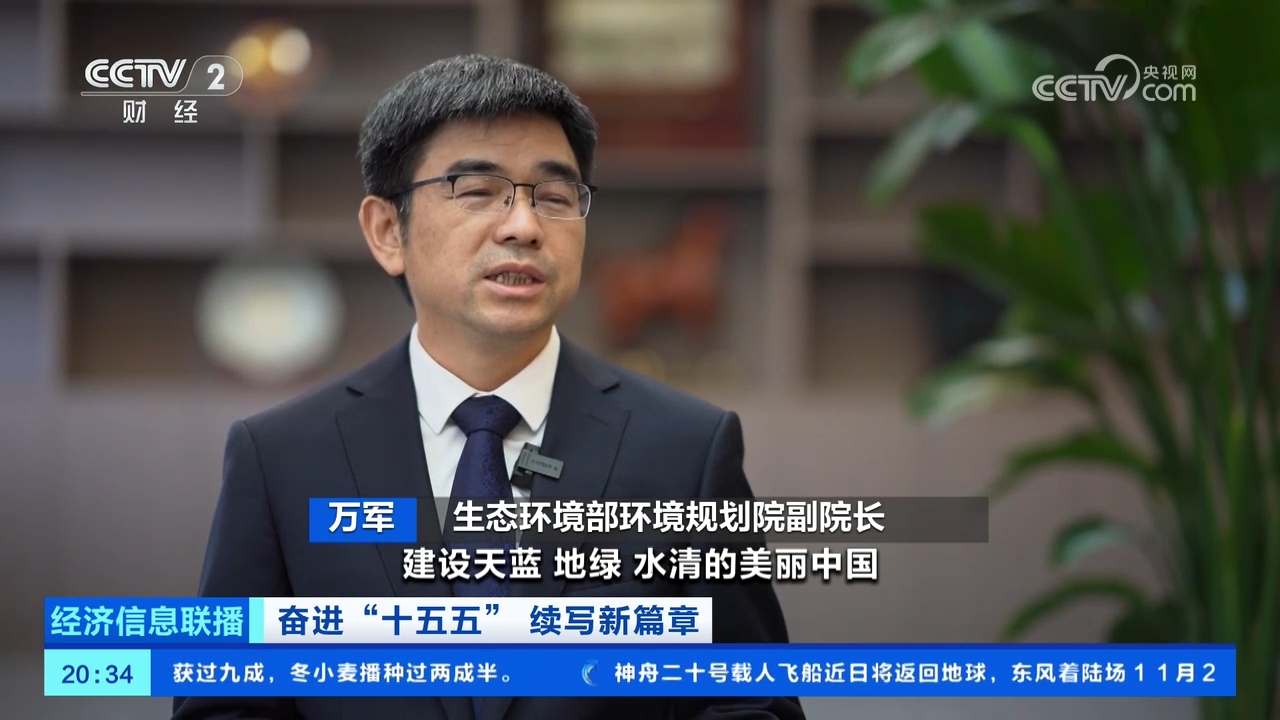
国家气候战略中心战略规划部主任 柴麒敏:表面上碳达峰碳中和是环境问题、气候问题,实际上跟经济的发展、产业投资、国际贸易、新市场新技术的部 署都息息相关,本质上是一个发展问题。 专家表示,加快能源绿色低碳转型是全面绿色转型的"牛鼻子"。当前中国已经构建了全球最大、发展最快的可再生能源体系,建成了全球最大最完整的新能 源产业链。 生态环境部环境规划院副院长 万军 :美丽中国建设是一个系统工程,首先颜值要高,建设天蓝、地绿、水清的美丽中国;其次是发展质量要好,要坚持绿 色、低碳、高质量的发展;第三个还要体现在治理体系、治理能力的现代化。体制机制能够保障美丽中国建设的持续开展。 专家表示,"十五五"时期是美丽中国建设承上启下、实现生态环境根本好转的关键时期,要持续深入推进污染防治攻坚和生态系统优化。 万军:要坚持以PM2.5控制为主线,加大PM2.5和臭氧的协同控制力度,推动挥发性有机物和氮氧化物的协同减排。在水环境方面,增加了200多个小微水体 和支流的断面监测,同时增加水生态的评价考核。 在加快绿色转型、建设美丽中国的过程中,"双碳"目标的牵引作用日益凸显。 央视网消息:"十五五"规划建议提出,以碳达峰碳中和为牵 ...
津巴布韦2025年第三季度新增46个投资项目
Shang Wu Bu Wang Zhan· 2025-11-03 17:03
Core Insights - Zimbabwe's Investment Development Agency (ZIDA) reported 46 new investment projects in Q3 2025, with renewable energy and information communication technology (ICT) as the leading sectors [1] - The report highlights 14 renewable energy projects, including the expansion of the 10 MW Solgas solar project, and 13 ICT projects focusing on broadband network construction and data centers [1] - Investments in agriculture and manufacturing are also increasing, covering areas such as nut plantations, dairy revival, and vaccine production [1] - A public-private partnership agreement with Kinda Energy Zimbabwe for the refurbishment of Units 1-6 at the Wanji Nuclear Power Station is seen as a turning point for restoring reliable base-load power and unlocking multi-industry potential [1] Investment Environment - The Zimbabwean government is actively promoting the implementation of investment projects across various sectors, including solar and wind energy development and digital infrastructure construction [1] - These investments align with the country's energy transition and digital economy development strategies, aiming to create numerous job opportunities and enhance industrial competitiveness [1] - ZIDA's director, Chinamo, emphasized the commitment to continuously optimize the investment environment, providing policy support and service guarantees for project advancement [1]
COP30前夕中方发声,国家能源局答21丨碳中和周报
2 1 Shi Ji Jing Ji Bao Dao· 2025-11-03 13:26
Group 1: Climate Financing and Policy - China's Ministry of Ecology and Environment emphasizes the need for a $1.3 trillion financing roadmap ahead of COP30, highlighting the importance of international cooperation and funding commitments from developed countries [2][3] - The report indicates that developing countries are dissatisfied with the $300 billion annual target set at COP29, calling for more substantial commitments from developed nations [2] - The report outlines China's contributions to climate governance and its 2035 Nationally Determined Contributions (NDC) as part of the Paris Agreement [2] Group 2: Green Certificate Market - The National Energy Administration reports a 210% increase in the average trading price of green certificates in Q3 compared to Q1, reflecting a growing demand for renewable energy [4] - The trading volume of green certificates reached 529 million units from January to September, a year-on-year increase of 110% [4] - The transition from policy-driven to value-driven green certificate markets is noted, indicating a real growth in corporate demand for clean electricity [5] Group 3: Green Trade Initiatives - The Ministry of Commerce is accelerating the construction of a carbon footprint database for foreign trade products, which will aid companies in calculating their carbon footprints [6][7] - The initiative aims to help Chinese enterprises adapt to international carbon barriers, such as the EU's Carbon Border Adjustment Mechanism (CBAM) [7] Group 4: Sustainable Urban Development - Guangzhou's guidelines for sustainable housing emphasize the use of green building materials and energy-efficient appliances, mandating that at least 20% of materials be green [8][9] - The guidelines promote the integration of photovoltaic systems in residential buildings to enhance renewable energy use [8] Group 5: Corporate Sustainability Efforts - Lenovo Group signs a strategic cooperation agreement with Xi'an New Area to develop a zero-carbon city, focusing on smart and low-carbon transformations across eight key sectors [13] - Tetra Pak announces its first carbon-neutral production base in Kunshan, showcasing a successful model for achieving carbon neutrality in complex operational environments [14]
国际能源署发布《2025年可再生能源》报告
Xin Lang Cai Jing· 2025-11-03 10:00
Core Insights - The International Energy Agency (IEA) predicts that global renewable energy generation capacity will double by 2030, increasing by 4600 GW, with solar power accounting for nearly 80% of this growth [1][2]. Group 1: Renewable Energy Growth - By 2030, global renewable energy generation capacity is expected to double, adding 4600 GW, equivalent to the total generation capacity of China, the EU, and Japan combined [1]. - Solar photovoltaic capacity is projected to more than double, leading the growth in renewable energy due to low costs, faster approval processes, and broad social acceptance [2]. - Wind energy capacity is also expected to nearly double, reaching over 2000 GW, despite facing supply chain issues and rising costs [2]. Group 2: Policy Impact and Regional Variations - The growth forecast for global renewable energy capacity has been slightly downgraded by 5% due to policy changes in the US and China, with the US forecast reduced by nearly 50% [2][3]. - India is expected to become the second-largest growth market for renewable energy, with capacity projected to increase 2.5 times by 2030, driven by higher bidding volumes and support for rooftop solar projects [3]. - The Middle East and North Africa region saw a 25% upward revision in forecasts, primarily due to rapid solar growth in Saudi Arabia [3]. Group 3: Financial Challenges in the Industry - Major manufacturers of solar and wind energy report significant losses, with solar prices in China dropping over 60% since 2023, leading to a profit margin of -10% for the largest manufacturers [4][5]. - Despite financial challenges, renewable energy developers have maintained or increased their deployment targets for 2030, with 20% of surveyed developers raising their goals [5]. Group 4: Supply Chain and Integration Challenges - The offshore wind industry faces multiple challenges, with growth forecasts downgraded by over 25% due to policy shifts and rising costs [6]. - The supply chain for solar photovoltaic and wind turbine components is highly concentrated in a single country, raising supply chain security risks [6]. - By 2030, intermittent renewable energy is expected to supply nearly 30% of global electricity, necessitating increased flexibility and investment in grid infrastructure [6]. Group 5: Renewable Energy in Heat and Transport - The share of renewable energy in transport energy demand is projected to rise from 4% to 6% by 2030, driven by electric vehicle usage and liquid biofuels [7]. - Renewable energy is expected to account for 18% of global heat demand by 2030, up from 14%, with a 42% increase in renewable heat consumption primarily from industrial and building sectors [7].
光伏5.2GW!中企在阿联酋参建全天候供电可再生能源项目
Xin Hua Wang· 2025-11-03 05:19
Core Viewpoint - The foundation ceremony for a round-the-clock power supply solar storage project, involving China Electric Power Construction (China Electric), was held in Abu Dhabi, UAE, marking a significant step in the region's energy transformation towards digitalization and sustainability [1] Group 1: Project Overview - The project is a collaboration between Abu Dhabi Future Energy Company and UAE Water and Electricity Company [1] - It features a solar power station with an installed capacity of 5.2 gigawatts and a battery system with a total storage capacity of 19 gigawatt-hours, making it one of the largest projects of its kind globally [1] - The project is expected to be operational by 2027 [1] Group 2: Industry Impact - The project aims to address the intermittency challenges of renewable energy, providing stable and sustainable clean power for the era of artificial intelligence and emerging technologies [1] - The initiative is expected to drive the energy transformation of the local digital industry [1] Group 3: Company Commitment - China Electric expressed its commitment to continue developing global clean energy cooperation projects [1]

埃尼:油气仍维持能源主导地位
Zhong Guo Hua Gong Bao· 2025-11-03 02:16
Core Insights - The 24th edition of Eni's "World Energy Review" indicates a 2% growth in global energy demand for 2024, with fossil fuels maintaining dominance despite record expansions in renewable energy [1][2] - Global oil demand is projected to reach 102.8 million barrels per day in 2024, an increase of 800,000 barrels per day from 2023, primarily driven by China, India, Latin America, and the Middle East [1] - The average Brent crude oil price for 2024 is expected to be $80.8 per barrel, a 2% decrease year-on-year due to anticipated supply increases from OPEC+ and economic concerns [1] - Global natural gas demand is forecasted to grow by 3% in 2024, with China being the main driver, while European consumption remains stable [1][2] Renewable Energy Insights - The global renewable energy sector continues its record expansion, with total installed solar and wind capacity nearing 3000 GW, accounting for 15% of global electricity generation [2] - Traditional energy sources still contribute approximately 60% of global electricity, highlighting the ongoing reliance on fossil fuels [2] - Biofuel production is expected to grow by 7%, with the United States and Indonesia as key contributors [2] - The production of critical minerals necessary for energy transition is projected to increase by 5.5%, with cobalt production surging by 21% [2] Environmental Impact - Despite advancements in clean energy, global CO2 emissions are expected to rise by 0.8% in 2024, driven by production increases in emerging economies, while emissions in developed economies continue to decline [2] - The report emphasizes the "structural inertia" within the global energy system, indicating that fossil fuels will remain dominant even with significant increases in renewable energy capacity and stronger decarbonization policies [2]

新发展理念看变化|绿色发展享自然
Xin Hua She· 2025-11-02 07:17
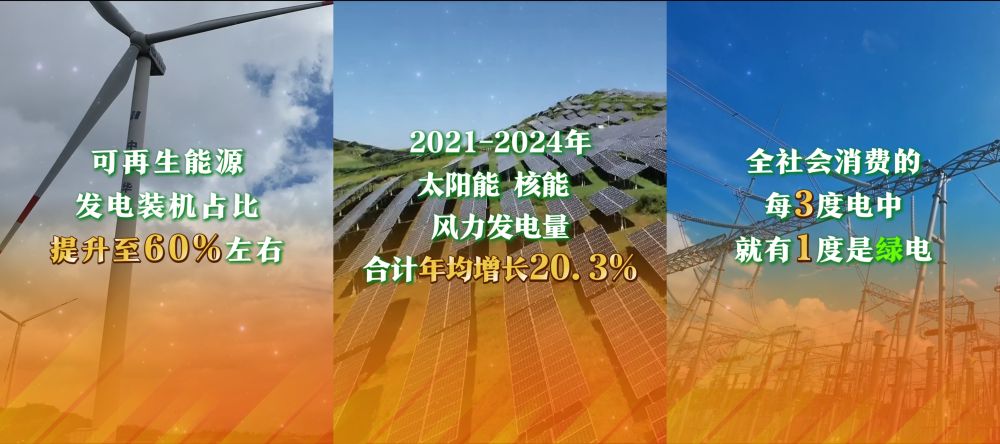
Core Insights - The article emphasizes the significant progress made in China's high-quality development under the guidance of the new development concepts introduced during the 18th National Congress, particularly focusing on green development and ecological priorities [1]. Group 1: Green Development Achievements - During the "14th Five-Year Plan" period, China's energy transition towards green development has shown remarkable results, with the share of renewable energy generation capacity rising to approximately 60% [1]. - From 2021 to 2024, the annual growth rate of solar, nuclear, and wind power generation is projected to be 20.3%, with one-third of the total electricity consumption being green electricity [1]. Group 2: Air and Water Quality Improvements - By 2024, the concentration of PM2.5 in cities has decreased to 29.3 micrograms per cubic meter, a reduction of 16.3% compared to 2020, with the proportion of days with good air quality reaching 87.2% [3]. - The proportion of surface water quality meeting good standards has exceeded 90% for the first time, with major rivers like the Yangtze and Yellow Rivers maintaining Class II water quality for several consecutive years [3]. Group 3: Forest Coverage and Biodiversity - By 2024, forest coverage is expected to exceed 25%, an increase of about 2 percentage points since 2020, with the establishment of five national parks and thousands of various nature reserves covering approximately 18% of the land area [5]. - 90% of terrestrial ecosystem types and 74% of nationally protected wildlife species are effectively protected [5]. Group 4: Growth in Green Products - From 2021 to 2024, the annual production growth rates for solar cells, ultra-white glass for industrial use, and bio-based chemical fibers are projected to be 44.5%, 114.7%, and 89.6%, respectively [7]. - In 2024, the production of new energy vehicles is expected to reach 13.168 million units, with exports of electric vehicles, lithium batteries, and photovoltaic products increasing by 2.6 times compared to 2020 [7].
印度难迈能源这个“坎儿”
Jing Ji Ri Bao· 2025-11-01 22:03
Core Insights - The ongoing tension between the US and India regarding India's purchase of Russian oil has intensified, with India asserting its need for energy security despite US pressure [1][3] - India is heavily reliant on oil imports, with approximately 85% of its crude oil needs met through imports, making it the world's third-largest oil importer [1][2] - The geopolitical landscape has allowed India to capitalize on discounted Russian oil, increasing its imports from Russia from less than 1% before the Ukraine crisis to 34% currently [3] Group 1: Energy Dependency - India’s energy sector has historically struggled with self-sufficiency, facing challenges such as monopolistic management and price controls that stifle market vitality [2] - The discovery of the Mumbai offshore oil field in 1974 was initially seen as a turning point, but regulatory constraints have limited its potential [2] Group 2: Strategic Purchasing - The Ukraine crisis has created an opportunity for India to purchase Russian oil at discounted rates, allowing it to shift its import focus from the Middle East to Russia [3] - India has also engaged in reselling some of this oil to Europe, profiting from the price difference, which has led to its characterization as a "second-hand dealer" in the oil market [3] Group 3: Currency and Trade Challenges - India's attempt to use the rupee for oil transactions has failed, as global suppliers are reluctant to accept it due to its low liquidity and high exchange rate risk [4] - Despite efforts to diversify its energy sources and invest in renewable energy, India faces significant hurdles in achieving a sustainable energy framework [4][5] Group 4: Future Outlook - The urgency for India to achieve energy independence is increasing, as reliance on imported oil remains high while the avenues for low-cost Russian oil are narrowing [5] - The challenges in transitioning to a diversified energy system highlight the complexities India faces in its pursuit of becoming a major global power [5]