
数据中心

Search documents
白银,继续狂飙
Xin Lang Cai Jing· 2025-12-28 23:25
Group 1 - The current demand for silver from investors and the industrial sector is extremely high, with both physical and financial assets being accumulated for wealth storage and as a hedge against risks associated with the US dollar and other currencies [3][4] - In the real economy, the demand for silver is robust, particularly from jewelry manufacturers, medical device producers, electric vehicle manufacturers, data center construction companies, and notably, solar panel manufacturers [3][4] - Citigroup analysts estimate that the solar industry consumes nearly 30% of the annual silver production from mining and recycling [3][4] Group 2 - There is little possibility of significant new silver supply entering the market, as global "pure silver" deposits are nearly exhausted, with most silver now being produced as a byproduct of mining other metals like copper, gold, and zinc [3][4] - John Ciampaglia, CEO of Sprott Asset Management, indicates that changes in silver supply are often driven by the demand for other metals rather than silver itself [3][4] - There are warnings that precious metal prices are at a "cliff edge," with accumulating risks of a price correction [3][4]

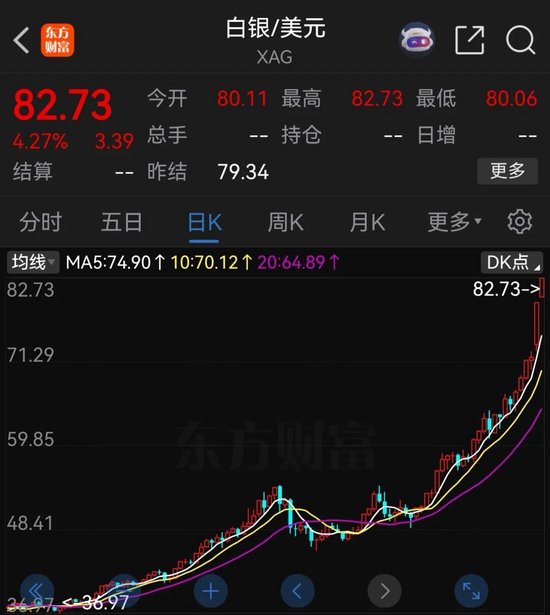
白银,继续狂飙
财联社· 2025-12-28 23:19
Group 1 - The current demand for silver from both investors and the industrial sector is extremely high, with silver being accumulated in both physical and financial asset forms for wealth storage and as a hedge against risks associated with the US dollar and other currencies [3] - The jewelry industry, medical device manufacturers, electric vehicle producers, data center construction companies, and especially solar panel manufacturers are major consumers of silver [3] - Citigroup analysts estimate that the solar industry consumes nearly 30% of the annual silver production from mining and recycling [4] Group 2 - There is little possibility of significant new silver production entering the market, as global "pure silver" deposits are nearly exhausted, with most silver now being produced as a byproduct of mining other metals like copper, gold, and zinc [4] - Changes in silver supply are often driven by the demand for other metals rather than silver itself, according to John Ciampaglia, CEO of Sprott Asset Management [4] - Some analysts warn that precious metal prices are at a "cliff edge," indicating that the risk of a price correction is accumulating [5]

亲历价格战、转型危机、人才慌:苏州IDC创业20年,活着比赚钱难
Sou Hu Cai Jing· 2025-12-28 18:18
Core Insights - The article chronicles the journey of Suzhou Shengwang IDC, highlighting the evolution of the company from a small operation in a tin house to a significant player in the data center industry over two decades. The founder reflects on the challenges faced, including market skepticism, price wars, and the need for technological upgrades to stay competitive in a rapidly changing environment [1][18]. Group 1: Early Years (2005-2010) - In 2005, the company started in a 120 square meter tin house with an initial investment of 200,000 yuan, purchasing eight second-hand cabinets and an IBM mini-computer [1][2]. - The first client was a foreign trade company that required server hosting, marking the beginning of the company's revenue generation [1][2]. - The founder faced significant challenges, including extreme temperatures in the tin house and a lack of market understanding, with many potential clients mistaking IDC services for simple server sales [4][2]. Group 2: Growth and Challenges (2011-2015) - The year 2008 marked a turning point as the e-commerce boom led to increased demand, with cabinet rental rates rising from 40% to 90% [6][8]. - However, a price war ensued as many new competitors entered the market, causing rental prices to drop significantly from 80,000 yuan in 2012 to as low as 30,000 yuan by 2014 [6][8]. - A major crisis occurred in 2013 when a competitor's power failure damaged the industry's reputation, leading to a loss of clients and necessitating significant investments in infrastructure to regain trust [8][6]. Group 3: Transformation and Innovation (2016-2020) - The introduction of the "green data center" policy in 2016 required a PUE (Power Usage Effectiveness) of 1.4 or lower, prompting the company to adopt liquid cooling technology to reduce its PUE from 1.8 to below 1.3 [10][12]. - The founder took significant financial risks, including mortgaging property and borrowing 2 million yuan to fund the necessary equipment for the upgrade [10][12]. - By 2018, approximately 37% of traditional IDC providers were eliminated due to failure to upgrade, while Suzhou Shengwang thrived by leveraging liquid cooling and hybrid cloud services [12][10]. Group 4: Current Trends and Future Outlook (2021-2025) - The rise of AI and the demand for high-density computing environments have led to a new wave of transformation in the IDC industry, with the company upgrading its facilities to support GPU clusters [13][14]. - A significant challenge remains in recruiting talent capable of managing advanced technologies, with a talent supply-demand ratio of 1:2.3 in Suzhou [13][14]. - The company continues to adapt, emphasizing the importance of staying ahead of technological trends and maintaining client trust in a rapidly evolving digital landscape [16][18].


大位科技董事长张微:不仅成为算力基础设施的提供者 更要成为产业创新的赋能者
Zheng Quan Ri Bao Zhi Sheng· 2025-12-28 16:06
本报记者 贾丽 "源网荷储一体化使算力中心从能源的消费者变为区域能源系统的'智能调节器',并为互联网头部企 业、智能制造等实体产业提供'降本'与'降碳'双轨并行的数字化赋能,这正是超越传统数据中心、定义 下一代基础设施的核心竞争力。"张微进一步表示。 打开"高质量增长"新空间 随着全球数字经济的蓬勃发展,算力已成为继水电、网络之后的重要生产力。近年来,我国"东数西 算"工程的全面启动与人工智能大模型应用的快速普及,共同推动算力产业进入以"智算"为核心的新阶 段。在这一进程中,一批企业正通过战略转型,积极投身于这场波澜壮阔的产业变革。 其中,2001年在上交所正式上市的大位数据科技(广东)集团股份有限公司(以下简称"大位科技")的 转型之路尤为引人注目。目前,公司全力聚焦互联网业务。 近日,《证券日报》记者专访了大位科技董事长张微。她分享了大位科技对算力产业技术跃迁、商业模 式创新与未来战略的思考,更以坦诚而坚定的态度,回应了市场对这家"算力新贵"的诸多关切。 从"计算"到"智算" 产业在质变 当前,算力产业正经历从传统计算向智能计算的深刻转型。谈及这一转变的核心驱动力,张微表 示:"从'计算'到'智算',产业 ...

英伟达800伏电压“革命”:全球数据中心面临史上最大规模基础设施改造
Hua Er Jie Jian Wen· 2025-12-28 11:57
Core Insights - Nvidia is leading a significant shift in data center power architecture by transitioning from traditional AC power to 800V DC power, preparing for ultra-high-density computing environments with a power density of 1 megawatt (MW) per rack [1] - This transition is driven by the increasing power density demands of modern AI workloads, which are expected to exceed the capabilities of existing power systems [2] - The shift to 800V DC is anticipated to reduce total cost of ownership (TCO) by 30% in the long term, although it presents a substantial capital expenditure challenge in the short term [1][6] Group 1: Technological Transition - The 800V DC architecture allows for over 150% more power transmission on the same copper conductors compared to traditional systems, significantly enhancing energy efficiency [2] - Nvidia's new Vera Rubin NVL144 rack design incorporates liquid cooling technology and increased energy storage capacity to manage the extreme power density [2] - The transition will eliminate the need for traditional AC power distribution units (PDUs) and uninterruptible power supply (UPS) systems, reducing the demand for AC PDUs by up to 75% [3] Group 2: Market Impact - The shift to higher voltage systems is expected to increase revenue potential per megawatt from €2 million to €3 million in traditional data centers [4] - The industry anticipates that 80-90% of new data centers will adopt the 800V DC architecture in the future, despite currently only one-third of racks operating below 10kW [5] - Key suppliers in the semiconductor space, such as Analog Devices and Infineon, are positioning themselves to meet the demand for advanced chips required for 800V DC systems [5] Group 3: Infrastructure and Supply Chain - The transition will necessitate a comprehensive upgrade of the entire supply chain, including transformers, circuit breakers, and cooling systems [1] - Companies like Schneider Electric are targeting the market for racks capable of handling up to 1.2MW, while also developing solutions for liquid cooling systems [3] - Solid-state protection devices are replacing mechanical circuit breakers, with ABB leading in the development of solid-state breakers designed for DC distribution [5] Group 4: Timeline and Financial Considerations - The full commercial transition to 800V DC data centers is expected to align with the deployment of Nvidia's Kyber architecture by 2027, with significant scale effects anticipated around 2028 [6] - Data center operators will face substantial investment requirements over the next five years, in addition to addressing a $5 trillion AI funding gap [6]

“白皮书”称人工智能数据中心演进为驱动创新的“前沿源泉”
Xin Lang Cai Jing· 2025-12-28 10:09
Core Insights - The white paper titled "From Computing to Cognition: Development Path and Future Outlook of AIDC" highlights the fundamental shift of Artificial Intelligence Data Centers (AIDC) from being a "back-end system" to a "frontier source" driving innovation [1] - AIDC is identified as a core carrier for the implementation of the "East Data West Computing" strategy and an important support for the development of the trusted computing industry [1] Industry Trends - The global market share of lithium batteries in data center batteries has surpassed 25% and is expected to exceed 35% by 2025 [2] - The white paper anticipates that the AIDC industry will achieve leapfrog development along three directions, including the formation of a "cloud training + edge response" architecture that balances low latency and high computing power [2] Challenges and Innovations - The AIDC industry faces challenges such as technical bottlenecks, weak ecosystems, and high costs, but these issues are expected to be gradually resolved through industry iteration [2] - The company Shengyang proposes a "lithium-sodium dual-engine" approach, utilizing sodium batteries for edge data centers and extreme environments, while employing lithium iron phosphate batteries for stable operation in core data centers [2]
AIDC深度报告:AI浪潮已至,电力设备有望迎来新机遇
Guotou Securities· 2025-12-28 08:31
Investment Rating - The industry investment rating is "Outperform the Market - A" [1] Core Insights - The artificial intelligence (AI) industrialization wave is approaching, leading to a rapid increase in demand for Artificial Intelligence Data Centers (AIDC) [4][11] - Power distribution equipment is a crucial component of AIDC and is expected to benefit significantly from the high demand in AIDC [36] - Major companies involved in the AIDC sector are highlighted, indicating potential investment opportunities [3] Summary by Sections Section 1: AI Industrialization and AIDC Demand Growth - AI is at a critical turning point for commercial deployment, driving a rapid increase in demand for intelligent computing power [4][11] - AIDC serves as the physical carrier for intelligent computing power, benefiting from the AI industrialization wave [12] - AIDC is evolving towards high energy consumption and high density, necessitating continuous upgrades in power distribution equipment [30][35] Section 2: Power Distribution Equipment in AIDC - Power distribution equipment is a vital part of AIDC, accounting for approximately 13% of initial investment costs [42] - AIDC's power supply architecture typically employs redundancy designs to ensure high reliability [43][44] - Diesel generator sets are the most common backup power solution for AIDC [56][60] - The transition from UPS to high-voltage direct current (HVDC) systems is anticipated, with HVDC becoming the mainstream architecture in the future [68][86] - The market for server power supplies is projected to exceed 100 billion, with supercapacitors and battery backup units (BBU) being key growth areas [113]




AI正在重塑绿电的赚钱逻辑!
格隆汇APP· 2025-12-28 07:26
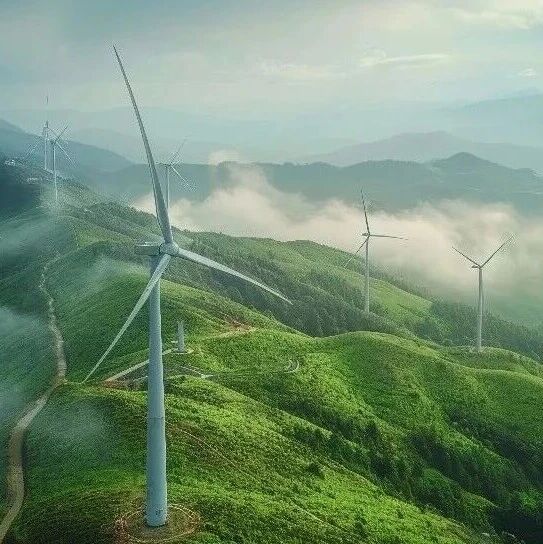
Core Viewpoint - The rapid development of AI technology is driving an explosive growth in electricity demand for data centers in the U.S., leading to a power shortage that constrains industry growth. The dual trends of energy transition towards green electricity and the rise of AI storage are creating a golden development period for the U.S. energy storage market, presenting a trillion-dollar market opportunity [4][10]. Group 1: Electricity Demand and Supply - Over the past decade, the annual electricity consumption in the U.S. has remained stable at around 4000 TWh, with a compound growth rate of only 2%. However, the rise of AI data centers has disrupted this balance, with electricity demand projected to reach approximately 1269 TWh by 2030, accounting for 22% of total electricity demand [6][10]. - The U.S. power supply is struggling to keep pace with this demand growth, with an average annual power generation capacity addition of about 40 GW expected from 2025 to 2027, resulting in a persistent electricity shortfall of 20-40 GW [6][10]. Group 2: Green Electricity and Storage Solutions - The combination of green electricity and energy storage is becoming the preferred power supply solution for U.S. data centers due to its cost-effectiveness and environmental benefits. The cost of solar and storage has dropped to $0.033 per kWh, making it highly competitive against traditional energy sources [11]. - By 2030, the demand for green electricity storage is expected to reach 240 GWh if the green electricity ratio is 50%, and 150 GWh if the ratio is 30%. This indicates a significant market expansion for green electricity storage [14]. Group 3: Low-Voltage Direct Current Storage - The demand for energy quality management in AI data centers is giving rise to a new storage trend—low-voltage direct current storage. This new architecture can reduce energy consumption by 5-8% and improve computing density and efficiency [16][18]. - The advantages of this new architecture include enhanced peak support, improved model training efficiency by 15-20%, and reduced operational costs through lower electricity prices [17][18]. Group 4: Investment Opportunities - The U.S. energy storage market is expected to exceed expectations, with installed demand projected to reach 80 GWh by 2026, a 51% year-on-year increase, and 391 GWh by 2030, corresponding to a battery demand of over 500 GWh. Domestic battery production capacity is only 100 GWh, indicating a significant reliance on Chinese supply chains [19]. - Investment focus should be on three main areas: battery production, energy storage systems, and photovoltaic integration projects, as these sectors are poised to benefit from the growing demand for energy storage solutions [19].
前沿科技2026年度策略:矿场转型AI数据中心,资产上链方兴未艾
SINOLINK SECURITIES· 2025-12-28 06:25
Investment Rating - The report does not explicitly provide an investment rating for the industry Core Insights - There is a divergence in the outlook for the cryptocurrency market in 2026 among leading global crypto institutions, primarily concerning the existence of Bitcoin's four-year market cycle and the uncertainty of the U.S. interest rate cuts [1][11] - The transition of crypto mining companies to AI data centers is seen as a positive trend, with companies expected to benefit from the growing demand for AI computing power [3][38] - The U.S. is expected to see significant developments in asset tokenization and prediction markets, which may drive the next wave of crypto market growth [4][46] Summary by Sections 1. Observing the Fed's Rate Cut Rhythm - The total market capitalization of cryptocurrencies fell by 8.6% in 2025, with Bitcoin's price declining by 6.1%, marking the first year to break a three-year growth streak [2][12] - The price of Bitcoin is correlated with global M2 growth rates, which are currently weaker than in previous cycles, suggesting that the performance of the industry in 2026 will depend on the pace and scale of monetary easing by major economies [2][16] 2. U.S. Crypto Mining Transitioning to AI Data Centers - The cost of Bitcoin mining has risen significantly, with the average cost including depreciation reaching $111,557 per BTC, exceeding the current Bitcoin price [3][39] - The U.S. energy department anticipates a need for an additional 100GW of peak power supply by 2030, with a significant portion allocated for data centers, making the transition of mining companies to AI services a natural choice [3][38] 3. U.S. Rapidly Advancing Asset and Prediction Market Tokenization - The Nasdaq has applied to the SEC to launch tokenized stocks, with expectations for tokenized stocks to trade alongside traditional stocks by the third quarter of 2026 [4][46] - The monthly betting amounts on platforms like Polymarket and Kalshi have surged from under $100 million in early 2024 to over $13 billion by November 2025, indicating explosive growth in demand for event contracts [4][48] 4. Investment Recommendations - The report suggests focusing on companies with substantial self-owned power capacity, low debt ratios, and low market value per watt of power, as well as those collaborating with major firms like Google and Amazon [5][43] - It also recommends prioritizing investments in leading cryptocurrency companies during this cyclical opportunity [5]
为优先给AI数据中心供电 特朗普要抢美国电网监管权
智通财经网· 2025-12-28 02:30
Core Viewpoint - The Trump administration is attempting to shift control of parts of the U.S. power grid from state to federal government to facilitate the expansion of AI data centers by streamlining energy regulations [1][3]. Group 1: Federal vs. State Control - Energy Secretary Chris Wright's directive to the Federal Energy Regulatory Commission (FERC) aims to draft new regulations for the connection of large data centers to the power grid, traditionally managed by state governments under the Federal Power Act of 1935 [1][3]. - State regulators expressed strong opposition at a meeting in Seattle, arguing that the plan violates the regulatory division established by the Federal Power Act [3]. - Former FERC Chairman Mark Christie criticized the plan as a significant federal power grab at the expense of state interests, warning of potential legal disputes [3]. Group 2: Market Dynamics and Political Implications - The market is closely monitoring the surge in electricity demand from data centers, with a $60 billion merger between Trump Media Technology Group and TAE Technologies highlighting ongoing investment in this sector [2]. - Investigations initiated by Democratic Senator Elizabeth Warren into rising electricity costs for residents due to data centers have made energy distribution a new political battleground [2]. Group 3: Acceleration of Regulations - The Trump administration argues that new rules will stimulate data center growth and ultimately lower electricity costs, countering concerns that AI will drive up prices [4]. - Chris Wright has instructed FERC to complete the new regulations by April 30, indicating a rapid pace for a traditionally cautious regulatory body [4]. - Florida's Governor Ron DeSantis has proposed legislation to limit the impact of AI on consumers and prevent utility companies from charging higher fees to support large data center development [4]. Group 4: FERC's Shift in Priorities - Newly appointed FERC Chair Laura Swett emphasized the importance of ensuring quick and sustainable power connections for data centers, indicating a shift in federal regulatory priorities [5]. - This shift suggests an intensifying conflict between federal and state control over the power grid [5].