
线下零售

Search documents
开源证券:关注情绪消费下四条投资主线
Sou Hu Cai Jing· 2025-09-16 01:17
Group 1 - The core viewpoint emphasizes the importance of focusing on high-quality companies in the "emotional consumption" theme amid the backdrop of consumer recovery [1] Group 2 - Investment focus areas include: 1. Gold and jewelry sector, highlighting brands with differentiated product strength and deep consumer insights [1] 2. Offline retail sector, emphasizing companies that adapt to trends and actively explore transformations [1] 3. Cosmetics sector, focusing on high-quality domestic beauty brands that excel in high-growth niche markets and continuously iterate their capabilities [1] 4. Medical aesthetics sector, concentrating on manufacturers with differentiated product pipelines [1]
开源证券:关注情绪消费主题下的高景气赛道优质公司
Mei Ri Jing Ji Xin Wen· 2025-09-16 00:17
Core Viewpoint - The report from Kaiyuan Securities emphasizes the importance of focusing on leading companies that align with the theme of "emotional consumption" as consumer recovery takes center stage, highlighting four key investment lines [1] Group 1: Investment Lines - Gold and Jewelry: Attention should be given to gold and jewelry brands that possess differentiated product capabilities and deep consumer insights [1] - Offline Retail: Retail enterprises (supermarkets, department stores, chains) that actively adapt and explore trends should be monitored [1] - Cosmetics: High-quality domestic beauty brands that are deeply engaged in high-growth niche markets and continuously evolving their capabilities are of interest [1] - Medical Aesthetics: Companies with differentiated product lines in the medical aesthetics sector should be focused on [1]
行业点评报告:8月社零同比+3.4%,金银珠宝表现亮眼
KAIYUAN SECURITIES· 2025-09-15 13:50
Investment Rating - The industry investment rating is "Positive" (maintained) [1] Core Viewpoints - The report highlights that the retail sector is experiencing steady growth, with a year-on-year increase of 4.6% in retail sales from January to August 2025, amounting to 3,239.06 billion [3][4] - In August 2025, retail sales reached 396.68 billion, reflecting a year-on-year growth of 3.4%, slightly below the expected 3.8% [3][4] - The report emphasizes a strong performance in optional consumption categories, particularly gold and jewelry, which saw a year-on-year increase of 16.8% in August [4][6] Summary by Sections Retail Sales Performance - The total retail sales for January to August 2025 were 3,239.06 billion, with August sales at 396.68 billion, showing a year-on-year increase of 3.4% [3][4] - Essential goods like grain and oil showed resilience, while optional categories like gold and jewelry performed exceptionally well [4] Online vs. Offline Channels - Online retail sales from January to August 2025 reached 999.28 billion, growing by 9.6%, with physical goods online sales at 809.64 billion, up by 6.4% [5] - Offline retail growth has shown a marginal slowdown across various formats, with supermarkets and convenience stores growing by 4.9% and 6.6% respectively [5] Investment Recommendations - The report suggests focusing on high-quality companies in the "emotional consumption" theme, particularly in four main areas: 1. Gold and jewelry brands with differentiated product offerings [6] 2. Retail enterprises adapting to market trends [6] 3. High-quality domestic beauty brands [6] 4. Medical beauty product manufacturers with unique pipelines [6]
半年揽 300 万会员、流水破亿:线下消费“省心革命”如何悄然兴起?
Sou Hu Cai Jing· 2025-09-15 05:25
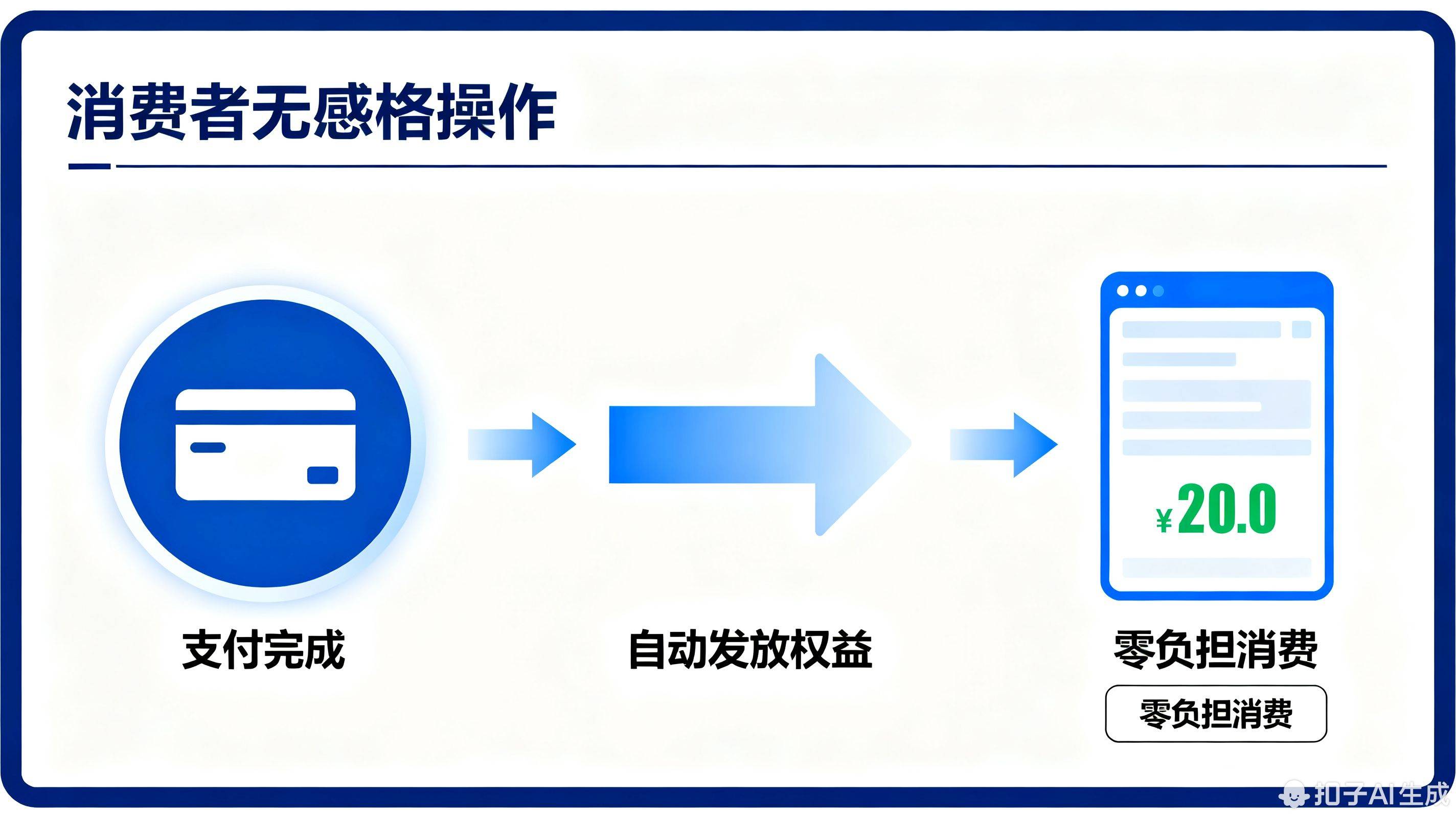
Core Insights - A new AI-enabled payment model has achieved over 100 million in transaction volume within six months, attracting approximately 3 million targeted members without traditional promotional strategies [1] - This model connects consumers, physical stores, and promotional teams seamlessly, creating a "worry-free revolution" in offline consumption [1] Consumer Experience - Traditional membership processes are often cumbersome, requiring multiple steps that can lead to missed benefits [3] - The innovative model allows consumers to receive membership benefits directly after payment, without additional registration or clicks, enhancing convenience [4] - The system features an intelligent rights distribution mechanism that adjusts benefits based on consumer spending habits, increasing loyalty and repurchase rates [4] Benefits for Physical Stores - The model addresses key pain points for physical stores, such as cash flow and operational costs, by providing instant fund settlement directly to the store's WeChat merchant account [6] - A small convenience store saw its monthly sales increase from 30,000 to 110,000 after adopting the model, significantly improving cash flow efficiency [6] - The model requires no new payment equipment or entry fees, allowing easy integration for small and medium-sized stores [7] Promotion and Expansion - The success of the model relies on the efforts of ground promotion personnel and regional agents, who benefit from a sustainable income tied to store performance [10] - For example, a promoter can earn a stable income based on the total transaction volume of the stores they help onboard [10] - Regional agents receive fixed monthly returns based on the total transaction volume in their area, incentivizing long-term engagement [10] Technological Support - The underlying intelligent system focuses on data integration and utilization, providing personalized services for consumers, stores, and promotional teams [12] - The system enhances consumer experience by recommending products based on purchase history, leading to increased average spending [12] - It also serves as a business advisor for stores, helping them optimize inventory and marketing strategies based on consumer data analysis [12] Trust and Reliability - The system operates on real consumption records, ensuring that all benefits and promotions are based on actual consumer behavior, thus avoiding false advertising [13] - This reliable service model builds trust among consumers and stores, laying a solid foundation for the platform's long-term growth [13] - The digital transformation of offline consumption does not require complex technology or high costs but focuses on addressing the needs of all parties involved [13]

25年中报业绩综述:竞争加剧,布局线下和出海
ZHESHANG SECURITIES· 2025-09-14 11:33
Investment Rating - The industry investment rating is "Positive" (maintained) [4] Core Insights - The tourism sector is expected to experience high growth in 2025, with inbound travel demand surging. In H1 2025, tourism trips increased by 20.6% year-on-year, and travel spending grew by 15.2%. The trend of younger and more localized tourism continues, with 45% of travel orders during the "May Day" holiday coming from the post-95 generation [2] - Online Travel Agencies (OTAs) are benefiting from the overall growth in the tourism market, maintaining a stable market structure. Major OTAs like Tongcheng and Ctrip reported revenue growth of 10.0% and 16.2% respectively in Q2 2025, exceeding market expectations [2] - The offline retail sector is undergoing transformation, with supermarkets expected to accelerate profit release due to store renovations and supply chain improvements. The retail landscape is improving, with supermarkets showing better performance compared to department stores [4][5] - The restaurant sector is recovering faster than hotels, with a focus on wedding and niche markets. However, the overall restaurant market is under pressure, with a 3.8% year-on-year increase in retail sales from January to July 2025 [7] - The e-commerce sector is rebounding, with online retail sales reaching 3.12 trillion yuan in Q2 2025, a year-on-year increase of 6.29%. Instant retail is emerging as a new growth driver, with the market expected to reach 780 billion yuan by 2024 [10][11] Summary by Sections Tourism - Inbound tourism demand is accelerating, with a 15.8% increase in entry and exit trips in H1 2025, and a 30.2% increase in foreign visitors [2] - Major OTAs are performing well, with Tongcheng's revenue at 4.669 billion yuan (up 10.0%) and Ctrip's revenue at 14.843 billion yuan (up 16.2%) in Q2 2025 [2] Retail - The retail sector is seeing varied growth across formats, with supermarkets growing by 5.2% and convenience stores by 7.0% in the first seven months of 2025 [4] - Supermarket renovations are expected to enhance customer attraction and profitability [4] Restaurants and Hotels - The restaurant sector is under pressure, with a 3.8% increase in retail sales in the first half of 2025, while hotel RevPAR is facing challenges [7] - Major hotel chains are experiencing a decline in RevPAR, with some companies showing resilience through operational efficiency [7] E-commerce - E-commerce is recovering, with Q2 2025 online retail sales reaching 3.12 trillion yuan, a 6.29% year-on-year increase [10] - Instant retail is projected to grow significantly, with the market expected to reach 780 billion yuan by 2024 [10][11] Cross-border E-commerce - Platform-based companies are showing stable performance, with revenue growth for companies like Xiaoshangcheng and Jiaodian Technology at 14% and 16% respectively in H1 2025 [12] - Product-based companies are experiencing revenue resilience but face profit uncertainties due to external factors [12] Baby and Maternity Retail - The industry is being catalyzed by supportive policies, with steady recovery in same-store sales [16] - Companies like Haiziwang and Aiyingshi are optimizing store structures and launching new brands to enhance profitability [16]
A股又大涨,还能“上车”么?最新研判
Zhong Guo Ji Jin Bao· 2025-09-12 01:49
Core Viewpoint - The market experienced a significant rally, with major indices rebounding strongly, driven by multiple factors including external influences from the US tech sector and internal improvements in cash flow for listed companies [1][2][3] Market Performance - On September 11, the Shanghai Composite Index rose by 1.65%, the Shenzhen Component Index increased by 3.36%, and the ChiNext Index surged by 5.15% [1] - Over 4,200 stocks in the market saw gains, with AI-related stocks leading the charge [1] Factors Driving Market Growth - External factors include a major US tech company's substantial earnings increase due to a surge in AI cloud service demand, which ignited market sentiment and led to a return to the AI theme in A-shares [2] - The US non-farm payrolls data falling short of expectations raised the likelihood of the Federal Reserve restarting interest rate cuts, alongside expectations of RMB appreciation and improved PPI, resulting in continued foreign investment inflows into the Chinese market [2] - The International Financial Association reported that foreign investors injected nearly $45 billion into emerging market stocks and bonds in August, marking the highest inflow in nearly a year [2] Internal Market Dynamics - The technology sector had previously undergone a significant correction, and with the recent catalysts, many stocks rebounded from prior adjustments [2] - Listed companies are seeing improvements in operating cash flow, with a decline in capital expenditures and an increase in free cash flow, enhancing their long-term intrinsic value [2] - The current low interest rate environment is encouraging residents to shift investments towards equity assets, indicating potential for further price appreciation [2] Future Market Outlook - The overall market is expected to maintain a long-term positive trend, with a focus on domestic demand and potential policy measures to stimulate growth [4] - The macroeconomic environment is characterized by a downward trend in risk-free returns, accelerated capital market reforms, and stabilization in US-China relations, all contributing to a gradual increase in market indices [4] Investment Focus Areas - Key sectors to watch include AI, Hong Kong internet stocks, "anti-involution" policies, and non-bank financials [5][6] - Specific investment opportunities are identified in construction materials, steel, photovoltaics, traditional Chinese medicine, lithium, and offline retail, particularly in relation to supply-side reforms [5] - The AI sector remains a focal point due to its strong fundamental outlook, with significant demand for AI chips and domestic semiconductor production expansion [6] - Non-bank financials are also highlighted as a sector with potential for recovery and growth, particularly those meeting low PE and PB criteria [6]
商贸零售行业点评报告:7月社零同比+3.7%,金银珠宝和化妆品环比改善
KAIYUAN SECURITIES· 2025-08-15 10:41
Investment Rating - The industry investment rating is "Overweight" [8] Core Viewpoints - The report indicates that social retail sales maintained steady growth, with a year-on-year increase of 3.7% in July, supported by national subsidies [3][4] - Essential categories like grain, oil, and food showed stronger resilience, while discretionary categories such as gold and jewelry, and cosmetics saw improved performance [4] - Online retail channels continued to grow, with a 9.2% year-on-year increase in online retail sales from January to July 2025, while offline retail growth showed signs of marginal slowdown [5] Summary by Sections Social Retail Sales - The total retail sales of consumer goods from January to July 2025 reached 28,423.8 billion yuan, with July sales at 3,878 billion yuan, reflecting a year-on-year growth of 4.8% and 3.7% respectively [3] - Urban and rural retail sales increased by 4.8% and 4.7% year-on-year [3] Price Factors - The overall Consumer Price Index (CPI) remained stable, with food CPI down by 1.6% year-on-year [4] - Retail sales in various categories showed different growth rates, with essential goods like grain and oil up by 8.6% year-on-year, while discretionary items like cosmetics and jewelry saw increases of 4.5% and 8.2% respectively [4] Online vs Offline Channels - Online retail sales reached 86,835 billion yuan from January to July 2025, with physical goods online sales at 70,790 billion yuan, accounting for 24.9% of total retail sales [5] - Offline retail growth rates for supermarkets, convenience stores, and department stores showed a slight decline compared to the previous month [5] Investment Recommendations - The report suggests focusing on high-quality companies in sectors aligned with "emotional consumption," particularly in gold jewelry, offline retail, cosmetics, and medical aesthetics [6] - Specific recommendations include brands like Lao Pu Gold and Chao Hong Ji in gold jewelry, and companies like Mao Ge Ping and Pechoin in cosmetics [6]
日本市场,不接受快节奏洗礼
3 6 Ke· 2025-08-06 07:56
Core Insights - The Japanese market is described as a "tough nut to crack" for overseas brands due to its unique challenges such as an aging population, cautious consumer decision-making, and high loyalty to local brands [1][2] - In 2023, China's direct investment in Japan reached 178.9 billion yen (approximately 1.1 billion USD), showing over 100% year-on-year growth, with expectations for further increases in 2024 [1] - E-commerce platforms like Shein, Temu, and TikTok Shop are expanding into the Japanese market, indicating a growing interest from Chinese companies [1] E-commerce and AI in Japan - Japan's e-commerce penetration is still below 10%, but the market is beginning to explore AI applications, which are seen as a complement to offline retail rather than a replacement [4][10] - Rakuten Group's chairman highlighted Japan's AI capabilities as lagging behind other countries, with only 26.7% of the population having used generative AI services [5] - Rakuten aims to create an environment where AI is easily usable for all age groups, emphasizing the importance of human-centered service in AI applications [5][8] Consumer Behavior and Market Entry Strategies - Japanese consumers exhibit a cautious shopping behavior, often comparing prices and product information before making a purchase, which poses challenges for e-commerce strategies [13] - The preference for offline retail remains strong, and brands entering Japan may benefit from a hybrid approach that combines online and offline channels [12][19] - Younger consumers are more open to new products and brands, presenting opportunities for companies targeting this demographic [12][13] Trust and Brand Loyalty - Trust is a critical factor in the Japanese market, with consumers showing high brand loyalty and a preference for established brands [13][15] - Brands must invest time in building trust and understanding local consumer preferences to succeed in Japan [19] - The integration of traditional cultural elements with modern marketing strategies can resonate well with Japanese consumers, particularly among younger generations [17]

东南亚的线下市场,该怎么赚钱?
Hu Xiu· 2025-07-16 06:03
Core Insights - The article discusses the emerging opportunities and challenges for Chinese brands entering the Southeast Asian offline retail market, emphasizing the need for localization and understanding regional differences [1][3][9] Group 1: Event Overview - The event titled "Opportunities and Challenges for Overseas Brands in Southeast Asian Offline Channels" is scheduled for July 31, from 14:00 to 17:00 in Shenzhen [3][8] - The event aims to provide practical insights rather than theoretical discussions, focusing on real business practices in Southeast Asia [1][5] Group 2: Key Discussion Topics - The first topic will analyze the regional differences and commonalities in offline channels across major markets like Thailand, Indonesia, and Malaysia [3][9] - The second topic will explore the changing consumer behaviors in Southeast Asia and identify categories experiencing explosive growth in offline retail [4][9] - The third topic will discuss effective online and offline integration strategies, sharing localized case studies from Southeast Asia [4][9] - The fourth topic will cover the expansion strategies and paths for Chinese consumer brands in Southeast Asia, including collaboration with local agents or building in-house teams [4][9] Group 3: Target Audience and Participation - The event is designed for high-level decision-makers and aims to facilitate strategic networking opportunities [5][15] - Participation is limited, with a ticket price of 888 yuan per person, emphasizing the exclusivity of the event [12][15]

新消费洞察系列一:关于新消费业态的思考
GOLDEN SUN SECURITIES· 2025-07-16 05:20
Investment Rating - The report rates the stock of Beilingsong as "Accumulate" with projected EPS of 0.12 in 2024 and increasing to 0.93 by 2027, indicating a significant growth potential [5]. Core Insights - The service retail sector in China is poised for substantial growth, with a market size reaching 7 trillion yuan, driven by digitalization and changing consumer preferences [21][26]. - The report emphasizes the necessity for offline retail to adapt to the challenges posed by e-commerce, highlighting the importance of unique value propositions and customer experiences [27][32]. - Successful new consumption models must focus on high customer unit prices and integrate products with services to enhance consumer engagement and brand loyalty [2][3]. Summary by Sections Service Retail: A Trillion-Yuan Blue Ocean - China's service retail development level is relatively low, with a GDP contribution of only 56.7% in 2024, compared to 60%-80% in developed countries [10][13]. - The per capita service consumption expenditure in China is projected to reach 46.1% of total consumption in 2024, indicating significant room for growth [10][21]. - The rise of digital platforms has transformed consumer experiences, leading to an exponential increase in service retail market size [25][26]. Offline Retail: Challenges and Breakthroughs - Offline retail faces significant challenges due to e-commerce competition, leading to high fixed costs and product homogenization [27][32]. - Retail models that can achieve high gross margins and customer loyalty are more likely to succeed in the current market [33][36]. New Players in Service Retail - New retail players are emerging by focusing on niche markets and addressing unmet consumer needs, such as the rise of beauty and wellness services [38][39]. - Companies like Xila and Beilingsong are leveraging standardized service models and clear franchise systems to facilitate rapid expansion [46][49]. Key Company Analysis - Beilingsong is transitioning its business model to include both technology products and quick-effect massage services, aiming to enhance customer experience and brand loyalty [4]. - Xila is expanding into scalp care, leveraging its strong brand and supply chain capabilities to become a preferred service provider for families [4].
