
新材料

Search documents
纳微科技:尚无半导体领域业务收入
Zheng Quan Ri Bao Wang· 2026-01-20 12:10
证券日报网讯1月20日,纳微科技在互动平台回答投资者提问时表示,高性能微球在半导体领域有化学 机械拋光、先进封装、导电互连等应用场景。公司目前专注于生物医药、分析检测、体外诊断和平板显 示领域的核心微球材料供应及相关技术服务,尚无半导体领域的业务收入。 ...

【广发宏观王丹】2026年第一份软数据EPMI表现如何
郭磊宏观茶座· 2026-01-20 11:55
Core Viewpoint - The Strategic Emerging Industries Purchasing Managers' Index (EPMI) for January 2026 increased by 0.9 points to 50.0, indicating stable mid-level economic conditions with three out of seven sub-industries in the expansion zone, consistent with seasonal trends observed in previous years [1][5][6]. Sub-item Summaries - **Production and Demand Indicators**: In January, production volume, product orders, and export orders increased by 1.6, 1.5, and 1.0 points respectively. The production-to-demand ratio has risen for three consecutive months, suggesting positive demand expectations among emerging enterprises [2][10]. - **Price Signals**: Purchase prices and sales prices increased by 0.4 and 0.3 points respectively. The sales price index has been on an upward trend since July 2025, with only a brief decline in November 2025 [2][11]. - **Loan Difficulty Indicator**: The loan difficulty index rose by 0.4 points, marking a two-month recovery, potentially linked to liquidity conditions in early January [2][11]. Industry Analysis - **Leading Industries**: The biotechnology, new energy vehicles, and next-generation information technology sectors have maintained high levels of prosperity since October 2025. The biotechnology sector is driven by a surge in patent applications, while the new energy vehicle sector benefits from both domestic and export growth [3][13]. - **Weak Industries**: High-end equipment manufacturing, new materials, and energy conservation sectors have shown weaker performance, remaining in the contraction zone for three consecutive months [3][13]. Manufacturing PMI Expectations - Historical data suggests that the manufacturing PMI typically experiences slight declines in January during years with late Spring Festival dates. The impact of strong exports and concentrated fiscal policies in the previous quarter on January's production preparations remains to be observed [4][17]. Economic Data Overview - The high-frequency data for January appears stable, with strong port data and weak construction and real estate data. Hard data is expected to show decent year-on-year performance due to the timing of the Spring Festival, with results to be published in March [4][21].


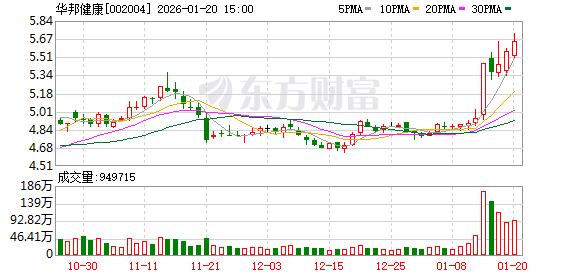
扭亏为盈 华邦健康预计2025年实现净利润最高7.3亿元
Zheng Quan Ri Bao· 2026-01-20 11:41
Core Viewpoint - Huabang Health is expected to achieve a net profit attributable to shareholders of 660 million to 730 million yuan in 2025, marking a turnaround from losses in the previous year [2]. Group 1: Company Overview - Huabang Health was established in 1992 and focuses on clinical skin medications and skin health [2]. - The company has developed a model of independent growth with three listed subsidiaries in the fields of agriculture, new materials, and tourism [2]. - The business scope includes five major areas: pharmaceuticals, medical services, agriculture, new materials, and tourism [2]. Group 2: Performance and Growth - The agricultural and new materials sectors have shown signs of recovery, leading to improved overall performance through market expansion and cost management [2]. - The pharmaceutical and tourism sectors have also experienced steady growth, contributing to the overall performance increase of the company [2].

德业股份:与私募基金合作投资设立创业投资合伙企业
Ge Long Hui A P P· 2026-01-20 11:18
Core Viewpoint - The company, 德业股份, has signed a partnership agreement with 宁波曦晨 Private Equity Fund Management Co., Ltd. to establish a new investment fund focused on the intelligent technology industry [1] Group 1: Investment Details - The company will contribute 86 million yuan as a limited partner, representing 78.18% of the total investment in the fund [1] - The fund will primarily invest in projects related to the robotics industry chain, artificial intelligence, semiconductors, new materials, and new energy [1] Group 2: Transaction Characteristics - This transaction does not constitute a related party transaction or a major asset restructuring [1] - There is no requirement for board or shareholder meeting approval for this transaction [1]

新的经济增长点蓄势待发,创业板ETF易方达(159915)助力便捷布局新兴产业发展机遇
Sou Hu Cai Jing· 2026-01-20 11:15
Group 1 - The ChiNext Index fell by 1.8%, the ChiNext Mid 200 Index decreased by 2.2%, and the ChiNext Growth Index dropped by 2.4% [1] - The National Development and Reform Commission stated that new economic growth points such as new energy, new materials, aerospace, quantum technology, biomanufacturing, and embodied intelligence are gaining momentum [1] - The installed capacity of new energy storage has surpassed 100 million kilowatts, accounting for over 40% of the global share [1] Group 2 - The "Artificial Intelligence +" initiative implemented last year is enhancing the advantages of various scenarios in China, accelerating the transition of AI from the digital world to the physical world [1] - This transition is expected to drive explosive growth in high-end manufacturing, emerging consumption, and new business models in China [1]

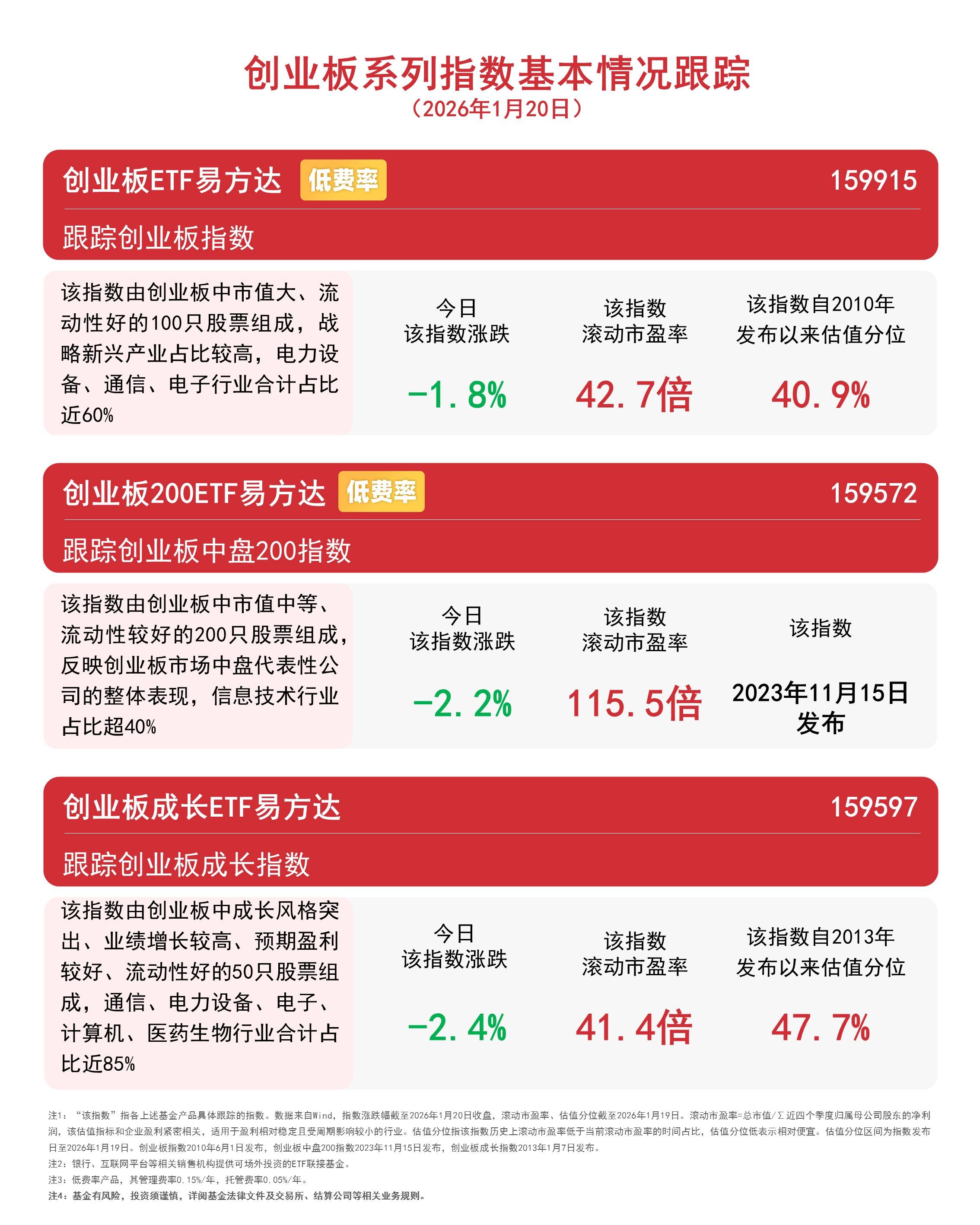
资本大迁徙:五年前后,2025年中国创投11大高增长赛道深度解析
3 6 Ke· 2026-01-20 11:01
Core Insights - The Chinese venture capital market is experiencing a significant shift from consumer-driven sectors to hard technology sectors, with funding for hard tech such as drones, robotics, and new materials increasing dramatically while consumer sectors like second-hand e-commerce and local logistics see funding drop by over 95% [1][15] Funding Growth by Sector - Drones: Funding events increased from 23 in 2021 to 139 in 2025, with total funding rising from 1.757 billion to 7.227 billion yuan, marking a growth rate of 504.35% in event numbers and 311.33% in funding amount [2][3] - Robotics: Funding events surged from 157 to 627, with total funding jumping from 19.863 billion to 58.776 billion yuan, reflecting a growth rate of 299.36% in event numbers and 195.91% in funding amount [2][3] - New Materials: Increased from 258 events and 22.50116 billion yuan in 2021 to 616 events and 48.14507 billion yuan in 2025, showing a growth rate of 138.76% in event numbers and 113.97% in funding amount [2][4] High-Growth Sectors - Aerospace: Funding events grew from 67 to 201, with total funding increasing from 9.699 billion to 17.6297 billion yuan, achieving a growth rate of 200% in event numbers and 81.77% in funding amount [2][4] - Optical and Photonic: Events increased from 37 to 138, with funding rising from 2.867 billion to 5.56726 billion yuan, reflecting a growth rate of 272.97% in event numbers and 94.18% in funding amount [2][4] Key Drivers of Growth - The rise of drones is driven by the transition from consumer to industrial applications, supported by national policies promoting low-altitude economy [7] - Robotics growth is fueled by advancements in AI and the emergence of "embodied intelligence," leading to increased investment in humanoid robots and automation [8] - The push for domestic alternatives and self-sufficiency in sectors like new materials and aerospace is a significant driver of investment, particularly in response to external technology restrictions [9][10] Strategic Insights - The shift towards hard technology represents a fundamental change in investment paradigms, moving from short-term gains to long-term value creation [15] - The demand for automation in manufacturing due to rising labor costs and the need for efficiency is driving investments in robotics and smart equipment [11] - Continuous policy support, including tax incentives and funding for high-tech industries, is crucial for sustaining growth in hard technology sectors [12]
三省“双子星”抢龙头,透视区域经济新格局|城市论
Sou Hu Cai Jing· 2026-01-20 10:23
Group 1: Economic Competition in Northeast China - In 2024, the GDP of Dalian and Shenyang surpassed 900 billion yuan, with Dalian reaching 951.69 billion yuan and Shenyang at 902.71 billion yuan, marking a significant competition for the title of "Northeast Champion" [3] - The gap between Shenyang and Dalian has narrowed to 489.8 billion yuan, with Shenyang showing a growth rate of 6.1% compared to Dalian's 6.0%, indicating a strong catching-up momentum [3][6] - Dalian's economic strength is rooted in its industrial base and port advantages, while Shenyang is leveraging its transportation hub status and rich educational resources to transition towards high-end manufacturing [5][6] Group 2: Economic Dynamics in Southeast China - The competition between Fuzhou and Quanzhou has been ongoing for over 20 years, with Fuzhou recently reclaiming its position as the leading city in Fujian province [7][8] - Fuzhou's economic growth has been bolstered by its digital economy, which exceeded 450 billion yuan, accounting for over 45% of its GDP by 2020 [7][8] - Quanzhou, while facing challenges in traditional manufacturing, is focusing on upgrading its industries and developing strategic emerging sectors such as artificial intelligence and new materials [8] Group 3: Economic Developments in Hebei Province - The competition between Shijiazhuang and Tangshan has lasted for 20 years, with Tangshan initially surpassing Shijiazhuang in GDP due to its strong industrial base [12][13] - In 2024, Tangshan's GDP reached over 1 trillion yuan, while Shijiazhuang's GDP was 820.34 billion yuan, indicating a shift towards a "dual trillion city" dynamic in Hebei [13][15] - Both cities are focusing on integrating with the Beijing-Tianjin-Hebei region and developing new industries, with a shared goal of enhancing their economic growth potential [15][16]

炬光科技:预计2026年1-3月日常关联交易400.59万元
Xin Lang Cai Jing· 2026-01-20 10:16
Core Viewpoint - The announcement indicates that from January 2026, Xi'an Hongdun New Materials Technology Co., Ltd. and its subsidiaries will no longer be related parties of the company, which is expected to streamline operations and reduce potential conflicts of interest [1] Group 1: Transaction Details - The company anticipates that from January to March 2026, the total daily related transactions with Xi'an Hongdun and its subsidiaries will amount to 4.0059 million yuan, which does not require shareholder meeting approval [1] - The transactions primarily involve the purchase of raw materials and commissioned processing services, with fair and reasonable pricing [1] - In 2025, the actual transaction amount was 19.355 million yuan, which did not exceed the previously estimated 28.85 million yuan [1] Group 2: Operational Status - Xi'an Hongdun and its subsidiaries are operating normally and possess the capability to fulfill their obligations [1] - The related transactions align with the company's operational needs and will not harm shareholder interests [1]

佛山超八成规上工业企业实现智改数转
Nan Fang Ri Bao Wang Luo Ban· 2026-01-20 09:59
Group 1 - Over 80% of industrial enterprises in Foshan have achieved digital transformation, with traditional industries like ceramics, textiles, and furniture accelerating their modernization [1] - Foshan has become a national pilot city for the digital transformation of small and medium-sized enterprises, emphasizing that digital transformation is a necessity for business owners [1] - The city has established a new industrial fund with a total scale of 20 billion yuan, aiming to attract investment and expand production [1] Group 2 - Foshan has built 14 municipal concept verification centers and 71 municipal pilot platforms covering 13 key industrial sectors, including semiconductors and robotics [2] - Among the 75 units selected for the Guangdong provincial pilot platform in 2025, 14 are from Foshan, marking the city as a leader in pilot industrial development in the province [2] - Foshan's pilot platform quantity ranks first among prefecture-level cities in Guangdong, indicating its strong position in industrial technology development [2]
2025年,滨州聚焦“113388”工作体系再夺丰硕成果
Qi Lu Wan Bao· 2026-01-20 08:52
Economic Performance - The GDP of the region is expected to grow by approximately 5.5% [1] - Fixed asset investment increased by 0.9%, ranking second in the province [1] - Revenue from the service industry grew by 10.4%, also ranking second in the province [1] - General public budget revenue and local tax revenue increased by 3.7% and 8% respectively, ranking second and first in the province [1] Investment and Projects - A total of 332 investment projects commenced construction, with the largest being the 39.8 billion yuan Wanhu Green Power Industrial Park [1] - 716 key projects exceeded their annual investment completion targets by 27 percentage points [1] - Private investment grew by 12% [1] - 168 industrial projects were completed, generating an additional output value of 35.9 billion yuan [1] - Industrial profits for large-scale enterprises increased by 26.9% [1] Market Dynamics - The number of market entities reached 478,000, with 4 companies listed in the top 500 Chinese enterprises and 7 in the top 500 private enterprises [2] - The non-performing loan ratio decreased to 1.29%, the lowest level in nearly a decade [2] Infrastructure and Connectivity - The overall plan for the Ta'er River Port area was approved by the provincial government [2] - The G228 Ta'er River Bridge has significantly reduced travel time from 90 minutes to 5 minutes [2] - The G220 East Extension project was completed, along with upgrades to 8 urban roads [2] Social and Cultural Development - The region has cultivated 408 "Heart Safety Cells" and promoted a nationwide model for campus fire safety and social psychological service systems [2] - The area successfully hosted the provincial intellectual sports meeting and received a cultural innovation award for the Yellow River Scenic Belt [2] - The region ranked among the top 30 in China's health and wellness cities [2]