
石油石化

Search documents
金融工程日报:沪指震荡上行迎14连阳,煤炭走高、存储芯片活跃-20260107
Guoxin Securities· 2026-01-07 15:10
- The report does not contain any quantitative models or factors for analysis[1][2][3]
中国石化大宗交易成交65.00万股 成交额396.50万元
Zheng Quan Shi Bao Wang· 2026-01-07 14:42
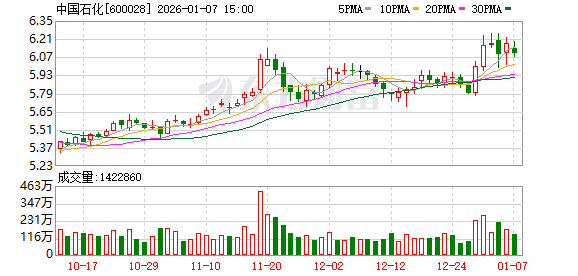
Summary of Key Points Core Viewpoint - China Petroleum & Chemical Corporation (Sinopec) executed a block trade on January 7, with a transaction volume of 650,000 shares and a transaction value of 3.965 million yuan, at a price of 6.10 yuan per share [2] Group 1: Block Trade Details - The buyer of the block trade was Shenwan Hongyuan Securities Co., Ltd., while the seller was Guohai Securities Co., Ltd. [2] - In the last three months, Sinopec has recorded a total of 2 block trades, with a cumulative transaction value of 7.6115 million yuan [2] Group 2: Stock Performance - On January 7, Sinopec's closing price was 6.10 yuan, reflecting a decrease of 1.29%, with a daily turnover rate of 0.15% and a total transaction amount of 871 million yuan [2] - The net outflow of main funds for the day was 76.3104 million yuan, while the stock has seen a cumulative increase of 1.67% over the past five days, with a total net inflow of 133 million yuan [2] Group 3: Margin Trading Data - The latest margin financing balance for Sinopec is 1.256 billion yuan, which has decreased by 21.791 million yuan over the past five days, representing a decline of 1.70% [2]


中企出海进入新时期,服务贸易发展空间巨大
Di Yi Cai Jing· 2026-01-07 14:25
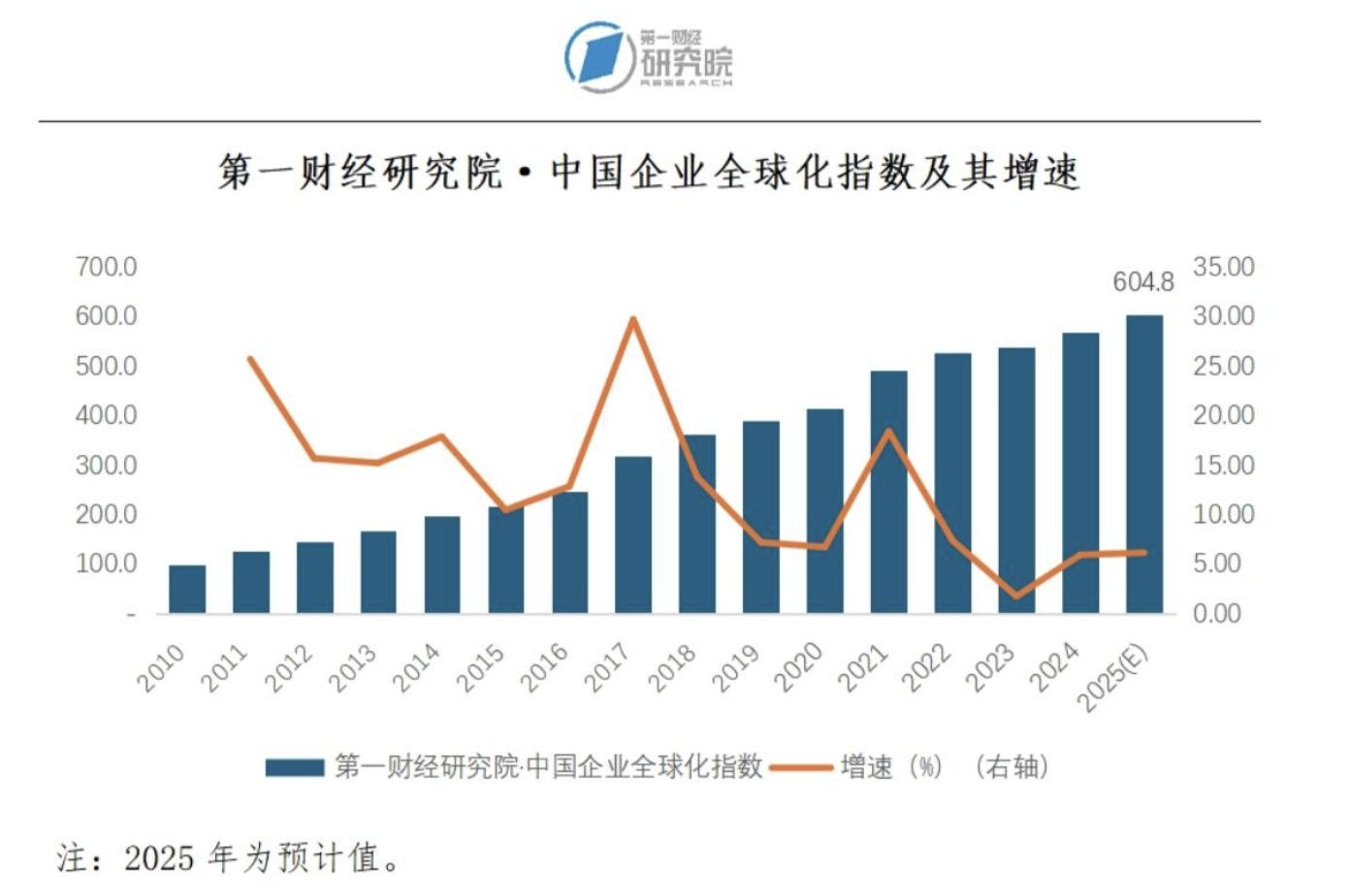
Core Viewpoint - The globalization process of Chinese enterprises is entering a new stage, characterized by increased resilience and global competitiveness, as highlighted by the launch of the "Wenhai: New Observations on Chinese Enterprises Going Global" column by Yicai [2] Group 1: Globalization Trends - Chinese enterprises are showing high activity in overseas markets, with exports increasing by 6.2% to 24.46 trillion RMB and foreign direct investment rising by 7.5% to 1.13145 trillion RMB in the first 11 months of 2025 [2] - Direct investment in countries along the Belt and Road Initiative saw a significant increase of 19% to 255.53 billion RMB, while new contracts for overseas engineering projects grew by 20.4% to 1.44269 trillion RMB [3] - The current wave of globalization for Chinese enterprises began in 2023, transitioning from individual efforts to a more collaborative approach supported by government initiatives [3] Group 2: Challenges and Adaptations - The globalization landscape is facing new challenges due to rising trade protectionism and geopolitical tensions, leading to a more complex and uncertain environment for global operations [4] - The UNCTAD reports that by the end of 2024, 46 countries will have established foreign direct investment review mechanisms, more than double the number from a decade ago, indicating a tightening of investment scrutiny [4] - The Chinese enterprise globalization index is projected to grow by 6.1% in 2025, reaching 604.8, reflecting the continued expansion of Chinese enterprises in global markets [5] Group 3: Sectoral Insights - Emerging industries such as renewable energy and industrial robotics are experiencing sustained export growth, while digital technology is accelerating its integration with local services [8] - The report identifies 50 leading Chinese enterprises in globalization based on their overseas impact, global layout, and social responsibility, highlighting the diverse nature of current Chinese global enterprises [8] Group 4: State-Owned Enterprises (SOEs) - SOEs play a unique and critical role in globalization, characterized by a focus on cooperation and responsibility, with significant overseas investments since 2001 [11] - Compared to private enterprises, listed SOEs show higher levels of overseas revenue, particularly in heavy asset industries like construction and oil [12] - SOEs face dual challenges in globalization, including regulatory scrutiny and the need for effective cross-cultural management [16] Group 5: Service Trade Opportunities - The global service trade is projected to reach 8.69 trillion USD by 2024, with China’s service trade expanding and optimizing its structure, although it still faces a trade deficit in high-value services [19][22] - The overseas revenue of listed service enterprises in China is expected to grow from 1.4 trillion RMB in 2020 to 1.7 trillion RMB in 2024, marking a 21.4% increase [22] - Recommendations for enhancing the quality of China's service trade include optimizing service structures, promoting digital transformation, and supporting the development of emerging service sectors [22]
银河证券北交所日报-20260107
Yin He Zheng Quan· 2026-01-07 13:48
Core Insights - The North Exchange 50 index increased by 0.22% to close at 1,496.28 points on January 7, 2026, with a trading volume of 275.48 billion yuan and a turnover rate of 4.09% [1][2] - The overall valuation of the North Exchange is at 47.70 times earnings, which is higher than the valuations of the ChiNext and STAR Market [1][8] - The sectors with the largest gains include Oil & Petrochemicals (+6.0%), Nonferrous Metals (+5.4%), and Communications (+1.6%), while the sectors with the largest declines include Computers (-2.2%), Defense & Military (-1.8%), and Pharmaceuticals & Biology (-1.5%) [1][2] Trading Performance - On January 7, 2026, the North Exchange had a total market capitalization of 903.09 billion yuan, with a circulating market value of 549.77 billion yuan [1] - The trading volume was 10.35 billion shares, indicating a recovery compared to the average daily trading volume of 19.40 billion yuan from the previous week [1][5] Stock Performance - Among the 287 listed companies, 95 saw an increase in stock price, while 187 experienced a decline. The top gainers included Jiaxian Co. (+25.68%), Huitong New Materials (+16.83%), and Jiuling Technology (+8.29%) [1][6] - The largest declines were observed in Jinhao Medical (-14.76%), Tianming Technology (-12.58%), and Guoyuan Technology (-11.59%) [1][7] Valuation Insights - The average price-to-earnings (P/E) ratio for North Exchange companies is 47.70 times, with the highest sector being Nonferrous Metals at 130.5 times, followed by Household Appliances at 90.9 times and Food & Beverage at 82.3 times [1][8] - The P/E ratios for STAR Market and ChiNext are 76.06 times and 45.01 times, respectively, indicating that the North Exchange maintains a higher valuation compared to these markets [1][9] Sector Analysis - The North Exchange shows a mixed performance across various sectors, with significant gains in Oil & Petrochemicals and Nonferrous Metals, while sectors like Computers and Pharmaceuticals are underperforming [1][10] - The distribution of listed companies across sectors indicates a diverse market presence, with a notable concentration in sectors such as Machinery and Chemicals [1][11]
大西北︱《能源脉动》:撑起绿色中国的能源“粮仓”
国家能源局· 2026-01-07 10:46
Core Viewpoint - The documentary "Big Northwest" highlights the role of the northwest region of China in the modernization process, focusing on energy security, ecological protection, and technological innovation [2][17]. Group 1: Energy History and Contributions - The northwest region, particularly the Loess Plateau, is recognized as the cradle of China's petroleum industry, with significant historical milestones such as the first oil well drilled in 1907 [5]. - The region has produced notable figures in the energy sector, exemplified by the contributions of Wang Jinxi, symbolizing the spirit of dedication and hard work in building China's energy capabilities [5]. - Lanzhou Petrochemical, known as the "first son" of China's petrochemical industry, has achieved 109 national firsts in various fields over its 60-year history, showcasing its pivotal role in the industry [7]. Group 2: Innovations in Energy Production - The northwest holds approximately one-third of China's coal resources, with advancements in technology leading to safer and more efficient mining operations [9]. - A significant development is the world's largest coal-to-oil facility in Ningdong, which produces 4.05 million tons of oil annually, marking a breakthrough in coal liquefaction technology [9]. - The integration of photovoltaic technology in Qinghai has not only provided clean energy but also revitalized local ecosystems, demonstrating a successful model of ecological restoration and economic benefit for local herders [11]. Group 3: Infrastructure and Energy Distribution - The use of ultra-high voltage transmission technology allows for rapid energy transfer from Xinjiang to eastern regions, exemplified by the speed of electricity transmission from Hami to Chongqing in just 7 milliseconds [14]. - The natural gas project in southern Xinjiang has significantly improved the quality of life for local residents, transitioning them from traditional fuel sources to cleaner energy [16]. - The northwest region serves as a crucial stabilizer in China's energy landscape, contributing to national energy security and supporting the country's green development goals [16].
9.93亿元资金今日流出石油石化股
Zheng Quan Shi Bao Wang· 2026-01-07 09:01
Market Overview - The Shanghai Composite Index rose by 0.05% on January 7, with 17 out of the 28 sectors experiencing gains, led by the comprehensive and coal industries, which increased by 3.86% and 2.47% respectively [1] - The oil and petrochemical sector saw the largest decline, dropping by 1.73%, followed by the non-bank financial sector, which fell by 1.13% [1] Capital Flow Analysis - The main capital outflow from the two markets totaled 54.336 billion yuan, with only four sectors experiencing net inflows [1] - The telecommunications sector had the highest net inflow, amounting to 4.752 billion yuan, while the coal sector followed with a net inflow of 1.870 billion yuan [1] Oil and Petrochemical Sector Details - The oil and petrochemical sector experienced a net outflow of 999.3 million yuan, with 12 out of 47 stocks in the sector rising and 35 declining [2] - Among the stocks with net inflows, the top performer was Unified Holdings, which saw an inflow of 74.91 million yuan, followed by Guanghui Energy and Bohai Chemical with inflows of 39.62 million yuan and 19.58 million yuan respectively [2] - The stocks with the highest net outflows included China National Offshore Oil Corporation, which had an outflow of 504.09 million yuan, and China Petroleum with an outflow of 129.66 million yuan [2] Individual Stock Performance - The following stocks in the oil and petrochemical sector had significant net outflows: - China National Offshore Oil Corporation: -4.03% with a net outflow of 503.91 million yuan [2] - China Petroleum: -3.60% with a net outflow of 129.66 million yuan [2] - Hengli Petrochemical: -0.80% with a net outflow of 125.78 million yuan [2] - Conversely, Unified Holdings had a notable increase of 4.27% with a substantial net inflow of 74.91 million yuan [3]




月度策略:继续关注科技成长及高股息“哑铃”策略-20260107
Zhongyuan Securities· 2026-01-07 08:38
Macro Environment - The central economic work conference held on December 10-11 emphasized counter-cyclical and cross-cyclical adjustments, indicating a stable macro policy for 2026, focusing on structure and efficiency [10] - The manufacturing PMI for December was 50.1%, up 0.9 percentage points from the previous month, indicating an acceleration in manufacturing activities [12] - The non-manufacturing business activity index rose to 50.2%, returning to the expansion zone [12] Market and Industry Performance - In December, the bond market faced pressure, with the ten-year main contract down 0.05% and the thirty-year bond down 2.66% [50] - The equity market favored growth styles, with the advanced manufacturing sector rising by 5.97% and technology (TMT) by 4.55% [51] - The top five performing industries in December were defense and military (17.22%), non-ferrous metals (13.68%), and telecommunications (12.06%) [59] Monthly Allocation Recommendations - For January 2026, the report suggests focusing on technology sectors (such as electrical equipment and semiconductors), resource products, and high-dividend sectors due to ongoing policy support and a favorable liquidity environment [70]
博时市场点评1月7日:沪指十四连阳,成交继续放量
Xin Lang Cai Jing· 2026-01-07 08:04
【博时市场点评1月7日】沪指十四连阳,成交继续放量 每日观点 今日沪深三大指数继续上涨,沪指收获十四连阳。两市成交较昨日继续放量至2.88万亿,资金情绪较 为活跃。2026年央行工作会议1月5日-6日召开,会议强调,继续实施适度宽松的货币政策,发挥增量政 策和存量政策集成效应,加大逆周期和跨周期调节力度。从全年的重点工作部署看,总体与去年保持一 致,均为七项重点工作,且排序保持一致,但对重点工作的布置更细致、更全面。扩大内需、优化供给 成为今年货币政策的重要着力点;总体要求方面,强调为经济稳定增长、高质量发展和金融市场稳定运 行营造良好的货币金融环境,相比去年,金融市场的稳定运行被纳入考量。往后看,当前经济仍处于弱 修复状态,在财政政策靠前发力的情况下,货币政策或积极配合,降准和结构性降息或值得期待。 消息面 2026年中国人民银行工作会议于1月5日至6日召开。会议部署了七项年度重点工作,首要任务是继续 实施好适度宽松的货币政策。会议明确将把促进经济高质量发展、物价合理回升作为重要考量,灵活运 用降准降息等多种工具,保持流动性充裕和社会融资条件相对宽松。会议还提出将建立在特定情景下向 非银机构提供流动性的机制 ...
粤开市场日报-20260107
Yuekai Securities· 2026-01-07 07:55
Market Overview - The A-share market showed a mixed performance today, with major indices mostly closing higher. The Shanghai Composite Index rose by 0.05% to close at 4085.77 points, while the Shenzhen Component increased by 0.06% to 14030.56 points. The ChiNext Index saw a gain of 0.31%, closing at 3329.69 points. Overall, there were 2164 stocks that rose, 3188 that fell, and 107 that remained unchanged. The total trading volume in the Shanghai and Shenzhen markets reached 285.41 billion yuan, an increase of 47.6 billion yuan compared to the previous trading day [1][10]. Industry Performance - Among the Shenwan first-level industries, the sectors that performed well included Comprehensive, Coal, Electronics, and Communications, with increases of 3.86%, 2.47%, 1.25%, and 1.24% respectively. Conversely, the sectors that experienced declines were Oil & Petrochemicals, Non-bank Financials, Beauty Care, Computers, and Banks, with decreases of 1.73%, 1.13%, 1.03%, 0.81%, and 0.72% respectively [1][10]. Concept Sector Performance - The concept sectors that saw the most significant gains today included Semiconductor Equipment, Lithography Machines, the SMIC International Supply Chain, Semiconductor Materials, Industrial Gases, Rare Earths, Semiconductor Wafers, CRO, Wafer Industry, Nuclear Fusion, Selected Coal Mining, Cobalt Mining, Optical Modules (CPO), National Big Fund, and Aquaculture [2].
沪指再创10年新高,新的一年把握哪些投资主线?
Sou Hu Cai Jing· 2026-01-07 06:57
Group 1 - The A-share market reached a new record on January 6, with the Shanghai Composite Index closing at 4083.67 points, marking a 1.5% increase and a 13-day consecutive rise, surpassing the previous record of 12 days set in 1992 [1] - Multiple positive factors contributed to this "opening red" phenomenon, including coordinated fiscal and monetary policies, which improved fundamental expectations, and a shift in market sentiment as new capital began to enter the market [1] - The performance of technology companies over the past six months has significantly boosted investor confidence, with many firms demonstrating strong profitability [1] Group 2 - Institutions generally hold an optimistic view on the A-share market's future performance, attributing the current trend to a combination of favorable policies, capital influx, solid fundamentals, and industry trends [2] - The investment focus for the new year is expected to revolve around technology sectors such as AI, semiconductor equipment, and brain-computer interfaces, reflecting optimism about technological breakthroughs and industry implementation [2] - Investors are advised to adopt a long-term perspective, focusing on new productive forces like artificial intelligence, high-end manufacturing, and biomanufacturing, while being cautious of short-term volatility [2] Group 3 - Investors are encouraged to anchor their strategies on fundamentals and cash flow, avoiding high-valuation stocks without performance support and low-valuation traps lacking improvement expectations [3] - A "barbell" strategy is recommended, balancing investments between low-risk assets and high-risk, high-reward assets to manage current market conditions [3] - The goal is to achieve a comprehensive allocation strategy that controls short-term risks, captures mid-term recovery, and fosters long-term growth [3]