跨境电商

Search documents
乌鲁木齐新年第一天就这么“猛”吗?
Xin Lang Cai Jing· 2026-01-04 04:33
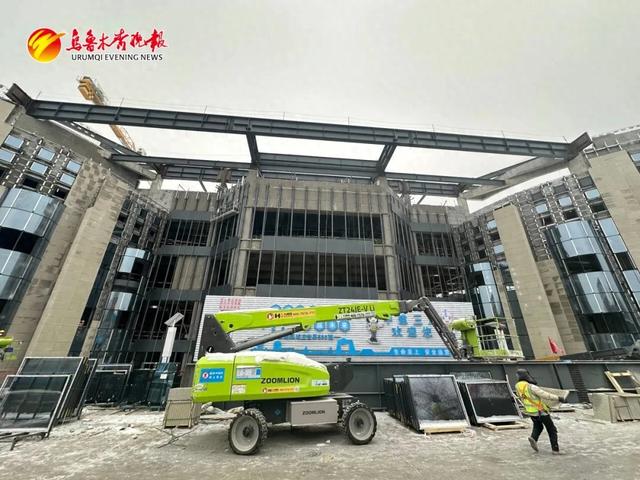
Group 1 - Urumqi is entering 2026 with a strong focus on production, capacity expansion, and market development, aiming to set a grand stage for the year's growth [1] - The Xinjiang Jiangyao Cultural Industry Park project is a key municipal project with a total construction area of over 66,000 square meters, featuring a multi-functional space for cultural and commercial activities [3] - The Xinjiang Zhongyun Intelligent Building Technology Co., Ltd. is ramping up production of modular "Starry Sky Houses," expanding to 13 types and benefiting from local supply chain efficiencies that have reduced production costs by 10%-15% [3] Group 2 - Xinjiang Jiangnan Yitai Building Materials Company is increasing its solid waste recycling rate and aims for a 20% year-on-year production increase by 2026, with significant investments in environmental upgrades [5] - The Xinjiang Medical Device Trading Market has secured a $5 million overseas order for 1,000 blood dialysis machines, highlighting its role as a key trade hub since its operation began in October 2024 [5] - The "Tianshan" multi-modal transport brand has successfully launched its first return train carrying 1,700 tons of flax seeds from Kazakhstan, enhancing international logistics efficiency [7] Group 3 - Xinjiang Panya International Trade Co., Ltd. is implementing a "全民跨境" public training program, covering 530 companies and facilitating digital transformation for 12 traditional businesses [9] - The company has developed a self-logistics system and a cross-border e-commerce service platform that has attracted over 2,000 sellers, achieving sales of 31 million yuan [9] - Urumqi is actively working on creating an open and innovative industrial cluster to contribute to high-quality foreign trade development [9]

中国跨境电商交易会:【广东产业带】大佬云集,广东卫冕跨境第一!
Sou Hu Cai Jing· 2026-01-04 04:21
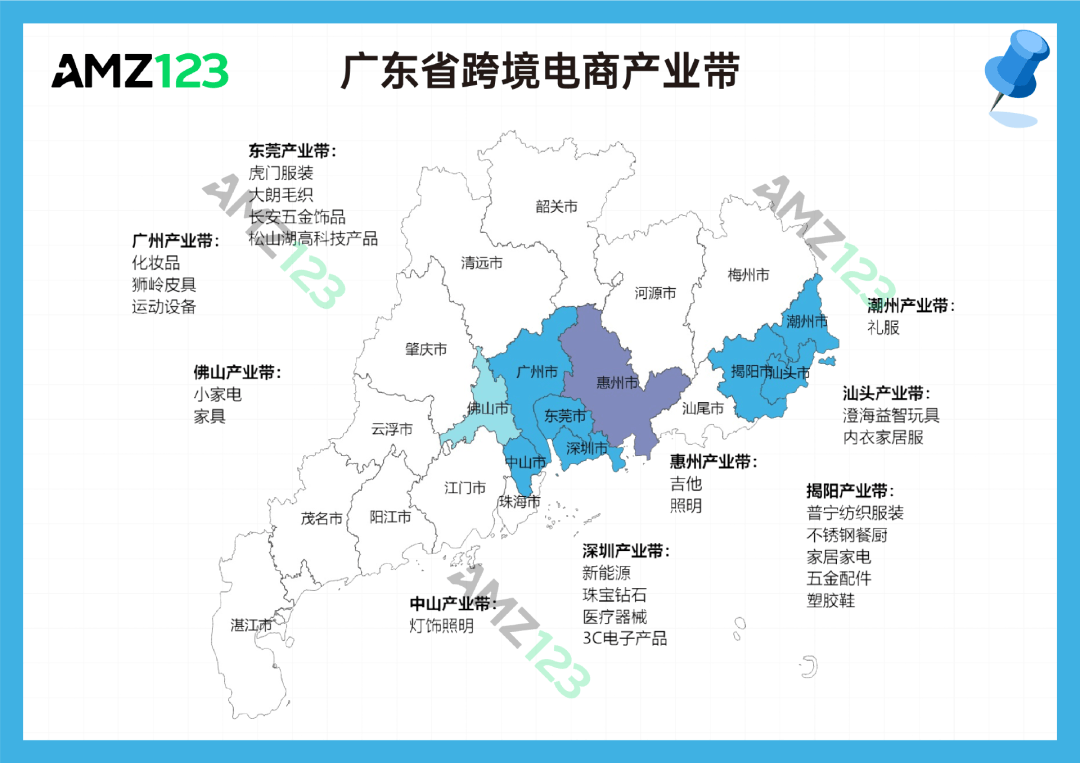
Core Insights - Guangdong has emerged as a leader in China's cross-border e-commerce, with its import and export scale growing from 11.3 billion yuan in 2015 to 745.4 billion yuan in 2024, an increase of approximately 66 times over nine years, accounting for over one-third of the national total [1][21][30] - The province's cross-border e-commerce exports have an average annual growth rate of 51.4%, the highest in the country, supported by a robust manufacturing base and an open economic framework [1][22][30] - Guangdong's cross-border e-commerce is transitioning from "platform distribution + foreign trade wholesale" to "brand export + digital supply chain" [1][21] Industry Overview - The success of Guangdong's cross-border e-commerce is attributed to its comprehensive and systematic manufacturing landscape, particularly in the Pearl River Delta, which has developed stable and specialized industrial belts [4][21] - The region has three main "outbound arteries": the 3C "hardcore belt" in Shenzhen, Dongguan, and Huizhou; the lifestyle belt in Guangzhou and Foshan; and the creative corridor of lighting and toys in Zhongshan, Jiangmen, and Chaozhou [7][12][17] 3C "Hardcore Belt" - The Shenzhen-Dongguan-Huizhou area is known for its dense network of factories and supply chains for electronic products, with Shenzhen housing over 80,000 cross-border e-commerce entities, accounting for about half of the national total [8][9] - Companies like UGREEN and GMKtec exemplify the successful integration of manufacturing and operations, leveraging local supply chains to build strong brands [11][12] Lifestyle Belt - The Guangzhou-Foshan area focuses on fashion and home appliances, with Guangzhou's textile and apparel exports reaching 46.09 billion yuan in 2024, supported by a high-frequency supply chain [12][14] - Brands like SHEIN have established flexible supply chains in Guangzhou, connecting global demand directly to local production [12][14] Creative Corridor - The Zhongshan area is recognized as the "Lighting Capital," with over 30,000 lighting businesses and significant export volumes, while Chaozhou is known for its toy manufacturing, with over 50,000 toy companies [17][18] - The integration of creative design and cross-border e-commerce has transformed local products into recognizable brands on platforms like Amazon [18][19] Infrastructure and Logistics - Guangdong has implemented 166 cross-border trade facilitation measures over the past eight years, enhancing customs efficiency and expanding shipping routes [22][23] - The province's logistics capabilities, including major ports and airports, support a multi-tiered outbound system for cross-border e-commerce [22][24] Economic and Policy Environment - The provincial government actively promotes cross-border e-commerce as a key strategy for foreign trade transformation, establishing comprehensive support systems for businesses [28][29] - The combination of experienced entrepreneurs and a new generation of digital-savvy operators is driving innovation in cross-border e-commerce [26][27] Challenges Ahead - The industry faces challenges in transitioning from volume-based sales to brand-building, as many early sellers struggle to establish lasting brand recognition [31][32] - Rising costs and labor shortages in the Pearl River Delta are prompting a shift in production to lower-cost regions, complicating supply chain management [33][34] Conclusion - Guangdong's early adoption of cross-border e-commerce and its ability to adapt to challenges position it as a likely leader in the next chapter of China's cross-border e-commerce landscape [35]
日本跨境电商的终点,是成为“本地企业”:海外仓是卖家唯一“入场券”
Sou Hu Cai Jing· 2026-01-04 04:12
Core Insights - Japan is set to undergo a significant structural change in its cross-border market with the complete removal of the consumption tax exemption for imported goods valued under 10,000 yen, imposing a uniform 10% consumption tax on all goods entering Japan [1] Group 1: Impact of Tax Policy Changes - The new tax policy will increase costs by 10% for cross-border sellers who have relied on the "low-price direct mail" business model, significantly affecting their profitability [1][2] - The tax reform aims to eliminate the price advantage previously enjoyed by cross-border sellers, particularly those from China, and to support local retailers by removing policy benefits [2][3] Group 2: Shift in Competitive Focus - As all sellers face the same tax costs, competition will shift from a "price war" to a "value war," emphasizing logistics speed, service quality, and brand trust rather than just pricing [2][3] - Cross-border sellers will need to adapt by learning compliance, branding, and local operations to survive in the new policy environment [2][7] Group 3: Benefits of Third-Party Overseas Warehouses - Third-party overseas warehouses can enhance efficiency and customer experience by allowing sellers to operate with a "local merchant" identity, achieving delivery times comparable to local brands [3][4] - Local shipping improves product visibility on platforms and enhances consumer trust, which is crucial for building brand image beyond price competition [4][5] - Utilizing overseas warehouses allows sellers to convert fixed costs into variable costs, making expenses more manageable based on actual usage [6] - These warehouses also help mitigate risks and simplify compliance, allowing sellers to operate without establishing a legal entity in Japan [7]

中国-东盟合作稳步前行
Xin Lang Cai Jing· 2026-01-03 19:19
Core Insights - The article highlights the resilience and progress of China-ASEAN cooperation in 2025 amidst a complex international environment, emphasizing the importance of regional economic integration and institutional innovation to counter external uncertainties [4][12]. Group 1: Economic Cooperation - China-ASEAN trade reached 6.82 trillion yuan, a year-on-year increase of 8.5% in the first eleven months of 2025, maintaining ASEAN as China's largest trading partner [5]. - The signing of the upgraded version of the free trade agreement (FTA 3.0) in Kuala Lumpur marks a new phase in economic cooperation, expanding the cooperation framework to include nine areas such as digital economy and green economy [4][6]. - Agricultural trade between China and ASEAN amounted to 51.3 billion USD in the first ten months of 2025, with a year-on-year growth of 8.9% [6]. Group 2: Infrastructure and Technology - Infrastructure projects like the China-Laos Railway and the Jakarta-Bandung High-Speed Railway are enhancing regional connectivity and facilitating economic activities [7]. - The establishment of the China-Laos Artificial Intelligence Innovation Cooperation Center signifies a shift towards digital economy collaboration, with increasing cooperation in areas like 5G and cross-border e-commerce [8]. Group 3: Regional Governance - China is enhancing people-to-people exchanges with initiatives like the "ASEAN Visa," promoting easier travel and cultural exchanges [9]. - In response to regional security challenges, China is facilitating cross-border crime cooperation and engaging in multilateral dialogues to maintain stability in the region [10]. Group 4: Future Outlook - The implementation of the China-ASEAN Comprehensive Strategic Partnership Action Plan (2026-2030) is expected to further deepen cooperation across various fields, with 2026 marking the fifth anniversary of the partnership [12].

TP:2026年出海全球展望报告
Sou Hu Cai Jing· 2026-01-03 13:16
Core Insights - The report highlights that 2026 will be a pivotal year for Chinese companies' globalization, transitioning from "scale-driven" to a new phase characterized by refined operations, forward-looking strategies, and sustainable growth [1][7] - Chinese outbound investment continues to expand, diversifying from traditional manufacturing and infrastructure to technology, e-commerce, and digital services, with a more balanced global distribution towards emerging markets like ASEAN, the Middle East, and Latin America [1][12][27] Group 1: Key Forces Shaping the 2026 Outbound Landscape - Six key forces are identified that will shape the outbound landscape in 2026, including the integration of AI into core operations, which is expected to see global spending on AI core systems exceed $300 billion by 2026, with a 40% year-on-year growth in AI deployment among Chinese outbound enterprises [2][13] - Customer experience is emerging as a new growth currency, with companies excelling in customer experience seeing revenue growth rates more than double those of their competitors [2][14] - Compliance is evolving into a competitive advantage, with a focus on "trust by design" becoming essential in operational frameworks [2][15] Group 2: Industry Trends and Performance - Cross-border e-commerce continues to lead, with exports reaching 1.83 trillion RMB in 2023, and the electric vehicle sector accounting for 40% of global exports [2][18] - The media and entertainment industry is experiencing strong growth, highlighting the core value of customer experience and brand trust across three key sectors [2][18] - The TP Outbound Confidence Index (CCI) for 2026 scores 7.8, indicating a high level of confidence, with cross-border e-commerce and digital content identified as significant growth engines [2][19] Group 3: Strategic Recommendations for Success - Future success for Chinese outbound brands hinges on combining intelligence with empathy, innovation with trust, and deepening localized operations while enhancing AI-enabled customer experiences [3][19] - Companies must establish a forward-looking compliance framework and leverage ecosystem collaboration for efficient expansion [3][19] - The report emphasizes that the next wave of outbound growth will be built on closer cooperation with international ecosystems, service partners, and digital platforms [2][19] Group 4: Localization as a Growth Engine - Deep cultural localization is crucial for enhancing retention and reputation in overseas markets, requiring brands to align with local audience expectations beyond mere translation [4][55] - Successful localization involves systematic adjustments across product experience, communication methods, service expectations, and community engagement [4][56] - A multi-language global delivery framework supports Chinese clients in over 170 markets, integrating local insights and cultural understanding [4][56]

跨境电商纷纷落户郑州 豫品出海 扩圈提速
He Nan Ri Bao· 2026-01-02 23:22
Core Viewpoint - Zhengzhou is transforming its cross-border e-commerce from a "channel economy" to an "ecological economy," showcasing significant growth and development in the sector through various initiatives and collaborations [1][3]. Group 1: Event Highlights - The 2025 Zhengzhou Cross-Border E-commerce Ecological Industry Exchange event gathered industry experts, business leaders, academia, and government representatives to discuss new paths for transformation and ecological construction in cross-border e-commerce [1]. - Zhengzhou's cross-border e-commerce ecosystem service platform was officially launched, and 93 cooperation projects were signed on-site, indicating a robust commitment to industry development [1][4]. Group 2: Industry Growth and Data - Zhengzhou Airport's annual cargo throughput exceeded 1 million tons, marking its entry into the global air cargo "million-ton club" [3]. - In the first 11 months of 2025, cross-border e-commerce cargo volume at Zhengzhou Airport surged by 98% year-on-year, capturing a significant share of international export cargo [3]. - The cross-border e-commerce transaction volume in Zhengzhou reached 141.66 billion yuan in the first 10 months of 2025, with an expected annual total of 160 billion yuan, maintaining a leading position nationally [3]. Group 3: Policy and Support Initiatives - The Zhengzhou cross-border e-commerce talent support policy includes ten measures aimed at cultivating 100,000 talents over the next 3 to 5 years to address industry challenges [4]. - The Zhengzhou cross-border e-commerce ecosystem service platform will focus on policy, finance, supply-demand, and talent services, creating a comprehensive online service system [4]. - The event saw the signing of 93 projects involving various resources from different cities, enhancing the collaborative ecosystem for cross-border e-commerce in Zhengzhou [4]. Group 4: Future Outlook - The "14th Five-Year" plan emphasizes the support for new business models like cross-border e-commerce, with Zhengzhou aiming to become a national-level innovation demonstration hub for the sector [5]. - Experts suggest that the integration of resources in cross-border e-commerce is not merely a migration from coastal areas to central regions but a mutual convergence of various cities, fostering a new development ecology [6].
创新开放 活力涌动
Xin Lang Cai Jing· 2026-01-02 18:29
Group 1 - In 2024, the foreign trade import and export volume of the Twelve Division increased by 215% year-on-year, with continued high growth expected in 2025 [1] - The Xinjiang Free Trade Zone is not merely focused on trade but aims to deeply cultivate its advantageous industries [1] - The Fourth Division is building a modern industrial system characterized by silicon-based aluminum, agricultural and mineral processing, and modern services, with significant contributions from leading enterprises [1] Group 2 - The total industrial output value of the Fourth Division reached 3.26 billion yuan from January to November 2025, representing a 20% year-on-year growth, while the total import and export volume increased by 48% [1] - As of October 2025, the Xinjiang Free Trade Zone's contribution to the total import and export volume of the Corps was 42%, despite occupying only 0.05% of the land area [1] Group 3 - The Corps is focusing on market-oriented, legal, convenient, and international approaches to enhance the business environment, emphasizing institutional innovation [2] - The construction of a dedicated railway line at the Horgos Port aims to reduce transfer time by over 50%, facilitating smoother trade [2] Group 4 - The Twelve Division has improved service efficiency, with the time from material submission to business license issuance reduced to under one hour, reflecting a commitment to enhancing the business environment [3] - Since 2025, the Corps has implemented 73 reform pilot tasks and streamlined 40 provincial-level permissions to improve administrative efficiency [3] Group 5 - Various divisions are introducing tailored measures to enhance the business environment, such as the "five-in-one" exchange rate risk service mechanism in the Fourth Division [4] - The Corps aims to deepen institutional openness and expand its cooperative mechanisms to foster economic exchanges and connectivity [4]
“中国购”线上线下活力满满有新意 “新特产”走俏 装满海外消费者“购物车”
Yang Shi Wang· 2026-01-02 07:43
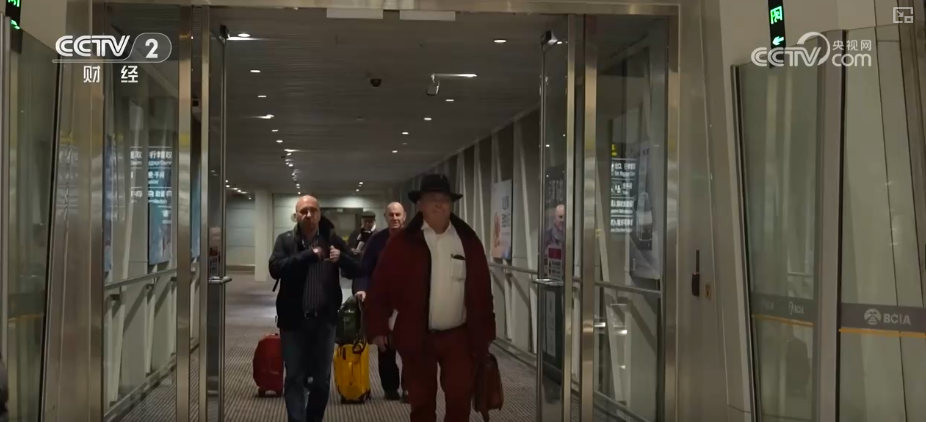
Group 1 - The core viewpoint of the articles highlights the increasing influx of foreign tourists to China, driven by the expansion of visa-free countries and various policy incentives, leading to a surge in international tourism and consumer spending [1][11][20] Group 2 - In Beijing, the first international flight of 2026 brought tourists from Frankfurt, Germany, with welcome ceremonies and travel guides provided [2] - In Chengdu, over 3,000 panda-themed cultural products have become popular among foreign tourists, with a significant portion of sales attributed to traditional crafts [3][7] - In Suzhou, foreign tourists are engaging in immersive experiences of Chinese aesthetics, with activities like boat rides and traditional crafts drawing interest [9] Group 3 - The implementation of a visa-free policy for Russian tourists in Heilongjiang is expected to boost the local tourism market, with a reported 24.7% increase in foreign visitors since the policy's announcement [11][13] Group 4 - Cross-border e-commerce is thriving, connecting Chinese products to international markets, with significant sales growth reported in regions like Hainan and Heilongjiang [15][18] - In Heilongjiang, cross-border e-commerce trade has seen over 50% year-on-year growth, with a strong demand for electronics and clothing from Russian consumers [20]

离岸人民币兑美元升破6.97,创2023年5月以来新高,行业如何配置?
Sou Hu Cai Jing· 2026-01-02 01:39
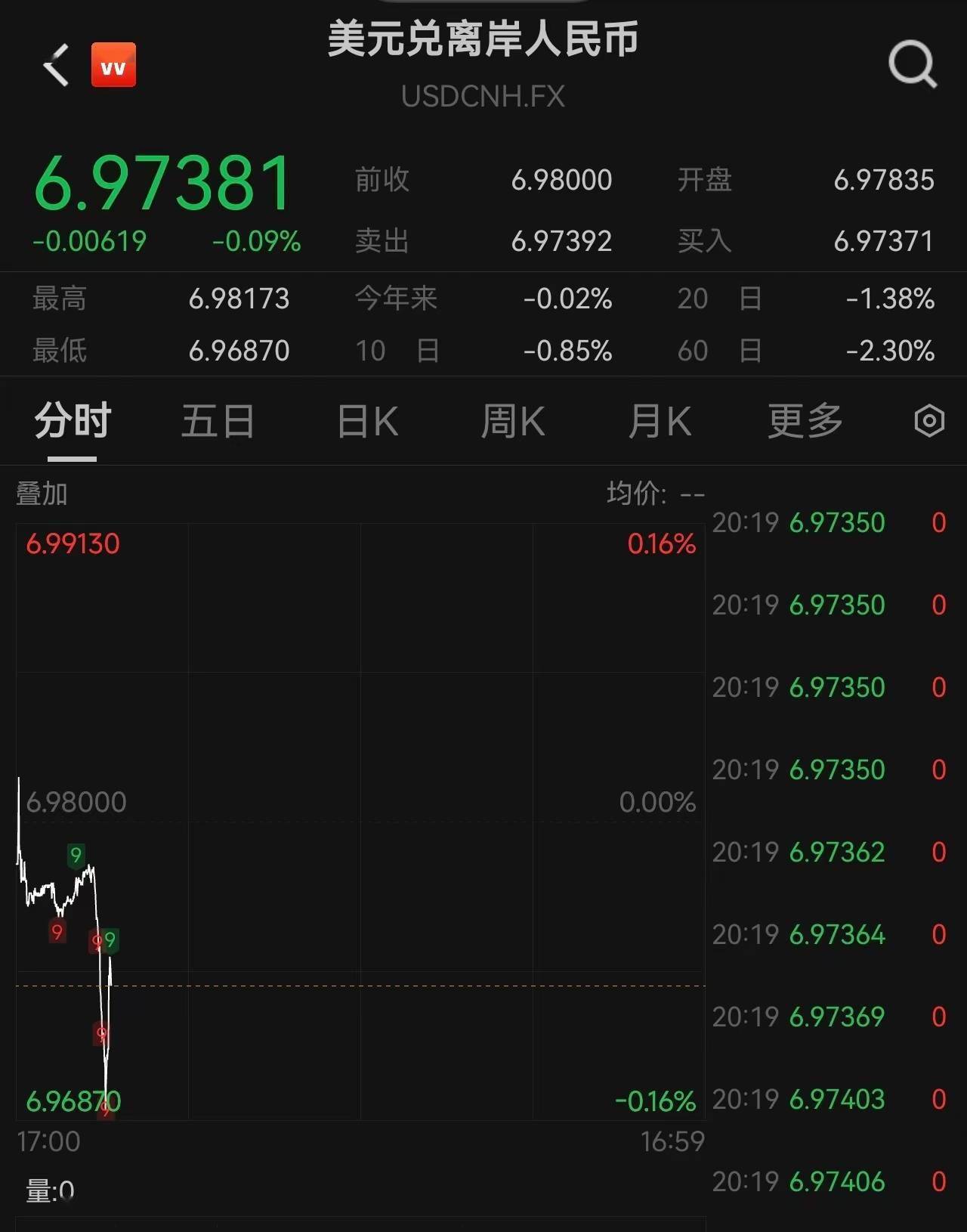
Core Viewpoint - The offshore RMB has appreciated against the US dollar, surpassing 6.97, reaching a high of 6.9678, the highest since May 2023 [1] Group 1: Impact of RMB Appreciation - The appreciation of the RMB is expected to reverse capital flows, including domestic funds waiting to be settled abroad and previously withdrawn foreign funds, potentially leading to a significant capital inflow into Chinese assets [3] - Historical data shows that during previous RMB appreciation cycles since 2016, both A-shares and Hong Kong stocks generally experienced gains [3] - The current macro environment is characterized by "domestic fundamentals improving + overseas easing," which may enhance the upward elasticity of Hong Kong stocks compared to A-shares [3] Group 2: Industry Configuration Logic - Four key logic points for industry configuration during RMB appreciation include: 1. Lower import costs benefiting upstream resource sectors such as coal, steel, and certain chemicals [4] 2. Decreased foreign currency debt costs benefiting industries with significant USD liabilities, including real estate and logistics [4] 3. Increased domestic purchasing power benefiting consumption-driven sectors like cross-border e-commerce and high-end services [4] 4. Attraction of foreign capital back to Chinese assets, with a shift in foreign investment preferences potentially reinforcing current market trends [4] Group 3: Key Sectors to Watch - Focus on sectors benefiting from changing foreign investment preferences and strong domestic consensus, including AI hardware, advanced manufacturing, and non-ferrous metals [5] - Upstream resource sectors benefiting from rising PPI and reduced import costs, such as steel and chemicals [5] - Service and high-end consumption sectors benefiting from improved domestic purchasing power, including duty-free and e-commerce [5] - Industries with reasonable valuations and potential for marginal improvement in 2024, such as aviation, paper, and logistics [5] Group 4: Industry Performance Metrics - The projected net profit growth rates for various sectors by 2026 and Q3 2025 indicate high growth potential in communication electronics, battery manufacturing, and certain chemical sectors [6] - Specific industries like steel and logistics show varying degrees of recovery potential, with some facing challenges while others are positioned for growth [6]
DeepSeek元旦发布新论文,开启架构新篇章;安克创新回应“裁员30%”;陈天桥再押注,中国首家超声波脑机接口公司成立丨邦早报
创业邦· 2026-01-02 01:09
Group 1 - Gestala, China's first ultrasound brain-computer interface company, was officially established, focusing on innovative technology for brain signal reading and analysis [3] - Ideal Auto delivered 44,246 vehicles in December 2025, with a total of 1,540,215 vehicles delivered since inception [4] - NIO delivered 48,135 vehicles in December 2025, a year-on-year increase of 54.6%, with total deliveries for the year reaching 326,028 vehicles, up 46.9% [4] Group 2 - Xpeng Motors delivered 37,508 vehicles in December 2025, a 2% year-on-year increase, with total deliveries for the year at 429,445 vehicles, up 126% [4] - Zeekr delivered 30,267 vehicles in December 2025, a historical high, with total annual deliveries of 224,133 vehicles [5] - Leap Motor achieved 60,423 vehicle deliveries in December 2025, a 42% year-on-year increase, with total annual deliveries of 596,555 vehicles, up 103% [5] Group 3 - DeepSeek published a new paper introducing a new architecture called mHC, aimed at addressing instability in large-scale model training while maintaining performance gains [4] - Anker Innovation responded to rumors of a 30% layoff, stating that the adjustments were part of a normal personnel restructuring for strategic upgrades [9] - Neuralink plans to start mass production of brain-computer interface devices in 2026, transitioning to a streamlined, nearly fully automated surgical process [10][12] Group 4 - The Chinese film box office for 2025 reached 51.832 billion yuan, a year-on-year increase of 21.95%, with domestic films accounting for 79.67% of the total [27] - The box office for the 2026 New Year's Day period surpassed 300 million yuan, with "Zootopia 2," "Avatar 3," and "Killing" leading the box office [29] - ListenHub's parent company MarsWave completed a $2 million funding round, with an annual recurring revenue (ARR) exceeding $3 million [23]