家电

Search documents
巴西“中资业务大讲堂”新年首讲聚焦安全风险与应对
Zhong Guo Xin Wen Wang· 2026-02-05 13:53
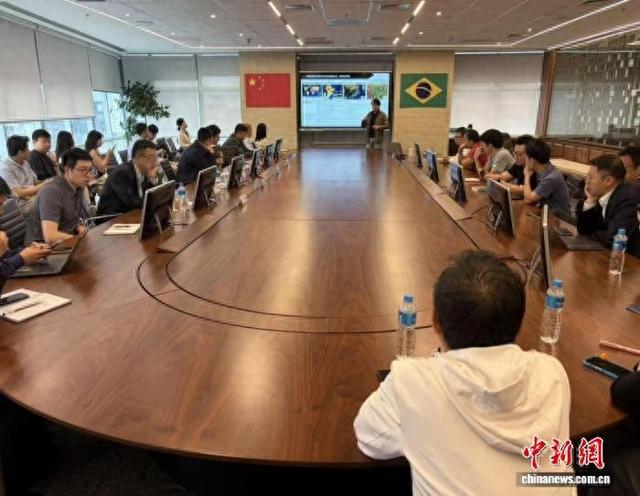
中新网圣保罗2月5日电 (记者 林春茵)日前,巴西中资企业协会联合海尔巴西在圣保罗成功举办2026年 首场"中资业务大讲堂"——"中企出海巴西:安全风险与应对策略"专题讲座。 讲座特邀海尔巴西安全战略与政企总监管成担任主讲人。管成系统解析了巴西安全威胁的类型,结合近 期涉枪犯罪、暗网数据泄露等典型案例,重点讲解了三大核心安全内容:设施安全防护,包括圣保罗绿 区办公选址建议;人员与物流安全,涵盖高危区域规避、出行防护、防弹车辆配置及物流全程监控措 施;应急响应机制,详解事前预警、事中处置流程及事后复盘方法,并现场演示了止血带使用等应急实 操技能,强调"生命至上"原则,构建合规高效的海外安全保障体系。 参会企业代表纷纷表示,讲座内容直击海外安全痛点、干货满满,不仅系统梳理了核心安全风险,更通 过多场景实操指导方案的精准输出,强化了全员在巴工作生活的安全风险防范意识与底线思维,为企业 优化内部安全管理体系、降低运营风险提供了重要实践参考。(完) 李东成表示,作为共建"一带一路"中拉合作重要枢纽,巴西吸引众多中资企业扎根,而安全是发展的前 提,协会积极聚焦企业核心关切,助力在巴中资企业筑牢安全防线。 徐磊表示,本次讲 ...

视频丨惠及1613万人次 “新国补”实施首月带动产销两旺
Sou Hu Cai Jing· 2026-02-05 13:53
Group 1 - The "New National Subsidy" policy has been fully implemented, leading to a surge in consumer interest in replacing old products, benefiting 16.13 million people and generating sales of 92.56 billion yuan in automotive, home appliances, digital, and smart products in its first month [1] - The offline retail sector is experiencing significant growth, with nearly 80% of new purchases in home appliances and digital products coming from in-store sales, reflecting a year-on-year increase of approximately 20% [7] - The policy is driving cross-scenario consumption in leisure, transportation, and dining, creating a positive cycle of consumer engagement and spending [9] Group 2 - The "New National Subsidy" is promoting a new consumption trend focused on green and smart products, with the subsidy standard for home appliances raised to first-level energy efficiency, leading to increased sales of high-performance appliances [12] - Consumers are attracted to energy-efficient products, with subsidies of up to 1,500 yuan for first-level energy-efficient appliances, making them both cost-effective and environmentally friendly [14] - The demand for green and environmentally friendly electric vehicles is also rising, with significant increases in orders for these models due to the subsidy [16] Group 3 - The implementation of the "New National Subsidy" is fostering new industry growth, providing companies with new market opportunities [23] - A smart glasses manufacturing company has seen a surge in orders, doubling its annual sales target from 50,000 to 100,000 units due to the increased demand from the subsidy [25] - To meet the rising demand, upstream component manufacturers in the smart glasses industry are operating at full capacity and expanding production lines [28]

内资加码助力恒指稳住阵脚 空头活跃度短线攀升
Xin Lang Cai Jing· 2026-02-05 13:42
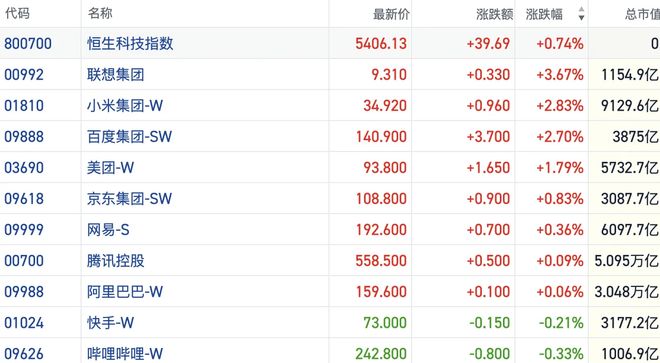
Core Viewpoint - The Hong Kong stock market showed signs of recovery with major indices turning positive, supported by domestic capital inflows and a mixed performance across sectors, particularly in technology and traditional industries [1][4]. Group 1: Market Performance - The Hang Seng Technology Index reached a new low during the day but closed up by 0.74% at 5406.13 points [2] - The Hang Seng Index and the National Enterprises Index increased by 0.14% and 0.5%, respectively [1] - Major tech stocks such as Xiaomi and Baidu rose nearly 3%, while Meituan increased by nearly 2% [1] Group 2: Sector Movements - Consumer sectors including dining, dairy, and beer stocks collectively rose, while telecommunications, biomedicine, home appliances, automotive, banking, and brokerage stocks also strengthened [2] - In contrast, sectors like gold and non-ferrous metals experienced downward volatility, with semiconductor and AI-related industries undergoing continued adjustments [3] Group 3: Trading Activity - The total trading volume for the Hang Seng Index reached 315.11 billion HKD, indicating a certain level of market activity [4] - Southbound capital saw a net purchase of nearly 25 billion HKD, becoming a key driver for market support [4] - Short selling reached a record high of 40.17 billion HKD, accounting for 12.75% of the trading volume, indicating ongoing market volatility [4] Group 4: Investment Trends - There is a notable shift in market focus from high-tech sectors like AI to more traditional industries [4] - Hedge funds are reportedly increasing short positions in software stocks, contributing to a significant sell-off in that sector [6] - Goldman Sachs forecasts a 3% appreciation in the nominal effective exchange rate of the RMB, which may benefit cyclical traditional industries [6] Group 5: Future Outlook - Analysts expect the market to maintain a volatile trend, with potential rotation in investment styles and themes [8] - The current valuation expansion space for Hong Kong stocks is limited, with earnings performance likely to dictate market trends [8] - A "technology + dividend" strategy remains effective in the short term, with an emphasis on defensive sectors such as banking, insurance, telecommunications, and utilities [8]
雪祺电气:2025年境外业务收入持续增长
Zheng Quan Ri Bao Wang· 2026-02-05 13:14
Core Viewpoint - The company, Xueqi Electric (001387), is focusing on expanding its overseas core markets and emerging markets, with a significant increase in foreign revenue projected for 2025 [1] Group 1: Overseas Business Growth - The company has maintained a growth rate of approximately 20% in foreign revenue during the first three quarters, with the revenue share increasing from 18.81% in 2022 to around 45% [1] - The sales regions include over 100 countries and regions across all continents, such as the United States, Indonesia, Australia, Canada, Mexico, Russia, Germany, South Korea, and Vietnam [1] - Notable growth in foreign revenue is observed in South America, Oceania, and North America [1] Group 2: Future Strategies - In 2026, the company plans to continue expanding its overseas market presence and focus on product innovation and iteration [1] - The company aims to launch high-value-added quality products with differentiated features to meet the diverse needs of customers in different countries and regions [1]
雪祺电气:2026年公司将继续充分发挥业务协同效应,实现上下游高效联动
Zheng Quan Ri Bao Wang· 2026-02-05 13:14
Core Viewpoint - The company is committed to "large capacity refrigerators + commercial cold chain" and is accelerating its upstream and global market expansion while focusing on research and innovation for high-quality development [1] Business Overview - The company's main business includes the research, production, and sales of large capacity refrigerators (400L and above) and commercial display cabinets, establishing itself as a well-known ODM supplier in the home appliance industry [1] Subsidiary Developments - In 2024, the company will establish a new controlling subsidiary, Wuliang Intelligent, focusing on PCBA processing, electronic component support, and hardware/software design for controllers, covering various fields such as smart home appliances, industrial control, energy storage, charging piles, and automotive electronics [1] - In 2025, another controlling subsidiary, Shengbang Electric, will be added, primarily engaged in specialized components like refrigeration parts, piping parts, and metal structural components, with applications in home appliances and light commercial sectors [1] Strategic Goals - The company aims to leverage business synergy to achieve efficient upstream and downstream collaboration, enhancing its core competitiveness by 2026 [1] - The company plans to further expand into overseas markets and accelerate its globalization strategy through a combination of strengthening its main business, upstream collaboration, and international layout to continuously explore markets and enhance its competitive capabilities [1]
2025年农村网络零售额首超3万亿元
Xin Hua Wang· 2026-02-05 11:29
Core Viewpoint - The report highlights significant growth in rural e-commerce and consumer spending in China, projecting substantial increases in both rural online retail and agricultural product sales by 2025 [1] Group 1: Rural E-commerce Growth - By 2025, rural online retail sales are expected to reach 3 trillion yuan, with a year-on-year growth of 6.7% [1] - Agricultural product online retail sales are projected to be 783.31 billion yuan, reflecting a year-on-year increase of 9.9% [1] - Major e-commerce platforms are anticipated to conduct over 4 million live-streaming events to promote agricultural products, with sales exceeding 10 billion units and daily shipments surpassing 20 million [1] Group 2: Consumer Spending Trends - In 2025, the sales volume of home appliances and mobile phones through trade-in and subsidy programs in county areas is expected to reach 48.23 million units, generating sales of 158.6 billion yuan [1] - County-level service sales are projected to achieve 9.1 trillion yuan, marking a year-on-year growth of 5.9% [1] Group 3: Logistics Network Development - By 2025, 348 county-level logistics distribution centers and 562 township express logistics stations are planned to be established [1] - Currently, the coverage rate of county-level logistics distribution centers across the country has reached 100% [1]
家电行业2026年度信用风险展望(2026年1月)
Lian He Zi Xin· 2026-02-05 11:01
Investment Rating - The report indicates a stable outlook for the home appliance industry, with a focus on credit risk assessment for 2026 [7] Core Insights - The home appliance industry in China experienced a historical high in domestic sales in 2025, driven by government policies and consumer demand, although growth is expected to slow down due to high base effects and market saturation [10][20] - The export of home appliances faced challenges in 2025, with total export value and quantity declining compared to the previous year, influenced by high base effects and uncertain trade environments [10][22] - The industry is undergoing structural changes, with growth driven by smart, green, and high-end product upgrades, as well as deeper market penetration [10][11] Industry Overview - In 2025, China's GDP reached 140.19 trillion yuan, growing by 5.0% year-on-year, supported by domestic demand and government policies [11] - The retail sales of home appliances and audio-visual equipment reached 1.16949 trillion yuan, a year-on-year increase of 11.0% [20] - The home appliance market is characterized by a shift from policy-driven growth to market-driven dynamics, with a notable impact from the "old-for-new" subsidy policies [10][20] Policy and Regulatory Environment - The government continued to enhance the "old-for-new" subsidy policy in 2025, expanding the scope and funding to stimulate home appliance consumption [15][16] - The 2026 policy will maintain support for the "old-for-new" program, focusing on energy-efficient products and expanding the range of supported items [17] Industry Performance - The home appliance sector showed resilience in 2025, with sample companies reporting revenue growth of 7.35% and profit growth of 10.42% in the first three quarters [44] - The industry is experiencing a structural differentiation in performance, with leading brands benefiting from government policies and market dynamics [38] Competitive Landscape - The home appliance industry is highly competitive, with leading companies like Midea, Haier, and Gree dominating the market, accounting for a significant share of total revenue [38][41] - The market is increasingly concentrated, with the top ten companies accounting for approximately 82.38% of the industry's revenue [38] Financial Condition - The sample companies in the home appliance industry maintain a low leverage level, with a median debt-to-asset ratio of 43.29% as of September 2025 [49] - Profitability indicators show a decline in gross margin to 21.61% in the first three quarters of 2025, compared to 23.15% for the previous year [45]
深中联动征集!邀你共话同城情、共享中山货
Nan Fang Du Shi Bao· 2026-02-05 10:11
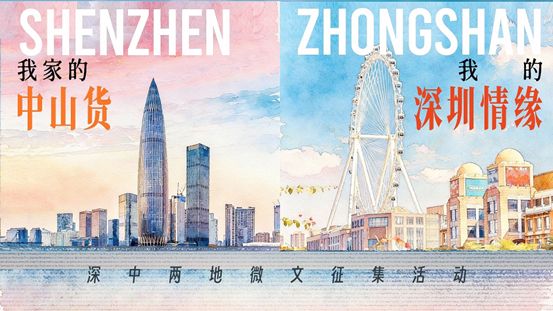
Core Viewpoint - The upcoming event "Guanghuo Xing Tianxia: Zhongshan Goods Enter Shenzhen" aims to strengthen the connection between Zhongshan and Shenzhen through a consumer festival featuring local products and stories [1]. Group 1: Event Overview - The event will take place on February 7 and 8 at the Happy Harbor Ferris Wheel Square in Bao'an District, Shenzhen, organized by the Zhongshan government [1]. - An online micro-article collection activity will be launched alongside the event, inviting citizens from both cities to share their experiences with Zhongshan products and their connections to Shenzhen [1][4]. Group 2: Topics for Participation - Participants can share their "Zhongshan Goods," highlighting well-known brands such as Weili Washing Machines, Xiaobawang Learning Machines, and Lebaisi AD Calcium Milk, among others [3]. - The second topic encourages sharing personal stories related to "My Shenzhen Connection," focusing on the impact of the Shen-Zhong Channel on their lives and the anticipation for a "half-hour living circle" between the two cities [3]. Group 3: Engagement and Incentives - The event encourages active participation from citizens, offering a total of 20,000 yuan in cash and prizes for the best submissions [4]. - Citizens and visitors are invited to experience the unique charm of Zhongshan goods at the event venue in Shenzhen [4].
财富观 | A股2025亏损画像:1442家公司预亏,谁是行业“亏损王”?
Sou Hu Cai Jing· 2026-02-05 09:36
Core Insights - Nearly 50% of A-share listed companies are expected to report losses for the 2025 fiscal year, with a total of 1,442 companies forecasting losses [6][4] Provincial Distribution - Hainan, Jilin, and Qinghai have the highest proportions of companies forecasting losses, each exceeding 40% [8] - Guangdong has the highest number of loss-forecasting companies at 257, followed by Beijing (172), Jiangsu (160), Zhejiang (133), and Shanghai (119) [7] - Other provinces with significant loss forecasts include Shandong, Hubei, Sichuan, Hunan, Anhui, and Fujian, each with over 40 companies forecasting losses [8] Industry Analysis - The real estate sector is the most affected, with Vanke A (000002.SZ) identified as the "loss king," expecting a net loss of approximately 82 billion yuan [12] - IT services and software development sectors have the highest number of loss-forecasting companies, totaling 60, followed by real estate with 54 and semiconductors with 50 [11] - Other industries with notable losses include chemical pharmaceuticals, general equipment, and specialized equipment, each with 40 to 50 companies forecasting losses [11] Financial Impact - The top 10 companies with the highest expected losses include five from the real estate sector, highlighting the significant financial strain within this industry [12] - The home appliance sector's "loss king," Shenkangjia A (000016.SZ), anticipates a loss between 12.58 billion and 15.57 billion yuan, attributed to increased impairment provisions and declining revenue from consumer electronics [12]



如何提高“以旧换新”受益人口覆盖率
Hua Xia Shi Bao· 2026-02-05 09:33
Core Viewpoint - The "old-for-new" policy for consumer goods, implemented from 2024 to 2025, is supported by a total of 450 billion yuan in long-term special government bond funds, aiming to stimulate consumer spending and sales growth, although its multiplier effect appears weaker than expected [2][3]. Group 1: Policy Implementation and Financial Support - The State Council issued measures in July 2024, allocating approximately 150 billion yuan for local support of the "old-for-new" policy, with an additional 300 billion yuan planned for 2025, expanding the range of eligible products from 8 to 12 categories [3]. - The estimated sales driven by the "old-for-new" policy for 2024 and 2025 are projected to exceed 2.6 trillion yuan, with significant contributions from various product categories [4]. Group 2: Impact on Retail Sales - Retail sales growth for related product categories showed an initial acceleration followed by a decline, with significant growth in communication equipment and cultural office supplies, while home appliances and automotive sales growth lagged behind [6][7]. - The first year post-implementation saw a 10% increase in sales for related categories, but the second year showed only a 2% increase, indicating a diminishing effect of the policy [6]. Group 3: Consumer Demographics and Coverage - The total number of beneficiaries from the "old-for-new" policy was only 480 million, with participation rates among lower-income groups being particularly low, as the majority of beneficiaries were from higher-income brackets [11]. - The automotive sector accounted for 61.5% of the total consumption generated by the policy, highlighting the high average price of eligible products and the limited impact on lower-income consumers [11]. Group 4: Future Considerations and Adjustments - Proposed adjustments for the 2026 policy include expanding the subsidy range, lowering the average price of eligible products, and shifting focus towards job creation and income stability rather than solely on sales volume [10][12]. - The introduction of new product categories, such as smart glasses, aims to align with technological advancements and broaden consumer engagement [10].