
芯片制造

Search documents
豪掷200亿元,500亿芯片龙头官宣要建高端生产线
2 1 Shi Ji Jing Ji Bao Dao· 2025-10-19 14:48
Core Viewpoint - Company Silan Microelectronics (士兰微) plans to invest in a 12-inch high-end analog chip manufacturing line with a total investment of 20 billion yuan to enhance its position in the semiconductor industry [1][4]. Investment Agreement - Silan Microelectronics signed a strategic cooperation agreement with the Xiamen Municipal Government and other parties on October 18, 2025, to establish a joint venture for the project [1][4]. - The project will be implemented through a joint venture company named Silan Jihua, focusing on high-end analog integrated circuit chips [4]. Project Details - The total planned investment for the project is 20 billion yuan, with a planned capacity of 45,000 wafers per month, to be executed in two phases [4]. - Phase one will require an investment of 10 billion yuan, with a monthly production capacity of 20,000 wafers upon completion [5]. - Phase two will also require an investment of 10 billion yuan, adding an additional capacity of 25,000 wafers per month, leading to a total annual production of 540,000 wafers after both phases are completed [5]. Financial Contributions - The registered capital for the first phase is set at 6.01 billion yuan, with contributions from Silan Microelectronics, Xiamen Silan Microelectronics, Xiamen Semiconductor Investment Group, and Xiamen New Wing Technology totaling 5.1 billion yuan [5]. - The remaining 900 million yuan of the first phase's capital will be contributed by other investors in the future [5]. Market Performance - Silan Microelectronics reported a revenue of 6.336 billion yuan in the first half of the year, a year-on-year increase of 20.14%, and a net profit of 265 million yuan, marking a significant turnaround with a growth of 1162.42% [6]. - The company's stock price has seen fluctuations, with a recent high of 34.21 yuan per share on October 13, followed by a drop to 29.94 yuan per share on October 17, resulting in a market capitalization of 49.8 billion yuan [6][7].


A股公告精选 | 士兰微(600460.SH)200亿元芯片项目落地
智通财经网· 2025-10-19 13:01
Key Points - The article highlights various corporate actions and financial performance updates from multiple companies, indicating significant investments and growth in profits across different sectors [1] Group 1: Corporate Actions - Xiling Information's controlling shareholder and general manager has lifted a lien [1] - Silan Microelectronics plans to invest 20 billion yuan in a 12-inch high-end analog integrated circuit chip manufacturing project [1] - Tianhe Magnetic Materials' wholly-owned subsidiary intends to invest 850 million yuan in high-performance rare earth permanent magnets and related manufacturing and R&D projects [1] - Zhaojing Pharmaceutical will present clinical data for ZG006 and ZG005 at the 2025 European Society for Medical Oncology annual meeting [1] - Xuedilong plans to purchase land use rights for up to 400 million yuan to build an innovation industrial base [1] - Sunshine Novo plans to contribute 15 million yuan to the registered capital of Yuanma Zhiyao [1] - Yidao Information intends to acquire 100% equity of Langguo Technology, with resumption of trading on October 20 [1] - New City plans to use 157 million yuan of remaining fundraising for green energy and zero-carbon park planning and construction [1] - Zhongke Titanium White will change its stock name to "Titanium Energy Chemical" starting October 20 [1] - Dongpeng Holdings' first batch of rock slab products passed the 5A consumer product quality grading test [1] - Aosaikang's innovative drug ASK C202 will present clinical research data at the 2025 ESMO annual meeting [1] - Haizheng Pharmaceutical has had the EU revoke the GMP non-compliance declaration for its Taizhou factory [1] - Purang Co., Ltd. plans to establish a wholly-owned subsidiary in Hong Kong [1] - Anglikang has obtained a drug registration certificate for levofloxacin tablets [1] Group 2: Financial Performance - China Life's net profit for the first three quarters is expected to increase by approximately 50% to 70% year-on-year [1] - Zhuhai Guanyu's net profit for the first three quarters is expected to increase by 36.88% to 55.54% year-on-year [1] - Yangjie Technology's net profit for the third quarter increased by 52.4% year-on-year [1] - Xiangsheng Medical's net profit for the third quarter increased by 41.95% year-on-year [1] - Darui Electronics' net profit for the first three quarters increased by 26.84% year-on-year [1] - Huiquan Beer’s net profit for the first three quarters increased by 23.7% year-on-year [1] - Shaanxi Guotou A's performance report indicates a net profit increase of 6.6% year-on-year for the first three quarters [1] - Tongyou Technology reported a net profit of 27.6683 million yuan for the third quarter, turning a profit year-on-year [1] - Xingwang Yuda's net profit for the first three quarters was 38.3749 million yuan [1] - Xiangfenghua's net profit for the first three quarters decreased by 64.64% year-on-year [1] Group 3: Shareholding Changes - Hongfuhan's controlling shareholder, Hengmei International, plans to reduce its stake in the company by no more than 1.5% [1] - Intelligent Control's actual controller's concerted actor plans to reduce its stake in the company by no more than 1% [1]


突发,安世中国员工被断发工资,荷兰有意与中国谈判
半导体芯闻· 2025-10-18 01:26
Core Viewpoint - The Dutch Minister of Economic Affairs, Karremans, is seeking to negotiate with China to resolve the export ban on Nexperia chips, which is critical for global automotive manufacturers [1][2]. Group 1: Export Ban and Its Implications - The export ban on Nexperia chips, effective this week, follows the Dutch government's takeover of the company, leading to the dismissal of its Chinese CEO, Zhang Xuezheng [1]. - Nexperia, acquired by China's Wingtech Technology in 2019, produces over 50 billion chips annually, and the ban could lead to significant shortages in automotive electronics within weeks [1][2]. - The American Automotive Innovation Alliance has warned that supply issues may arise soon, affecting major manufacturers like BMW and Volkswagen [2]. Group 2: Importance of Chips in Automotive Industry - The European Automobile Manufacturers Association (ACEA) has expressed concerns that without chips, European automotive suppliers cannot produce necessary components, potentially halting production [3]. - Karremans emphasized the importance of ensuring Nexperia can navigate this crisis, aligning with the interests of the US, Netherlands, Europe, and China [3]. Group 3: Company Developments - Nexperia's situation has led to significant operational disruptions, with reports indicating that Nexperia's Chinese subsidiary, Anshi Semiconductor, has halted salary payments and lost system access [5].
“玲龙一号”全球首堆冷试成功;复旦团队造出可告别铅污染的太阳能电池,光电转换效率达17.7%丨智能制造日报
创业邦· 2025-10-17 03:24
Group 1 - The world's first sub-angstrom snapshot spectral imaging chip "Yuheng" has been developed by a team led by Professor Fang Lu from Tsinghua University, marking a significant advancement in intelligent photonics technology for high-precision imaging and measurement [2] - The RoboChallenge, the first large-scale, multi-task benchmark test for real robots operating in real physical environments, has been launched, providing reliable and comparable evaluation standards for visual language action models in robotics [2] Group 2 - A new type of artificial muscle developed by a research team from Ulsan National Institute of Science and Technology can switch between "soft and flexible" and "hard and powerful" states, capable of lifting objects weighing 4,000 times its own weight, which may advance soft robotics, wearable devices, and medical assistive technologies [4][5] - Fudan University has developed a tin-based perovskite solar cell that achieves a world record light-to-electricity conversion efficiency of 17.7% while being environmentally friendly throughout its lifecycle [5] - The "Linglong No. 1" modular small reactor has successfully completed its cold test, laying a solid foundation for subsequent fuel loading and commercial operation, with an expected annual power generation of 1 billion kWh, sufficient to meet the electricity needs of 526,000 households in Hainan and reduce carbon emissions by approximately 880,000 tons [5]


OpenAI需投入超1万亿美元才能兑现算力承诺,现金或难以为继
Xin Lang Cai Jing· 2025-10-16 16:28
Core Insights - OpenAI plans to collaborate with chip manufacturers like Nvidia, Broadcom, and AMD to deploy massive computing power, requiring over $1 trillion in investment over the next five years [1][2] - The latest agreement includes a commitment to provide 26 gigawatts (GW) of computing capacity, comparable to New York State's peak summer electricity demand [1] - Citi estimates that achieving 1 GW of operational computing capacity will require an investment of $50 billion in hardware, energy infrastructure, and data center construction [1] Financial Projections - By 2030, OpenAI's capital expenditures are projected to reach $1.3 trillion, while revenues are expected to be only $163 billion, highlighting a significant cost-revenue imbalance [2] - OpenAI has made substantial commitments to global AI infrastructure, including a $300 billion partnership with Oracle for the Stargate AI infrastructure project, which aims to provide 10 GW of computing power [2] Market Concerns - There are growing concerns about the potential overestimation of AI demand, with analysts expressing uncertainty about the economic impact of OpenAI's initiatives [3] - Another concern is whether the U.S. power infrastructure can expand quickly enough to meet the energy demands of new AI projects, which could affect the return on OpenAI's investments [3] Potential Gains for Chip Manufacturers - If OpenAI achieves its goals, chip manufacturers could see substantial revenue gains, with estimates suggesting Nvidia could earn up to $500 billion from its partnership with OpenAI [3] - Broadcom is also expected to benefit significantly, with potential revenues exceeding $100 billion from its collaboration with OpenAI [3]
Stock market today: Dow, S&P 500, Nasdaq waver amid TSMC's stellar earnings, trade-war jitters
Yahoo Finance· 2025-10-16 13:34
Group 1: Market Overview - US stocks experienced a decline in early gains as investors assessed AI demand signals and ongoing US-China trade tensions [1] - The Nasdaq Composite rose by 0.2%, driven by AI-related stocks like Nvidia, while the S&P 500 and Dow Jones remained relatively flat [1] - Market volatility persisted despite strong quarterly results from Wall Street banks and indications that the Federal Reserve may cut interest rates again this year [3] Group 2: Chip Industry Insights - Chip stocks saw an uptick after TSMC raised its 2025 revenue growth outlook for the second time this year, indicating strong AI demand [2] - TSMC reported a nearly 40% increase in quarterly profit, surpassing estimates and achieving record results, positively impacting Nvidia, Broadcom, Micron, and other AI-related stocks [2] Group 3: US-China Trade Relations - US-China trade tensions were highlighted as President Trump confirmed that the situation remains strained, suggesting a prolonged trade war [4] - Conflicting messages emerged from the administration regarding trade restrictions and potential tariffs, with Trump threatening additional 100% tariffs in November [5] - The ongoing US government shutdown, now in its third week, is expected to continue into November, affecting economic data availability for the Fed and Wall Street [5]
北水动向|北水成交净买入158.22亿 紫金黄金国际(02259)正式入通 北水全天抢筹超17亿港元
智通财经网· 2025-10-16 10:00
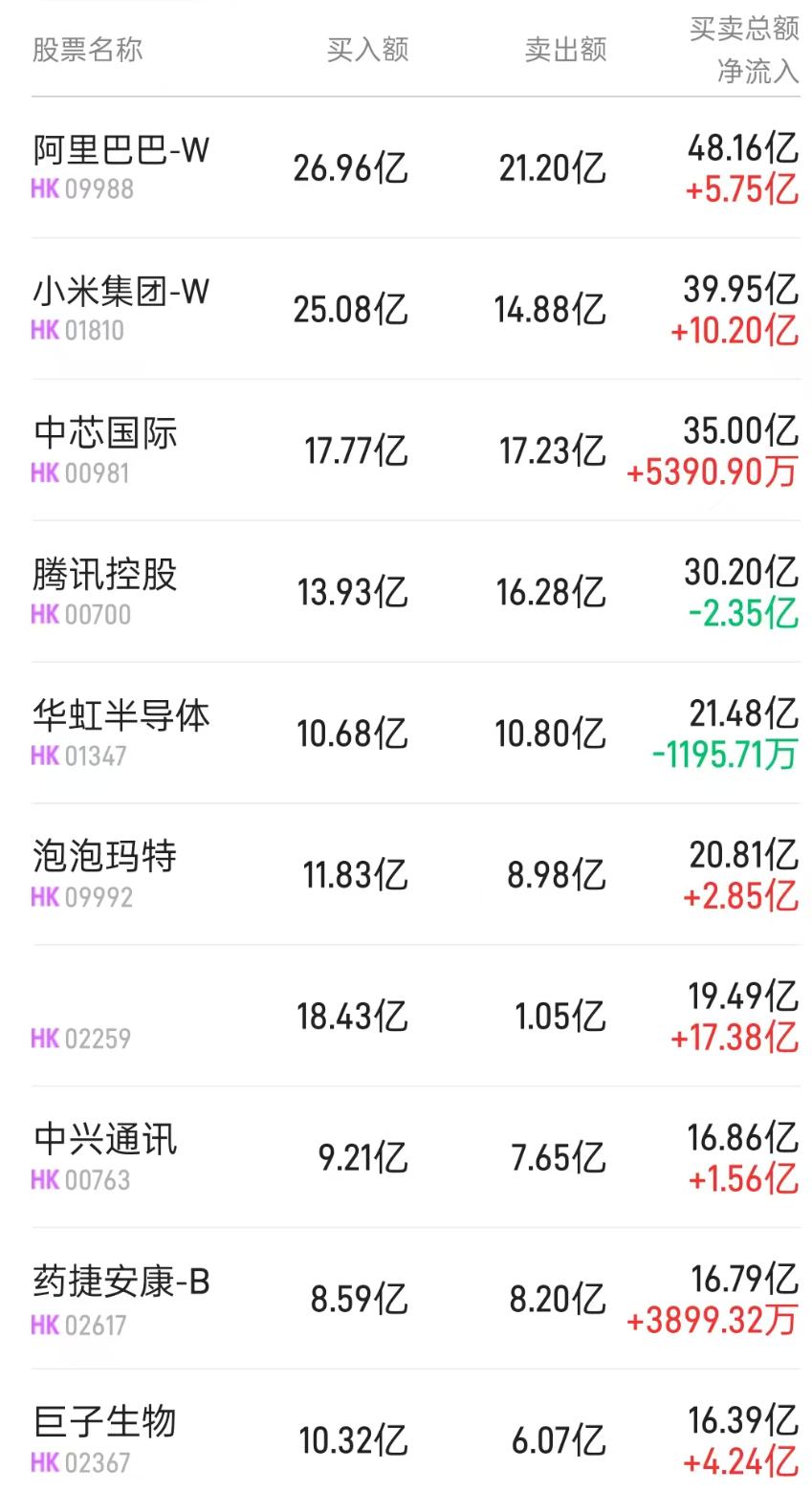
Core Insights - The Hong Kong stock market saw a net inflow of 15.822 billion HKD from northbound trading on October 16, with the Shanghai-Hong Kong Stock Connect contributing 8.672 billion HKD and the Shenzhen-Hong Kong Stock Connect contributing 7.15 billion HKD [1] Group 1: Stock Performance - The most net bought stocks included Zijin Mining International (02259), Xiaomi Group-W (01810), and Alibaba-W (09988) [1] - The most net sold stocks included SMIC (00981), GigaDevice Semiconductor (02367), and Tencent (00700) [1] Group 2: Detailed Stock Transactions - Alibaba-W had a net inflow of 2.696 billion HKD, with total transactions amounting to 4.816 billion HKD [2] - Xiaomi Group-W recorded a net inflow of 2.508 billion HKD, with total transactions of 3.995 billion HKD [2] - SMIC had a net outflow of 539.09 million HKD, with total transactions of 3.5 billion HKD [2] - Tencent experienced a net outflow of 235 million HKD, with total transactions of 3.02 billion HKD [2] - Zijin Mining International received a net inflow of 1.738 billion HKD, following its inclusion in the Stock Connect list [4] Group 3: Company-Specific News - Zijin Mining International is expected to achieve a compound annual growth rate of approximately 20% in production from 2025 to 2027, increasing total output from 45 tons to 65 tons, leading to a 30% compound annual growth rate in profits [4] - Xiaomi Group's stock price has been volatile due to various news events, with expectations of a decline in gross profit margin in the second half of the year [5] - Alibaba's stock received a boost from the launch of the Tmall Double 11 shopping festival and an upgrade in capital expenditure forecasts by Goldman Sachs [5] - Kangfang Biopharma (09926) received a net inflow of 6.02 billion HKD following the acceptance of its clinical research results for a new drug in a top medical journal [6] - Pop Mart (09992) saw a net inflow of 4.7 billion HKD, with expectations of strong sales growth from new IPs [7]




炸裂!台积电,突发!
Zhong Guo Ji Jin Bao· 2025-10-16 08:24
Market Overview - The A-share market experienced fluctuations on October 16, with the Shanghai Composite Index rising by 0.1%, the Shenzhen Component Index falling by 0.25%, and the ChiNext Index increasing by 0.38% [3] - A total of 1,177 stocks rose, while 4,171 stocks declined, indicating a challenging market environment [4] Sector Performance - The coal sector saw significant gains, with major companies like Dayou Energy rising by 10.09% and Zhongmei Energy by 7.35% [6][7] - The insurance and banking sectors also performed well, with China Life Insurance increasing by 5.16% and CITIC Bank by 3.84% [8][9] TSMC Financial Results - TSMC reported a consolidated revenue of approximately NT$989.92 billion (about RMB 230.45 billion) for Q3, a year-on-year increase of 30.3% [19] - The net profit for the same period was approximately NT$452.3 billion (about RMB 105.29 billion), reflecting a 39.1% year-on-year growth [19] - TSMC raised its revenue growth forecast for 2025 to the mid-30% range, indicating strong confidence in demand for AI-related components [19][20] Capital Expenditure Plans - TSMC adjusted its capital expenditure target for 2025, planning to invest at least $40 billion, up from a previous lower limit of $38 billion [20] - The company remains a key beneficiary of the AI infrastructure investment wave, with increasing demand for semiconductor products driven by AI technology [20] Analyst Target Price Adjustments - Following TSMC's earnings report, several investment banks raised their target prices for the company, including Barclays (from $325 to $330), Haima International (from $300 to $400), and Deutsche Bank (from NT$1,300 to NT$1,500) [21][22][24]

超预期!AI芯片需求持续火热,台积电Q3净利润创历史新高,超预期增长39%,资本支出达97亿美元
美股IPO· 2025-10-16 08:06
台积电Q3净利润4523亿元台币,同比增长39%,超出预估的4054.7亿元台币;第三季度毛利率59.5%,较上季度的58.6%继续改善,高于分析师预估 的57.1%。 受益于人工智能基础设施投资热潮加速,台积电最新财报显示净利润同比增长39%,超出市场预期,创下历史新高。 周四,台积电公布第三季度财报,具体来看: 营收增长得益于先进制程技术的强劲需求,具体来看: Q3净利润4523亿元台币,同比增长39%,超出预估的4054.7亿元台币; 第三季度毛利率59.5%,较上季度的58.6%继续改善,高于分析师预估的57.1%。营业利润率达50.6%,环比提升1个百分点,连续两季度改善。 营收和营业利润同样表现亮眼。三季度营收9899.2亿新台币,同比增长30%,超出预期的9677亿新台币;营业利润5006.9亿新台币,同比增长39%,超过预期的 4586亿新台币。 资本支出方面,Q3资本支出97亿美元,前9个月资本支出总计293.9亿美元,维持在高位水平,预计全年资本支出400亿美元至420亿美元,此前预计380亿美元至 420亿美元 从平台收入分布看,HPC(高性能计算)占比57%,首次明显超过智能手机的30 ...
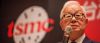
长电科技(600584.SH):第三季度产能利用率将呈现环比上升的态势
Ge Long Hui· 2025-10-16 08:02
Core Viewpoint - Changdian Technology (600584.SH) is collaborating with a globally leading wafer foundry, indicating a strong partnership in the chip manufacturing sector [1] Group 1 - The company's third-quarter capacity utilization rate is expected to show a quarter-on-quarter increase [1] - The company maintains a market-responsive pricing strategy [1]
