
软饮料

Search documents
食品饮料周报:把握白酒相对底部机会,关注板块季报催化-20250729
Tianfeng Securities· 2025-07-29 14:15
Investment Rating - Industry Rating: Outperforming the market (maintained rating) [4] Core Viewpoints - The liquor sector is showing signs of recovery as companies actively launch new products to adapt to changing consumer demands. The current PE-TTM for the Shenwan liquor index is 18.51X, which is at a reasonable low level compared to the past decade [2][11] - The beverage sector, particularly beer and soft drinks, is expected to benefit from upcoming consumption promotion policies and adjustments to alcohol bans, which will drive sales recovery [3][12] - The pre-processed food and seasoning sectors are leading the market, with a focus on companies that can enhance efficiency and market share through cost reduction and product diversification [13][19] Summary by Sections Market Performance Review - From July 21 to July 25, the food and beverage sector increased by 0.74%, while the Shanghai Composite Index rose by 1.69%. Notable increases were seen in pre-processed foods (+1.97%) and health products (+1.88%) [1][20] Liquor Sector Insights - The liquor sector increased by 0.94%, outperforming the overall food and beverage sector. Key players like Tianyoude Liquor saw significant gains, potentially linked to local infrastructure investments [2][11] - Recommendations include strong alpha companies such as Shanxi Fenjiu and Guizhou Moutai, as well as beta companies like Luzhou Laojiao and Wuliangye [2][19] Beer and Beverage Sector Insights - The beer sector rose by 1.06%, with Budweiser Asia and Chongqing Beer leading the gains. Management changes at Zhujiang Beer are expected to positively impact the company [3][12] - The soft drink sector also performed well, with notable increases from brands like Nongfu Spring (+8.1%) [3][14] Investment Recommendations - For the liquor sector, strong alpha companies benefiting from market concentration include Shanxi Fenjiu and Guizhou Moutai [19] - In the consumer goods sector, companies that align with cost reduction and market share enhancement strategies are recommended, including Dongpeng Beverage and Nongfu Spring [19] Sector and Individual Stock Performance - The food and beverage sector's dynamic PE ratio is 21.1X, ranking it 21st among primary industries. The highest valuations are seen in other liquor (55.83X) and health products (48.77X) [26][27]




好想你:已在电商和专卖店渠道推出啤酒相关产品
Bei Jing Shang Bao· 2025-07-29 12:19
北京商报讯(记者 郭秀娟 实习记者 王悦彤) 7月29日,好想你在投资者互动平台回答投资者提问称, 公司已在电商和专卖店渠道推出啤酒相关产品,主要是红枣口味,还有毛尖绿茶口味、茉莉花茶口味及 樱花蜜桃口味,满足消费者多口味需求。同时,我们邀请您品鉴,为我们多提宝贵的建议。线上购买方 式:淘宝APP搜索:"好想你啤酒",好想你官方旗舰店、好想你喜枣旗舰店均可以选购相关产品。 ...

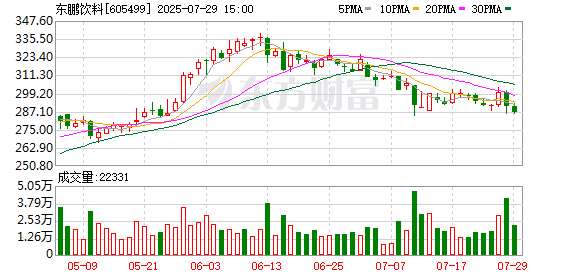
国信证券给予东鹏饮料优于大市评级:上半年收入同比增长36%,补水啦成为第二曲线,增长强劲
Mei Ri Jing Ji Xin Wen· 2025-07-29 12:08
Group 1 - The core viewpoint of the report is that Dongpeng Beverage (605499.SH) is rated as outperforming the market due to its strong growth in the functional beverage segment and continued high growth in its hydration products [2] - The report highlights that the functional beverage segment maintains a growth rate of 22%, indicating robust demand and market positioning [2] - Despite a slight slowdown in Q2 performance due to increased investment and the impact of new product launches, the company has sufficient drivers for profit improvement throughout the year [2]


冰杯市场迎来农夫山泉、伊利、蒙牛等多方巨头,这个夏天又卖爆了
Xi Niu Cai Jing· 2025-07-29 06:42
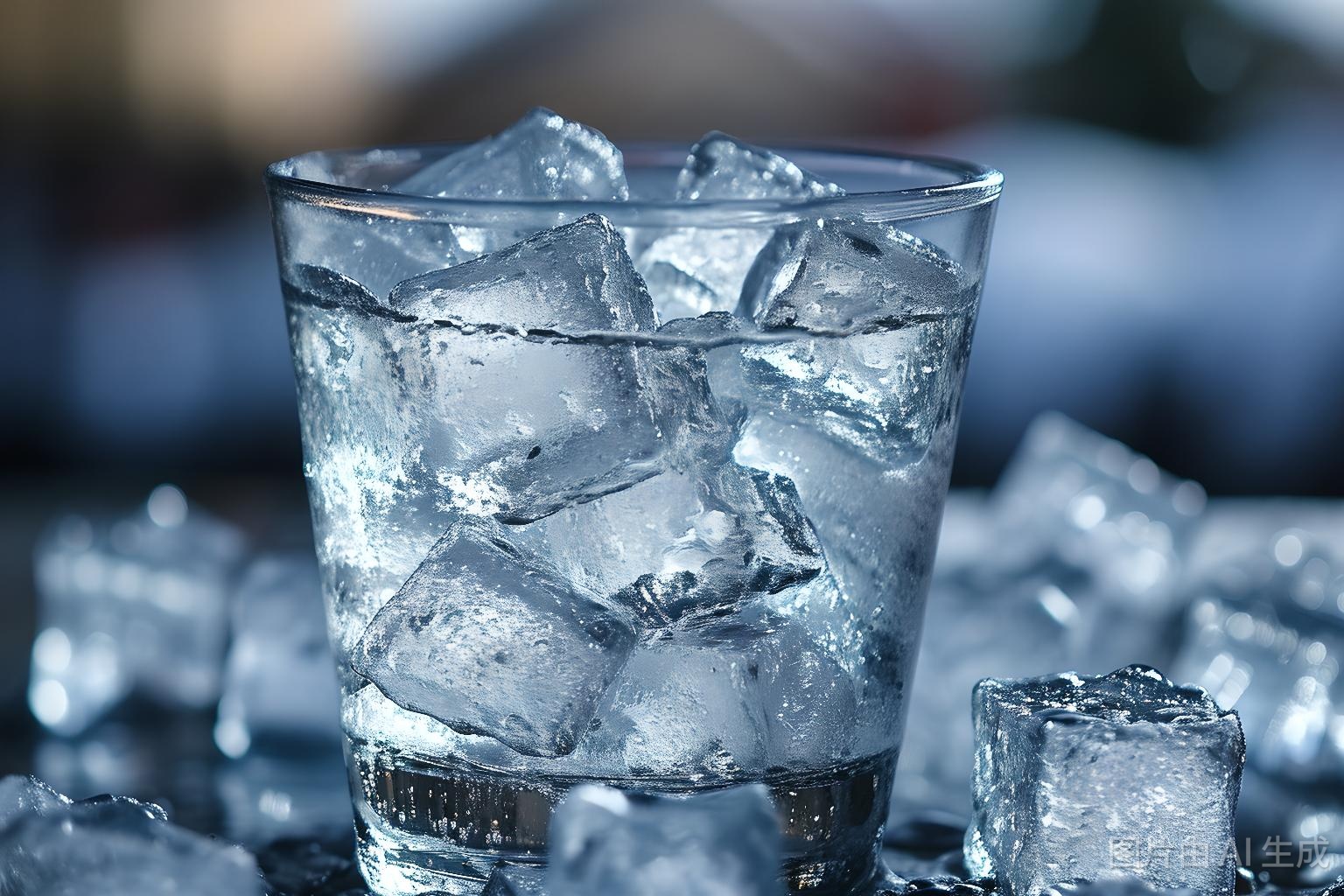
Core Insights - The ice cup market is experiencing intense competition with numerous brands entering the space, including Yuanqi Forest, Yili, Mengniu, and others, all of which have found success in this segment [2] - The price of ice cups has increased significantly, with some products priced at nearly three times the cost of the water used to make them, indicating a shift in consumer willingness to pay for convenience and novelty [2] - Consumer habits are evolving, with ice cups becoming a popular choice for refreshing drinks during summer, leading brands to capitalize on this trend by enhancing their ice cup offerings [3] Market Dynamics - The ice cup market has seen a dramatic increase in sales, with a reported growth rate exceeding 300% over the past two years, particularly in first-tier cities where the average annual consumption is 48 cups per person [3] - The future growth of ice products in instant retail channels is projected to reach 39% over the next three years, significantly outpacing the overall channel growth of 8% [3] - Despite the current dominance of plain water ice cups, there is potential for flavor diversification, which could become a key competitive factor in the market [3] Consumer Behavior - Ice cups are increasingly viewed as a solution for consumers seeking convenience, especially in scenarios where traditional ice acquisition is difficult, thus enhancing the appeal of these products [3] - The emotional value and experiential aspect of ice cups are driving consumer interest, as they cater to modern consumers' desires for personalized and immediate consumption experiences [4] - The seasonal nature of ice cups presents challenges, with potential sales peaks followed by periods of low demand, indicating a need for brands to innovate and maintain consumer engagement year-round [3][4]

食饮:二季报前瞻及当前如何看待板块投资机会?
2025-07-29 02:10
Summary of Key Points from Conference Call Records Industry Overview - **Food and Beverage Sector**: The overall situation in the food and beverage sector is currently at a historical low in institutional holdings, with the food and beverage index declining for four consecutive years since 2021. The fundamentals and expectations are also at low levels, making it a potential time for bottom-fishing opportunities [2][3][4]. Key Insights and Arguments - **Snack Sector**: The snack sector is expected to rebound as new products are launched and the third quarter enters a peak sales season. Short-term data is anticipated to improve, with a significant verification point in Q1 2026 during the Chinese New Year, which is expected to show impressive growth due to a low base [1][3]. - **Konjac Products**: The konjac category continues to grow, with companies like Wei Long and Yan Jin adjusting their SKUs and channels, leading to short-term performance pressure. Yan Jin is expected to maintain a growth rate of 20-25% in the second half of the year [1][4]. - **Wan Chen Company**: The resignation of the chairman and the appointment of new management is seen as a positive development. The company is expected to open 1,000 to 2,000 new stores in the first half of the year, with a projected net profit of around 250 million RMB [1][5]. - **Frozen Food Sector**: The frozen food sector is under pressure, with Anji experiencing single-digit revenue growth and profit decline due to various factors including a ban on alcohol and price fluctuations. The company aims for close to 10% revenue growth in the second half of the year [1][7]. Additional Important Content - **Diverse Performance Among Snack Companies**: Companies like Yan Jin and Wei Long are performing well, while others like Gan Yuan are facing challenges due to channel changes. Gan Yuan's revenue is expected to remain flat or slightly decline, and the company is focusing on new product promotions [1][6]. - **Beer and Seasoning Sectors**: The beer sector faced challenges in Q2 due to external factors and a ban on alcohol, but cost reductions have helped maintain overall industry profits. Recommended companies include Yanjing, Zhujiang, and China Resources [2][9]. - **Dairy Sector**: The dairy sector is experiencing a high level of activity, driven by travel and hot weather. Companies like Yili and Mengniu are expected to show improved performance, with Yili's liquid milk revenue expected to remain stable [2][20]. - **Market Dynamics**: The market for soft drinks and dairy products is competitive, with companies like Nongfu Spring recovering from a low base and showing significant growth. The decline in PET prices is beneficial for profit margins [2][16][17]. Conclusion The food and beverage sector is currently navigating through a challenging environment, with varying performances across different categories. Opportunities for investment exist, particularly in the snack and dairy sectors, while caution is advised in the frozen food and beer sectors due to ongoing pressures.
食品饮料行业跟踪报告:食饮持仓环比减少,雅江项目催化白酒行情
Shanghai Aijian Securities· 2025-07-28 11:02
Investment Rating - The food and beverage industry is rated as "stronger than the market" [1][3] Core Views - The food and beverage sector has shown a weekly increase of 0.74%, underperforming the Shanghai Composite Index which rose by 1.67% [1][7] - The industry is currently at a historical low valuation, with a PE-TTM of 21.41x, placing it in the 16th percentile over the past 15 years [14][17] - The white liquor sector is experiencing a rebound driven by external economic and policy factors, particularly the Ya River hydropower project, which is expected to boost consumption [4][22] - The beer sector faced slight pressure in June, with production down by 0.2% year-on-year, but Qingdao Beer is diversifying into the water market [29][30] - The dairy sector shows a mixed performance, with production up by 4.1% in June, but prices for fresh milk are still under pressure [34][36] - The soft drink market is shifting towards health and functionality, with electrolyte drinks seeing significant sales growth [40][41] Summary by Sections Market Review - The food and beverage sector increased by 0.74% in the week of July 21-25, ranking 26th among 31 sub-industries [1][7] - The sector's performance was better from Monday to Thursday, gaining 2.44%, but saw a significant drop of 1.65% on Friday [1][7] White Liquor - Public funds have significantly reduced their allocation to white liquor, with a heavy reliance on stable pricing and dividends from leading companies like Kweichow Moutai and Wuliangye [3][22] - The Ya River hydropower project is expected to stimulate white liquor consumption due to increased infrastructure investment [22][24] Beer - In June, beer production was 4.12 million kiloliters, a slight decrease of 0.2% year-on-year, attributed to weak dining consumption [29][30] - Qingdao Beer is expanding into the health drink market, leveraging celebrity endorsements to boost sales [30][41] Dairy Products - Dairy production in June reached 254.6 thousand tons, up 4.1% year-on-year, while the average price of fresh milk is stabilizing [34][36] Soft Drinks - The trend towards health and functionality is reshaping the soft drink market, with significant growth in electrolyte drink sales, which increased from 476 million yuan to 1.493 billion yuan year-on-year [40][41]
中证中国内地企业全球主要消费综合指数报8671.19点,前十大权重包含农夫山泉等
Jin Rong Jie· 2025-07-28 09:36
金融界7月28日消息,上证指数高开震荡,中证中国内地企业全球主要消费综合指数(CN消费综合, H30379)报8671.19点。 从指数持仓来看,中证中国内地企业全球主要消费综合指数十大权重分别为:贵州茅台(26.08%)、 五粮液(6.78%)、伊利股份(4.97%)、牧原股份(3.67%)、温氏股份(2.71%)、泸州老窖 (2.63%)、山西汾酒(2.59%)、农夫山泉(2.29%)、海天味业(1.85%)、东鹏饮料(1.69%)。 从中证中国内地企业全球主要消费综合指数持仓的市场板块来看,上海证券交易所占比53.35%、深圳 证券交易所占比35.01%、香港证券交易所占比11.16%、北京证券交易所占比0.31%、纽约证券交易所占 比0.14%、纳斯达克证券交易所(Consolidated Capital Market)占比0.01%、纳斯达克全球精选市场证券交 易所(Consolidated Issue)占比0.00%、纳斯达克股票市场证券交易所(Consolidated Large Cap)占比0.00%。 从中证中国内地企业全球主要消费综合指数持仓样本的行业来看,酒占比48.53%、食品占比20 ...



东鹏饮料(605499):Q2收入延续高增,平台化布局深化
Minsheng Securities· 2025-07-28 05:39
Investment Rating - The report maintains a "Recommended" rating for the company, indicating a potential stock price increase of over 15% compared to the benchmark index [4][6]. Core Insights - The company achieved significant revenue growth in Q2 2025, with a total revenue of 58.9 billion yuan, representing a year-on-year increase of 34% [1]. - The company is deepening its platform layout, with notable growth in its second curve products, particularly electrolyte water, which saw a revenue increase of 190% year-on-year [2]. - The company is expected to maintain high growth in revenue and net profit over the next few years, with projected revenues of 206.82 billion yuan, 259.17 billion yuan, and 309.55 billion yuan for 2025, 2026, and 2027 respectively [4]. Financial Performance Summary - For H1 2025, the company reported revenues of 107.4 billion yuan and a net profit of 23.7 billion yuan, reflecting year-on-year growth rates of 36% and 37% respectively [1]. - The gross profit margin for Q2 2025 slightly decreased by 0.35 percentage points, attributed to a higher proportion of lower-margin products [3]. - The company plans to distribute a mid-term dividend of 1.3 billion yuan, with a dividend payout ratio of 55% [1]. Product and Market Strategy - The company is focusing on channel expansion and product diversification, with significant contributions from its core product, Dongpeng Special Drink, and the new product, Dongpeng Water [2]. - The revenue from the Guangdong region was 14.2 billion yuan in Q2 2025, a 20% increase year-on-year, while other regions collectively generated 35.5 billion yuan, marking a 39% increase [2]. - The company is actively exploring overseas markets and enhancing its product matrix to ensure long-term growth potential [3].
农夫山泉20250727
2025-07-28 01:42
Summary of Nongfu Spring Conference Call Company Overview - Nongfu Spring is recognized as a leading brand in the beverage industry, with significant brand value acknowledged by authoritative institutions like AC Nielsen and Kantar Group. The Ministry of Industry and Information Technology has listed it as an international Chinese consumer brand, highlighting its strong brand influence [2][5]. Financial Performance - The company has surpassed a scale of 40 billion RMB, making it the second-largest soft drink company in China, with expectations to become the largest within the next two years. From 2020 to 2023, it achieved a compound annual growth rate (CAGR) of 23%, with profit margins exceeding 28%, leading the industry [2][5]. - Revenue projections for 2025, 2026, and 2027 are 51.7 billion, 60.4 billion, and 70.5 billion RMB, respectively, with net profits of 14.9 billion, 17.7 billion, and 21 billion RMB [4][23]. Growth Strategy - Nongfu Spring has transitioned from a single bottled water company to a platform enterprise driven by both bottled water and various beverages. The company has launched innovative products like C100, Power King, and Tea π, successfully creating multiple flagship products [2][7][8]. - The company has a leading position in three major beverage segments: bottled water, tea beverages, and juice drinks, with the highest market share in bottled water and unsweetened tea [9]. Market Dynamics - The bottled water market in China has significant growth potential, with per capita consumption at 37.5 liters in 2023, which is notably lower than developed countries. The packaging rate in mainland China is only about 15%, indicating room for growth [10]. - The tea beverage sector has become the largest sub-category in soft drinks, with a market share of 21.1% in 2023. Nongfu Spring's tea beverage business has shown a CAGR of 52% from 2020 to 2024 [15]. Competitive Advantages - Nongfu Spring's competitive edge lies in its extensive network of 15 high-quality water sources, ensuring product quality and supply chain efficiency. The company has also optimized its management and supply chain capabilities, achieving the lowest comprehensive costs and highest operational efficiency in the industry [6][11][12]. - The brand's strong marketing focus on health has cultivated consumer recognition of its premium products, maintaining brand vitality for over a decade [6]. Future Outlook - Nongfu Spring's long-term growth potential remains robust, with expectations to continue expanding its market share in bottled water and tea products. The company is also focusing on enhancing its juice business, which is still in the cultivation stage in China [19][20]. - The company is exploring potential growth areas beyond its main segments, including sports drinks and coffee [24]. Key Takeaways - Nongfu Spring's strong brand recognition and innovative product offerings position it well for future growth in the competitive beverage market. The company's strategic focus on health, quality, and market expansion is expected to drive continued success and profitability [2][4][23].
东鹏饮料: 东鹏饮料(集团)股份有限公司关于修订公司于H股发行上市后生效的公司章程(草案)的公告
Zheng Quan Zhi Xing· 2025-07-25 16:49
Core Viewpoint - Dongpeng Beverage Group Co., Ltd. has revised its articles of association following its H-share issuance and listing on the Hong Kong Stock Exchange, ensuring compliance with relevant regulations and addressing the company's actual needs [1][8]. Summary by Sections Revision of Articles of Association - The company held its 16th meeting of the third board of directors on July 25, 2025, where the proposal to amend the articles of association was approved [1]. - The amendments are necessary due to the company's H-share issuance and listing, aligning with the Hong Kong Stock Exchange's listing rules and the company's operational requirements [1][8]. Specific Amendments - The articles now specify that shares will be issued in the form of registered shares, with the inclusion of terms such as "non-voting" or "restricted voting" for different classes of shares [2][4]. - The shareholder register will be maintained by a securities registration agency, with the original register for H-share shareholders kept in Hong Kong, ensuring consistency between the original and duplicate registers [3][4]. - Provisions regarding the rights and obligations of shareholders, including those related to lost shares and voting rights, have been clarified [4][5]. Shareholder Meeting and Voting Rights - All shareholders, including those with special voting rights, have the right to attend and vote at shareholder meetings, with provisions for proxy voting [5][6]. - The voting process has been detailed, including the handling of invalid votes and the rights of shareholders to express their opinions on proposals [7][8]. Authorization for Further Adjustments - The board of directors is authorized to make further adjustments to the articles of association as required by domestic and international laws, regulations, and regulatory bodies, ensuring flexibility in compliance [8].