
铝业

Search documents
南山铝业(600219.SH):首次回购134.75万股股份
Ge Long Hui A P P· 2026-01-20 08:59
格隆汇1月20日丨南山铝业(600219.SH)公布,2026年1月20日,公司通过集中竞价交易方式首次回购股 份数量为134.75万股,占公司总股本的比例为0.01%,回购成交的最高价为6.59元/股,最低价为6.59元/ 股,支付的资金总额为人民币8,880,025元(不含交易费用)。 ...

斥资超30亿元新建印尼电解铝项目,南山铝业加大海外扩张步伐
Huan Qiu Lao Hu Cai Jing· 2026-01-20 08:40
Core Viewpoint - Nanshan Aluminum plans to establish a joint venture in Indonesia to build a 250,000-ton electrolytic aluminum project, with a total investment of approximately $437 million (about 3.056 billion RMB) [1][2] Group 1: Project Details - The joint venture will be established through Nanshan Aluminum's subsidiary, with Shengshi Asia holding 99% and Shengshi Aluminum holding 1% [1] - The project aims to reduce electrolytic aluminum production costs and enhance competitive advantages through scale [2] - The project leverages Indonesia's bauxite resources and cost advantages to improve the company's profitability and respond to local market demands [2] Group 2: Industry Context - The global aluminum industry is undergoing restructuring, with domestic electrolytic aluminum capacity facing regulatory ceilings [2] - The competition in the industry is shifting towards cost control and overseas resource allocation, driven by steady demand growth in downstream sectors like new energy vehicles and aerospace [2] Group 3: Company Performance - Nanshan Aluminum has built a complete aluminum processing industry chain, covering various segments including power generation, alumina, electrolytic aluminum, and recycling [3] - The company has seen enhanced profitability due to full-capacity alumina production and recovering demand in high-end manufacturing [3] - Financial data shows that the company's revenue for 2022-2024 is projected at 34.951 billion RMB, 28.844 billion RMB, and 33.477 billion RMB, with net profits of 3.516 billion RMB, 3.474 billion RMB, and 4.83 billion RMB respectively [3]
特朗普“夺岛”引发避险高潮,铸造铝延续震荡格局
Xin Lang Cai Jing· 2026-01-20 08:39
Core Viewpoint - The market for casting aluminum alloys is experiencing pressure due to weak demand and high inventory levels, despite stable supply conditions and some positive macroeconomic indicators [1][2]. Group 1: Market Performance - The main contract for casting aluminum alloy (2603) opened high but saw a slight rebound after a dip, closing at 22,765 yuan, up 30 yuan, with a trading volume of 10,762 lots, an increase of 346 lots [1]. - The holding position decreased by 685 lots to 19,520 lots [1]. Group 2: Price Trends - Current prices for casting aluminum alloys are as follows: A356.2 at 25,800 yuan/ton (down 100 yuan), A380 at 25,100 yuan/ton (down 100 yuan), ADC12 at 23,600 yuan/ton (down 100 yuan), ZL102 at 25,200 yuan/ton (down 100 yuan), and ZLD104 at 25,100 yuan/ton (down 100 yuan) [1][2]. Group 3: Supply and Demand Dynamics - The supply side remains stable, but some factories are limited in production due to profit losses and environmental policies, leading to pressure on casting aluminum prices [2]. - Demand is weak as the end market is in a low season, with alloy plant operating rates declining and the automotive sector also slowing down [2]. - The price of scrap aluminum remains high, increasing costs for recycled aluminum alloy producers, while downstream die-casting enterprises are struggling to accept high prices, further impacting demand [2]. Group 4: Market Outlook - Overall, the casting aluminum market is expected to maintain a weak supply-demand balance, with prices likely to experience fluctuations and adjustments due to the current economic conditions [2].


中孚实业:预计2025年净利润同比增加120.27%—141.59%
Zheng Quan Shi Bao Wang· 2026-01-20 08:11
人民财讯1月20日电,中孚实业(600595)1月20日公告,预计2025年年度实现归属于母公司所有者的净 利润为15.5亿元—17亿元,同比增加120.27%—141.59%。公司本期业绩增长主要系电解铝业务成本下降 及销售价格上涨影响。 ...

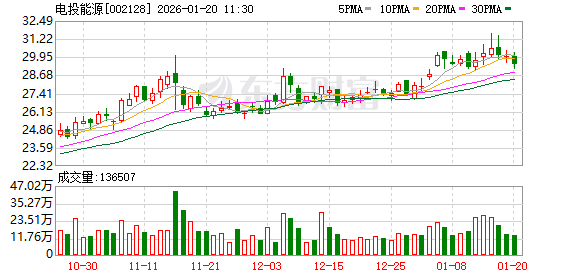
电投能源:扎铝二期项目2025年12月20日开始通电调试,目前正在试生产
Mei Ri Jing Ji Xin Wen· 2026-01-20 04:16
电投能源(002128.SZ)1月20日在投资者互动平台表示,扎铝二期项目2025年12月20日开始通电调试, 目前正在试生产,部分电解槽产生铝液作为在产铝,用于后续电解槽启动。 每经AI快讯,有投资者在投资者互动平台提问:扎铝二期项目首批电解槽在2025年12月20日成功通 电,请问计划什么时候可以产出铝锭? (文章来源:每日经济新闻) ...

以“含绿量”提升发展“含金量”
Guang Xi Ri Bao· 2026-01-20 02:42
Group 1: Environmental Initiatives - Liu Steel Group has invested over 9.2 billion yuan in environmental protection over the past three years, implementing more than 230 environmental improvement projects, leading to a significant increase in local bird populations [1] - The company has transitioned from a high-energy-consuming entity to a recognized "green development benchmark enterprise," achieving ultra-low emissions across its processes [1] - Guangxi's state-owned assets and enterprises are enhancing their development quality by increasing their "green content," focusing on green low-carbon development [1] Group 2: Energy Efficiency and Upgrades - Guangxi Investment Group has completed energy-saving upgrades for its entire 700,000-ton electrolytic aluminum capacity, saving approximately 420 million kilowatt-hours annually [2] - Guangxi Huayin Aluminum Industry has implemented technical upgrades that reduced carbon emissions intensity and overall energy consumption by 5.63% and 4.98%, respectively [2] - The North Bay Port Group has enhanced its solid waste treatment capacity to 3 million tons per year through technological improvements [2] Group 3: Renewable Energy Development - Guangxi Investment Group has acquired a total of 5 million kilowatts of controlling new energy indicators, with clean energy accounting for over 60% of its installed capacity [3] - The Liu Cheng North Shale Gas Project has achieved a daily output of 15,000 cubic meters, replacing 180,000 tons of standard coal annually and reducing carbon dioxide emissions by 484,000 tons [3] - The North Bay Port Group's energy sector has a total installed capacity of 1.2798 million kilowatts, with cumulative on-grid electricity reaching 2.788 billion kilowatt-hours by October 2025 [3] Group 4: Innovation and Technology - Regulatory enterprises are encouraged to focus on key technology breakthroughs in energy conservation and carbon reduction, with 19 green low-carbon technology projects supported by local state capital in the past two years [3] - Liu Gong Group is developing 11 key core technologies, including hybrid power and integrated technology, to enhance energy efficiency [3] - Guangxi Automobile Group is working on insulation technology for vehicle bodies, optimizing material environmental performance and structural lightweighting [3] Group 5: Forestry and Sustainable Practices - Guanglin Group is leveraging technology in forestry, leading to the approval of two important national standards that promote industry green transformation [4] - The company has established a forestry industry internet platform, achieving over 23 billion yuan in transaction volume and onboarding more than 1,100 forestry enterprises [4] - The application of drone technology in forestry has significantly reduced labor costs and improved survey accuracy, covering approximately 850,000 acres [4] Group 6: Comprehensive Ecological Protection - Guangxi Water Development Group prioritizes ecological protection in its planning and implementation of projects, improving construction processes to enhance resource utilization [5] - The company is implementing ecological networks through various projects, including ecological fishways and fish species proliferation stations [5] - The use of BIM+GIS platforms for construction monitoring is creating a comprehensive ecological protection system throughout the design, construction, and operation phases [5]
政协委员王琦:以“人工智能+”为笔 绘就滨州数字化转型新图景
Qi Lu Wan Bao· 2026-01-20 02:19
Core Insights - Artificial intelligence (AI) is becoming a core force in reshaping industrial patterns and activating development momentum, with the city of Binzhou aiming to leverage AI as a new engine for high-quality development [1] Group 1: AI Integration in Traditional Industries - Binzhou is at a critical stage of industrial upgrading, with traditional sectors like aluminum, textiles, and agriculture facing urgent demands for quality improvement and green development [1] - Many enterprises are struggling with the challenges of AI technology, including issues of usability, affordability, and effectiveness, leading to a disconnect between technology supply and industrial demand [1] Group 2: Proposed AI Empowerment Initiatives - A proposal suggests the establishment of a municipal-level AI empowerment platform to lower the application threshold for businesses, utilizing existing resources from universities, research institutions, and the Weiqiao National Science Computing Center [1] - The creation of the "Binzhou AI Empowerment Center" aims to provide accessible computing power, algorithm tools, and industry solution libraries for small and medium-sized enterprises [1] - An "AI Empowerment Enterprise Tour" is proposed to form expert teams that will provide tailored digital diagnostics for companies, alongside exploring data-sharing mechanisms in key industries like aluminum processing and textiles [1] Group 3: Focus on Industrial and Civilian Applications - The proposal emphasizes the dual application of AI in industrial and civilian sectors, targeting full-process intelligent demonstration projects in industries such as aluminum, textiles, and equipment manufacturing [2] - In the civilian sector, initiatives include smart city management, intelligent healthcare, and smart agriculture, aiming to integrate AI technology into everyday life [2] - A special fund for municipal demonstration projects is suggested to reward effective applications, thereby stimulating corporate innovation [2] Group 4: Talent Development and Ecosystem Building - To address talent shortages, the proposal advocates for the construction of an industry-education integration ecosystem, supporting local universities and vocational schools to offer AI-related programs [2] - The establishment of training bases and certification centers is recommended to cultivate "AI + industry" composite talents [2] - Regular hosting of the "Binzhou AI Innovation Competition" is proposed to attract talent and promote production, alongside the formation of industry alliances to foster collaboration among enterprises, universities, research institutions, and capital [2] Group 5: Vision for AI in Binzhou - The overarching goal is to ensure that AI is rooted in the industrial landscape and addresses real-world problems, thereby enabling traditional industries to adopt intelligent solutions and enhancing the quality of life for residents [2] - The proposal aims to inject digital momentum into Binzhou's development, contributing to the city's high-quality growth narrative [2]
未知机构:华创李梦娇南山铝业印尼拟规划至100万吨电解铝成长分红可期-20260120
未知机构· 2026-01-20 02:10
Summary of Conference Call Notes on Nanshan Aluminum Industry Company Overview - Nanshan Aluminum is planning to establish a joint venture in Indonesia to build a 250,000-ton electrolytic aluminum project through its subsidiary, Nanshan Aluminum International, with an investment of 3.056 billion yuan. The project is expected to take 2 years to complete [1] - The company has an existing domestic capacity of 680,000 tons of electrolytic aluminum and 1.4 million tons of alumina, with a 100% matching anode supply [1] Key Points and Arguments - The planned capacity in Indonesia could reach 700,000 tons, effectively doubling the production scale [1] - Nanshan Aluminum International has announced an additional plan for a 500,000-ton electrolytic aluminum project, which, combined with the existing projects, will increase the total capacity to 1.38 million tons [1] - The company has a 100% self-sufficiency rate for upstream resources, including power plants, alumina, and anodes, ensuring stable production costs for domestic electrolytic aluminum [2] - The existing 4 million tons alumina project in Indonesia has very low costs, further supporting the anode project [2] Financial Performance and Dividend Policy - Nanshan Aluminum has demonstrated strong dividend capabilities, announcing a special dividend of 3 billion yuan in 2025, with a total expected dividend of 5 billion yuan, corresponding to a dividend payout ratio of nearly 100% [2] - The company maintains a strong balance sheet and cash flow, with an expected high dividend yield of approximately 5.6% based on a 60% payout ratio in 2026 [2] - Considering the 250,000-ton projects, the estimated profit from the Indonesian electrolytic aluminum is projected to be 2.4 billion yuan, leading to a total profit of 8.8 billion yuan for Nanshan Aluminum, resulting in a valuation of only 8 times earnings [2] - If the additional 500,000-ton electrolytic aluminum project is included, the profit from Indonesian electrolytic aluminum could reach 4.1 billion yuan, pushing the total profit over 10.5 billion yuan, effectively doubling the profit scale and resulting in a valuation of less than 7 times earnings, indicating a potential market value increase of over 40% [2]
南山铝业国际涨超5% 计划于26年启动年产25万吨电解铝项目筹备工作
Zhi Tong Cai Jing· 2026-01-20 01:41
消息面上,1月19日,南山铝业国际发布公告,为进一步提升集团的竞争力,驱动持续增长,并构建产 业链上下游业务的协同效应,集团拟开展电解铝及相关原材料及配套业务。 集团计划于2026年启动年产25万吨电解铝项目的筹备工作,初步预计在两年的建设期间投资金额约为 4.366亿美元,建设周期为两年。这一项目拟将选址于集团氧化铝厂所位处的印尼民丹岛上的卡朗巴塘 经济特区,并须获得相关地方当局的环境及╱或建设许可。 南山铝业(600219)国际(02610)涨超5%,截至发稿,涨5.08%,报71.5港元,成交额1277.18万港元。 展望中长期发展,集团还计划制定额外年产50万吨电解铝项目的规划工作,以进一步扩大集团的电解铝 产能规模,扩展电解铝相关业务。 ...
港股异动 | 南山铝业国际(02610)涨超5% 计划于26年启动年产25万吨电解铝项目筹备工作
智通财经网· 2026-01-20 01:37
消息面上,1月19日,南山铝业国际发布公告,为进一步提升集团的竞争力,驱动持续增长,并构建产 业链上下游业务的协同效应,集团拟开展电解铝及相关原材料及配套业务。 集团计划于2026年启动年产25万吨电解铝项目的筹备工作,初步预计在两年的建设期间投资金额约为 4.366亿美元,建设周期为两年。这一项目拟将选址于集团氧化铝厂所位处的印尼民丹岛上的卡朗巴塘 经济特区,并须获得相关地方当局的环境及╱或建设许可。 智通财经APP获悉,南山铝业国际(02610)涨超5%,截至发稿,涨5.08%,报71.5港元,成交额1277.18万 港元。 展望中长期发展,集团还计划制定额外年产50万吨电解铝项目的规划工作,以进一步扩大集团的电解铝 产能规模,扩展电解铝相关业务。 ...