银行业

Search documents
FXTRADING 经济数据汇总:德国企业信心回暖,欧洲央行稳预期,英国央行转向宽松与美联储趋于谨慎
Sou Hu Cai Jing· 2026-02-23 17:35
Group 1: Germany's Economic Outlook - The Ifo Business Climate Index for Germany improved to 88.6 in February, exceeding market expectations and showing significant improvement from the previous value [2] - The evaluation of current business conditions saw a notable increase, indicating a better perception of the economic environment among companies [2] - The future expectations index rose slightly, suggesting a cautious optimism in market sentiment, although the recovery remains uneven, particularly in the trade sector [2] Group 2: European Central Bank's Policy Stance - The President of the European Central Bank (ECB) reaffirmed the commitment to complete her term, aiming to reduce uncertainty amid ongoing economic recovery [4] - Inflation has returned to target levels, and the labor market remains robust with low unemployment rates, indicating gradual improvement in economic fundamentals [4] - The ECB is focused on maintaining policy continuity and predictability, with no significant changes expected in monetary policy direction in the short term [4] Group 3: Bank of England's Policy Shift - Officials from the Bank of England have indicated a shift towards a more accommodative stance, as inflation risks are transitioning from persistent to downward pressure [6] - Weakening demand and a cooling labor market are reducing the support for prices, suggesting potential risks of inflation falling below target levels [6] - The current interest rate is viewed as still tight, with expectations of two to three rate cuts needed to return to a neutral stance [6] Group 4: Federal Reserve's Observational Approach - Recent strong employment data has led Federal Reserve officials to adopt a more positive outlook on the economy, reducing the risk of a rapid economic slowdown [8] - The Fed emphasizes that single-month data does not represent a trend, and further observation of employment, inflation, and consumption data is necessary before making policy decisions [8] - In the short term, the Fed is likely to maintain interest rates, which may help sustain the resilience of the dollar and keep global market liquidity relatively tight [8]

一天暴跌36%!年轻人疯狂借贷买黄金,这场韭菜盛宴正在重演
Sou Hu Cai Jing· 2026-02-23 16:32
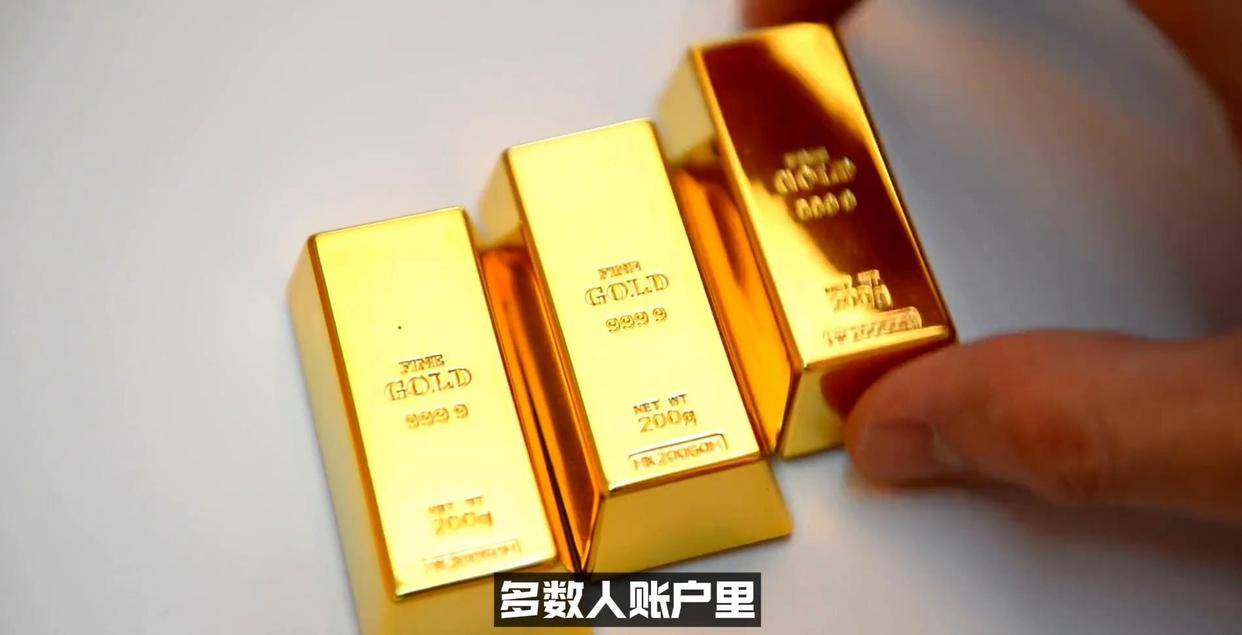
Core Viewpoint - The article discusses a significant market crash in precious metals, particularly gold and silver, highlighting the rapid shift in investor sentiment and behavior leading up to the crash, and drawing parallels to past real estate market bubbles. Group 1: Market Dynamics - On January 31, 2026, spot silver prices plummeted by 36%, while gold fell below $4,700 per ounce, marking the largest single-day drop in nearly 40 years [1] - Prior to the crash, many young individuals were seen queuing outside banks to convert consumer loans into gold bars, indicating a shift in investment focus from real estate to precious metals [3] - A policy initiated on September 1, 2025, aimed at stimulating consumer spending through subsidized loans, inadvertently became a tool for speculative investment in gold [5] Group 2: Investment Behavior - The consumer loan policy allowed individuals to borrow up to 50,000 yuan with a government subsidy, leading to a surge in gold purchases as people sought to capitalize on low-interest loans [5] - In 2025, China's total gold demand reached 1,003 tons, with gold ETFs attracting 110 billion yuan in inflows, reflecting a growing trend of investment in gold [5] - The market frenzy peaked in January 2026, with international gold prices rising nearly 30% within a month, and silver prices soaring close to 60% [7] Group 3: Market Collapse - The announcement of Kevin Warsh as the next Federal Reserve Chair by President Trump triggered fears of tighter monetary policy, leading to a sharp increase in the dollar index and a subsequent crash in gold and silver prices [9] - The crash was exacerbated by high leverage among retail investors, resulting in forced liquidations as prices fell below critical levels, causing a rapid decline in market value [9] - Following the crash, major banks adjusted their gold accumulation policies, reminiscent of past real estate market interventions, indicating a shift in market stability [10][12] Group 4: Historical Parallels - The article draws comparisons between the current gold market situation and past real estate bubbles, suggesting that many investors may be left holding depreciated assets while early investors exit profitably [14] - A report indicated that 47% of Chinese homeowners are currently underwater on their mortgages, mirroring the precarious position of gold investors post-crash [12]
巴西央行上调2026年GDP增速预期至1.82%
Zhong Guo Xin Wen Wang· 2026-02-23 16:29
Core Viewpoint - The Central Bank of Brazil has slightly adjusted its GDP growth forecast for 2026 from 1.8% to 1.82%, while maintaining the growth forecast for 2027 at 1.8% and projecting 2% for both 2028 and 2029 [1] Economic Indicators - The inflation expectation for the nationwide broad consumer price index (IPCA) in 2026 has been revised down from 3.95% to 3.91%, with 2027's expectation remaining at 3.8%, and 3.5% for both 2028 and 2029 [1] - All inflation levels are within the target range set by the National Monetary Council, which has a target value of 3% with a fluctuation margin of 1.5 percentage points [1] Interest Rates - The market anticipates that Brazil's benchmark interest rate will decrease to 12.13% by the end of 2026, down from a previous forecast of 12.25%. The expected rates for 2027 and 2028 are 10.5% and 10%, respectively, with a potential drop to 9.5% by 2029 [1] Exchange Rates - The market expects the exchange rate of the US dollar to the Brazilian real to be 5.45 reais by the end of 2026, increasing to 5.50 reais by the end of 2027 [1]
阿联酋中央银行黄金储备预计到2025年将接近380亿迪拉姆
Shang Wu Bu Wang Zhan· 2026-02-23 15:30
Core Insights - The Central Bank of the UAE (CBUAE) projects its gold reserves to grow by 64.93% to reach 37.902 billion dirhams by the end of December 2025, up from 22.981 billion dirhams at the end of December 2024 [2] - As of December 2025, the gold reserves are expected to show a month-on-month increase of 1.64%, reaching 37.291 billion dirhams as of the end of November 2025 [2] Deposits Overview - As of December 2025, current deposits are expected to exceed 12.64 trillion dirhams, compared to approximately 11.09 trillion dirhams at the end of December 2024 [2] - Savings deposits are projected to reach 400.51 billion dirhams by the end of December 2025, up from 317.488 billion dirhams at the end of December 2024 [2] - Fixed deposits are anticipated to surpass 11.65 trillion dirhams by the end of December 2025, compared to 9.457 trillion dirhams at the end of December 2024 [2]
美联储理事沃勒:若非农疲软 3月将投票支持降息
智通财经网· 2026-02-23 14:19
Core Viewpoint - The decision on whether to support interest rate cuts at the upcoming Federal Open Market Committee (FOMC) meeting will depend on the forthcoming non-farm labor market data, as indicated by Federal Reserve Governor Christopher Waller [1][2]. Group 1: Labor Market Data - Waller stated that if the February labor market statistics show a reduction in downside risks similar to January's data, maintaining the current interest rate may be appropriate during the FOMC meeting on March 17-18 [1]. - He expressed concern that the positive labor market statistics might be misleading, particularly as revisions indicated that net job additions for 2025 could be nearly zero, suggesting a weak labor market [2]. Group 2: Inflation and Monetary Policy - Waller emphasized that the assessment of inflation would exclude the impact of aggressive trade policies from the Trump administration, predicting that core inflation is nearing the FOMC's 2% target [3]. - Despite strong January non-farm employment data, which led to a reduction in market expectations for rate cuts in 2026, hedge fund manager David Einhorn believes the Fed will cut rates more than the market anticipates [3][4]. Group 3: Market Expectations - Einhorn described betting on more frequent rate cuts than currently expected by the market as one of the best trading strategies [4]. - Goldman Sachs analysts noted that assuming Kevin Warsh's hawkish past at the Fed reflects his future policy stance is incorrect, suggesting that a willingness to cut rates is a prerequisite for his current role [4].
越秀证券每日晨报-20260223
越秀证券· 2026-02-23 14:04
Market Performance - The Hang Seng Index closed at 26,413, down 1.10% for the day but up 3.05% year-to-date [1] - The Hang Seng Tech Index fell 2.91% to 5,211, with a year-to-date decline of 5.52% [1] - The Dow Jones Index increased by 0.47% to 49,625, with a year-to-date gain of 3.25% [1] Currency Trends - The Renminbi Index stands at 98.340, showing a 1M increase of 0.36% and a 6M increase of 1.44% [2] - The USD/JPY exchange rate is at 155.570, with a 1M increase of 1.66% but a 6M decrease of 5.30% [2] Commodity Prices - Brent crude oil is priced at $71.460 per barrel, up 11.37% over the last month and 9.20% over the last six months [3] - Gold is trading at $5,038.03 per ounce, reflecting a significant increase of 50.48% over the last six months [3] Economic News - The U.S. GDP growth for Q4 last year was estimated at 1.4%, significantly below the expected 3% [5][14] - The unemployment rate in Hong Kong has risen to 3.9%, an increase of 0.1 percentage points [20] Company Updates - JD.com reported a 150% increase in robot order volume during the Spring Festival, driven by a significant rise in search and inquiry volumes [22][23] - Xuan Bamboo Biotechnology has been included in the Hang Seng Composite Index, effective March 9, 2026 [25] Sector Performance - The technology sector has shown a decline, with the Hang Seng Tech Index down nearly 3% [6] - The financial and real estate sectors remained stable, with notable increases in certain real estate stocks [6]



美联储理事沃勒:3月利率决定取决于劳动力市场数据
Sou Hu Cai Jing· 2026-02-23 13:42
Core Viewpoint - The Federal Reserve Governor Waller indicated that the March interest rate decision will depend on February's labor market data, with the possibility of maintaining rates or supporting a rate cut based on the employment report [1] Group 1: Labor Market Data - January employment data exceeded expectations, suggesting a stronger labor market [1] - If February labor market data is similar to January's, it may indicate reduced downside risks for the labor market [1] - Waller stated that the likelihood of maintaining rates or cutting rates in March is nearly equal, with both scenarios having a 50% chance [1]
高位震荡!2月23日伦敦金现站稳5150美元,贵金属市场涨跌互现
Sou Hu Cai Jing· 2026-02-23 13:07
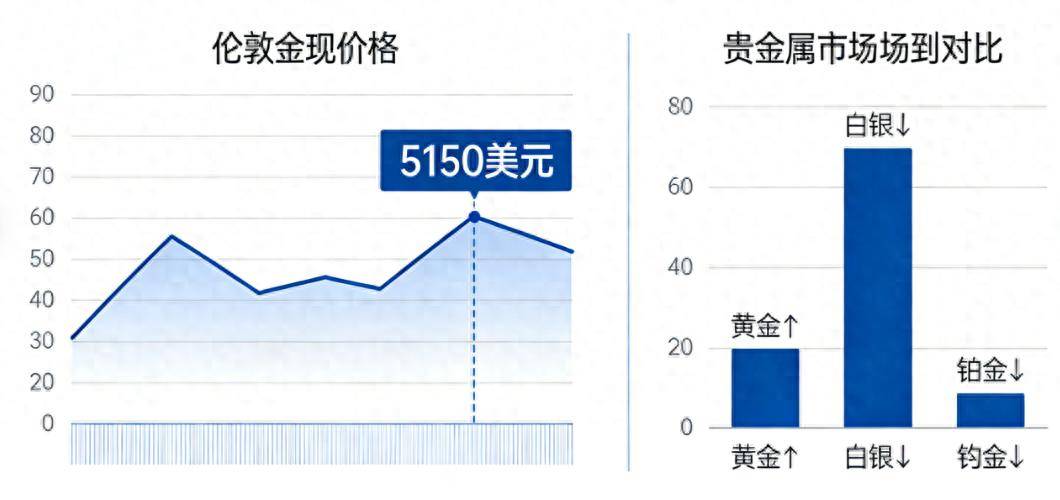
Group 1 - The global precious metals market is experiencing high volatility with gold prices stabilizing above $5,150 per ounce and silver showing slight corrections, influenced by Federal Reserve policy signals and geopolitical risks [1][3] - As of February 23, gold was reported at $5,152.02 per ounce, down $12.61, with a daily high of $5,164.63, while silver was at $86.797 per ounce, down $0.196, with a peak increase of 2.22% during the day [3] - The domestic physical gold market shows a clear divergence, with major retailers like Chow Tai Fook and Chow Sang Sang maintaining gold prices at 1,560.0 CNY per gram, while other retailers like Chow Sang Sang and King Fook experienced price declines [4] Group 2 - The futures market is underperforming compared to the spot market, with significant declines in futures prices attributed to strong signals from the Federal Reserve indicating no interest rate cuts in the short term, leading to profit-taking in precious metal futures [3][5] - The price of gold T+D in the domestic market was reported at 1,108.5 CNY per gram, down 16.55 CNY, while silver T+D was at 19,270 CNY per kilogram, down 649 CNY, reflecting a downward trend [3] - Experts indicate that the core logic behind the high volatility in the precious metals market is the interplay between risk aversion and Federal Reserve policies [5]
韩国央行(BOK)再次呼吁由商业银行主导韩元稳定币发行
Xin Lang Cai Jing· 2026-02-23 11:26
Core Viewpoint - The Bank of Korea (BOK) emphasizes the need for commercial banks to lead the issuance of the Korean won stablecoin, warning that private issuance could undermine monetary policy effectiveness and pose risks to foreign exchange and financial stability [1] Group 1: Central Bank's Position - BOK refers to the Korean won stablecoin as a "quasi-currency substitute" and states that its launch must consider monetary policy and foreign exchange stability [1] - The central bank expresses concerns that stablecoins could be used to circumvent foreign exchange reporting requirements [1] Group 2: Regulatory Recommendations - The report suggests prioritizing the issuance of stablecoins by banks that are subject to capital and compliance regulations [1] - The BOK indicates that any decision to allow non-bank entities to issue stablecoins should be gradually implemented following a risk assessment [1]
米兰刷新冬奥会经济逻辑
Guo Ji Jin Rong Bao· 2026-02-23 10:41
Core Insights - The Milan-Cortina Winter Olympics represents Italy's return to hosting a major sporting event after 20 years, with significant implications for economic recovery and infrastructure development [3][5] - The event is expected to generate over €53 billion in economic returns, driven by investments in public infrastructure and private capital [5][6] - The Olympics aims to transform short-term tourism influx into long-term economic benefits through improved infrastructure and regional branding [4][7] Economic Impact - The overall budget for the Milan Winter Olympics is approximately €52 billion, with €35 billion allocated for public infrastructure and €17 billion from private investments [5][6] - Direct consumer spending during the event is projected to be around €11 billion, with an additional €12 billion expected from post-event tourism [6][7] - Long-term structural value in the northern Alps region is estimated to reach €30 billion through upgraded facilities and sustainable tourism networks [6] Infrastructure and Cost Management - The event's organization emphasizes cost control, with 85% of venues being existing facilities to minimize new construction costs [10][11] - The budget for the event has increased from an initial estimate of $1.3 billion to over $1.7 billion due to inflation and rising construction costs [10] - The decentralized hosting model aims to reduce environmental impact and enhance community resilience, integrating various regional assets into a cohesive tourism strategy [11][12] Challenges and Considerations - The decentralized venue approach may reduce peak consumption and population flow, potentially compressing short-term revenue despite lowering risks [8][12] - Historical data suggests that the economic benefits of hosting such events may not always justify the high capital expenditures involved [8][9] - The success of the Milan Winter Olympics will depend on balancing immediate economic stimulation with sustainable long-term growth [9][10]