
电池

Search documents
400亿电池巨头欣旺达冲刺A+H上市
2 1 Shi Ji Jing Ji Bao Dao· 2026-02-03 01:56
Core Viewpoint - XINWANDA has re-submitted its application to the Hong Kong Stock Exchange for an IPO, focusing on raising funds to support its overseas production capacity expansion, particularly in Hungary, Vietnam, Morocco, and India [1] Group 1: Company Overview - XINWANDA is a leading player in the consumer battery sector, holding a 34.3% market share in global mobile phone batteries [4] - The company has expanded into automotive power batteries and energy storage systems, becoming one of the fastest-growing manufacturers in these segments [4] - Revenue figures for XINWANDA from 2022 to 2024 are projected at 52.16 billion, 47.86 billion, and 56.02 billion RMB, respectively, with a compound annual growth rate of 3.6% [4] Group 2: Financial Performance - In the first three quarters of 2025, XINWANDA reported revenue of 43.534 billion RMB, a year-on-year increase of 13.73%, and a net profit of 1.405 billion RMB, up 15.94% [4] - The sales volume of consumer batteries increased, while power battery sales grew by 80% and energy storage systems saw nearly a threefold increase compared to the same period in 2024 [5] - Despite the increase in sales volume, the average selling prices for consumer and power batteries have declined, with consumer batteries dropping from 47.2 RMB to 47.6 RMB per unit and power batteries from 0.7 RMB/Wh to 0.5 RMB/Wh [6] Group 3: Legal Issues - XINWANDA faces a lawsuit from Geely's subsidiary, Weirui Electric, claiming 2.314 billion RMB, which poses a risk to its IPO process [10] - The company believes the lawsuit lacks sufficient evidence and that the likelihood of a court ruling in favor of the plaintiff is low [11] - XINWANDA has made provisions for potential liabilities related to the lawsuit, including a 275 million RMB provision for warranty claims and a 109 million RMB provision for bad debts [12]


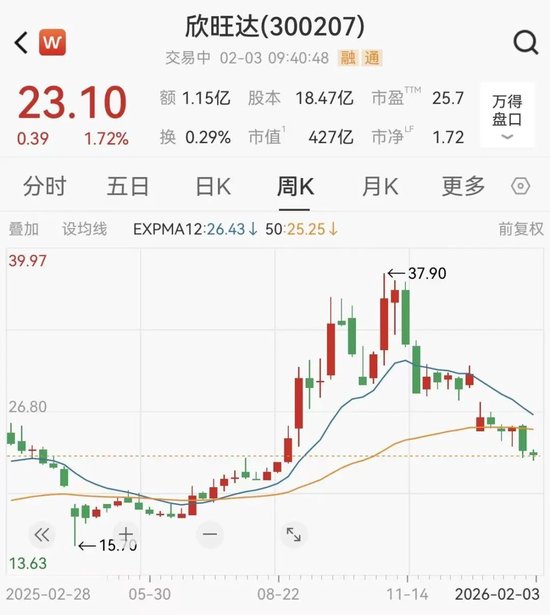
400亿电池巨头冲刺A+H上市
21世纪经济报道· 2026-02-03 01:52
Core Viewpoint - The article discusses the recent actions of XINWANDA, including its reapplication for an H-share listing in Hong Kong, focusing on overseas production capacity and the implications of a significant lawsuit with Geely's subsidiary, which could impact investor sentiment [1][9]. Group 1: Company Overview - XINWANDA has submitted its application to the Hong Kong Stock Exchange again, with a focus on supporting its overseas production capacity, particularly in Hungary, Vietnam, Morocco, and India [1]. - The company has a leading position in the consumer battery market, holding a 34.3% global market share in mobile phone batteries, and is among the fastest-growing manufacturers in the power battery and energy storage sectors [4]. - Revenue figures for XINWANDA from 2022 to 2024 are projected at 52.16 billion, 47.86 billion, and 56.02 billion RMB, respectively, with a compound annual growth rate of 3.6% [4]. Group 2: Financial Performance - In the first three quarters of 2025, XINWANDA achieved a revenue of 43.534 billion RMB, a year-on-year increase of 13.73%, and a net profit of 1.405 billion RMB, up 15.94% [4]. - The sales volume of consumer batteries increased, while power battery sales grew by 80% and energy storage systems saw nearly a threefold increase compared to the same period in the previous year [5]. - Despite the increase in sales volume, the average selling prices for consumer batteries decreased from 47.2 RMB to 47.6 RMB per unit, and for power batteries from 0.7 RMB/Wh to 0.5 RMB/Wh [5][6]. Group 3: Legal Issues - XINWANDA faces a lawsuit from Geely's subsidiary, Weirui Electric, claiming 2.314 billion RMB, which poses a significant risk to the company's operations and investor confidence [9]. - The company believes the lawsuit lacks sufficient evidence and that the likelihood of a ruling against them is low, as the claims cover a wide range of issues beyond the supplied battery cells [10]. - XINWANDA has made provisions of 275 million RMB for warranty claims and potential costs related to the lawsuit, indicating a cautious approach to financial management [11].
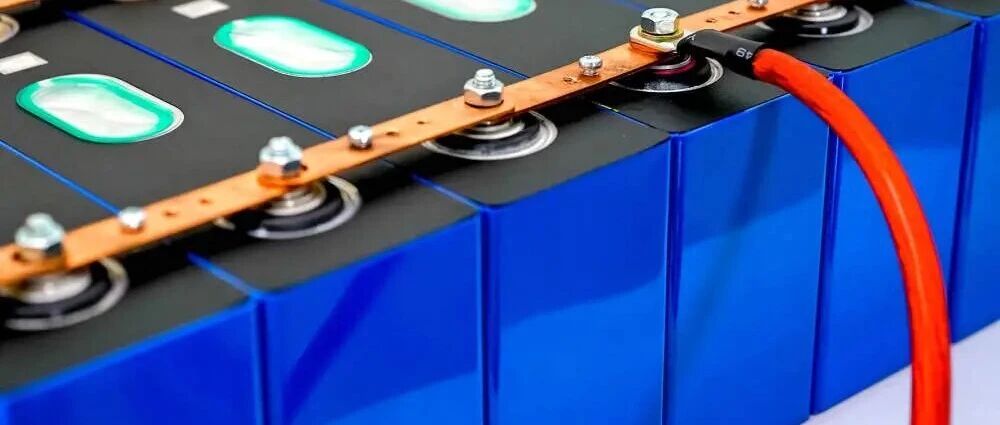
37股获推荐 华盛锂电目标价涨幅超76%丨券商评级观察
2 1 Shi Ji Jing Ji Bao Dao· 2026-02-03 01:07
Group 1 - The core viewpoint of the news is that several companies have received significant target price increases from brokers, indicating potential investment opportunities in the battery and gaming sectors [1][2]. - The companies with the highest target price increases include Huasheng Lithium Battery with a 76.77% increase, Zhongyi Technology with a 68.24% increase, and Gibit with a 53.12% increase, all of which belong to the battery and gaming industries [1][2]. - On February 2, a total of 17 target price adjustments were made by brokers, reflecting a strong interest in specific sectors [1][2]. Group 2 - A total of 12 companies received initial coverage from brokers on February 2, with Aorijin receiving an "Outperform" rating from Guosen Securities, and Zhongyi Technology receiving a "Buy" rating from Tianfeng Securities [3][4]. - Other companies that received ratings include China Merchants Shekou and Huayuan Co., both rated "Buy" by Huayuan Securities, and Capital Online rated "Hold" by Zhongyou Securities [3][4]. - The sectors represented in the initial coverage include packaging, real estate development, automotive parts, IT services, and chemical pharmaceuticals [4]. Group 3 - On February 2, 37 listed companies were recommended by brokers, with Dongpeng Beverage receiving recommendations from four brokers, while Xinyi Sheng and Zhongji Xuchuang received recommendations from two brokers each [5].

科技日报:阻挠福特与中企电池合作只会损害美产业发展
Ke Ji Ri Bao· 2026-02-03 00:56
Group 1 - The U.S. House of Representatives' China Affairs Committee Chairman John Moolenaar has expressed concerns regarding Ford's collaboration with Chinese battery companies, claiming it threatens U.S. supply chain independence and economic security [1] - Ford announced plans to utilize CATL's technology for producing lithium iron phosphate (LFP) batteries for energy storage systems, and is also in talks with BYD for hybrid vehicle battery deals [1] - The U.S. battery industry lags significantly behind China, with Bernstein predicting that by 2026, the U.S. will account for only 10% of global battery capacity compared to China's 80% [1] Group 2 - Ford's collaboration with CATL and BYD is seen as a strategic move, as LFP batteries dominate the energy storage market with over 90% share and are becoming mainstream in electric vehicles [2] - CATL leads the global market for LFP battery technology with a 48% share, while BYD holds nearly 30% in the hybrid vehicle battery sector [2] - The partnership is crucial for Ford's transition to new energy vehicles, as it allows access to advanced technology necessary for innovation [2] Group 3 - The U.S. lawmakers' actions reflect a misguided "national security" mindset, viewing the use of Chinese technology and products as inherently risky [3] - There is a call for U.S. politicians to recognize the importance of U.S.-China technological and industrial cooperation, and to cease interference in normal business collaborations [3]



鹏辉能源产销两旺最高预盈2.3亿 设9大海外分支机构冲刺港股IPO
Chang Jiang Shang Bao· 2026-02-03 00:25
Core Viewpoint - Penghui Energy is moving towards global expansion after achieving profitability, with plans to list H-shares on the Hong Kong Stock Exchange to enhance its international competitiveness and financing capabilities [1][2][3]. Financial Performance - In 2025, Penghui Energy expects to achieve a net profit attributable to shareholders of between 170 million and 230 million yuan, recovering from a loss of 252 million yuan in the previous year [1][5]. - The company reported a revenue of 7.961 billion yuan in 2024, a year-on-year increase of 14.83%, despite a previous loss of 25.2 million yuan [4]. - For the first half of 2025, revenue reached 4.301 billion yuan, up 13.99% year-on-year, while the net profit attributable to shareholders was a loss of 88.23 million yuan [5]. - In Q3 2025, the company achieved a revenue of 3.280 billion yuan, a significant year-on-year increase of 74.96%, with a net profit of 203 million yuan, marking a 977.24% increase [5]. Market Position - Penghui Energy holds a 3.6% market share in the global battery market, ranking ninth in terms of shipment volume for energy storage batteries in 2024 [3]. - The company is the global leader in portable energy storage batteries and ranks third in household energy storage batteries based on shipment volume for 2024 [3]. Global Expansion Strategy - The company has established branches in nine key energy storage markets, including the USA, Germany, Japan, Singapore, Indonesia, India, Turkey, Spain, and Chile, to provide localized support for global customers [1][7]. - Penghui Energy is implementing a dual-track strategy for its large-scale energy storage business, focusing on partnerships with leading energy storage integrators and seizing opportunities in renewable energy and power auxiliary services [8]. Production and Technology - The company has achieved a 95% automation rate in energy storage cell production and has established a network of nine production bases globally, enhancing its manufacturing capabilities [7]. - Penghui Energy is committed to integrating research, production, and service across its value chain to respond efficiently to market demands [7].

8点1氪丨“杰我睿”后,水贝又一黄金平台现兑付异常;马斯克否认上过爱泼斯坦私人小岛;SpaceX宣布收购人工智能企业xAI
3 6 Ke· 2026-02-03 00:12
Group 1 - Li Qiangqing has been appointed as the general manager of Kweichow Moutai Sales Co., a core subsidiary of Kweichow Moutai, which is responsible for market operations and sales of Moutai liquor. The sales revenue for Moutai liquor is projected to exceed 145.9 billion yuan and 110.5 billion yuan for the first three quarters of 2024 and 2025, respectively [4][6] - The Shanghai Gold Exchange has adjusted the margin levels and price limits for silver deferred contracts due to significant price volatility in the silver market [7] - Mercedes-Benz has adjusted the manufacturer's suggested retail prices for some models by approximately 10%, which is expected to provide some liquidity relief for dealers [6][7] Group 2 - Huayi Brothers' stock price has plummeted due to a consumption restriction imposed on Wang Zhonglei, the company's legal representative, facing a risk of delisting. The company has been involved in multiple legal disputes with a total amount of approximately 111 million yuan in the past year [5][6] - The "Yun Dian Dang" gold trading platform in Shenzhen is experiencing withdrawal issues, similar to the previous crisis faced by "Jie Wo Rui." The company has reported significant funding gaps due to operational difficulties and industry panic [1][2] - The IPO policy rumors regarding an increase in on-site inspection ratios and batch suspensions have been debunked as old news, with no new regulations confirmed by the China Securities Regulatory Commission [6][7] Group 3 - Disney reported a revenue of $25.98 billion for Q1 of fiscal year 2026, a 5% year-on-year increase, with adjusted earnings per share of $1.63 [16] - Samsung SDI reported a battery sales revenue of 3.62 trillion won for Q4, with a loss of 33.85 billion won [16] - The company Rui Pu Lan Jun expects a net profit of 630 million to 730 million yuan for the year ending December 31, 2025, marking a turnaround from a net loss of approximately 1.353 billion yuan for the previous year [17]

国泰海通:价值股有望出现重要拐点 重视非银、电池、电子等盈利预期上修的低拥挤滞涨板块
智通财经网· 2026-02-02 22:44
Core Viewpoint - The report from Guotai Junan indicates that the "transformation bull market" has significant room for growth, driven by the downward shift in risk-free returns, capital market reforms, and China's economic transformation. Value stocks are expected to reach an important turning point after years of decline and valuation compression [1]. Group 1: Economic Outlook - The new economic growth center is shifting upward, with a broader range of profit improvements expected. By Q4 2025, the acceleration of economic transformation will lead to a noticeable rise in the new economic growth center, expanding from AI to sectors like overseas expansion, resource products, and service consumption [1]. - The emerging technology industry is experiencing strong supply and demand dynamics, with a significant increase in internal price hikes across various segments [1]. - Four structural characteristics of profit growth in Q4 are identified: 1. Emerging economies remain the primary high-growth area for Q4 performance, with significant increases in electricity consumption in the technology service sector [1]. 2. The profit share of mid- and downstream manufacturing is increasing, with improved inflation and smooth cost transmission in the new economy [1]. 3. Large and mid-cap companies show greater profit growth elasticity, with improved production expectations and order conditions [1]. 4. High-tech export performance remains strong, with semiconductor, automotive, power equipment, and engineering machinery exports growing faster than overall exports [1]. Group 2: Sector Insights - The technology and manufacturing sectors are driven by increased AI penetration and accelerated overseas expansion. The demand for emerging industries is surging due to the continuous rise in AI-related new business penetration across various sectors [2]. - In the cyclical resources sector, global tariffs and geopolitical tensions are causing supply disruptions, while new demands from AI and power infrastructure are expanding. Prices for non-ferrous metals, sulfur, phosphorus chemicals, and fluorine chemicals are expected to rise significantly in Q4 2025, leading to sustained profit growth in these industries [2]. - Domestic consumption policies are accelerating the transition of consumption structure towards services, with the stock market's trading center expected to rise significantly by 2025, benefiting sectors like insurance and securities [2]. Group 3: Investment Recommendations - The report suggests focusing on low-crowded sectors with upward profit expectations, including non-bank financials, batteries, electronics, machinery, two-wheeled vehicles, and commercial vehicles. These sectors have not fully reflected the current profit expectation revisions in their stock prices [3]. - Two dimensions are used to assess sectors that have not adequately incorporated profit expectation revisions: 1. Profit-price matching degree, highlighting industries like batteries, components, shipbuilding, motorcycles, and engineering machinery that have lagged in stock performance since November 2025 [3]. 2. Profit-crowding degree, identifying sectors like non-bank financials, machinery, and electronics that have upward profit revisions but limited stock price increases [3].

如何看待 出口退税调整
Sou Hu Cai Jing· 2026-02-02 16:41
Core Viewpoint - The recent announcement by the Ministry of Finance and the State Taxation Administration to cancel export tax rebates for nearly 250 products, including photovoltaic products, is a significant step towards transforming China's foreign trade strategy and economic growth model, aiming to reduce reliance on exports and promote domestic demand [1][2][3] Group 1: Policy Adjustment and Economic Strategy - The adjustment of export tax rebates is part of China's broader strategy to address issues arising from an over-reliance on exports, which has led to trade imbalances and increased foreign exchange risks [2][3] - Since the initiation of the "export-for-foreign-exchange" strategy, export tax rebates have contributed significantly to China's trade surplus, accounting for about half of it over the past 30 years [3] - The emphasis on photovoltaic and battery products in the announcement reflects China's competitive advantages and aims to alleviate international trade tensions [3] Group 2: Industry Response and Future Outlook - Experts express concerns that reducing or eliminating export tax rebates could negatively impact export enterprises, especially in the current uncertain external environment [5][9] - Companies are encouraged to enhance their competitiveness through innovation and quality improvement rather than relying on government support [10] - The transition from an export-oriented model to one focused on domestic demand will require time and may involve challenges, but it is deemed necessary for long-term economic stability [10]
连续亏损两年后,这家储能电芯龙头如期盈利!
Xin Lang Cai Jing· 2026-02-02 14:23
Core Viewpoint - Rui Pu Lan Jun (HK: 00666) anticipates a net profit of approximately RMB 630 million to 730 million for the fiscal year 2025, marking its first profit since its listing in 2023, following a net loss of RMB 1.353 billion in 2024 due to increased shipments of power and energy storage battery products [2]. Group 1 - In the first half of 2025, Rui Pu Lan Jun's lithium battery product shipments reached 32.4 GWh, a year-on-year increase of 100.2%, with energy storage batteries accounting for 18.87 GWh, up 119.3% [5]. - The company achieved record quarterly shipments in Q3 2025, exceeding 23 GWh, with a single month surpassing 8 GWh [5]. - Rui Pu Lan Jun was established in 2017 and is the first enterprise in the new energy sector under the world’s top 500 company Qingshan Industry, focusing on the research, production, and sales of lithium-ion batteries [5]. Group 2 - The company has R&D centers in Shanghai, Wenzhou, and Jiaxing, and production bases in Wenzhou, Jiaxing, Liuzhou, Foshan, and Chongqing, with an overseas battery factory under construction in Indonesia [5]. - In 2024, Rui Pu Lan Jun ranked fifth globally in energy storage cell shipments and second in the household storage segment, while also ranking third in the national market for new energy heavy truck battery installations [5]. - By the first three quarters of 2025, the company ranked first globally in both household storage battery shipments and commercial industrial battery storage shipments [5]. Group 3 - As of February 2, 2025, Rui Pu Lan Jun's stock closed at HKD 11.92 per share, reflecting a 3.29% increase, with a market capitalization of approximately HKD 27.856 billion [6].

珠海冠宇:关于第二期以集中竞价交易方式回购公司股份的进展公告
Zheng Quan Ri Bao Zhi Sheng· 2026-02-02 14:09
Group 1 - The company Zhuhai Guanyu announced that as of January 31, 2026, it has repurchased a total of 3,634,391 shares through the Shanghai Stock Exchange trading system, accounting for 0.32% of the company's total share capital [1]
