
投资银行

Search documents
特朗普一个多月购债券逾八千万美元,涉及受益于其政策的行业
Sou Hu Cai Jing· 2025-11-16 14:22
Group 1 - The U.S. Office of Government Ethics reported that President Trump purchased at least $82 million in corporate and municipal bonds between late August and early October, including investments in industries benefiting from his policies [2] - Trump's financial disclosures indicate he has continued to earn income from numerous luxury real estate and business projects, many valued at tens of millions of dollars [2] - During the specified period, Trump made over 175 financial purchases, with total bond investments exceeding $337 million, primarily in municipal, state, county, and school district bonds [2] Group 2 - Trump's bond purchases included those from major companies such as Intel, Broadcom, Qualcomm, Meta Platforms, Home Depot, CVS Health, and investment banks like Goldman Sachs and Morgan Stanley [3] - Since returning to the presidency on January 20, Trump has purchased over $100 million in bonds, raising concerns about potential conflicts of interest due to his ongoing business interests [3] - Trump's annual disclosure for 2024 revealed income exceeding $600 million from various ventures, including cryptocurrency and golf properties, indicating a significant increase in wealth from these investments [3]


没了“股神”佩洛西,还有“股神”特朗普
凤凰网财经· 2025-11-16 13:10
Core Insights - The article discusses the financial activities of former President Trump, highlighting his significant investments in corporate and municipal bonds, totaling at least $82 million from late August to early October 2023 [4][5]. Group 1: Trump's Investments - Trump purchased corporate bonds from major companies such as Broadcom, Qualcomm, Meta Platforms, Home Depot, CVS Health, Goldman Sachs, and Morgan Stanley [5]. - The total value of bonds purchased by Trump during the specified period exceeded $337 million, with over 175 financial transactions reported [4][5]. - Trump's bond investments are linked to industries benefiting from his administration's policy changes, particularly in financial deregulation [4]. Group 2: Government and Financial Oversight - The financial disclosures were made public under the 1978 Ethics in Government Act, which mandates transparency in government officials' financial dealings [4]. - Trump's investments are managed by third-party financial institutions, and he has stated that he and his family do not directly manage the investment portfolio [8]. Group 3: Broader Context of Political Investments - The article also mentions other political figures, such as Nancy Pelosi, who has reported significant investment activities, with her family's investment returns reportedly reaching 84.3% in 2023 [11]. - Pelosi's investment success has drawn attention, with her family's wealth increasing from $41 million in 2004 to $120 million in 2023, showcasing the potential for substantial financial gains among political figures [11].

“数据缺失”打乱降息计划,高盛:原本该“12月降息,1月暂停”,现在不确定
Hua Er Jie Jian Wen· 2025-11-16 02:28
劳动力市场风险上升 尽管数据稀缺,现有指标显示劳动力市场面临下行压力。Challenger公司报告显示,10月私人部门裁员公告升至除衰退期外的最高水平。 关键经济数据的缺失正让美联储和债券市场陷入"盲飞"状态,迫使投资者重新评估美联储12月降息的可能性。高盛分析师警告,数据不足打乱了 原本预期的降息节奏,原本"12月降息、明年1月暂停"的预期面临极大不确定性。 市场目前对12月降息的定价已降至50%以下。尽管随着美国政府重开,经济数据将陆续出炉,但投资者亦面临多重数据空白:10月非农就业报告 可能无法发布,11月就业报告可能在12月FOMC会议前无法获得,通胀数据也可能出现缺失。在数据缺失的情况下,美国利率市场正处于观望模 式,1年期远期1年期利率在窄幅区间内波动。 这种数据真空状态直接冲击了市场此前预期的政策路径。高盛原本预测美联储将进行三次"保险性"降息,随后在明年1月暂停,但数据缺失使这 一预期变得不再确定。高盛在研究报告中指出,在极少数据支撑下,美国利率市场处于观望模式。 美国劳动力市场下行风险持续存在,尤其是人工智能对就业、通胀和中性利率的影响难以准确评估,进一步增加了政策前景的复杂性。 近期企业三 ...


诚邀体验 | 中金点睛数字化投研平台
中金点睛· 2025-11-16 01:04
Core Viewpoint - The article emphasizes the establishment of a digital research platform by CICC, aiming to provide efficient, professional, and accurate research services by integrating insights from over 30 specialized teams and covering more than 1800 stocks globally [1]. Group 1: Research Services - CICC's digital research platform, "CICC Insight," offers a one-stop service that includes research reports, conference activities, fundamental databases, and research frameworks [1]. - The platform features daily updates on research focuses and timely article selections, enhancing the accessibility of market insights [4]. - CICC provides over 3,000 complete research reports covering macroeconomics, industry research, and commodities [9]. Group 2: Data and Frameworks - The platform includes more than 160 industry research frameworks and over 40 premium databases, facilitating comprehensive industry analysis [10]. - CICC Insight incorporates advanced AI search capabilities, allowing users to filter key points and engage in intelligent Q&A [10].

中金10月数说资产
中金点睛· 2025-11-15 00:07
Core Viewpoint - The economic data for October shows a decline in growth rates compared to September, driven by weak demand and the fading effects of seasonal factors, indicating an increasing necessity for policy support [2][3]. Macroeconomic Analysis - The industrial value-added growth rate fell to 4.9% year-on-year in October, down from 6.5% in September, reflecting both the end of seasonal effects and a drop in demand [4]. - The export delivery value turned negative with a year-on-year decline of 2.1% in October, influenced by weak domestic demand and competitive pressures in certain industries [4]. - Fixed asset investment saw an expanded decline, with a cumulative year-on-year drop of 1.7% from January to October, worsening from a 0.5% decline in the first nine months [5][7]. Consumer Behavior - Retail sales in October grew by 2.9% year-on-year, a slight decrease from the previous month, with the "trade-in" consumption segment experiencing a significant slowdown, particularly in appliances and automobiles [5][13]. - The restaurant sector showed signs of recovery, with a growth rate of 3.8% in October, likely boosted by holiday spending [5][13]. - The overall consumer sentiment remains cautious, with high base effects from last year impacting growth rates [13][45]. Real Estate Market - The real estate market exhibited a simultaneous decline in both volume and price, with new housing sales dropping by 18.8% and sales revenue decreasing by 24.3% year-on-year in October [6][15]. - The funding sources for real estate development also weakened, with a year-on-year decline of 22.0% in October, reflecting reduced sales returns [15]. - The investment in real estate development further declined, with a year-on-year drop of 23.0% in October, indicating a lack of recovery momentum in the sector [15][17]. Infrastructure and Manufacturing Investment - Infrastructure investment growth slowed to 1.5% year-on-year from January to October, with a significant drop of 12.1% in October alone [7]. - Manufacturing investment growth also decreased, with a cumulative year-on-year increase of only 2.7% from January to October, down from 4.0% in the previous period [7][8]. - The overall fixed asset investment saw a monthly decline of 11% in October, exacerbated by weak demand and slow funding support [11][17]. Financial Sector Insights - The financial data for October indicated a continued decline in credit growth, with new loans decreasing by 0.2 trillion yuan year-on-year [27]. - The M1 and M2 money supply growth rates showed signs of slowing, reflecting a trend of deposit migration and reduced lending activity [27][28]. - The banking sector remains stable, with expectations for policy measures to support credit demand in the coming months [28].

中金公司成功举办2025年度投资策略会
中金点睛· 2025-11-14 11:50
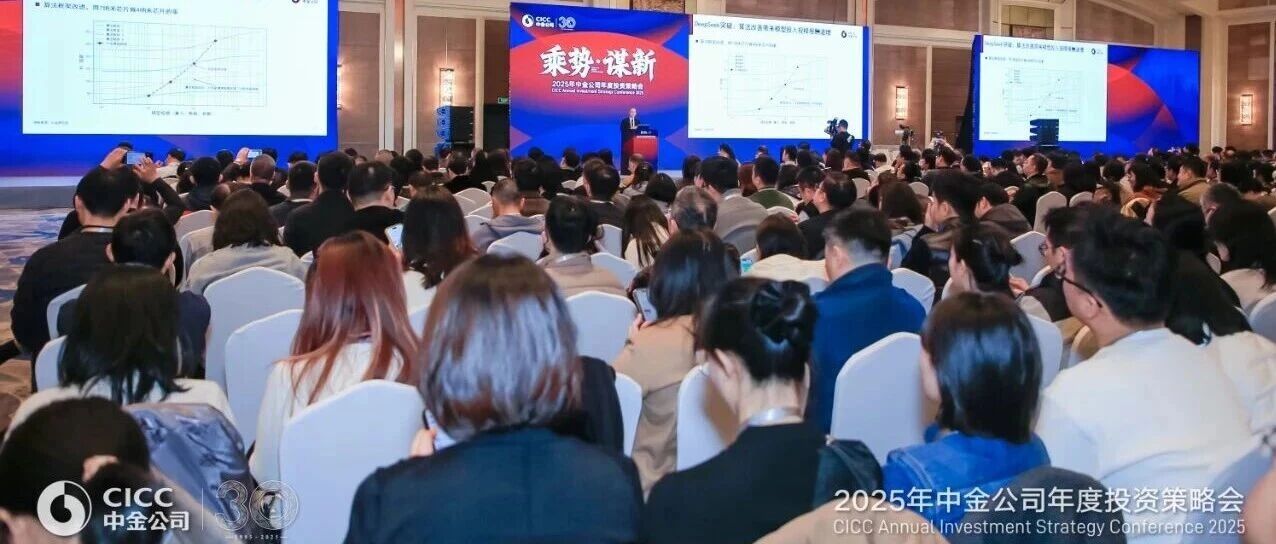
Core Viewpoint - The article discusses the 2025 CICC Annual Investment Strategy Conference, emphasizing the themes of new supply, new technology, new consumption, and new finance, reflecting the evolving landscape of China's economy and capital markets [4][5]. Group 1: Economic Outlook - The global landscape is undergoing significant changes due to a new round of technological revolutions and industrial transformations, reshaping global competition [5][7]. - China's economy is in a critical phase of transitioning from old to new growth drivers, with technology innovation and green development becoming core engines for economic growth [7]. - The development of artificial intelligence (AI) is highlighted as a unique competitive advantage for China, driven by its large population and market scale [7]. Group 2: Capital Market Dynamics - CICC aims to support technological innovation and economic transformation through its integrated services in investment banking, research, and asset management [7]. - The capital market is expected to play a crucial role in supporting technology innovation and facilitating economic transformation [7][9]. Group 3: Geopolitical and Economic Relations - The U.S.-China economic relationship is entering a new phase characterized by a "fragile balance," with both countries needing to achieve economic rebalancing [12]. - The internal and external economic cycles in China are expected to promote mutual reinforcement, focusing on innovation and boosting domestic demand [11]. Group 4: Market Strategies and Recommendations - The A-share market is anticipated to continue its upward trend, with a focus on sectors benefiting from AI technology and innovation [17]. - Investment strategies should consider three main lines: growth in AI technology, opportunities in overseas markets, and sectors poised for cyclical recovery [17][20]. Group 5: Research and Digital Innovation - CICC is committed to enhancing its research capabilities and providing comprehensive, forward-looking research services to investors [24]. - The CICC digital research platform aims to offer a one-stop service for institutional investors, facilitating access to research reports, databases, and event information [23].

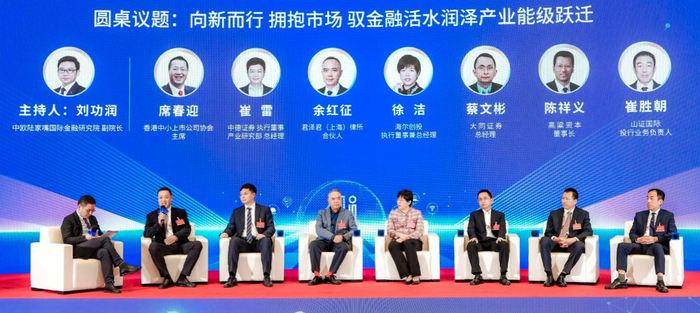
圆桌论坛一:向新而行 拥抱市场 驭金融活水润泽产业能级跃迁
Zheng Quan Ri Bao Zhi Sheng· 2025-11-14 11:08
圆 桌论坛一:向新而行拥抱市场驭金融活水润泽产业能级跃迁 主持人:各位来宾、各位朋友、女士们、先生们下午好!欢迎大家继续回到会议现场,我们将在这里举 行下午的流程。今天下午将在这里有两场圆桌对话要奉献给大家,我们将会进入今天下午第一场圆桌对 话的时间,本场圆桌议题是"向新而行拥抱市场驭金融活水润泽产业能级跃迁",我们要请出参与圆桌的 嘉宾,他们是: 主持人:刘功润中欧陆家嘴国际金融研究院副院长 参会嘉宾: 席春迎香港中小上市公司协会主席 崔雷中德证券执行董事、产业研究部总经理 余红征君泽君(上海)律所合伙人 徐洁海尔创投执行董事兼总经理 蔡文彬大同证券总经理 陈祥义高粱资本董事长 崔胜朝山证国际投行业务负责人 刘功润:尊敬的各位来宾、各位企业家朋友大家下午好!非常荣幸又来到了太原,我直观的感受一下就 是由衷为我们山西产业圈包括资本圈的朋友们点赞,这个平台除了是每年一度的朋友聚会,关键是我们 大家思想交流,尤其思想交流之后我们希望能够达到的共同行动这种倡议,我们投资人,我们的产业圈 包括我们做研究的人,能够把大家的行动,整合在一起,找到好的突破路径。当然我看到我们的峰会每 年一度有一个关键词就是产业升级,围绕产 ...
电力改变AI竞赛格局!高盛报告:大力推进电力建设将使中国在中美AI竞赛中占据优势
Huan Qiu Wang Zi Xun· 2025-11-14 07:49
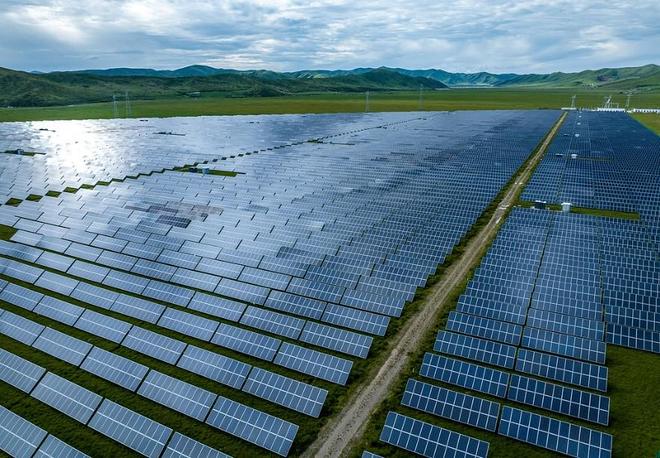
来源:环球网 【环球网报道 记者 张倩】据美国彭博社报道,美国高盛集团当地时间13日发布报告称,中国大力推进 电力建设,将使其在扩展支持人工智能(AI)技术的数据中心方面,较美国占据优势。 "有效备用电力容量的有限性可能成为美国进一步发展数据中心的瓶颈。"高盛报告称,"相比之下,中 国电网已经具有相当可观的备用容量,我们预计这一容量还将进一步扩大。" 四川一处光伏发电站 资料图 图源:视觉中国 彭博社称,中国正以全球领先速度推进可再生能源发电及核电建设。到2030年,中国可能拥有大约400 吉瓦的备用电力容量,是全球数据中心集群预计需求的三倍,这为其进一步发展提供了充足空间。高盛 分析师在上述研究报告中表示,预计中国仍将拥有充足的备用容量来满足数据中心及其他行业不断增长 的电力需求。 彭博社援引高盛分析继续称,数据中心所需电力目前已占据美国电力需求的6%左右,而这一快速增长 叠加新建电厂建设不足,导致美国13个区域电网中有8个区域电网的"有效备用电力容量"已经处于或低 于临界阈值,这使其容易受到价格飙升或供应短缺的影响。数据中心需要消耗大量电力进行运行并冷却 内部所有计算设备。 ...
电力优势成关键!高盛看好中国在AI数据中心竞赛中超越美国
Zhi Tong Cai Jing· 2025-11-14 07:40
虽然中国目前拥有全球约四分之一的数据中心容量,但可能很快就会赶上拥有44%份额、处于领先地位 的美国。 高盛称,数据中心已占美国电力需求的6%左右,这种快速增长加上缺乏新的发电厂建设意味着美国13 个区域电网中有8个已经达到或低于关键的备用容量水平,这使得它们容易受到电价飙升或电力短缺的 影响。 到2030年,这种紧张可能会限制数据中心的增长,因为数据中心需要大量电力来运行和冷却其内部的所 有计算能力。 分析师表示:"有限的有效的备用电力产能可能会成为美国数据中心进一步发展的瓶颈。相比之下,中 国的电网已经拥有大量的备用产能,而且我们预计这一产能还会进一步扩大。" 高盛集团表示,中国大规模的发电能力建设将使其在扩展为人工智能提供动力的数据中心方面比美国更 具优势。 自2021年和2022年遭遇一系列电力短缺问题以来,中国一直在大力建设电力设施,可再生能源、燃煤电 厂和核电机组的建设速度均处于世界领先地位。到2030年,中国可能会有约400千兆瓦的备用电力产 能,是全球数据中心预期需求的三倍,这为数据中心的持续扩张提供了充足的空间。 高盛的分析师最新的研究报告中写道:"我们预计中国的备用产能将保持充足,能够满足 ...
高盛跟随IEA步伐:推迟石油需求见顶预测至2040年
智通财经网· 2025-11-14 04:08
智通财经APP获悉,高盛认为,由于能源需求强劲,全球石油需求的增长将持续时间比此前预期的还要 长。而就在几天前,国际能源署(IEA)也改变了其关于石油需求即将达到峰值的论断。分析师Yulia Grigsby和Daan Struyven在周四的一份报告中指出,石油需求量将从 2024 年的1.035亿桶/日增长至2040 年的 1.13 亿桶/日。该银行去年曾预测石油需求将在 2034 年达到峰值。 高盛的分析师写道:"我们并不认为低碳技术会有重大突破。即便是为了实现石油需求峰值,我们预计 在 2030 年之后石油需求仍会处于长期平稳状态。以液化天然气为动力的卡车不太可能在除中国以外的 地区大规模推广。" 不过,高盛公司提醒称,长期的石油需求预测具有极大的不确定性,而且往往会大幅调整。他们指出, 低碳技术的快速发展以及潜在经济衰退的持续影响都存在风险。 高盛公司指出,由于低碳技术及基础设施建设方面的瓶颈问题,再加上能源需求的增加,公司对经济增 长峰值的预测进行了调整。该行表示,在经历了道路运输领域的长期平稳期后,石化产品将成为石油消 费的主要驱动力,而航空业也将做出显著贡献。 此前,IEA在其年度《世界能源展望 ...