
超市

Search documents
上半年山西76家重点零售企业销售额超422.89亿元
Zhong Guo Chan Ye Jing Ji Xin Xi Wang· 2025-08-13 00:36
Core Insights - The retail sector in Shanxi Province has shown significant sales performance in the first half of the year, with 76 key retail enterprises generating a total sales revenue of 42.289 billion yuan [1] - The top three performing segments are shopping centers, automotive, and supermarkets, collectively accounting for over 50% of total sales [1] Segment Analysis - The distribution of the 76 key retail enterprises spans 14 segments, with the automotive segment comprising 10 enterprises (over 10%), shopping centers and pharmacies each having 9 enterprises (over 10%), and supermarkets and mobile digital segments each having 8 enterprises (over 10%) [1] - In terms of sales revenue, shopping centers lead with over 10.259 billion yuan (over 20%), followed by the automotive segment with approximately 8.452 billion yuan (nearly 20%), and supermarkets with about 5.715 billion yuan (over 10%) [1] Growth Trends - Online sales exhibited the highest year-on-year growth, reaching over 4.583 billion yuan, a growth of over 70% [1] - The pedestrian street segment reported sales of approximately 968 million yuan, with a year-on-year increase of nearly 20% [1] - The home appliance segment achieved sales of about 1.309 billion yuan, reflecting a year-on-year growth of over 10% [1] - The mobile digital and automotive segments recorded sales of approximately 1.589 billion yuan and 8.452 million yuan, respectively, with year-on-year growth of over 10% and nearly 10% [1]
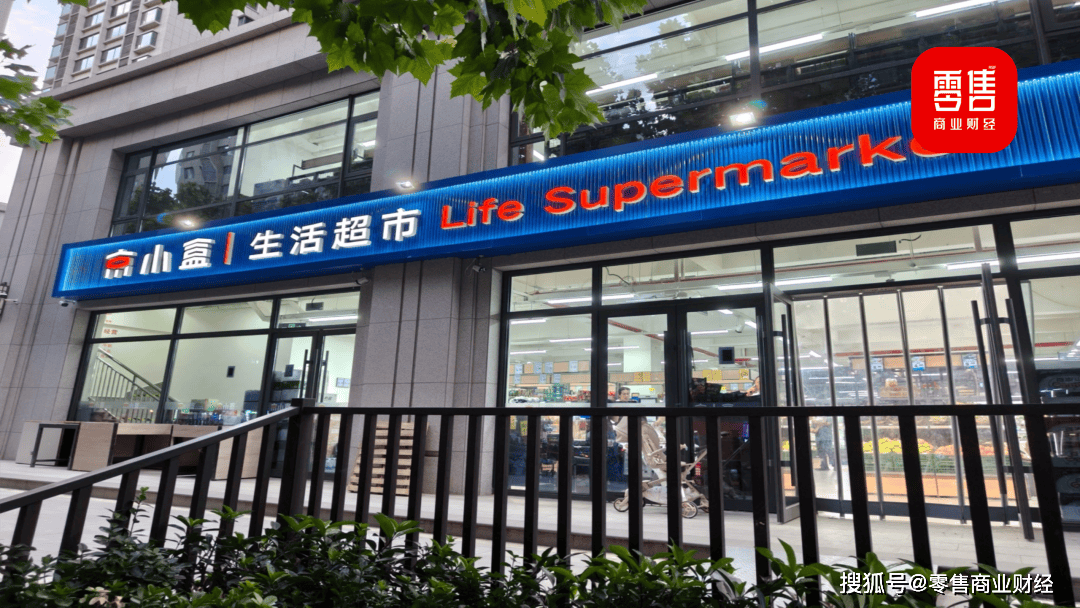
实探西安京小盒:对标奥乐齐,自营商品仍需进化
Sou Hu Cai Jing· 2025-08-12 18:22
Core Viewpoint - Jingxiaobox, a leading hard discount retail brand in Xi'an, focuses on product strength, extreme cost-effectiveness, community engagement, and operational optimization to establish its market presence, providing a reference for regional retail brands [2][4]. Group 1: Company Overview - Jingxiaobox has over 130 stores in Xi'an, with store sizes typically ranging from 600 to 800 square meters and an overall SKU count of approximately 1,000 to 1,200, covering essential household categories such as grains, fresh produce, beverages, and snacks [2][4]. - The brand originated from "Adir Life Supermarket," which opened its first store in 2015, adopting a simplified product display method and pricing around 70% of other supermarkets, inspired by Germany's ALDI [2][4]. Group 2: Operational Strategy - Jingxiaobox implements a cost-control strategy similar to ALDI's "penny-pinching supermarket" model, focusing on minimizing operational costs through simplified store layouts and direct product displays [6][10]. - The stores primarily cater to daily household needs, with a focus on essential products, and some locations offer basic fresh produce in a simplified display format [6][8]. Group 3: Pricing and Product Strategy - The pricing strategy emphasizes extreme cost-effectiveness, with competitive prices on fresh produce and other essential items, such as pumpkin at 1.99 yuan per jin and bottled water at 3.8 yuan for 500ml [11][13]. - Jingxiaobox aims to enhance its self-owned product capabilities, with a focus on product differentiation and competitive pricing, similar to ALDI's approach [15][20]. Group 4: Market Positioning and Challenges - The brand's strategy is to maximize customer satisfaction by ensuring that every customer leaves with a purchase, focusing on essential household needs [23][24]. - Despite its strengths, Jingxiaobox faces challenges in standardizing operational details across stores, which may affect brand perception [24][25]. - The company needs to enhance its brand building and online presence to support its growth in the competitive hard discount market [25][26].

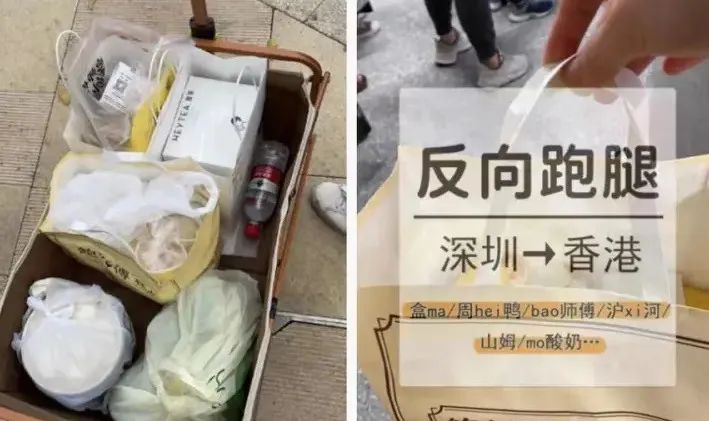
香港人反向代购热潮越来越火
3 6 Ke· 2025-08-12 04:15
Core Viewpoint - The trend of Hong Kong residents traveling to mainland China for shopping and the rise of reverse purchasing has become a significant commercial phenomenon, reflecting a deepening integration between Hong Kong and mainland cities [1][22]. Group 1: Hong Kong Residents' Consumption Trends - Hong Kong residents are increasingly traveling to mainland cities, particularly the Greater Bay Area, for shopping, with a notable preference for high-end products and services [2][3]. - The average spending of Hong Kong residents when they visit mainland China ranges from 300 to 500 HKD, with over 80% of their expenditures on lifestyle services such as health, beauty, and personal care [3][22]. - The phenomenon of reverse purchasing, where residents buy products from mainland China to sell back in Hong Kong, has gained traction, with some individuals reportedly earning substantial profits [5][6]. Group 2: Real Estate and Property Trends - Many Hong Kong residents are opting to purchase properties in mainland cities, particularly in Shenzhen, Guangzhou, and Zhuhai, due to the affordability compared to Hong Kong's real estate market [2][22]. - The average Hong Kong family would need to spend 14.4 years of income to buy a home, while properties in the Greater Bay Area are more accessible, often requiring only a down payment [2][22]. Group 3: Historical Context and Evolution - The current trend marks a significant shift from the previous era of Hong Kong goods being purchased by mainland consumers, highlighting a reversal in purchasing dynamics [15][22]. - The initial wave of purchasing from Hong Kong to mainland China began in the 1980s, with various consumer goods entering the mainland market, leading to a cultural exchange [8][9][15]. - The peak of the Hong Kong goods purchasing trend occurred around 2014, but recent years have seen a resurgence of Hong Kong residents shopping in mainland China [15][22]. Group 4: Business Integration and Market Dynamics - The integration of Hong Kong and mainland markets is evident, with numerous mainland brands establishing a presence in Hong Kong, enhancing competition and diversifying the retail landscape [16][19]. - Major e-commerce players like JD and Alibaba are increasingly focusing on the Hong Kong market, indicating a strategic shift towards localizing their operations [19][22]. - The collaboration between Hong Kong and mainland businesses is expected to grow, with initiatives like the cooperation memorandum between Hong Kong and Hainan aimed at expanding trade opportunities [21][22].
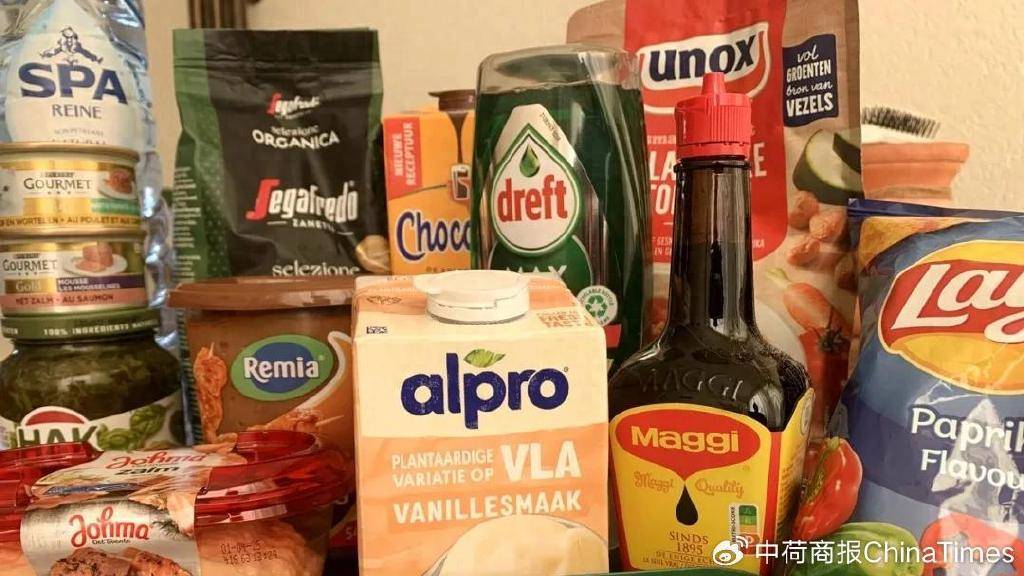
荷兰超市省钱妙招失灵?60%营收靠美国!超市CEO:绝不转嫁消费者
Sou Hu Cai Jing· 2025-08-11 17:49
Group 1 - The core viewpoint is that private labels are gaining popularity among consumers in Europe due to dissatisfaction with rising prices of A-brands, providing supermarkets with valuable insights during negotiations with these brands [1][4] - Ahold Delhaize is collaborating with other European supermarket groups for joint purchasing to secure better prices, as significant price discrepancies exist across countries [4] - The growth of private labels is enhancing Ahold Delhaize's negotiating power with A-brands, allowing them to use their own products as comparison materials during negotiations [4] Group 2 - The impact of the trade war between the US and Europe has been minimal for Ahold Delhaize, as the company primarily sources food locally for its supermarkets [6] - However, rising costs of packaging materials, particularly aluminum and steel, are expected to affect the costs of products sold in US supermarkets [6] - The company is exploring smarter solutions to mitigate the impact of rising costs without passing them on to consumers [6]
新势力不断崛起,济南本土传统商超如何重构“人货场”
Qi Lu Wan Bao Wang· 2025-08-11 15:22
Core Insights - The retail industry in Jinan is undergoing significant transformation as major supermarket chains adapt to the new retail wave through innovative business models and supply chain restructuring [1][7] Group 1: New Retail Strategies - Supermarkets are shifting from merely selling products to offering experiential shopping environments, enhancing customer engagement through scene-based consumption [2][3] - Yonghui Supermarket's recent transformation has led to a sales increase of over 400% and a customer traffic increase of more than 150% after implementing a "Pang Donglai-style" adjustment [2][5] - Hema Fresh is integrating shopping with dining experiences, offering a variety of ready-to-eat options and fresh food, catering to the fast-paced urban lifestyle [3][4] Group 2: Store Adjustments and Innovations - Traditional supermarkets are undergoing significant renovations to improve customer experience, with examples like Jiajiayue introducing open kitchen areas and new product lines [5][6] - Jiajiayue has replaced approximately 40% of its homogenized products based on consumer data analysis, resulting in a 20%-30% increase in average sales post-renovation [5][6] - Dazhonghua is leveraging online platforms to enhance customer convenience, allowing for real-time price synchronization and rapid delivery, thus reducing operational costs [6] Group 3: Market Dynamics and Competition - New retail players like Sam's Club and Hema Fresh are rapidly expanding in Jinan, while local brands like Hualian Supermarket are struggling with declining sales and store numbers [7][8] - Hualian Supermarket reported a 5% decline in sales to 2.81042 billion yuan in 2024, alongside a 4.5% decrease in the number of stores [7][8] - The traditional supermarket sector is facing challenges from e-commerce and new shopping channels, prompting a shift from store closures to renovations aimed at enhancing the shopping experience [8] Group 4: Future Directions - Experts suggest that traditional supermarkets should focus on four key areas for transformation: upgrading experiences, innovating services, integrating digital solutions, and incorporating cultural elements into their offerings [8]


胖东来发布关于招聘“刑释人员”说明:基于人性的善良和美好
Qi Lu Wan Bao· 2025-08-11 03:01
Core Viewpoint - The recent decision by Pang Donglai to recruit ex-offenders has sparked significant public discussion, emphasizing the importance of social reintegration and respect for all individuals, regardless of their past [1][4]. Group 1: Recruitment Initiative - Pang Donglai's recruitment of ex-offenders is rooted in the belief in human kindness and the need for societal respect and care for all groups [4]. - The company aims to help ex-offenders reintegrate into society and live with dignity, viewing them as equal citizens after serving their sentences [4]. - The initiative encourages ex-offenders to adopt a positive outlook on life, learn from their past, and contribute positively to society [4]. Group 2: Company Operations - Pang Donglai currently operates two stores in Xinxiang, Henan Province, known as "Da Pang" and "Er Pang," with a third store, referred to as "San Pang," under renovation and expected to open in October [6][9]. - The company has approximately 4,000 employees across its two existing stores in Xinxiang, with recruitment for the new store yet to officially commence [10]. - The employee turnover rate for Pang Donglai from January to July 2025 was reported at 0.94%, with a notably low rate of 0.14% in July [8].
盒马调整战略:关停会员店聚焦主业,年内计划新开百家门店
Sou Hu Cai Jing· 2025-08-10 19:07
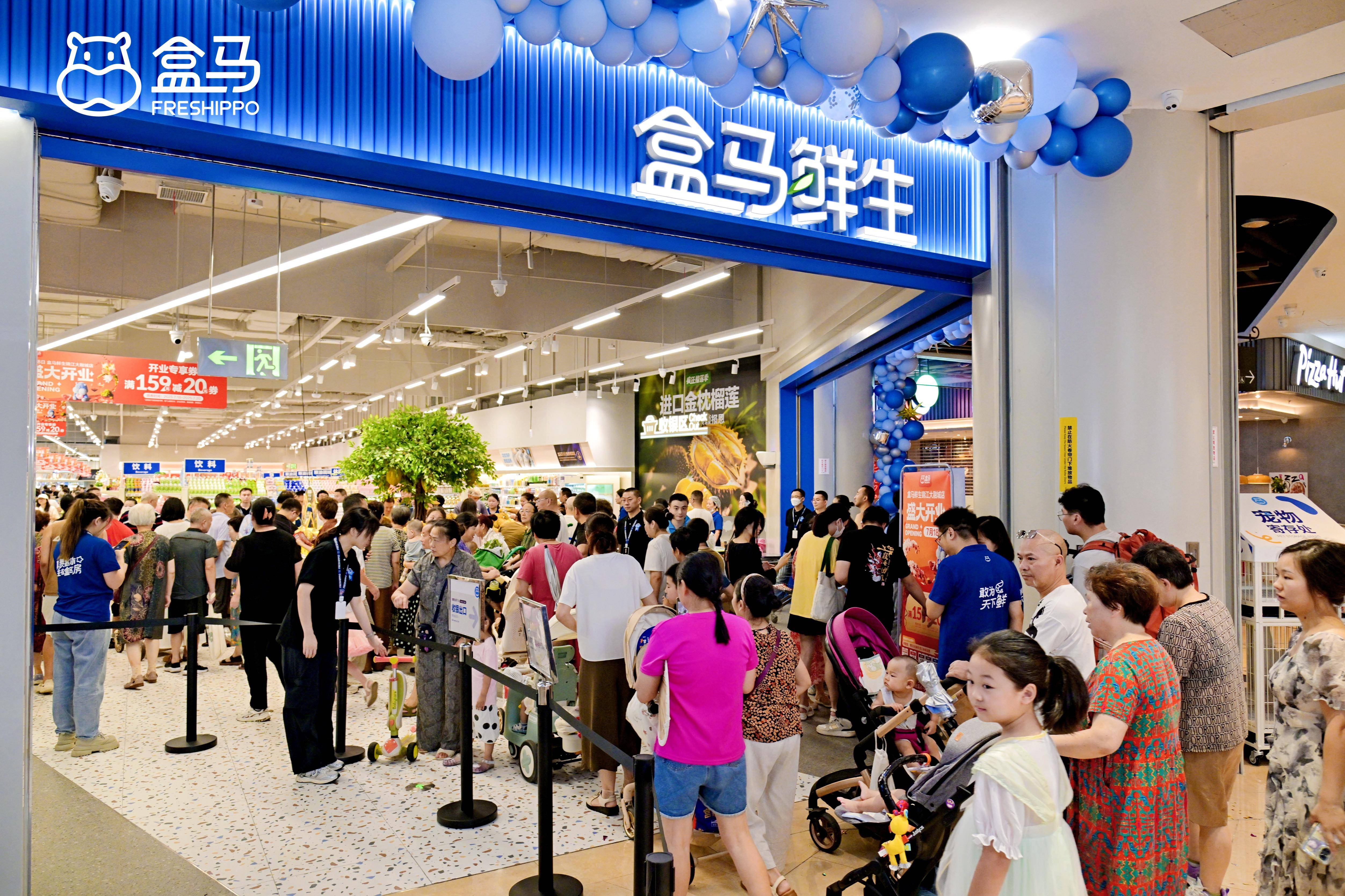
Core Insights - Hema, a retail giant, announced the closure of all its warehouse-style membership stores, which has garnered significant attention in the market [1] - The CEO, Yan Xiaolei, stated that the closures represent less than 2% of the total stores, as the company aims to focus on its core business and has implemented various store optimization measures since last year [1] - Hema plans to open nearly 100 new stores and expand into over 50 new cities within the current fiscal year [1] - The last Hema X membership store will close on August 31, marking the company's complete exit from the membership store sector [1] - Hema achieved a milestone of profitability for the first time in the last fiscal year [1] - As of March 31, 2025, Hema Fresh is expected to have over 420 stores, ranking third in China's supermarket industry with a GMV of 75 billion yuan [1] Strategic Adjustments - Experts interpret Hema's decision to exit the membership store business as part of a strategic shift towards a dual-line layout, focusing on Hema Fresh for community fresh produce and Hema NB for hard discount models [5] - The closure of Hema X membership stores aligns with the company's previously stated strategy to concentrate on its main store formats and discount stores [5] - This move reflects a broader trend in the retail industry, shifting from "scale expansion" to "efficiency first," as membership stores require larger spaces and higher investments, leading to longer investment return cycles [5] - Hema Fresh and Hema NB have smaller store sizes and lower capital requirements, allowing for quicker profitability, which aligns with the company's current strategic goals [5]
超市行业调改步入深水区 加速向品质零售升级
Zheng Quan Ri Bao· 2025-08-10 16:47
Core Viewpoint - The traditional supermarket industry is under significant pressure for transformation, with many companies exploring quality retail as a key strategy for upgrading and improving sales performance [1][4]. Group 1: Industry Performance and Trends - As of August 10, 2023, four listed companies in the A-share supermarket sector have disclosed earnings forecasts, with one company expecting a net profit increase of 50% to 100%, another anticipating a return to profitability, while two others are projecting losses [1]. - According to the China Chain Store & Franchise Association, by the first half of 2025, chain supermarkets will continue to face substantial development pressures, with less than half of the supermarkets achieving year-on-year sales growth [1][3]. - A survey indicated that 75% of supermarkets attempted transformation in 2024, with 75% of those reporting varying degrees of sales growth [3]. Group 2: Company-Specific Developments - Yonghui Supermarket has initiated a strategic transformation focused on "quality retail," with significant upgrades to store environments and product offerings, including the removal of over 3,900 existing products and the introduction of 1,201 high-quality items [2]. - As of now, Yonghui has completed upgrades in over 150 stores and aims to reach 200 by the end of September 2023, emphasizing high quality and diverse product offerings to meet consumer demands [2]. - Despite facing challenges, including a projected net loss of 240 million yuan for the first half of 2025 due to extensive store renovations, Yonghui remains committed to its reform efforts and plans to raise up to 3.992 billion yuan for further store upgrades [5]. Group 3: Market Dynamics and Challenges - The retail market in China is characterized by significant scale and a multitude of operators, leading to imbalances and intense competition, necessitating optimization and adjustment within the industry [4]. - The shift towards quality retail is seen as both a challenge and a necessary evolution for traditional supermarkets to enhance profitability and brand influence in a competitive landscape [4].
商贸零售行业周报:武商集团布局仓储会员店,探索本土化成长路径-20250810
KAIYUAN SECURITIES· 2025-08-10 11:45
Investment Rating - The industry investment rating is "Positive" (maintained) [1] Core Insights - The report highlights the emergence of differentiated membership stores, such as the WS Jiangtun membership store launched by Wushang Group in Wuhan, which focuses on unique products and services [5][24] - The report emphasizes the importance of emotional consumption themes and recommends high-quality companies in sectors like gold jewelry, offline retail, cosmetics, and medical aesthetics [8][29] Summary by Sections Retail Market Review - The retail industry index reported a decline of 0.38% for the week of August 4 to August 8, 2025, underperforming the Shanghai Composite Index, which increased by 2.11% [14][21] - The jewelry sector showed the highest growth among retail sub-sectors, with a weekly increase of 6.07% and a year-to-date increase of 32.99% [16][19] Retail Insights - Wushang Group's WS Jiangtun membership store adopts a "paid membership + selected products" model, aiming to provide a differentiated shopping experience [5][24] - The store features a dual membership structure with basic and diamond tiers, enhancing customer engagement and loyalty [25] Investment Recommendations - Focus on gold jewelry brands with differentiated product offerings and consumer insights, recommending companies like Laopu Gold and Chaohongji [8][29] - Highlight the potential of offline retail companies that adapt to consumer trends, recommending Yonghui Supermarket and Aiyingshi [8][29] - Emphasize the growth of domestic cosmetics brands, recommending companies like Maogeping and Pola [8][29] - Suggest investment in medical aesthetics firms with differentiated product lines, recommending Aimeike and Kedi-B [8][29] Company Performance Highlights - Laopu Gold achieved a revenue of 8.506 billion yuan in FY2024, with a net profit increase of 253.9% [31][36] - Yonghui Supermarket reported a revenue of 17.479 billion yuan in Q1 2025, with a significant decline in net profit [31] - Chaohongji's Q1 2025 revenue increased by 25.4%, driven by its focus on fashion jewelry [43]




开“穷鬼超市”,湖南老板年入500亿
创业家· 2025-08-10 10:44
Core Viewpoint - The article discusses the unique business model of Le'er Le, a supermarket chain founded by Chen Zhengguo, which focuses on providing extremely low prices while maintaining profitability through cost control and high sales volume [5][8][9]. Group 1: Company Overview - Chen Zhengguo, born in 1976 in Hunan, started Le'er Le in 2011, inspired by the spirit of "serving the public" from the historical text "Yueyang Tower" [13][17]. - Le'er Le has expanded to over 9,000 stores nationwide, achieving annual sales of 50 billion yuan [9][24]. Group 2: Business Model - Le'er Le's pricing strategy is significantly lower than competitors, with products priced 15%-20% lower than typical supermarkets, yet it maintains a gross margin of 17% [26][27]. - The company operates with a high sales volume model, leveraging cost-cutting measures to ensure profitability despite low prices [28][30]. Group 3: Cost Control Strategies - Chen Zhengguo employs various strategies to minimize costs, including selecting less expensive locations, using minimal store decor, and maximizing store space for inventory [32][35][39]. - The average sales per square meter for Le'er Le's best-performing stores exceed 100,000 yuan annually, compared to the industry average of 20,000-30,000 yuan [40]. Group 4: Supply Chain Management - Le'er Le bypasses lower-tier distributors by negotiating directly with higher-tier suppliers, reducing costs and ensuring a stable supply of products [46][50]. - The company has built strong relationships with suppliers, allowing for quick cash transactions and reliable inventory [50]. Group 5: Market Positioning - Le'er Le positions itself as a value-driven supermarket, focusing on affordability and accessibility for consumers, particularly students [19][23]. - The brand's reputation for low prices has led to rapid word-of-mouth growth, establishing a loyal customer base [20][24].
