公用事业

Search documents
中山公用最新筹码趋于集中
Zheng Quan Shi Bao Wang· 2025-11-10 13:57
Core Viewpoint - Zhongshan Public Utility reported a significant decrease in the number of shareholders, indicating potential shifts in investor sentiment and stock performance [2] Group 1: Shareholder and Stock Performance - As of October 31, the number of shareholders for Zhongshan Public Utility was 49,005, a decrease of 12,593 from the previous period, representing a 20.44% decline [2] - The closing price of the stock on the reporting date was 12.01 yuan, with a slight increase of 0.08%, but the stock has cumulatively decreased by 9.36% since the concentration of shares began, with 5 days of increase and 10 days of decrease [2] Group 2: Financing and Margin Data - As of November 7, the latest margin trading balance for the stock was 698 million yuan, with a financing balance of 697 million yuan, reflecting a decrease of 38.93 million yuan, or 5.29%, since the concentration of shares began [2] Group 3: Financial Performance - In the third quarter report, the company achieved a total operating revenue of 3.143 billion yuan, a year-on-year decrease of 7.04%, while net profit reached 1.211 billion yuan, an 18.11% increase year-on-year, with basic earnings per share at 0.8300 yuan and a weighted average return on equity of 6.90% [2] Group 4: Institutional Ratings - In the past month, the stock received a buy rating from one institution, with the highest target price set at 15.00 yuan by CITIC Securities on November 2 [2]


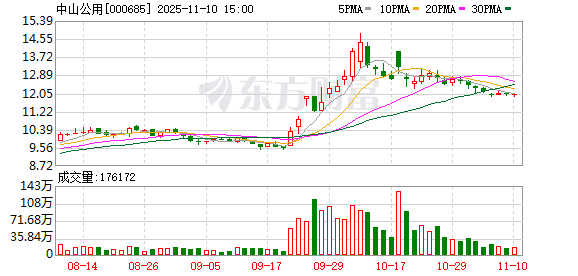
花旗:美股大量多头“口是心非”:嘴上说怕AI泡沫,手上却狂买股票!
美股IPO· 2025-11-10 11:23
花旗报告表示,投资者的言辞与行动出现了显著脱节,他们对估值、信贷和劳动力市场"忧心忡忡",但对美国大盘股的配置却"坚定不移",情绪指数已 触"亢奋"。当前美股估值达历史极值,但强劲盈利成关键支柱。花旗认为,当前AI未现泡沫,适合逢低布局。 这种分裂心态为市场带来了不确定性。强劲的企业盈利为股市提供了支撑,但极端的估值和过度乐观的仓位使市场变得异常脆弱。一旦盈利增长的故事 出现裂痕,当前这种微妙的平衡就可能被打破。 情绪与仓位的巨大鸿沟 花旗报告详细揭示了投资者情绪与实际仓位之间的巨大差异。报告指出, 尽管客户口头上表达了对"估值、泡沫、信贷和劳动力"的"持续担忧",但其 市场仓位读数却显得"亢奋"。 用来衡量市场情绪的花旗莱斯科维奇恐慌与亢奋指数(Levkovich Index)目前读数为0.72,显著高于0.38的"亢奋"标准。报告的历史回测数据显示,当 该指数进入亢奋区域时,标普500指数接下来一年的回报中位数通常为负值(-9.4%)。 一种"口是心非"的矛盾情绪正在主导美股市场。据追风交易台,花旗最新报告指出, 投资者一方面对高企的估值和潜在的AI泡沫表示担忧,但他们的实 际投资组合却显示出极度看涨的" ...

滨海投资(02886)11月10日斥资7.94万港元回购7万股
智通财经网· 2025-11-10 09:45
Core Viewpoint - Binhai Investment (02886) announced a share buyback plan, intending to repurchase 70,000 shares at a cost of HKD 79.4 million on November 10, 2025 [1] Company Summary - The company is planning to execute a share buyback, which indicates a strategy to enhance shareholder value and potentially signal confidence in its financial health [1]
30股最新股东户数降逾一成
Zheng Quan Shi Bao Wang· 2025-11-10 09:31
Core Insights - A total of 819 stocks reported their latest shareholder numbers as of October 31, with 333 stocks showing a decline compared to the previous period [1][3] - The stocks with the largest decrease in shareholder numbers include Yigor, Shouhua Gas, and Shenghong Co., with declines exceeding 10% [3] Shareholder Data - The stock with the most significant decline in shareholder numbers is Yigor, which decreased by 28.74% to 28,724 shareholders, while its stock price increased by 41.84% since the concentration of shares [3] - Shouhua Gas reported a 22.18% decrease in shareholder numbers to 21,736, with a stock price decline of 11.59% during the same period [3] - A total of 30 stocks experienced a decline of over 10% in shareholder numbers [3] Market Performance - The average increase for concentrated stocks since October 21 is 5.09%, with notable performers including Moen Electric, Haima Automobile, and Foshan Plastic, which saw increases of 68.79%, 51.95%, and 42.91% respectively [3] - Among the concentrated stocks, the mechanical equipment, basic chemicals, and electronics sectors are the most represented, with 37, 30, and 28 stocks respectively [3]

联美控股(600167):受地产周期影响,广告业务业绩承压,看好氢能在“十五五”期间的景气度提升
China Post Securities· 2025-11-10 06:53
Investment Rating - The report maintains a "Buy" rating for the company [5] Core Views - The company has faced pressure on its advertising business due to the real estate cycle, but there is optimism regarding the hydrogen energy sector's growth during the 14th Five-Year Plan period [3][4] - For the first three quarters of 2025, the company reported a revenue of 2.16 billion yuan, a year-on-year decrease of 6.2%, while the net profit attributable to shareholders was 540 million yuan, an increase of 6.9% [3] - The company's gross margin and net margin improved to 33.3% and 25.4%, respectively, compared to the previous year, mainly due to the performance of its subsidiary [4] Financial Summary - Revenue projections for 2025-2027 are 3.37 billion, 3.46 billion, and 3.59 billion yuan, with net profits of 660 million, 690 million, and 730 million yuan, respectively [5] - The company’s PE ratios for the same period are projected to be 28, 26, and 25 times [5] - The company’s total assets are expected to grow from 172.19 billion yuan in 2024 to 175.34 billion yuan in 2027, with a debt ratio decreasing from 32.5% to 29.8% [9]

推进煤炭与新能源融合发展,碳中和碳达峰的中国行动白皮书发布 | 投研报告
Zhong Guo Neng Yuan Wang· 2025-11-10 06:49
Group 1 - The core viewpoint of the report emphasizes the integration of coal and new energy development, with significant progress expected by the end of the 14th Five-Year Plan [2] - The report outlines key tasks for coal and new energy integration, including the development of photovoltaic and wind power in mining areas, clean energy substitution, and innovation in green energy utilization [2] - The "China's Action on Carbon Peak and Carbon Neutrality" white paper highlights the importance of green and low-carbon energy transformation to achieve carbon neutrality goals [2] Group 2 - The weekly performance of various indices shows significant increases, with the lithium battery index rising by 8.00% and the energy storage index by 4.60% [1] - Lithium prices have increased, with carbonate lithium priced at 80,600 yuan/ton, up 6.8% from the previous week, and hydroxide lithium at 75,800 yuan/ton, up 2.9% [1] - The average national electricity purchase price is projected to decrease by 1% year-on-year by June 2025, while coal prices have increased by 47 yuan/ton week-on-week [3] Group 3 - Investment recommendations include focusing on undervalued thermal power assets and opportunities in charging pile and photovoltaic infrastructure [4] - Specific companies recommended for investment in thermal power include Jingtian Energy, Jingneng Power, and Datang Power [4] - The report suggests that the growth potential of green electricity is re-emerging, with historical issues regarding national subsidies expected to be resolved [4]


岁末年初,港股高股息资产更吸睛
2025-11-10 03:34
岁末年初,港股高股息资产更吸睛 20251109 港股银行板块中,国有大行和部分股份行经营稳定,分红水平长期稳定 在 30%左右,平均分红收益介于 4.3%至 5.4%之间。中信银行资产质 量改善显著,分红收益也达到 5.4%。渝农商行受益于成渝经济圈建设, 港股对应 2025 年的股息率约为 5.4%。 油气煤电板块推荐中海油和中国神华,成本管控能力强,现金流状况良 好,有提升派息率空间。公用事业板块关注华润燃气和新奥能源,华润 燃气商业模式稳健,新奥能源私有化若成功,股息率可观。 高端商业地产复苏主线下,关注华润万象生活、太古地产和恒隆地产, 预计 2026 年平均股息率约为 5.5%。香港楼市企稳,利好新鸿基地产 和恒基地产。消费板块关注百胜中国、美高梅中国和华住集团,食品饮 料板块关注统一企业中国。 当期收益。此外,折现率从 750 日移动平均国债收益率曲线改为财报日市场利 率,使得负债现值对短期利率波动更加敏感,也促使保险公司通过配置高股息 股票来平滑利润表上的波动。 高股息股票在港股市场中的表现如何? 根据统计数据,自 2015 年以来,港股高股息资产在一季度和四季度取得正收 益的概率分别为 73 ...
华夏标普港股通低波红利ETF:低利率时代掘金港股的高股息机会
Quan Jing Wang· 2025-11-10 03:28
Core Viewpoint - The article highlights the increasing attractiveness of the Hong Kong stock market due to its relatively low valuations and the influx of southbound capital, with a focus on the launch of the China Asset Management's Hong Kong Stock Connect Dividend Low Volatility ETF (code: 159118) as a new investment tool for high dividend assets in Hong Kong [1][2][8]. Group 1: Market Conditions - The global low interest rate environment is prompting investors to seek stable returns, with Hong Kong stocks currently at historically low valuations, making them an appealing choice for investment [1][2]. - As of October 21, 2025, the Hang Seng Index's PE (TTM) is approximately 11.94 times and PB (LF) is about 1.22 times, placing it in the 79% and 83% percentiles of the past decade, respectively [2]. - Southbound capital has seen a net inflow of over 12 billion HKD into Hong Kong stocks since the beginning of 2025, marking a significant increase compared to previous years [3]. Group 2: Investment Strategy - The Hong Kong Stock Connect Dividend Low Volatility ETF (159118) utilizes a "dividend + low volatility" dual-factor strategy, selecting high dividend yield stocks with low volatility to provide investors with a streamlined investment option [6][8]. - The index tracks the top 75 stocks with the highest dividend yields from the Hong Kong Stock Connect, further narrowing down to the 50 stocks with the lowest volatility, ensuring a focus on cash flow and liquidity [6]. - Historical performance shows that the index has achieved a cumulative increase of approximately 94.95% since 2021, with an annualized return exceeding 16%, significantly outperforming the Hang Seng Index [6]. Group 3: Sector Distribution - The index maintains a balanced sector distribution, with the top three sectors being real estate (approximately 16%), utilities (about 15%), and banking (around 14%), ensuring no single sector exceeds 25% [7]. - The index includes high dividend leaders across various sectors, such as Jiangxi Copper, China Shenhua, and CNOOC, with a notable valuation discount of approximately 34.5% compared to A-shares, indicating significant potential for valuation recovery [7]. Group 4: Fund Management - China Asset Management is recognized for its expertise in index investment, with a team of 43 professionals and an average industry experience of over 12 years, providing strong support for its index products [7]. - The fund manager for the ETF, Yan Xiaoxian, has 10 years of experience in the securities industry, including over 4 years in public fund management, enhancing the fund's credibility [7]. - The ETF employs a complete replication strategy with low management fees of 0.15% and custody fees of 0.05%, aimed at reducing costs for investors [7].
60年传奇终谢幕!巴菲特今夜将发布最后一封公开信
Jin Shi Shu Ju· 2025-11-10 03:20
Core Viewpoint - Berkshire Hathaway's stock has risen over 4% in the past week, outperforming the market, as investors await Warren Buffett's upcoming letter, marking his first public statement since announcing his retirement as CEO at the end of the year [2][3] Group 1: Upcoming Letter and Leadership Transition - Buffett plans to discuss charity, Berkshire Hathaway, and other topics of interest in his upcoming letter, which is seen as a farewell after over 60 years of leadership [2] - Greg Abel will succeed Buffett as CEO, while Buffett will remain as chairman, with Abel expected to write the annual shareholder letter in early 2026 [2][3] - Post-letter, Buffett's communication with Berkshire shareholders may be limited, as he will not attend the annual shareholder meeting in May [2] Group 2: Company Performance and Financial Strength - Buffett may reaffirm confidence in Berkshire's future under Abel's leadership, highlighting the company's strengths, including over $300 billion in cash reserves and nearly $50 billion in after-tax annual earnings [3] - Berkshire's stock price rose 4.6% amid a broader market decline, showcasing its defensive business model and strong balance sheet, particularly through its Geico insurance business [3] - The company reported a 34% year-over-year increase in operating profit for the third quarter, with insurance underwriting income soaring over 200% to $2.37 billion [3] Group 3: Market Position and Stock Performance - Berkshire has been a net seller of stocks for 12 consecutive quarters, with speculation about further reductions in its large Apple holdings [4] - Despite its defensive business and strong cash position, Berkshire's stock has underperformed the S&P 500 this year, rising nearly 10% compared to the S&P's 14.4% increase [4]
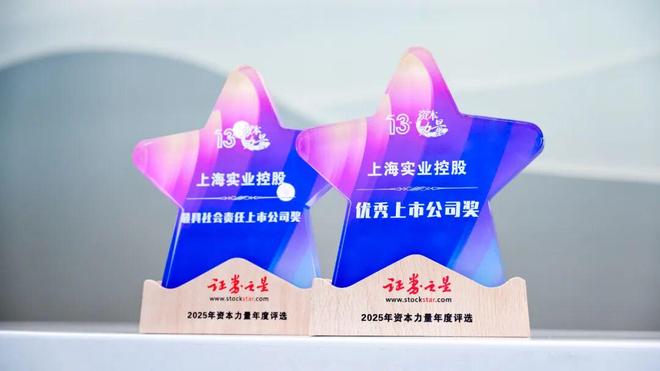
上海实业控股荣获2025证券之星“优秀上市公司奖”及“最具社会责任上市公司奖”
Xin Lang Cai Jing· 2025-11-10 02:33
Core Viewpoint - Shanghai Industrial Holdings Limited has been awarded the "Outstanding Listed Company Award" and the "Most Socially Responsible Listed Company Award" at the 13th Securities Star Capital Power Annual Brand Event, reflecting the capital market's recognition of the company's innovative and transformative efforts [1][8]. Group 1: Awards and Recognition - The "Outstanding Listed Company Award" acknowledges the company's commitment to R&D investment and innovation, actively responding to carbon neutrality and dual carbon goals [5]. - The "Most Socially Responsible Listed Company Award" recognizes the company's excellence in corporate responsibility, social care, and environmental protection [8]. Group 2: Company Initiatives - The company has advanced key projects such as the Baoshan Renewable Energy Utilization Center and the Qingpu Xicen Water Purification Plant, applying international advanced technologies to enhance energy-saving and emission-reduction efficiency [5][6]. - In the real estate sector, the company has achieved 33 green building certifications, covering a total area of 3.79 million square meters, and has implemented cutting-edge technologies like BIM to reduce resource consumption and improve project efficiency [6]. Group 3: Social Responsibility Efforts - The company is dedicated to social contributions, engaging in education assistance, poverty alleviation, and community health initiatives, including rural revitalization and educational support in Yunnan [8]. - The company integrates green concepts into its strategy, promoting projects such as wastewater treatment and waste incineration to enhance energy-saving and emission-reduction outcomes [8]. Group 4: Governance and Management - The company has established a sound governance structure and an efficient management team, ensuring scientific decision-making and effective supervision through various committees [6]. - The company emphasizes a people-oriented approach in its compensation, performance evaluation, and training systems, providing employees with growth opportunities and competitive guarantees [6].