外卖

Search documents
印度迎IPO狂潮,全民“股疯”,散户疯狂打新,298家公司扎堆上市
Sou Hu Cai Jing· 2025-11-03 11:04
Core Insights - India's stock market is experiencing an unprecedented IPO boom, with 298 companies listed in the first ten months of the year, surpassing the total for all of 2023 [1][3] - Retail investor participation has surged, with the ease of the IPO application process leading to a threefold increase in enthusiasm, allowing even ordinary workers to earn significant returns [1][3] - Major players like Jio, owned by Asia's richest man Mukesh Ambani, are expected to join the IPO wave next year, further fueling market excitement [5] IPO Activity - The number of IPOs in India has reached a record high, with 298 companies going public in 2023, including new entrants in the renewable energy and technology sectors [3] - Companies are utilizing IPOs for various purposes, such as expanding production capacity in the renewable energy sector and raising funds for business expansion in the tech industry [11][12][14] Retail Investor Trends - The proportion of household savings directed towards the stock market has doubled from 2.5% in 2020 to 5% currently, driven by improved market performance and simplified application processes [7] - A significant portion of new retail investors is under 30 years old, with over 40% of IPO participants falling into this age group, indicating a shift in market demographics [9] Company Strategies - Renewable energy firms are primarily raising funds to expand capacity, with companies like Waaree Energies and NTPC Green Energy planning to use IPO proceeds for solar power projects [12] - Technology companies, such as Swiggy and Ather Energy, are seeking capital to enter new markets and enhance production capabilities, despite some not yet being profitable [14][16] Market Dynamics - A substantial portion of this IPO activity involves existing shareholders cashing out, with approximately two-thirds of new stock offerings being "offer for sale" transactions [19] - Foreign investment dynamics are mixed, with some companies like LG Electronics and Hyundai Motor listing their subsidiaries through "offer for sale" while foreign institutional investors have sold around $18 billion in Indian stocks this year [21]


京东七鲜小厨跨平台入驻 外卖大战转向协同共赢
Cai Jing Wang· 2025-11-03 08:12
Core Insights - JD's food delivery brand Qixian Xiaochu has shifted its strategy from a self-built ecosystem to an open collaboration model by entering third-party platforms like Meituan and Taobao Flash Purchase [1][3][5] - This transition reflects a broader industry trend moving from subsidy wars to rational competition and cooperation among platforms [1][3][7] Company Strategy - Qixian Xiaochu, launched in July 2025, initially operated exclusively on JD's own platform, achieving over 1,500 daily orders per store and a 30% increase in order volume within a 5-kilometer radius [2][3] - The brand's recent entry into Meituan and Taobao Flash Purchase has resulted in significant sales, with over 2,000 monthly orders on Taobao and 400 on Meituan [3][5] - JD plans to establish 10,000 Qixian Xiaochu locations nationwide within three years, indicating a strong commitment to expanding its market presence [5] Industry Dynamics - The collaboration between JD and Meituan marks a shift from a competitive to a cooperative landscape in the food delivery sector, breaking the previous adversarial market structure [4][6] - Analysts suggest that this partnership allows both companies to leverage their strengths: JD enhances order diversification and brand exposure, while Meituan benefits from improved food quality and user retention [5][7] - The overall market is evolving towards a model where platforms seek synergies and shared growth opportunities, moving away from zero-sum competition [7][9] Future Outlook - The future of the food delivery market will depend on platforms' abilities to integrate their services and collaborate across ecosystems, focusing on high-frequency and low-frequency business interactions [9] - The successful integration of resources and the establishment of an open ecosystem will be crucial for platforms aiming to gain a competitive edge in the next phase of market development [9]


TikTok东南亚月活用户突破4.6亿丨出海周报
2 1 Shi Ji Jing Ji Bao Dao· 2025-11-03 06:32
Group 1: Trade Relations - The U.S. will cancel the 10% "fentanyl tariff" on Chinese goods, while the 24% reciprocal tariff will remain suspended for another year [2] - Both parties agreed to extend certain tariff exclusion measures and reached consensus on fentanyl cooperation, expanding agricultural trade, and handling specific corporate cases [2] Group 2: E-commerce and Digital Economy - Guangzhou's foreign trade import and export reached 923.68 billion yuan in the first three quarters, a year-on-year increase of 12.5% [3] - TikTok's Southeast Asia user base has surpassed 460 million, with Indonesia having the highest number of users at over 160 million [4] - Meituan's international delivery brand Keeta has officially launched operations in Abu Dhabi, expanding its presence in the UAE [5] Group 3: Financial Performance - Amazon reported third-quarter revenue of $180.169 billion, a 13% increase year-on-year, with net profit rising 38% to $21.187 billion [6] - eBay's third-quarter net revenue was $2.82 billion, exceeding market expectations, with a projected fourth-quarter revenue range of $2.83 billion to $2.89 billion [8] Group 4: Market Adjustments - Shopee announced its exit from the Colombian and Chilean markets due to strategic adjustments, while maintaining operations in Southeast Asia and other Latin American markets [9] - TEMU has opened its platform for local sellers in Brazil, marking a shift from cross-border to local sales [10] Group 5: Company Developments - Fengbo International secured $71 million in funding to accelerate platform development and expand international market reach [11] - Anker Innovations reported a revenue of 21.019 billion yuan in the first three quarters, with overseas business accounting for over 96% of total revenue [12] - Pop Mart opened its first store in the Middle East at Hamad International Airport in Qatar, marking a significant step in its global expansion strategy [14]

中国公司全球化周报|TikTok东南亚月活用户突破4.6亿/淘宝出海双11全球上新210万新品
3 6 Ke· 2025-11-03 02:09
Group 1: Industry Trends - Investment, trade, and technology are currently the most popular directions for Chinese companies expanding into Dubai [2] - TikTok's monthly active users in Southeast Asia have surpassed 460 million, with Indonesia leading at 160 million [5] - Taobao has launched 2.1 million new products globally for this year's Double 11 shopping festival, aiming to enhance the international competitiveness of domestic brands [5] Group 2: Company Developments - Pop Mart opened its first store in the Middle East at Hamad International Airport in Doha, Qatar, marking its global expansion strategy [6] - OPPO launched its Find X9 series flagship smartphone in Spain, priced at €1,299 (approximately ¥10,700), aligning with the trend of increasing average smartphone prices [6] - Meituan's international delivery brand Keeta has officially started operations in Abu Dhabi, expanding its presence in the UAE market [6] Group 3: Financial Performance - Anker Innovations reported a revenue of ¥21.019 billion for the first three quarters of 2025, with overseas business contributing over 96% of total revenue [7] - Geely has officially entered the UK market with the launch of its first pure electric SUV, the EX5, and aims to sell 100,000 units by 2030 [7] - BYD unveiled its K-EV model at the 2025 Tokyo Mobility Show, introducing a dual strategy of pure electric and hybrid vehicles [7] Group 4: Investment and Financing - Yuan Tian Biological received strategic investment from Toyota Tsusho, aiming to penetrate the automotive supply chain [9] - Seres plans to raise over HK$13 billion through a global offering of H shares, with expansion plans across multiple international markets [9] - JBD completed over ¥1 billion in financing, setting a record for the MicroLED micro-display sector, with applications in nearly 50 smart glasses [10] Group 5: Policy and Market Initiatives - The China Council for the Promotion of International Trade will release a directory of key cross-border e-commerce enterprises to promote healthy development in the sector [11] - KrASIA launched new English media services aimed at Chinese companies going abroad, enhancing global brand visibility [11]




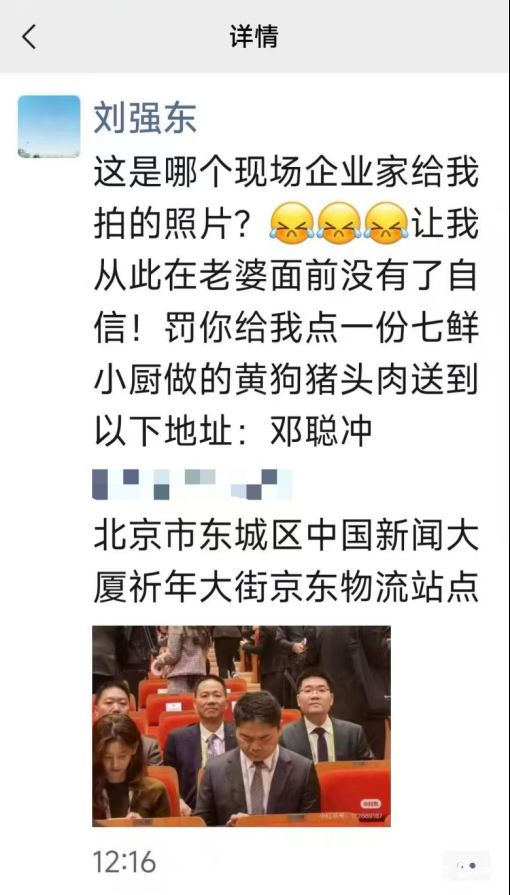
刘强东吐槽夫妻合照,“索赔”一份黄狗猪头肉,七鲜小厨爆单
Nan Fang Du Shi Bao· 2025-11-03 01:56
Core Insights - Liu Qiangdong, founder and chairman of JD Group, humorously commented on a photo from the APEC summit, which led to a surge in online discussions and trending topics [1] - The mention of delivery rider Deng Congchong in Liu's post resulted in an overwhelming number of orders for the dish "Huang Gou Zhutou Rou" from JD's Seven Fresh Kitchen, causing a spike in business [4][6] Group 1 - Liu Qiangdong's humorous post included a request for a specific dish, which led to a significant increase in orders for that item [1] - Deng Congchong, the delivery rider mentioned, experienced a flood of new orders and social media interactions as a result of the post [4][6] - The dish "Huang Gou Zhutou Rou" has been popular since its introduction, with high demand leading to stock shortages [8] Group 2 - Deng Congchong has been a full-time rider for JD for over eight years and recently joined JD's delivery service, benefiting from formal employment benefits [8] - The Seven Fresh Kitchen has been experiencing high order volumes, with around 30 full-time riders scheduled during peak times to meet demand [8] - Liu Qiangdong personally prepared the dish at a recent event, highlighting its popularity and the company's commitment to customer engagement [8]
TikTok东南亚月活用户突破4.6亿;淘宝出海双11全球上新210万新品|36氪出海·要闻回顾
36氪· 2025-11-02 13:35
Core Insights - TikTok's monthly active users in Southeast Asia have surpassed 460 million, with Indonesia leading at 160 million, followed by Vietnam at 70 million and Thailand at 50 million, marking the highest user growth in the region [3] - Taobao has launched 2.1 million new products globally for this year's Double 11 shopping festival, aiming to enhance the international competitiveness of Chinese brands [3] - Anker Innovations reported a revenue of 21.02 billion yuan for the first three quarters of 2025, with overseas business accounting for over 96% of total revenue [5] - Geely has officially entered the UK market with the launch of its first pure electric SUV, aiming to sell 100,000 units by 2030 [5] - ByteDance is set to launch an overseas gaming distribution platform called GameTop, similar to Steam, to cater to international gaming needs [6] Group 1 - TikTok's Southeast Asia monthly active users reached 460 million, with Indonesia at 160 million, Vietnam at 70 million, and Thailand at 50 million, leading regional growth [3] - Taobao's Double 11 event features 2.1 million new products launched globally, with over 1 million participating merchants and more than 400 million items eligible for free shipping [3] - Anker Innovations achieved a revenue of 21.02 billion yuan in the first three quarters of 2025, with 96.7% of revenue coming from overseas markets [5] Group 2 - Geely launched its first pure electric SUV in the UK, with plans to establish 100 sales and service outlets by 2026 [5] - ByteDance is launching GameTop, a new gaming platform for overseas markets, providing personalized gaming content and tools for creators [6] - JBD completed over 1 billion yuan in financing, focusing on MicroLED display technology for AR glasses, with applications in nearly 50 smart glasses [8] Group 3 - Meituan's international delivery brand Keeta has officially launched in Abu Dhabi, expanding its presence in the UAE [5] - Source Biological received strategic investment from Toyota Tsusho, aiming to enter the automotive supply chain with a focus on recycling PET [7] - The China Council for the Promotion of International Trade will release a directory of key cross-border e-commerce enterprises to enhance global business connections [9]


官宣!美团骑手“屏蔽恶意顾客”功能全国上线:最多可屏蔽2名用户,屏蔽期为365天;网友力挺:就应该这样
新浪财经· 2025-11-02 08:00
Core Viewpoint - Meituan has launched a new feature allowing delivery riders to block malicious customers, addressing the riders' demands for fairness and respect in their work environment [1][2]. Group 1: Feature Implementation - The "block malicious customers" feature is now fully operational across the country, enabling riders to apply for blocking users who have engaged in abusive behavior [1]. - Riders can submit evidence such as recordings or chat logs to support their request to block a user for a period of one year, with the option to block up to two users at a time [2]. - The blocking period lasts for 365 days, after which it automatically expires, and riders can adjust their block list at any time [2]. Group 2: Market Context - As the food delivery market expands, conflicts between riders and customers have become more frequent, with reports of riders facing unreasonable demands and negative reviews for trivial issues [2]. - The introduction of this feature is seen as a response to the growing need for protection and support for delivery riders in the face of customer misconduct [3]. Group 3: Industry Reactions - Reactions from riders are mixed; some appreciate the protection it offers, while others believe that blocking two users is insufficient given the competitive nature of the delivery market [3]. - Industry experts view this initiative as a positive step towards providing more choices and protecting the rights of both riders and customers [3].

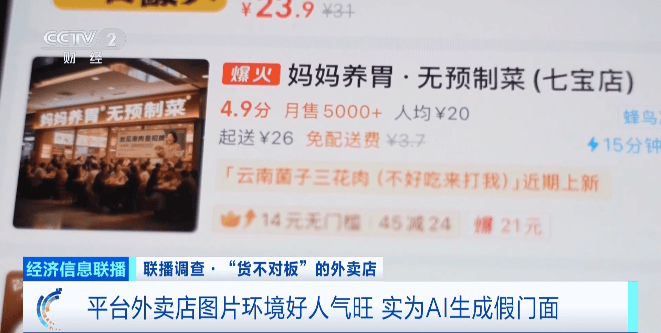
“货不对板”的外卖店 律师:利用AI图片造假 商家涉嫌违法
Yang Shi Wang· 2025-11-02 05:56
Core Viewpoint - Multiple food delivery platforms have established special teams or governance groups to implement stricter merchant management standards, yet consumer doubts persist regarding the legal responsibilities of these businesses [1] Group 1 - Several food delivery platforms have formed specialized teams to enhance merchant management practices [1] - Consumers continue to express concerns about the dual nature of online and offline operations of food delivery merchants [1] - Legal experts indicate that some merchants are misleading consumers by using AI-generated images to fabricate store scenes, which may violate e-commerce laws [1]
美团上线新功能:骑手可屏蔽恶意用户|首席资讯日报
首席商业评论· 2025-11-02 03:44
Group 1 - Meituan has launched a new feature allowing delivery riders to block malicious users, enhancing the fairness of the evaluation mechanism [2] - Xiaoma Zhixing becomes the first company to obtain a city-wide robot taxi license in Shenzhen, allowing autonomous taxis to operate outside pilot areas [2] - Xiaomi's car deliveries exceeded 40,000 units in October, indicating strong demand [3][4] Group 2 - Nvidia CEO Jensen Huang completed a stock sale plan, cashing out over $1 billion amid a surge in AI processor demand, with Nvidia's stock rising over 85% in the past six months [3] - XPeng Motors reported a record delivery of 42,013 new cars in October, with cumulative deliveries of 355,209 units from January to October, a year-on-year increase of 190% [4] Group 3 - Cambrian Technology is facing a lawsuit from its former CTO, who is claiming 4.287 billion yuan in damages, marking a significant internal conflict in China's AI sector [5] - JD.com announced a "super supply chain" initiative and a plan to double imports from Asia-Pacific countries over the next three years [6] Group 4 - The Shenzhou 21 spacecraft successfully docked with the space station, setting a record for the fastest docking process [7] - Microsoft's Q1 financial report revealed a net loss of $3.1 billion from its investment in OpenAI, indicating a significant valuation drop [8] - Coinbase is in late-stage negotiations to acquire the stablecoin infrastructure startup BVNK for approximately $2 billion [8] Group 5 - China National Railway Group reported a net profit of 11.72 billion yuan for the first three quarters of 2025, with total operating revenue of 912.2 billion yuan [9]




平台外卖店图片号称“实拍图”:环境好人气旺!实为AI生成
Sou Hu Cai Jing· 2025-11-01 15:27
Core Insights - The rise of food delivery services has led to increasing concerns about food safety and authenticity of restaurant representations [1] - Many food delivery businesses are using AI-generated images to mislead consumers about the quality and appearance of their offerings [10] Group 1: Consumer Experience - Consumers often encounter discrepancies between the images presented on delivery platforms and the actual food received, leading to dissatisfaction [1] - A specific case of a restaurant named "Mama Nourishes" was highlighted, where the online presence showed a bustling environment, but the physical location was difficult to find and did not match the advertised quality [3][5] Group 2: Business Practices - Some restaurants operate multiple brands from the same kitchen, misleading consumers about their offerings and sales figures, with each brand reportedly selling over 4,000 orders per month [7] - The use of AI technology to create virtual storefronts has become a common practice among some food delivery businesses, allowing them to present an appealing image at a low cost [10] Group 3: Misleading Marketing - Certain restaurants employ misleading branding and video content to create a false impression of their dining environment, which does not reflect the actual conditions [9] - The cost of AI-generated images for restaurant marketing is relatively low, making it an attractive option for businesses looking to enhance their online presence without significant investment [10]