风电

Search documents
在沙地里“追风逐日”:从“金色沙海”到“绿色蓝海”
Zhong Guo Xin Wen Wang· 2026-01-14 08:13
Core Insights - The transformation of the Keshiketeng Banner from a desert area to a green landscape is attributed to the integration of photovoltaic (PV) technology with ecological restoration efforts [2][3] Group 1: Ecological Restoration and Renewable Energy - The region's vast desert and arid land are being utilized for solar energy generation, referred to as "planting the sun" in the desert [3] - The installation of PV panels not only generates electricity but also stabilizes the soil by reducing wind speed and preventing erosion, allowing for the cultivation of drought-resistant plants [3][4] - The "shade effect" of the PV panels can reduce surface water evaporation by 20% to 30% [4] Group 2: Project Development and Economic Impact - In 2023, a development agreement was signed for a wind and solar integration project with a total capacity of 3 million kilowatts, including 1.4 million kilowatts of wind power and 1.6 million kilowatts of solar power [4] - The first phase includes a 300,000-kilowatt solar project and a 200,000-kilowatt wind project, with plans to complete sand control over 135,000 acres by 2024 [4] - The "agriculture-solar complementary" model is being developed, utilizing the land between PV panels to grow high-quality forage, expected to produce 7,000 tons of dry grass annually [4] Group 3: Community Benefits and Wildlife Conservation - Compensation for land acquisition in the region amounts to 6.1 million yuan, benefiting local herders significantly [5] - Local employment opportunities are created through the PV project, with workers earning approximately 300 yuan per day [5] - The installation of bird-friendly structures on power lines has improved the habitat for local bird species, promoting ecological balance [6]
长江扬州段风电整机出口量连续两年全国第一
Yang Zi Wan Bao Wang· 2026-01-14 03:37
Core Insights - The Yangzhou maritime department reported that by 2025, the cumulative transshipment volume of wind power equipment in the Yangtze River Yangzhou section is expected to reach 4.353 million cubic meters, representing a year-on-year growth of over 86.82% [1] - The total export volume of wind power equipment is projected to be 4.0321 million cubic meters, with a year-on-year increase of 136%, ranking second nationwide, while the export volume of complete wind power units has maintained the first position in the country for two consecutive years [1] - Yangzhou maritime has implemented multiple measures to enhance safety and pollution management, aiming to establish a favorable transportation environment for wind power equipment [1] Group 1 - Yangzhou maritime department has strengthened service responsibilities to achieve new breakthroughs by conducting visits and research on wind power equipment production and transportation companies [2] - The department has arranged dedicated personnel to coordinate with terminals and agents, promoting a "multi-ship consultation" and "one ship, one plan" operational model [2] - Yangzhou port's 4th and 5th berths have been successfully coordinated to complete the first export task of wind power complete units in the Jiangdu port area [2] Group 2 - The Yangzhou maritime department has established a safety assurance system focusing on the "super long, super heavy, super wide" characteristics of wind power equipment transportation [2] - Utilizing "smart maritime" and big data platforms, real-time monitoring of vessel dynamics and weather conditions is conducted to ensure safety measures are implemented [2] - A joint mechanism has been established with other departments to monitor wind power transport vessels in complex waterways, ensuring comprehensive oversight [2] Group 3 - The department conducts 24-hour dynamic monitoring of vessels in port using CCTV and drones to ensure operational order [2] - Inspections are carried out based on vessel conditions, focusing on certificates, firefighting, and lifesaving elements, with all identified issues rectified before departure [2] - Yangzhou maritime aims to continue supporting local economic development and enhancing port infrastructure while providing quality services for the wind power industry [2]
二十兆瓦海上风电机组完成吊装
Liao Ning Ri Bao· 2026-01-14 02:17
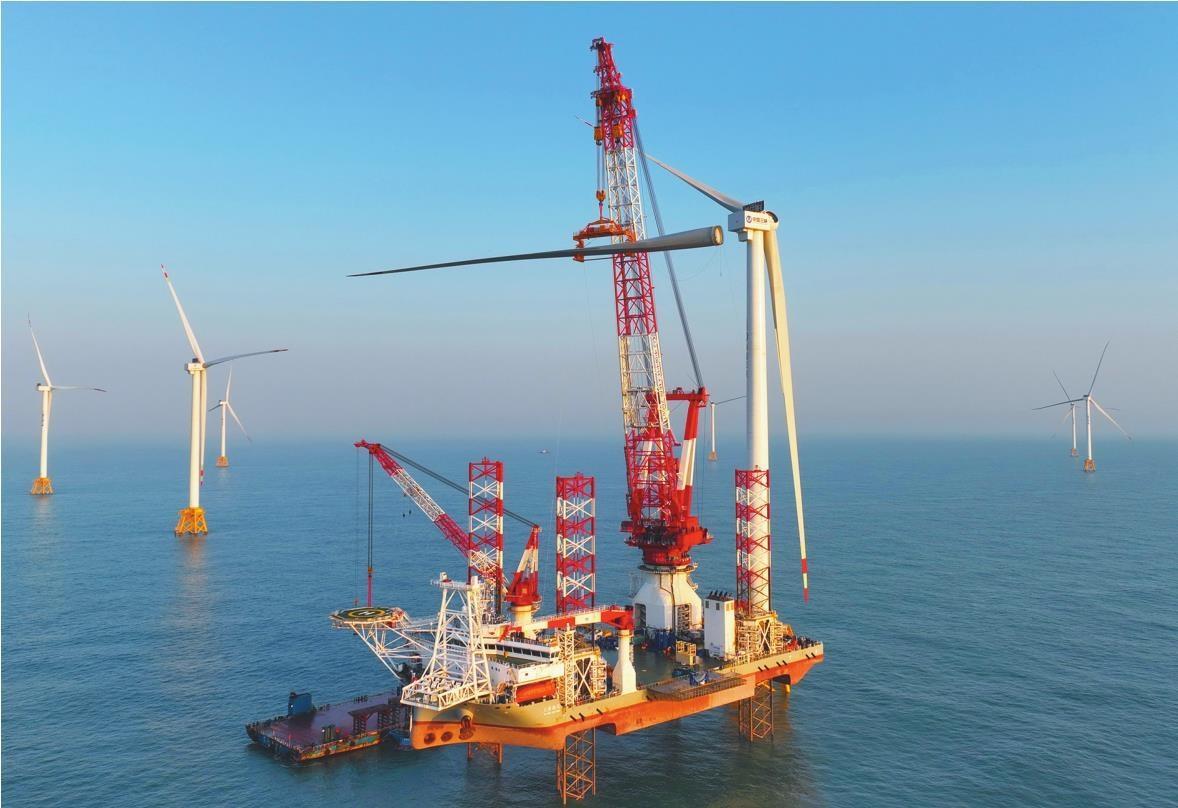
新华社发 一月十三日,在"大桥海风"号两千吨自升式海上风电安装平台上,二十兆瓦风机叶片在进行吊装(无人机照片)。一月十三日,由三峡集团与金风科技联合 设计建造和示范应用的二十兆瓦海上风电机组在福建闽南海域完成吊装。该机组的成功吊装,是我国海上风电大容量机型应用的又一重要突破。 ...


银星能源:目前正在推动贺兰山四五期、太阳山三四期等以大代小改造项目的前期工作
Mei Ri Jing Ji Xin Wen· 2026-01-14 01:26
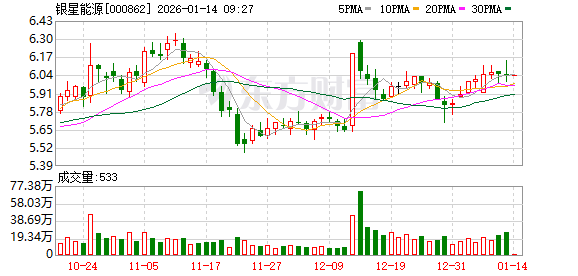
银星能源(000862.SZ)1月14日在投资者互动平台表示,公司风电总装机容量161万千瓦时,累计已有 23.5万千瓦时完成了以大代小技术改造,目前正在推动贺兰山四五期、太阳山三四期等以大代小改造项 目的前期工作。完成全部老旧风机以大代小技术改造的时间受国家、行业及地方等政策影响尚存在不确 定性。后续公司将继续推动风电上大压小改造工作,并依托中铝集团资源,深化分布式项目开发、绿电 直连等一体化项目布局,以改善企业经营质量和盈利能力,提升公司价值。 (文章来源:每日经济新闻) 每经AI快讯,有投资者在投资者互动平台提问:请问还有多少风电场没有完成以大代小?预计哪一年 可以完成全部风机的以大代小?目前公司股价一直低迷是否有提升公司市值的办法出台? ...

全球首台!成功吊装
中国能源报· 2026-01-13 12:50
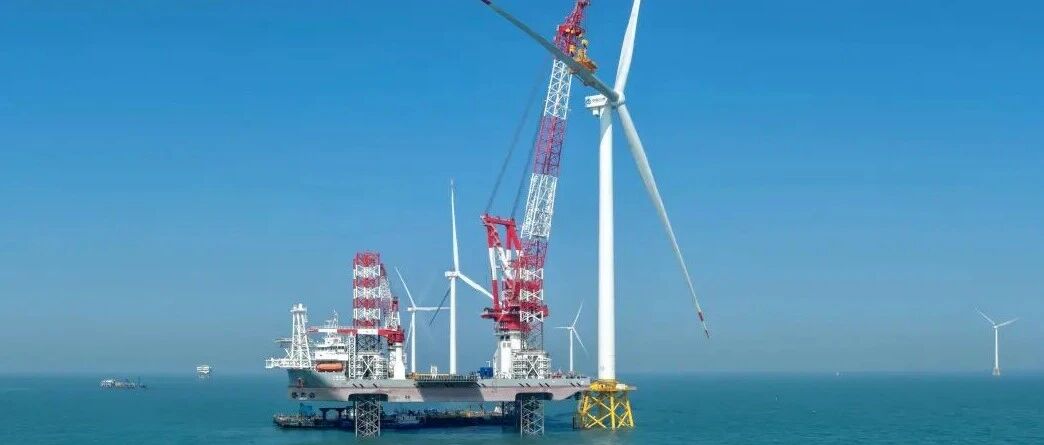
Core Viewpoint - The successful installation of the world's first 20 MW offshore wind turbine in Fujian marks a significant breakthrough in China's development and manufacturing of ultra-large capacity wind turbines and offshore construction capabilities [1][7]. Group 1: Installation Details - The turbine was installed over 30 kilometers offshore in waters deeper than 40 meters, facing challenges such as a short construction window during the monsoon season, complex sea conditions, and high-altitude operational risks [3][7]. - A fourth-generation wind turbine installation vessel with a lifting capacity of 2000 tons was utilized, employing high-precision positioning and intelligent pile sinking control systems to smoothly elevate three giant blades, each 147 meters long, to a height of 174 meters for precise hub connection [3][7]. Group 2: Technological Achievements - The 20 MW turbine is part of a national key research and development project and has been included in the list of major technological equipment by the National Energy Administration [5]. - The turbine achieved 100% localization of key components and made breakthroughs in lightweight design, reducing the weight per megawatt by over 20% compared to the industry average, effectively lowering installation difficulty and foundational construction costs [5]. Group 3: Environmental Impact - Once connected to the grid, the turbine is expected to generate over 8 million kilowatt-hours annually, sufficient to meet the electricity needs of approximately 44,000 households for one year, equivalent to saving about 24,000 tons of standard coal and reducing carbon dioxide emissions by approximately 64,000 tons [7].
全球首台20兆瓦风机在福建海域完成吊装
Zhong Guo Xin Wen Wang· 2026-01-13 11:57
Core Insights - The installation of the world's first 20-megawatt offshore wind turbine in Fujian marks a significant advancement in China's offshore wind power capacity, elevating the single-unit capacity to a new level [1][2] - This development is expected to enhance the efficiency and cost-effectiveness of offshore wind power generation, contributing to the accelerated large-scale development of offshore wind energy in China [1] Group 1: Technological Advancements - The 20-megawatt offshore wind turbine features a hub height of 174 meters, equivalent to a 58-story building, with a blade length of 147 meters and a rotor diameter of 300 meters, covering an area comparable to nearly 10 standard football fields [1] - The turbine's design and construction were a collaborative effort between China Three Gorges Corporation and Goldwind Technology, achieving 100% domestic production of key components and innovations in three major technical areas [1][2] Group 2: Environmental Impact - Once connected to the grid, the turbine is expected to generate over 80 million kilowatt-hours annually, sufficient to meet the electricity needs of approximately 44,000 households for one year, while saving about 24,000 tons of standard coal and reducing carbon dioxide emissions by approximately 64,000 tons [2] Group 3: Industry Implications - The successful installation of the 20-megawatt turbine is anticipated to drive upgrades across the entire offshore wind power industry chain, including design, manufacturing, and construction, thereby reinforcing China's global leadership in the development and application of large-capacity offshore wind turbines [2] - The project team employed innovative installation techniques to address challenges posed by the complex maritime environment, ensuring the successful completion of the installation task [2]

20兆瓦海上风电机组在闽南海域完成吊装
Xin Lang Cai Jing· 2026-01-13 11:40
1月13日,由三峡集团与金风科技联合设计建造和示范应用的20兆瓦海上风电机组在福建闽南海域完成 吊装。该机组的成功吊装,是我国海上风电大容量机型应用的又一重要突破。 ...
金风科技为全资子公司金风阿曼提供担保
智通财经网· 2026-01-13 11:04
金风国际与Riyah Amin Energy LLC及Riyah Nimr Energy LLC分别签署《母公司担保协议》,为金风阿 曼在上述《长期运维服务协议》项下的履约责任和义务提供担保,担保金额均不超过747.9万美元,合 计不超过1495.8万美元(折合人民币约1.05亿元),担保期限自《母公司担保协议》签署之日起至2032年1 月11日。 智通财经APP讯,金风科技(02208)发布公告,金风科技的全资子公司金风国际控股(香港)有限公司的全 资子公司Goldwind Renewable Energy SPC(以下简称"金风阿曼")与Riyah Amin Energy LLC及Riyah Nimr Energy LLC分别签署了《长期运维服务协议》,由金风阿曼作为服务供应商,负责机组整场验收后的 运维服务工作,并提供相应的机组可利用率保证。 两份《母公司担保协议》的签署日期为2026年1月12日,签署地点为北京、马斯喀特。 ...
【兴证策略】60大热门赛道:哪些拥挤度仍在低位?
Xin Lang Cai Jing· 2026-01-13 09:26
Core Insights - The article discusses the investment strategies for the year 2026, focusing on opportunities identified by top fund companies and managers in the market [1][124]. Group 1: Market Sentiment Indicator - The "Congestion Degree" is a unique indicator developed by the company to reflect trading sentiment in popular sectors, combining four dimensions: volume, price, funds, and analyst forecasts [3][126]. - This indicator quantitatively tracks changes in market sentiment and has strong implications for short-term stock price movements [3][126]. Group 2: TMT Sector Insights - The congestion levels for various TMT (Technology, Media, Telecommunications) segments are as follows: - Optical modules: congestion level is moderately low [10][131]. - Servers: congestion level is moderately high [8][133]. - Base stations: congestion level is moderate [10][135]. - Optical fiber and cables: congestion level is moderately high [10][136]. - IDC (Internet Data Center): congestion level is moderately high [10][136]. - Computer equipment: congestion level is high [10][139]. - Optical components: congestion level is high [10][140]. - RF components: congestion level is high [10][145]. - PCB (Printed Circuit Board): congestion level is moderate [10][146]. - IT services: congestion level is moderately high [10][147]. - Semiconductor materials: congestion level is high [10][157]. - Consumer electronics: congestion level is moderately low [10][172]. Group 3: Manufacturing Sector Insights - The congestion levels for various manufacturing segments are as follows: - Automotive parts: congestion level is high [10][181]. - Lithium batteries: congestion level is moderate [10][184]. - Wind power: congestion level is moderately low [10][187]. - Photovoltaic components: congestion level is high [10][197]. - Industrial robots: congestion level is high [10][199]. - Unmanned aerial vehicles: congestion level is high [10][200]. Group 4: Consumer and Pharmaceutical Sector Insights - The congestion levels for various consumer and pharmaceutical segments are as follows: - White goods: congestion level is low [10][207]. - Alcoholic beverages: congestion level is moderately low [10][209]. - Medical services: congestion level is moderately high [10][222]. Group 5: Financial and Real Estate Sector Insights - The congestion levels for various financial and real estate segments are as follows: - Real estate: congestion level is moderate [10][225]. - Insurance: congestion level is high [10][225]. - Banking: congestion level is low [10][226].
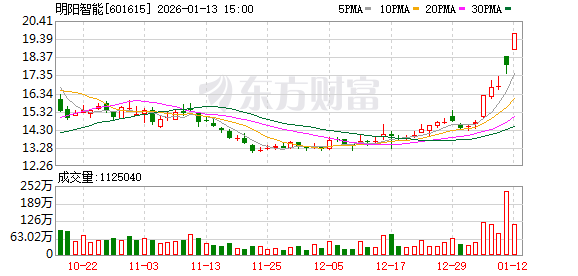
明阳智能停牌拟布局商业航天 风电板块搭上“航天概念”集体走强
Di Yi Cai Jing· 2026-01-13 09:23
Core Viewpoint - Mingyang Smart Energy (601615.SH), a wind turbine company with a market value exceeding 40 billion, has suspended trading starting today for a period not exceeding 10 trading days to plan the acquisition of control over Zhongshan Dehua Chip Technology Co., Ltd. [2] Group 1: Company Overview - Mingyang Smart Energy's main business includes wind turbine manufacturing, renewable power generation, and sales of renewable power products, with wind turbines and related components being the primary revenue source [2] - According to the China Renewable Energy Society Wind Energy Professional Committee, Mingyang Smart Energy ranks third in new installed capacity of wind turbines with 12.29 million kilowatts in 2024 [2] Group 2: Acquisition Details - The acquisition of Dehua Company is planned to be executed through the issuance of shares and cash payment, along with raising matching funds [2] - The transaction is currently in the planning stage and is not expected to constitute a major asset restructuring, but it is classified as a related party transaction [2] Group 3: Dehua Company Profile - Dehua Company focuses on the commercial aerospace sector, specializing in the research and industrialization of high-end compound semiconductor epitaxial wafers, chips, and space energy systems [2] - The company aims to provide comprehensive energy system solutions for satellites, deep space probes, and space stations [2] Group 4: Market Reaction - Mingyang Smart Energy's stock has increased by over 30% since the beginning of 2026 [3] - Other wind energy companies, such as Goldwind Technology (002202.SZ) and Taisheng Wind Power (300129.SZ), have also seen stock price increases due to the commercial aerospace concept [3] - Goldwind Technology's stock has risen by 66.42%, surpassing a market value of 100 billion, while Taisheng Wind Power's stock has increased by 60.13% [3] Group 5: Industry Trends - The commercial aerospace concept has been a significant driver for the rising stock prices of wind energy companies [4] - Goldwind Technology's stock surge is linked to its equity investment in Blue Arrow Aerospace, the first commercial aerospace company to go public [4][5] - Taisheng Wind Power is in the early stages of business layout in the commercial aerospace sector, focusing on rocket storage tank production and market expansion [5]