量贩零食

Search documents
鸣鸣很忙:从“万店”很忙到“万品”很忙,是馅饼还是陷阱?
3 6 Ke· 2025-12-25 00:43
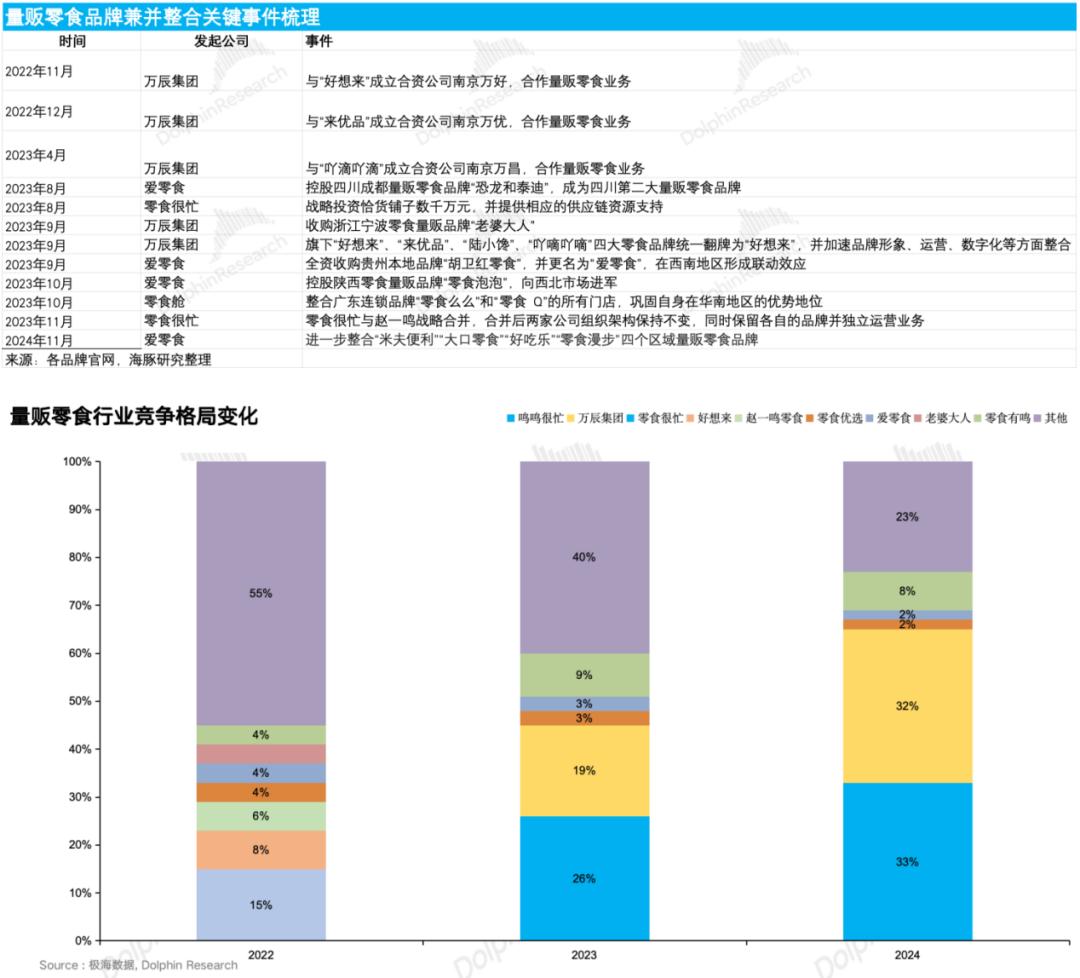
Core Insights - The article discusses the growth potential and investment value of the snack brand "Mingming Hen Mang," which is likened to a "Pinduoduo" in the snack industry, emphasizing its highly digitalized supply chain as a key driver of its business model [2][4]. Group 1: Growth Potential - The growth of "Mingming Hen Mang" relies on two dimensions: store expansion and single-store GMV (Gross Merchandise Value) [2]. - The competitive landscape of the snack industry has evolved from a fragmented market (2017-2021) to a duopoly model post-2021, with significant capital inflow leading to aggressive expansion and price wars [4][5]. - The average net profit margin in the industry has dropped from 2% to below 1% due to intense price competition, prompting consolidation among smaller brands [5][9]. - The market concentration (CR2) has surged from under 10% in 2021 to over 65% by 2024, indicating a rapid shift towards a few dominant players [5][9]. Group 2: Store Expansion and Market Dynamics - "Mingming Hen Mang" has established a strong market presence in Central China, with plans to expand into Southwest and South China, while its competitor, Wancheng Group, focuses on East and North China [9]. - The saturation of stores in Hunan province has led to a significant increase in competition, with many brands experiencing a 30%-40% drop in customer traffic due to overlapping locations [10]. - Future store density projections suggest that the total number of snack stores could reach between 60,000 to 70,000 across various regions, with "Mingming Hen Mang" potentially capturing 50% of the market share [11][12]. Group 3: Transition to Discount Supermarkets - In response to declining same-store revenue, "Mingming Hen Mang" is transitioning to a dual-brand strategy, with "Zhao Yiming Snacks" evolving into a discount supermarket model [13][15]. - The transition aims to leverage existing customer traffic and expand product categories, although it presents challenges in supply chain integration and management complexity [15][20]. - The initial results of the transition show a 20%-25% increase in GMV, but the payback period for new stores has extended from over two years to more than three years due to increased operational costs [19][20]. Group 4: Self-Brand Development - The company aims to enhance its self-brand product offerings, which could lead to improved profitability by reducing reliance on third-party brands and addressing consumer preferences more effectively [21][24]. - By 2025, "Mingming Hen Mang" plans to launch various self-branded products targeting different consumer segments, with initial offerings already showing high repurchase rates [24][25]. Group 5: Investment Value - The company is expected to slow its store opening pace starting in 2026, focusing on optimizing existing stores and achieving profitability in the discount supermarket model [26][32]. - Revenue projections indicate a CAGR of 10.7% from 2025 to 2029, with profit expected to grow from 1.65 billion to 4.04 billion yuan during the same period [27][32]. - The company's valuation is anticipated to increase significantly if the transition to a full discount supermarket model proves successful, although current estimates remain conservative due to the inherent challenges of such a transition [35][36].

万辰集团(300972):首次覆盖报告:量贩零食龙头加速成长,向上势能强劲
Shanghai Aijian Securities· 2025-12-24 07:58
Investment Rating - The report assigns a "Buy" rating for the company, marking its first coverage [2][3]. Core Insights - The company, a leader in the snack retail industry, has established a strong position through a network of over 15,000 stores, leveraging supply chain scale effects to thrive in a rapidly changing market. Revenue projections for 2025, 2026, and 2027 are estimated at 497.2 billion, 625.1 billion, and 715.8 billion yuan, respectively, with year-on-year growth rates of 53.8%, 25.7%, and 14.5%. Net profit attributable to shareholders is expected to reach 10.7 billion, 17.5 billion, and 24.0 billion yuan, reflecting growth rates of 266.0%, 63.2%, and 36.7% [3][5]. Summary by Sections Investment Rating and Valuation - The company is rated "Buy" based on its leading position in the snack retail sector and robust revenue growth forecasts. The estimated price-to-earnings (PE) ratios for 2025, 2026, and 2027 are 32.5X, 19.9X, and 14.6X, respectively [2][3]. Industry and Company Analysis - Originally focused on edible fungi, the company entered the snack retail market in 2022 through acquisitions, rapidly increasing its revenue share from this segment to 98.9% by Q1-Q3 2025. The snack retail market in China has grown from 21.1 billion yuan in 2019 to 80.9 billion yuan in 2023, with a compound annual growth rate (CAGR) of approximately 40%, and is projected to reach 123.9 billion yuan by 2025 [3][5]. Key Assumptions - The company plans to maintain a steady pace of store expansion, with the number of stores expected to reach 18,000, 21,000, and 22,500 by the end of 2025, 2026, and 2027, respectively. Single-store revenue is projected to stabilize and grow, with estimates of 273.2, 295.1, and 315.7 thousand yuan for the same years [3][5]. Market Dynamics - The company is positioned to benefit from ongoing expansion in the East China region and penetration into untapped areas. The number of stores in East China reached 8,727 in H1 2025, contributing significantly to profits. The company’s supply chain infrastructure, including a 90,000 square meter warehouse system, provides a competitive edge [5][3]. Financial Projections - Total revenue is projected to grow significantly, with estimates of 9.3 billion yuan in 2023, increasing to 71.6 billion yuan by 2027. The net profit is expected to turn positive by 2024, reaching 3.4 billion yuan by 2027 [5][24].
策略深度报告:风格与趋势共振:新消费投资图景
Bank of China Securities· 2025-12-16 03:11
Group 1 - The report highlights that the new consumption market has a rotation and rebound configuration opportunity, driven by three main logics: fundamental, financial, and style rotation [9][10][12] - The fundamental aspect indicates that under the backdrop of US-China trade friction, there is a strong expectation for policies to boost domestic demand, which catalyzes the consumption style market [9][10] - Financially, global capital reallocation and valuation recovery in Hong Kong stocks are noted, with A-shares and Hong Kong stocks showing a resonance in consumer sectors [10][12] Group 2 - The report discusses structural changes in the Chinese consumption market driven by demographic shifts and weakening consumer confidence, with the middle-income group expanding and the "Z generation" becoming the main consumer force [28][29] - It emphasizes that the economic transformation and declining real estate cycle have led to a cautious consumer sentiment, affecting spending behavior [38][40] Group 3 - The report identifies three key trends in new consumption: "emotional consumption," "value-for-money consumption," and "service and experience consumption," each with distinct growth drivers and investment opportunities [48][59][68] - "Emotional consumption" is characterized by high margins and resilience to economic cycles, with significant growth in IP economy and pet economy sectors [48][51] - "Value-for-money consumption" is driven by rational consumption tendencies and supply chain optimization, leading to the rise of discount retail and bulk snack industries [59][62] Group 4 - The report notes that the service and experience consumption sector is expected to grow rapidly, particularly in outdoor sports, as GDP per capita surpasses 10,000 USD, influenced by the "single economy" and changing consumption preferences [68][71] - It highlights that outdoor apparel and footwear sales are projected to see significant growth, with a year-on-year increase of 87.3% expected in 2024 [68][71]
万辰集团20251202
2025-12-03 02:12
Summary of Wanchen Group Conference Call Company Overview - **Company**: Wanchen Group - **Industry**: Retail, specifically in the bulk snack sector - **Established**: 2011, initially focused on edible fungi, transitioned to bulk snacks in 2022 under new leadership Key Points Expansion and Growth - Wanchen has rapidly expanded its bulk snack store network, signing over **18,000 stores** by the end of 2023 and establishing **4,700 stores** [2][4] - The company turned profitable in Q2 2023, with revenue reaching **36.2 billion** and a profit contribution of **1.7 billion** in the first three quarters of 2025 [2][7] - Future growth strategies include optimizing multi-category store types and expanding into North and Northeast China [2][8] Financial Performance - Projected revenue for 2025 is over **50 billion**, with net profit nearing **1.3 billion**, corresponding to a **27x PE** ratio [3] - By 2026, revenue is expected to reach **57.9 billion** with net profit close to **2 billion**, at an **18x PE** ratio [3] - The company has achieved a gross operating rate exceeding **5.3%**, significantly outperforming traditional supermarkets and e-commerce platforms [7] Market Position and Industry Dynamics - The bulk snack industry is entering a **duopoly** phase, with Wanchen leveraging supply chain and scale advantages, posing challenges for smaller brands [2][9] - Small brands and stores struggle to scale due to limited locations and competition from larger firms like Wanchen [9] Shareholder Equity and Incentives - Wanchen has made significant progress in reclaiming minority shareholder equity, with plans to increase ownership in subsidiaries to **75.5%** [10] - The company has successfully met all incentive targets, reflecting strong performance in revenue and profit growth [11][12] Stock Performance and Market Sentiment - Since July 2024, Wanchen's stock has surged over **9 times**, indicating market confidence in its operational model and profitability [12] - The anticipated recovery of minority shareholder equity and the development of multi-category stores are expected to drive further stock appreciation [12] Retail Industry Trends - The Chinese retail landscape is evolving towards **discount retail**, **quality retail**, and **instant retail**, with Wanchen positioned to capitalize on these trends [13][14][15] - The focus is on providing better, faster, and more cost-effective retail solutions, with Wanchen adapting its business model accordingly [14][15] Additional Insights - Wanchen's logistics infrastructure supports efficient operations, with over **50 logistics centers** and multiple cold chain systems, enabling next-day delivery services [7] - The company aims to enhance profitability by increasing the proportion of stores outside the East China region, which currently accounts for **43%** of its operations [8]
万辰集团:接受中邮证券等投资者调研
Mei Ri Jing Ji Xin Wen· 2025-11-26 12:31
Group 1 - The core viewpoint of the article is that Wancheng Group (SZ 300972) is engaging with investors through a scheduled meeting, highlighting its business focus and financial performance [1] - For the first half of 2025, Wancheng Group's revenue composition shows that 98.95% comes from snack retail, while agricultural planting contributes only 1.05% [1] - As of the report, Wancheng Group has a market capitalization of 32.4 billion yuan [1]
来优品省钱超市,“硬折扣”模式重构社区零售
Sou Hu Wang· 2025-11-15 05:32
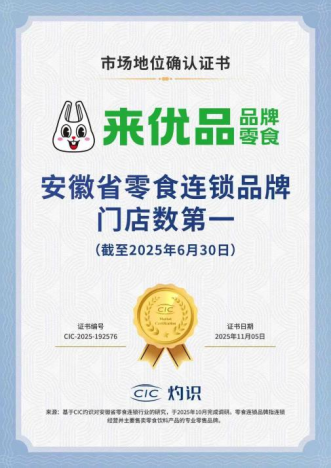
Core Insights - The company "Lai You Pin" has surpassed 1,300 stores and has been recognized as the leading snack chain brand in Anhui Province by the international consulting firm CIC [1][4] - To celebrate its store expansion, Lai You Pin launched a "Million Consumption Subsidy" campaign to stimulate consumer spending from November 15 to 30 [3] - The parent company, Wancheng Group, is one of the largest and fastest-growing enterprises in China's snack retail industry, with plans to have over 15,000 stores across 29 provinces by June 30, 2025 [4][6] Company Development - Lai You Pin started in 2015 as a small 12-square-meter store in Huainan and has grown to become a regional leader with 1,300 stores [6] - The brand has evolved from a vertical snack store to a comprehensive discount supermarket, enhancing its market potential while maintaining its scale advantage [7] - The company adheres to a business philosophy of "quality, low price, and simplicity," focusing on high-quality products and efficient supply chains [7] Market Strategy - In 2024, Lai You Pin introduced the "Penny-Saving Supermarket" concept, aiming to reshape community retail by offering a one-stop shopping experience that combines snacks, trendy toys, and daily necessities [8] - The first "Penny-Saving Supermarket" opened on January 10, 2025, featuring over 3,000 SKUs across various categories, and has shown significant sales and efficiency improvements [10] - The company is focused on building a chain ecosystem and enhancing operational efficiency to improve the overall consumer experience [10] Social Responsibility - Lai You Pin has a strong commitment to social responsibility, donating materials and funds for disaster relief and local educational initiatives [11] - The company has created nearly a thousand jobs in Anhui, indirectly supporting over ten thousand employment opportunities, contributing to local economic vitality [11] Consumer Trends - The company recognizes a shift towards more rational consumer behavior, emphasizing the importance of quality-price ratio in its offerings [13] - Lai You Pin aims to enhance operational efficiency and consumer experience while providing high-quality products to meet evolving consumer demands [13]
天风证券晨会集萃-20251107
Tianfeng Securities· 2025-11-06 23:42
Group 1: Macroeconomic Overview - Industrial value-added is expected to grow by 5.5% year-on-year in October, with a decline in production PMI indicating a marginal retreat in production enthusiasm [3][21] - Trade figures for October predict a 3.0% year-on-year increase in both exports and imports, with imports expected to maintain resilience in the fourth quarter [3][22] - Inflation forecasts indicate that October CPI will remain flat year-on-year, while PPI is expected to decline by 2.2% [3][23][24] Group 2: Banking Sector Insights - The pressure to realize floating profits in banks is manageable this year, with state-owned banks showing better revenue progress compared to smaller banks [4] - Smaller banks are expected to have a stronger demand to realize floating profits due to significant declines in revenue from the gold market [4] Group 3: Semiconductor Industry Analysis - The semiconductor sector is projected to continue its optimistic growth trajectory, driven by AI and domestic substitution trends [5][7] - The storage segment is expected to see sustained high growth in contract prices in Q4 2025, with strong performance anticipated from various semiconductor companies [5][7] Group 4: Company-Specific Performance - Huatai Technology reported a 135% year-on-year increase in net profit for Q3 2025, driven by strategic acquisitions and industry fund establishment [7][8] - Juhua Co. achieved a 160% year-on-year increase in net profit for the first three quarters of 2025, with significant growth in refrigerant prices [15][29] - Sanhua Intelligent Controls reported a 40.9% year-on-year increase in net profit for the first three quarters of 2025, supported by cost reduction measures and diverse business expansion [16][33] Group 5: Construction and Infrastructure - China State Construction Engineering Corporation's revenue decreased by 4.2% year-on-year in the first three quarters of 2025, with a focus on the conversion of orders to support performance [25][26] - The company secured new contracts worth 30,383 billion yuan, with significant growth in energy and municipal engineering sectors [26][27] Group 6: Market Performance and Trends - The A-share electronic industry remains the largest heavy-weight sector with a 25.53% allocation, indicating a significant increase in investment interest [5] - The overall market indices showed positive movements, with the Shanghai Composite Index closing at 4007.76, up by 0.97% [10]





“无脚鸟”鸣鸣很忙,还能飞多久? | 巴伦精选
Tai Mei Ti A P P· 2025-11-06 13:00
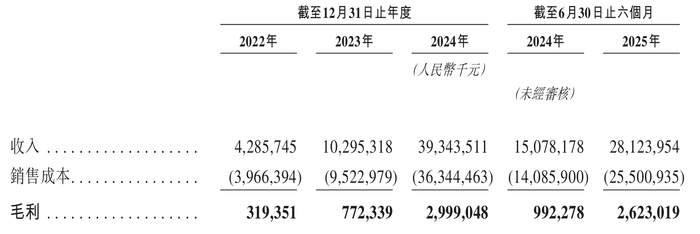
Core Insights - The article discusses the rapid expansion and profitability of the snack retail company "Ming Ming Hen Mang" in the context of the Chinese snack food market, which is projected to grow from 3.7 trillion yuan in 2024 to 4.9 trillion yuan by 2029 [1][2]. Group 1: Company Overview - Ming Ming Hen Mang has significantly increased its franchise store count from 1,898 in 2022 to 16,759 by mid-2025, representing an over 8-fold increase in just two and a half years [2]. - The company has a diverse product offering with 3,605 SKUs as of June 30, 2025, and aims to maintain at least 1,800 SKUs per store, benefiting from extensive consumer data analysis [2][15]. Group 2: Financial Performance - The company's GMV reached 55.5 billion yuan in 2024, with a substantial increase to 41.1 billion yuan in the first half of 2025, marking an 86.9% year-on-year growth [6]. - Revenue figures show a consistent upward trend, with revenues of 4.29 billion yuan in 2022, 10.30 billion yuan in 2023, and 39.34 billion yuan in 2024, alongside adjusted net profits rising from 0.81 billion yuan in 2022 to 9.13 billion yuan in 2024 [7][8]. Group 3: Market Strategy - The company focuses on "extreme cost performance" and targets third- and fourth-tier cities for expansion, which allows for rapid replication of its store model [3]. - Ming Ming Hen Mang's pricing strategy is based on low margins and high sales volume, with average prices approximately 25% lower than similar products in offline supermarkets [17]. Group 4: Operational Efficiency - The company has developed a robust digital management system that supports store operations, product selection, and supply chain logistics, enhancing overall efficiency [18]. - As of 2024, the company had over 16 billion consumer visits and a membership base of 120 million, with a 75% annual repurchase rate, indicating strong customer loyalty [18]. Group 5: Competitive Landscape - The competitive environment is intensifying, with new entrants like Wancheng Group rapidly expanding their store counts, which could lead to price wars and reduced profitability for existing players [4][19]. - The merger with Zhao Yiming Snacks aims to strengthen market position but raises concerns about brand integration and operational efficiency in the long run [20][21].
业绩亮眼!2025上半年GMV 411亿,鸣鸣很忙经营质效领跑行业
Nan Fang Du Shi Bao· 2025-10-29 10:05
Core Insights - The company, Mingming Hen Mang, submitted updated listing application materials to the Hong Kong Stock Exchange, showcasing strong financial performance and market leadership [1][3] - As of June 30, 2025, the company achieved a retail sales (GMV) of 41.1 billion RMB, with revenue of 28.12 billion RMB and an adjusted net profit of 1.034 billion RMB [1] - The total number of stores reached 16,783, maintaining its position as the industry leader, and it is the first in the sector to surpass 20,000 stores according to Frost & Sullivan [1][3] Financial Performance - The company reported a cash balance exceeding 2.394 billion RMB and net current assets of 2.827 billion RMB as of June 30, 2025 [3] - For the first half of 2025, the operating cash flow net amount was 1.395 billion RMB, indicating robust cash generation capabilities [3] - The inventory turnover days were only 11.7 days, reflecting efficient asset management and supply chain operations [3] Market Position - Mingming Hen Mang is recognized as one of China's largest leisure food and beverage retail chains, integrating its dual brands "Snacks Are Busy" and "Zhao Yiming Snacks" to enhance operational efficiency [3] - The company ranked among the top 10 in the 2024 China Chain Industry, being the only bulk snack enterprise in that list [3] - The updated prospectus is seen as a routine step in the Hong Kong IPO process, with expectations for a successful listing due to the company's scale, operational quality, and growth momentum [3]
鸣鸣很忙更新招股书,加盟店数量占比达99.9%
Sou Hu Cai Jing· 2025-10-29 09:23
Core Viewpoint - Mingming Hen Mang Group, a leading player in the snack retail industry, has shown rapid growth in performance, driven by its low-price strategy, but faces challenges in establishing a stable supply chain and developing high-margin private label products for long-term profitability [1][6][9] Group 1: Company Performance - As of June 30, 2023, Mingming Hen Mang Group has 16,783 stores, with 99.9% being franchise stores [1][3] - The company achieved a GMV of 41.1 billion yuan in the first half of the year, representing an 86.9% increase year-on-year [3] - Revenue for the first half of 2023 reached 28.124 billion yuan, up 86.5% from the previous year, while adjusted net profit was approximately 1.035 billion yuan, a 265.5% increase [3][6] - The company has maintained a compound annual growth rate (CAGR) of 203% in revenue and 234.6% in adjusted net profit from 2022 to 2024 [6] Group 2: Market Position and Strategy - Mingming Hen Mang Group is the largest chain retailer in the domestic market for leisure food and beverages, according to data from Frost & Sullivan [3] - Approximately 58% of the company's stores are located in county towns and rural areas, covering 1,327 counties [4] - The average price of the company's products is about 25% lower than similar products in offline supermarket channels, contributing to its competitive edge [6] Group 3: Challenges and Risks - The company faces challenges related to rising rental, labor, and logistics costs, which impact its low gross margin [7] - The reliance on a franchise model poses risks, especially in a competitive market that is transitioning from rapid expansion to more refined operations [8] - Analysts suggest that the company must focus on supply chain efficiency and the development of high-margin private label products to ensure long-term profitability [9]