
医疗

Search documents
港股反弹日,AI龙头全线上攻,阿里巴巴涨近5%,港股互联网ETF(513770)涨超2%
Xin Lang Cai Jing· 2025-10-20 02:00
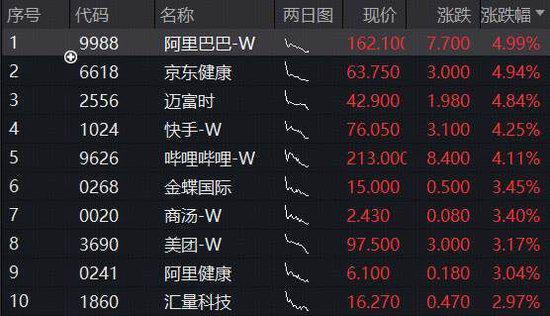
Market Performance - Alibaba-W led the rebound with a nearly 5% increase, followed by Kuaishou-W and Bilibili-W with over 4% gains, and Meituan-W with over 3% [1] - The Hong Kong Internet ETF (513770) rose by 2.25%, with a trading volume exceeding 160 million yuan within the first half hour of trading [2][3] Industry Insights - The Hong Kong Internet ETF tracks the CSI Hong Kong Internet Index, with Alibaba-W, Tencent Holdings, and Xiaomi Group-W being the top three holdings, accounting for 18.92%, 15.60%, and 11.54% of the total weight, respectively [4][5] - The index has shown significant resilience this year, outperforming the Hang Seng Technology Index, with a year-to-date increase of 55.11% compared to 45.79% for the Hang Seng Technology Index [6] Economic Context - Recent video calls between U.S. and Chinese trade leaders have eased market tensions, with expectations for further trade negotiations [3] - The Federal Reserve Chairman Jerome Powell hinted at a potential 25 basis point rate cut in the upcoming meeting, which could encourage foreign capital inflow into Hong Kong stocks [3][4] Valuation Metrics - The current price-to-earnings (P/E) ratio of the CSI Hong Kong Internet Index is 26.69, which is lower than the historical average and significantly better than U.S. and A-share technology sectors [6] - The index's performance over the past five years has varied, with notable fluctuations, including a 109.31% increase in 2020 and a 36.61% decrease in 2021 [8]


投中“宁王”“寒王”后,谢诺投资为什么最看好这个AI+赛道?
2 1 Shi Ji Jing Ji Bao Dao· 2025-10-20 01:04
Group 1: Core Insights - The AIR (Artificial Intelligence and Robotics) industry is becoming a central field in global technological competition and industrial transformation, reshaping human production and lifestyle paradigms [1] - Financial empowerment is crucial for the development of the AIR industry, requiring a robust financial support system that includes long-term capital supply and strategic capital efficiency [1] - Guangdong province is leading in technological innovation and has a solid industrial foundation, serving as a model for high-quality development in the AIR industry through the "new industrial finance research" initiative [1] Group 2: Investment Focus - Xie Nuo Investment has achieved significant returns by investing in leading companies like Ningde Times and Cambricon, focusing on the "AI + healthcare" sector as their most promising investment area [3][4] - The firm emphasizes that healthcare has strong social and commercial value potential, with AI technology expected to resolve the longstanding dilemma of low-cost and high-quality medical services [3][9] - Xie Nuo's investment strategy involves deep research and a focus on breakthrough technology startups, with a history of successful investments in over 60 companies, 18 of which have gone public [5][6] Group 3: AI + Healthcare Sector - The integration of AI in healthcare is seen as a "golden track" that can break the cost-quality paradox, providing both social benefits and explosive commercial value [9][12] - AI technologies can significantly reduce drug development timelines and optimize medical processes, enhancing patient care efficiency [8][12] - Xie Nuo's investment approach includes a focus on hardware and application layers within the AI sector, with a particular interest in the hardware layer benefiting from the current industrial revolution [10][11] Group 4: Investment Methodology - Xie Nuo's investment philosophy is characterized by a cautious approach, focusing on high-quality selections through extensive research, while also being willing to make substantial investments in promising companies [7][11] - The firm has developed a multi-dimensional AI healthcare ecosystem through investments in various AI-driven medical companies, demonstrating a commitment to long-term, patient capital [10][11] - The investment methodology is summarized by three key principles: high vision with practical execution, a combination of hardware and software, and adaptability to market trends [12][13] Group 5: Role of Public Investment - Public investment funds, particularly state-owned capital, are crucial for nurturing emerging industries and should adopt a more proactive investment stance to support technological breakthroughs [13][14] - Collaboration between public investment institutions and market-oriented investment firms is essential for enhancing investment efficiency and effectiveness [15][17] - Strengthening partnerships with academic and research institutions can improve investment decision-making and increase the likelihood of successful outcomes [18][19]


AI赋能数字经济新图景
Bei Jing Shang Bao· 2025-10-19 15:40
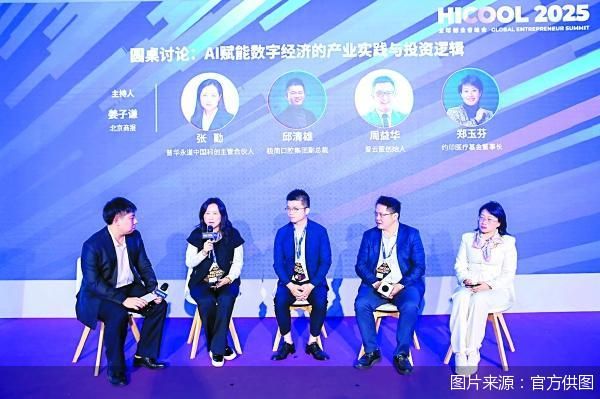
Core Insights - The forum titled "AI Empowering High-Quality Development of Digital Economy" focused on how AI can become a new growth engine for China's economy and how businesses can seize opportunities in global tech competition [1] Group 1: AI's Role in Business - AI is evolving from being an auxiliary tool to becoming a decision-making partner for businesses [4] - The rapid development of AI is expected to significantly increase workforce capabilities, potentially doubling the labor force in some sectors [5] - Nearly half of technology leaders reported that AI is fully integrated into their core business strategies, with one-third indicating it is fully integrated into products and services [5] Group 2: Economic Impact of AI - AI could drive a 15% increase in global economic scale over the next decade, adding an extra 1% to annual global growth rates [6] - In industries like automotive and aerospace, AI can reduce product time-to-market by 50% and cut costs by 30% [5] - AI applications in healthcare are transitioning from isolated uses to comprehensive solutions that enhance efficiency across treatment processes [6][7] Group 3: Investment Opportunities - There is a significant focus on B2B AI businesses, while the B2C sector has yet to see breakout successes [8] - Investors are looking for companies with unique strategic advantages that can sustain long-term growth [8] - AI in healthcare is expected to become mainstream within 5-10 years, indicating a growing investment landscape [8] Group 4: AI in Healthcare - AI technologies are being utilized for non-contact cancer screening, achieving accuracy rates of 80% to 90% [9] - The integration of AI in healthcare is expected to transform patient care models, making digital doctors accessible to a wider population [9] Group 5: Ecosystem and Collaboration - A comprehensive discussion on AI-driven technological breakthroughs emphasized the need for demand-side focus and upstream-downstream industry collaboration [12] - Capital trends indicate a growing presence of AI elements in projects, reflecting its increasing importance in both domestic and international markets [13] Group 6: Challenges and Solutions - There is a noted imbalance between supply and demand in AI capabilities, particularly in processing large datasets [13] - The focus should be on foundational technologies to address current gaps and enhance business applications [13][14] Group 7: Future Directions - The future of AI in the digital economy requires an open approach, leveraging China's strong technical capabilities while addressing global market opportunities [15] - Legal frameworks need to evolve to ensure effective enforcement and protect consumer rights, particularly for platform-based companies [16]
“十四五”·答卷|这五年,民生蓝图变成幸福实景
Yang Shi Wang· 2025-10-19 13:52
Core Points - The article emphasizes the significant improvements in people's livelihoods in China over the past five years, driven by the "14th Five-Year Plan" which prioritizes the enhancement of living standards and addresses urgent public concerns [1][30] - Key indicators related to health, education, and housing have shown substantial progress, reflecting the government's commitment to improving the quality of life for its citizens [1][30] Health Sector - The "14th Five-Year Plan" aims to enhance the healthcare system, targeting 3.2 practicing (assistant) physicians per 1,000 people and increasing life expectancy by one year [3] - By the end of 2024, the actual figures reached 3.61 practicing (assistant) physicians per 1,000 people and an average life expectancy of 79 years, surpassing the targets [3][5] - The establishment of a tightly-knit county medical community has improved access to healthcare, with over 90% of residents able to reach a medical facility within 15 minutes [9][11] Education Sector - The plan sets ambitious goals for education, including a preschool enrollment rate of over 90%, a high school enrollment rate of 92%, and a higher education enrollment rate of 60% [21] - By 2024, the actual enrollment rates achieved were 92% for preschool, 92% for high school, and 60.8% for higher education, indicating that the education system has reached the average level of high-income countries [22][24] - Initiatives to balance educational resources across urban and rural areas have been implemented, including the "Quality Balanced Creation of Compulsory Education" program [24][26] Housing Sector - The "14th Five-Year Plan" includes a focus on improving housing security, with a target to renovate 21.9 million old urban residential communities [13] - Over the past five years, more than 240,000 old urban communities have been renovated, benefiting over 40 million households and 110 million people [13][19] - The renovation process has faced challenges, but efforts have been made to engage residents in decision-making and funding [15][17]
医药资产又香了?近7亿资金增仓医疗ETF(512170)!港股通创新药ETF(520880)连日高溢价
Xin Lang Ji Jin· 2025-10-19 12:42
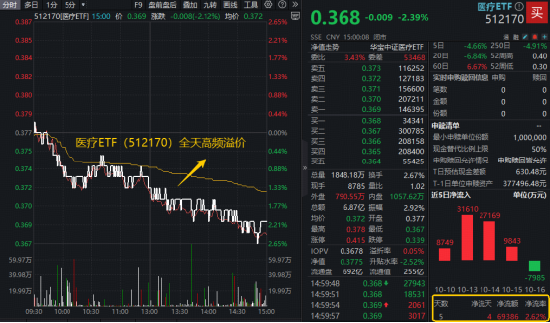
Core Viewpoint - The Chinese asset market is experiencing a significant adjustment, with A-shares and Hong Kong stocks declining sharply, particularly in high-tech sectors, while the healthcare sector shows signs of resilience and potential investment opportunities [1][3][4]. A-shares and ETFs Performance - A-shares saw all three major indices decline, with the Shenzhen Component Index and the ChiNext Index both dropping over 3%, while the largest medical ETF (512170) fell by 2.39% but showed strong buying interest with a trading volume increase of 30% to 687 million yuan [1][3]. - The only drug ETF in the market (562050) outperformed the market with a decline of only 1.56%, indicating strong buying momentum as it traded at a premium throughout the day [3]. Hong Kong Stocks and Innovation Drugs - The Hong Kong innovation drug sector has faced volatility, with the Hong Kong Stock Connect Innovation Drug ETF (520880) dropping 2.53% after two consecutive days of gains, while 33 out of 37 covered companies saw declines [3][4]. - Despite the downturn, the Hong Kong innovation drug ETF has also been trading at a premium, with a net inflow of over 128 million yuan in the past five days, suggesting continued investor interest [3][4]. Market Trends and Investment Strategies - The market is shifting from high-tech assets to dividend-paying assets, with healthcare ETFs and innovation drug ETFs attracting significant capital inflows [3][4]. - Analysts predict a potential rebound for the innovation drug sector in the fourth quarter, driven by multiple catalysts such as industry conferences, favorable quarterly earnings, and upcoming national healthcare negotiations [4][5]. Investment Recommendations - Investment strategies focus on identifying companies with strong quarterly earnings, particularly in the CXO sector, and balancing portfolios between innovation drugs and other healthcare segments [4][5]. - The medical ETF (512170) is noted for its high cost-performance ratio, with a current PE valuation of 35.1 times, lower than 60% of the past decade, indicating a favorable entry point for investors [3][4].
每日全球并购:智光电气拟购智光储能股权|凯撒旅业完成收购青岛汉莎天厨(10/17)
Xin Lang Cai Jing· 2025-10-17 21:12
Group 1: Mergers and Acquisitions - Caesar Travel Industry completed the acquisition of 100% equity in Qingdao Hansha Tianchu for 16 million RMB, with the deal approved by the board and registration completed [1] - Longbai Group's subsidiary, Bailian Europe, plans to acquire assets related to Venator UK's titanium dioxide business for 69.9 million USD, excluding taxes [2] - Zhiguang Electric announced plans to acquire equity from minority shareholders of its subsidiary Zhiguang Energy through a combination of share issuance and cash payment [3] - Maipu Medical intends to acquire 100% equity of Guangzhou Yijie Medical Technology for 334.84 million RMB, aiming to diversify its product offerings [4] - NIRAKU's subsidiary NBI is set to acquire land and buildings in Atami, Shizuoka Prefecture, Japan, for 791 million JPY, expected to complete by November 4, 2025 [7] - Huada Technology plans to acquire 100% of Huayi Microelectronics through share issuance and cash payment, aiming to enhance its capabilities in power device R&D and testing [8] - Electronic Arts (EA) accepted a cash acquisition offer of 55 billion USD from a consortium including Saudi Arabia's sovereign wealth fund and Silver Lake Partners, marking the largest privatization in the gaming industry [9] Group 2: Corporate Restructuring and Investments - Hainxin Energy's indirect controlling shareholder is set to change to Guangyu Fangyuan, with the current controlling shareholder being Beijing Hainxin Low Carbon Technology Development [5] - Yunnan Energy Investment announced a capital increase for its wholly-owned subsidiary Anning Yunnan Energy Storage Technology to meet funding needs for a 350MW compressed air energy storage project [6]

HICOOL 2025|显著扩展劳动力边界 AI将从辅助工具演变至决策伙伴
Bei Jing Shang Bao· 2025-10-17 12:50
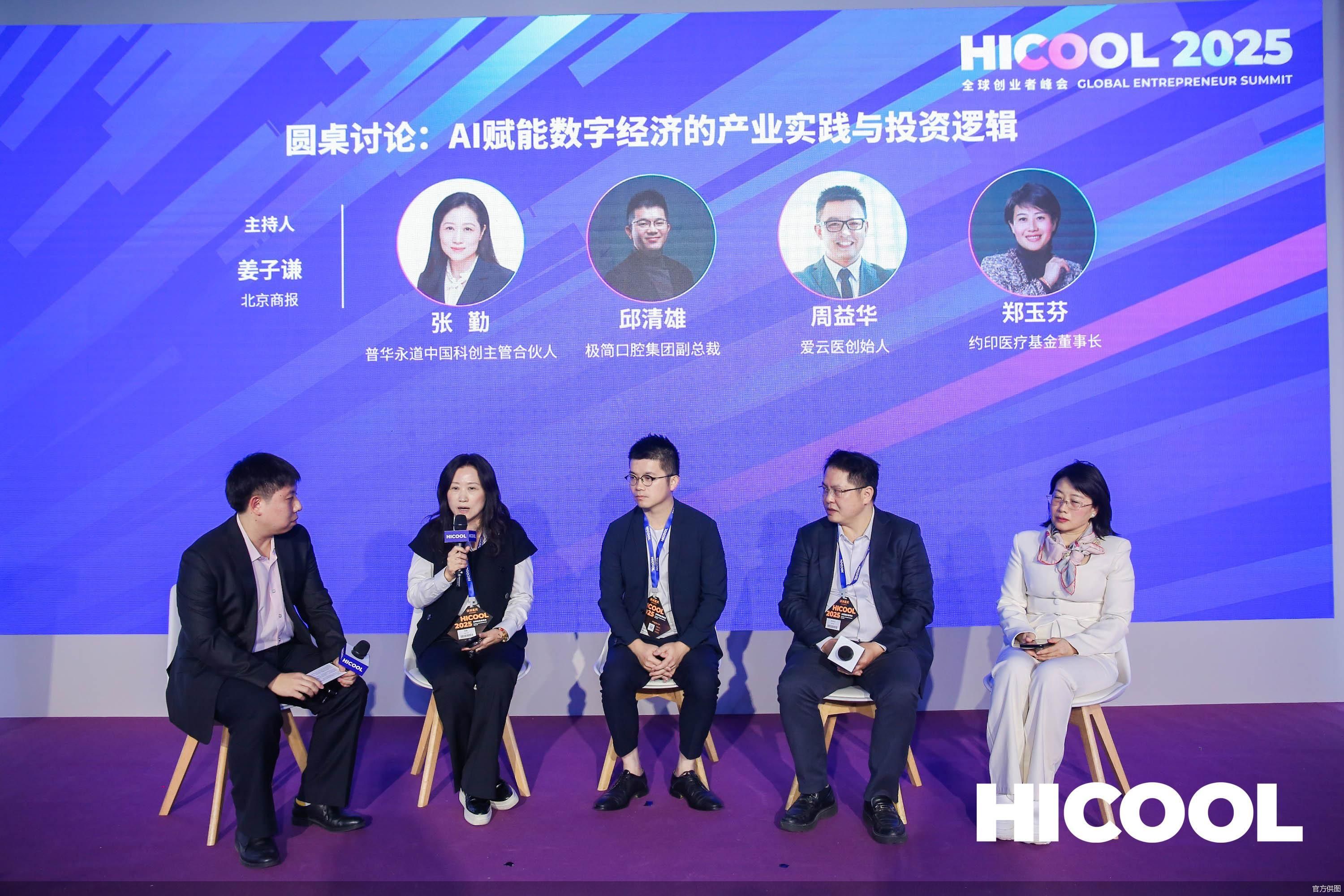
Core Insights - The forum at the HICOOL 2025 Global Entrepreneur Summit highlighted the transformative role of AI in the digital economy, particularly in the healthcare sector, emphasizing the shift of AI from a supportive tool to a decision-making partner [1][8]. Group 1: AI's Impact on Workforce - The rapid development of AI is expected to significantly increase workforce capabilities, potentially doubling the workforce with the introduction of digital assistants and employees [6]. - According to PwC's 2024 Pulse survey, nearly half of technology leaders reported that AI is fully integrated into their core business strategies, with one-third indicating it is fully embedded in their products and services [6]. - PwC's report predicts that AI could drive a 15% increase in global economic scale over the next decade, contributing an additional 1 percentage point to global economic growth, comparable to the impact of 19th-century industrialization [6]. Group 2: AI in Healthcare - The application of AI in the healthcare sector has evolved from isolated applications to a more integrated approach, enhancing efficiency in treatment processes [7]. - AI is expanding its professional coverage, transforming the diagnostic experience of top doctors into measurable data for training younger physicians, and aiding in financial management and system upgrades [7]. - AI's role in healthcare is shifting from a tool to a partner in diagnosis and treatment, with the potential to provide personalized medical services to patients [8]. Group 3: Investment Perspectives - The chairman of the Yuyin Medical Fund noted that the AI bubble in China has not yet arrived, with current investments primarily focused on B2B AI businesses, while B2C opportunities remain untapped [9]. - Investment strategies emphasize the importance of unique strategic barriers for companies, assessing their long-term sustainability and potential to become "evergreen" enterprises [9]. - AI in healthcare is expected to gain mainstream visibility within the next 5 to 10 years, indicating a growing market potential [9]. Group 4: AI Innovations in Medical Diagnostics - The AI cancer screening system developed by AiYun Medical allows users to upload images and videos for health assessments, providing results within 24 hours and covering over 110 types of tumors and 1,700 other diseases with an accuracy rate of 80% to 90% [10]. - The integration of AI in healthcare is anticipated to revolutionize patient care, making digital doctors accessible to households [11].
为健康开“处方”!西城体重管理市集提供义诊、运动一站式服务
Xin Jing Bao· 2025-10-17 10:25
Core Insights - The event titled "Weight Management Year" was held in Xicheng District from October 17 to 19, showcasing a comprehensive approach to weight management through various services and products [1] Group 1 - The event featured participation from medical institutions such as Concord Hospital, along with multiple technology and sports brands [1] - The initiative aimed to create a holistic weight management experience that includes free medical consultations, nutrition advice, technology integration, and fitness activities [1]
希玛医疗(03309)10月17日斥资38.14万港元回购20万股
智通财经网· 2025-10-17 10:13
Core Viewpoint - Hema Medical (03309) announced a share buyback plan, spending HKD 381,400 to repurchase 200,000 shares at a price range of HKD 1.89 to HKD 1.92 per share [1] Summary by Category - **Company Actions** - The company will repurchase 200,000 shares at a total cost of HKD 381,400 [1] - The buyback price per share is set between HKD 1.89 and HKD 1.92 [1]
港股午评|恒生指数早盘跌1.61% 燃气股逆市走高
智通财经网· 2025-10-17 04:10
Market Overview - The Hang Seng Index fell by 1.61%, down 415 points, closing at 25,472 points, while the Hang Seng Tech Index dropped by 2.81%. The early trading volume in the Hong Kong market was HKD 153.2 billion [1] Energy Sector - Gas stocks rose, with Zhongyu Energy (03633) increasing by over 10%. This surge is attributed to the early initiation of winter heating in Gansu and other regions due to continuous temperature drops, leading to increased natural gas demand [1] Biotechnology Sector - Newly listed stock Xuan Zhu Bio-B (02575) surged over 13%, reaching a new high, and is up more than 190% from its IPO price. Yimai Sunshine (02522) rose over 4% following the global launch of its medical imaging model product AIR. The performance of medical stocks varied, with Yaojie Ankang-B (02617.HK) up over 21%, Baize Medical (02609) up over 5%, while Kangfang Biotech (09926) fell by 2%. Kangning Jereh Pharma-B (09966) increased by over 13% after announcing a share buyback plan, with market attention on significant data from the ESMO conference [2] Precious Metals Sector - Laopu Gold (06181) rose over 4%, benefiting from increased channel expansion and upgrades, with institutions indicating that rising gold prices favor its high-end brand positioning [3] Hospitality Sector - Wanda Hotel Development (00169) increased by over 10% after completing a sale and announcing a special dividend of HKD 0.462 per share to be paid next month [4] Digital Assets Sector - Delin Holdings (01709) rose over 3% after entering a strategic cooperation agreement with Antalpha to promote business in the digital asset sector [5] Telecommunications Sector - Changfei Optical Fiber and Cable (06869) fell over 6%, having dropped 40% from its September peak due to declining fiber optic prices and shareholder sell-offs. Cryptocurrency-related stocks collectively declined, with Bitcoin experiencing significant volatility and a recent incident in the US stablecoin market. Mi Strategy (02440) fell by 4.36%, and OSL Group (00863) dropped by 3.99% [6] Semiconductor Sector - Chip stocks continued to decline, with SMIC (00981) down over 5% and Huahong (01347) down over 3%, as US export controls accelerate domestic semiconductor replacements [6]