
银行业

Search documents
2026年2月19日印尼央行连续第四次维持4.75%基准利率不变
Sou Hu Cai Jing· 2026-02-19 10:55
Group 1 - The Bank of Indonesia has maintained the 7-day reverse repo rate at 4.75% for the fourth consecutive time, aligning with market expectations [1] - The decision aims to control inflation within the official target range of 2.5%±1%, stabilize the currency, and support economic growth amid global financial uncertainties [1] - The inflation rate in January 2026 was reported at 3.55% year-on-year, attributed to base effects, with the government and central bank coordinating measures to stabilize supply and prices [1] Group 2 - Since September 2024, the Bank of Indonesia has cut interest rates by a total of 150 basis points, reaching the lowest level since 2022 [1] - The central bank plans to continue interventions in the foreign exchange market to maintain currency stability and bolster market confidence, indicating that the Indonesian rupiah is undervalued relative to economic fundamentals [1] - The GDP growth forecast for 2026 remains unchanged at a range of 4.9% to 5.7%, with expectations of strengthened economic growth in the first quarter due to government stimulus and improved business confidence [2]
摩根大通称新兴市场对冲基金录得2022年以来最佳单月表现
Xin Lang Cai Jing· 2026-02-19 10:54
Core Insights - Emerging market hedge funds recorded their strongest monthly performance in over three years in January, with alpha returns contributing to more than half of the total returns [1][2] - The return rate for emerging market hedge funds in January was 4.9%, marking the best single-month performance since November 2022 [1][2] - The beta of emerging market hedge funds has steadily increased over the past year and is currently at the upper end of its historical range [1][2] Fund Flows - There has been strong capital inflow into exchange-traded funds (ETFs) focused on Korean stocks, exceeding 100% of the assets under management [1][2] - Latin American, African, and Middle Eastern stock ETFs are also receiving significant attention [3] - In contrast, the inflow into emerging market fixed income funds and other regional funds has been more moderate [4]
美联储会议纪要暴巨大分歧
华尔街见闻· 2026-02-19 10:24
Core Viewpoint - The latest Federal Reserve meeting minutes reveal significant divisions among decision-makers regarding the future direction of interest rates, with discussions on both rate cuts and the possibility of rate hikes due to persistent inflation concerns [1][2]. Summary by Sections Interest Rate Outlook - The Federal Reserve decided to pause interest rate cuts during the January meeting, with two dissenting votes advocating for a 25 basis point cut [3]. - Some participants expressed caution about further rate cuts in light of high inflation data, fearing it could signal a weakened commitment to the 2% inflation target [4]. - The minutes indicate that monetary policy will not follow a predetermined path but will be influenced by evolving data and economic conditions [5]. Inflation Concerns - Overall inflation in the U.S. has significantly decreased from its 2022 peak but remains slightly above the Fed's long-term target of 2% [6]. - Participants expect inflation to trend down towards 2%, but the pace and timing of this decline remain uncertain [6]. - Concerns about persistent inflation risks were highlighted, with some participants noting that businesses might raise prices in response to cost pressures, including those related to tariffs [6]. Labor Market Insights - The labor market shows signs of stabilization, with recent data indicating a steady unemployment rate and low job growth [8]. - Most participants noted that while layoffs remain low, hiring is also subdued, reflecting caution among businesses regarding economic prospects and the impact of automation [8]. - There is a general consensus that the downward risks in the labor market have diminished, although some indicators still suggest a softening market [8]. Economic Growth - Economic activity appears to be expanding at a steady pace, supported by resilient consumer spending and strong business investment, particularly in technology [10]. - Participants anticipate that economic growth will remain robust through 2026, despite high uncertainty regarding growth prospects [10]. - Recent data shows accelerated economic growth, easing inflation, and a stabilizing labor market, with January's CPI growth falling below market expectations [10]. Financial Stability Risks - Discussions on financial stability highlighted concerns about high asset valuations and low credit spreads, with some participants noting vulnerabilities related to the recent developments in the AI sector [12]. - Risks associated with private credit and its exposure to higher-risk borrowers were also discussed, along with concerns regarding hedge funds and their increasing presence in the bond and equity markets [12].


金价,彻底沸了!“1公斤金条卖断货”,有人不问价直接出手
Sou Hu Cai Jing· 2026-02-19 09:59
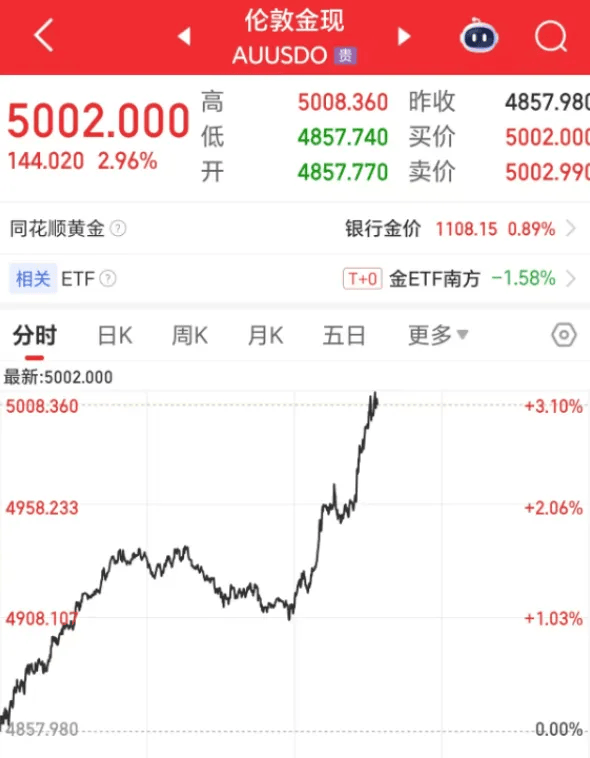
Core Viewpoint - International precious metal prices continue to rise, with spot gold surpassing $5000 per ounce, reflecting a daily increase of over 2.5% [1][3]. Price Movements - As of February 18, the spot gold price reached $5002.00 per ounce, showing a significant increase from the previous day's price of $4857.98, marking a rise of approximately 2.96% [2]. - The price of gold bars and jewelry has also seen a surge, with 1000-gram gold bars selling out due to high consumer demand, particularly during the festive season [4]. Market Sentiment and Influences - The market is anticipating the upcoming release of the Federal Reserve's January monetary policy meeting minutes and key U.S. inflation data, which are expected to influence future monetary policy decisions [3]. - There is a prevailing expectation that the Federal Reserve may begin to lower interest rates in June, contributing to the recent rebound in gold and silver prices after a significant decline [3]. - Geopolitical factors, including ongoing negotiations between the U.S. and Iran, as well as the Russia-Ukraine conflict, are also driving demand for safe-haven assets like gold [3]. Consumer Behavior - Despite gold prices reaching historical highs, consumer enthusiasm for purchasing gold remains strong, with reports of significant sales in gold jewelry and investment bars during the Chinese New Year [4]. - The price for investment gold bars was reported at 1112 yuan per gram, leading to a total cost of approximately 1.112 million yuan for a 1000-gram bar [4][5]. Analyst Insights - Analysts indicate that while gold is considered a safe-haven asset, its price will continue to experience volatility, particularly influenced by the Federal Reserve's policies and the global economic landscape [7]. - The next Federal Reserve chair's stance on reducing the Fed's balance sheet is expected to exert continued downward pressure on international gold prices [7].
大年初二金价大涨!有商场1000克金条卖断货,“顾客不问价直接出手!”专家严肃提醒
Xin Lang Cai Jing· 2026-02-19 08:40
Core Viewpoint - International precious metal prices are rising, with spot gold surpassing $5000 per ounce, reflecting a daily increase of over 2.5% [1][3]. Group 1: Market Trends - As of February 18, spot gold is priced at $4914.64 per ounce, up 0.78%, while spot silver is at $75.807 per ounce, up 3.15% [4]. - The April gold futures price on the New York Mercantile Exchange is reported at $4936.50 per ounce, with a gain of 0.62%, and March silver futures at $75.820 per ounce, up 3.10% [5]. Group 2: Consumer Behavior - Despite gold prices reaching historical highs, consumer demand remains strong, with significant purchases observed during the Spring Festival, including a notable sale of a 68-gram gold bracelet [5]. - Large gold items, particularly those over 10 grams, are in high demand as gifts, especially around the Spring Festival [7]. Group 3: Economic Factors - Market anticipation is building for the upcoming release of the Federal Reserve's January monetary policy meeting minutes and key U.S. inflation data, which may influence future monetary policy [3]. - The CME FedWatch Tool indicates a high probability that the Federal Reserve will begin cutting interest rates in June [3]. Group 4: Analyst Insights - Analysts suggest that the expectation of a rate cut by the Federal Reserve may face challenges, as gold prices encounter resistance around the $5000 mark due to profit-taking by some investors [7]. - HSBC's chief precious metals analyst, James Steel, notes that while gold is considered a safe-haven asset, it is still subject to price volatility, with market fluctuations expected to be a significant feature in 2026 [7].
高市早苗迎关键抉择!日本央行人事变动在即 “鸽派风暴”或撼动日元、日债
智通财经网· 2026-02-19 08:38
Core Viewpoint - Japanese Prime Minister Fumio Kishida is facing a crucial decision regarding the nomination of candidates to fill upcoming vacancies on the Bank of Japan's policy board, which will indicate the extent of her influence on monetary policy [1][2]. Group 1: Nomination Context - The nominations are expected to be proposed as early as February 25 during a parliamentary meeting, with the terms of current members Asahi Noguchi and Junko Nakagawa expiring soon [1]. - Kishida has the opportunity to appoint more pro-reflation members to the committee, similar to her mentor, former Prime Minister Shinzo Abe, following a decisive electoral victory [1][2]. Group 2: Market Reactions and Concerns - Investors are concerned that selecting two pro-reflation candidates could delay interest rate hikes by the Bank of Japan, especially with inflation remaining above the 2% target for four consecutive years [2]. - If both nominees strongly advocate for monetary easing, it could lead to a significant depreciation of the yen and a surge in Japanese bond yields [2]. Group 3: Kishida's Policy Stance - Kishida is known for her support of stimulus policies and cautious approach to interest rate hikes, having previously described potential rate increases as "foolish" [2][3]. - Since taking office, Kishida has become more cautious in discussing specific monetary policy details, particularly after recent market volatility linked to her fiscal policy statements [3]. Group 4: Legislative Approval and Future Implications - The upcoming nominations require approval from both houses of parliament, complicating the process as Kishida's party does not hold a majority in the Senate [4]. - Kishida's choices will provide insights into her policy direction, and her electoral victory positions her to influence future appointments, including the next Bank of Japan governor and deputy governor in 2028 [4].
美联储会议纪要暴巨大分歧:一些官员支持进一步降息,一些暗示加息可能
美股IPO· 2026-02-19 08:03
一些(Several)与会者支持利率指引中用"双向"表述,反映若通胀持续高于2%,可能适合加息;另一些人认为,若通胀如预期下降可能适合进一步降 息;大多数人警告,通胀下行进程可能比预期更慢、更不均衡;绝大多数认为,近几个月就业下行风险缓和,但通胀更持久的风险仍存在;一些人讨论股 市估值高、市值集中少数公司等AI相关的脆弱性,一些人强调私人信贷领域的脆弱性。 美联储最新公布的会议纪要再次暴露决策层对利率未来走向的巨大分歧,除了支持降息派和观望派,纪要还首次明确提到有人讨论加息的可能性。这反 映出,在通胀持续高于联储目标2%、经济保持韧性的情况下,联储的政策重心重新回到通胀风险,而非就业放缓。 "一些(Several)与会者警告,在通胀数据高企的情况下进一步放松货币政策可能会被误解为决策者对2%这一通胀目标的承诺有所减弱。" 这一立场与另一组官员的观点形成对比。纪要显示,一些(Several)官员认为,如果通胀如预期下降,进一步降息的可能性依然存在。不过,大多数 官员表示,通胀进展可能比普遍预测的要慢。 所有参会者一致同意,货币政策并非按照预设路径进行,而是会由各种最新数据、不断变化的经济前景以及风险平衡决定。 ...
降息还是加息?美联储“内部分歧加剧”,金银油价大反弹
Sou Hu Cai Jing· 2026-02-19 07:45
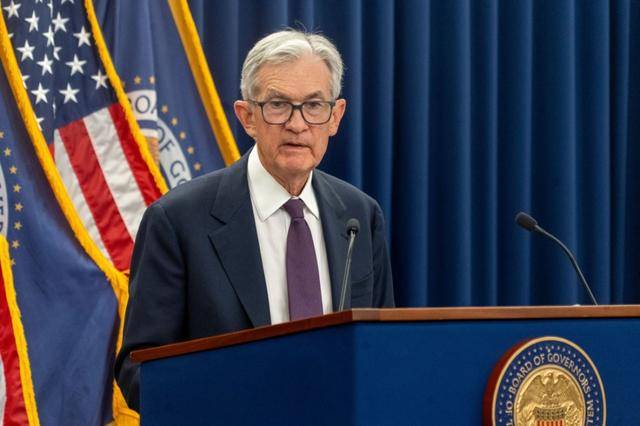
北京时间2月19日凌晨,美联储公布1月货币政策会议纪要。纪要显示,官员在利率前景问题上出现明显 分歧,在抑制通胀和支持劳动力市场之间摇摆不定。其中,多位参会官员表示,如果通胀按其预期下 降,进一步降息很可能将是合适的。部分决策官员则对进一步降息持谨慎态度。值得注意的是,会议纪 要还首次提到,有官员讨论了加息的可能性。 此外,美国声称仍然存在对伊朗动武的可能性,导致国际油价大涨。 形成鲜明对比的是,有个别参会官员提出,不应排除重新加息的可能性,并希望会后声明能更明确体 现"利率决策具有双向可能"。这一措辞标志着,美联储官员对通胀黏性的担忧明显增加。 大多数参会官员警告称,通胀回落至2%的进程可能比普遍预期"更慢、更不均衡"。绝大多数参会官员 判断,近几个月就业方面的下行风险有所缓和,但通胀更加持久的风险依然存在。 降息、暂停、加息 美联储"内部分歧加剧" 美国联邦储备委员会主席鲍威尔。新华社发 美东时间2月18日,美联储公布了1月货币政策会议纪要,其中显示,美联储内部围绕利率路径的讨论出 现重大分歧,降息、暂停降息、加息三种可能性均被提及。 回顾此前,美联储于1月27日至28日召开的议息会议上决定暂停降息,12 ...
美国陷入困境,关键时刻求助中国,局势迎来新转机
Sou Hu Cai Jing· 2026-02-19 06:29
Core Insights - The interest expenditure on U.S. national debt is projected to reach $970 billion in FY 2025, surpassing military spending, highlighting a significant fiscal challenge for the U.S. economy [1] - The total national debt increased from $37.2 trillion in August to $38.4 trillion by year-end, indicating an alarming rate of debt accumulation at $70,000 per second [1] Historical Context - The accumulation of U.S. debt is attributed to multiple factors, including tax cuts and military spending during the Reagan era, the costs of the Iraq War under George W. Bush, and unprecedented relief spending during the 2008 financial crisis and the COVID-19 pandemic [3] - Each major fiscal stimulus has temporarily alleviated economic pressure but has also created long-term debt vulnerabilities [3] Current Financial Strategies - The U.S. has seen a decline in foreign confidence in its debt, leading to significant capital outflows, prompting the introduction of the "Pennsylvania Plan" to attract domestic investors and pension funds [3] - The rise of stablecoins like Tether (USDT) is injecting liquidity into the market by purchasing short-term government bonds, but this practice poses risks akin to printing money [5] Monetary Policy Implications - The Federal Reserve is expected to lower interest rates multiple times between 2024 and 2025 to ease the burden of debt interest payments, although this could lead to a depreciation of the dollar [5] - A 10% depreciation of the dollar could reduce debt pressure by approximately $2.8 trillion, but it may also undermine the dollar's status as a global reserve currency [5] Political and Economic Challenges - Experts believe that the current U.S. approach is more of a stopgap measure lacking fundamental reform, with political divisions hindering unified fiscal policy [7] - The evolving U.S.-China relationship reflects the strategic adjustments necessitated by U.S. debt pressures, with increased economic communication indicating a desire for stability [7] Debt and Military Spending Dynamics - The competition between military spending, which stands at $901 billion, and debt interest payments reveals conflicting fiscal priorities, potentially leading to cuts in both military and social welfare spending [9] - The trust crisis surrounding U.S. debt is exacerbated by reduced holdings from traditional creditor nations like China and Europe, raising concerns about the sustainability of U.S. fiscal policy [11] Long-term Consequences - The fiscal pressures stemming from pandemic relief policies will continue to influence budget decisions for years, complicating the debt issue [13] - The integration of digital currencies into the debt market presents new trends and regulatory challenges, with potential risks that need to be addressed [13] - The U.S. faces a dilemma between reducing debt through interest rate cuts and maintaining the stability of the dollar, which could lead to greater economic volatility if not managed carefully [15]
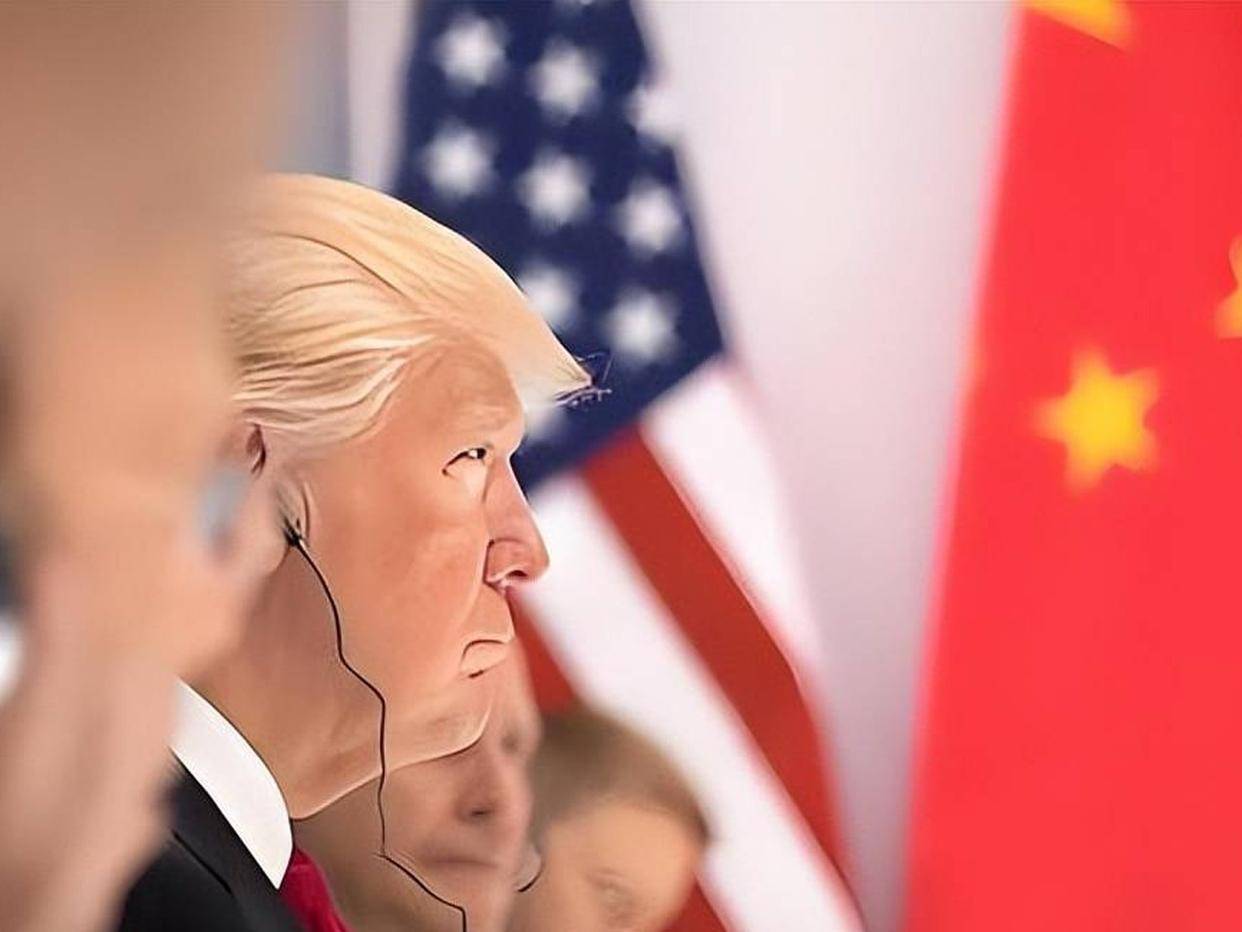
美高官秘密来华一周!2月11日才曝光,提要求:中国得多买大豆,经贸谈判
Sou Hu Cai Jing· 2026-02-19 06:07
Core Viewpoint - The recent secret visit of senior U.S. Treasury officials to China highlights the underlying anxieties and strategic calculations amid global financial turmoil, particularly concerning the U.S. dollar's declining confidence and China's increasing gold reserves [1][3][5]. Group 1: Financial Market Dynamics - The secret visit occurred during a period of global financial instability, with the U.S. dollar index falling and gold prices rising significantly, indicating a loss of confidence in the dollar [3]. - Reports suggest that the People's Bank of China has been increasing its gold reserves for several months, while domestic banks are advised to reduce their holdings of U.S. Treasury bonds [3][5]. - The U.S. is facing unprecedented financial challenges, with a massive debt burden and annual interest payments exceeding $1 trillion, compounded by political divisions affecting fiscal policy [5][11]. Group 2: U.S.-China Relations - The U.S. aims to stabilize market sentiment through discussions on soybean purchases and financial stability, but China's response indicates a reluctance to be seen as merely accommodating U.S. demands [7][9]. - China's strategy involves diversifying soybean imports away from the U.S. to countries like Brazil and Argentina, reflecting a broader intent to reduce reliance on U.S. assets [9][15]. - The visit is seen as a desperate attempt by the U.S. to seek cooperation from China amid its own financial pressures, but China's firm stance suggests a complex negotiation landscape [13][15]. Group 3: Global Economic Implications - The visit underscores deeper issues within the U.S. financial system, including a long-term deterioration of fiscal health and challenges to the dollar's dominance as countries adjust their reserve structures [11][15]. - The trend of de-dollarization is becoming more pronounced, with China’s actions to increase gold holdings and diversify procurement strategies aligning with this global shift [9][15]. - The future of U.S.-China relations and the global financial landscape will likely evolve through these nuanced interactions, reflecting the ongoing adjustments in international economic dynamics [13][15].
