快餐

Search documents
「年纪轻轻全款拿下肯德基相机和麦当劳跑车」,餐饮巨头们咋哄得打工人疯抢儿童餐?
36氪· 2025-06-02 11:09
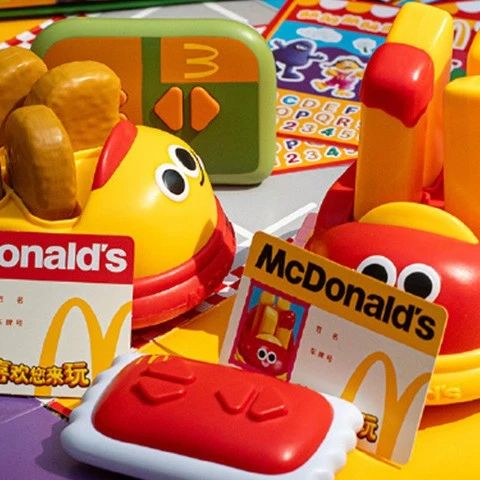
Core Viewpoint - The article discusses how Children's Day has become a significant event for the restaurant industry, akin to a sales event like "Double Eleven," with various brands launching promotional toys and meals to attract consumers [2][4]. Group 1: KFC's Strategy - KFC has collaborated with Sanrio to launch a limited edition of six toys, including a Hello Kitty digital camera, which became a hot item, selling out quickly [8][9]. - The Hello Kitty camera features dual lenses, 1080P resolution, and customizable frames, making it a high-value item in the toy market [11]. - KFC's promotional strategy included a special purchase requirement for the camera, leading to a rapid sell-out and a surge in secondary market sales [14]. Group 2: McDonald's Approach - McDonald's partnered with Chiikawa to create a set of remote-controlled toy cars, which also generated significant consumer interest [26][27]. - The promotional toys included a set of two remote-controlled cars themed around McDonald's food items, with a unique packaging design that doubles as a racetrack [28]. - McDonald's limited supply strategy included a minimum purchase requirement, ensuring that the toys were highly sought after [34]. Group 3: Pizza Hut's Offerings - Pizza Hut introduced a collaboration with Pokémon, offering a range of toys including a remote-controlled Pikachu beach car and other themed items [39][40]. - The promotional meals required higher spending compared to competitors, reflecting a premium pricing strategy for the toys [43]. Group 4: Wallace's Unique Offer - Wallace, a local fast-food brand, partnered with My Little Pony, offering a variety of collectible items with their meals, showcasing a deep understanding of consumer trends [49][51]. - The promotional strategy included multiple collectible items with different meal tiers, appealing to a younger demographic [52]. Group 5: Other Brands' Initiatives - Other brands like Luckin Coffee and Starbucks also launched promotional items, with Luckin focusing on themed cups and Starbucks offering a gaming console in collaboration with a nostalgic brand [68][80]. - The article highlights how various brands are leveraging popular IPs to create engaging promotional items, enhancing consumer interaction and brand loyalty [91].


“年纪轻轻全款拿下肯德基相机和麦当劳跑车”,餐饮巨头们咋哄得打工人疯抢儿童餐?
3 6 Ke· 2025-06-01 23:10
Group 1 - The article discusses the increasing popularity of children's day promotions among fast-food brands, highlighting the significance of toys in driving sales [1][4][18] - KFC's collaboration with Sanrio for children's day has generated significant consumer interest, leading to a rush for limited edition toys [4][6][7] - The toys offered by KFC include a variety of creative and functional items, with the Hello Kitty camera being the most sought-after due to its advanced features [6][9] Group 2 - McDonald's has also engaged in similar promotional activities, launching unique toys like remote-controlled cars themed around their food items, which have attracted considerable attention [18][20][22] - Pizza Hut has partnered with Pokémon to offer a range of toys, including remote-controlled cars and interactive figures, appealing to both children and collectors [25][27] - Wallace, a local fast-food chain, has introduced a colorful range of My Little Pony-themed toys, showcasing a deep understanding of current consumer trends [30][32] Group 3 - The article emphasizes the trend of transforming promotional toys into creative and functional items, with consumers finding innovative uses for them [12][23][28] - Brands are increasingly leveraging popular IPs to enhance their promotional offerings, creating a competitive landscape among fast-food chains [40][54] - The article concludes by noting the festive atmosphere surrounding children's day promotions, with brands vying for consumer attention through unique and engaging products [58][59]
日入上万的生烫米线店,凭什么硬控打工人?
Hu Xiu· 2025-05-28 14:36
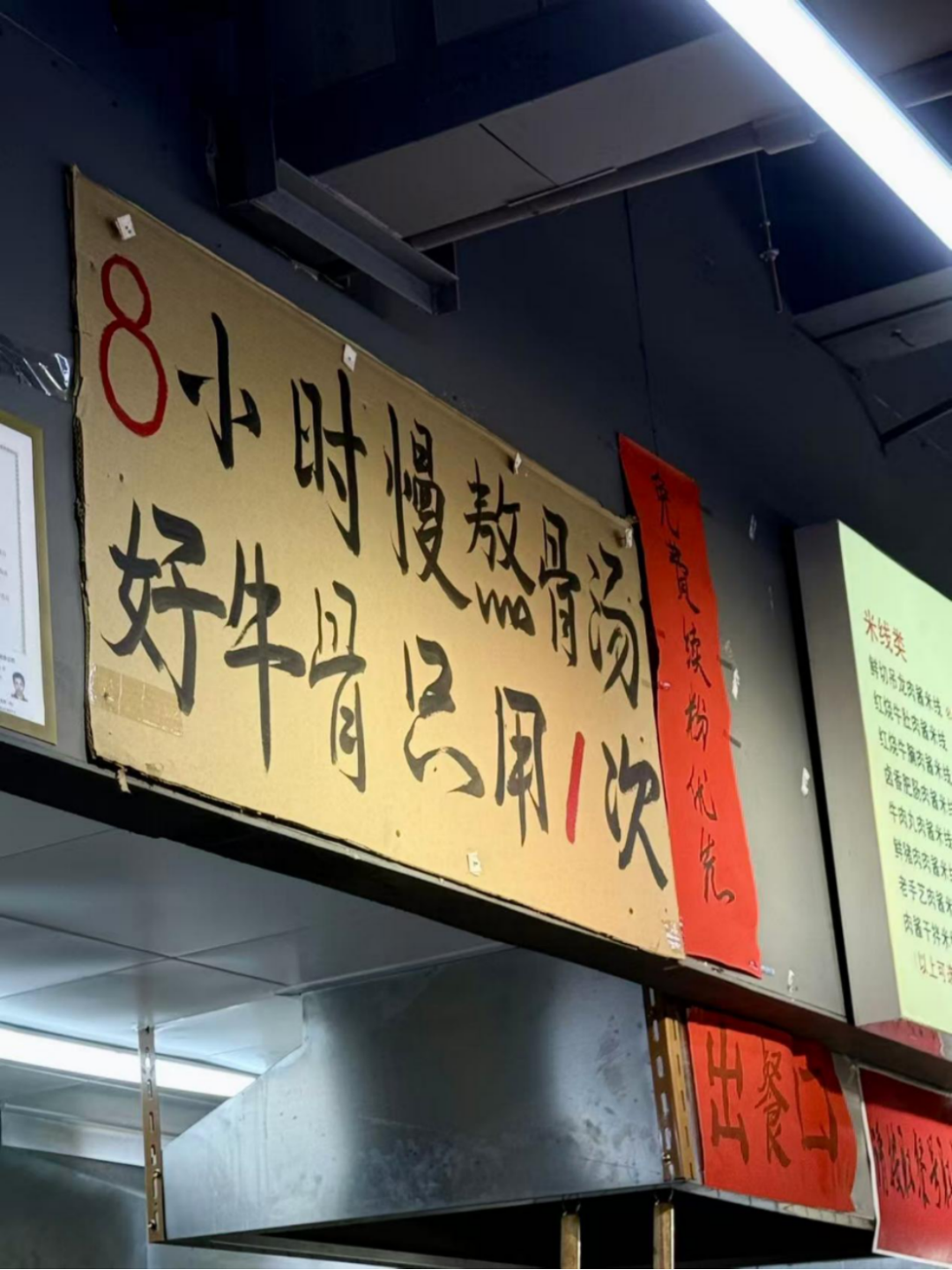
Core Insights - The rise of "raw beef rice noodles" has become a significant trend in the restaurant industry, appealing to urban consumers with its affordability and fresh preparation methods [2][22][24] Group 1: Business Model and Consumer Appeal - The business model of raw beef rice noodle shops emphasizes visible preparation, allowing customers to witness the freshness of ingredients, which enhances the dining experience [3][7][9] - The pricing strategy is attractive, with many dishes priced between 5 to 10 yuan, leading to an average customer spend of around 20 yuan, making it appealing to budget-conscious consumers [17][19][23] - The shops effectively leverage promotional strategies, such as introductory discounts and free add-ons, to attract customers and encourage repeat visits [18][28] Group 2: Market Dynamics and Competition - The market for raw beef rice noodles is characterized by high competition, with numerous brands emerging and adopting similar pricing strategies, leading to concerns about product differentiation [31][34] - Despite the initial popularity, the sustainability of the business model is questioned due to rising costs of beef and the potential for diminishing consumer interest as novelty wears off [33][36] - The rapid opening and closing of these establishments indicate a volatile market, where many new entrants struggle to maintain profitability [35][36] Group 3: Operational Efficiency - The operational efficiency of raw beef rice noodle shops is highlighted by their quick service model, with meals prepared in approximately 90 seconds, allowing for high turnover rates [25][27] - The focus on simple preparation methods contributes to lower labor costs and faster service, which are critical for maintaining profitability in a competitive environment [28][30]
广东人把麦当劳爆改成粤菜了
36氪· 2025-05-28 00:09
Core Viewpoint - The article discusses the deep-rooted love and cultural significance of McDonald's among the people of Guangdong, particularly in Guangzhou, highlighting its dominance in the fast-food market and its integration into local lifestyle and identity [2][45][70]. Group 1: McDonald's Market Presence in Guangdong - McDonald's has a significant presence in Guangdong, with approximately 23% of its total restaurants in mainland China located in this province [45]. - As of April 2023, the 800th McDonald's opened in Guangzhou, indicating rapid expansion in the region [46][51]. - The article notes that McDonald's has effectively "taken over" Guangdong, with its restaurants appearing in various locations, including residential areas and public spaces [51][52]. Group 2: Cultural Integration and Consumer Behavior - The love for McDonald's is so profound that it influences various aspects of daily life for Guangdong residents, including dining choices and social interactions [11][16][19]. - Many locals use McDonald's as a reference point for quality and popularity, indicating its status as a cultural touchstone [12][13][19]. - The article mentions that McDonald's has become a common choice for breakfast among locals, alongside traditional foods [23][25]. Group 3: Historical Context and Brand Evolution - McDonald's entered the Guangdong market in 1990, with its first restaurant in Shenzhen, which marked the beginning of its journey in China [57][60]. - The brand's strategy focused on urban areas, particularly in Guangdong, where the acceptance of Western fast food was high due to the region's rapid economic development [72][76]. - McDonald's has adapted its menu to cater to local tastes, introducing items like the pork chop bun, which are not available in other regions [78][79]. Group 4: Competitive Landscape - Despite KFC having a larger number of outlets in China, McDonald's has managed to establish a stronger cultural connection with Guangdong residents [66][67]. - The article suggests that the perception of McDonald's being more prevalent than KFC in Guangdong is due to its deep integration into local culture and lifestyle [86][90]. Group 5: Lifestyle and Social Significance - McDonald's serves not only as a dining option but also as a social space where people gather, highlighting its role in the community [90][92]. - The brand is associated with nostalgia and emotional value for many residents, reflecting its impact on their upbringing and social experiences [94][97].
一条差评让5元自助快餐店走红:平民经济学的力量|新京报快评
Xin Jing Bao· 2025-05-27 10:03
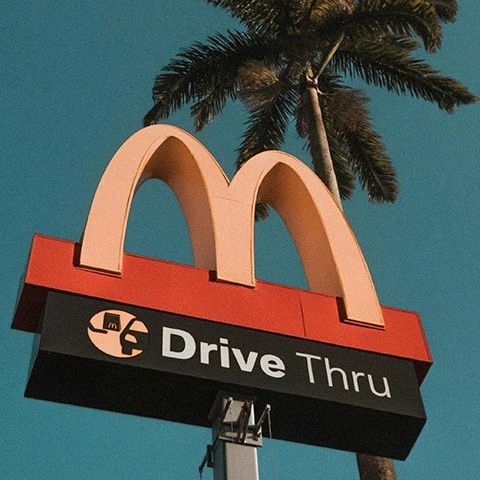
Core Viewpoint - A small self-service fast food restaurant in Jinan gained popularity due to a negative review, which sparked online discussions and support from netizens [3][4]. Group 1: Business Model and Pricing - The restaurant offers a meal for 5 yuan, featuring 6 to 8 dishes, targeting low-income workers such as delivery riders and construction workers, thus saving them living costs [4]. - The owner, a young entrepreneur, set the price after calculating costs, ensuring it meets the basic needs of customers [4]. - The restaurant's success is attributed to its focus on affordability, large portions, and the owner's use of short videos and online group buying to increase visibility [4][5]. Group 2: Community Engagement and Marketing - The restaurant's rise in popularity is partly due to the community's response to the negative review, with many netizens promoting the restaurant and even contributing food items [5]. - The restaurant's online group buying page humorously features high-end dishes, showcasing a blend of community support and light-hearted marketing [5]. - The owner expressed that the encouragement from customers has motivated him to continue running the restaurant, highlighting the warmth and connection within the urban community [5].
UU跑腿要求高管午休时间接单,创始人回应;巨子生物回应重组胶原蛋白检测争议;李嘉诚旗下一近50亿元在建楼盘项目涉偷工减料丨邦早报
创业邦· 2025-05-25 00:51
Group 1 - UU Delivery requires executives to participate in delivery during lunch breaks to experience the challenges faced by frontline workers [3] - McDonald's plans to open nearly half of its new restaurants in China this year, with over 90% of its raw materials sourced locally to mitigate tariff fluctuations [5] - Giant Bio responded to allegations of collagen content in its products, stating that multiple tests confirmed collagen levels above 0.1% [5] Group 2 - Elon Musk indicated that the recent operational issues on the X platform highlight the need for significant operational improvements [8] - Alibaba's chairman, Cai Chongxin, acknowledged that the company's internationalization efforts have seen both successes and failures, with 80% of its revenue still coming from China [9] - Series X, a venture capital fund associated with Alphabet's X lab, plans to raise over $500 million to invest in spin-off companies [11][12] Group 3 - GAC Group announced its entry into the Brazilian market, aiming to establish a local factory by the end of 2026 [15][16] - 52TOYS submitted its prospectus for a Hong Kong IPO, reporting revenues of 460 million yuan, 482 million yuan, and 630 million yuan from 2022 to 2024 [18] - ZhiYuan Robotics is nearing completion of a new funding round, with investors including JD.com and a state-owned fund [19] Group 4 - BMW showcased the Concept RR motorcycle, emphasizing performance and aerodynamic design [19] - The 2025 BMW M2 CS was revealed with a more aggressive front design and upgraded rear wing [21] - The pre-sale box office for new films during the 2025 Dragon Boat Festival has exceeded 10 million yuan, with top films including "Time's Child" and "Mission: Impossible 8" [23]

麦当劳今年近半新餐厅将开在中国,九成采购本土化抵御关税波动
Di Yi Cai Jing· 2025-05-24 06:29
Core Viewpoint - McDonald's China business remains stable despite recent "reciprocal tariffs" events, driven by increased delivery share, successful value meal offerings, and strong chicken business performance [1][2] Group 1: Business Performance - In Q1 2025, McDonald's China reported stable performance, benefiting from enhanced delivery services and value meal promotions [1] - Over 90% of McDonald's raw materials in China are sourced locally, including key ingredients like chicken and potatoes [2] Group 2: Market Strategy - McDonald's has shifted focus from primarily first and second-tier cities to expanding its presence in third to fifth-tier cities, with approximately 50% of its restaurants now located in these areas [1] - The company plans to open around 1,000 new restaurants in China in 2025, part of a global strategy to open about 2,200 new locations [3] Group 3: Consumer Trends - McDonald's has launched a "Value Year" initiative in 2025, featuring multiple high-value projects aimed at enhancing customer experience [2] - A survey revealed that young consumers prioritize quality and experience over merely low prices, indicating a shift towards a "quality-price ratio" era in the Chinese dining market [2] Group 4: Innovation and Expansion - McDonald's is innovating restaurant formats to enhance consumer convenience, including drive-thru services, smart pick-up cabinets, and family-friendly dining options [3] - The company aims to increase store density in key cities while expanding into new business districts [3]
多少肯德基员工,被车速取折磨成人形立牌?
Ge Long Hui· 2025-05-23 18:35
Core Viewpoint - KFC is expanding its drive-thru service despite challenges in implementation, aiming to compete with rivals like McDonald's and local brands in a highly competitive fast-food market [17][22]. Group 1: Drive-Thru Service Challenges - Some KFC locations are not designed for efficient drive-thru service, leading to employees waiting outside to hand over orders, which complicates the process for both staff and customers [3][10][20]. - Customers often face issues with poorly designed drive-thru lanes, causing delays and confusion during the pick-up process [11][14][16]. - The drive-thru service has been described as "slow pick-up" due to various logistical challenges, including the need for customers to navigate complex parking and pick-up routes [10][14][22]. Group 2: Expansion of Drive-Thru Service - KFC's drive-thru service has evolved to a 2.0 version, which includes street-side pick-up options, and is set to expand to nearly 5,000 locations by the end of 2024 [18][19]. - Despite the challenges, KFC is committed to promoting the drive-thru service as a competitive advantage in the fast-food market, particularly against McDonald's and local competitors [22]. Group 3: Consumer Behavior and Market Position - The demand for drive-thru services in China is questioned, as many consumers do not prefer to eat in their cars, leading to low order volumes at some locations [21][22]. - KFC's strategy appears to be driven by the need to maintain market share in an increasingly competitive environment, where even small advantages are deemed valuable [22].
当行业巨头跨界餐饮,是搅局还是重塑?
Sou Hu Cai Jing· 2025-05-23 05:40
Core Insights - The restaurant industry has become a new battleground for various industry giants, including energy companies, internet firms, and luxury brands, all seeking to capture a share of this growing market [1] Group 1: Reasons for Interest in the Restaurant Sector - High-frequency consumption makes dining a necessity, providing a crucial touchpoint for brands to reach consumers [3] - Dining experiences enhance brand culture, increasing user loyalty [3] - The integration of data and scenarios allows for optimization of supply chains and user operations [4] - The restaurant sector offers higher profit margins compared to traditional retail, with some business models achieving gross margins of 60%-70% [5] Group 2: Motivations Behind Cross-Industry Entry - The restaurant industry has significant market potential, closely tied to daily life, with continuous growth driven by consumption upgrades and diverse consumption scenarios [7] - Many industry giants pursue not only profit but also traffic and brand extension through restaurant ventures, as seen with ByteDance's investments in coffee brands to engage younger consumers [8] - Companies leverage existing resources to support their restaurant initiatives, such as PetroChina and Sinopec utilizing their extensive gas station networks to launch coffee brands [10] Group 3: Successes and Challenges in Cross-Industry Practices - Successful examples include Country Garden's robot restaurant, which combines technology and agriculture for operational efficiency and a unique dining experience [12] - Haidilao's "Pomegranate Plan" introduces multiple sub-brands to cater to various consumer needs, reinforcing its market position [13] - Challenges are evident in cases like Wahaha's tea shops, which struggled due to brand misalignment with market demands and insufficient operational expertise [15] - Both Wahaha and Wanglaoji faced setbacks in the tea beverage market, negatively impacting their main brand reputations [16] Group 4: Future of Cross-Industry Dining - Opportunities for innovation and integration abound, with advancements in technology enabling more precise market targeting and personalized service experiences [18] - The restaurant sector faces intense competition and operational challenges, including supply chain management and food safety, as industry giants enter the market [19] - The trend of industry giants entering the restaurant space reflects a broader market evolution, emphasizing the need for resource utilization, market understanding, and continuous innovation [22]
五年涨十倍,吉野家要把拉面卖成全球第一?
3 6 Ke· 2025-05-22 03:41
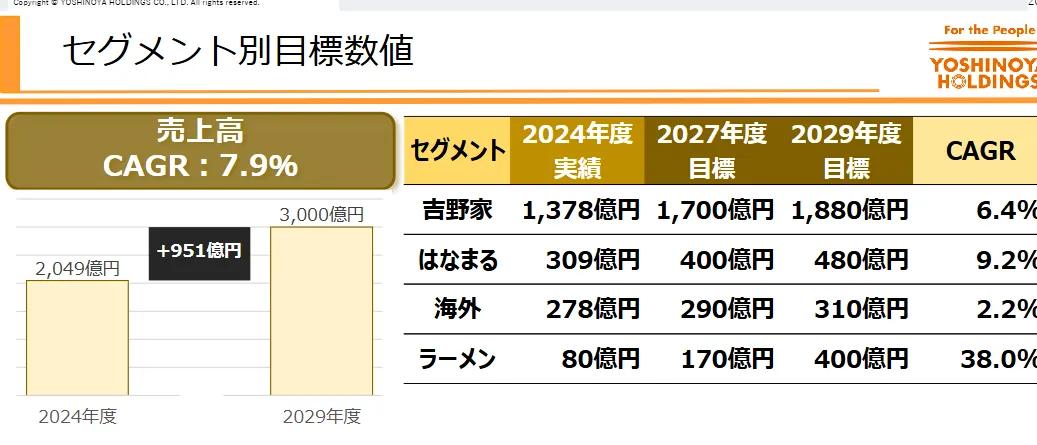
Core Insights - Yoshinoya aims to become the world's largest ramen restaurant by the fiscal year ending February 2035, as stated in its latest mid-term business plan (2025-2029) [1] - The company plans to transform its ramen business into a significant third business segment alongside its existing domestic and overseas operations, targeting a fourfold increase in ramen revenue within five years [1][2] Business Strategy - Yoshinoya has set a target to increase ramen sales from 8 billion yen (approximately 0.4 billion RMB) to 40 billion yen (approximately 1.99 billion RMB) by the fiscal year 2029, representing an annual growth rate of 38% [1][2] - The company aims to expand its ramen store count to 500 locations by 2029, increasing the ramen segment's contribution to total sales from 4% to 13% [1][2] Financial Goals - The ramen business's profitability is expected to grow tenfold, from 400 million yen to 4 billion yen over the next five years [2] - Yoshinoya's overall sales target is set at 300 billion yen by 2029, with a compound annual growth rate (CAGR) of 7.9% [2] Recent Acquisitions - The company has acquired 17 ramen brands, including Setagaya and Kirameki, to strengthen its ramen supply chain [3][5] - Yoshinoya's acquisition of Takara Sangyo, a supplier of noodles and sauces, is intended to enhance production capacity and sales resources for its global ramen expansion [5] Market Challenges - Yoshinoya's previous attempts to expand its Udon brand in China were unsuccessful, leading to its exit from the market in 2022 [8][9] - The company faces challenges in the Chinese market, where Japanese ramen has struggled with issues such as lack of cost-effectiveness and insufficient product innovation [9]