铁矿石

Search documents
战略反攻,可能已经到来,中国新一轮反制威力在哪?
3 6 Ke· 2025-10-11 12:48
今天,老局打算和大家聊一下最近新一轮的中美 "关税战", 但在正式开聊之前,我们得先看一段历史小故事。 两千年多年前,中国所面对的最强大的敌人叫匈奴。 作为马背上的民族,匈奴人可谓"武德充沛",小孩子骑在羊羔身上,用玩具弓箭射杀老鼠和狐狸,长大了则跨上战马,换上战弓,而且堪称"全民皆兵", 动不动就"控弦之士十余万"。 不仅实力空前强大,匈奴人的战术对于中原王朝来说也是完全陌生的。 司马迁先生在《史记》中对匈奴人的战术给予了非常准确的评价:"利则进,不利则退,不羞遁走"。翻译出来就是:战局有利就进攻,战局不利就撤退, 后退和跑路像呼吸一样简单自然。 在草原上来去如风的匈奴人,从来不会像中原民族那样坚如磐石地固守阵地,他们天生就是机动战专家。 最开始的那些年,中原王朝的军队非常不适应匈奴人的这种战法,一度闹出了"白登之围"这样的重大危机。甚至,面对匈奴大单于侮辱性的挑衅,吕后被 逼得只能用近乎于谄媚的态度来应对。 没辙,打不过就是打不过啊。 但不要紧,很快,中原王朝就摸清了匈奴的命门: 第一,匈奴作为草原行国,主要的经济手段就是畜牧业,战马和牛羊是匈奴人的软肋。 于是,汉军每次出塞攻击匈奴,都选择在了初春时节— ...


从被割7000亿到反杀!中国铁矿定价权之战,这局赢得太提气
Sou Hu Cai Jing· 2025-10-11 07:01
Core Viewpoint - The article discusses China's recent shift in negotiating power regarding iron ore purchases from Australia, highlighting a significant change in the dynamics of pricing and payment methods, particularly the acceptance of RMB settlements by Australian mining giant BHP [1][13]. Group 1: Historical Context - China has historically overpaid for iron ore, spending an excess of 700 billion yuan from 2000 to 2006 due to a lack of negotiation power and transparency from Australian suppliers [3][5]. - The cost of iron ore production in Australia is significantly lower than the prices charged to China, leading to minimal profit margins for Chinese steel companies [5]. Group 2: Current Negotiation Power - China now holds three key advantages in negotiations: the ability to halt purchases, established alternative suppliers, and a robust pricing market through its futures exchange [7][9][11]. - BHP relies heavily on the Chinese market, with 60% of its iron ore sales directed to China, making China's purchasing decisions impactful on BHP's profitability [7]. Group 3: Future Implications - The acceptance of RMB for iron ore transactions marks a significant step for China in asserting its pricing power in global commodity markets, potentially influencing future negotiations in other sectors such as oil and gas [13][14]. - This shift indicates a broader strategy for China to establish its own rules in international trade, challenging the dominance of the US dollar [14].

撼动美元霸权,人民币结算澳铁出口,中国重塑国际贸易规则
Sou Hu Cai Jing· 2025-10-10 18:39
撼动美元霸权第一枪,中国终于在2025年9月把牌摊在了桌面上,场面一度尴尬,澳洲那边总理阿尔巴尼斯对着 镜头挤出"失望"俩字,翻译一遍意思就是:这下麻烦了。 铁矿石,这玩意儿看起来没啥存在感,实则是现代工业的"饭票",中国要吃饭,澳洲要卖饭,过去十年形成 的"你买我卖"默契,这一刻说断就断了,像极了深夜分手短信,隔着太平洋都能闻到一股生意场的火药味。 2025年9月18日,澳洲铁矿企业的股票直接跳水,跌幅超过8%,有个老股民在微信群里发了句"自作孽不可活", 没人敢接话,澳洲的GDP有六成都押在矿上,这一下不是挠痒,是捅肺管。 有人问:怎么突然就翻脸了?其实不突然,攒了十年的火气,早在2022年中国矿产资源集团成立时就埋下了种 子,大家都知道,铁矿石的价格一直是澳洲三巨头说了算,买家像是菜市场里等着挨宰的主儿,85%的货进中 国,价钱却总是"美金报价",一边喊着市场自由,一边玩着定价权的把戏。 我问了个做钢材的小老板,2023年他还在抱怨普氏指数"一天三变",铁矿石进厂价一吨能差出四五百块人民币, 他说"买家就像韭菜,卖家拿着镰刀",没得选。 2025年这次谈判,澳洲那边依旧想按老规矩来,美元结算,普氏定价, ...

铁矿石月报:终端需求拖累矿价-20251010
Wu Kuang Qi Huo· 2025-10-10 14:38
Report Investment Rating No information about the industry investment rating is provided in the report. Core Viewpoint In October, iron ore prices will be dragged down by terminal demand. After the end - of - Q3 shipping rush, overseas mines' shipments are expected to decline seasonally, and arrivals are also expected to decrease. Steel mills' hot metal production remains high, but downstream terminal demand is weak. After the pre - holiday restocking, the contradiction between high hot metal production and terminal demand will accumulate. If the finished product inventory pressure increases and steel prices adjust downward, the raw material prices will be under pressure, and port inventories are expected to increase slightly. Attention should be paid to the policy directions from the Fourth Plenary Session in late October and the potential impact of sudden news on prices [13][14]. Summary by Directory 1. Monthly Assessment and Strategy Recommendation - **Supply**: In September, the weekly average of global iron ore shipments was 32.8238 million tons, a month - on - month increase of 48,400 tons. The weekly average of Australian shipments to China via 19 ports was 16.091 million tons, an increase of 1.4708 million tons; Brazilian shipments had a weekly average of 7.531 million tons, a decrease of 1.3968 million tons. The weekly average of arrivals at 45 ports was 24.6145 million tons, a month - on - month increase of 43,300 tons [13]. - **Demand**: The estimated daily average domestic hot metal production in September was 2.4017 million tons, an increase of 12,000 tons compared to the previous month [13]. - **Inventory**: At the end of September, the imported iron ore inventory at 45 ports was 139.7779 million tons, an increase of 2.1477 million tons; the weekly average of daily ore removal at 45 ports was 3.3116 million tons, an increase of 1.044 million tons. The weekly average of daily consumption of imported iron ore by steel mills was 2.9351 million tons, a decrease of 450,000 tons [13]. 2. Futures and Spot Market - **Price Spreads**: At the end of September, the PB - Super Special powder spread was 71 yuan/ton, a month - on - month decrease of 37 yuan/ton; the Carajás - PB powder spread was 139 yuan/ton, an increase of 27 yuan/ton; the Carajás - Jinbuba powder spread was 185 yuan/ton, an increase of 29 yuan/ton; the ((Carajás + Super Special powder)/2 - PB powder) spread was 34 yuan/ton, an increase of 32 yuan/ton [19][22]. - **Feed Ratio and Scrap Steel**: At the end of September, the pellet feed ratio was 15.16%, a decrease of 0.48 percentage points; the lump ore feed ratio was 12.06%, an increase of 0.08 percentage points; the sinter feed ratio was 72.78%, an increase of 0.4 percentage points. The Tangshan scrap steel price was 2,245 yuan/ton, a decrease of 50 yuan/ton; the Zhangjiagang scrap steel price was 2,150 yuan/ton, an increase of 30 yuan/ton [25]. - **Profit**: At the end of September, the steel mill profitability rate was 58.01%, a decrease of 5.63 percentage points [28]. 3. Inventory - **Port Inventory**: At the end of September, the imported iron ore inventory at 45 ports was 139.7779 million tons, an increase of 2.1477 million tons; pellet inventory was 2.7865 million tons, a decrease of 47,200 tons; iron concentrate inventory was 10.8306 million tons, a decrease of 295,300 tons; lump ore inventory was 17.2213 million tons, an increase of 682,300 tons; Australian ore port inventory was 59.1619 million tons, a decrease of 621,200 tons; Brazilian ore port inventory was 53.5452 million tons, an increase of 3.1776 million tons [35][38][41]. - **Steel Mill Inventory**: At the end of September, the imported iron ore inventory of 247 steel mills was 97.3639 million tons, an increase of 7.292 million tons [43]. 4. Supply Side - **Overseas Shipments**: In September, the weekly average of Australian shipments to China via 19 ports was 16.091 million tons, an increase of 1.4708 million tons; Brazilian shipments had a weekly average of 7.531 million tons, a decrease of 1.3968 million tons. Rio Tinto's weekly average shipments were 6.319 million tons, an increase of 428,000 tons; BHP's were 5.4408 million tons, an increase of 192,400 tons; Vale's were 5.3985 million tons, a decrease of 1.2485 million tons; FMG's were 4.1385 million tons, an increase of 509,700 tons [49][52][55]. - **Arrivals and Imports**: In September, the weekly average of arrivals at 45 ports was 24.6145 million tons, a month - on - month increase of 43,300 tons. In August, China's non - Australian and non - Brazilian iron ore imports were 16.899 million tons, a month - on - month decrease of 622,700 tons [58]. - **Domestic Mines**: At the end of September, the domestic mine capacity utilization rate was 61.27%, an increase of 1.28 percentage points; the daily average output of iron concentrate from domestic mines was 478,500 tons, an increase of 10,000 tons [61]. 5. Demand Side - **Hot Metal Production**: The estimated domestic hot metal production in September was 72.05 million tons, with a daily average of 2.4017 million tons, an increase of 12,000 tons compared to the previous month. At the end of September, the blast furnace capacity utilization rate was 90.86%, an increase of 0.84 percentage points [66]. - **Ore Removal and Consumption**: In September, the weekly average of daily ore removal at 45 ports was 3.3116 million tons, an increase of 1.044 million tons. The weekly average of daily consumption of imported iron ore by steel mills was 2.9351 million tons, a decrease of 450,000 tons [69]. 6. Basis As of September 30, the calculated basis of the iron ore BRBF main contract was 54.21 yuan/ton, and the basis rate was 6.49% [74].
银河期货铁矿石日报-20251010
Yin He Qi Huo· 2025-10-10 11:13
Group 1: Market Data Summary - DCE01 price rose from 790.5 to 795.0, an increase of 4.5; DCE05 rose from 771.0 to 774.5, an increase of 3.5; DCE09 rose from 750.5 to 753.0, an increase of 2.5 [2] - I01 - I05 spread increased from 19.5 to 20.5, an increase of 1.0; I05 - I09 spread increased from 20.5 to 21.5, an increase of 1.0; I09 - I01 spread decreased from -40.0 to -42.0, a decrease of 2.0 [2] - Among various iron ore spot products, prices of most products increased, such as PB powder (60.8%) rising from 770 to 777, an increase of 7; Newman powder rising from 774 to 778, an increase of 4; etc [2] - The optimal deliverable product is Newman powder, with a price of 838, 01 - contract basis of 40, 05 - contract basis of 59, and 09 - contract basis of 80 [2] - In terms of spot product price differences, the price difference between different products changed, for example, the price difference between Carajás fines and PB powder decreased from 139 to 134, a decrease of 5 [2] - Import profits of some products decreased, such as Carajás fines' import profit decreasing from 25 to 14, a decrease of 11; Newman powder's import profit decreasing from -6 to -12, a decrease of 6 [2] - The Platts 62% iron ore price increased from 103.9 to 105.9, an increase of 1.9; the Platts 65% iron ore price increased from 117.6 to 119.5, an increase of 2.0; the Platts 58% iron ore price increased from 93.9 to 94.6, an increase of 0.6 [2] - The difference between SGX main contract and DCE01 remained unchanged at 8.0; the difference between SGX main contract and DCE05 decreased from 10.7 to 10.5, a decrease of 0.2; the difference between SGX main contract and DCE09 remained unchanged at 13.1 [2] Group 2: Graphical Data - There are multiple graphs including the basis between the optimal deliverable product and 01, 05, 09 contracts, cross - period arbitrage 1/5 spread, import profits of various iron ore products, price differences between different products, and iron ore's internal - external market US dollar spread [10][12][14] - Data sources for these graphs are from Galaxy Futures and Mysteel Information [12][14][19] Group 3: General Information - The report is a black research report from the Commodity Research Institute, specifically an iron ore daily report dated October 10, 2025 [2] - The author has a futures qualification certificate from the China Futures Association and promises to issue the report independently and objectively [33]
黑色产业链日报-20251010
Dong Ya Qi Huo· 2025-10-10 09:53
Report Date - The report is dated October 10, 2025 [1] Steel Industry Core View - Yesterday's upward movement in the steel futures market was a rebound driven by events and macro - optimistic sentiment, lacking fundamental support. With the core supply - demand contradiction unresolved, upward resistance is significant, and the market is expected to remain under pressure, but the impact of favorable macro - policies should be watched [3] Price Data - **Futures Prices**: On October 10, 2025, the closing price of the rebar 01 contract was 3103 yuan/ton, up from 3096 yuan/ton on October 9; the hot - rolled coil 01 contract closed at 3285 yuan/ton, down slightly from 3286 yuan/ton on October 9 [4] - **Spot Prices**: The aggregated rebar price in China on October 10 was 3262 yuan/ton, up from 3257 yuan/ton on October 9; the hot - rolled coil price in Shanghai remained at 3350 yuan/ton [7][9] - **Spread Data**: The rebar 01 - 05 month spread on October 10 was - 56 yuan/ton, up from - 63 yuan/ton on October 9; the hot - rolled coil 01 - 05 month spread remained at - 7 yuan/ton [4] Iron Ore Industry Core View - With the seasonal recovery of terminal demand, marginal improvement in fundamentals, and continuous supply - side disturbances, iron ore prices are expected to show an "easily rising and hard - falling" trend in the short term [19] Price Data - **Futures Prices**: On October 10, 2025, the closing price of the iron ore 01 contract was 795 yuan/ton, up 4.5 yuan from the previous day [20] - **Spot Prices**: The price of Rizhao PB powder on October 10 was 789 yuan/ton, up 5 yuan from the previous day [20] Fundamental Data - The daily average pig iron output on October 10 was 241.54 tons, down 0.27 tons from the previous week; the 45 - port ore handling volume was 327 tons, down 9.4 tons from the previous week [23] Coking Coal and Coke Industry Core View - In the fourth quarter, domestic coking coal mine production is restricted by policies. The winter storage this year is expected to be better than last year, providing phased support for coking coal and coke prices. However, the rebound height and sustainability of prices depend on the supply - demand balance of downstream steel [29] Price Data - **Futures Prices**: The coking coal 01 - 05 month spread on October 10 was - 98 yuan/ton, up 1 yuan from the previous day; the coke 01 - 05 month spread was - 152.5 yuan/ton, up 2.5 yuan from the previous day [33] - **Spot Prices**: The ex - factory price of Anze low - sulfur coking coal on October 10 was 1530 yuan/ton, unchanged from the previous day [34] Ferroalloy Industry Core View - The supply of ferroalloys is at a high level in the past five - year historical period, while demand has not improved significantly during the peak season. There is a prominent contradiction between high supply and weak demand. Cost factors and capital outflows also affect prices [43] Price Data - **Silicon Iron**: On October 10, 2025, the silicon iron basis in Ningxia was 94 yuan/ton, up 36 yuan from the previous day [44] - **Silicon Manganese**: The silicon manganese basis in Inner Mongolia on October 10 was 270 yuan/ton, up 8 yuan from the previous day [48] Soda Ash Industry Core View - Market sentiment fluctuations increase soda ash price volatility. With the second - phase ignition of Yuanxing, future supply pressure persists. The supply - demand pattern remains one of strong supply and weak demand, although exports have alleviated some domestic pressure [57] Price Data - **Futures Prices**: On October 10, 2025, the soda ash 05 contract closed at 1332 yuan/ton, down 12 yuan from the previous day [58] - **Spot Prices**: The heavy - soda market price in North China on October 10 was 1300 yuan/ton, unchanged from the previous day [61] Glass Industry Core View - High inventory in the upstream and mid - stream and weak real - world demand limit glass prices. The supply - demand pattern in the near - term is one of strong supply and weak demand. Attention should be paid to supply, cost, and inventory factors [85] Price Data - **Futures Prices**: On October 10, 2025, the glass 05 contract closed at 1334 yuan/ton, down 4 yuan from the previous day [86] - **Spot Prices**: The basis of the glass 05 contract in Shahe on October 10 was - 99 yuan/ton, up 10.8 yuan from the previous day [86]
广发期货《黑色》日报-20251010
Guang Fa Qi Huo· 2025-10-10 05:51
Report Industry Investment Rating - Not provided in the content Core Viewpoints - For the steel industry, after the holiday, steel prices rebounded slightly. Steel production decreased slightly during the holiday, and inventory increased significantly due to stagnant demand. The supply - demand gap narrowed at the end of September. In October, demand is expected to recover seasonally, and inventory is expected to decline seasonally. The short - term supply and demand are basically balanced, and inventory pressure is not large. Pay attention to the support levels of 3050 and 3200 for rebar and hot - rolled coil January contracts respectively. The unilateral drive is not obvious. For arbitrage, reverse arbitrage on the monthly spread at high levels and convergence of the hot - rolled coil to rebar spread are recommended [3]. - For the iron ore industry, on the first trading day after the holiday, iron ore showed an oscillating upward trend. There are many disturbances on the supply side, but the external iron ore swap still follows the domestic price trend. Iron ore has a rebound drive, but the upward space depends on steel prices to give steel mills profits. Short - term, buy iron ore 2601 at low prices, with a price range of 760 - 830, go long on iron ore and short on hot - rolled coil, and buy out - of - the - money call options on iron ore 2601 [5]. - For the coke and coking coal industries, after the holiday, coke and coking coal futures rebounded from the bottom, showing a divergence between futures and spot. The coke market is expected to have another round of price increase, but may face downward pressure due to compressed steel mill profits. The coking coal market is expected to be weak but the futures have a rebound expectation. For coke, buy coking coal 2601 at low prices in the price range of 1550 - 1750, conduct 1 - 5 reverse arbitrage on coke, and buy out - of - the - money call options on coke 2601. For coking coal, buy at low prices in the price range of 1080 - 1180, conduct 1 - 5 reverse arbitrage, and buy out - of - the - money call options on coking coal 2601 [8][9]. Summary by Relevant Catalogs Steel Industry Prices and Spreads - Rebar spot prices in East, North, and South China are 3240, 3210, and 3320 yuan/ton respectively. Rebar 01, 05, and 10 contracts are at 3096, 3159, and 3020 yuan/ton respectively. Hot - rolled coil spot prices in East, North, and South China are 3350, 3290, and 3320 yuan/ton respectively. Hot - rolled coil 01, 05, and 10 contracts are at 3293, 3259, and 3370 yuan/ton respectively [2][4]. Cost and Profit - Steel billet price is 2960 yuan/ton, up 10 yuan. Plate billet price is 3730 yuan/ton, unchanged. Profits of East, North, and South China hot - rolled coils are 66, 16, and 46 yuan/ton respectively, all decreasing [3]. Supply and Inventory - Daily average pig iron output is 241.5, down 0.3 (- 0.1%). Five - major steel products output is 863.3 (down 3.8, - 0.4%) million tons. Rebar output is 203.4, down 3.6 (- 1.7%). Five - major steel products inventory is 1600.7 (up 127.9, 8.7%) million tons, rebar inventory is 659.6 (up 57.4, 9.5%), and hot - rolled coil inventory is 412.9 (up 32.3, 8.5%) [3]. Demand - Building materials trading volume is 12.0, up 3.9 (49.0%). Five - major steel products apparent demand is 751.4, down 153.4 (- 17.0%) [3]. Iron Ore Industry Prices and Spreads - Warehouse receipt costs of various iron ore powders and spot prices at Rizhao Port have different changes. The 5 - 9 spread is 20.5, up 1.5 (7.9%); the 9 - 1 spread is - 40.0, unchanged; the 1 - 5 spread is 19.5, down 1.5 (- 7.1%) [5]. Supply - 45 - port weekly arrivals are 2608.7, up 248.2 (10.5%) million tons. Global weekly shipments are 3279.0, down 196.4 (- 5.7%) million tons. National monthly import volume is 10522.5, up 61.5 (0.6%) [5]. Demand - 247 steel mills' weekly average daily pig iron output is 241.5, down 0.3 (- 0.1%). 45 - port weekly average daily port clearance is 0.0, down 336.4 (- 100.0%) million tons. National monthly pig iron and crude steel outputs are 6979.3 and 7736.9 respectively, both decreasing [5]. Inventory - 45 - port inventory decreased by 22.5 (- 0.2%) million tons compared to Monday. 247 steel mills' imported iron ore inventory increased by 300.4 (3.1%). 64 steel mills' inventory available days decreased by 4.0 (- 16.0%) [5]. Coke and Coking Coal Industries Prices and Spreads - Coke and coking coal contract prices and basis have different changes. For example, coke 01 contract is 1654, up 31 (1.9%); coking coal 01 contract is 1164, up 38 (3.4%) [9]. Supply - Coke production: The daily average output of all - sample coking plants is 66.1, unchanged; 247 steel mills' daily average output is 241.8, down 0.6 (- 0.2%) million tons. Coking coal production: Raw coal output is 836.7, down 31.3 (- 3.6%); refined coal product is 426.3, down 19.8 (- 4.4%) million tons [9]. Demand - 247 steel mills' pig iron output is 241.5, down 0.3 (- 0.1%) million tons. The daily average output of all - sample coking plants for coke demand is 66.1, unchanged [9]. Inventory - Coke total inventory is 909.8, down 10.1 (- 1.1%). Coking coal inventory: Fenwei coal mine refined coal inventory increased by 14.1 (14.5%), and other inventories had different changes [9].
10月铁矿月报:供应端干扰,铁矿或先扬后抑-20251010
Xin Shi Ji Qi Huo· 2025-10-10 05:48
新世纪期货铁矿月报 商品研究|铁矿月报 黑色产业链组 电话:0571-85103057 邮编:310000 地址:杭州市拱墅区万寿亭 13 号 网址 http://www.zjncf.com.cn 铁矿 2025.6 月月报——铁矿 石价格的"短多长空":需求 淡季的市场逻辑 强运行 铁矿 2025.8 月月报——重要 10 月铁矿月报—— 供应端干扰,铁矿或先扬后抑 观点摘要: 库存: 目前钢厂利润收缩,高产量承压。铁矿石供应仍维持高位,需 求在钢材库存持续增加情况下有转弱预期,节前没有超额补库,关 注国庆节后成材库存去化情况。 铁矿 2025.7 月月报——"反 内卷"吹响号角,短期矿价偏 总结: 部分自媒体报道称因铁矿石定价争议升级,对禁止进口 BHP 等 矿山矿石的消息产生新的担忧,但中国钢厂并没有收到相关通知, 另外西芒杜事故也影响了市场情绪,后续关注供应端的实际影响情 况。钢厂盈利面有所走低,但依旧处于近年偏高水平,日均铁水产 量也维持在高位,短期很难看到负反馈,节后核心仍在钢材需求, 若十月钢材需求不及预期,从而钢材库存持续累积,钢价下跌带动 利润走低,导致钢厂减产进而形成负反馈。目前铁矿石交易 ...
中国不想再当“卑微甲方”
Hu Xiu· 2025-10-10 04:13
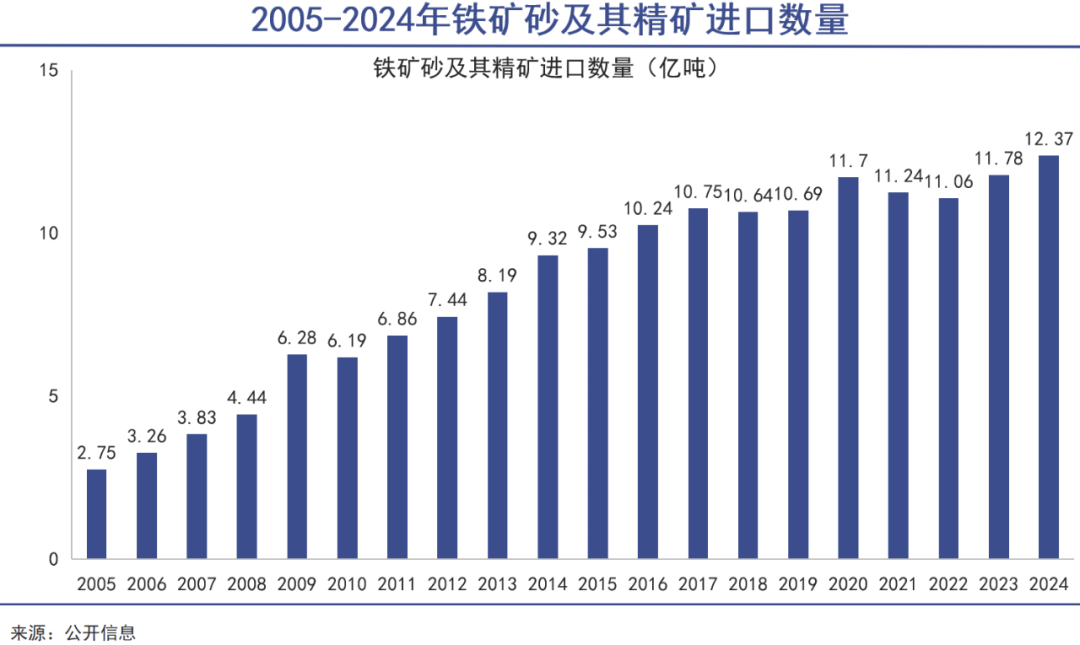
Core Viewpoint - Recent actions by China regarding strategic mineral resource management have garnered significant attention, indicating a potential shift in its pricing strategy in the global commodities market [1][7]. Group 1: China's Actions in Mineral Resource Management - On September 30, 2023, it was reported that China Mineral Resources Group requested domestic buyers to suspend purchases of BHP's iron ore cargo priced in USD, causing a stir in international raw material markets [2][4]. - On October 9, 2023, China's Ministry of Commerce announced export controls on rare earth-related technologies and items, further emphasizing its strategic approach to resource management [5]. Group 2: China's Position in the Global Market - China is the largest consumer of iron ore globally, importing 1.237 billion tons in the previous year, which is nearly five times the amount imported two decades ago, accounting for approximately 75% of global seaborne iron ore imports [8][9]. - Despite being a major buyer, China has historically lacked pricing power, often forced to accept prices set by suppliers, particularly Australian mining giants [9][11]. Group 3: Historical Context of Pricing Power - From 2003 onwards, China has been the largest buyer of Australian iron ore but has been subjected to unfavorable pricing mechanisms, such as the "first-mover-follow" pricing strategy employed by major mining companies [11][12]. - Significant price increases have been imposed on China, with instances of price hikes reaching as high as 96.5% in 2008, reflecting the lack of negotiation power [13][16]. Group 4: Industry Consolidation Efforts - The fragmentation of Chinese enterprises in the commodities market has contributed to its weak pricing power, prompting the establishment of the China Mineral Resources Group in 2022 to consolidate procurement efforts [21][24]. - The group has initiated centralized procurement for iron ore, representing a significant shift from the previously fragmented purchasing approach of over 600 steel companies [25][26]. Group 5: Future Outlook and Global Infrastructure - China's pursuit of global pricing power in commodities is not aimed at economic hegemony but rather to secure fair benefits for its economic development, especially in light of a new global infrastructure cycle [34][40]. - The anticipated infrastructure investments in the Middle East and emerging economies present opportunities for China to leverage its position in the iron ore and rare earth markets, which are critical for construction and new energy projects [35][39].



大快人心!中国发起冷酷复仇,全球紧盯这张最后通牒
Sou Hu Cai Jing· 2025-10-10 04:08
Core Viewpoint - The request from China's mineral resources group for domestic buyers to halt dollar settlements for BHP's iron ore and switch to renminbi reflects significant geopolitical and economic shifts, indicating a transformation in the global order [1] Group 1: China's Iron Ore Imports and Strategy - China imports over 1.1 billion tons of iron ore annually, with more than 60% sourced from Australia, making it the largest iron ore importer globally [3] - The West African Simandou iron ore project, which China plans to start production in November, is expected to yield 12 million tons annually, providing China with leverage in international negotiations [3] - China's strategic intent extends beyond price reduction to gaining a dominant position in the global settlement system, particularly in currency settlements [3] Group 2: Impact of Brazil's Shift to Renminbi - Following the election of leftist leader Lula in Brazil, over 40% of iron ore and soybean transactions with China are now settled in renminbi, significantly enhancing the currency's role in international commodity trading [4] - Brazil's acceptance of renminbi settlements is expected to influence the Simandou project, further pressuring BHP to adapt to changing global trade dynamics [4] Group 3: China's Centralized Purchasing Power - The establishment of the China Mineral Resources Group in 2022 has consolidated iron ore import demands, allowing for unified negotiations and reducing the historical premium paid by Chinese steelmakers [6] - This consolidation has empowered China to demand BHP to change its settlement currency, marking a shift in negotiation power [6] Group 4: Geopolitical Context - Australia's reliance on the U.S. for security is increasingly questioned, especially in light of U.S. President Trump's comments on reviewing security agreements, prompting Australia to reassess its geopolitical stance [6] - China's naval activities in the region have heightened Australia's sensitivity to China's rise, placing it in a complex geopolitical position [6] Group 5: Future Implications for Global Trade - The likelihood of BHP accepting renminbi settlements is reported to be 75%, indicating a growing influence of China in the international monetary system [7] - As renminbi usage in global trade increases, the dominance of the U.S. dollar is threatened, with potential shifts in settlements for oil, gas, and other commodities to renminbi [7] Group 6: Australia's Dilemma - Australia faces a critical choice between aligning with the U.S. or adapting to China's growing influence, with commercial and geopolitical pressures shaping its decision [8]