
芯片制造

Search documents
美政府盯上军工巨头特朗普政府有意收购军工企业股权
Jin Rong Shi Bao· 2025-08-28 08:34
Core Viewpoint - The U.S. government is interested in acquiring equity stakes in defense contractors, specifically targeting Lockheed Martin following a recent investment in Intel [1] Group 1: Government Interest in Defense Sector - The U.S. Commerce Secretary stated that the Trump administration is considering acquiring stakes in defense companies [1] - Lockheed Martin's annual report indicates that 73% of its net sales in 2024 will come from the U.S. government, with 65% of that from the Department of Defense [1] Group 2: Recent Investment in Intel - On February 22, Intel announced an agreement with the U.S. government for an investment of $8.9 billion, acquiring 9.9% of the company's common stock [1] - President Trump expressed a desire for more similar investment cases following the Intel deal [1]


美国财政部长:英伟达不需要政府的财政支持,不考虑入股!
Sou Hu Cai Jing· 2025-08-28 05:29
Group 1 - The U.S. government is unlikely to invest in Nvidia, as stated by Treasury Secretary Scott Bessent, who emphasized that Nvidia does not require financial support from the government at this time [2][3] - Bessent indicated that the government may consider equity interventions in industries that need restructuring, such as the shipbuilding industry, reflecting a shift in government policy towards direct equity participation to strengthen critical supply chains [3][4] - The recent acquisition of nearly 10% of Intel by the Trump administration highlights the government's focus on maintaining domestic control and competitiveness in the semiconductor industry [3][4] Group 2 - The U.S. government's exploration of diverse tools for industry support is driven by geopolitical changes and global supply chain challenges, indicating a deeper and broader intervention in the economy [4] - Although Nvidia is not currently on the government's investment list, the emphasis on restructuring specific industries suggests future interventions may be more selective and flexible [4]



通信行业利好频频!长飞光纤3分钟垂直涨停,4天3板
Zheng Quan Shi Bao Wang· 2025-08-28 05:19
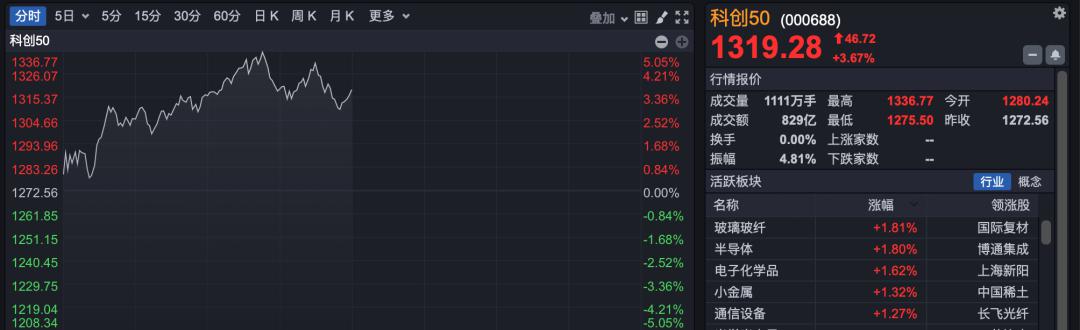
Core Viewpoint - The A-share market is experiencing a slight upward trend, with technology stocks leading the gains, particularly in the communication and chip sectors, indicating strong investor interest and market momentum [1][4][6]. Communication Sector - The communication equipment sector continues to rise, with the index surging over 7% today, marking a cumulative increase of over 82% this year [4]. - Notable stocks such as Changfei Fiber (601869) have hit their historical highs, with multiple trading days of limit-up performance [4]. - The Ministry of Industry and Information Technology has issued guidelines to promote the satellite communication industry, aiming for over 10 million satellite communication users by 2030 [4][5]. Chip Industry - The chip sector is witnessing significant growth, with the index rising over 2% and many stocks hitting their daily limit [6]. - The demand for chips is surging due to the rapid development of AI technology, leading to substantial price increases for various chip products [6]. - Data shows that China's integrated circuit production reached 239.5 billion units in the first half of 2025, a year-on-year increase of 8.7% [6][7]. Company Performance - Among the 58 semiconductor companies that have disclosed their semi-annual reports on the Sci-Tech Innovation Board, 40 reported positive profit growth, with 17 companies seeing net profit increases exceeding 100% [7]. - Notable performers include Cambrian Technology, which turned a profit for the first time, and Zhenlei Technology, which saw a net profit increase of over ten times [7]. - The semiconductor sector is expected to continue thriving, particularly in the context of domestic chip procurement and usage amid ongoing trade uncertainties with the U.S. [7].



美政府考虑入股军工企业!“盯上”这家企业
证券时报· 2025-08-28 04:38
Core Viewpoint - The U.S. government is considering acquiring equity stakes in defense contractors, particularly Lockheed Martin, following a similar investment in Intel, indicating a trend of government intervention in key industries [1][3]. Group 1: U.S. Government's Investment in Defense - The U.S. Commerce Secretary revealed that the Trump administration is interested in acquiring shares of major defense contractors, specifically naming Lockheed Martin [3]. - Lockheed Martin derives 97% of its revenue from the U.S. government, with 73% of its net sales in 2024 expected to come from government contracts, primarily from the Department of Defense [3]. Group 2: Intel's Agreement with the U.S. Government - Intel announced an agreement with the U.S. government for an investment of $8.9 billion, acquiring 9.9% of the company's shares at $20.47 per share [5]. - The funding for this investment comes from previously allocated subsidies under the CHIPS and Science Act, aimed at revitalizing the struggling semiconductor industry [5]. Group 3: Implications of Government Ownership - Intel expressed concerns that the government's stake could pose commercial risks, particularly affecting its international sales, which account for nearly 80% of its revenue [7]. - The involvement of the U.S. government as a major shareholder may lead to stricter foreign subsidy reviews and impact Intel's operations in international markets [7].

英伟达本财年二季度营收和净利润同比大增
Xin Hua She· 2025-08-28 03:06
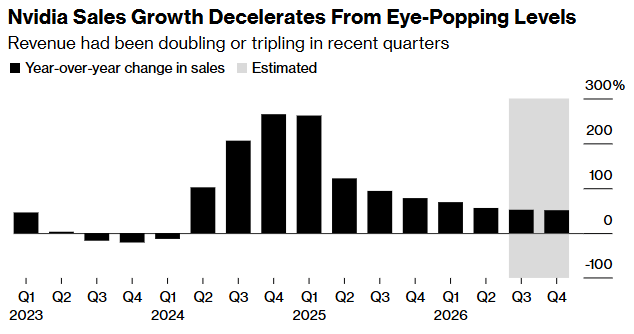
Core Insights - Nvidia reported significant year-over-year growth in revenue and net profit for Q2 of fiscal year 2026, with revenue reaching approximately $46.7 billion, a 56% increase, and net profit around $26.4 billion, up 59% [1] Group 1: Financial Performance - The revenue for Nvidia's data center segment was $41.1 billion, also reflecting a 56% year-over-year increase, although slightly below market expectations [1] - Sales of data center graphics processing unit (GPU) products saw a 1% decline compared to the previous quarter, impacting Nvidia's stock price in after-hours trading on the day of the report [1] Group 2: Future Outlook - Nvidia anticipates revenue of approximately $54 billion for the third quarter of fiscal year 2026 [1] - The CEO of Nvidia, Jensen Huang, emphasized that the artificial intelligence race has begun, with the new Blackwell architecture computing platform being central to this competition [1]
“AI信仰”受挫!英伟达(NVDA.US)指引显示增长放缓,美股狂欢迎来降温信号?
Zhi Tong Cai Jing· 2025-08-28 02:09
Core Viewpoint - Nvidia's latest guidance indicates a slowdown in growth after two years of rapid expansion, raising concerns about the sustainability of investments in artificial intelligence [1][12]. Financial Performance - For the period ending July 27, Nvidia reported a revenue increase of 56%, reaching $46.7 billion, slightly above the average expectation of $46.2 billion [2]. - The adjusted earnings per share were $1.05, surpassing the analyst expectation of $1.01 [2]. - The data center segment generated $41.1 billion in sales, also reflecting a 56% year-over-year growth, while gaming-related revenue was $4.29 billion, exceeding expectations [2]. Market Challenges - Nvidia faces challenges in the Chinese market due to intensified U.S.-China competition, with restrictions on semiconductor exports impacting revenue potential [3][6]. - The company reported no sales of its H20 AI chips to Chinese customers in the second quarter, and the future sales depend on U.S. government approvals [6][12]. AI Investment Trends - Analysts suggest that the initial surge in AI investments may be waning, with large data center operators potentially reducing spending if short-term benefits remain difficult to quantify [7]. - Nvidia's major clients, including Meta, Alphabet, Microsoft, and Amazon, are heavily investing in infrastructure to develop AI models and services [7]. Stock Performance and Valuation - Nvidia's stock price has surged 35% this year, pushing its market capitalization above $4 trillion, but investors are becoming more critical of its performance amid high valuations [14][15]. - The company's price-to-earnings ratio is approximately 34 times its expected earnings for the next 12 months, which is considered reasonable for a tech company with strong growth [13]. Future Outlook - Nvidia's forecast suggests a potential revenue of $54 billion for the third quarter, aligning with Wall Street expectations but falling short of some analysts' predictions of over $60 billion [1][12]. - The company has approved an additional $60 billion stock buyback plan, indicating confidence in its long-term prospects despite current challenges [1].
台积电集成创新模式分析
Xin Lang Cai Jing· 2025-08-28 01:41
Core Viewpoint - TSMC has established itself as the absolute leader in the global foundry industry through integrated innovation, driven by demand, technology leadership, deep collaboration, and an ecosystem of mutual benefits [2] Group 1: Integrated Innovation System - TSMC's success is attributed to a demand-driven, technology-led, deeply collaborative, and ecosystem-oriented integrated innovation system that connects demand insights to value realization [2] - The company has created a diverse product supply capability by integrating customer needs through innovative business models and a customer-first strategy [3] - TSMC's "customer-first" strategy emphasizes growth and shared success with high-quality clients, exemplified by its partnership with Apple, where TSMC absorbed defect costs to support Apple's chip orders [4] Group 2: Technological Leadership - TSMC maintains its position as a technology leader by deeply researching and mastering processes, equipment, and materials, leading to significant advancements in wafer fabrication and packaging technologies [5] - The company has consistently outpaced competitors, achieving milestones such as the first 7nm process in 2018, 5nm mass production in 2020, and plans for 2nm production by 2025 [5] Group 3: Organizational Efficiency - TSMC has adopted a fluid organizational structure to break down departmental barriers, ensuring effective collaboration between R&D and production [6] - The company has implemented a "headquarters innovation + global production" strategy, allowing for efficient conversion of laboratory results into mass production [7] Group 4: Ecosystem Collaboration - TSMC fosters a multi-win ecosystem through investments, joint R&D, and platform integration with industry partners [8] - The company has engaged in strategic investments, such as acquiring a 15% stake in ASML to ensure priority supply of critical equipment and materials [10] - TSMC's establishment of the TSMC Alliance promotes collaboration among customers, partners, and suppliers, enhancing competitiveness and innovation within the semiconductor industry [11]


美政府考虑入股军工企业
Di Yi Cai Jing· 2025-08-28 00:55
Group 1 - The U.S. government is considering acquiring equity in defense contractor Lockheed Martin, following its recent investment in Intel [1][2] - U.S. Commerce Secretary Gina Raimondo highlighted that 97% of Lockheed Martin's revenue comes from the U.S. government, indicating a close relationship between the company and the government [1] - In 2024, Lockheed Martin reported that 73% of its net sales would come from the U.S. government, with 65% specifically from the Department of Defense [1] Group 2 - Intel announced a deal with the U.S. government for an $8.9 billion investment, acquiring 9.9% of the company's common stock [2] - The funding for Intel's investment comes from previously allocated subsidies under the CHIPS and Science Act, totaling $5.7 billion, along with an additional $3.2 billion from government-funded projects [2] - Following the transaction, the U.S. government will become a major shareholder in Intel, with President Trump expressing interest in similar future investments [2]
特朗普政府考虑入股军工企业
Bei Jing Ri Bao Ke Hu Duan· 2025-08-27 22:25
Core Viewpoint - The U.S. government, under the Trump administration, is considering acquiring equity in defense contractors, specifically targeting Lockheed Martin, following a recent investment in Intel [1] Group 1: Government Interest in Defense Sector - U.S. Commerce Secretary Ross revealed that the government is interested in purchasing shares of defense contractors, with Lockheed Martin being specifically mentioned [1] - Lockheed Martin generates 97% of its revenue from the U.S. government, indicating a close relationship between the company and the government [1] - The discussion around funding for military procurement is ongoing, with further deliberations needed among defense officials [1] Group 2: Recent Investment in Intel - The U.S. government recently announced an investment of $8.9 billion in Intel, acquiring 9.9% of the company's shares [1] - The funding for this investment comes from $5.7 billion in subsidies granted to Intel under the CHIPS and Science Act, along with an additional $3.2 billion from government-funded projects [1] - Following this transaction, the U.S. government will become a major shareholder in Intel, with President Trump expressing a desire for more similar investments in the future [1]
美联储,大消息!
Zheng Quan Shi Bao· 2025-08-27 15:19
Group 1: Federal Reserve Chair Candidates - The U.S. Treasury Secretary Bessent announced that he will submit a list of candidates for the Federal Reserve Chair to President Trump, with 11 "very strong" candidates currently identified [2] - Interviews for these candidates will begin next month, and three to four finalists will be recommended to Trump [2] - Bessent criticized the Federal Reserve for deviating from its core monetary policy goals since 2008, emphasizing the need to return to its primary mission [2] Group 2: Internal Review of the Federal Reserve - Bessent called for an internal review of the Federal Reserve following the dismissal of Governor Lisa Cook, suggesting that the allegations of mortgage fraud against her should be included in the review [3] - He expressed that if a Federal Reserve official is guilty of mortgage fraud, they should not hold a position in a major financial regulatory body [3] - The dismissal of Cook by Trump has been described as "unprecedented," and Cook has stated she will continue her duties and seek legal action against the dismissal [3][4] Group 3: Government Investment in Technology Companies - Bessent clarified that the U.S. government has no plans to invest in Nvidia, stating that the company does not require financial support [5] - In contrast, the government has agreed to invest $8.9 billion in Intel, acquiring a 9.9% stake in the company [5] - The funding for Intel's investment comes from previously allocated subsidies under the CHIPS and Science Act [5][6] Group 4: Trade and Tariff Negotiations - Bessent acknowledged that negotiations regarding tariffs are flexible, with Canada willing to join secondary tariffs [7] - He mentioned that the U.S. is not concerned about India's currency becoming a reserve currency and expects a consensus to be reached with India on tariff issues [7] - Bessent also provided updates on the IPO progress for Fannie Mae and Freddie Mac, indicating that major banks will be involved in the stock issuance process [7]