
通信

Search documents
重大信号出现!这个板块暴跌之后,我准备卖房抄底!
Sou Hu Cai Jing· 2026-01-31 03:48
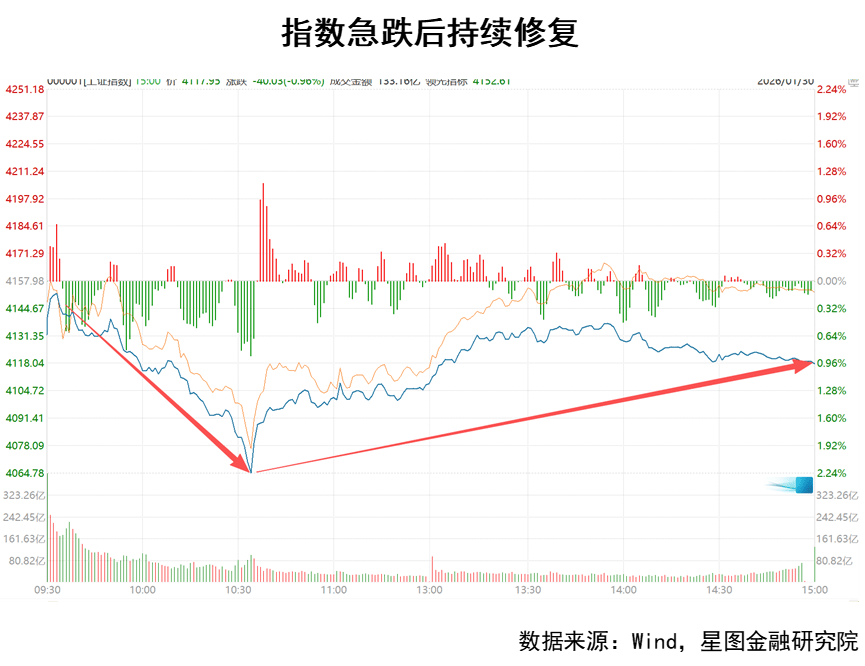
Market Overview - The A-share market showed mixed performance with the Shanghai Composite Index down by 0.96%, Shenzhen Component down by 0.66%, and the ChiNext Index up by 1.27% [1] - The total trading volume in the Shanghai, Shenzhen, and Beijing markets was 28,624 billion yuan, a decrease of 3,970 billion yuan from the previous day [1] Sector Performance - AI hardware sectors saw a broad increase, with significant gains in optical modules, optical circuit switching, optical communication, optical chips, and advanced packaging [1] - The non-ferrous metals sector experienced a collective sharp decline, with industrial metals, rare earths, gold and jewelry, and other related sectors showing significant losses [1] - Traditional sectors like liquor and real estate, referred to as "old stocks," performed poorly after a recent surge [1] Investment Sentiment - The market is experiencing a significant risk rotation, with funds flowing into underperforming technology and agriculture sectors as a form of risk aversion [1] - Despite the sharp decline in the non-ferrous metals sector, it is believed to have medium to long-term investment value, with the performance of this sector closely tied to commodity prices, particularly gold [9] - The liquidity in the market remains robust, as indicated by the reduced trading volume being attributed to investors locking in positions rather than panic selling [5] Specific Stock Insights - The liquor index showed a significant decrease in trading volume, suggesting that large funds are not exiting but rather locking in positions, indicating potential for future gains [10][11] - The "old stocks" like liquor and real estate may present opportunities for short-term trading, with potential returns of 10%-20% based on technical signals [10]

刷新多项世界纪录!本周,我国在多领域实现突破
Huan Qiu Wang Zi Xun· 2026-01-30 23:45
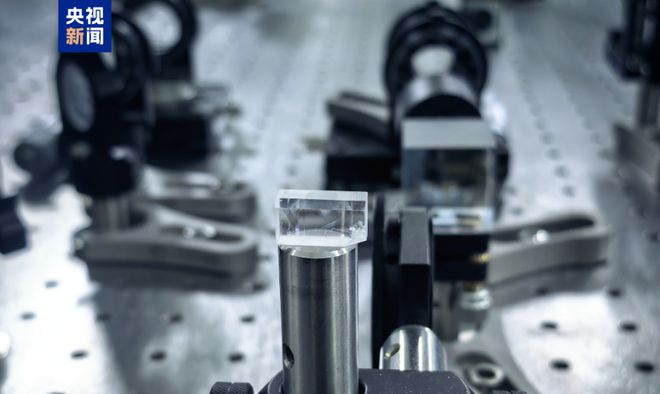
Group 1 - China has achieved a breakthrough in high-temperature superconductivity by developing a superconducting magnet with a magnetic field strength of 35.6 Tesla, setting a new world record in this field [3] - The development signifies China's advanced level in high-temperature superconductivity applications, providing technical support for material science, life sciences, and nuclear fusion research [3] Group 2 - Chinese scientists have successfully developed a new type of crystal, ammonium borofluoride (ABF), which has achieved direct frequency doubling of vacuum ultraviolet laser output at a wavelength of 158.9 nanometers, marking a significant advancement in precision manufacturing and cutting-edge research [4][6] - The ABF crystal has set three world records: the shortest wavelength for direct frequency doubling, a maximum pulse energy of 4.8 millijoules at 177.3 nanometers, and a conversion efficiency of 7.9% [6] Group 3 - The Chinese Academy of Sciences has successfully conducted a business application experiment for space-ground laser communication, achieving a communication rate of 120 Gbps, marking a new milestone in this technology [7][9] - This achievement follows previous breakthroughs of 10 Gbps in 2023 and 60 Gbps in 2025, indicating a significant advancement in China's space-ground laser communication capabilities [9] Group 4 - Researchers from the Chinese Academy of Sciences have reconstructed the high-resolution cryo-electron microscopy structure of the OSTα/β protein, revealing its novel assembly and transport mechanisms, which are crucial for understanding fat digestion and related diseases [10][12] - The study introduces a new "ladder" transport model for OSTα/β, addressing long-standing questions about its assembly and transport mechanisms, providing a new structural framework for understanding bile acid transmembrane transport [12]
高位高波,长钱长投
Sou Hu Cai Jing· 2026-01-30 14:57
Group 1: Market Overview - The current market is characterized by high volatility and elevated levels, suggesting that a "long money, long investment" strategy may be a rational choice for investors [3][5][6] - The A-share market's upward momentum is driven by the shifting balance of power between China and the U.S., leading to capital flow and value reassessment [9][10] - Recent market fluctuations indicate strong support levels, with a notable rebound after a brief dip below previous lows, reflecting a robust market sentiment [5][9] Group 2: Commodity Market Insights - The commodity market is witnessing a consensus on the value of resources in a "weak fiat currency" era, with the Trump administration's interference in Federal Reserve decisions accelerating the price increase logic for commodities [3][6][7] - Coal prices are supported by a recent uptick in spot prices and favorable policies, with the coal sector attracting long-term investment due to its stable high dividend yield [4][15][18] - Gold prices have shown significant volatility, with recent highs nearing $5,600 before dropping below $5,000, yet the long-term fundamentals for gold remain strong, suggesting potential buying opportunities during corrections [4][18][24] Group 3: Economic and Geopolitical Factors - The U.S. economy faces challenges, including concerns over "stagflation," which may limit the Federal Reserve's monetary policy options, increasing the appeal of gold as a hedge against asset depreciation [22][23] - Geopolitical tensions in regions like the Middle East and Ukraine contribute to heightened market risk aversion, providing additional support for gold prices [23][24] - China's economic recovery may be accelerated by rising commodity prices, which could help break the negative feedback loop affecting domestic economic growth [11][12]

120Gbps!中国星地激光通信传输速率刷新纪录
Ke Ji Ri Bao· 2026-01-30 13:45
Core Viewpoint - The successful implementation of over 100G satellite-ground laser communication experiments marks a significant advancement in China's capabilities for high-speed data transmission between satellites and ground stations [1] Group 1: Technological Advancements - The Chinese Academy of Sciences has successfully conducted business application experiments for satellite-ground laser communication, achieving a transmission rate increase from 60Gbps to 120Gbps [1] - This achievement sets a new domestic record for satellite-ground laser communication transmission rates, indicating a leap in the country's technological capabilities in this field [1] Group 2: Industry Implications - The enhancement of satellite laser communication payload capabilities signifies a new stage in the business application of satellite-ground laser communication in China [1]
ETF日报:国内经济内生动力将持续增强,企稳回升的步伐有望加快
Xin Lang Cai Jing· 2026-01-30 13:43
Market Overview - The A-share market showed signs of recovery after hitting a low, with the Shanghai Composite Index closing at 4117.95 points, down 0.96%, while the Shenzhen Component Index fell 0.66%. The ChiNext Index, however, rose by 1.27% due to strong performance from heavyweight stocks [1][20] - Over 2400 stocks rose while nearly 2900 declined, indicating mixed performance among individual stocks. The total trading volume in the Shanghai and Shenzhen markets was approximately 2.86 trillion yuan, a decrease of nearly 400 billion yuan from the previous day, reflecting a notable decline in trading sentiment [1][20] Sector Performance - Most sectors experienced declines, with telecommunications and semiconductor sectors leading the gains. Recently strong sectors like metals and mining showed signs of correction [1][21] - The market has been characterized by high volatility, with fluctuations around the 4150-point mark. The influx of external funds initially indicated strong buying intent, but the market subsequently retreated following increased trading in broad-based ETFs [1][21] Investment Strategy - Given the current high volatility in both equity and commodity markets, a long-term investment approach is suggested as a rational choice for investors [1][21] Commodity Market Insights - The driving factors for both equity and commodity markets remain unchanged, with strong medium to long-term investment value still present. The "weak fiat currency" era has led to a consensus that resources are becoming increasingly valuable, accelerated by interventions from the Trump administration affecting Federal Reserve decisions [2][22] - Precious metals and industrial metals are seen as core choices for capital seeking to hedge against currency depreciation risks, pushing commodity prices into a slow upward trend [2][22] A-Share Market Dynamics - The core logic driving the rise of A-shares is the shifting balance of power between China and the U.S., leading to capital flows and value reassessment. The ongoing U.S.-China rivalry is influencing global capital allocation, providing long-term upward momentum for A-shares [4][24] - Quality stocks with core competitiveness in the A-share market, previously undervalued, are now experiencing value reassessment as China's national strength and industrial advantages become more pronounced [4][24] Future Outlook - On a macro level, both the U.S. and China appear to have found new solutions to their domestic issues. The U.S. is adopting a "shrinking plunder" strategy, focusing on core interests while avoiding overextension, which may have profound implications for the global economy and geopolitical landscape [6][25] - For China, the continuous rise in commodity prices, particularly precious metals, may help break the negative feedback loop of prices and accelerate the economic recovery process, potentially exceeding investor expectations [7][26] Investment Focus - The investment strategy should focus on "anti-involution + technology," as the gradual implementation of anti-involution policies is expected to lead to value reassessment in related cyclical sectors. The technology growth sector is also anticipated to receive strong policy support [8][28] - The coal sector has shown resilience, with recent price increases in thermal coal providing support for near-term performance. The market is expected to see a recovery in coal demand due to infrastructure investment and industrial recovery [10][29][31]
助力智算发展,“储能+智算中心”专题交流会在海博思创房山智造基地举办
海博思创· 2026-01-30 13:34
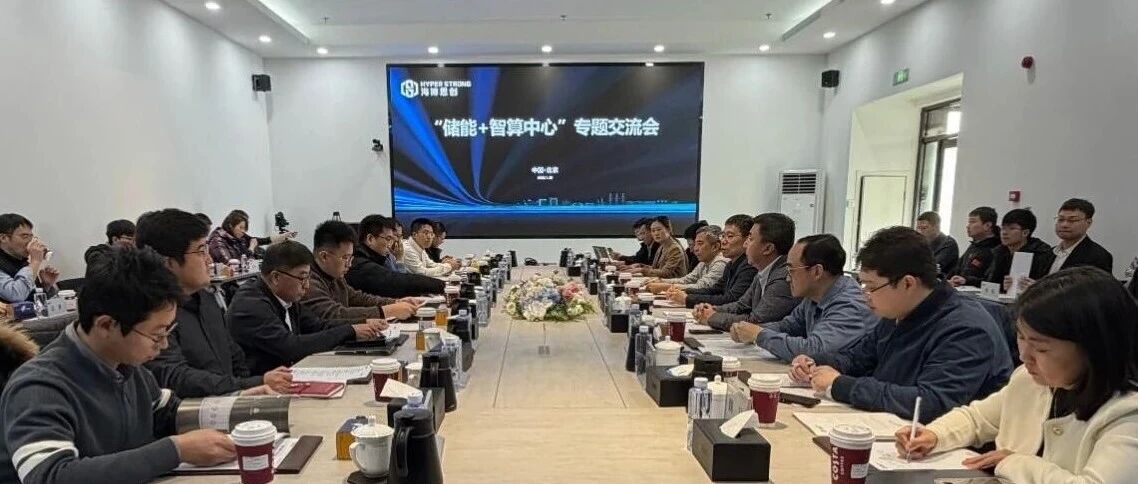
Core Viewpoint - The article emphasizes the importance of integrating energy storage with intelligent computing centers to promote green energy development and enhance economic efficiency in the industry [1][8]. Group 1: Event Overview - The "Focus on Green Energy, Empower Intelligent Computing Development" seminar was successfully held, organized by the Beijing Economic and Information Technology Bureau, aiming to discuss the application of energy storage in intelligent computing centers [1]. - Key representatives from major companies and research institutions attended the event, including China Mobile, China Unicom, and JD.com, highlighting the collaborative nature of the discussions [3]. Group 2: Company Insights - Haibo Shichuang, founded in 2011, has transformed from a traditional product sales model to a comprehensive service provider in the energy storage sector, focusing on innovative applications of energy storage in computing centers [3]. - The company has already implemented energy storage projects in data centers, demonstrating the feasibility of large-scale promotion [4]. Group 3: Technical Discussions - The seminar featured discussions on the economic viability and safety of energy storage applications, with a focus on reducing reliance on diesel generators through innovative energy storage solutions [5][6]. - Experts highlighted the need for continuous innovation in technology and business models to fully replace diesel generators with energy storage systems [6]. Group 4: Policy and Future Directions - Officials from the Beijing Economic and Information Technology Bureau emphasized the critical role of energy storage in supporting the green and sustainable development of the intelligent computing industry [7]. - The article calls for collaborative efforts to explore scalable solutions for integrating energy storage with intelligent computing centers, aiming to support the high-quality development of the digital economy in Beijing [7][8].
北交所日报-20260130
Yin He Zheng Quan· 2026-01-30 13:01
Market Performance - On January 30, 2026, the North Exchange 50 index decreased by 0.29%, closing at 1,531.55 points[1] - The overall trading volume on the North Exchange was 27.211 billion CNY, with a turnover rate of 4.50%[1] - The North Exchange's total market capitalization was 936.302 billion CNY, with a circulating market value of 580.261 billion CNY[1] Industry Trends - The top-performing sectors included Communication (+2.4%), Agriculture, Forestry, Animal Husbandry, and Fishery (+2.2%), and Media (+0.8%)[1] - The sectors with the largest declines were Oil and Petrochemicals (-14.4%), Utilities (-8.2%), and Computers (-3.8%)[1] Stock Performance - Among the 292 listed companies, 93 saw an increase, 6 remained flat, and 193 experienced a decline[1] - The stock with the highest increase was Meidel (美德乐) at +161.46%, followed by Qiule Seed Industry (+10.22%) and Hengdong Light (+9.56%)[1] - The largest declines were seen in *ST Yunchuang (-28.28%), Tongguan Mining Construction (-14.43%), and Keli Co. (-14.39%)[1] Valuation Insights - The overall valuation of the North Exchange was approximately 47.75 times earnings, which is higher than the ChiNext's 45.80 times but lower than the Sci-Tech Board's 79.88 times[1] - The highest sector valuation was in Nonferrous Metals at 133.7 times, followed by Oil and Petrochemicals at 90.9 times and Communication at 87.4 times[1] Risk Factors - Risks include lower-than-expected policy support, insufficient technological innovation, intensified market competition, and market volatility[1]
多只ETF、LOF罕见跌停
Xin Lang Cai Jing· 2026-01-30 12:51
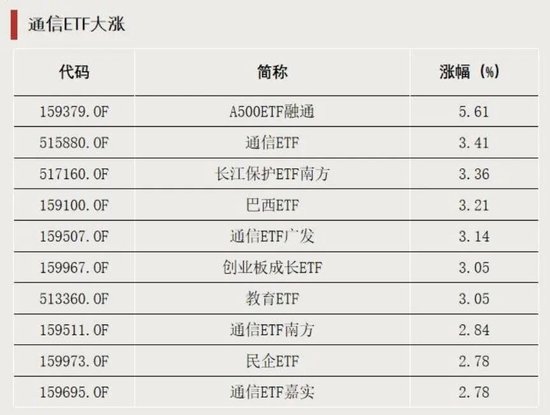
Group 1 - The precious metals, industrial metals, and minor metals sectors experienced a significant decline, with multiple gold and colored ETFs hitting the limit down [1][2][9] - Several LOF funds that had previously hit the limit up faced a limit down after resuming trading, indicating market volatility [10][18] - On January 29, gold and colored ETFs attracted substantial net inflows, while semiconductor-related ETFs also saw reverse positioning [11][15] Group 2 - The communication ETF sector showed a general increase, with several ETFs related to communication and artificial intelligence rising significantly [12][13] - Low-valuation sectors such as agriculture, forestry, and paper-making led the market gains, contrasting with the overall decline in precious metals [12] - The trading volume for gold ETFs surged, with the gold ETF reaching a transaction volume of 257.78 billion, significantly higher than the previous week's average of 71.07 billion [4][14] Group 3 - On January 29, various ETFs related to colored metals and gold saw net inflows exceeding 10 billion, indicating strong investor interest [15][17] - The semiconductor sector, despite its recent declines, attracted significant reverse investments, with notable inflows into semiconductor equipment ETFs [16][17] - The core logic supporting gold prices remains unchanged, driven by high geopolitical risks and the weakening of the dollar's credibility due to high U.S. government deficits [8][19]
智通港股解盘 | 贵金属高位掉头引发连锁抛售 巴拿马涉港口再遇突发
Zhi Tong Cai Jing· 2026-01-30 12:32
Market Overview - Recent surge in precious metals led to market excitement, but a sharp decline followed, with Hong Kong stocks dropping 2.08% [1] - International gold and silver prices experienced volatility, with gold surpassing $5,500 per ounce before falling below $5,200 [2] - Resource stocks, including those in gold and copper, saw significant declines, with companies like Zhaifeng Gold and Shandong Gold dropping over 14% [2] Geopolitical Developments - Trump announced plans to engage in dialogue with Iran, contingent on Iran not possessing nuclear weapons and ceasing repression of protesters, which may temporarily stabilize oil prices [1] - The U.S. Federal Reserve chair nomination is expected to favor a hawkish candidate, potentially leading to a stronger dollar [1] Corporate News - Longfor's subsidiary faced a ruling from Panama's Supreme Court declaring its port contracts unconstitutional, impacting its $22.8 billion global port asset sale [2][3] - The Chinese Foreign Ministry stated it would take measures to protect the rights of Chinese enterprises affected by the ruling [3] Sector Focus - AI investments are gaining traction, with OpenAI planning an IPO and Alibaba considering increasing its AI and cloud investment to 480 billion RMB over three years [3] - Companies like Changfei Optical Fiber and Cable saw stock increases of over 6% due to positive developments in the optical communication sector [3] Battery Technology - CATL launched sodium-ion battery products, which outperform lithium batteries in low-temperature environments and safety [4] - The introduction of sodium batteries could disrupt the lithium battery market, with companies like Ganfeng Lithium and Tianqi Lithium experiencing declines of over 10% [5] Earnings Reports - Tiger Med announced expected revenue of 6.66 to 7.68 billion RMB for 2025, with a net profit forecast of 830 million to 1.23 billion RMB, reflecting strong growth [5] - Shanghai Fudan anticipates a revenue increase of approximately 9.46% to 12.25% for 2025 [5] Film Industry Developments - The National Film Development Fund is promoting high-quality development in the film industry, with several new films set to release during the 2026 Spring Festival [6] - Beneficiaries include companies like Dama Entertainment and Maoyan Entertainment, involved in producing and distributing upcoming films [7] AI Growth - Kuaishou's AI product, Keling, has seen significant user growth, with monthly active users surpassing 12 million and a 350% increase in paid users [8] - The company expects substantial revenue growth, with projections of $140 million for 2025, significantly exceeding initial targets [9]


1.30犀牛财经晚报:国际贵金属遭资金全面抛售
Xi Niu Cai Jing· 2026-01-30 11:40
Group 1: Precious Metals Market - International gold and silver prices experienced a sharp decline, with spot gold dropping by 7.95% to $4949.62 per ounce and spot silver falling by 16.93% to $95.86 per ounce, hitting a low of $95 [1] - The market volatility was attributed to speculation and a sudden sell-off, with gold prices plummeting by $380 in just 28 minutes, a nearly 7% drop, while silver prices fell by 11% in the same timeframe [3] - The World Gold Council reported that the demand for gold in 2025 is expected to solidify its position among central banks, investors, and consumers, with structural adjustments impacting the market until early 2026 [3] Group 2: Lithium Mining Sector - The lithium mining sector faced a significant drop, but companies like Ganfeng Lithium and Yahua Group reported that their operations are normal and products are in high demand [2] - Battery-grade lithium carbonate prices have surged from approximately 70,000 yuan per ton to around 170,000 yuan per ton since the second half of 2025, indicating a recovery that may benefit companies with their own mines and salt lakes [2] Group 3: Private Equity and IPOs - In January, private equity firms participated in new stock placements, with a total allocation amounting to 338 million yuan across five companies, highlighting the continued interest in private equity investments [4] - The China Securities Regulatory Commission approved the IPO registration of Beijing Weitongli Electric Co., indicating ongoing activity in the public market [7] Group 4: Renewable Energy and Hydrogen Production - By the end of 2025, China's renewable energy hydrogen production capacity is expected to exceed 250,000 tons per year, marking a significant increase compared to the previous year [6] Group 5: Chicken Market - The white feather chicken market has shown signs of recovery, with prices for large wings nearing 50 yuan per kilogram, reflecting a more than 20% increase from the low point in October 2025 [6] Group 6: Pharmaceutical Developments - Kangzheng Pharmaceutical received approval for the first targeted drug for treating vitiligo in China, indicating advancements in the pharmaceutical sector [5] Group 7: Financial Performance Forecasts - Companies such as CICC and Huazi Industrial are projecting significant profit increases for 2025, with CICC expecting a net profit increase of 50% to 85% and Huazi Industrial forecasting a growth of 128% to 167% [16][18]