
智能汽车

Search documents
汽车业AI“狂飙”,“轮式智能生命体”即将到来
Hua Xia Shi Bao· 2025-09-25 07:58
Core Insights - The automotive industry is on the brink of a significant transformation driven by artificial intelligence, moving from traditional vehicles to "intelligent wheeled life forms" that can interact with users and adapt to their needs [1][2][4] Industry Trends - The "Global AI Technology Conference" coincided with the release of the State Council's document on deepening the integration of AI with the real economy, setting a target for significant advancements by 2027 [2] - Industry leaders emphasize the need to shift focus from hardware specifications and price wars to creating vehicles that can think, learn, and collaborate within smart city traffic networks [2][4] Technological Developments - Discussions at the conference highlighted the importance of AI in transforming the automotive landscape, with leaders proposing that future vehicles will communicate with traffic systems to optimize travel efficiency [4][6] - The report released by the Automotive Home Research Institute identified five core trends shaping the future of China's electric vehicle market, including the widespread adoption of advanced driver-assistance systems and the emergence of RoboTaxi services [6][7] Consumer Behavior Changes - A significant shift in consumer perception has occurred, with the percentage of users viewing "intelligence" as the core advantage of electric vehicles rising from 30% to 73% over three years [7] - The relationship between consumers and vehicles is evolving into a "two-way selection" process, where consumers will demand rigorous testing of vehicles' intelligent features before purchase [8] Safety and Ethical Considerations - Despite advancements, a report indicated that 85% of tested vehicles required human intervention during assisted driving, highlighting the critical need for safety and reliability in AI-driven vehicles [8] - Industry leaders have called for a focus on core technological breakthroughs, expanding from "single vehicle intelligence" to "industry-wide intelligence," while maintaining safety and ethical standards [8][9] Company Strategies - Automotive Home is leveraging its data assets and self-developed models to enhance both consumer and business services, aiming for a dual upgrade in user experience and ecosystem services [9] - The integration of AI into vehicles is seen as essential for modern automotive products, positioning it as a critical competitive advantage for all market participants [9]


奔驰入股千里科技,后者系吉利投资
Sou Hu Cai Jing· 2025-09-25 06:03
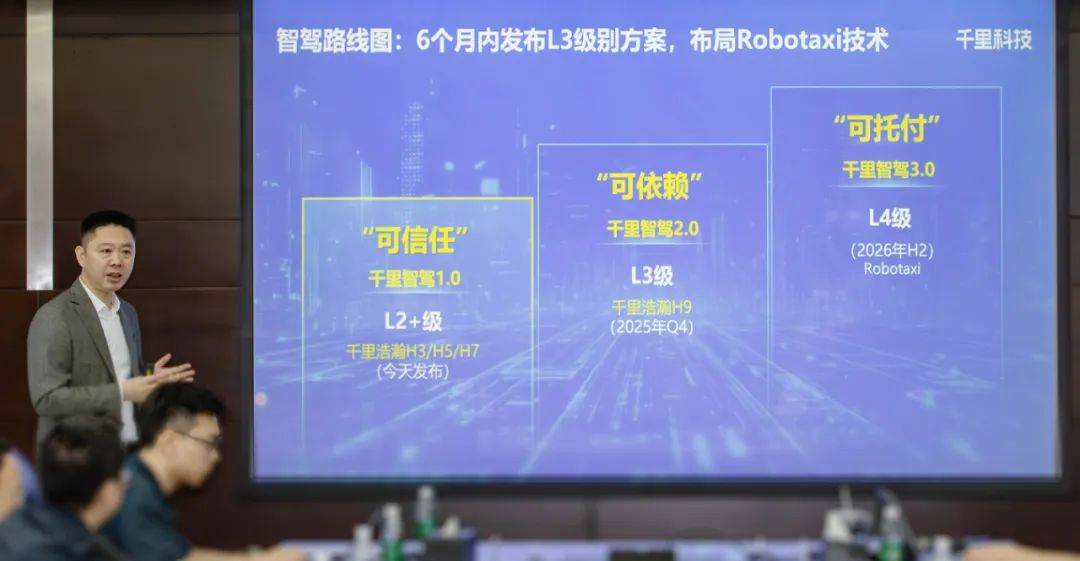
Group 1 - The core point of the news is that Qianli Technology announced a share transfer agreement with Mercedes-Benz Digital Technology, following a failure by its major shareholder, Chongqing Lifan Holdings, to complete a stock pledge repurchase transaction [1] - Lifan Holdings will transfer a total of 136 million shares, representing 3.00% of the company's total share capital, at a price of 9.87 yuan per share, amounting to a total consideration of 1.339 billion yuan to repay related debts [1] - The acquisition by Mercedes-Benz Digital Technology is seen as a significant step in deepening Mercedes-Benz's strategic layout in China's intelligent vehicle market, potentially enabling Qianli Technology to provide smart driving technology support for new models launched by Mercedes-Benz in China [1] Group 2 - Qianli Technology, formerly Lifan Technology, focuses on the "AI + vehicle" core strategy, expanding into intelligent assisted driving and smart cockpit sectors, with Zhejiang Geely Holding Group as one of its major shareholders [2] - Qianli Technology has established a joint venture, Qianli Zhijia, with Geely, where each party holds a 30% stake, and Lotus holds 5%, resulting in Geely's effective ownership exceeding 60% [2] - The company has launched the Qianli Zhijia 1.0 intelligent assisted driving solution, which includes three versions with varying computing power, the flagship version boasting up to 700 TOPS for complex decision-making and interactions [2] Group 3 - Qianli Technology plans to release the L3-level intelligent driving solution, Qianli Zhijia 2.0, within the next six months, and aims to introduce the L4-level solution for Robotaxi scenarios, Qianli Zhijia 3.0, in the second half of 2026 [3] - Wang Jun, who joined Qianli Technology as co-president in June, has extensive experience in the intelligent automotive solutions sector, having previously held multiple senior positions at Huawei [3]

不造车的华为,手握100万辆车的销售命脉
21世纪经济报道· 2025-09-25 03:04
Core Viewpoint - Huawei has transitioned from a technology provider to a significant player in the automotive industry, establishing a comprehensive sales and service network while maintaining control over its brand and operations [7][28][30]. Group 1: Huawei's Automotive Strategy - Huawei's automotive business has evolved from initial skepticism to becoming a key partner for various car manufacturers, now collaborating with eight major state-owned car companies [7][8]. - The company has developed a structured sales model called "Hongmeng Zhixing," which integrates sales, delivery, and service functions under a unified management system [14][22]. - The sales strategy has shifted from a dual-channel approach to a more centralized model, allowing Huawei to exert greater control over the customer experience and operational standards [12][14][17]. Group 2: Sales and Distribution Channels - The establishment of "Hongmeng Zhixing" user centers has allowed Huawei to rapidly expand its service network by converting existing luxury brand showrooms into its own centers [18][19]. - Different types of stores, such as direct stores, authorized experience stores, and user centers, have been created to cater to various sales and service needs [21][22]. - The sales process emphasizes a standardized approach, with strict adherence to Huawei's operational guidelines to ensure a consistent customer experience across all locations [24][25]. Group 3: Product Development and Market Positioning - Huawei's product development strategy is heavily influenced by user feedback, allowing it to create vehicles that resonate with consumer needs, particularly in the high-end market [26][30]. - The company aims to position itself as a "super supplier" rather than a traditional car manufacturer, focusing on providing comprehensive solutions for smart vehicles [30][32]. - Huawei's approach to automotive sales reflects its broader strategy of leveraging its technological expertise while avoiding the pitfalls of direct vehicle manufacturing [28][32].
奔驰携手Momenta打造新一代智能辅助驾驶,首车CLA今秋上市
Zhong Guo Qi Che Bao Wang· 2025-09-25 02:20
Core Insights - Mercedes-Benz and Momenta have announced a collaboration to develop an intelligent driving assistance system based on Momenta's large model, which will debut in the new all-electric CLA model launching this autumn [1][3] - The system will provide advanced driving assistance capabilities, enabling intelligent driving from parking space to parking space in various scenarios including highways and urban areas [1][3] Group 1: Collaboration and Development - Mercedes-Benz became the first international car manufacturer to invest in Momenta in 2017, marking the beginning of a strategic partnership focused on intelligent driving systems [3] - The new system is tailored to Chinese traffic conditions and driving scenarios, developed through collaboration between Chinese and German teams to meet Mercedes-Benz's standards [3][5] - The collaboration aims to integrate Mercedes-Benz's engineering legacy with Momenta's cutting-edge AI technology, enhancing the driving experience for Chinese customers [3][5] Group 2: System Features and Testing - The intelligent driving system utilizes local Chinese data and incorporates experiences from seasoned drivers to better meet the needs of Chinese customers [5] - Extensive testing has been conducted, including real-world road tests in high-traffic urban areas and advanced simulation tests, ensuring the system's reliability and performance [5][6] - The system prioritizes safety, featuring measures such as not forcing through yellow lights and preemptive deceleration at intersections to prevent collisions [6]

鸿蒙智行:全新问界M7建议零售价27.98万起
Mei Ri Jing Ji Xin Wen· 2025-09-25 02:13
Group 1 - The core message is that Hongmeng Zhixing announced the new recommended retail price for the AITO Wenjie M7 starting at 279,800 yuan, with a promotional offer of up to 60,000 yuan for pre-orders made before November 3 [1]
985管培生吐槽每天拧螺丝12小时,车间实习长达半年,五菱回应;曝理想未经授权用歼-20战机做宣传海报;小米大家电登陆欧洲市场
雷峰网· 2025-09-25 00:31
Key Points - The article discusses various industry news and events, highlighting significant developments in companies and sectors such as automotive, technology, and AI [2][4][7][8][10][15][26][29]. Group 1: Automotive Industry - A significant number of management trainees at SAIC-GM-Wuling reported dissatisfaction with their roles, which involve extensive manual labor, contradicting initial job expectations [4][5]. - BYD's executive vice president stated that the company has backup plans in case of a supply disruption from NVIDIA, emphasizing their self-research capabilities [8][9]. - Li Auto faced controversy for unauthorized use of military aircraft images in promotional materials, leading to a formal complaint from Aviation Industry Corporation of China [10]. Group 2: Technology and AI - Zhou Hongyi emphasized that larger AI models are not necessarily better, advocating for the importance of specialization and local knowledge in AI applications [7]. - Lei Jun of Xiaomi highlighted the importance of benchmarking against industry leaders to achieve competitive advantage [8]. - Alibaba announced a significant investment in AI infrastructure, aiming to enhance its capabilities and expand its global data center network [15][21]. Group 3: Market Developments - Tesla reported a surge in vehicle registrations in China, indicating a strong recovery in the market, particularly for the Model Y [16][17]. - Intel is seeking investment from Apple to revitalize its business, while also exploring partnerships with other companies [23][24]. - Google and Qualcomm are collaborating on a new product that merges the functionalities of PCs and smartphones, hinting at innovative developments in computing technology [24].
21调查|手握100万辆车销售命脉:华为不造车,如何卖好车?
2 1 Shi Ji Jing Ji Bao Dao· 2025-09-25 00:09
Core Insights - Huawei is evolving its automotive strategy by establishing a comprehensive sales and service network under the "Hongmeng Intelligent Travel" brand, which integrates sales, delivery, and after-sales services [1][10][12] - The company has shifted from a traditional partnership model with car manufacturers to a more centralized control approach, enhancing its influence over the sales process and customer experience [8][10][17] - Huawei's focus is on becoming a "super supplier" in the automotive industry rather than a traditional car manufacturer, leveraging its technology and expertise in smart systems [23][21] Group 1: Sales and Distribution Strategy - Huawei's new user centers, such as the Shangjie center, are designed to enhance customer engagement and streamline the sales process, with a focus on creating a welcoming environment for potential buyers [1][2] - The company has implemented a standardized operational methodology across its sales channels, ensuring a consistent customer experience and adherence to Huawei's branding and service standards [13][15] - The sales model has evolved from a dual-channel system to a more integrated approach, allowing for better management of customer interactions and service delivery [9][10] Group 2: Partnerships and Market Position - Initially, Huawei faced skepticism from traditional automakers but has since formed partnerships with eight major state-owned car manufacturers, expanding its influence in the automotive sector [2][4] - The company has transitioned from a "behind-the-scenes" role to a more prominent position in the automotive market, taking on responsibilities for marketing, sales, and service management [8][19] - Huawei's strategy includes a focus on high-end consumer needs, leveraging its experience in consumer electronics to better understand and meet the demands of the automotive market [16][22] Group 3: Challenges and Adaptations - Early challenges in the sales process highlighted the complexities of managing customer experience across different sales channels, leading to a reevaluation of the operational structure [7][10] - The company has recognized the need for rapid expansion of service networks to meet increasing customer demand, particularly during peak times [11][12] - Huawei's iterative approach to its automotive strategy reflects a willingness to adapt and refine its business model based on market feedback and operational challenges [18][23]
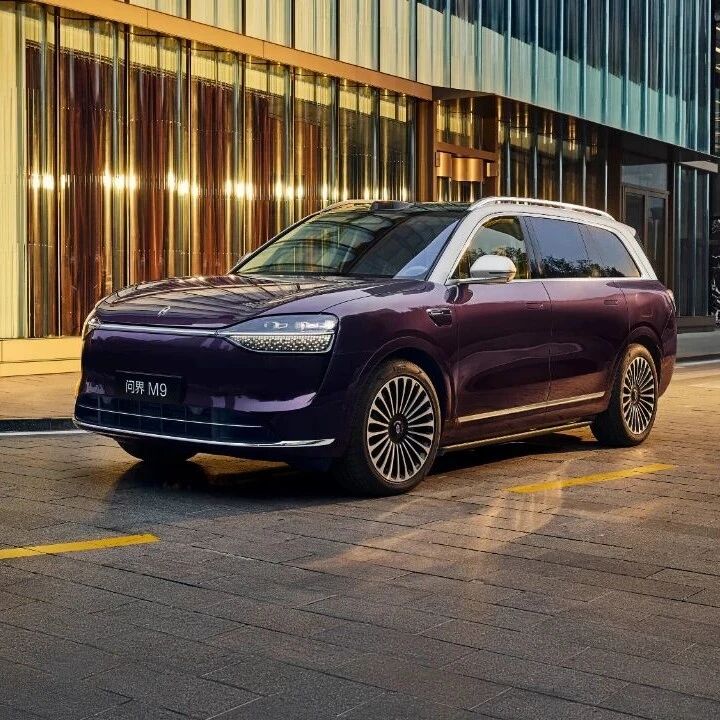
18个月50万级销冠!问界M9如何重写豪华车市场规则
Feng Huang Wang Cai Jing· 2025-09-24 14:16
Core Insights - The AITO M9 has disrupted the luxury car market, achieving over 240,000 deliveries and capturing more than 70% of the new energy market in the 500,000+ segment within 18 months of its launch [1] - Traditional luxury car dealers are increasingly shifting towards AITO M9, indicating a significant change in consumer preferences [1] Group 1: Technology and Innovation - AITO M9 leverages Huawei's full-stack intelligent technology to establish a new paradigm of "tech luxury," moving beyond traditional luxury metrics like engine displacement and leather quality [1][2] - The vehicle offers advanced features such as the HarmonyOS 4 and the upgraded Huawei QianKun intelligent driving system, which enhances user experience and safety [2] - The introduction of the "Parking from Space 2.0" feature allows for seamless parking, showcasing the vehicle's advanced automation capabilities [2] Group 2: Market Positioning and User Experience - AITO M9 is positioned as a "full-scenario smart flagship SUV," catering to both high-end business and family travel needs, thus transforming the perception of luxury from mere status to experiential value [4] - The vehicle's design and features have made it a popular choice for business receptions, enhancing corporate image and facilitating client interactions [4] - Family-oriented features, such as rear-seat projection and child-friendly modes, address specific user pain points, making it a preferred choice for parents [5][6] Group 3: Market Impact and Competitive Landscape - The introduction of the new color "Silver Purple" reflects AITO M9's confidence and aims to attract younger, trend-conscious consumers [7][8] - The success of AITO M9 has pressured global automotive giants, leading to layoffs and dealership closures as they respond to the rise of Chinese smart car brands [8] - The shift from "material luxury" to "tech luxury" signifies a fundamental change in consumer values, challenging traditional luxury car manufacturers to adapt or risk obsolescence [8]
18个月50万级销冠!问界M9如何重写豪华车市场规则
凤凰网财经· 2025-09-24 14:08
Core Insights - The AITO M9 has disrupted the luxury car market, achieving over 240,000 deliveries and capturing more than 70% of the market share in the 500,000+ yuan new energy segment within 18 months of its launch [1][4]. Group 1: Technology and Market Positioning - The AITO M9 leverages Huawei's full-stack intelligent technology to redefine "tech luxury," moving beyond traditional luxury metrics like engine displacement and leather quality [4][11]. - Traditional luxury car users are increasingly shifting their focus from brand prestige to technological experience and practicality, with features like advanced driver assistance and vehicle-to-phone integration becoming key decision factors [5][11]. - The AITO M9's advanced features, such as the HarmonyOS 4 voice assistant and the upgraded ADS 4 driving system, set a new standard for intelligent driving and user interaction [8][9][10]. Group 2: User Experience and Market Impact - The AITO M9 is positioned as a "full-scenario smart flagship SUV," catering to both high-end business and family travel needs, thus enhancing user experience from mere status symbol to a more meaningful engagement [12][24]. - The vehicle's design and features have made it a popular choice for business receptions, with companies reporting direct business benefits from using the M9 [15][16]. - The M9's family-oriented features, such as rear-seat entertainment and safety systems, address common pain points for family users, enhancing overall satisfaction [19][23]. Group 3: Color Strategy and Market Dynamics - The introduction of the "Silver Purple" color reflects the AITO M9's confidence and aims to attract younger, trend-conscious consumers [26][29]. - The success of the AITO M9 has prompted traditional luxury car manufacturers to make strategic adjustments, including layoffs and dealership closures, in response to the competitive pressure from Chinese brands [31][34]. - The shift from "material luxury" to "tech luxury" signifies a fundamental change in consumer value perception, with the AITO M9 exemplifying how technology can redefine luxury in the automotive sector [34][35].
新问界M7上市24小时大定超4万台
Zheng Quan Shi Bao Wang· 2025-09-24 12:55
Core Insights - The new Wenjie M7 has achieved over 40,000 pre-orders within 24 hours of its launch [1] Group 1: Product Launch - The Wenjie M7 was unveiled at the Huawei HarmonyOS Autumn New Product Launch event [1] - The high-end version of the M7 is equipped with an external 192-line LiDAR system [1] - Another version features an internal LiDAR for visual-assisted driving [1]