商业航天

Search documents
商业航天的奇点时刻:国家战略下的万亿新赛道,如何把握投资机遇?
Sou Hu Cai Jing· 2026-01-31 04:01
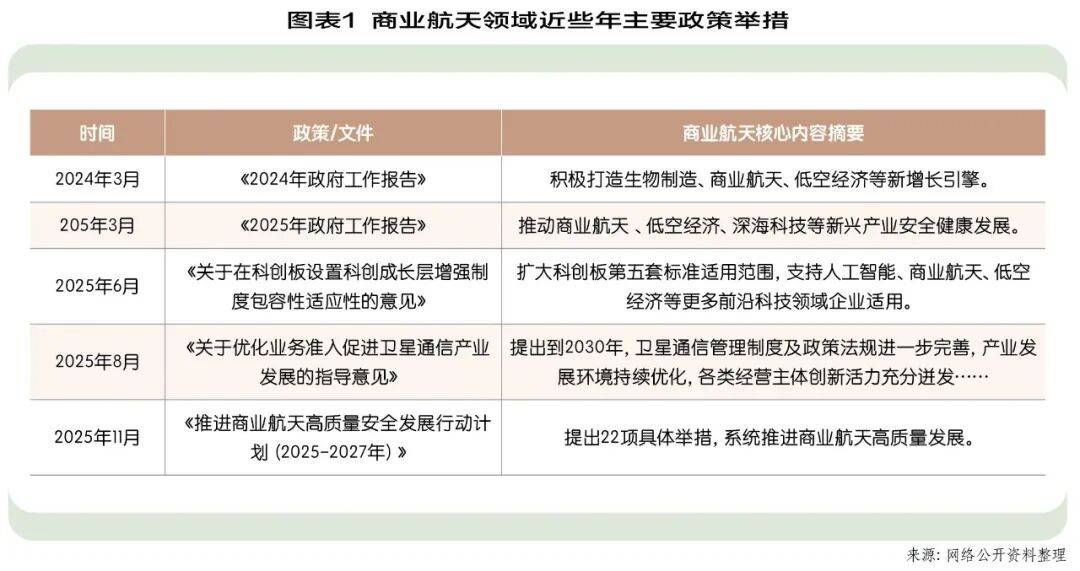
Core Insights - The commercial aerospace industry is entering a "capital year" in 2025, driven by both policy and market forces, with companies like Blue Arrow Aerospace, Tianbing Technology, and Xinghe Power rapidly advancing towards IPOs, indicating a vibrant commercial aerospace ecosystem is forming [1][9][21] - The industry is characterized by a shift from traditional state-led aerospace to market-driven commercial aerospace, focusing on profitability and commercial operations [3][4] Policy Developments - The commercial aerospace sector has been increasingly recognized in government reports, with mentions in the 2024 and 2025 Government Work Reports, highlighting its role as a new growth engine [4][5] - In June 2025, the inclusion of commercial aerospace in the fifth set of listing standards for the Sci-Tech Innovation Board expanded the pathways for unprofitable yet high-potential companies to go public [4][5] - The establishment of a dedicated Commercial Aerospace Department by the National Space Administration in November 2025 marks a significant step towards specialized regulatory oversight [4][9] Market Growth - According to the China Investment Industry Research Institute, the commercial aerospace market in China is expected to reach 2.3 trillion yuan in 2024, with a compound annual growth rate of 22.5% from 2015 to 2024 [6][9] - The market is projected to enter a golden development period from 2025 to 2030, with an estimated market size of 8 trillion yuan by 2030 [9][10] Industry Trends - There is a pressing demand for satellite constellation networking, driven by international competition for low-Earth orbit resources [10] - Cost optimization is crucial for the sustainable development of commercial aerospace, particularly in satellite manufacturing and launch costs [10][11] - The preference for large-capacity, reusable rockets is emerging as a necessity to meet the demands of satellite deployment [10][11] Company Highlights - Blue Arrow Aerospace aims to raise 7.5 billion yuan through its IPO, focusing on developing reusable liquid oxygen-methane rockets and has invested approximately 2.3 billion yuan in R&D from 2022 to mid-2025 [16][18] - Xinghe Power has successfully completed 21 commercial launches and raised 2.4 billion yuan in its D-round financing, focusing on developing reusable liquid rockets [19] - Tianbing Technology is preparing for the maiden flight of its "Tianlong-3" rocket, which boasts a payload capacity exceeding 20 tons, and has raised nearly 2.5 billion yuan in financing [20] Overall Industry Outlook - The commercial aerospace industry is experiencing explosive growth across multiple dimensions, including policy support, capital influx, and market expansion, marking 2025 as a milestone year in its development [21][26] - The industry's future hinges on sustainable market demand and the creation of new economic activities, such as space tourism and data services, which could redefine traditional economic models [23][24][25]

iPhone迎史上最佳季度表现,黄金价格日内一度跌超7% | 财经日日评
吴晓波频道· 2026-01-31 00:29
Group 1: Airline Industry - The new draft regulation from the China Air Transport Association mandates that airlines must categorize economy class seats into "free selectable seats" and "reserved seats," with specific percentages of free seats based on total seat count [2][3] - For domestic flights with 160 or fewer economy seats, at least 70% must be free; for 161-200 seats, at least 75%; and for over 200 seats, at least 80%. International flights must offer at least 65% free seats [2] - This regulation aims to balance operational efficiency and commercial interests while protecting the basic rights of ordinary passengers, addressing previous issues of excessive commercialization by some airlines [2][3] Group 2: Gold Market - On January 30, gold prices experienced a significant drop of over 7%, reaching around $4,990 per ounce, while silver fell more than 15% [4] - UBS maintains a bullish outlook on gold, raising its price targets for March, June, and September 2026 to $6,200 per ounce, a 24% increase from the previous target of $5,000 [4] - The recent volatility in gold prices is attributed to speculative capital and market dynamics rather than fundamental changes, with expectations that prices will stabilize after the exit of speculative funds [5] Group 3: Apple Inc. - Apple reported Q1 2025 revenues of $143.76 billion, a 16% increase year-over-year, with net profits rising 15.9% to $42.10 billion, driven primarily by strong iPhone sales [6] - The iPhone generated $85.27 billion in revenue, accounting for 59.3% of total revenue, marking a 23% year-over-year increase [6] - Apple's strategy of upgrading AI capabilities in collaboration with Google may enhance future performance, although the long-term sustainability of its pricing strategy remains uncertain [6][7] Group 4: SpaceX and xAI - SpaceX is exploring potential mergers, including with Tesla or xAI, as it prepares for a possible IPO in mid-2026, aiming to raise approximately $50 billion [8][9] - The merger with xAI could enhance SpaceX's valuation and facilitate technological synergies in areas like space data centers and aerospace AI [8][9] - Integrating multiple companies under Elon Musk's umbrella could streamline management and resource allocation [9] Group 5: OpenAI - OpenAI is reportedly accelerating its IPO plans for Q4 2023, with a valuation of $500 billion, as it prepares by expanding its financial team [10][11] - The company faces competition from Anthropic, which is also planning to go public, raising concerns within OpenAI about maintaining its market position [10][11] - The influx of capital is crucial for AI companies to sustain their technological advancements and market presence, with OpenAI's potential IPO seen as a way to bolster its financial resources [10][11] Group 6: Kweichow Moutai - Kweichow Moutai's prices surged ahead of the Spring Festival, with wholesale prices increasing significantly, reflecting a renewed consumer demand [12][13] - The company has implemented sales and channel reforms, including the launch of a direct sales platform, to stabilize prices and manage inventory effectively [13] - Moutai's cultural and brand value continues to provide a competitive edge, helping it navigate market fluctuations [13] Group 7: Norwegian Government Pension Fund - The Norwegian Government Pension Fund achieved a 15.1% return in 2025, with a total fund size of approximately 21.27 trillion Norwegian Krone (about 15.47 trillion RMB) [14][15] - Equity investments were the primary driver of returns, particularly in technology, finance, and basic materials sectors, with significant contributions from major tech companies [14] - The fund's long-term investment strategy and focus on technology stocks have positioned it well for sustained performance, despite potential short-term market volatility [15]


普通人离“太空游”还有多远?
Huan Qiu Shi Bao· 2026-01-30 22:38
Core Viewpoint - The development of commercial space tourism in China is gaining momentum, with several companies launching initiatives to make space travel accessible to the general public, including the introduction of the "CYZ1" spacecraft by Beijing ChuanYue Space Technology Co., which aims for its first commercial flight by 2028 [1][2][5]. Group 1: Company Initiatives - The "CYZ1" spacecraft is the first domestically designed reusable manned spacecraft targeting end consumers, with a maximum capacity of 7 passengers and a flight height of up to 220 kilometers [2][5]. - Other companies, such as Beijing Ziwei Yutong Technology Co. and China Aerospace Technology Co., are also developing space tourism projects, with plans for manned flights by 2028 [5][6]. - The "Li Hong 2" spacecraft, developed by China Aerospace Technology Co., is designed for both scientific experiments and space tourism, with a reusability target of at least 30 flights [6]. Group 2: Technical Aspects - The "CYZ1" spacecraft features a unique escape design and a reusable system, with a spacious return cabin of 21 square meters [5]. - Key technologies for successful space tourism include safety redundancy, reliable subsystems, and repeatable verification processes, which are still under development [9]. - The spacecraft's landing system incorporates multiple safety features to ensure that ordinary people can endure the experience [5][9]. Group 3: Market Potential - The global space tourism market is expanding, with a focus on suborbital flights, which have become a hot topic in commercial space endeavors [11]. - Internationally, companies like Virgin Galactic and Blue Origin have established operational space tourism programs, indicating a growing demand for such experiences [12][13]. - The pre-sale price for tickets on the "CYZ1" is set at 3 million RMB, with nearly 20 tickets already pre-sold, reflecting strong market interest [15].

范树奎:国家级并购基金将引领产业整合升级
Xin Lang Cai Jing· 2026-01-30 18:44
Core Viewpoint - The establishment of a national-level merger and acquisition (M&A) fund is expected to drive China's industrial integration into a "strategic-led" new phase, shifting the core logic from spontaneous market integration to a dual-driven approach of national strategy and market efficiency [3][4]. Group 1: Characteristics of the National-Level M&A Fund - The national-level M&A fund will have six key characteristics: clearer strategic orientation, optimized resource allocation, more flexible investment methods, stronger risk control, enhanced innovation drive, and promotion of industry advantages [4][5]. - It will focus on critical areas such as key core technology breakthroughs, supply chain security, and the development of strategic emerging industries, thereby enhancing the overall competitiveness of the national industry [4][5]. Group 2: Collaboration with Regional Funds - The national-level M&A fund will work in conjunction with regional funds in areas like Beijing-Tianjin-Hebei, the Yangtze River Delta, and the Greater Bay Area, creating a synergistic system that promotes high-quality development [6][7]. - It will facilitate the flow of technology, talent, and capital across regions, forming a "research-development-transformation-industry" cross-regional chain [7]. Group 3: Investment Focus Areas - The fund will prioritize investments in three main dimensions: traditional pillar industries (e.g., steel, non-ferrous metals, construction materials), emerging technology industries (e.g., integrated circuits, renewable energy), and future industries (e.g., quantum computing, brain-machine interfaces) [8][9]. - Companies that align with these investment areas should possess digital transformation capabilities, core technologies, and clear equity structures to attract early-stage investment or acquisition [9]. Group 4: Avoiding Internal Competition - To prevent "involution" competition between the national-level M&A fund and local industry funds, it is crucial to strengthen top-level design, improve coordination mechanisms, and clarify functional positioning [10][11]. - Establishing a multi-level, complementary fund ecosystem will maximize capital aggregation and effectively support the construction of a modern industrial system [12].
飞越“卡门线”
Qi Lu Wan Bao· 2026-01-30 18:24
Core Insights - The article discusses the rapid development of commercial space tourism in China, particularly focusing on suborbital flights as a new opportunity for the public to experience space travel [3][5][10] - Beijing Chuangyue Space Technology Co., Ltd. announced its "Chuangyue No. 1" suborbital flight plan, marking a significant step in China's commercial space tourism [3][5] - The article highlights the competitive landscape of suborbital flight providers in China, including the "Chuangyue No. 1" and the "Lihong No. 2" from China Aerospace Science and Technology Corporation [5][6] Suborbital Flight Experience - Suborbital flight involves reaching the edge of space, approximately 100 kilometers high, with a total journey time of about 2.5 hours, including a core experience of around 12 minutes in space [3][4] - Passengers will experience 3-4G of overload during ascent and a 3-6 minute period of weightlessness after crossing the Kármán line, providing a unique sensation of floating [4][6] - The flight experience is enhanced by specially designed windows that offer a 45-degree wide view while filtering harmful radiation [4] Key Players in the Market - "Chuangyue No. 1" is a focal point in the market, weighing 8 tons with a maximum diameter of 5 meters, and aims for a commercial launch in 2028 with a ticket price of approximately 3 million yuan [5][6] - The "Lihong No. 2" is another significant player, designed for both tourism and scientific experiments, with a maximum flight height of 108 kilometers and a capacity for 7 passengers [6][8] - Other companies, such as Deep Blue Aerospace, are also entering the commercial space market, with plans for suborbital flight ticket sales starting in 2024 [6][7] Cost Reduction and Market Growth - The article notes that the ticket prices for suborbital flights are currently in the hundreds of thousands of yuan range but are expected to decrease to tens of thousands of yuan due to technological advancements and policy support [7][8] - The use of reusable spacecraft can potentially reduce launch costs by over 70%, making space travel more accessible [7][8] - The establishment of the Commercial Space Administration in November 2025 is expected to further support the growth of the commercial space industry in China [7][8] Future Developments - The article mentions that the development of orbital-class commercial spacecraft is on the agenda, aiming to allow tourists to stay in space for several days and participate in scientific experiments [10][11] - The long-term vision of Beijing Chuangyue includes plans for a space hotel and lunar orbit tourism by 2038, with a goal to reduce ticket prices to around 300,000 yuan [11][12] - The advancements in space technology are expected to extend beyond tourism, impacting various industries such as materials science and biotechnology [9][10]

10万亿!史上最大IPO定档6月,马斯克生日那天
Sou Hu Cai Jing· 2026-01-30 17:22
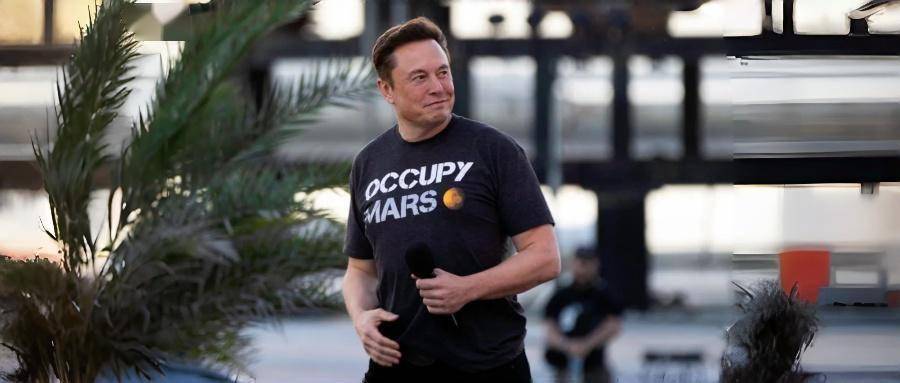
Core Viewpoint - Elon Musk's companies, including SpaceX, xAI, and Tesla, are considering potential mergers, which has led to significant stock price movements for Tesla [2][4][8] Group 1: Merger Discussions - Two main merger paths are being evaluated: one between SpaceX and Tesla, and another between SpaceX and xAI, with xAI having integrated Musk's social media platform X [4][6] - The potential merger of SpaceX and xAI is seen as a step towards Musk's vision of a "space data center," integrating SpaceX's infrastructure with xAI's computational needs [5][6] - The discussions are still in early stages, and no final decisions have been made, with the possibility that the companies may continue to operate independently [4][17] Group 2: IPO Considerations - SpaceX is planning an IPO for June, targeting a valuation of approximately $1.5 trillion and aiming to raise up to $50 billion, which would be the largest IPO in history [4][11] - The company is collaborating with major banks to prepare for this potential IPO, with the valuation and fundraising plans still subject to market conditions [11][14] - SpaceX's IPO is linked to its strategy of deploying data centers in space, which Musk believes is crucial for competing in the AI sector [11][14] Group 3: Market Reactions - Following the merger news, Tesla's stock rose by 4.5% in after-hours trading after a 3.5% decline during regular trading [2][8] - Current valuations indicate that xAI is valued at $230 billion, while Tesla's market cap stands at $1.39 trillion [4][8] - Predictions suggest a 48% chance of a merger between SpaceX and xAI occurring before mid-year, while the likelihood of a merger between SpaceX and Tesla is estimated at 16% [8]
1月收官战警报拉响!白银闪崩,微软暴跌,A股周期股行情要终结?
Sou Hu Cai Jing· 2026-01-30 17:00
Group 1 - The first "bomb" in the commodity market saw a dramatic drop in precious and non-ferrous metal prices, with silver experiencing a price swing of 12% in a single day, indicating a rapid exit of profit-seeking funds [3][4] - Multiple gold-related companies in the A-share market issued warnings about stock price volatility in relation to gold prices, suggesting regulatory guidance aimed at cooling overheated speculation in non-ferrous metals [3][4] - The second "bomb" came from the U.S. stock market, where Microsoft reported strong earnings but faced a sell-off due to concerns over slowing revenue growth in its Azure cloud service and high capital expenditures for AI infrastructure, leading to a 12% drop in its stock price [4][5] Group 2 - Meta's earnings report exceeded expectations, driven by strong advertising performance, resulting in a 9% increase in its stock price, highlighting a shift in market sentiment towards companies that can demonstrate AI's direct impact on profitability [5] - In the domestic market, the dye industry is experiencing a price increase, with disperse dye prices rising to 19 yuan per kilogram and reactive dye prices to 23 yuan per kilogram, indicating a potential turning point for the industry's fundamentals [7] - The commercial aerospace sector is set for significant growth, with projections estimating the market size to reach 2.5 to 2.8 trillion yuan by 2025 and potentially 8 to 10 trillion yuan by 2030, driven by advancements in technology and government support [8] Group 3 - In the AI application sector, there are numerous developments, including the release of new AI models and significant funding negotiations for OpenAI, indicating a strong long-term investment outlook for AI [9] - Trading data from January 29 shows a divergence between retail and institutional investors, with retail investors heavily buying into AI application stocks while institutions were reducing their positions in precious and non-ferrous metals [10] - Institutions are reallocating funds from overbought metal sectors to the chemical sector, particularly dye companies, suggesting a strategic shift in investment focus [10][12]
调整观望?
第一财经· 2026-01-30 15:41
Market Overview - The A-share market experienced a significant decline, with the Shanghai Composite Index breaking below the 5-day and 10-day moving averages, indicating increased bearish momentum [6] - A total of 2,449 stocks rose, while the decline-to-rise ratio was 59:61, reflecting a mixed market sentiment with localized recovery in profitability [7] - The main funds saw a net outflow of 4.868 billion yuan, indicating a shift in investor sentiment [8] Trading Volume and Sentiment - The total trading volume of the two markets was 0.84 trillion yuan, down 12.21%, showing a notable decrease in trading activity and a prevailing cautious sentiment among investors [9] - Institutional investors are primarily focusing on portfolio adjustments and structural optimization, moving away from defensive sectors to growth sectors like CPO, semiconductors, and agriculture [11] Investor Behavior - Retail investors are showing rational behavior, avoiding short-term volatility risks while selectively investing in quality stocks during sector rotations [11] - The sentiment among retail investors indicates a preference for strategic positioning rather than impulsive trading, with a notable portion of funds being allocated to high-potential sectors [11]

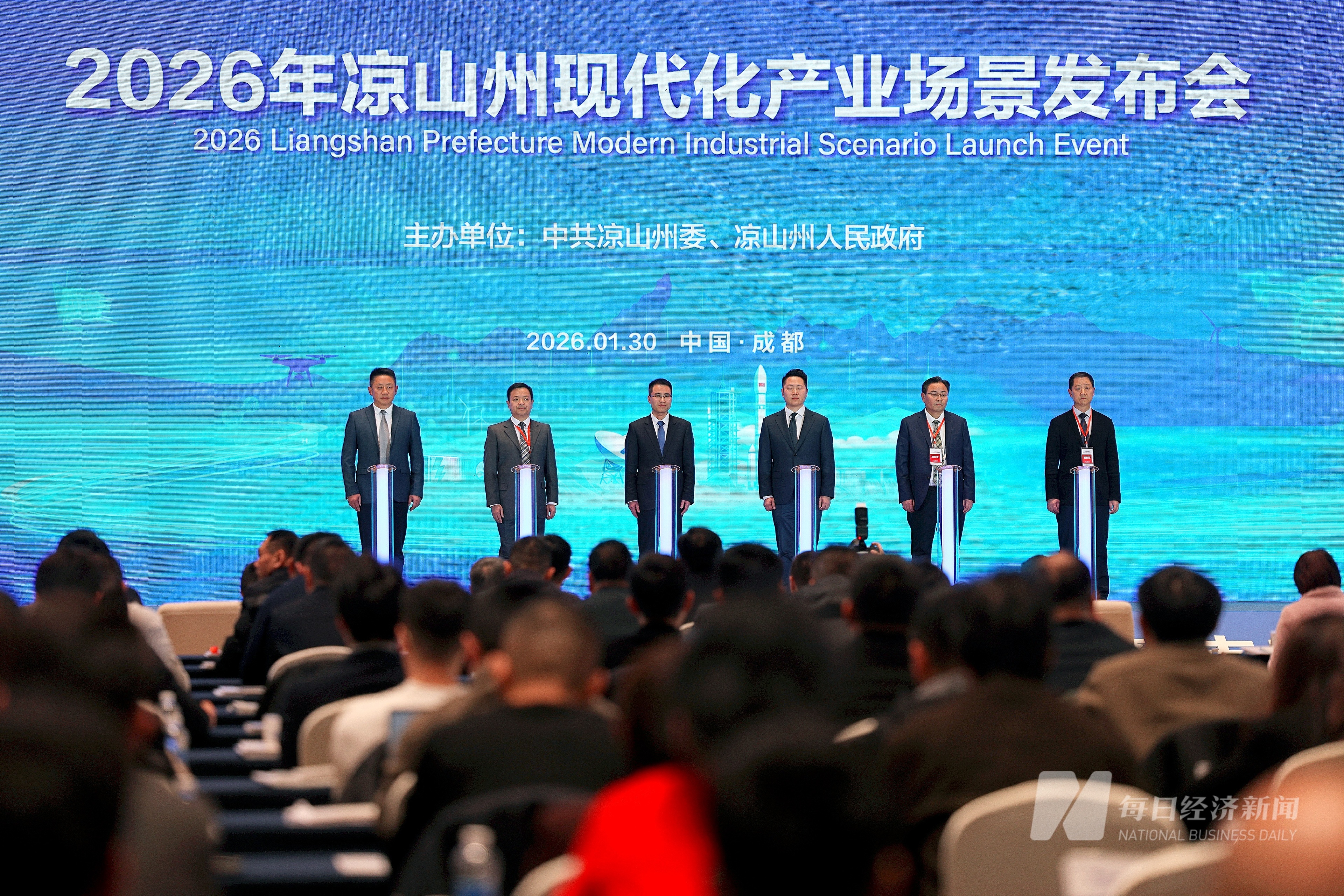
凉山首场现代化产业场景发布会举行,聚焦“空天经济·氢储新能”释放33个合作机遇
Xin Lang Cai Jing· 2026-01-30 15:35
Core Insights - The event focused on the integration of aerospace, low-altitude economy, and hydrogen energy storage, unveiling 33 specific cooperation opportunities in the "Aerospace·Sky·Hydrogen" fusion scenario [1] - Liangshan aims to transform its traditional resource conversion path by leveraging its 220 million kilowatts of clean energy resources and solid aerospace industry foundation to create a "super fusion scenario" [1] - The release of the "Special Policy to Support the Gathering Development of the Commercial Aerospace Industry" includes five major policy initiatives to support industry development [1] Investment Opportunities - A total of 11 projects were signed during the event, including rocket assembly manufacturing and new energy battery materials, with a total investment amounting to 73.1 billion yuan [1] - Key enterprises such as Dongfang Space, Zongheng Co., and Guohydrogen Technology shared their plans for industrial collaboration with Liangshan [1] - Approximately 250 representatives from 164 leading industry companies attended the event, indicating strong interest and potential for collaboration [1] Economic Development Strategy - Liangshan is implementing an "Industry Attack Year" initiative to drive economic growth, building on a foundation that has seen its economic total exceed 200 billion yuan during the 14th Five-Year Plan [2] - The focus is on applying scenarios to drive new productive forces and accelerate the establishment of a modern industrial system unique to Liangshan [2]
731亿元赋能新赛道,凉山擘画“空天氢”融合发展新蓝图
Mei Ri Jing Ji Xin Wen· 2026-01-30 15:28
图片来源:每经记者 张建 摄 作为四川省清洁能源资源富集区及航空航天产业重要承载地,凉山州积极打造"绿色能源筑基、空天产业赋能、场景融合驱动"的创新产业生态,以场景开放 促产业发展。 本次发布会围绕商业航天、低空经济与氢能储能三大方向,释放出33项独具特色优势的场景合作机遇。在商业航天领域,凉山将构建"航天特材—星箭制造 —发射服务—空天信息—航天文旅"全链条生态。在低空经济领域,凉山将聚力建设亚高原无人机测试指挥基地和装备制造中心,拓展低空出行、物流配送 等应用场景,激活区域低空经济发展新引擎。在氢能领域,依托攀西地区氢能试点基础,凉山将推进绿电直连制氢、大型储能设施建设及氢能多元应用,全 力建设国家绿色能源基地。 围绕"空天经济与氢储新能"场景,本次集中签约共11个项目,涵盖空天经济类4个、氢储新能类7个,标志着凉山州在商业航天、低空经济、氢能储能等战略 性新兴产业布局上迈出了关键步伐,此次签约不仅实现了资金与项目的有效对接,也展示出凉山立足产业基础、把握能源革命与空天科技机遇的重要布局。 每经编辑|唐元 1月30日,2026年凉山州现代化产业场景发布会在成都举行,同步开展"空天经济与氢储新能"场景合作项 ...